Tag: gear

objects used for various activities

  • Barefoot & Minimalist Shoes

    Our feet are well engineered and actually do a better job at removing stress from knees and hips than cushioned shoes. Traditional shoes with heels forces you into an unnatural position which is more likely to result in injury. There are a number of experienced long distance hikers and ultra-runners who use minimalist sandals or trail running shoes, logging thousands of miles / year for decades without injuries. If you have been using traditional shoes and want to give minimalist shoes a try, go for it, but don’t rush it. Learn about proper form and transition slowly as you build the muscles to move in a new way.

    [toc]

    My Experience

    I was born with deformed feet. I was in casts for the first couple years of my life and then custom orthotics until my 20s. I had significant problems finding shoes that were comfortable. When I ran more than a mile or walked more than 10 miles I would have knee and/or hip pain. In 2005 a coworker who was trained in the Alexander Technique encouraged me change how I walked and use minimalist shoes. The transition produced some soreness because I was using new muscles and needed to stretch my Achilles tendon, but once I made the shift I found that my knee pain disappeared. As my strength and fitness improved I was able to carry my backpack for 45 miles on a long summer day and run a marathon without pain. Well, at least no pain in my knees or hip… my leg muscles were sore for a couple of days after the marathon :).

    Since 2005 I yearly log around 2500-4000 miles walking, hiking, backpacking. Since 2012 I also have been yearly logging 1000-1500 miles running. All of that with minimalist shoes or sandals. Other than some stubbed toes while wearing sandals or 5fingers, I have just one foot injury.

    I developed plantar fasciitis in 2020 when I pushed my feet too much. I ran increasing hard everyday, tried jogging with a 40lb pack, and switched to new shoes that I now know don’t work for me.

    To recover I spend several months wearing a cushioned running shoes. Within a couple of months the actuate pain was gone, but my feet were still hurting, especially first thing in the morning. After six months I decided the cushioning wasn’t resolving the issue. I switched back to my minimal Luna Venado Sandals. Within a couple of months my feet were back to normal and I was able to start to run regularly. After a while I tried the Xeno Mesa again and noticed my feet were not happy. I am not sure why, but Xeno shoes (and sandals) soles just don’t work for me.

    I typically wear Shamma sandals, but when I need shoes for rugged conditions I switch to Inov-8 Trailfly 270 which are zero drop, but with a 12mm stack aren’t exactly minimalist. I wear a pair of Vivobarefoot Gobi II when I need to be dressed up.

    Why Minimalist / Bio Mechanism

    There have been numerous articles such as You Walk Wrong (slightly questioned in Your shoes are killing you), Going Barefoot is Good for the Sole, Why You Should Spend Time Walking Barefoot Everyday, A Moderate Approach to Minimalist Shoes, and a podcast by Peter Attia with Irene Davis from the Harvard/Spaulding Running Center which promote the benefits of going barefoot or wearing minimalist shoes. 

    The Harvard Skeletal Biology Lab has a lot of information about foot strikes and biomechanics. For example a paper about how Foot strike patterns and collision forces in runners were less with barefoot runners. The book Born to Run tells the story of people who run barefoot (or in minimalist sandals) for their entire lives. Other studies have suggested that while running is more efficient on the balls of our feet, that walking with heel strikes is more efficient. Another interesting paper is on The Effect of Running Shoes on Lower Extremity Joint Torques. It’s should be noted that a running stride is different from a walking/hiking stride.

    As I have read numerous studies I am convinced that people who grew up going barefoot or wearing minimalist shoes are better off than people who grew up wearing traditional shoes. When properly trained, I think most people benefit from minimalist shoes when running. When walking, the benefits from barefoot / minimalist shoes aren’t as compelling for people whose feet have been constrained by traditional shoes for a few decades. The combination of weak muscles and limited toe splay might make it challenging to adapt and fully benefiting from minimalist shoes.

    I have noticed after years of using minimalist shoes than when I am feeling foot pain, I am typically using bad form. The pain is like a warning light I am doing something wrong. Most recently it was the outside of my left foot was sometimes sore. After some self observation I noticed I was rolling that foot a bit to the outside. For the next few days I was more intentional about foot placement. The pain went away.

    Fully Barefoot

    Some people go fully barefoot not just when walking, but running, backpacking over terrain which many would expect to be painful.  There are a variety of resources such as barefooters.org. barefootted.com,  and The Barefoot Hiker. I don’t have anything to add on this topic because I don’t got barefoot except in my home and at the beach. There are numerous studies demonstrating that unshod and minimalist running involve different biomechanics from each other (examples here, here, here and here). While there’s not as much literature involving walking, the same appears to be true.

    Five Fingers

    vibram fivefingers has been a cult hit. The soles of five finger shoes looks like the bottom of our foot, down to a separation between the toes. There is a nice beginner’s guide to five fingers for people getting started with these shoes.

    There were many things I loved about wearing Five Finger shoes. The first was a sense of freedom, and the sensory experience on walking in them. I felt more connected to my environment. I felt more free. I also loved that I stopped getting blisters between my toes.

    The major problem I found with Five Fingers was that I was regularly stubbing my toes. A more traditional shoe spreads the force of impact over all the toes making it much less likely that one toe will be traumatized. There were some additional minor issues. The first was several members of my family teased me about how ugly the five fingers were. Second, they take longer to put on because you have to line your toes up. Finally. the original model used a mesh on the upper that let trail dust into the shoes. After an hour or so the dust would start to function like sandpaper forcing me to stop and clean off my feet. I found the Five Finger Spyridon addressed this problem. I used the Spyridon for trail running, hiking, and backpacking for several seasons.

    Minimalist Sandals

    After Born to Run was published, there are a number of companies that started making minimalist versions of Huaraches sandals such as Shamma, Earthrunners,  Luna, Unshoes, and Bedrock. There are also so minimalist sandals that don’t have the toe-post including unshoes pah tempe, feelgrounds pathway, xeno, and some of the sports sandals from paisley running sandals.

    Minimalist Shoes

    The most minimal shoes are the classic, sole-less, suede moccasins. When I starting using minimalist shoes there weren’t many options. Besides moccasins the only choices were ballet slippers, track shoes, the martial arts oriented Feiyue shoes and Terra Plana which seem to be the predecessor of Vivobarefoot which made tennis shoe with a replaceable sole that zipper on/off. All of these shoes were ok for walking around town, but all had serious traction issues in the back country. My first minimalist shoe made by Terra Plana.

    I believe Inov-8 was the first company to make minimalist shoes specifically made for outdoor sports. These shoes had zero drop,  relatively thin soles and lot of flexibility. I went through 14 pairs of the moderately “heavy” Inov-8 Flyroc 310 before trying other trail running (and for me backpacking) shoes.

    These days there are lots of companies that make minimalist shoes which are sports / outdoor oriented. Main stream companies like New Balance, Merrell and Nike have minimalist models. I have enjoyed running in the Merrill Vapor Gloves. Of course Vivobarefoot continues to make excellent shoes. Vibram has expanded from 5finger to the minimalist Furoshiki sneaker – but I hear they are too narrow in the toes. Xero Shoes are popular with many people, but hurt my feet. Peluva also makes a five toed shoe. LEMs Shoes are beloved by many.

    Dressing Up

    There are a number of small manufacturers that make minimal / zero drop shoes that are appropriate for more “dressed up” situations such as business meetings or a night out. Besides Vivobarefoot, I have tried LEMs ShoesSoft Star, Tadeevo. Other shoes that would be worth a look include Ahinsa, Freet Barefoot, Hike Footwear, Joe Nimble, Jim Green and Sense of Motion. Carets make a zero drop shoe (though not minimalist) classic dress shoe for men. Arcopedico makes some attractive minimalist shoes for women. In today’s evolving sense of style, historically “casual” shoes which can be minimalist like espadrille, driving loafers, etc are often acceptable, if not fashion forward.

    Other Material

  • Tarp-tents and Other Ultralight Shelters

    Today  there is a wide range of ultralight shelters including traditionally designed tents using exotic materials to move them into the ultralight weight classification. Many of the ultralight shelter designs came from people’s experiences on long thru hikes combined with a desire to find the lightest possible shelter while still providing adequate protection. I think the sweet-spot value sweet spot are single wall tarptents made from SilPoly. You can save weight by upgrading to a shelter made from DCF. A big advantage of SilPoly and DCF over the classic SilNylon is the lack of stretch so you don’t have to constantly re-tighten the shelter to maintain a taut pitch. These single wall shelters are extremely light weight, and when well designed can handle severe weather, and provides a bug free space which enables me (and I expect others) to have a more restful night. There are a number of other types of shelters, one of which might be better for you. See fitmytent.com to see how interior space of different shelters compare to each other.

    My Choice

    I use a Durston x-mid pro2 which is light enough for solo use and large enough for trips with my wife or a friend. Stable enough for 3+ seasons, can be opened up for decent ventilation in warmer weather, and easy to pitch if you use a few tricks. I now also have a Gossamer Gear Whisper shelter for solo trips when I want to minimize my load.

    Quick Recommendations

    I can’t recommend one shelter as being the “best”. Giving equal weighting to the weight, usable size (See Andrew’s article about calculation usable space and the related space spreadsheet), small footprint, ease / speed of pitch, bug protection, survive high winds, rain protection, and ventilation, there is no clear winner. Add price and the field flattens even more. Depending on how you weight these issues will result in a different shelter being “the best”. Here are my favorite:

    • Durston X-Mid2 Pro 20oz, $639, A two person, hiking pole shelter. Plenty of room for two. Likely can handle light 4-season weather (not extreme snow), easy to pitch.
    • MLD SoloMid (or DuoMid) XL with inner bug-netting which can be thought of as a “some assembly required” tarp-tent. Doesn’t do anything perfectly, but can handle just about any conditions you might encounter.
    • Six Moon Designs Gatewood Cape $135, 10oz, combined with the Serenity NetTent $125, 12oz provides shelter, rain gear and pack cover in a versatile package. There are better shelters and better rain gear but this is a great system for some people. I find it a tad too small for my taste, but it is workable and beloved by many.
    • Tarptent Notch Li solo 20oz, $599 provides a very usable space which is more storm worthy than ZPacks shelters and feel more roomy that the SoloMid.  Inner tent is small but useable and can be set up after the outer tent is up. A good first look review of the Notch Li. Need room for two? Check out the Stratospire Li.
    • HMG Mid-1 solo 16.8oz, $599. One person pyramid with integrated bug netting and floor. A number of extra tie-outs for want facing more severe weather. Sets up with a single pole.

    Limitations of Tarp-tents

    Tarp-tents are ideal when facing moderate weather conditions combined with a desire for a bug free space. There are shelters that provide more protection, or are lighter weight, but few that will match a tarptent’s overall performance. There are a number of situations that I think there are better shelters:

    • Extreme Conditions.  Most of these shelters don’t handle extreme conditions well.  What’s extreme?  For me, winds consistently above 35 mph, standing water, or real snowfall. A little snow isn’t a problem, but when there is enough to pile up and get blown in to the shelter most ultralight designs just aren’t appropriate with a possible exception of pyramid tarps.
    • People who can’t control their movement and therefore need something to keep them from repeatedly rubbing against the condensations on the shelter walls. This is often a problem with kids.
    • People that can’t be gentle with gear, or who are extremely accident prone… e.g. will fall on top of their shelter several times due to coordination issues or carelessness.

    Managing Condensation

    People are often concerned about condensation in single walled shelters which most ultralight shelters are. My experience is condensation is not a big issue in well designed ultra light shelters which have adequate ventilation and reasonably steep sidewalls. Those made from Dyneema (formally called cuben) seem to have less issues with condensation.

    Pretty much any night that the temperature drops significantly you will get some condensation (in the worse cases a fair bit), but so long as you don’t repeatedly brush against the walls the water won’t be a significant issue. In heavy winds or rains some water will shake off, but most will stay on the walls, or roll down to the edge without falling on you. The worse condensation will be nights were you have cold rain which cools your shelter, but the ground under the shelter is warm so ground moisture condenses on the shelters walls/roof. In the morning you wipe the inside of the shelter down with a bandana or pack towel and you are fine.

    Some people perspire significantly more than others and might find that they will have more condensation that others using the same shelter, in the same conditions. Obviously two people will generate more moisture than one person.

    SMD has a nice article about Getting the Most from your Ultralight tent. BPL’s single wall shelters and condensation has useful information.

    Floors

    Floors in ultra light shelters can be convenient, specially for people new to ultra light shelters or when you really need your shelter to be sealed against bugs or other crawling creatures, but they are rarely adequate if you are facing standing water which can’t be avoid in some locations (like the flat midwest during a thunderstorm). There was a nice posting by Ron Moak about the limitations of ultralight bathtub floors.

    Tarp Systems

    A close relative of the ultralight shelter / tarp tent are flat tarps combined with “netting” tents, and  shaped tarps combined with optional bug netting and/or floors. While these shelters weight more than an similarly size ultralight shelter, they have a couple of advantages. The first is that the bug netting can be pitched separating from the tarp which is great when there are bugs and good weather. Secondly with the floor separate from the canopy it’s easy to replace a damaged floor, you can pack your “dirty floor” separately, and most importantly, it’s easily to manage wet unless there is standing water. When it’s raining hard you can go strait into your shelter and close the door. Sort of like a vestibule, but larger. The excess water can typically be absorbed by the the ground. Finally, most shaped tarps are more storm worthy than most tarp-tents, especially when facing heavy winds.

    Ultralight Solo for the Sierras

    I used the original Zpacks Hexamid for many years. I found it nearly ideal for three season trips in the Sierras. It provide adequate protection from weather, a bug free, for just over 8oz. The only downside for me was the entry was lower than ideal (28″). When I decided to purchase new solo shelter, the Hexamid was no longer made and began to look something like the hexamid. I like the design and taut pitch of the Meadow Physics Abode but the entry was even lower. If I was better at sewing I would made a montmolar shelter. In the end, I purchased a Gossamer Gear Whisper shelter. It’s light, easy access, plenty of room, with protection from flying insects. I like that it has no floor which makes managing in the rain easier than an integrated floor. Other good options are the Zpacks Plex Solo, Durston X-Mid Pro1, and HMG Mid-1. If I didn’t need bug protections I would have go with the OG MLD SoloMid or consider the minimalist Ounce Designs.

    Other Options

    I don’t track the market these days. I would recommend look at BPL Editor’s Recommendations, The Trek’s Best Shelters, or Adventure Allan‘s shelter gear guides.

    Some ultralight shelters I have used, are still made and worth a look:

    • Gossamer Gear The One: 21oz, $299. A single person shelter with plenty of  room for me that’s fairly easy to use. I used the first version for a couple of years. I had troubles getting a really taut pitch. The current model has been updated and I understand pitches better.
    • LightHeart Gear shelters. I wrote up my experiences with a Solo+Awning.   A diamond shaped floor that makes use of two hiking poles. This shelter provides a double walled solo shelter with a lot of room, good views when the fly is pulled back, good insect protection, and decent weather protection.There are some good discussions at lightheart@whiteblaze and lightheart@bpl.  I wouldn’t trust this shelter in high winds, but in places that have some wind protection it would be very nice. This shelter is very similar to the Wanderlust Nomad.
    • Tarptent Double Rainbow (DR): ~32sq ft + 20 sq ft vestibules, 40oz, $299. Very usable shelter for two that weighs less than 2.5lbs. The design keeps netting between you and the sil-nylon which might accumulate condensation virtually eliminated the danger of getting condensation on your sleeping bag. Adequate living space for two 6ft people, though the top is narrower than the floor so you have to be a bit careful not to bump the sides near the top of the shelter. Typically purchased with a bathtub style floor which can be relaxed for better ventilation. There are a pair of high vents which are slightly helpful with the vestibules are closed. The DR can be pitched free starting if you have a pair of long hiking poles or it can be staked down (what I did most of the time). Double vestibules have a fabric extender which lets you turn them into rain porches. If you expect to face strong winds get wind stabilizer anchors added. Can be pitched in under 4 minutes.  The DR, especially if you add extra guy points can survive surprised harsh conditions as described in this thread about Tarptent Double Rainbow in strong winds. I am comfortable using the DR in anything but a real snowfall.
    • Tarptents has a number of other shelters which are attractive and well designed shelters.
    • Six Moon Designs makes a number of ultralight tarp-tents. My favorite is the Skyscape which stands up to wind better than the Lightheart Solo. I found it fairly easy to set up and provides a comfortable living space. On paper Six Moon Designs shelters are nice, but for whatever reason I never used one of their shelters for more than a few trips.  If they bring back the 16oz Dyneema version of the Skyscape, I would be very tempted.
    • Warmlite was the first tunnel tent (1958? – history link) made of light weight Sil-Nylon. IMHO it was decades before there were commercial tents that matched the weight / performance. I haven’t used one of these tents since then early 2000s. They are pricy compared to the above shelters, but some people might fine them useful.

    Historical

    BPL’s Single Wall Tents: State of the Market gives a nice summary of the options in 2008. They also did a Floorless Shelter Review and  Single Wall Tents & Shelters Review in 2004. There are some shelters I thought worth noting which are no longer made.

    • Tarptent Squall: One of the lightest 2-person shelter of it’s day: 23oz for a floorless shelter with flying bug protection, 30oz with a sewn in floor. I found the Squall Classic to be one of the fastest shelters to set up. It had simple but elegant design with beautiful lines. Plenty of room for two people sleeping, but only one can sit up at a time. Later, Gossamer Gear Squall Classic made a spinnaker cloth version. This saved weight, but didn’t pitch as well due to the lack of stretch of the spinnaker material.
    • MSR Missing Link : lots of room for two people in this 37sq ft shelter + a huge overhang. But this weights more than 3lbs (1lb more than most of the other ultra-light shelters). There are some people who have a fondness for this shelter, but I was disappointed in it’s performance in any sort of storm. I never owned this shelter, but have been on several outings where the people with me were using a Missing Link and had problems.
    • Six Moon Designs Europa: A light weight, single walled tent for two people (36oz). This hybrid shelter has most of the advantages of a double walled shelter at the weight of a single walled tent. It is natural for me to compare this shelter to my favorite, the Squall2. Advantages for the Europa are slightly better ventilation, it’s a bit easier to keep dry during a rain storm and it is less likely for you to brush against condensation on the body of the shelter. I found that the Europa is a bit harder to get a good pitch, doesn’t pitch as taut, and therefore isn’t as good in high winds. The Europa has more square footage, but doesn’t have sidewalls that are as steep or as much headroom of the Squall2. There was a nice review comparing the squall2 and six moon designs europa.
    • Wanderlust made a number of light weight shelters that were loved by their owners. Alas, this cottage business got overwhelmed seemed to stop doing business in 2003. If you want a Wanderlust shelter, check out Lightheart Gear which has a very similar design.

    Budget Options

    There are several Chinese companies which makes clones of US based cottage designs such as 3fulgear which are often very affordable through aliexpress. I have no personal experience but see them referenced on /r/ultralight with generally favorable comments.

  • How to Evaluate Audio Equipment

    The best source of information is your EARS. Form your own opinions, don’t just accept what other people say. Believe what your ears tell you when listen to music!

    Remember that many people who write about audio are biased in one way or another.  Beyond that, There is often a lot of  hype to justify very expensive equipment and the perpetual upgrade switch around game. You might want to use some of the information from the community to help you narrow down what you would like to take a first listen, but you need to listen for yourself.

    Purchase what sounds good to you. There is no reason to spend $15,000 on a high end system if you don’t notice significant difference between it and a $2000 system, or for some people, a $200 system.

    I would suggest doing blind A-B testing (or better yet, A-B-X) whenever possible. Blind A-B is were you do back-to-back comparisons of two (or more) pieces of equipment, but have no knowledge which is which. When doing blind testing it is important to vary only one thing.  For example, when you switch amplifiers, you need to make sure the output levels are equivalent.  This is possible if someone is willing to switch equipment around, not telling you what they are doing, while keeping a record of the sequence used. This said, 30 minutes of blind AB testing in a showroom is not a sufficient.  You really need numerous hours to fully evaluate a piece of equipment. Also remember that you get used to a particular sound signature so you need to have enough time to get use to something that sounding different.

    I have found that knowing what equipment I was listening always tainted my evaluation of the equipment. In particular, I tended to favor well regarded equipment (e.g. more expensive) even when I couldn’t tell a difference in blind testing. There is a nice write up about blind vs sighted testing and the bias when people know what they are listening to.

    Make sure whatever you are comparing have been volume matched. Higher volume is almost always favored. There are very fancy way to attempt to volume match to components, but a good starter method is to play pink sound through the system while placing the microphone section  the ear buds that likely shipped with your smartphone in front of the speaker or inside the the headphones.  Use a sound level meter application to measure the volume of the pink noise. Adjust until volumes match.

    When evaluating new equipment you should listen to music you know well. Ideally music that you have heard live. I have found that female vocalist, percussion, piano, violin, and cello solos are particularly helpful in evaluating equipment for good timbre. Choirs with a large orchestral backing can help you determine how the system renders very complex sounds. There are a number of audiophile recording companies like Chetsky have samplers which can be quite useful and companies like hdtracks which specialize in high fidelity records. Audicheck.net also has some useful audio tracks. I would suggest though, that the music you test with is primarily the music you listen to. I would also suggest have at least a couple of tracks which aren’t well recorded because you will likely have some music that you love but is poorly recorded. You will want a system that doesn’t render this music painful to listen to.

    I encourage people to consider that what sounds good at first might not be a sound you want to live with. A powerful bass may seem rockin for a few minutes but but very well may sound boomy if you have to listen to it for hours. Better quality audio equipment is neutral, allowing each piece of music to sound as it was recorded without adding or subtracting anything. 

    While you need to form your own opinions, it can be helpful to learn from others, both to prioritize what equipment to listen to, and to discover equipment which you might not have known about.  A technique that I have found to be useful is to read reviews about equipment I have listened to myself.  My goal is to find reviewers whose opinions are well correlated against mine.  When I find a reviewer that seems to have similar opinions, I prioritize the list of equipment I want to listen to based on their opinions.  The reviewers have listened to a lot more equipment than me, so why not use their experience to prioritize my list.  For example, if I have listened to a particular headphone I thought was really good, I will look for reviewers who agree with me.  Then I will see what other components they liked.  The components they liked (which are in my price range 🙂 would go to the top of my “try it” list.

    In this era of streaming services, an important question is what is the encoding quality of your source. Is a lossy source like Spotify or Apple Music sufficient, or do you need a lossless source like Tidal or purchased track. It would be useful to know can you hear the difference between lossy and lossless audio? There are a number of ABX tests to help determine this. If you can’t hear the difference it gives you a larger number of options which are typically cheaper and more manageable. I will note when doing these ABX tests, your should be using the best quality audio gear that you might using in the foreseeable future.

    BTW: Something that might be useful as you read reviews is know that is the audio community there are a variety of descriptive words that have specific meanigs to that community. There is a brief sound description glossary which was assembled at head-fi.

  • Speakers

    You should always chose your speakers first, and then select components which work well with the speakers you have selected. All speakers have flaws which you must choose between so speaker preference will be extremely personal. This is often demonstrated by people who agree about the relative merits of a amplifiers or DAC but disagree about speakers.  It’s also useful to identify what speakers you will be using because speakers vary in what they require from an amplifier depending on their efficiency and impedance.

    The cheapest way to get truly excellent speakers is to purchase great headphones.  Often you can build headphone based systems which will be one fifth the cost of a similar quality speaker based system.

    Electrostatic & Planners

    I have found that the speakers that I generally favor electrostatic speakers made by Martin-LoganSoundLabAudiostatic, and older Quad. I also to like panel speakers that use ribbons such as the original Apogee and the reborn Apogee Accoustics. While I don’t like  Magnepan speakers as much as pure electrostatic speakers, I think they deliver an excellent value, providing sound quality that rivals speakers nearly twice their cost with the MG1.7 providing the their best price/performance.

    Planner speakers are particularly well suited to the sort of music I like: “small” and intimate. Vocalists, chamber music, folk, blues, and small jazz combos. I want clear and tight bass, but it doesn’t need to shake my bones. I want something that gives me a lot of detail, and has exceptionally smooth vocals. Most panel speakers, once properly place give superior soundstage, and are particularly good in the mid-range and higher frequencies. Weakness of most panel speakers is that the absolute dynamic range is less than a conventional design, they tend to be large and touchy about placement, and may have a weaker bass end. Sometimes panel speakers will be paired with a dynamic woofer, since the real-estate required for a good panel woofer is quite large such as in the Martin-Logan Aerius which I used for many years.

    Horns

    Horns were theoretically a very cost effective way to get audiophile level sound quality, but it was very challenging to get the built and set up right. With modern 3D printing and software modeling it’s much easier to do effective horns. I am sure a bit of searching on the web would produce a mound of useful information.

    Dynamic Speakers

    For people on a tight budget I generally recommend the NHT super line.  I would also recommend the Wharfedale Diamond 225 and KEF Q350. Other lower priced speaker which have gotten good reviews include the Elac Debut B6, Aperion 422-LR, Axiom Audio Millennia M3Ti SE.

    There were a lot of well regarded speakers $2000-4000 range which didn’t impress me. Yet, there are a lot of people who seem to like them. If you don’t like panel speakers, I would suggest checking out the somewhat bright Thiel,  warm Vandersteen, or the fairly neutral speakers from KEF or B&W.  I would also recommend checking out GoldenEar speakers even though I haven’t listened to them because people I trust rate them very highly. My favorite dynamic speaker made by Aerial (particularly the Model 10T, now 20T) and Sonus Faber (Electa Amator and up).

    Powered Speakers

    In 2017 I moved to a new home and my Martin-Logan Aerius just didn’t fit in.  After a bit of searching we found that the KEF LS50 wireless monitor speakers were the only speakers under $10k was there visually acceptable to my wife, and sonically acceptable to me. The LS50 wireless are a mini monitor with a built in DAC and amplifier designed for the speakers. Good quality sound that fills a room, and excellent sound quality for near field use. Can take TOSlink, USB, Bluetooth, analog, and several IP based streaming protocols inputs over ethernet or WiFi. Roon can stream directly to it over the network, but it’s not Roon-Ready so can’t be synchronized with other Roon-Ready systems.  The iOS remote application is poor.  I drive the LS50W via USB on a computer running Roon which remove the need for the KEF remote and the speakers can be synchronized with other Roon Ready end-points giving me whole house music. I still prefer the sound quality of electrostatic speakers driven by separate audiophile grade electronics, but I am happy that I downsized my audio system so I could focus on other things.  KEF has released the LSX which is around 1/2 the price of the LS50W which are smaller and have a lower sound quality.

    Less expensive is the Roon-Ready Pulse Flex 2i which allows me to have synchronized whole house music. It also supports inputs via USB, Bluetooth, AUX, Airplay2, and a number of streaming services like Spotify and Tidal.  Has a decent iOS and Android remote control app. Controls on the top let you select one of 5 user-defined “channels” without using the remote. I have the optional battery pack so it can be used in our backyard. It can be used away from it’s home, but you have to reconfigure it’s WiFi settlings which is a pain. Sound quality is significantly less than KEF LS50 but cheaper and much more portable. For people who aren’t using Roon, I would recommend Sonos: for it’s lower price point, better streaming options, and slightly more processed sound quality which everyone but audio purists like me typically prefer. If you are really trying to keep the price down consider products from Audio Pro, or use one of the small smart speakers from Amazon or Google.

    Smart Speakers

    I have yet to use a smart speaker that I thought had reasonable sound quality. The Apple speaker is the best sounding I have heard, but is a far distance from “audiophile” speakers, and the voice recognition is still a distant third to Google and Amazon.

  • DAC, Players, Streamers

    Today, most music content is digital. This content might be stored locally in a computer file system, on CD/DVD media, or is streamed from some service such as Spotify, TIDAL, Apple Music, etc over the Internet. To play this digital content you need a device which as able to read or receive the digital content (a player or receiver).

    Ultimately digital content needs to be sent through a Digital to Analog Converter (DAC) to drive speakers. In many products like the headphone jack on most laptops and cell phones the DAC is very low quality. In these cases, using an external DAC can significantly improve the sound quality. DACs might provide line-level analog outputs designed to be fed to traditional stereo equipment or might have a built in amplifier designed drive headphones. Smart speakers and wireless headphones have built in DACs.

    There are devices that are just dedicated players/stream-receivers, dedicated DACs, or contain both functions.

    Streaming Devices

    Today the most common “streaming devices” are computers, cell phones, and the all-in-one self powered wireless speakers. A common approach for audiophiles who have a significant amount of locally stored media is to have a computer which holds their content and runs software like Roon, Apple Music, etc and sends a signal via USB or TOSlink to a DAC and into traditional audio components.

    For people who are just using streaming services, or want to separate their computer(s) from their audio equipment there is a wide range or devices. I think one of the best values based on the article wiim mini successor to chromecast puck is the WiiMPro which is $149 and supports hi-rez audio with connections via ApplePlay2, Google Chromecast, Spotify, TIDAL, Amazon Music, and a number of other streaming services. A higher end but reasonably priced alternative is the Bluesound Node. This device supports lossless streaming via Roon, Airplay2, and TIDAL. It also has built in Spotify Connect and supports BlueTooth connections. Additionally, it can accept data via TOSlink and HDMI Arc. The signals it receives can send digital out via TOSlink which bypasses it’s DAC, or via RCA jacks through a decent built-in DAC. It can be configured to automatically select whatever source has most recenting started streaming data.

    Desktop DAC

    There is an amazing price range for desktop DACs. They can range in price from less than $100, to $42k?! Like most high end audio, there is a law of diminishing returns. It’s often possible to find less expensive DACs which sound better that moe expensive DACs. I would recommend the following DACs which I have generally arrange in increasing sound quality (and typically increasing price)

    • JDS O2+ODac, $279 for most headphones, or the Matrix m-stage HPA-2 w/ USB, $289 for HD800.
    • Massdrop Liquid Carbon X-Sdac, $349 combines a good quality headphone amplifier with a budget Grace designed DAC into a very nice desktop unit.
    • Schiit Bifrost, $350-500 depending on options. The Bifrost is an amazing value and I think stands up well to the Gungnir and the DA11 if the rest of your signal chain is single ended.
    • Audio GD makes a range of products which tend to deliver good value at a variety of price points. Several of their DACs are paired with very respectable headphone amplifiers making them an excellent all-in-one solution for headphone users.
    • Schiit Gungnir very solid DAC which doesn’t do anything wrong. This would be my under $1000 choice for a DAC.
    • Lavry DA11 is a very solid DAC. With some high end DACs there is something I will notice and think, wow, this DAC is letting me hear something I haven’t been able to hear with lesser DACs. There is nothing about the DA11 that makes me go “wow”… but there is also nothing that I heard and think “that is wrong”. The DA11 is a very balanced, neutral DAC which does everything well and nothing wrong. It has a respectable built in headphone amplifier that I found drove my HD800 and the LCD-2 adequately, though not as well as high end headphone amplifiers.
    • Grace m903. I think of the Grace as being very similar to the DA11, slightly better sound quality, with a much better user interface and more features.
    • Chord Hugo (not desktop.. but this is where I place it)
    • NAD m51, PS Audio PWD2, Audio GD Master 7, Auralic Vega, and the Metrum Hex are all quite good… I have a slight preference for the GD Master 7.
    • Schiit Yggdrasil
    • Chord DAVE

    At the modest end, less expensive DACs made by Centrance and HRT are a good value whose performance in somewhere between the oDac and the Bitfrost. The Musical Fidelity V90 has gotten mixed reviews, with some people claiming it’s amazing, good as any $2K DAC, while others say it just ok. I have read several reviews of Questyle Q192 which suggest it might be worth a look.

    Based on reviews other DACs which are worth considering, which I expect would be in the same league (maybe better, maybe worse) than the Lavy DA11 in sound quality would include Benchmark DAC2 HGC, Anedio D2, M2Tech Young DAC, yulong a18, matrix-x. In past years the original Benchmark DAC1 often got good reviews. I don’t understand, I never liked the DAC1.

    There are a number of DACs that others might be interested in that should be in the same league (or maybe better) as the PWD2 / M51 / GD M7. They aren’t on my list because of my perceived ROI. This includes the Ayre QB9, Lampizator, Resonessence Labs Invicta, Berkeley Audio Designs Alpha Series 2, Lynx Hilo, and DACs from MSB Tech

    Some reviews you might find interesting include 21 DACs compared and 20013 mid-level DAC comparison.

    One other thing to mention is a sound processor system called the Realiser A8 which gives the experience of listened to speakers or 8-channel surround sound using headphones. They are very cool, but also price ($3k+), but for someone who doesn’t want the music in the middle of the head sense and can’t use speakers for some reason, these are worth giving a listen to.

    Portable DACs

    Nearly all the Portable DACs on the market accept USB input. Some also support Coax or TOSlink. Most of the portable DACs have built in headphone amplifiers. Some DACs are powered from the USB bus which keeps things simple if you are using a laptop of desktop (no batteries to charge or extra power cable) but limits it’s use with phones and tablets that don’t have enough power to run the DAC. Portable DACs I would recommend in order of sound quality:

    FiiO E17k ($139) is a decent sounding DAC / amplifier with lots of features and supports both USB and Coax digital in.

    EarStudio ES100 is a decent sounding bluetooth reciever combined with a DAC and headphone amplifier. It can also function as a USB DAC. Decent, but not exceptional audio quality, but enables using wired headphones with modern smart phones which no longer have headphone jacks. The amplifier was surprisingly powerful, able to adequately drive Sennheiser HD800.

    AQ Dragonfly is perfect for the “road warrior” who needs to travel light. It’s the size of a thumb drive and powered by the USB bus. Absolutely amazing sound quality for the size and price when driving IEM or efficent headphones. I used mine with a USB right angle adapter so the Dragonfly sat flush against my laptop rather than sticking out. The rest of the DACs I list here are better, but not night and day better. When focused on listening your would notice the units below are better, but if music was playing in the background, the Dragonfly’s sound quality wasn’t a distraction. I found combining the Dragonfly with a Headamp Pico Power was a very nice solution for full size headphones such as the HD800.

    Geek Out V2 (GOV2) is the most powerful amplifier I have tried that is powered via the USB bus. Had no problem driving full size headphones. Single ended it’s a bit better than the HiFi-M8, but trailing the Chord Mojo. When running balanced, the GOV2 gets very close to the Mojo. Compared to the Mojo, the GOV2 has better dynamics (especially in the lower registers) and slightly better high frequency extension. In every other areas, I found the Mojo better including sense of space, separation, as well as smoother and less fatiguing without giving up too much detail. The GOV2 packaging feels cheap, but doesn’t hinder function. Another review had Geek Out V2 close to the Mojo performanceGeek Out V2 measurements look good. I prefer the Mojo to the GOV2, but the GOV2 is an great value, being just slightly behind the Mojo in terms of sound quality at 1/2 the price. Alas, I believe the crowdsourced company that makes GOV2 might has ceased to exist.

    Chord Mojo ($599) is the best sounding portable DAC/amp I have personally heard exept for the Hugo which is 4x it’s cost. The Mojo is also one of the best sounding DAC & amp (portable or desktop, integrated or seperate) I have heard at it’s $600 price point driving my HD800 and Westone 5ES. That said, it is also one of the most over hyped products. It’s good, but it doesn’t compare to top end DACs and amplfiers.

    Chord Hugo2 ($2500) is an amazing unit, but it had better be for the money. The Hugo can compete against desktop size units even though it’s small enough to slip into a coat pocket, battery powered, take almost any input or output you could imagine, except no balance output. I would characterize the DAC a bit like my Lavry DA-11… that it didn’t do anything that bothered me (everything was good), but it didn’t blow me away. There are top DACs which I think are better, and several of them are cheaper than the Hugo. The amplifier is decent, but at the Hugo’s price point I would have expected something better. I found the adding a Headamp Pico Power didn’t improve the sounds of the HD800, but it didn’t make it worse. The Sennheiser HDVD600 improved the sound quality, and the Hugo was noticeably behind the Headamp GS-X mk2.

    Over the last several years I demo-ed, borrowed, or owned a rather large number of portable DAC/amps. Below are a few portable DACs which I thought were particularly noteworthy. In general, I believe the above units will provide better price performance than these, but others might prefer them to what I listed above:

    • Ray Samuels Audio Predator and Intruder were noteworthy at one time because they were some of the only DAC/amps which had enough power to drive full size headphone.
    • Headamp Pico DAC/Amp was one of the first battery powered DAC/Amp capable of driving full size headphone. I found it had a neutral (almost to the point of cold) sound signature in a nice package. I prefered the Dragonfly driving the Pico Power amplifier.
    • CEnterence HiFi-M8 ($699) is a portable, do everything unit available in a number of configuration, powered by internal batteries, and has an amplifier that is powerful enough to handle even difficult to drive full size headphones and was available with a balance plugs, though the amplifier was single ended. While extremely versatile, I think nearly all the portable DACs I have listed provide superior sound quality.
    • Resonessence Labs Concero HP ($850) is one of the most expensive USB bus powered DAC. It’s as simple as the HiFi-M8 and Hugo are feature rich. I have not heard one myself, but reports from people I trust say that it is the best sounding USB powered DAC they have heard. I would love to compare it to the Chord Mojo… not sure which would be more pleasing to me.
    • DACs from iFi have a good reputation. I listened to one of their early models years ago and it was decent but not great. Newer models are likely worth a listen.

    I wrote up a bit about comparing the Chord Hugo vs The HiFi-M8 vs my Desktop Lavy DA-11 + GS-X mk2 and Chord Hugo vs Geek Out V2. There is a nice table showing portable DAC with the HD800

    Portable Players

    Smart phones have nearly killed the portable audio player marketplace. Why carry two devices when one works just fine? the headphone jack on almost all smart phones, if it exists, tends to be fairly low quality, and the Bluetooth implementations are even worse. For people who want good quality audio out of their smart phones or other portable computing devices  I suggest using one of portable DACs listed above.

    There are a few reasons people choice to use a dedicate portable player. The first reason is that its possible to carry more multiple at a significantly lower price point. The second reason is that the better quality portable players headphone jacks that provide high quality sound.

    Fiio is the low price leader while Astell&Kern is unmatched at the high end. Sony, who defined this marketplace continues to make products in this space. Sometimes brilliant, sometimes flawed. I have gotten tired of their uneven execution and stopped considering their products.

    Other Devices

    The Brennan B2 is versatile CD ripping, audio serving device which can stream to Sonos speakers, drive highly efficient bookshelf speakers with it’s built in 15 watt amplifier, send digital audio streams via TOPSlink or HDMI.

  • Headphone Amplifiers

    Headphone amplifiers were almost un-heard of until the 1990s, though many receivers and integrated amplifiers had fairly good quality headphone jacks. As headphones have grown in popularity, and fewer people are purchasing classic stereos, headphone amplifiers have emerged as a product category.

    The “headphone jack” on smart phones and laptops tends to have mediocre sound quality and doesn’t have enough power to drive audiophile grade headphones. For headphones with modest power requirements, I typically recommend upgrading the “headphone jack” with a good DAC that has an integrated headphone amplifier.

    Headphone amplifiers make good sense when a headphone’s power requirement are more than what the source device is capable of producing, or when you are using a device which  only does line-level outputs.

    The very best amplifiers are nuetral when it comes to tone, low distortion and very responsive which typically means class A amplification with very little use of feedback circuits.

    My Choice

    Today, I don’t have a dedicated headphone amplifier. Until 2020 I used a portable Chord Mojo DAC/amplifier to drive my Sennheiser HD800. There are better DACs and amplifiers, but I found the Mojo enjoyable to meet my needs. Most of the headphone amplifiers I have used are solid state because I don’t like the hassles of tubes and the temptation to constantly tinker by tube rolling. Today, the only “headphone amplifier” I use is an EarStudio ES100 to drive my Westtone 5ES IEM via bluetooth from my phone.

    Solid State

    I am a big fan of headphone amplifiers that are based on Kevin Gilmore’s designs which are free to people who build Gilmore amplifierHeadamp is the premium manufacturer of amplifiers based on Kevin’s designs. For several years I owned and used the Headamp GS-X mk2. I think it’s one of the finest amplifiers currently made. Headamp’s prices are high, but seem to reflect the actual cost of manufacturing rather than the typical audiophile profit margins. Headamp also sells the more reasonably priced Gilmore Lite Mk2. It’s also possible to find amplifiers such as the Headamp GS-1 and GS Lite which use Gilmore’s DynaLo circuit on head-fi.org for-sale forum.

    There are a fair number of people who like the DIY (or professionally built) headphone amplifiers from amb.org which includes the M^3 which is a competitor to the GS Lite (dynalo), and the beta22 which is a competitor to the higher end/power Gilmore amplifiers. I commonly hear people say Gilmore designs are a bit more transparent and fast, while the AMB designs are a bit more forgiving and “fun”.

    Commercially produced solid state amplifiers I would recommend checking out which generally increase in cost and sound quality: JDS Labs Objective2 amplifier which can often be found on MassDrop for less than $100, Schiit Magni, Matrix M-Stage, Schiit Asgard 2,  Headamp Gilmore Lite Mk2, a variety of amplifiers made by Audio-GF, Bryston, and Auralic.

    The Schiit Ragnarok is quite good. I liked Headamp GS-X mk2 more, but it was close. If the Ragnarok was able to drive my Martin Logan Aerius speakers I would have made the switch to simplify my electronic rack, but I found it wasn’t up to that job.

    I have heard good things from people I trust about amplifiers from ECP Audio and but have no personal experience with them. I have read mixed reviews of the Questyle CMA800R, some people think it’s a very good value, and others like the Schiit Magni better. Cavalli Audio made a number of well regarded amplifiers, but the company has stopped making headphone amplifiers for consumers.

    Tubes

    There are many people who like to use tube based amplifiers, especially with brighter or more forward headphones to tame the sound. Fairly inexpensive tube amplifiers which are a good value are made by Bottlehead, Little Dot, and Schiit. The top end tube amplifiers I would recommend are made by Eddie Current. I really enjoyed both the Super 7 and Balancing Act driving HD800. The amplifier I would love to hear is the discontinued ECP L-2 which has gone rave reviews from people who tend not to rave. Other manufacturers that have gotten good reviews, though I haven’t listened to them enough to have a strong opinion include Donald North AudioApex, Cavalli, and Woo Audio.

    “Speaker” Amplifiers

    Some headphones perform best when paired with an abundance of power. Some people achieve this by using class A amplifiers designed for speakers such as those made by First Watt.

    Portable

    There are a number of good quality battery powered headphone amplifiers which let you use full size headphones with portable players. My favorite for sound quality is the Headamp Pico PowerMeier and Ray Samuels Audio make several good sounding portable amplifiers. FiiO and iBasso seems to make some of the best lower priced amplifiers. Generally I don’t think portable headphone amplifiers make a lot of sense. Rather I recommend people to use a decent quality portable DAC/player which has sufficiently powerful audio out for your headphones.

  • Headphones

    Headphones are becoming the dominant way people listen to music as people shift from using records and CDs played through a stereo to streaming services played through a smart phone. Unfortunately, many people are using the earbuds provided with their smart phone, tablet, or laptop which has a significantly lower sound quality than most of the starter stereos from past years.

    Using earbuds or headphones doesn’t  need to be a sonic step backwards. There are numerous, high quality headphones that can provide superior sound quality at a fraction of the cost of a high-end stereo while preserving convenience and portability.

    It’s worth noting that the sound quality of the average smart phone audio jack is poor. I generally recommend using a good quality DAC/player. and in some cases a headphone amplifier might be useful.

    My Choice

    Updated in 2023

    I generally prefer using speakers (currently KEF LS50wireless) but have gone through several seasons of life went the majority of my listening was with headphones. I am currently using three different sets of headphones, actually IEM in addition to our speakers:

    • Apple AirPod Pros for their convenience. Mostly used when exercising to listen to podcasts and take phone calls.
    • Etymotic HF3. Used when I want sound isolation, often when on airplanes or trains. Provide ~40db passive noise blocking while being comfortable enough to wear non-stop on 14 hours flights. More sound blocking any of the active noise cancelation headphones I have tried.
    • HiFiman RE800 Silver. Purchased on sales for $100. Only moderately sound isolating with a fairly neutral and open sound. Use when around home so my music doesn’t bother others but I have some awareness of what’s going on around me.

    You can see the headphones I have used / owned in the past on head-fi profile. I would end up with a pair of Stax headphones and using them for several years. Then life circumstances would change and I would be primarily using speakers. I would sell the Stax because I wasn’t using them only to repeat the cycle in the future. I sometimes wonder if I should just store my Stax away because they will come out sometime in the future. The last time I was primarily using headphones I briefly had three summit headphone systems:

    • Stax SR-009 + BH amplifier. On loan from a friend who was traveling for a year. Favorite but couldn’t justify the cost.
    • Sennheiser HD800 driven by a Headamp GS-X mk2
    • Stax SR-007mk1 driven by a KGSSHV amplifier.

    I couldn’t see holding onto two high end systems. I decided to sell the Stax for two reasons. First, I could get more money for the Stax. Second, I could drive the Sennheiser HD800 using portable electronic while the Stax required me to be tethered to a wall outlet and large amplifier. After I got married I mostly switched from headphones to speakers to share the listening experience with my wife. I sold the GS-X and continued to occasionally use the HD800 driven by a Chord Mojo. In 2020 I realized I hadn’t used the headphones for more than a year, so I sold them and the Mojo DAC.

    “Starter” Headphones

    Most people aren’t audiophiles. They don’t want to spend a bunch of time comparing different headphones to find the one that is “best”. For people looking to upgrade their earbuds to something with decent sound quality  I typically recommend the following:

    • HIFIMAN RE-400, $99–>$19 one of the most neutral (accurate) in-the-ear monitors for less than $100 and a steal at $19.
    • Sennheiser HD 2.30, $54 are fairly comfortable, on the ear headphones with decent sound quality
    • Etymotic HF3, $79 are in-the-ear monitors which provide excellent sound isolation, excellent sound quality other than slightly weak bass, with microphone if your cell phone still has a headphone jack. The ES2SE is another good option if you don’t need the microphone.

    Massdrop is a great place to purchase excellent headphones for budget prices. They might have the headphones listen above for less money. For a set above the headphones listed above I would suggest versions HIFIMAN HE4xx. These headphones are typically around $150 and compare favorably to anything less than $400.

    “Audiophile” Headphones

    It always best to evaluate audio equipment with the goal to select equipment that you will enjoy. Don’t worry about what other people think.

    I think the HIFIMAN HE400S which can often be found for less than $200 might be the best headphone made when considering price / performance. There are certainly better sounding headphones, but you will paying increasingly larger amounts for smaller and smaller sound improvements.

    The Sennheiser HE1060/HEV106 is arguably the best headphone system in the world. $55K!? gets you an integrated DAC, amplifier, and a pair of headphones. It’s too pricy for me, so I haven’t bothered to listen to it.

    Stax

    The best headphones I have personally listened to were Stax SR-009 ear speakers driven by Headamp Blue Hawaii (BHSE) amplifier. This is almost $10K, so I would hope it sounded good. I thought using a Kevin Gilmore Solid State High Voltage (KGSSHV) amplifier was almost as good.  The sound quality of the Stax SRM-727 trailed the KGSSHV by a bit but doesn’t require assembly.

    I think the Stax SR-007 mk1 driven by either a BHSE or KGSSHV is also excellent. The SR-007 is a bit more laid back than the SR-009 or HD800, though still very detailed, with a warmer, more intimate tone. I know several people who think the SR-007 mk1 is the best headphone on the planet and was not surpassed by the SR-009, except in cost. I don’t share this view, but I can understand it for people who want a different tonal balance.

    Sennheiser HD800(S)

    Sennheiser HD800 (and the updated version the HD800S) are the very best dynamic headphones made today, and my second favorite headphones after the SR-009. The HD800 are the most comfortable headphones I have used. The HD800 midranges are as good as I have heard from any headphones except the SR-009. The HD800 has the best soundstage I have heard in a pair of headphones, and is more detailed, neutral, and transparent to my ears than any headphone other than the SR-009. Their bass is not “powerful”, but it’s tight and well controlled. They have a bit of artifical “air” / “seperation” which can take away a sense of integration in complex music but makes it easier to analyze what you are listening if that is a desire. 

    Sometimes the HD800 can be slightly too energetic in the treble, but this is normally more due to a bright DAC and/or amplifier though they do have a spike around 6k. People often suggest using a tube amp. I don’t find tube based amplifier necessary, and my experience a number of tube amplifers round off the HD800 too much. Likewise, some people try to tone down what they perceive as excessive brightness using equalization. In my experience this results in the HD800 sounding flat. Doing EQ is challenging. Some people think the HD800 is too analytical… I don’t think so, but different people have different preferences. I think the come of the best amplifier for them is the Headamp GS-X mk2.

    People often talk about how “picky” the HD800 is with the upstream electronics. Often people ask, can HD800 be enjoyed without spending huge amounts of money? My experience is that the HD800 scales well. That is to say that even with $300 electronics (low end Schiit, Matrix m-stage HPA-2, etc) the HD800 can be quite enjoyable. Higher end gear is required to get maximum performance from the HD800.

    IEMs

    There are a number of CIEM which provide audiophile quality sound  including Heir Audio 8.A, Ultimate Ears Custom Reference, or one of the other CIEM covered in Inner Fidelity’s CIEM Hall of Fame. A fairly comprehensive list of IEM can be found at In-Ear Fidelity.

    Other Top Tier Headphones

    Focus Utopia. I haven’t listened to these expensive headphones myself, but several people I know and trust rank them as some of the very best headphones on the market today.  While I am sure they are excellent, nothing makes me believe that I would like them more that the HD800 or Stax -007/009.

    Dan Clarke Audio (used to be called Mr. Speakers Headphones). They have a number of headphones at a variety price-point. If I was looking for new headphones they would be on my short list.

    Audeze makes a number of headphones. I think they are a bit heavy: in they way they feel on my head and in their tonal balance. I found the models I tried were uncomfortable after extended listening. When it comes to sound quality, I found Audeze headphones had great bass, but I they are missing crystal clear midrange, and open treble, and speed / detail I desire. There are many people who love these headphones.

    For someone elses take of the very best, check out the Big Sound 2015 hosted by Innerfidelity, David Mahler’s Battle of the Flagship HeadphonesInner Fidelity Comparing World Class Headphones and their interaction with Sanji Watsuki on the  State of Flagship Headphones.

    Next Tier / Collector Headphones

    There are a number of other excellent headphones that I have tried that I don’t recommend because the headphones listed above provide superior sound quality at an equal or cheaper price point.  For example: Abys, Beyerdynamics T1, Fostex TH-900, Grado xx-1000, Koss ESP-950, Oppo PM-1, less expensive Stax. The pricy Shure KSE1500 Electrostatic Earphone System would be interesting to someone with $3k who is looking for a highly portable headphone system.

    Further Information

    You might want to read the article the art and science of measuring headphones and learn to read waterfall plots.

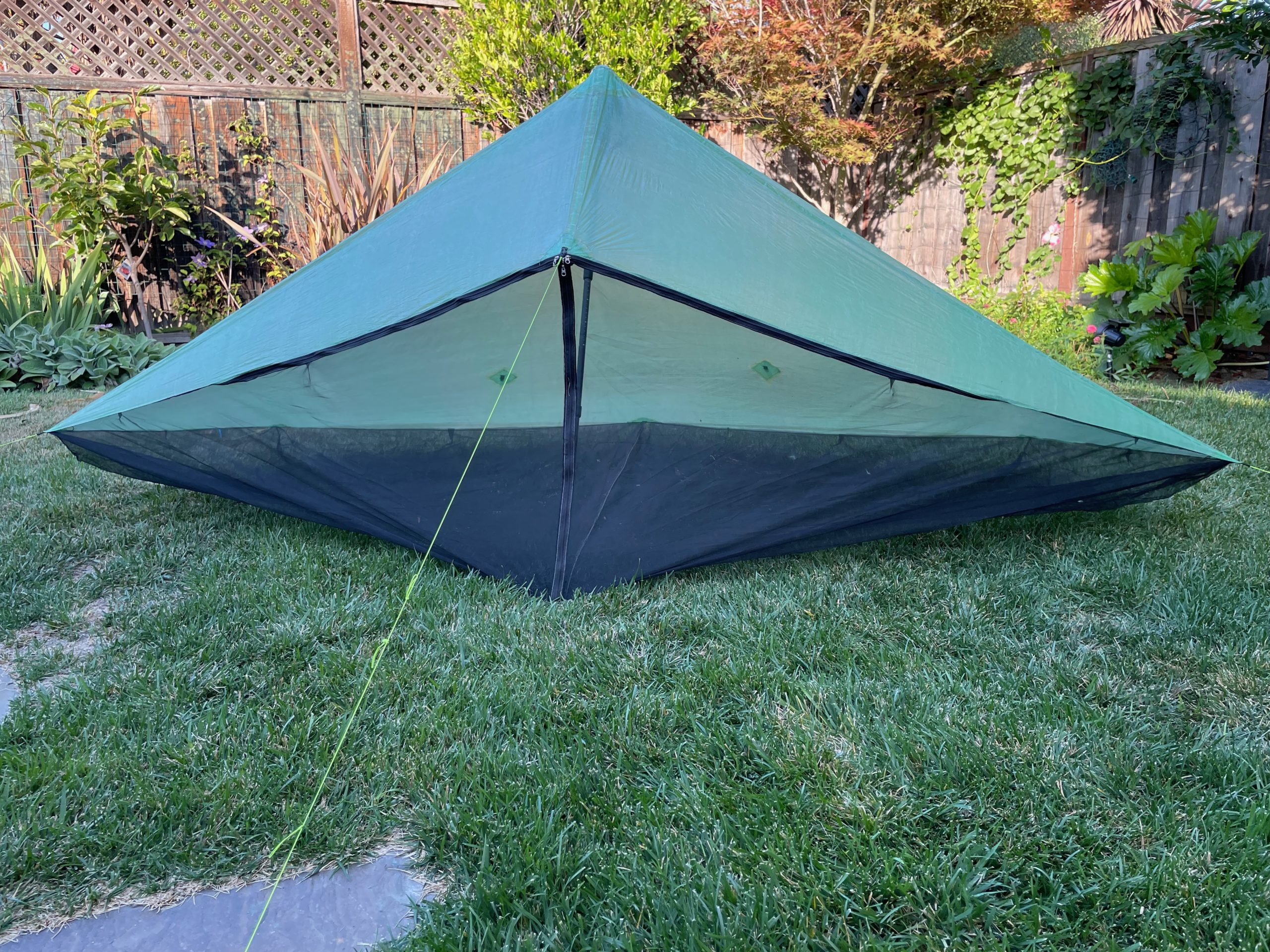
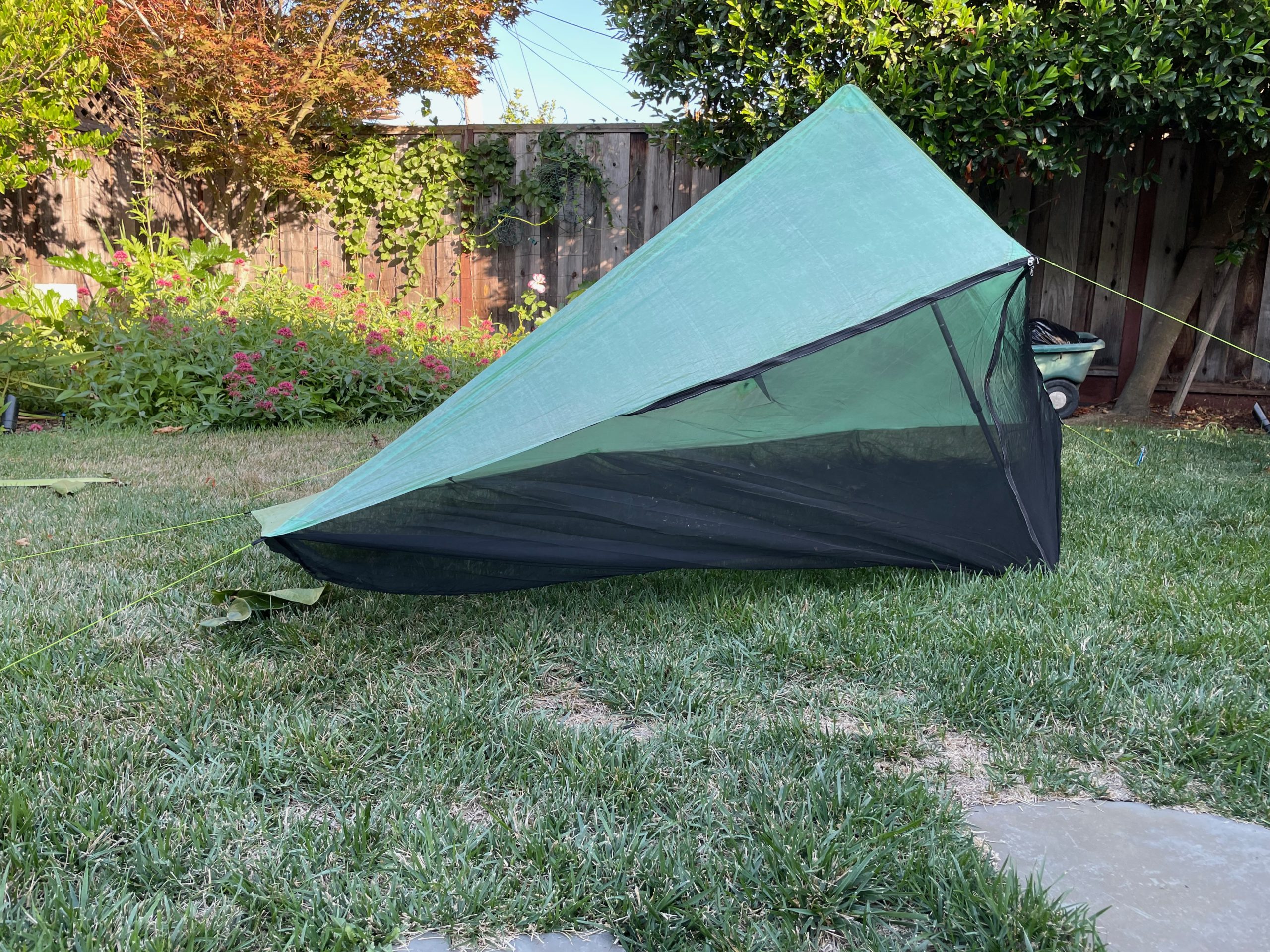
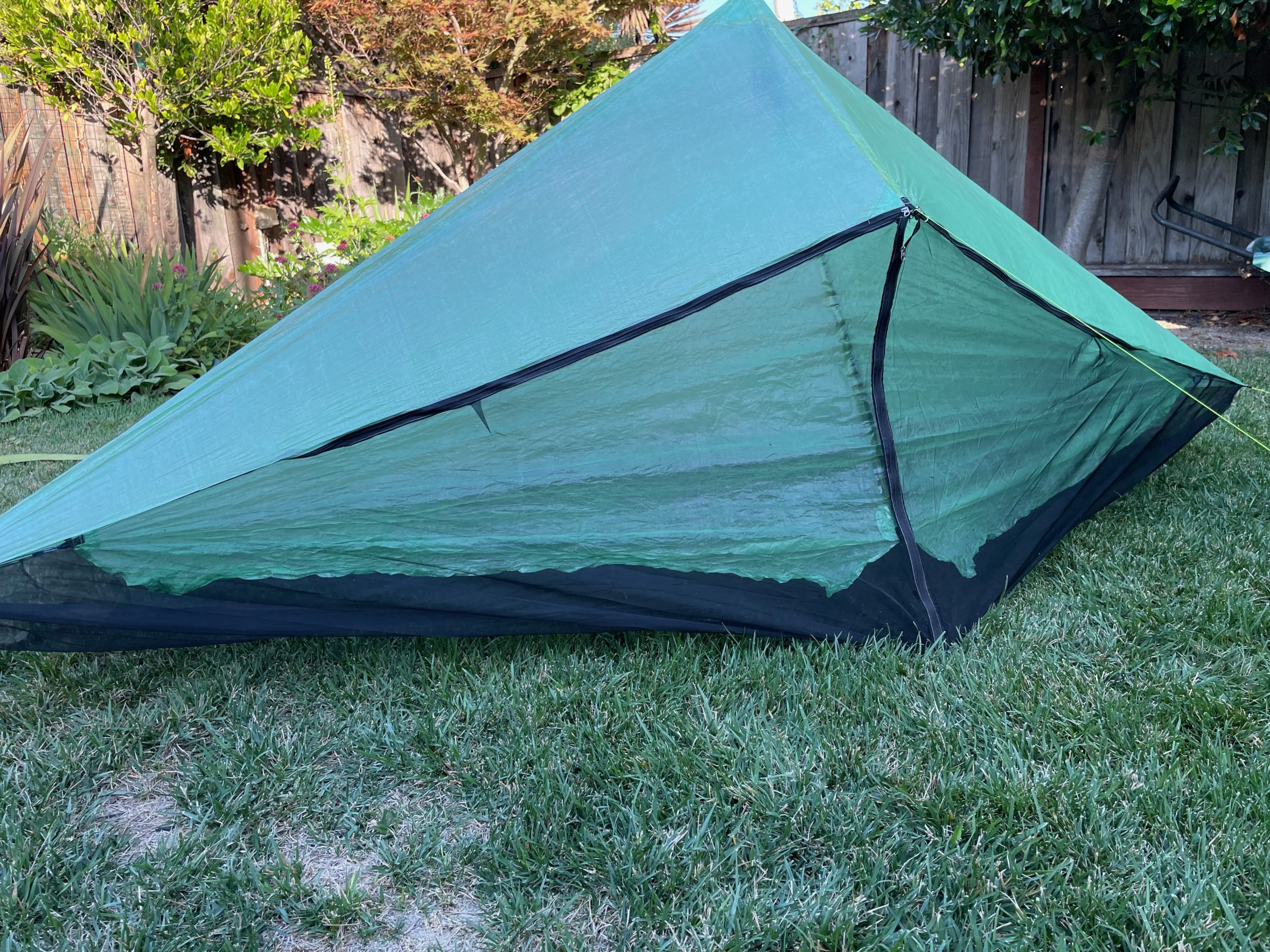
  • ZPacks Hexamid

    Review ItemZPacks Hexamid
    Options: Cuben with Netting
    Manufacture Year: 2010
    Listed weight
    : Cuben shelter, guylines, and bag 8.9oz
    Weight as delivered: tarp+attached guylines 8.3oz
    MSRP: US$259, no longer made

    I have a first generation which uses three zippers that meet at the top peak. Joe has now switched to a single zipper to save weight and reduce the risk of zipper failure. The other major change is that the seams in the current generation Hexamid are primary joined by sewing rather than by taping.

    Summary

    The Hexamid, especially the Cuben + netting model, is an amazing light solo shelter which is fast and easy to set up with a taut pitch. There is adequate of space for one person and gear. While sharing a Hexamid would be possible, I would  only do so under exceptional circumstances because I think the roof slope doesn’t leave adequate space for the person furthest away from the door. Obviously, Joe found that it could work for couple on the second half of his five month CDT hike.

    Things that I liked:

    • Super-light weight
    • Fast, easy setup which results in a taut pitch which has been stable for me in >=35mph winds
    • Good ventilation
    • Plenty of bug free space

    Things I don’t like:

    • Entry is too low (28”) to enter without brushed against the top or crawling on the ground
    • In more extreme conditions not enough protection from side blown rain, though optional doors helps a lot.
    • No line locks.. but this is easily added by user
    • If you experience heavy mud or freezing temperatures the netting can get “stuck” in the ground.

    My total shelter weight is 17.8oz which includes the Hexamid 8.3oz, optional door 1.5oz, 8 stakes, 2oz, MLD SuperLite Bivy 6oz.  This weight doesn’t include 1 GG Lightrek 4 pole 3.9oz. In good weather and low bugs I cowboy camp using the bivy with the Hexamid staying in my pack.

    Description

    The combination of the ZPacks Hexamid product page, and Tony’s pictures from BPL Pt Reyes Trip (starts at picture #17) gives a pretty good feel for the shelter.

    I have a Cuben Hexamid with netting. Since I purchase my Hexamid, Joe has  added an extended beak which would be a good alternative to the door, and is now also selling a separate bug tenting with the tarp. While I might have preferred the extended beak, I still prefer the netting being fully integrated with the tarp rather than separate because it provide more bug free space.

    There is also an optional 1.5oz “door”. In mild conditions I started using the Hexamid with a Gossamer Gear Polycro groundsheet (1.3oz) which I  place inside the shelter on top of the netting. I eventually switched to using a MLD Superlite Bivy with eVENT foot which weights 6oz. I am using the bivy to help keep the foot of my quilt dry (more on this later), to control drafts in colder conditions, and generally keep my quilt contained.

    Field Conditions

    In the first three  years I used the Hexamid in a variety of conditions. From near sea level on the California coast, to 12k ft in the Sierras. I got caught by in a couple of unexpected snow storms. Temperatures have ranged from 15-85F, with a significant number of the nights above dew point which is pretty unusual in my experience. There were a number of nights below dew point so I can talk about condensation. Wind conditions have varied from between completely calm, to clocked at 35mph as the wind was slowing down… I am sure it was quite a bit higher that that at it’s peak. The shelter saw number rain storms, included a three day storm which dropped more than an inch of water in an hour, and a few moderate hail storms.

    Performance

    Overall performance is quite good considering this is a extremely light weight three season shelter. The netting floor is a surprising idea. Placing a ground cloth over the netting does indeed seem to work if you keep the ground cloth away from the edges. The water runs down the netting on the outside of the ground cloth providing good protection. The one issue that needs to be managed is that wind blown rain that can come through the netting and pool on the top of the ground cloth. I would not want to use this shelter in a real rain storm without some sort of supplemental protection, especially if the wind shifted so it was blowing toward the door rather than the back of the Hexamid.  I think could stay dry without supplemental protection when awake, but experience has shown me that I move too much while asleep. I am sure I would wake up with the foot and maybe the head of my quilt soaked if I faced a heavy rain while I slept. Using either a  bivy, the optional door, the optional extended beak, or maybe ground cloth with bathtub side and an elastic strap to keep a bag/quilt inside the ground sheet would have worked.

    Ease of Setup

    This is an easy shelter to pitch. Just follow Joe’s video of setting up the Hexamid. I found that after three attempts I could set up the Hexamid more quickly that Joe does on the video. The only slightly tricky part was getting the pole properly adjusted. The first two times I went to set up the Hexamid I didn’t pull the pole quite forward enough. It’s important for the bottom of the pole to be directly under the front corner of the beak.

    There are three supplements I would recommend. First, as Joe recommends, you need to leave approximately 8 inches of slack between the front two guylines. Rather that having to approximate this each time, tied a knot at that exact point.  This way I pull the shelter tight, and then drive the stake in at the knot location. Second, I often camp places that are extremely rocky which makes placing stakes challenging.  Fixed guylines aren’t ideal. You can retying the staking loop on each trip that needs a varied lengthy, pre-tie a few loops at different lengths, or purchase a set of  mini line locks.  Finally, I would recommend doing a small shock cord loop for the two pullout for the middle of the shelters walls to insure you don’t over tension them.

    Condensation

    For whatever reason, many of my trips stayed above dew point, so most night I didn’t have condensation. I did see a number of nights below dew point, but even then, the condensations seemed lighter that I am used to. It seems like Hexamid is a bit less prone to condensation that other shelters I have used. Is because Cuben is less prone to condensation that Sil Nylon or Spinaker?

    Rain Protection

    A storm was rolling in just as the Hexamid arrived at my home. I set it up with the door facing the direction the wind would be blowing on the theory that this would provide me information about performance in the worst case which can happen if the wind shifts once the shelter is set up. I found the rain protection surprisingly good the first two nights. The first night got some rain, the second night got several hours of hard rain with winds averaging 10mph. While the rain did come through the netting, I found the space from the ridgeline back stay dry. The first night I placed the leading edge of a polycro ground cloth a few inches closer to the door than the top ridge. There was no noticeable moisture accumulation on the ground cloth. The second night the ground cloth was still dry, but the the foot of my quilt did get slightly damp when the wind picked up a bit. The surface dried completely in an hour or so in 50F, 80% humidity so it didn’t get that wet. I expect that if I had deployed the optional door, that the foot of my quilt would have been dry.  The third day we have some wind gusts than were around 15 mph which drove rain through the netting on to the top of the ground cloth near my head which accumulated a small puddle. Neither  me nor my quilt got wet because we were on top of my pad. I believe if the ground cloth’s leading edge was was under the ridge line rather than pushing under the beak that I wouldn’t have had any accumulation on top of the ground cloth.

    I moved the ground cloth so it’s leading edge was at the ridgeline.  The netting that was formerly under the ground cloth as well as the ground underneath was almost completely dry  in a couple of hours. It seems to me that having a netting floor to help manage moisture might work well.  The third night we had some good  gusts. I don’t know wind speed  but I am sure it was more than 20mph and some very hard rain for around 20 minutes. The rain reached slightly beyond the ridge line and got the edge of my quilt wet. I wish I would have deployed the door. The fourth day and night I deployed the door. We have some very hard rain with wind gusts over 30mphs. I had no problem staying dry though I had to be careful with me feet because the Hexamid narrows at the ends. Based on this experience, I would highly recommend the optional door for more severe weather conditions. Note: One of the biggest challenges I had was because I used a quilt which drapes over the side of the pad.

    After 4 days in the rain I shook the Hexamid out and weighed in. It weighted 15.5oz… nearly doubling it’s weight from accumulated water. After hanging two hours in a 55F garage at a 60% humidity the Hexamid was still slightly damp to the touch, weighting 10oz.

    On the next several rainy trips I had issues using a flat ground cloth. I couldn’t seem to find the right placement. Either the ground cloth extended too far so water pooled on top of it, or the ground cloth didn’t extend far enough, and my quilt would end up getting wet because there was no ground cloth between it an the wet ground. This included one of the trips where I did use the door to get more space toward the front of the Hexamid. I think a big part of this is that I use a quilt which I leave spread out in warmer weather to ventilate. If I had consistently used the straps on the quilt or being using a traditional sleeping bag, I think I could have found a placement of the ground cloth which would have worked in all by the worst storms.

    One thing that helped was  making a very shallow “foot pocket” by forming “corners” and slightly raising the side of the polycro with tape. This was helpful because the shape of the Hexamid has the edge of the tarp coming in significantly near the front and back corners. I might be a bit more sensitive to this than some people because my quilt has a very light shell that doesn’t have the best DWR finish. After two years with a number of rainy trips I decided that I was not having fun with my improvised bathtub floor ground sheet. I stayed dry, but keeping my quilt dry was hit or miss. It never got so bad that I was concerned for my safety, but it was troubling.  I considered switching shelters or getting one of the custom ground sheet. In the end I decided to get a DWR bivy because there have been a number of trips using the Hexamid, and using other shelters that a bivy would have been helpful, especially on colder trips when the wind got under my quilt. I now have a MLD Superlite bivy with an eVENT foot and don’t bother with a groundcloth. The bivy also makes it really easy to cowboy camp in good conditions.

    Wind Performance

    There were several trips where the Hexamid faced 15-20mph continuous wind, and >35mph peaks. Hexamid did fine.  When staked firmly, the shelter stayed in place with very modest flapping. In the strong winds there was some flattening of the back wall, but not so much that it caused any problems. There was one trip where winds exceeded 40mph for more than an hour. I only have a few inches of deflection. Several of the light weight tents looked like they lost 1/3 of their volume.

    Bug Protection

    Provided a roomy, bug free space with great ventilation.

    Construction & Durability

    The Hexamid is well construction. All the seams were taped, the sewing was even, I didn’t find any frayed edges. While well constructed, the Hexamid was not up to the class leading constructions of the Cuben shelters from Mountain Laurel Designs. Ron Bell of MLD has noted that he switched to a special tape that was significantly better than the traditional sealing tape. Besides being more UV resistant, the MLD tape doesn’t seem to stick out as much. When the Hexamid arrived, a piece of the tape for the peak had partially separated from the shelter. A bit of pressure and the tape was re-affixes, apparently no worse for the wear. In 2022 this shelter had around ~80 nights of use, many more nights in the pack because I cowboy camp whenever it’s possible. The shelter still looks to be in fine shape.

    I have some concerns about the fabric swatch that you set the tip of the pole into. Joe reports that it did not wear out or get a hole after 5.5 months of use. I am very surprised.  Being a cautious person, I put a rubber cap on my pole tip to protect the fabric. This might not be needed. Joe also pointed out that putting a small hole wouldn’t be a big deal because your ground cloth provides protection from moisture, not the netting floor.

    I do have a small tear in the floor mesh.  The tear wasn’t from the typical source. It’s torn because I grabbed the floor with a gloved hand and thought it was a piece of clothing which was partially stuck under my pad. I jerked hard, heard a rip, and realized that it was the floor, not my shirt.

    Joe has switched from taping the seams to doing a double stitch and letting owner seam seal. Time will tell how this effects durability.

    Sold in 2022 when I thought I was done with solo trips because I am mostly doing trips with my wife, and when it was just me I wouldn’t mind the extra weight / volume of our Durston x-Mid Pro2. Hmm… the might have been a mistake. The Hexamid was still usable but there were some places where the cuben was showing signs of wear I missed suggesting a limited lifetime left.

    Customer Service

    My order was processed quickly, and Joe was able to accommodate a “ship by” date so I could take it on my next scheduled outing.

    Compared To / Other Options

    There are a number of ultralight shelters which might be interesting to someone considering the Hexamid. Additionally, some people will find the combination of a tarp and either a bivy or nest (net tent) effective. The shelters I think are more closely related to the Hexamid with bug netting are listed below.

    Gossamer Gear Whisper: Whisper is a palace with super easy entry and exit compared to the Hexamid. Whisper has perimeter bug netting which you combine with a ground cloth. I like being able to pack the groundcloth separately and to be able to replace it when it wears out. Requires two poles. This is the shelter I am now using on solo trips. So far all the trips have had gentle weather so can’t report of it’s performance in storms.

    HMG Mid-1. One person pyramid with integrated bug netting and floor. A number of extra tie-outs for want facing more severe weather. 16.8oz. If I didn’t have the Whisper, this is the most likely shelter I would purchase for my use cases. I found entry / exit easy, not phased by some minor storms (haven’t see in serious storm), strait forward pitch.

    ZPacks Plex Solo Lite. I think of this as a refined version of the hexamid. Slightly taller (36″ entry), floor, integrated bug netting. Similar pitch characteristics.

    MLD SoloMid or MLD DuoMid + MLD Mid Inner Tent. More versatile and much better in harsh weather with more room inside the tarp at nearly twice the weight and expense. The solo innernet provides a smaller space than the inside of the Hexamid. I don’t have experience with the duo innernet, but expect that it would feel more roomy than the Hexamid sleeping on the diagonal. If I still did winter trips this would be on my short list of shelters to replace my Hexamid.

    Tarptent Aeon-Li provides a more livable and storm worthy shelter than my original Hexamid with a smaller pitching footprint and a bathtub floor which removes the need for using a bivy… but means cowboy camping is out. Downside is that the stays would require me to pack it vertically in my pack.

    Meadow Physics Abode is a streamlined Hexamid with perimeter netting (you do your own floor). It pitches a bit tauted than the Hexamid so should be good in the same conditions I used the Hexamid. Love the simplicity and the lack of a zipper means that it’s lighter with nothing to fail… but it also means the entry is just 18″… too low for my taste.

    SMD Deschutes Plus: Updated Wild Oasis. Slightly cheaper than the sil-nylon, netting version ofthe Hexamid. Not as bugproof as the Hexamid since a groundcloth is laid over the netting without being fully sealed. I borrowed the Wild Oasis from a friend and only used it two nights. The Wild Oasis is a bit more temperamental to set up than the Hexamid, and I found it felt a bit cramped. No personal experience with the Deschutes.

    SMD Gatewood Cape + Serenity NetTent. Provides rain gear/pack cover in addition to shelter. The NetTent has less space than the Hexamid. The Gatewood Cape/NetTent has an advantage that you can use the items separately. The combination of Gatewood Cape and NetTent was more expensive and heavier than the Hexamid when I purchased it, but I believe is a reasonably good deal now. I tried using the Gatewood Cape. I found it a bit unwieldy as rain gear and a bit small for my taste as a shelter.

    LightHeart Shelter (my review of a prototype): Twice the weight and more expensive buys you a larger living area in a true double walled shelter which can give you almost 360 visibility on the nights you don’t need the fly extended. There is also an option with an awning which would be a real plus when facing extended rain.  I had some issues with this shelter being blown down in heavy winds. Attaching the spreader bar to the tent fabric should prevent some of the issues I saw.

    Other Reviews

    Bushwalker Hexamid Review which goes into even more depth than my review about manage in wet conditions

    My recommended shelters for general information and other options.

  • Shelters

    Shelter selection should be based on how much room you need and the conditions you expect to encounter (rain, snow, wind, bugs, blistering heat, etc). For example, if you only camp in mild weather it would be silly to buy a mountaineering tent designed for expeditions since it will be more expensive, heavier, and not be as well ventilated as a shelter designed for three-season use. If you are camping in the Canadian lake district in June, taking a tarp without any bug protection would be stupid. If you are above tree line in the winter, it would be suicidal not to take a four season shelter designed to handle high winds and snow load. A corollary is that there isn’t one shelter which is perfect for all conditions… so if you adventure out in all seasons you might want to think about owning at least two different shelters.  The issues I consider when looking at a shelter are:

    • appropriate protection in view of the conditions expected
      • ability to handle snow loads (sidewall angle / material)
      • blocking spin-drift (solid walls, if not snow skirt)
      • ventilation (summer want a lot, winter I don’t want ventilation other than high vent)
      • if double walled can outer wall be set up first
      • bug protection
    • user friendly / low hassle
      • ease of a basic pitch
      • ease of a storm worthy pitch
      • ease of entry (I like side rather than front entry)
      • need to tighten at night? (DCF, spinnaker set and done, SilNylon stretches)
      • how careful do you need to be when moving (e.g. single or double walled)
    • how much visibility of your environment
    • usable space (sloping sidewalls can limit this) given number of people. See Andrew’s article about calculation usable space and the related space spreadsheet and the nice visualization at fitmytent.com
    • footprint size (smaller for more usable space good)
    • weight
    • how it looks (I like clean lines)
    • lifetime (a discussion about the lifespan of DCF)
    • cost

    The weighting of these factors varies person to person. In fact, my weighting of these factors depends on where I am going to use the shelter. I have noticed that some people tend to gravitate to shelters that are as open as possible. They want to be as fully connected to their environment as possible. I often see these people using flat tarps. Other people want their shelter to be enclosing and protective. Walls and floors are important. While I have used a flat tarp and cowboy camped, I find that I often like some sense of boundaries, especially on solo trips. I know that I could easily live without my “walls”, they can give me a psychological comfort that makes the trip more enjoyable.

    Quick Recommendations

    I am often asked to recommend a free-standing, two man, three season shelter with two doors.  The Durston Design X-Dome 2 is I think best option today. Just 2.7lbs, the space is very usable, easy to pitch, and remarkably weather resistant (especially if you use trekking poles for extra support). The Slingfin Portal-2 is another excellent 2 person which can easily handle 3+ season conditions. For light weight, free standard, 4 seasons, the Slingfin Crossbow 2. Big Agnes Copper Spur 2 Platinum and MSR Hubba Hubba are a bit heavier, not as protective in storms, but can be found in bring-and-mortar stores. A good “budget” tent is the $199 REI Trailmade-2. If the free-standing requirement is removed I strongly recommend selecting one of the better ultralight tarp-tent shelters. My first recommendation would be the Dan Durston’s X-Mid 2P is a versatile shelter is valued priced at $289. Want a do everything shelter that can be used in all four seasons, can be used by two but light enough for solo use? Check  out the MLD DuoMid XL plus their inner-net.

    My Choice of Shelters

    I have used tarps and tarptents on the majority of my trips for the last 20 years. Since 2022 I have used a Durston x-mid pro2 for most of my trips: it is light enough for solo use and large enough for trips with my wife or a friend. Stable enough for 3+ seasons, can be opened up for decent ventilation in warmer weather, and easy to pitch if you use a few tricks. Very livable space. For many years I used the predecessor of ZPacks Plex Solo which was called the Hexamid (my review) for 3-season solo trips in California. I recently started using a Gossamer Gear Whisper for solo trips in similar conditions.

    Options

    Cheap

    Nothing can beat the price / performance of a sil-poly flat tarp. For completely cheap use a 3 mil plastic sheet. Set a line up which will be the ridgeline. Tie some guylines to the four corners using a sheet bend knot, and stake the corners out. If you want a double wall tent, look for a closeout of a better brand such as Sierra Designs, MSR, or REI at places like Sierra Trading Post. I generally don’t recommend buying used tents unless you know it was well cared for and it is in good shape. Waterproof coating can degraded, fabric can weaken due to extended exposure to UV, and improper care can result in mildew and the PU coating disintegrated due to hydrolyzing.

    Classic Scouting / Club Tents

    There are a few manufacturers who seem to have captured a significant portion of the “club” market. By this I mean organizations which have a stock of gear which is loaned, or rented at low cost by their members. Clubs typically look for low cost options which can stand up to people who don’t treat the gear carefully. The two largest supplier to clubs seem to be:

    • Alps: I have no personal experience with Alps, but have a number friends who have used them.  Alps seems to be commonly used by the boy scouts and budget conscience folks. They seem to be better made than wal*mart / target / etc specials. They are not as light or as well made as many higher end tends made by companies like Sierra Designs. You should never pay suggested retail price for Alps tents. A bit of careful looking should lead you to prices around 60% of MSRP which makes it a good price / quality ratio.  Full price is cheap, but not a good value.
    • Eureka!: In the 70s, 80s, and maybe later, the Timberline was “the” standard tent used by many boy scouts troops, YMCA outdoor programs, etc for backpacking. They weren’t the lightest free standing tents, but they were value priced and fairly durable. I still have fond memories of timberline tents even though there were better shelters, even then. I have been much less impressed with Eureka’s dome tents, having seen a number fail in strong winds.

    Other Information