Tag: christian

  • Weight of Glory

    Weight of Glory is a sermon delivered by C.S. Lewis  in the Church of St Mary the Virgin, Oxford. The sermon was first published in THEOLOGY, November, 1941, and by the S.P.C.K, 1942. This and several other pieces by Lewis were combined in the book also called The Weight of Glory. Internet Archive and a copy of the Indian edition of this book, and an  audio version.

    I posted a PDF transcript of Weight of Glory in 1988 because it had a significant impact on my faith and life. After many years I received a very polite “Take Down” notice from the copyright holder. I learned that while the copyright had expired in a number of countries, the copyright was still in effect in the USA?! I removed my copy. I will bring it back once the copyright expires in the USA. Someone, hopefully out of the USA, has posted a PDF of the sermon.

    People in Canada and other locations that have a 50 year limit on copyright you can find the Weight of Glory contained in the freely available in the e-book Transpositions and other Addresses.

    There are numerous people who have written about how seeing people as they truly are is will transform how we engage others. For example Jack Kornfield cited Thomas Merton:

    I looked in the eyes of everyone going by and I saw their secret beauty that was born in them that no one can take from them. That magnificence of spirit, soul, whatever you want to call it.” He said, “The only problem would be I wanted to fall down at their feet and worship each one that went by.” He said, “If we could see each other that way there’d be no more need for war and cruelty. The world would be a different place.


  • A Tribute to Doug

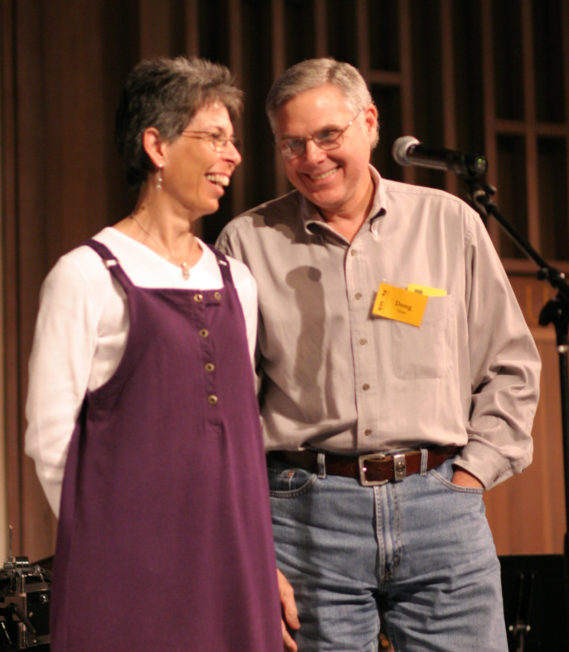
    Today I was deeply sadden by the news that Doug Goins had succumbed to his three year struggle with cancer. Like many people, and especially Candy, I will miss him, and look forward to seeing him in the next life. As I pedaled my way into work today I couldn’t stop crying and thinking about the powerful influence Doug and Candy had on my life. In the midst of the sadness, there was also a joy and thankfulness for Doug’s amazing life. Here are a number of things that came to my mind.

    Help Adapting to the Bay Area

    After living in Palo Alto for a few months I found myself feeling frustrated.  Doug said  “You are suffering culture shock”. I said “that can’t be true, I love it here” Doug then helped me see how there were things in the Bay Area culture that didn’t fit with my values and previous experience. He encouraged me to adjust my expectations, but also to hold onto things that were valuable, even if they didn’t “fit in” with Bay Area culture.

    For example, I was used to spontaneously getting together with people in Columbus. In the Bay Area it seemed like no one was prepared to do something spontaneously. I would suggest getting together with someone, and they would pull out their Day Planner and say “I have 1.5 hours free three Thursdays from now at 7:30pm. Should I pencil you in?”  Doug’s response was different. Like others he was often busy, but he said “I would love to join you but I already have something scheduled tonight, but please keep inviting me to do things spontaneously, and please continue to invite others to do things spontaneously because this is something our community needs.” Doug provided a great example of caring for others and making space for them. Though he was unable to respond to spontaneous invitations, Doug was wonderfully hospitable and made a point to welcome me, and many other people into his life. I took Doug’s encouragement to heart in three ways. The first was I continued to invite people to do things spontaneously. Second, I purposely left a couple of nights unscheduled each week, so there would be room to be available to others when unexpected things came up, to have margin. Third, I tried to invite at least one person to come over for dinner each week.

    A Model of Trusting People and God

    Doug and Candy opened their home for a young couples bible study. My late wife Libby and I had been married for ten years, but we were about the same age as everyone in the group, so we decided to give the group a try. After the study ended we were talking with Doug and Candy in their kitchen. At the end of the evening Doug said to me. “If you are interested, I lead a Sunday school in the west wing of the church. If you would like to take a turn teaching that group, or here in the couples group, I would be happy to give you a slot”.

    In the church I grew up in this would never happen. You had to prove yourself. When one of the church’s elders switched to our house church, he didn’t start teaching until people in our house church got to know him. How could Doug offer to let me teach having just met me? Doug had seen me interact with people during the couples group and had reason to believe I had a decent grasp of the Bible. Odds are that I would do an adequate job… but more than this, He trusted his God. Doug knew that even if I was a crackpot, that God was bigger than me. If I taught something crazy God would use it for good. He trusted that people would know I was wrong, corrections would be made, and everyone would grow.

    Doug’s trust in the Lord enabled him to extend amazing trust to others. To give broken people extraordinary opportunities to try things, to take risks. Sometimes these things went better than planned. Sometimes they “failed” spectacularly… but people always learned, grew, and God was magnified.

    An Authentic Life

    As I got to know people in the young couples group I noticed that there were couples that I was drawn toward, and others than I never got close to.  Some couples looked “great” on the outside. I came to notice that they seemed to have a protective bubble around themselves which kept everything safe. Then there were the people who seemed most influenced by Doug and Candy. The best word I could use for them was “authentic.” Their lives were messy, but they lived with wholeness, honesty and courage that was so attractive. Doug and Candy modeled this authenticity and encouraged others to join them. We watched as a number of couples started to drop their defenses and started to honestly engage with each other, maybe for the first time. I saw numbers lives and marriages transformed. The example made me feel welcome and encouraged us to “keep it real”.

    A Model of Godly Parenting

    I grew up in a non-Christian home, as did many of my friends. Many people I saw who grew up in “Christian homes” seemed worse off. They struggled with legalistic and were often extremely hypocritical. I honestly wondered if it might be better to grow up in a non-Christian home.

    Doug and Candy changed my perspective. I saw what a difference parents could make in the lives of their children. I saw how a mature faith could be a blessing to children rather than a lodestone. Candy and Doug models how to love children. Their example gave me the courage to start a family. Their example and words of wisdom made me a better parent.

    True Ecumenism

    Before getting to know Doug I could be pretty narrow minded when it came to interpreting the Bible and thinking about how a Christian life should be lived. I was happy to tell others how things should be, done, or understood. Doug by example and teaching helps me learn some humility. He helped me see that there are different, but equally valid ways to look at many topics. There are absolute truths, but the number of these is much smaller than the number of things I was prepared to take a stand on. Doug taught me to understand what was essential, and what was just my opinion. Doug taught me how to extent respect to people who looked at the world a bit differently than I did, and to learn from them. Over the years Doug’s humility and gentile spirit inspired me to find common ground with others, to learn from great authors like Henri Nouwen, and to be able to see the faith journeys of others who were seeking the same Lord I was.

    You then, my child, be strengthened by the grace that is in Christ Jesus, and what you have heard from me in the presence of many witnesses entrust to faithful men, who will be able to teach others also.  Share in suffering as a good soldier of Christ Jesus. No soldier gets entangled in civilian pursuits, since his aim is to please the one who enlisted him. An athlete is not crowned unless he competes according to the rules. It is the hard-working farmer who ought to have the first share of the crops. Think over what I say, for the Lord will give you understanding in everything.

    Remember Jesus Christ, risen from the dead, the offspring of David, as preached in my gospel, for which I am suffering, bound with chains as a criminal. But the word of God is not bound! Therefore I endure everything for the sake of the elect, that they also may obtain the salvation that is in Christ Jesus with eternal glory. The saying is trustworthy, for:
    If we have died with him, we will also live with him; 

    if we endure, we will also reign with him;
    if we deny him, he also will deny us;
    if we are faithless, he remains faithful—
    for he cannot deny himself. 

    II Timothy 2:1-13
  • Christian’s Second Most Important Book

    The dominate culture in the US prizes freedom and choice above all else which has led us to have one of the most individual oriented cultures. Garret Kell’s article entitled The Second-Most Important Book for Every Christian is a great antidote to the individual focus we are exposed to. What is the second most important book? Your church directory. The directory represents a vital community of belonging and service.

    Do not neglecting to meet together, as is the habit of some, but encouraging one another, and all the more as you see the Day drawing near.
    –Hebrews 10:25, ESV
  • Romans 8 and Christmas Dinner

    In the last couple of weeks I have been thinking a lot about the Bible’s teaching about how we, as Christians are called to live.  I have spent a good bit of time looking at Romans 5-8.  At the core of this passage is our inability to be good or to do anything truly right on our own. Thankfully, God is at work… he forgives us, covers our sins, gives us a new nature, a new heart, a new source of power. This is completed work, though we often try to live as if we are in control and have the abilities in ourselves. When we try to do things from our own strength we will see failure as is described in Romans 7… the harder we try, the worse it is.

    Romans 8:6 says “For the mind set on the flesh is death, but the mind set of the spirit is life and peace”.  So what is the mind set on the flesh.  Is it planning to do bad things?  No, it’s much more. It’s reasoning from our own perspective, trying to control, trying to justify ourselves, trying to do life without God. It’s charting our own course, trying to fix things, make things ok.  Doing this always ends up in a mess.

    I have a couple of friends who have really been struggling with some hard issues.  They need to understand life in the spirit rather than the flesh.  I recently finished reading Becoming a True Spiritual Community by Larry Crabb which talked about how the community can embrace and love someone working through this.  Crabb talks about living in the downstairs (flesh) or upstairs (spirit).  Crabb’s book really encouraged me to come along side these friends.  I have been looking through the rest of our books, trying to find something that would be good for my friends to read, something that would help them to move from a “Yes, I have read Romans 5-8 100s of times” to understanding what they have read.  I know that just a book can’t make that happen, only God can, but often books can be used by God to break through.  Of the books we own, I found that The Normal Christian Life by Watchman Nee seemed to be the best, so I re-read it, to be sure it would be good for my friends as well as to grow my understanding.  I found The Normal Christian Life even better than when I first read it. I wonder if the first time I read it I was doing the “Check.  This is a doctrine I know” rather than letting it really challenge me and grow my understanding. I think it is the single best book I have read about Romans 5-8.

    Since I have been thinking about “life in the spirit -vs- flesh” so much,  I thought I was understanding it pretty well.  Christmas day came.  This is our first Christmas without Libby.  I was intent on doing as much as I could to keep up family traditions, to make the day as normal as I could for Helen.  Almost from the start of the day we were off track. Helen woke up late.  She decided to skip open stockings and go strait to breakfast. We did make waffles for breakfast, but she didn’t want anything else. After opening presents she was still tired and wanted to take a nap.  By the time Helen was up from her nap I was feeling pretty stressed. The minor issue was that while our tradition of going to the Redwood was still possible, but it was going to have to be Henry Cowell, not the preferred Muir Woods.

    The more difficult issue was that I was only going to have 1-1.5 hours to prepare a complicated dinner than I have never made before. I had been worrying about making this dinner for several days. We have a standard Christmas menu that Libby developed over the last 26 years.  Most of the recipes come from the Silver Palate Cookbook.  Not the most complicated recipes, but not simple: orange carrot soup, blueberry chicken, green beans with cashews & parsley, fresh bread, scallop potatoes, chocolate mousse.  Ack!  I couldn’t find the recipe for scallop potatoes, so I had to scramble and find something. Cook’s Illustrated came to my rescue with their 2005 holiday scallop potato recipe.  All of these recipes take a fair bit of labor.  I felt pressure to get to the cooking, but I really wanted to go to the redwoods.  So I push us out the door.  We got in the car and I stepped on the gas hard… maybe speeding the journey by a minute.

    On the drive I thought I had calmed down.  Helen and I started to talk about the week, what we were thinking about, what we had been doing. I was talking with Helen about some of the things I was seeing in Romans, and how I wanted to share them with a couple of friends who didn’t seem to be understanding how it worked.  They were still laboring under “the law” described in Romans 7… trying to fix things that they weren’t capable of fixing.

    Well… about half way through the drive Helen told me during the day I have gone from “Bad Dad” to “Worse Dad”.  Ouch! As we talked it became clear “bad dad” cared more about executing all the family traditions than he did how his precious daughter was feeling. “Worse dad” was getting angry at his daughter for standing between him and successful execution of his plans.  Ugh!!  Here I was, talking about how important the perspective in Romans was, while completely missing the point in my own life.  Rather than “the law” being something from the Bible, it was my list of expectations for Christmas.

    Thankfully, there was time to recover. Helen and I laughed about it. We had a great walk and talk among the redwoods.  While we were walking and then on the return drive I completely forgot about the need to make dinner, I wasn’t feeling any pressure.

    Once we got home I got to work.  The food prep went faster than it should have. We ended up having dinner on time. The meal turned out well.  Helen (and I) thought the the scalloped potatoes were better than any we had made before.. but how could they not be good with 3 cups of heavy cream. The only problem was that I forgot to half the chocolate mousse recipe.  This turned out to be a blessing.  I was able to take mousse for eight over to the Taylors, have enough for Helen and I, some of her friends, and another family of five. Christmas wasn’t the happiest day ever, but we were able to be content, and celebrate the birth of the most important person who ever lived.  Thank you God.

  • Meeting God in the Empty Place – Turning Loneliness to Solitude

    Libby and I used to talk nearly every night.  Often for a couple of hours. The topics varied greatly: basic logistical issues, smoothing over relational friction, concerns weighing on our hearts, big ideas, silly dreams.  Honestly the topics almost didn’t matter, it was having someone to share life with.  It’s been three months since we had a good two way conversation. The last couple of weeks before Libby went home to God she wasn’t really up to talking.  More than anything, I miss those evening conversations.

    When Libby passed from this world it felt like a huge hole was ripped in my soul.  There was an emptiness.  For a week I was numb, but then I felt a huge hunger.  I wanted the hole to go away.  I wanted it to be filled up. I knew that that the emptiness wasn’t going to be filled anytime soon, but that didn’t make the desire, the longing any less.  Ironically, it took more than two months for me to recognize the emptiness has another name, loneliness.

    Each time I talk with someone, it seems like a small bit of the hole is filled in.  Just a shovel full of filling for a 500k sq ft building foundation. At this rate I will die of old age before the hole is fully filled, but after each interaction with someone I have a sense of hope.  That it won’t always hurt this much.  That the emptiness will someday be filled.

    Something more important has come to me though… I have found that I can sit in the emptiness.

    I don’t have to rush out and find someone to fill the hole, nor do I need to throw myself into activity to distract myself.  The emptiness is not pleasant, but it can be transformative.   I can see more clearly my longings. I can hear and seeing God a more clearly and God reveals what I truly believe, what’s in my heart. It’s only when the heart is revealed that healing and lasting change can happen.

    God is not filling the emptiness, but He is meeting me there.  In these moments, the loneliness is transformed into solitude.  No longer is the focus on what is lacking, but a time of looking with God’s eyes. I wish I have better words to describe it, but I don’t.  I can share one of the small ways I have see this change in the last week.  I am very aware of how much I miss Libby and how important community and relationships are.  I am particularly aware than I want to spend time with people who are comforting and encouraging. Even when I am not with these friends, I end up thinking about them.  Typically wondering if it would be ok to call them, or if I am going to make myself a pest by calling too frequently.  As I am pulled from loneliness to solitude, my focus chances.  Rather than being focused on my lack, the loneliness, I find myself thinking about how I can bless others, to love and serve them.  What are their needs, what is God doing in their lives, is there some way to be a blessing to them.  I am seeing God’s heart and it is changing me and I can feel at peace.  I am able to love, not because I hope to get something in return, but because I know that I am loved by God.

    I have wondered, if God is with me always, why do I feel lonely, why not a constant sense of peace.  Couldn’t God fill that hole Himself once and for all.  I think the answer is He could, but He won’t, because it won’t be good.  Partly because we need to sense the emptiness before we stop and turn toward Him.  But I don’t think that’s the only reason.  We were designed to be in relationship with God AND with other people.  We are made for community.  Desiring people in our lives is good. The mistake we make is to try and control how it happens, to arrange things so the hunger is fed rather than trust God to take care of us as we participate in community.

    We are called to follow Jesus’ example.  Choice to love and serve those around us.  Yes, we should welcome the companionship of others, even to ask for it, but ultimately, we have trust that the Lord will take care of us.  To live with open hands, welcoming God to works in our lives. Jesus was deeply involved with people.  He spent most of his waking hours with others.  He would also take time to withdraw, to find quiet times with His father.  But even with perfect commune with His Father, and empowered by the Spirit Jesus experience the difficulties of life just as we do.  We see him cry.  He experienced loneliness, lose, and pain. This used to be a mystery to me.  If you could see God clearly, wouldn’t everything be ok.  Wouldn’t seeing God’s goodness be like a fire that burns everything else away, leaving you in a state of constant awe: content, even happy?  The answer is no.  So long as we live in this broken world, there will be loneliness, pain, suffering, in a word, sorrow. It will be set right, but not yet.  Anyone who is responding to Lord will feel these things.  How could we not because things are not right.

    This is a painful season of life, but it is also exciting because I can see how my life is being changed. While I want the loneliness to end, the hunger to be sated, I find myself appreciating how loss is pull me toward God, and how the loneliness is being transformed into solitude. I believe that in time, much of the acute loneliness will pass, but I pray that the solitude that grows from it will never waver.

    Update 2011/12/30: I just realized that loneliness to solitude is the first section of Henri Nouwen’s excellent book Reach Out.  I would recommend checking this book out for a much clearly discussion of this transition.

  • Purpose in Life

    Libby and I were recently talking about a women she sees each week. Last week the women noted that Libby’s life seems different from hers, and that when Libby prays it seems like God is right there. This women has faced a lot of difficult issues in the last year and is looking for peace. She wanted to know what Libby’s secret was. We thought what has made a difference was that Libby let the tough times deepen her trust in God and transform her character and understands that God uses difficulties (trials) to bring her into a closer walk with Him.

    A nice interview on this topic entitled Preparing for Eternity — On Purpose can be found on Billy Graham’s website. Warren is best known as the author of The Purpose Driven Life.

  • The Cellular Church via The New Yoker

    I enjoyed the article The Cellular Church which takes a look at Saddleback Church and the small groups that power it. Gladwell s known for the books “Tipping Point” and “Blink”.

  • Why Do Many People’s Faith Drift After College?

    For the last twenty years I have spent a portion of my time each week working with college students at my church. I have generally found the college students’ faith vital with a great interest in making a difference in the world. I have watched these young men and women invest time into serving their communities, devoting time and energy into learning more about God and looking for ways to live out their faith. When I connect up with many of these students several years after they have completed college I typically find folks who still have vital spritual lives who are actively serving in their churches. This is encouraging. Yet, I believe this is the exception. It seems that a large percentage of people who have vital spiritual lives in college end up being “sunday christians”. I have been asking myself and others the question “Why do people see to lose their vitality after college?”

    The first thing I have noticed is that once people leave college, they often leave behind a tight knit and supportive community. Often times, people go from living in close quarters, sharing a dorm or a tiny off campus apartment to a place of their own which doesn’t require day to day sacrifice and interaction with others. The Bible makes it very clear that living in community is very important to ongoing growth… but our culture encourages use to “get a place of our own” rather than look for how to build and deepen community. Secondly, young people are often encouraged to “make a good start” in their field of choice. This often means moving to a new city and starting a job that wants way more than 40 hours / week. People do this to get started and tell themselves that once they get established they will be able to balance life. In the mean time, they have a nice income and have the expectation that the their standard of living should go up now that they are no longer students. So money gets spent. Sometimes consumer debt is rung up, sometimes not. But it is no longer possible to live on the same money that was adaquate during student years because the appatite has grown.

    So is that all there is to it? Keep hanging with friends and don’t get too caught up with money and you will be find? Unfortunately, I think there is more to it than that. I had a wonderful opportunity to talk with a number of church leaders in the last few months. There are two topics which repeatedly come up.

    College Discipleship Often Misses Spiritual Formation

    A number of leaders from the church planting community have noted that college discipleship typically stressed learning disciplines and basic practices, but often failed to get to heart transformation or spiritual formation. This is the very lack which Renovare is trying to encourage. More on this later.

    Vocation and Work

    One of the most common issues is that many people have not been taught to integrate their lives, to understand vocation. So they have a “spiritual life” and a “working/secular” life which don’t get combined. As these two world tug on a person’s heart, the work world often dominates. I tend to agree that this is one of the major issues. The college students that we have explicitly talked with about vocation and integrating faith into all aspects of life have tended to do better in later years.

    I believe that the modern church has been it’s own worse enemy in this regard. While the scripture talks about the priesthood of all believers, we need to quickly divide things into spiritual and secular, and clergy and laity. I believe these divisions make it much harder for people to see it is possible to live an integrated, incarnational life dedicated to service.

    If I may, let me expand on this a bit. I was at the Intersection conference a few weeks ago. This is a conference dedicated to the mobilization of the church and had a track specifically about the workplace being ministry. In the professional track there were a number of very moving discussions where people like Brett Johnson told stories about how business men were learning to be a blessing to their communities through their businesses, touching people spiritual and materially. There are a number of people who have been seeing first hand revival as well as positive economic and development results such as described in The Fortune at the Bottom of the Pyramid: Eradicating Poverty Through Profits by C. K. Prahalad.

    Yet I had a somewhat discouraging discussion with one of the gentleman who was in the pastor’s / mobilizing track. This gentleman is a good hearted pastor who has been looking to help his congregation integrate their lives. He asked a simple question to his fellow pastors. He said: “There is a woman in my congregation who is an executive recruiter and a staffing specialist. She has her own business which is reasonably successful. How can I help her be an effective minister of the gospel?” The answers he got were teach her evangelism and take her on short term mission trips. That’s it!! Yet, here is a women who is in a great position to use her business as a way to minister to people. She can help people find their vocation and calling. She can resist the temptation to place the first qualified candidate in a position to quickly get a commission, and instead work for the long term of getting great matches for people and companies (which in the long term pays dividends). She can work with people to find their skills, there calling, which helps those people be more marketable, and helps the companies hiring them find what they really need. I could go one, but I am sure you can see how there are many ways that she can bless her community while at the same time be even more successful as a business women. Even pastors and mobilizes who are attending a conference which is encouraging integration seem to be missing the mark.

    What To Do?

    Live intergrated lives. Understand that the workplace is as much a ministry as someone who is a fulltime pastor. Your ministry is not just evangelism… it is how you love and serve your coworkers and customers. If is making a difference by bringing character and quality to your work. It is makes good things that will last. There are a number of resources which can be helpful. One of the best books on this subject is Richard Lamb’s Following Jesus in the Real World has been a helpful resource.

  • Renovare Conference

    This past weekend I attended a Renovare conference hosted by MPPC. The primary presenters were Dallas Willard, John Ortberg, and Richard Foster. It was a lot of fun to watch these three men teaching and interacting together. You could tell they held each other in great respect and are great friends.

    Renovare is an organization formed Richard Foster with the assistance of Dallas Willard, Bill Vaswig, James Bryan Smith, and Marti Ensign to promote spiritual formation. At the core of Renovare is the belief that God wants us to experience continual renewal. Renovare highlights six “streams” or traditions related to spiritual development: contemplative (prayer), holiness (integrity), charismatic (spirit powered), social justice (compassion), evangelical (Word centered) and incarnational (sacramental). These themes are fully developped in Foster’s book Streams of Living Water.

    The conference was wonderful balance of encouragement, practical exercises, and teaching. It is easy for a conference to be so focused on knowledge transfer that people walk away bloated. Other conferences focus only on encouraging folks and leave them with a “rah-rah” emotional high, but little more. Renovare attempts to facilitate transformation. If this conference is any indication, I think they are doing a great job.

    I would highly recommend checking out one of the Renovare conferences. You might also want to consider the Spiritual Formation Forum’s Conference

  • Faith

    Everyone has a personal faith. Some people place their faith in traditional religions while others collect ideas from various sources and create a unique, personal faith. Sometimes people put their faith in social or political movements. Still others place their faith in progress or technology, that is the future. Not everyone has a well thought out faith, not everyone recognizes what their faith is, but everyone lives by some sort of faith.

    UPDATE 2025: The core of my faith hasn’t changed, but a number of the references needed to be updated. I have also added a bit of what the last 35 years has taught me since first writing this post.

    [toc]

    What is Faith?

    So what is faith? It is trusting in something you can’t prove and living based on those core beliefs. That’s not to say that faith is irrational, or that there isn’t evidence backing your conclusion, just that you have to go beyond what you can see. Even the pure “rationalist” has to make a “leap of faith” to trust their thinking as discussed by Timothy Keller in his Authors@Google talk. A great illustration of this comes from the book Flatland. Just as the two dimensional residents of Flatland struggled to imagine the greater reality of three dimensional space, so we struggle to see the full reality that goes beyond what we can see with our eyes. C.S. Lewis’ discussed this struggle in  The Weight of Glory. There is a spiritual dimension that anyone can discover, but no one sees naturally.

    My “Faith” Journey

    I grew up in a secular Jewish home. I had faith that I was a good person who could make a difference in the world. I had faith that science and the advances in technology would ultimately address any problem. In my teens I discovered that I wasn’t as good as I had hoped. I could be selfish or cruel when I wanted to be gracious and kind. I started to fear there was more evil in the world than good, and wondered if there was any hope. I also started to see how technology was a two edge sword, useful to do great good, but often came with unintended consequences and could be misused. Would mankind destroy ourselves and our planet?

    I read the books of many faith traditions and several philosophical systems from Autobiography of a Yogi to Zen Mind, with the Bible, the Koran, Mere Christianity and many others books in-between. Nothing gave me the answers I was looking for. I decided that there must not be a God. I started to think that the nihilists were right. In the midst of this my heart longed for hope. Then one night I woke up and felt the need to pray for a friend (who I later learned was in grave danger). It was odd, I don’t recall praying before that night, and even stranger was praying to a God I didn’t believe in. Over the next couple of years I found myself continuing to talk to God, even though I doubted there was a personal God, nor did I hear any reply.

    One day a friend succeeded in getting me to a bible study after persisting for months. The study from James 2 made sense. One of the observations the teacher made was that if Christianity was true, it should make a huge difference in people’s lives. I thought “Exactly… that’s why Christianity must not be true, Christians are such hypocrites”. I looked around the study. There were people I had known for several years. I was fairly self-righteous, and thought I was better than they were. Yet, I could see a love, a unity in that community that I couldn’t explain, and that I wanted. I later learned the Bible (John 13:35) noted “By this all people will know that you are my disciples, if you have love for one another”. Maybe there was something more to Christianity than the hypocrisy I was so quick to point out. The teacher called for people to commit themselves to Jesus. All of a sudden, everything I read in the last few years snapped into focus: foremost the amazing life of Jesus described in the the book of John and C.S. Lewis’ Liar, Lunatic, Lord argument. That night I became a follower of Jesus.

    Over the next few months I continued to examine my new faith. Did it truly make sense, or was it an emotional reaction to a meeting? I reread the gospels and several books from the New Testament. I learned much of the material found in Discovering God which convinced me that I could trust the Bible. The more I investigated my new faith, the more it made sense. I concluded that I really did think the Christian faith was true. Furthermore, I had a sense of God’s presence in my life. I started to see God’s hand in the world. Decades later, I find the core of my faith unchanged. I still encounter things I just can’t get my head around. Life is filled with paradoxes which defy understanding. When I encounter something that is beyond me, I have learned to admit I don’t understand and then I choose to wait for God to make it clear.

    The Core of My Faith

    My faith is centered on a person, Jesus. On who He is, what He did, and what He taught. In a sentence I would say “Jesus loves me and gave me a new life which I didn’t deserve.” Romans 5:10 put it this way “For if while we were enemies we were reconciled to God by the death of his Son, much more, now that we are reconciled, shall we be saved by his life.” I think it’s important to say Jesus rather than Christian because in the mind of many people, the term Christian is link to very un-Christian images. Saying follower of Jesus brings front stage that the Christian faith is centered on a personal relationship, not a system of beliefs, a strict code of ethics, nor is it an alignment with the political left or right. I appreciate the attempt to recapture the word Christian in Carol Wimmer’s poem entitled When I Say “I am a Christian”.

    In my original post I listed a description of my theological beliefs… but I have come to see that there is a great risk to over emphasize orthodoxy. Ultimately unconditional, self giving love is the heart of everything. That said, having a well thought out theological / philosophical system can be helpful when not held rigidly. My theological beliefs are rooted in classic orthodoxy, along the lines of the Nicene Creed. If ever wrote a personal statement of faith it would look something like the Missional Manifesto. My personal theology is more expansive that the Nicene Creed or Missional Manifesto, but I am much less dogmatic about “my” additional details. I recognize that many of my beliefs are my opinion, not fact, and not so important that I should let them separate me from others. As my friend Danny Hall says, “there are very few beliefs I would be prepared to die for.” I wrote a bit about finding unity in essentials and granting freedom in everything else.

    Gain Understanding of the Christian Faith

    I think the best way to explore Christianity is in community. I would suggest seeing if the alpha course is offered near you. These gatherings provide a place to discuss important issues. While the group is lead by Christians, all viewpoints are welcome and honest discussion is encouraged. It’s an opportunity to learn together.

    There are numerous books that explain / explore the Christian faith. I would suggest the best starting place would be reading the “book” of John found in the Bible. The books A Search for the Spiritual by James White and Discovering God by Dennis McCallam are brief but excellent guides to the process of exploring spiritual issues. The Reason for God: Belief in an Age of Skepticism by Timothy Keller clearly addresses the most common questions related to the Christian God. The identity of Jesus is the single most important issue when considering Christianity. Is there credible evidence that Jesus is the Son of God? The Case for Christ by Lee Strobel attempts to answer this question. Basic Christianity by John Stott has one of the clearest explanations of the core of the Christian faith.

    The good and beautiful series and the book/materials from Practicing the Way provide excellent frameworks to understand how Christianity, a life centered on following Jesus, works out in everyday life.

    How Faith Shapes My Life?

    I think people often make the “Christian” life too complex. They have a long list of rules, things that they should do, things they should avoid. I think it’s much simpler. I think the most important thing is to understand love. One of my favorite Bible passages that gets at the core of how following Jesus should effect our life:

    He has shown you, O man, what is good. And what does the Lord require of you? To act justly and to love mercy and to walk humbly with your Lord.

    Micah 6:8

    A similarly brief formulation was provided by Jesus:

    You shall love the Lord your God with all your heart and with all your soul and with all your mind. This is the great and first commandment. And a second is like it: You shall love your neighbor as yourself.

    Matthew 22:37-40 (ESV)

    How does this work? The life of a follower of Jesus is spent learning about who Jesus is, understanding His love, and letting His love set them free to live a meaningful and loving life. As you grow to know a friend, and to appreciate them, your life changes a bit and you take on some of their characteristics. A follower of Jesus will slowly have their life changed so that it looks more like the life of love that Jesus lived. Not because they are now following an external set of rules like the Ten Commandments, but because they have love in their heart. Book of Galatians which can be found in the Bible’s New Testament says that the fruit of the Spirit, that is the result of God working in a Christian’s life, should be love. Then this book goes on to enumerate what this love looks like: joy, peace, patience, kindness, goodness, faithfulness, gentleness, and self-control. Jesus himself said that people will know we are His followers by the love which is manifest in their community.

    Key with following Jesus is remembering that we are responding to His love. Grace, not works!! God initiated not us. My breath prayer is “Lord so fill me with your love that it overflows on others”. We shouldn’t be surprised when we fall short. The gospel is at the core of not just being “saved”, but also how we live. A few months after I had starting following Jesus, a dear friend shared an observation which has shaped my life.

    The sign of maturity is not the lack of sin because in this life you will never be free of sin, but how quickly you return to the throne of grace.

    Doug Lawver

    My Experience with Churches

    I have a seperate post which summarizes what are church essentials.

    After I decided to follow Jesus I attended Fish House Fellowship, later called Xenos, and now Dwell Community Church. There is an interesting thesis that examines the development of Dwell and Vineyard Columbus. During my twelve years at this church I along with my co-leaders started and ran small groups, conductive evangelistic Bible studies, planted a house church, started a ministry to international students, establish a missions program, and sent mission teams to Brazil and to Southeast Asia. Xenos provided a great foundation in both practical and systematic theology, advanced hermeneutics and provided an effective framework for service which I am forever grateful. The church had it’s issues… it was a bit too focused on methodology and some of the leaders, especially the younger ones, could be overly controlling because they had not yet learned how trustworthy God is, and the futility of striving to control life.

    then moved to the SF Bay Area and attended Penisula Bible Church which helped me trust God more deeply in day to day life and to find common ground with people who embraced different traditions and beliefs thanks to the example of Doug Goins and several other people of faith. At PBC I co-lead small groups, served and provided mentorship to college students, young adults, and young married couples. I coordinated the Perspectives class several times, co-lead our missions team and I participated in PBC’s intern program.

    I moved to Menlo Church, Cafe Campus to join Jackie and her (now our) daughter who loved their junior high youth program. At Menlo I was involved with small groups and Stephen Ministry.

    When Menlo closed the Cafe campus Jackie and I started to search for a new spiritual home… we aren’t completely settled yet. We continue to be involved with the Side by Side Community at Menlo. Most of our friends from Cafe ended up at A New Community Church in Menlo Park.

    Some hints about finding a good church.

    Caring for “The Other”

    The heart of orthodox Christianity is love, that is caring for others. Our identity, allegiance, and citizenship is as a member of God kingdom, not the nation/state here on earth, or tribe, our political party, or other any other human organization. We are called to care for and treat all people the same, not to favor people like “us” and be against “them” which was is eloquently explored in several of Miroslav Volk’s writings such as Exclusion and Embrace.

    Alas, evangelical churches are breaking apart due to political tensions because people have forgotten that we are Jesus’ people, not the follower of some political ideology or a political personality. The universal call to love “others” has been replaced with a political identity which is being used to separate people rather than to promote reconciliation… the mission Jesus wants us to attend to. I believe a huge issue is that the church in the USA has been victim of what Os Guinness called “cultural containment” thinking our culture is Christian without looking for how our faith and culture are in tension.

    I have a post which discusses why God calls us to love our neighbors, not to seek power!

    Additional Resources

    There are countless resources and books to explore different belief systems. It would be hopeless to try and keep a good list. When I first wrote this post one of the best sites was Websites about Religion: originally created by Wabash Center. These days I would say use a search engine.

    There are a number of other books have been pivotal in shaping my world view. Some of the most significant authors that have shaped my faith have been C.S. Lewis, Dennis McCallum, Watchman Nee, John White, Francis Schaeffer, James Sire, Os Guinness, J. Oswald Sanders, Ralph Winter, Larry Crabb, Richard Foster, Kenneth Bailey, D.A. Carson, Dan Allender, Henri Nouwen, Dallas Willard, Timothy Keller, and Miroslav Volk. I have benefited from many of the ideas popularized by Renovare.

    Now faith is the assurance of things hoped for, the conviction of things not seen. For by it the people of old received their commendation. By faith we understand that the universe was created by the word of God, so that what is seen was not made out of things that are visible.

    Hebrews 11:1-3 ESV

    in your hearts honor Christ the Lord as holy, always being prepared to make a defense to anyone who asks you for a reason for the hope that is in you; yet do it with gentleness and respect – I Peter 3:15 (ESV)