Blog

  • Beauty

    Today I listened to a wonderful podcast with Sarah Clarkson about the importance of beauty. A quote that will stick with me:

    beauty is a tangible encounter with God’s goodness 

    She is very interested in our embodied lives, something that I am coming to see is very important.

    There was a lot of other good content, including her addressing the critique “Beauty is only relevant to privileged / rich people”.  A rough paraphrase of her response is: Nonsense. Beauty is very relevant to war torn areas. Beauty is not the perfect middle class home, it’s providing shelter to people. It’s binding up wounded. It’s bringing healing. As she was talking I was thinking about the Japanese are of Kintsugi where broken pottery is repaired, often with gold or silver. The “scars” are a reminder of history, worthy of preserving rather than throwing out.

    I can recommend her book A Beautiful Truth. More than any other book, it has helped me to understand the sacramental stream / tradition.

    During the podcast I was reminded of core principles at Hashicorp:

    Beauty Works Better

    I am glad that I retired, but regret that I was too worn out to spend more time at Hashicorp. The company’s Tao and Principles were aligned with my personal values.

    Other Quotes from This Week

    Two quotes I came across this week which aren’t about beauty, but can’t help but share them because I think they are so good:

    The deepest motive for mission is simply the desire to be with Jesus where he is, on the frontier between the reign of God (good / wholeness) and the usurped dominion of the devil (evil / distruction)

    Lesslie Newbigin, A Word in Season, 129.

    Work is love made visible

    Kahlil Gibran, The Prophet
  • Love: The Heart of Goodness

    Unconditional love is the most powerful and important force in our world. Love is the heart of our connections and communities, possessing the remarkable power to mend fractured relationships and bridge gaps between people. Love not only opens our hearts to others but also serves as a potent catalyst for learning and personal growth. Love is an essential element for the well-being of individuals. Writing about love is a daunting task. I’m unable to do it justice AND the topic is so important I have to try.

    In the Christian faith, love is central. It is a defining characteristic of God, as stated in I John 4:16. Jesus declared the greatest commandment to be the love for God and neighbor (Matt 22:37-40). Paul followed up noting all the commandments find their fulfillment in love (Rom 13:8, Gal 5:1). Love becomes the unmistakable mark of a true follower of Jesus (John 13:35) and stands as the singular fruit of the Spirit (Gal 5:22).

    How did Christianity go from a fringe and persecuted faith to a national “religion” of the Roman Empire in 300 years and went on to shape most of the core values in the modern world? It wasn’t through violence or force. It was through gentle, humble love for “the other”: caring for the sick, the poor, anyone in need. In short, loving neighbors. Unfortunately, Christians often forget that true power is love, rather than economic, political, or military power which is ultimately impotent. [Sidenote: Tom Holland’s book Dominion covers how the church has oscillated between leaning into love and into power and what came from those orientations]

    What is Love?

    The word love is used in a variety of ways: a preference for a product, romantic infatuation, deeply caring for a friend or family member, and many other things. In Greek there are four different words that translate into the English word “love”. I believe the Greek word “agape,” often described as “unconditional love,” comes closest to my definition of love. My favorite definition:

    Love is willing good toward someone else, independent of what you get in return

    I think there are some simple tests to determine if you are being loving in this way:

    • Are you happy to do something good for the person you love anonymously?
    • If someone gets an opportunity that you wanted, can you rejoice and encourage them?

    Sometimes agape love is called sacrificial love, which I have come to see as poor phrasing. First it can convene a sense that this sort of love necessitates pain. Second, some people perceive this as diminishing the value of the loved person, or places the lover in a superior position. I don’t like the term because a sacrifice isn’t involve at all, love is operating on a completely different plane. The “sacrifice” is merely temporal or material things, existing in “chronos” time. The joy of seeing the person flourish is operating in the realm of eternity, or “kairos” time. Imagine being offered the best experience of your life for a $1 fee, or even $1000. Is that fee a sacrifice? Jim Elliot aptly remarked, “He is no fool who gives what he cannot keep to gain what he cannot lose.”

    As a new convert to Christianity I had a vision that God poured love into my heart, and that my job was to let His love flow through me to touch others. My breath prayer for many years has been “Lord so fill me with your love that it overflows onto others”

    A Renewable, Exponential Resource

    Gentle and Lowly by Dane Orthlund got me thinking about how love is an infinite resource because it comes from God’s nature. Better yet, it grows as it is shared. When you love someone in a true manner, you are passing on the love God put into your heart. As you “use it”, God refills your heart with more love. Now your heart is full and the person you loved has more as well.  If they turn around and love someone, their heart can be refilled by God and the amount of love  grows exponentially. Numerous videos try to capture what happens when people “pay it forward“. People have noted that simple acts of kindness can become viral and even boomerang back.

    I have seen how small, simple acts of love change others. I wrote a bit about my “samaritan experiment” in Relational Openness and Delightful Surprises. Maybe the best way to impact the world is in simple acts of love to neighbors. People underestimate the impact of small acts. I plan to write about this later.  For now, check out Hidden Brain’s A Secret Source of Connection.

    The Measuring Stick

    Given that love is a defining characteristic of God, and seems to be the most important commandment for His followers, it would make sense that love should be the basis of our ethics, the rooting of our decision making process, the heart of our values. When things are unclear “what is loving” can be like a searchlight in the dark.

    Jesus said that the rest of the world should judge whether we are his followers by the love we have for each other. I know seeing the love between members of a church led me to become a Jesus follower.

    As an ambassador of God (I Cor 5:16-20) our first mission is to demonstrate and tell people about God’s love. Our lives should have integrity, that is we shouldn’t just talk about loving others, but live it out.

    Likewise, our church should be judged based on whether we are loving people rather than just caring about orthodoxy of belief. Do we deeply understand that it’s God’s love, not our righteousness, that has us in His family? Are we humble? Do “sinners”, “unGodly”, people who are broken or discarded by our society feel welcome and comfortable at our church? They should. After all, these were the people Jesus loved unconditionally, and who enjoyed hanging out with Jesus. Do we care for people that no one else does because there will be no “return” of that investment? We should live this way.

    The Heart of Lasting Impact

    I noted in my post about revisiting mid-life decision that I have concluded that when it comes to making a long term impact of the human experience, that loving people is the key. It’s impact will often not be seen now, but give the likely exponentially growing impact, it will hugely impactful in a few generations.

    Further Reading

    Owe no one anything, except to love each other, for the one who loves another has fulfilled the law.  For the commandments, “You shall not commit adultery, You shall not murder, You shall not steal, You shall not covet,” and any other commandment, are summed up in this word: “You shall love your neighbor as yourself.” Love does no wrong to a neighbor; therefore love is the fulfilling of the law.

    Romans 13:8-10 ESV
  • Book Themes

    I have been spending a bit of time thinking about what’s important to me, what’s shaped my life. I noticed that there seem to be themes which thread the books I love, the stories I tell, and the way I try to live. Today I was looking at the books that have most influenced me, that I most often have gifted to others, and that I have recently been recommending to friends.  I wrote down keywords that each book evoked and then counted up the number of times each of those keywords appeared.  Here is my stack ranked list with a few keywords lumped together:

    • Love, Grace, Relationships, Community: Likely should be several separate categories but it’s impossible for me to pull them apart. It starts with God’s amazing love toward us followed by the heartbreak of how people seem to get self-righteous and fail to love others. Our deep need for relationships / community. How to effectively build relationships with both people and with God.
    • Empowerment: Identifying and nurturing everyone’s skills and abilities to maximize flourishing.
    • Reflection/Truth: Truth while difficult to identify is what should drive life. An unexamined life isn’t worth living. It’s valuable to think about thinking and learn tools and methods to break problems into manageable pieces. Wisdom > Knowledge > Facts.
    • Simplicity: Key heuristic and value. Improves almost everything when applied
    • Humility/Others:  Personal perspective is limited and often misses something important. Striving to see things through other people’s eyes. Nurture compassion and check your ego at the door.
    • Systems: How people and things interact is more interesting and often more powerful than them in isolation. Look for the relationships between everything. Appreciate how small things with relationships can produce complexity.
    • Technology (has Two Edges): Technology can solve many problems and is really cool. Technology used inappropriately can do great harm. Be optimistic about what technology can do, but always ask what the unintended consequences are. Sometimes low-tech beats high tech.
    • Justice/Money:  Could be separated, but easier to think of them together. How to be good stewards of what God has provided. Use what we are given wisely, but also the need to be generous and to see that everyone flourishes. When wealth and power is too concentrated, everyone life is poorer.
    • Control/Comfort: Its folly of trying to control and strive to only experience comfort. Left to our own devices we would pursue stupid things and avoid opportunities to really learn and grow.  Worse, we will often try to control things which we have no control over, resulting in frustration.  The only thing we can truly take responsibility for is our response to situations. The best path is to trust in God’s love and respond to His prompting.
    • Work Hard: We are designed to work, to make and shape things. Idleness is soul killing. Yes we need rest, but we do best when we work hard on meaningful things.
    • Health/Exercise/Nutrition: We were gifted with a body. Take good care of it, it’s the only one you have in this life.

    I shouldn’t be surprised, but this list has a large overlap with a text I wrote called “Lessons from Life”.  While this list isn’t all my core values and beliefs, it’s a pretty good sample of them.

    What books have you read that really influenced you?  What are your core values?

  • Spirit of a Place

    I attended a group prayer / worship meeting held in Bridgetown Church’s Prayer: Room. As I entered I felt overwhelmed, moved to tears. The space felt holy. Part of it was the candles and soft lighting. Near the top of the four walls was the Lord’s prayer written out. Below each passage of the prayer were graphics or words which matched the theme of that section of the prayer. The walls were filled with post-it notes and larger pieces of paper containing someone’s prayers, grouped by the themes.

    The sense of holiness came from more than the physical space. I believe God’s spirit was there in a noticeable way. That God’s spirit was present shouldn’t be a surprise. He said that when two or three are gathered in His name, His Spirit would be present.  This morning it seemed like it was more than that.

    I was reminded of a couple of experiences.  The first was a few months ago when Jackie and I walked into a barn along the Camino which had been updated to become the artist studio / home of Arthur Lowe.  Later I heard several other people (from a variety of faith traditions) say that the space felt holy to them as well. 

    After we had been there for a bit, Arthur stepped away from his easel, gathered us up, and prayed for the pilgrims in his gallery. Later I asked him about how he came to set up his studio. The story was moving and too long to recount now, but I will share a part of his story which is directly relevant to this post. Arthur said he wasn’t into super spiritual things, angels and what not, BUT when he came into the barn for the first time he felt like God said “You are safe here. My angels will take care of you.” It’s funny, we heard the phrase “I am not into spiritual things, BUT” from many of the people walking the Camino, followed by stories of answered prayers and God inspired kindness and love. The way I was feeling, it was easy to picture there were angels hanging out taking care of Arthur and all the pilgrims.

    A quite different experience was a church in Castilian (Toledo maybe?) that felt wrong. It was physically beautiful in the big cathedral way, but it felt really uncomfortable.  It seemed evil. Sometime after leaving the church we learned that in the 1400s that church was one of the centers of the Spanish Inquisition, and that many people had been tortured or died by that church.

    The Bible says that there are things going on that our eyes can’t see. That there are spiritual forces, angels, demons which are associated with physical space. In view of this, some Christians practice prayer walking, or praying for a city or other geographic area, asking for God to care for the people there, and to bind the activities of evil spirits.  I find myself wondering if the rare time I get a sense of something, be it good or evil, that God might be giving me a small taste of what is going on in the world I can’t see.

    Going forward I am going to try to be aware of these feeling, and respond to them. In places that feel holy, to enjoy the space and to pray and thank God for his goodness. In the places that feel evil, to ask God to remove whatever has stained that space, to bind the works of evil, and bring healing and forgiveness.  I am certainly going revisit Bridgetown’s prayer room.

    Are there places you have feel holiness or evil? How to you response to these experiences?

    For we do not wrestle against flesh and blood, but against the rulers, against the authorities, against the cosmic powers over this present darkness, against the spiritual forces of evil in the heavenly places.

    Ephesians 6:12 ESV
  • Forest Bathing

    When I first hear the Japanese term shinrin-yoku, which is forest bathing in English, I pictured a outdoor onsen that was in the middle of a forest, or maybe a deep soaking tub which was part of an outdoor bathroom attached to a hide-away cabin in the woods.

    I was wrong. I failed to read the definition or any articles about the practice. If I would have done this I would learn that forest bathing isn’t about taking a water bath when in the forest, rather it’s being bathed in the atmosphere of the forest. To be surrounded by trees and nature.  The practice is lingering in nature while paying attention to your surroundings.

    I now know that I have been practicing forest bathing for years. At least weekly, more frequently when I was feeling stressed, I would take a couple of hours, sometimes more, to get away from from hectic, technology driven life to walk among the trees.

    On these walks I notices within a few minutes my whole posture relaxes.  I find myself breathing a bit deeper, walking a bit slower. It seems like a weight has been taken off my shoulders. I strongly recommend the practice to everyone. There have been numerous studies about how getting outdoors is good for health.

    Until recently I believed that I needed to get somewhere that felt like wilderness to experience the benefits of forest bathing. I thought that the minimum effective dose was a trail that was several miles long, with no city noise, and no building being visible. In the last few months Jackie and I have walked several places that didn’t have these characteristics, but seemed to have a similar effect.

    I found that building that blended into the scenery didn’t interfere with the rejuvenating sense the forest bath. I also discovered than I didn’t need to have a long trail, or even feel completely away from the city.  Hearing cars (so long as alarms aren’t blaring) was fine, so long as they weren’t in my line of sight.  Examples of places that provided a wonderful experience included walking in Portland’s Japanese garden and around Fresh Pond (reservoir) in Cambridge, Massachusetts. I also discovered that the effect for me is accelerated when I am under a canopy of trees.

    Do you find your soul and spirit rejuvenated when you walk among trees, in nature? Have you made it a regular practice?

    The heavens declare the glory of God, and the sky above proclaims his handiwork. Day to day pours out speech, and night to night reveals knowledge. There is no speech, nor are there words, whose voice is not heard. Their voice goes out through all the earth, and their words to the end of the world.

    Psalm 19:1-4 ESV
  • Poetic Chat-GPT

    In gratitude for changes I tried to capture what I was feeling. I wondered how chat-gpt would improve what I wrote so I fed it my paragraph with a number of different instructions. The original paragraph was:

    I had planned on going for a hike today, but I missed the group. Instead, I find myself sitting on the couch, looking down on Portland, the light softened by the rain, framed by beautiful trees, warm and dry, with a cup of tea, luxuriating in the memories of blessings that have shaped my life. I don’t have time to write them all down. That will have to wait for another day.

    It’s my voice, but I felt I could do better.  Here is what chat-gpt did with it with the following requests

    Poetic

    Today, my intention had been to embark on a hiking adventure, yet the hands of time slipped away, and I missed the gathering. Now, I sit here, nestled upon the couch, peering out at the enchanting tableau of Portland, a city embraced by the graceful boughs of trees, their silhouettes softened by the soothing rain. Here, I am ensconced in warmth and comfort, cradling a cup of tea, and basking in the tapestry of memories that have woven the fabric of my life.

    The blessings I’ve encountered flood my mind, an overwhelming rush of gratitude that threatens to overflow. They are stories waiting to be told, tales of love, laughter, and resilience. But for now, I must savor them in the quiet corners of my heart, like precious jewels waiting to be discovered. The quill shall meet paper on another day, when time and inspiration conspire, allowing me to unfurl these cherished tales and give them life in written form.

    Definitely not me.  I guess I am not very poetic.

    Improve

    I had originally intended to go for a hike today, but I ended up missing the group. Instead, I now find myself comfortably nestled on the couch, gazing out at the rain-kissed scenery of Portland. The soft, diffused light filtering through the raindrops paints a tranquil picture, framed by the majestic trees that surround the city. I’m wrapped in the warmth and coziness of my surroundings, cradling a steaming cup of tea in my hands. In this moment, I’m indulging in a cascade of cherished memories that have woven the tapestry of my life. The sheer abundance of blessings is overwhelming, and while I’d love to document them all, that task must wait for another day.

    Hmm… not bad. I could definitely make use of some of these changes.

    Clear, to point

    I missed the hike today, but now I’m on the cozy couch, gazing at rainy Portland. Tea in hand, relishing life’s blessings in my memories. No time to jot them down; that can wait.

    A bit to short but I like.

    Haiku like

    Hike plans slipped away
    Couch, rain-kissed view, tea’s embrace,
    Blessings linger, stay.

    Did this just for fun. not bad.

    In the voice of John McPhee

    My intention had been set squarely on venturing into the great outdoors for a hike today. Yet, as fate would have it, the rhythms of time proved unforgiving, and I found myself falling behind, missing the gathering of fellow wanderers.

    And so, here I am, firmly ensconced upon my favored spot, this well-worn couch, with a view that stretches down to the city of Portland. The cityscape below, bathed in the soft, diffused light of recent rain, is a picturesque tableau framed by the graceful boughs of trees.

    I am nestled in a cocoon of warmth, shielded from the elements, my hands wrapped around a comforting cup of tea. It’s a moment of luxurious reprieve, where time seems to slow and memories take center stage.

    These memories, these blessings, are like polished stones collected over a lifetime, each one bearing the weight of experiences and moments that have profoundly shaped my journey. They beckon, urging me to put pen to paper, to immortalize their stories.

    Yet, as the hands on the clock continue their relentless march, I am reminded that this day is not the one for such endeavors. The tales and reflections that reside within me will have to bide their time, waiting patiently for the day when I can commit them to paper. That day will come, but for now, I sit here, sipping tea and luxuriating in the silent symphony of memories that have graced my life.

    Hmm.  I think they need to train on McPhee a bit more.  Doesn’t sound like him at all to me.

    DALL-E2 Image from the Original Paragraph

    DALL-E2 from Haiku

  • Gratitude for Changes

    This morning I have been reflecting on, and being grateful for books, people, and events that has shaped my life. This has been brought about because I am catching up with some old friends, including one that I haven’t seen in 40 years.

    I am in Portland for most of October. It turns out I know several people here. It’s been wonderful to catch up with these old friends. To hear about their journeys and to share some of my stories. It’s also been great to meet some new people and hear how their lives have changed and lessons learned that shape their lives.

    I often share books that have moved me. I sometimes remember the content of the book, but not the title. In these cases I often pull up my post books that have really changed me. Alas, a few times the book’s title I am trying to remember isn’t on that page.

    This morning I updated the page with a couple of the books that were missing. As I was adding the book  Love Your Enemies by Arthur Brooks, I was reminded of how Doug Goins exemplified the content. Doug was full of grace and wisdom. He knew how to listen and to find common ground with others. I continue to be inspired by Doug’s generous and humble spirit, and pray that I can be more like him.

    I had planned on going for a hike today, but I missed the group. Instead, I find myself sitting on the couch, looking down on Portland, the light softened by the rain, framed by beautiful trees, warm and dry, with a cup of tea, luxuriating in the memories of blessings that have shaped my life. I don’t have time to write them all down. That will have to wait for another day.

    Are there books or people who changed your life?  If so, would you share them with me… or better yet, write a thank you note to the person or author. If they have passed, write a thank you to their spouse or family.

    Give thanks to the Lord, for he is good; his love endures forever. Let the redeemed of the Lord tell their story those he redeemed from the hand of the foe, those he gathered from the lands, from east and west, from north and south.

    Psalm 107:1-3
  • Layoffs Done “Right”

    The recent wave of layoffs within prosperous tech companies has been a wake-up call, especially for younger professionals who have not experienced previous economic downturns. However, those familiar with cyclical business trends or the relentless pursuit of “shareholder value” are neither shocked nor surprised.

    Why Layoffs Happen

    Layoffs often signal that a company’s executives believe there’s a pressing need to recalibrate the balance between the workforce and the firm’s mission or products. This misalignment could occur due to various factors:

    • Unsustainable Business Model: In simple terms, the revenue generated doesn’t justify the costs of product delivery.
    • Product Misalignment: The company may be investing in products that don’t align with its core mission or that are not effectively serving its customers.
    • Irresponsible Hiring Practices: During rapid growth phases, some companies might hire recklessly, resulting in an inflated workforce.
    • Overemphasis on Shareholder Value: When shareholder value becomes the primary yardstick for performance, both employees and customers suffer.
    • Significant change in Market: A company workforce might have been scaled appropriately when a significant change in the economic environment or industry results in scaled back growth. This is often what companies say, even when the previous issues was the primary driver.

    The Consequences of Poorly-Executed Layoffs

    A common mistake is implementing across-the-board cuts based on arbitrary targets, such as reducing the workforce by 10%. This fails to consider that not all teams contribute equally to company misalignment.

    Even worse, when layoffs are solely used to appease market expectations, they often become a recurring issue, indicating a lack of strategic depth in management decisions.

    The Ripple Effect of Multiple Layoffs

    Frequent layoffs can be corrosive to employee morale. After the initial round, those with the most employment alternatives often exit, leaving the remaining workforce vulnerable and increasingly disengaged. The worse mistake the leadership can make is do a light cut, hoping that more cuts won’t be necessary. It’s better to cut deeply once, with confidence that future cuts won’t be needed, though there is still the risk the company / division will completely fail.

    Caveat: Multiple layoffs is not an indication that the first layoff wasn’t done well IF the following layoffs were due to a new change.

    When Layoffs Are Necessary

    In unavoidable situations, leaders need to do more than just cut costs; they must refocus the company on core competencies and critical success factors. A well-planned approach can enhance the leadership’s credibly, and can signal that further layoffs will be unnecessary.

    Best Practices for Conducting Layoffs

    Effective layoffs prioritize human dignity and clear communication. As outlined in TechCrunch’s article on How to Conduct More Compassionate Layoffs, the bad news should be delivered personally by a familiar and respected authority figures.

    A Case Study: Tellme Networks

    Perhaps one of the most conscientious layoffs I’ve experienced was at Tellme Networks. Founded during the tail end of the DotCom bubble, Tellme aspired to revolutionize voice-interface technology by joining the power of the Internet, the ubiquity of the phone, and the ease of voice interfaces long before smartphones and voice assistants were common.  Within two years, the company raised $250 million and built a team of over 200. When the DotCom bubble burst, ad revenues plummeted, and the enterprise business was going too slowly given our staffing. The company was on track to run out of money within 18 months.

    Strategic Pivot

    Faced with this dire situation, Tellme’s leadership undertook rigorous planning to pivot towards a more sustainable, enterprise-focused model. I believe this was when we started using the RIFLE methodology, (SBS case study) though that might have come shortly after the layoff.

    The executives scrutinized every team’s alignment with this new focus and restructured accordingly. Initial target was a 50% staff reduction. Once the analysis was completed, teams were marked to shrink, grow, or eliminated in service of the new focus. In the end, around one-third of the staff were to be laid off, with several others moving to new roles.

    Transparent Communication

    The exec held an offside with all the managers a day before the layoff was to be announced. Thankfully, there were no rumors of a pending layoff before the offsite. The leadership shared the company’s financial outlook, the planned pivot, and the need for an extremely painful layoff. The managers were equipped to answers questions. help people process the upcoming changes, and asked to commit to help make the change proceed smoothly.

    On the day our of the layoff, people who were to transition roles were individually called into a meeting with their current manager.  They were told about a new role that their current manager hoped they would consider. Then they were told  that a major restructuring was going to be announced later in the day which was going to result in their old position being eliminated. They were highly valuable, and everyone in the company hoped they would stay on in a new role. It was hoped that being informed that they still had a job would lessen the impact of the changes.

    The individuals who were laid off were called into 1:1 meetings. They were told that the company was pivoting due to a failed business model and that if something wasn’t done, the company would be out of business in less than 18 months. They were told that being laid off had nothing to do with their performance, and that many of their fellow employees were losing their jobs due to the pivot.

    Once the people who were most directly impacted by the layoff had learned about the changes a company all hands was called. This meeting, and future all-hands is discussed below.

    Respected Treatment

    People who were to be laid off were personally told by someone in the company’s leadership team they personally knew.  This was not a task that was handed off to HR. People were told “Your performance was great… the problem is the company isn’t going to succeed in the current form. We had to make some really painful decisions to drop a lot of what we are doing.”  The discuss was in a private location so the affected person didn’t have to worry about other people seeing their reaction. They were free to exit without having to interact with anyone, and come back later to retrieve their personal items. If they didn’t want to have to come back, they were free to grab their personal items before heading out. No one was “escorted out”.

    Encourage Those that Remained

    Once the people who had been laid off left the building an all hands was called. The key “talking points” of the meeting:

    • Even though we had raised a massive amount of money,  we would run out of cash before achieving profitability. Without a change, we would “fly the plane into the ground” in less than 18 months.
    • The company was pivoting to exclusively focus on servicing enterprises, initially targeting large customers we could completely delight. The execs believed this strategy would result in the company being cashflow positive before we ran out of money.
    • Hadi, one of the company founders and the VP whose teams were most effected by the changes would be resigning. His organization would now report to Matt who was better prepared to help them success given the new focus. Hadi made it clear he still believed in Tellme and would continue to be involved as an advisor.
    • An acknowledgement that this was super painful. We all had friends and coworkers who were laid off. They were great people. No one deserved this.
    • That all the options the people had earned… even if they hadn’t hit a vesting cliff, were vested, paid for by the company, and given to the people laid off.
    • We should do two things from our colleagues that were just laid off:
      • Use our personal networks to help them find jobs.
      • Make Tellme succeed so the hard work they put in (and the stock they now held) would increase in value.
    • Everyone was given the rest of the day (Friday) and weekend to process, and were encouraged to come back Monday ready to engage in the new plan and see success in our work.

    The transparency and respect for employees continue in the weekly all-hands. Each week a graph was displayed that showed past / current / projected cash on hand, revenue, and expenses with commentary from the CFO about how we were executing compared to “the plan”. Everyone knew the goal was to get to cash flow positive before we ran out of cash and how the company was doing. Once a month our CFO would give a mini-course to help everyone understand how businesses function from a financial perspective

    Poorly Executed Layoffs

    In the last few months I have been stunned by the poor execution of layoffs at Amazon and Google. I expect other companies as well. Some people have noted Tellme was able to execute well because it was small. While size makes it easier, I saw layoffs (or furloughing without layoffs at HP in the 1970s) done by large companies in a compassionate and thoughtful manner.

    I am deeply troubled by what I have heard from people I know at Google and Amazon. This included people who were laid off, who have to lay people off, or weren’t directly affected by the process but are now tried to figure out where things will go from here. These have been individual contributors, managers and directors.

    • The people layoff off, nor the people left, lack at clear sense how the company is going to be changing other than belt tightening.
    • People often learned that they had been laid off because as they were performing their jobs (like carrying for production – customer facing services) their account privileges disappeared. In other cases they couldn’t access the building when the came to work in the morning. Minimally I would have thought schedules would have been arranges so that the person who was to be laid off wasn’t the primary on-call / on-duty person for a service.
    • The people who were tasked with delivering the news were not well prepared and were expected to follow a set script. In some cases an unknown HR person delivered the news. Even when the person who was being laid off had a decade long employment record and significant time as a colleague of the person delivering the news they often didn’t have any sense of a personal connection.
    • The people who were laid off have generally not received follow-up from their former managers. There are exceptions. I know several of my friends who are managers have continued to care for their former team members… but most of the people I know who were layoff off have not received this sort of support.

    We can, and should be better than this. To the people who have been treated poorly… I am so sorry. I pray you find a job which allows you to use all your skills and that your next company will treat you will the appropriate respect and care.

    Caveat: Some of these companies decided to execute the layoff in what appeared to be a thoughtless manner due to their concerns about lawsuits and regulatory compliance. They fear miscommunication would lead to discrimination lawsuits, accusations of insider-trading, etc. This is why cuts were selected at a highly level and communicated in a fairly scripted manner. Personally, I would like to think we could treat people more like grown-ups, such as what’s called for in Netflix culture document, but not every company is built this way.

    Key Takeaways

    Layoffs are inherently challenging. Handling layoffs responsibly requires transparent leadership, a strategic focus, and a commitment to treating everyone involved with dignity and respect. Through ethical practices and clear communication, companies can navigate these difficult phases while maintaining their organizational integrity.


  • People are More Important Than Things

    I am forever thankful to my friend Craig and an unnamed housemate who helped me to understand that I had to choose whether I loved people or things more.

    I purchased my first car on a Thursday afternoon and proceeded to drive it to where my house church was meeting.  Right after the meeting ended my friend Craig asked if he could borrow my car. There was a young lady who lived 10 miles away who needed to get home soon.  Craig wanted to talk with her, and if he didn’t drive her, it was going to be several weeks before they would get their next chance.

    This was my new car. I had only driven it about a mile. I wanted to drive it.  On the other hand, I had been carless for a couple of years and had housemates loan me their cars. I was grateful for their kindness and felt it wouldn’t be right to refuse my friend.  I handed him my key and joined a conversation with someone who lived in the house we were meeting in.

    When the conversation ended, I realized that everyone  had headed to a restaurant / bar we would frequent after the meeting.  I wouldn’t be able to join them and had to walk around 3 miles back to my home.  I was pretty grumpy. A couple of hours later my housemates started to return from the restaurant having clearly enjoyed the time hanging out with each other. I was really starting to regret loaning Craig my car.  I was thinking “It’s fine to share, but it was foolish to loan out my car.  Look what I missed out on.”

    Then a phone call came.  It was Craig.  He told me he has been in an accident. This was believable.  We used to say that the strongest evidence that guardian angels exist is that Craig had never been in an accident. I wanted to scream “You crashed my new car?  I only got to drive it one mile before you destroyed it?!”, but I didn’t. I was relieved that Craig was calling me rather than  police officer showing up to report Craig’s death or severe injury.  I had lost a friend less than a year earlier to a tragic traffic accident.

    I clamped down my anger and the words  “Are you ok?  Where are you? Do you need us to pick you up?” spilled out of my mouth.  Craig told me that he could get home.  The left front quarter panel was damaged, but he was able to pull it away from the wheel so he could drive it home.  I said “Thank God you are ok.  That’s the most important thing. Get home and we can figure out next steps later.” 

    As the phone call ended one my housemates said in a self satisfied voice “That’s why I don’t loan my car to others.”

    In that instant I knew I was at a crossroad.

    I had the example of several of my housemates  who had freely shared their cars with me.  I respected their character and saw how they cared for others. They were people I admired and wanted to be like.  They were willing to take the risk of their things being damaged.  Then there was this other housemate. His life was characterized by selfishness. He protected all his possessions and wasn’t willing to share. He was a negative role model. Someone who I didn’t want to be like.

    Without thinking I said  “And that’s why I am going to continue to loan my car out.”  Thankfully I stopped my outburst before I finish my thought  “because I don’t want to be a selfish #$^!% like you” and he didn’t catch how condescending I was toward him in that moment.

    From that day on I committed to care more about people than my things. That when I loaned things out to do it with the mindset that I was giving the item away.  So if it was damaged or not returned I would be ok, and if it came back in good shape I could rejoice.

    Craig wasn’t in an accident. He thought it was a funny prank.  When I learned my car was ok I was tempted to kill Craig, but decided to forgive him, and to be thankful that I had learned a valuable life lesson. For a couple of decades Craig was embarrassed by his prank… to which I always told him I am ever so grateful he did it because it was a crystallizing moment which has been instrumental in my life. In the years since that incident I continue to loan things to Craig 🙂

  • Systems Thinking

    I have used systems thinking for most of my adult life. It was at the heart of the infrastructure, services, and human organizations I built. Systems thinking has been a key tool to understand the world around me and to identify the most leveraged way for me to make a positive impact on the world. When I was asked to shared how systems thinking would inform a Human Resources team, I realized I had never written down any thoughts about systems and had never thought about how to explain systems beyond the context of computing systems. This is my starting place.

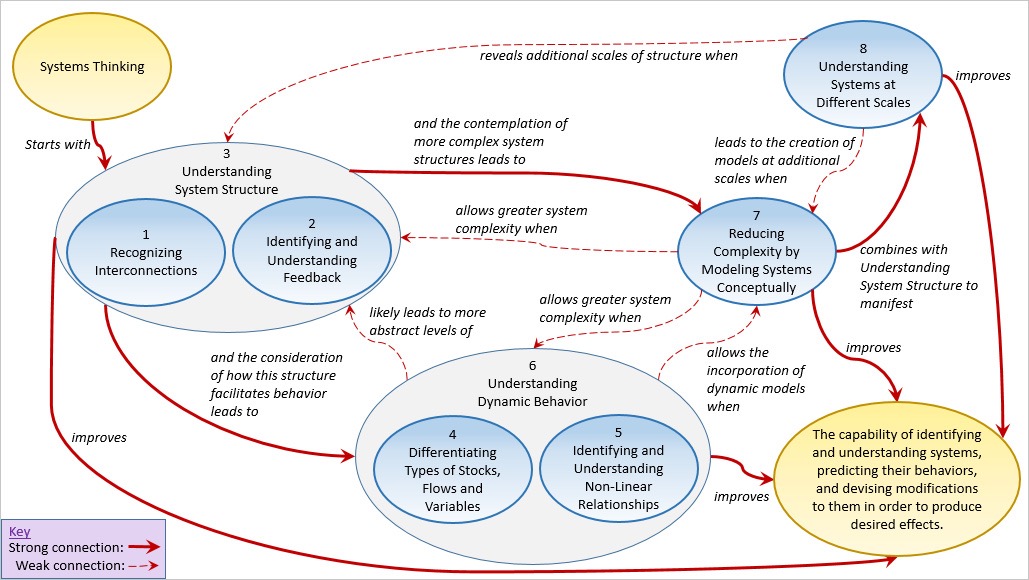
    Systems thinking is a holistic approach to analysis that focuses on the way that a system’s constituent parts (the elements) interrelate and how systems work over time and within the context of larger systems. Rather than isolating individual components, systems thinking emphasizes the interconnectedness of parts within a whole. Systems thinking  enables people to address complex problems which have emergent behaviors which result from a number of simple feedback mechanisms.  A systems description of systems thinking:

    Figure 3 from A Definition of Systems Thinking: A Systems Approach Ross D. Arnold*, Jon P. Wade. Procedia Computer Science 44 (2015) 669 – 678. 2015 Conference on Systems Engineering Research 

    References

    “Class” Materials

    HR / Leadership Focus

    Related