Blog

  • Housing

    The cost of housing in the US has been rising faster than inflation since the 1960s. For an investor who either owns real estate, or has enough money to invest, this is good news. For someone needing housing, this is bad news, and is a significant, if not the primary factor driving homelessness. Two articles that discuss the connection between housing costs and homelessness:

    There are numerous factors which have lead to the ever increasing cost of housing.  In the US, the most fundamental issues is a 4-8 million homes shortfall1. There is more demand than supply. This will continue until there is more housing or less people. Fannie Mae’s The U.S. Housing Shortage from a Local Perspective noted that the contributing factors vary, e.g. there will not be a one size fixes all.

    Another factor is the shifting of population. It has been noted that several cities have become “magnets” which attract people producing a combination of jobs and services which attract people to the city. In locations which limit geographical expansion, this produces significant upward pressure on the cost of housing. This is a problem not just in the US, but also in “desirable” cities across the world that employ a significant number of people and/or destinations known for a good quality of life, nice weather, etc. In some of these cities like Lisbon, real estate investors now own a significant portion of the housing which is often being offered up as short term housing.

    Regulations (and Unintended Affects)

    There have been many regulations created to encourage home ownership, safe housing, affordable housing, and that the elderly aren’t forced to move out of their homes as they age.

    Homes are a Principal Investment Vehicle

    US tax code encourages people to invest in real estate for good reason. Home ownership has become one of the most powerful tools for people to build familial wealth.  For many people, their house is their major investment and their primary “retirement account”.  They have a strong incentive to protect the value if their house. Anything that might reduce their homes values will be opposed.

    As a result, home owners typically fight against new housing, especially high density housings.  This is often referred to as not in my backyard (NIMBY). Adding housing potentially alters supply/demand. Second, the added housing might change the character of the neighborhood making it less desirable.

    Improved Building Standards

    Starting in the 1970s building codes were significantly strengthened and a tenant rights was put into law. The idea seemed good. Landlords should be required to insure their housing was safe and well maintained.

    Unfortunately, a significant portion of the rentals could not be brought up to these standards in a cost effective manner, providing the profits the landlords sought.  As the standards came in, these properties were often sold, improved, and then came back on to the market as upscale housing which was sold rather than rented. Often multi-tenant spaces were updated to provide more space for a smaller number of people. The result was that the supply of rental properties actually shrunk, driving prices up.

    Rent Control

    Rent control was intended to stop landlords from rapidly raising the rent on people, forcing them out of their homes.

    While noble in intent, it has not necessarily accomplished what was desired. First, many people do not stay in the same home for long enough time to benefit from rent control. There is an incentive for people to stay in housing, even when it does not suit their current needs.

    Rent control often reduces inventory because the return on the investment is capped by rent control. Landlords have incentives to take their rental units off the market and sell them. For a discussion about this, listen to the Freakanomics podcast  Why Rent Control Doesn’t Work (Replay)

    Single Family Zoning

    Many areas are zoned R1, that it single family residence. This limits housing density and limits the number of housing units that can be built. In many locations, the land is actually more costly than the home. Limiting a significant amount of the land to single family homes significantly limits what can be built.

    Tax Caps / Prop 13

    California Prop 13 was “sold” as a way to insure the elderly wouldn’t be driven out of their homes by rising real estate taxes. Unfortunately, businesses more than elderly home owners benefitted from this. As a result, long time home owners and savvy business have been able to keep their real estate taxes low, but people who have purchased housing more recently carry a disproportionate tax burden.

    Ineffective Low Cost High Density Housing

    I have heard it said that single family housing is a luxury that society can’t afford. IN many countries the majority of the housing are apartment building. A quick way to produce significant amounts of housing would be to construct cost managed, high density housing. In much of Europe is a key part of why there is affordable housing.

    In the USA, projects were attempted and largely failed. Rather than providing safe, affordable housing, the projects were often dangerous places that were not well maintained. They became “owned” by violent gangs which were so dangerous that the police would only enter in force.

    Several low cost housing projects I am familiar with have been quite expensive to tax payers. While the rents or purchase price have been “affordable”, the cost of construct was quite high. Sub 400sq ft places than cost almost 500k, modest home that cost almost $800k to construct.

    In the 1950s across communist nations many people were successfully housed by the building of ugly, but functional apartment buildings called Panelák. I am not sure why there is such a stark difference. Researching this might reveal keys to making this sort of housing to work well.

    Failure to Improve Efficiency

    The last 100 years has seen huge productivity improvements in most manufacturing fields. Housing was keeping up with these improvements until the 1950s when productivity stopped (maybe even regressing a bit) while other sectors continued to improve.  As a result, housing costs increased relative to other costs.

    Housing is  still a mostly one off construction, done on site with skilled workers. This method of construction has not been able to benefit from scale, quality improvement, nor the worker simplification / specialization than has made other manufacturing processes more efficient and productive.

    There have been several attempts to address this with factory produced (modular, prefab) homes. So far, this hasn’t produced the benefits that have been expected.

    There are some promising prefab homes. One of the more encouraging from both a design and price standpoint was covered in a business insider article and homes made by the company VMD are promising.

    What Could Be Done

    Update  Building Regulations

    Create a two tier building code system. The first that enables building safe, economical housing for people seeking a modest existence. For example, many building regulations require new construct to have 200amp (or more) power. While this might be necessary for a luxury home filled with electrical devices, a very livable home could be constructed that uses much less power.  A second tier of regulations would be available to insure homes met higher standards which are desired by “middle class” consumers.

    Ironically, Most Americans want less regulation, until a building burns down and people die, then they ask the government, how could this happen, how could you allow this unsafe condition? There’s no upside to government employees in less regulation, only potential downside. 

    Cohousing / Tiny Houses

    Cohousing attempts to build housing which supports and is informed by the community which will use the space. Cohousing creates common spaces to be used by the community which often reduces the amount of space needed by individual families.  In recent years, cohousing has been combined with prefab “TinyHouses” to lower the cost and increase the speed to creating new housing.

    There have been several non profit organizations which have been building sustainable cohousing communities specifically designed to address issues of homelessness. One great example of this are SquareOne Villages which are primarily in Eugene, OR and the Community First! Village described in the NYT piece Can a Big Village Full of Tiny Homes Ease Homelessness in Austin?

    Permit RV

    While no one is thrilled by it, RVs have become “affordable housing” in several high cost areas.  Often the people using RVs struggle to find safe places to part their vehicles. Cities are increasingly forbidding RVs to be parked on residential streets, and typically bar people using an RV which are parked on private property. RV Parks are rarely found in urban areas, and are typically expensive.

    Allowing people to use an RV parked on private property and having city provided areas that have affordable water, sewage, and power options could provide cost effective housing. I have been amazed to discover that while I am permitted to park an RV on my property, I am not permitted to let anyone stay in the RV. Portland is one of the few cities which seems to have a reasonable policy.

    HomeShare

    The Home Sharing Program in San Mateo County has been successfully running for 50 years. This program connect people who have extra space in their homes with people in the need of housing. The housing is provided for an affordable rent and/or services provided by the renter. I know several elderly whose are provided space in exchange for someone who can help them take care of the house, do grocery shopping, and occasionally provide transportation to doctors appointments.  This program inspired HomeShare Oregon

    Changing Tax / Loan Policies

    Changing favorable tax treatment of property is not something that is likely to change anytime soon. People who have benefited from the favorable tax treatment of housing would fight against losing it. Furthermore, changing this quickly could have a devastating impact to people who financial planning was dependent on the current policies. If this was to. be changed, it would need to be done somewhat gradually, with some sort of grandfathering.

    Another issue is 1031 which allows taxes to be differed if property is sold and then replaced with property of equal or larger value. This provides incentive for someone to grow their property footprint. The “new” property can be several properties. This encourages a consolidation of property into the hands of “successfully” property companies.

    Finally, loans are readily available to people with sufficient assets and income to purchase real estate. This make it fairly strait forward for people of means to acquire multiple properties. The US could establish policies such as in Taiwan, which will not grant real estate loans to people who already own property.

    1. The US is short more than 4 million homes: analysisAffordability crisis: United States needs 4.3 million more homes – Jun 22, 2023The Housing Shortage Is Larger Than You Think: Part 1The Housing Shortage Is Larger Than You Think: Part 2 ↩︎
  • Five Minute Rule

    Even if your are the expert, it’s valuable to take the time to listen to others’ perspectives. Engaging in such discussions can lead to surprising insights or beneficial outcomes for all the participants, including the expert. There are two key reasons for this. First, what is considered common knowledge in one field can often be a fresh, novel idea in another. Second, articulating complex concepts to someone outside your area of expertise can help clarify and strengthen your own understanding.

    When Tellme Networks was formed in 1999, the leadership was very intentional in building what was an exceptional company culture. It’s worth noting that most of my former co-workers went on to work for well regarded start-ups and industry leading companies including Apple, Google, Microsoft, LinkedIn, Invidia, Netflix, and Amazon have comment that Tellme had the best culture they ever experience in a workplace. Often practices were promoted to reinforce our values. One of these practices encouraged people to place a high value on learning, mutual respect, collaboration, and efficiently getting results. I called it the “Five Minute Rule”.

    When new people joined the company we would tell them:

    We are extremely selective in who we hire. If someone is working here, they are one of the best people in whatever field they come from. If someone asks a question or makes a suggestion, always take time to hear them out. You might be surprised by what comes of the conversation.

    When I explained the five minute rule I would often share the following story.

    In the 1980s folks at Xerox Palo Alto Research Center (PARC) built a directory service (think Microsoft Active Directory) that spanned multiple countries and companies.  Connectivity wasn’t always up, and several of the links were quite slow (56Kbit/sec). As a result, updates to the directory were having trouble completing and links were saturated by directory updates. A breakthrough came from the field of epidemiology. What if the directory updates spread like a virus in an epidemic?  This question produced the solution which enabled XNS Clearinghouse to scale beyond any system of its era. A description of what the team discovered can be found in the landmark paper Epidemic Algorithms for Replicated Database. Microsoft Active Directory, created more than a decade later failed to address issues in this paper resulting in operational issues for organizations trying to use the early versions of AD at scale.

    The “five minute rule” was operationalized at Tellme in the following way:

    Everyone was encouraged to ask questions or make a suggestion when they saw something that didn’t make sense to them. It was ok, if not encouraged to cross departments and to “skip levels”.  Line engineers could ask our CFO about the company’s model for revenue recognition,  someone managing external suppliers could ask the director of architecture about the system design. A VP in sales might ask an engineer if they had considered a different framing to a problem.

    The other side of this rule was that if someone came to you with a question or suggestion you should always be willing to take at least five minutes to talk with them.  Ideally the discussion would happen when they approach you. If you were busy, you would schedule time for a conversation within the next week.

    These conversations were always productive with a few possible outcomes:

    • The question / suggestion reveals that there was an improve the “domain expert” could make.
    • The question / suggestion revealed something that hadn’t been clearly communicated. The domain expert found they needed to be more crisp and clear in their communication. The person who asked the question / made a suggestion now has a better understanding of what another team was doing. This leads to deeper trust and alignment between the individuals and the teams.
    • We discovered that there were multiple, legitimate approaches. We would need to agree to disagree of the optimal solution, permit the person doing the work to decide, and then commit across the company to support the plan. Once the decision is made we would remind each other of Barksdale’s “Don’t play with dead snakes“, PARC’s rule, “The person who does the work makes the decision (e.g. don’t bother the driver)”

    I came to deeply appreciate cross domain interaction while working at PARC. Tellme was the first place I saw it purposely built into the culture. I introduced this practice to every team / company I worked with after Tellme.

    Related Content

    The way of fools seems right to them, but the wise listen to advice. – Proverbs 12:15

  • Computing Technology I Use

    My work has had me near the cutting edge of computing technology from 1978-2022. In 2022 I retired. I still follow current trends but I am not as involved in pushing things forward. I take a measured approach to technology. I don’t chase after everything new. Rather I try to thoughtfully adopt technologies which will effectively solve real world problems or will enhance life. I am sometimes an innovator or early adopter, but I often make a move with the early majority, and have sometimes avoided technology which even the trailing edge has adopted. I recognize that technology is powerful, and can both improve and impoverish life.

    [toc]

    Keep Options Open

    I strive to avoid lock-in to a particular technology, product, or company. I tend to select technology that have well designed, standards based interfaces. Likewise, I want my applications to run on the most common platforms. For user facing applications this would be native support of iOS, Android, OSX, Windows, and providing a web interface. Supporting a native Linux application is a bonus. I want to “own” my content. I really like encrypted, local-first storage that supports replication. This insures my content is accessible to me while preventing cloud operators or bad actors from being able to corrupt, remove, or access my content.

    I have always encourage my team to select the best technology for the problem they need to solve, even if it means going with a product / company they loved to hate, e.g. I have no patience for “religion”. In the 1990s, the discussion was often about Microsoft products. Many people on my team hated Microsoft but I would encourage them to use products that best got the job done. What I found was that Microsoft products were typically terrible in “production”, but often the best choice for “corporate” computing.

    Cloud

    Unless you are a large company operating at scale… using cloud services makes a huge amount of sense. Using well selected cloud products will provide higher quality, higher reliability solutions for a lower cost than more traditional solutions. Of course, poor select of cloud services can result in run-away cost for a service which is no more resilient than running everything in the same data center. I am a big fan infrastructure as code, and immutable infrastructure.

    For me it’s essential that cloud products keep my data encrypted, and that the encryption keys are only accessible by me, not the provider. When it comes to applications I use, I want them to support disconnected operations, so if I can’t access “the cloud” I can still get work done.

    I used to be a fan of google, but increasingly I have watch how the customer being the product is producing worse user experiences, aka enshittification. I am no longer confident that the data held by Google won’t be used against me, rather than to enhance my life. I have more confidence that Apple will care for me properly, which makes sense because I am paying for my services. Ironically, I trust Microsoft to try to treat me better than Google, but the combination of security flaws in Microsoft products and that numerous services (like OneDrive) don’t use zero-knowledge encryption is a non-starter for me. Proton is trying to fill the space Google used to occupy when it comes to web apps. I hope they succeed.

    Apple Eco-system

    In the last couple of years I have changed my strategy at bit. I still insist using technology that provides a way to export my content into rich, standards based formats, but I am ok if the applications only run in the Apple eco-system which I now inhabit. For example, I use Bear for most of my notes which is Apple only but has a great export ability and mostly avoid Apple Notes because there is no good way to export all my Apple Notes content to a different platform.

    OSX and iOS have less security vulnerabilities than Windows and Android while providing higher quality applications than is typically found on Linux or ChromeOS. I appreciate that Apple implements end-to-end encryption which helps keep my data secure while making sharing easy (AirDrop, iMessage, Photos, Notes, Files, etc). Apple supports hardware longer than many manufacturers which reduces the frequency that I need to upgrade my devices. The downside of Apple is a closed eco-system and products tend to be more expensive. I am sad that Apple, like most manufacturers, no longer make small phones or ultralight laptops. The Apple products I am currently using:

    • MacBook 12″ from 2017 (2023) This is the last ultra portable made by Apple. It’s 2lb, decent keyboard, and enables me to complete daily tasks with a minimum amount of friction. Can’t run the current version of OSX but security patches are still available. I could use OpenCore Patcher to run current OS, but not willing to risk bricking it right now.
    • Apple iPhone 16 Pro (2024) Too big, but can’t find a usable small phone :(. Camera on the 16 pro is quite good, appreciate the action and camera button, and the satellite messaging might be useful. On T-Mobile (2022) which has good international coverage but mediocre coverage in USA compared to Verizon. Purchased the 16Pro when my iPhone 12 mini’s battery couldn’t last more than a few hours.
    • Apple AirPod Pros (2021/2023) are nicely integrated with the Apple eco-system and just works. Noise reduction is “ok”, and the “ambient mode” provides situational awareness. The case is part of the “Find My” eco-system.  Downside is battery can’t be swapped when it no longer holds a charge. I have written about other headphones.
    • MacBook Pro 14-inch (2006/2022) When I am at home this is the device I use. When I am traveling it is left running in a safe location and I access it remotely via Tailscale. Holds the family’s archives: pictures, videos, ripped CDs, digitized books, and documents. I could change workflows so everything lived in cloud, but current system is working well. I select a configuration with enough storage for 2x my current usage (4tb at the time of purchase) and the maximum memory available which has allowed me to use the same MacBook Pro for >5 years before I feel the need to upgrade.

    Laptops

    When I am creating written content I like using devices with >12″ screens and an attached keyboard I can touch type on which works when it’s sitting on my lap. I want an operating system which lets me quickly switch between overlapping windows / applications, and supports easy copying of information between applications. This means that I want to use a traditional laptop.

    Since I am often on the move, I would like this device to be as small and light as possible while providing me adequate keyboard and display. For me, a perfect laptop is <2lb, with a 13-14″ display, running the current version of OSX. There are no devices that meet all these specifications. Hardware that comes the closest:

    • Apple MacBook 12″ from 2017.. mentioned above. Out of date, but light and still useful.
    • Current MacBook Air 13″, weights 2.7lb. When my MacBook 12″ no longer gets the job done I will purchase one and cry about how heavy it is 🙁
    • Fujitsu Lifebook UH-X: Just 1.4lbs, good performance, nice selection of ports. Almost impossible to find outside of Japan, and somewhat difficult to find in Japan.
    • Lenovo ThinkPad X1 Nano: Good all around and more easily found that the Lifebook UH-X. Gen 2 could be configured with 32GB of RAM and motherboard is well supported by Linux making it superior to Gen3
    • Asus Expertbook B9: Performance and battery life substandard to Lifebook and X1, but a decent option.
    • Asus Zenbook A14: announced at CES 2025. 2.2 lb, reported to have a good screen and very long battery life.
    • Microsoft Surface: Not a fan. Tablet with external keyboard running Windows. I want the keyboard attached, and my wife’s surface (several years ago) was regularly needing to go into the shop.

    None the modern laptops can be turned into a hackintosh because their CPUs are more modern than the last IntelMac made by Apple. The only way to use OSX on one of these x86 based laptops would be to run a host operating system (Windows, Linux, BSD, etc), and execute OSX in a virtual machines. This would mean maintaining two operating systems, paying the overhead of a virtual machine, and dealing with the inevitable hassles of using OSX in an environment it was not designed for. It used to be that you couldn’t log into your Apple account / access CloudKit and other iCloud resources from OSX running in a VM, but I have read that as of OSX 15 Sequoia it is possible to access some of Apple’s cloud resources.

    I spin up AWS instances time to time when I need more computing power.

    Chromebooks

    The OS is easier to maintain and more secure than most other options. Chromebooks boot quickly and are very responsive considering the hardware they are running on. For people who live in Google Apps, using a Chromebook can be good alternative to using a traditional laptop. Most modern Chromebooks are able to run Android applications which provides access to applications which aren’t native on ChromeOS. You can run Linux containers as well. I used a Google Pixelbook as my primary personal device for awhile until Google stopped providing OS updates. It was a shame that Google dropped support, the hardware was still very responsive, and had better specs that many of the Chromebooks in production at that time.

    Low end Chromebooks are cheaper and more functional than budget priced traditional laptops which is one of the reasons they have become popular at schools that send devices home with their students. I appreciate that Google has committed to continue to support releases of ChromeOS for 10 years on hardware produced after 2021.

    Unfortunately, there are no ultra portable Chromebooks. The lightest Chromebooks are actually tablets with removable keyboards. They often list weight of the tablet without the keyboard. When factoring in the weight of the keyboard these Chromebooks weight more (and are less ergonomic) than some of the laptops listed above.

    ChromeOS Flex is one way to make an out of date laptop usable.

    TinyPCs / PalmTops / Subnotebooks

    In 1989 I lusted after the tiny Poqet PC. In 2001 picked one of it’s successors, the Toshiba Libretto. It was a tiny PC which fit in the palm of my hand. While the concept of a full powered computer which could fit into my pocket was electrifying… the reality was disappointing. The keyboard and screen were just too small for me to be productive, Years later I tried one of the TinyPC made by GDP. My theory was that I could carry it everywhere and dock it with full size keyboard and screen when at home and work. After a few weeks I gave up on this. I found that it was just too painful to use when away from the docking station. I frequently would use my smartphone rather than pulling out my TinyPC. When I determined I needed to use the TinyPC I would often wait until I got to the docking station. I determined it was better to carry a normal laptop when there was a reasonable chance I might need to do “real work”, and make do with my phone (which had a SSH client) in the case of an emergency.

    Tablets

    I have tried using tablets on and off since 2010… well actually since 1993 when I was working at PARC next to the people inventing ubiquitous computing. I have found tablets to be wonderful for creating art, consuming information, the iPad also makes a nice portable monitor for MacBooks, but terrible for creating written content… even when using a good Bluetooth keyboard such as the Magic Keyboard. With any of the Android or iOS based tablets, there is too much friction integrating information from several windows and often the app experience on the “phone OS” platforms fell short when compared to the experience on a real laptop. It’s possible to run windows or Linux on a table… but those options to be more power hungry, and many apps don’t have UI that is well refined for tablet gestures. Furthermore, I never found a keyboard that would hold the tablet stable and at a good viewing angle when on my lap Over the years I have purchased three iPads and a couple of other tablets. While each was useful for a particular task, I have yet to find a tablet that was compelling for general use.

    Smart Phones

    Like most people I find a smart phone invaluable. I use a phone to capture information, to quickly look up information, and to communicate with other people. My ideal phone would have a battery which would support 24 hours of my normal use without recharging, support the applications I use, and have a 4″ diagonal screen which would allow me to hold the phone in one hand and touch the entire screen with my thumb. An initiative to build a small Android phone seems to have stalled out. Unihertz does make the tiny Jelly phone. I tried the first model and was disappointed. It was missing some of the frequency bands used by Verizon, it was rather thick / chunky, and the screen was a bit too small to be useful.

    The perfect phone for me would be an iPhone that was the size of the original iPhone that had a modern CPU, good camera, and a battery which would last for 2 days of light use. Alas, Apple canceled the iPhone mini, and even if they kept it, it was too big. When holding it securely in one hand I couldn’t reach the whole screen with my thumb. In 2024 I switched to an iPhone 16 Pro. The phone is way too big, but so are just about all the phones people use today. I do love the .5-5x camera, the separate camera button, and am hopeful that satellite based messaging will be useful when I am outside normal coverage areas. My biggest complaint (besides size) is that I find the voice support almost useless (Android seems better). First, accuracy seems poor. Second, Apple restricts what can be done via voice when the phone is locked.

    There are many people who do most of their “computational tasks” on phones. This has helped drive the adoption of larger screens and the growing popularity of folding phones. As I noted above, when I want to do real work, I much rather use a laptop. A number of the applications I use have excellent web interfaces when using a real computer than render badly on mobile browsers and the native iOS apps are often missing functionality.

    I briefly tried some of the “simple” / “low distraction” phones a number of years ago including the original light phone and the Punkt phones but gave up because they didn’t support all the frequency bands used by Verizon in the USA. I might have considered changing carriers, but all the long term reviews I read indicated that people ultimately switched back to a traditional smart phone because the minimalist applications were inadequate for their real (rather than imagined) lives. Additionally, there were several apps I was not prepared to give up that weren’t available of these phones. At that time, the app I won’t give up was Evernote which functioned as my second brain.

    What makes smart phones deeply useful is the connectivity provided by carriers.  In this season of life where I have no idea what country I will be in month to month I am using T-Mobile. They are the best deal if you want a US phone number and will be doing a lot of international travel. I get 5gb of data when outside the US, free texting, and reasonable price phone calls. Note: I have historically live within 5Gb/month on cellular networks, but recently iOS is using a lot of bandwidth, and I haven’t been able to identify how to stop it. If I turn off “cell” and make calls via WiFi, my calls to the US are free. There are three downsides. First, coverage is not nearly as good Verizon in the US. Second, they seem to partner the the second best carrier in many markets. Third, when traveling internationally, traffic is backhauled to the US, so performance is lower than using local carriers. For people not using T-Mobile, Airalo makes it easy to acquire an eSIM for wireless data while traveling internationally.

    Digital Recording Device

    I have found a small digital recording device can be an excellent way to make a quick “notes” to myself when I on the go and to record important meetings. Originally I used a small recorder from Olympus.

    I picked up a Plaud AI Recorder through Kickstarter and have used it a bit for on the go notes and recording meetings and presentations. I have been pleasantly surprised by the quality of the microphone and it’s useful summaries. The form factor for their NotePin and a similar product from Senstone would likely be even better. Another possibility is the CarbonVoice App on an iWatch. The nice thing about all these is that they have both the voice recording and a full transcript which is organized by a machine learning system. Most of the time, the transcription is perfectly good. When it’s not, you can listen to the audio.

    I have tried a number of apps on the phone but have been dissatisfied. The microphone on the phones I have tried was not good at picking up distant voices in meetings. The second issue is that the iPhone doesn’t permit apps to access the microphone when the phone is locked. While a good security feature, it kills my memo on the go use case. I can’t say “Siri Take a Memo” when I have AirPods in and the phone is in my pocket, locked. I can have Siri trigger launching an app stuffing text from a prompt to an app like ToDoist, but the transcript is wrong more often than right.

    A product / feature I am hoping for I first saw around 2016 on kickstarter? It was a wrist device which have a 2? minute continuous recording loop running.  A button press dumped the buffer to storage. The idea was wonderful.  Someone says something profound.  We don’t want to forgot it, but when someone says “That’s brilliant. Say it again so I can get that down”. and the response is often “I don’t know. What did I say?”. Unfortunately the product’s execution was poor. The device was much better at picking up background noise, rustling from shirts cuffs, etc than recording meaningful content.

    Software/Services

    Google Apps: Currently verber.com is a Google Apps business account. Originally it was set up as a free domain allowing me to shutdown much of the computing infrastructure in my home. At some point I had to upgrade to a business account. I am not using many of the features, and quite frankly it feels overpriced. Furthermore I don’t trust Google not to be evil. I am primarily using gmail for my email which works reasonably well and they do a good job of protecting me from unwanted spam. On OSX I use web apps. I use Google Calendar, Google Maps, and Gmail iOS applications. When working with others I will use docs, sheets, and slides because they have powerful collaborative features. I sometimes use drive when I have files I need to share out. At some point I will point my MX records to some other mail provider and cancel my gApps business account. Making this sort of change would have been easy years ago. These days, the combination of aggressive spam and that the largest mail providers functioning like a Cabal make it more challenging. I am not prepared to put all the effort required to make that transition right now.

    Apple Files: Data is end-2-end encrypted so Apple does not have access to my content. Permits me to share files (or folders) with others as needed. All the meta data lives on all devices. The actual contents are always present in the Cloud. Content is pulled down to a device on demand. It’s possible to explicitly clear the local copy, force a download, and pin the content to always be retained on the device. Historically I used sync.com. I selected sync.com because it was one of the early systems that provided end-2-end encryption and works on OSX, iOS, Android, Windows, and Linux. As an early adopted I have 7GB of free data. I moved away from it because 7GB isn’t enough data for all my needs, the people I wanted to share data with didn’t want to install sync.com, and currently I am just using Apple devices. I also have access to 1TB of “free” storage via Microsoft’s OneDrive. I place non sensitive, bulk data here since they don’t support end-2-end encryption.

    Bear: is a beautiful note taking application with a clean, intuitive user interface. I find markdown lets me quickly create nice looking notes. I am paying for the premium version which enables syncing between Apple devices using iCloud. This allows me to have all my content (editable) even when I am offline. Bear’s sync is built on top of Apple’s CloudKit so the data is well protected with end-2-end encryption. Hierarchal tags lets me organizing my content. It has a fairly powerful search (though it can be a bit slow). It’s easy to crosslink notes. Biggest downside is that I can’t share my notes with others. When I need something to be shared with others I either put it on my website, share it out with Google Apps, or place it in an Apple Note. I leave a stub behind in Bear with a pointer to where the shared document lives. Bear has excellent import and export features which allows me to painlessly migrate from Evernote, and should enable me to switch to some other system if I decide to leave the Bear ecosystem. This was important because I had thousands of notes I had created since 2009 in Evernote. I decided Evernote was hopeless bloated and buggy and it was time to move to a new system. I tried OneNote but was frustrated by its organizational features, its poor support of important/export, and it lacked encryption. Bear is my principal knowledge management system. I am really stretching it for this task. At some point I will likely investigate Obsidian and Anytype. I took a quick look at Logseq (complex and lacked polish), Craft (didn’t have fully functional version I could try for free) and Joplin (falls short of the user experience of Bear without obvious benefits). While powerful, the lack of offline supports removes Notion and Roam remove them from my consideration.

    Messaging: I mostly use iMessage/Facetime when communicating with friends and family. It just works… if others are using Apple products :). I use other apps based of what my friends are using. WhatsApp is the second most common system… seems to dominate the EU, Signal for my tech/security buddies, LINE for people in TW/Japan, and Telegraph for a couple of friends who are in Eastern Europe/Middle East. I am thinking about removing Telegraph due to the amount of spam I get on that system. I generally don’t use Facebook Messenger.

    Todoist: A list keeping app which has a good balance between simplicity and powerful features. I am using the free version, I can get along without the added features which required a subscription. I switch from Asana when I was no longer collaborating with my team on task lists.

    1Password: Insecure and reused passwords at the biggest risk for account security. Using a second factor eliminates something like 98% of account breaches. 1Password provides a safe place to store all my credential. It generates secure passwords and integrates well with all the software I use. It supports Google Authenticator one-time passwords and even notifies me when an account I am using doesn’t have a OTP set. I believe 1Password corporate culture and engineering practices makes it the most secure system for storing this sort of information. I have watch system other systems such as LastPass have security issues which did not give me confidence that my secrets would be safe. I originally moved into 1Password because I trusted their security and they supported all the platforms I was using. It’s possible I could switch to using Apple’s built-in system, but the cost of 1Password is small enough vs labor / risk of making the change. If you have the switch export/import doesn’t move your OTP. These have to be added to Apple’s Password by hand.

    Lightroom/Apple Photo: Most of my pictures are taken with the Camera app on my iPhone which automatically feeds into Apple’s Photo app. I don’t like the user interface / organizational features of Apple’s Photo app. I use Lightroom on my iPhone to automatically ingest my pictures into Lightroom. I run Lightroom Classic on my MacBook Pro which holds all my photographs. Once they are downloaded to my MacBook Pro and backed up, I delete new photos in the cloud version of Lightroom. I use features in Lightroom Classic to collect particularly treasured pictures into albums which I replicate into Lightroom Classic. I would like to migrate to Lightroom Cloud, but it still lacks some organizational features I want. Both Lightroom and Lightroom Classic’s auto face-tagging is substandard.

    Chat-GPT/Claude: Look up specific information, learning new material, assistance problem solving. Remember, these use large language models which predict what sequence of words is mostly likely. It doesn’t understand / have a model of the world, do it can gets things wrong than anyone with common sense would get right, and will often hallucinate.

    Google (and Apple) Translate: To read menus, labels, and documents when in non English speaking locations and when looking at websites that don’t have English. Google Translate on the iPhone 16pro doesn’t switch to macro mode when you are close to the writing who I desire to translate, Apple’s Translate application supports macro mode.

    Apple Podcasts: I don’t love the UI, but appreciate that it works well with Siri, the support of transcription, syncs across all my devices. Furthermore, the Apple Podcast app is used by all the people I regularly share recommendations with so it’s easy to send them links / recommendations. Originally I used Pocket Casts which supported multiple platforms and has an excellent UI.

    Feedly: I am still using RSS feeds. Lets be create a personalized “feed”. Articles that are particularly good get saved into Bear.

    Reddit: Often find good ideas / recommendations. Something I am not doing now, but considering for subreddits I regularly participate in comes from Dracomies: If I read a post, I click “Hide.” If I think it’s gold, I “Save” it. If it’s low value or I don’t care, I “Hide.” Goal = empty subreddit. So at the end of the day, the Subreddit is blank. This is useful because I only see what I want to see each day. And nothing is lost. I even got Life Pro Tips to nearly blank by going through Top posts (Day, Week, Month, All-Time) until it’s just less than 100 upvotes. Again, I click Hide when I read it. Until eventually everything is Hidden.

    Kindle: I have over 1000 books which were purchased in Kindle form. I find the Kindle app generally works well, though e-reading results is poorer retention of information. I like that my reading location is synced between devices which allows me to switch between devices. I make heavy use of highlighting and notes. My biggest gripe with Kindle is they are using DRM for the books. I know people who have lost their whole collection of books when they were incorrectly flagged as violating Amazon’s Terms of Service. To protect against this I periodically copy all my purchased content off the Kindle, but Amazon stopped supporting this in 2024. I use hoopla and libby to borrow free e-books and audio books.

    Spotify: They have a massive catalog of music, support offline caching of music, stream directly to smart devices, and most of my friends use so it’s easy to share playlists. The downsides are that I don’t like the UI and they still don’t support lossless audio. When I care about sound quality I use Apple Music to play tracks I RIPPED from CDs I purchased. At one time I was using Tidal. If Apple Music supported direct streaming to the smart devices I use, I would likely switch to it.

    Logos Bible: Arguably the best app for serious Biblical study. The combination of analytical tools and rich (but expensive) resource library makes it unmatched for detailed study. Besides the price, the other downside is that the iOS version requires Internet connectivity for many of its more advanced functions. Years ago, when I was downsizing my book collection, I re-purchased many of my Biblical references which saved significant space, allowed me to use them wherever I had a computing device, and made it much faster / easier to lookup information. Before I purchased Logos Bible I used Olive Tree Bible Reader which provide a simple and clear UI smart phones. e-Sword is arguably the best freeware Bible tool.

    Passapartout: VPN tool which makes it e as y yo set up OpenVPN and Wireshark connections on all Apple devices, enabling geoshift while traveling (eg looking like I am in the US while traveling outside the country). For some reason using the free OpenVPN would break access to the network after I started and then stopped a VPN connection requiring a reboot… this doesn’t happen with Passapartout.

    Quicken Simplify: Track finances. Don’t love it, but haven’t found anything I like better. I miss the early days of Mint… before innovation stopped.

    Supporting Technology

    “Tech Kit” items are stored in a small litesmith zipza pouch (2023) which is the perfect size, mostly waterproof, light, and a different texture than anything else in my bag so easy to find by touch. I am hoping that I will soon only have devices that use USB-C and will be able to do away with the adapters.

    • Nomad 65w Slim Charger (2024) hangs down rather than out so doesn’t lever itself out of loose outlets and packs well. 65W to one slot, 45W/20W when using both. Replaced an Anker 523 which is powering devices in our home. My wife loves her tiny 30w Anker Nano. For people who need three outlets, Anker 735 and Minix P1 and P3 are pretty good. If you need more power / more outlets I would think about getting something that has a removal cord rather than plugs directly into the wall like the Baseus 100W … because heavy watt chargers are getting so heavy that it will leverage itself out of the outlet. Snug plug can help prevent this problem.
    • Nitecore 10000 Gen2 (2023) power bank with USB-A out C in/out. Lightest and most compact 10k battery I have found. Comfortable in my pocket while charging my phone. Can slowly charge my MacBook or mostly power the MacBook while charging my iPhone. Supports pass through charging so I can charge this battery while my MacBook is plugged into. Has a bug that when you hold the “low power” button too long it puts the battery in standby mode which is only ended when you plug it in to be charged which is fixed in Gen3. Spreadsheet of many power bank options.
    • Cables: A 6ft USB-C cable, 2 6″ USB-C cables
    • Adaptor tips from USB-C to (Lighting, Garmin), and 2 USB-C to A converter.
    • Mogics Adapter MA1 (2023) is the smallest and lightest universal power adaptor I have found. For type E remember to unscrew and extended the type C prongs. Some trouble in UK outlets due to round pins: sparking until I got it set properly. BTW: The best visual display of outlet types I have found.
    • Tempo Logging Thermometer (2022) which lets me keep track of the conditions I experience.
    • Etymotic HF3 (2013/2023) Great sound isolation. Provides me with around 40db of noise reduction which is better than any consumer grade active noise cancelling headphones I have tried. Carried with FiiO KA11 (2024) USB-C DAC and airplane double jack adaptors. Second foam eartips for when current pair stops sealing.

    Related
  • Generosity > Greed

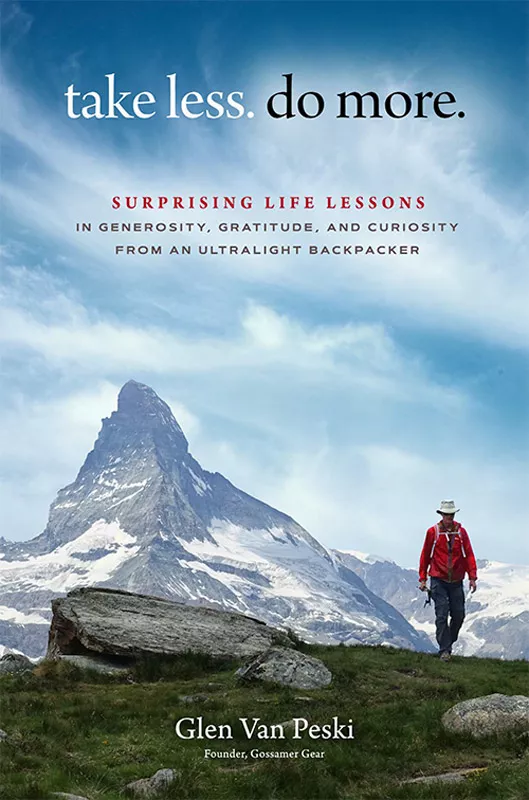
    I have been fortunate to have several people in my life who exemplify generosity and inspire me to follow in their footsteps. In the last year I have been challenged and encouraged by Glen Van Peski’s Take Less, Do More, a class on The Practice of Generosity at Bridgetown, and the book Giving is the Good Life.

    As I was reflecting on the material from the Generosity class I was reminded of a series of experiences from around twenty years ago:

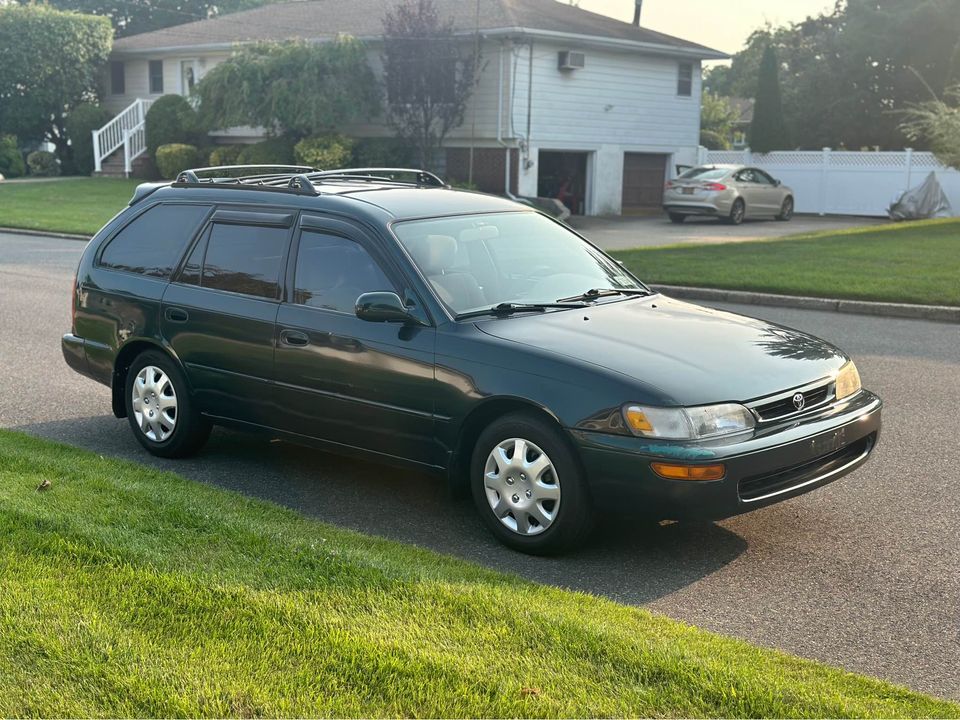
    My first couple of cars were compact Japanese sedans that were pre-owned. I was delighted to have a car that was reliable and safe. For nearly 15 years my wife and I shared a car. 1997 we decided to get a second car when I regularly had to travel further than was practical on my bicycle. We purchased a new Toyota Corolla wagon which became my wife’s car during the week, and the car we used for family activities. Our Mazda 323 became “my” car. A couple years later we determined the Mazda wasn’t safe. We replaced the Mazda with a Toyota Camry.  The Camry became my wife’s car, and the car we used going someplace as a family. I “inherited” the Corolla which delighted me. I really love the Corolla, the Camry seemed too big.

    In 2000 I was working for an early stage startup. Many of my coworkers came from startups that had done very well. Our parking lot was filled with cars paid for by IPOs. Mostly Audis, a good number of BMW and Mercedes Benz, a sampling of higher end Lexus, several Porsche, at least one Jag, Lotus, Range Rover, and a Hummer (real, not a H2). I noticed these cars, but it didn’t seem to affect me. I loving my little Corolla station wagon. It was very reliable,  functional and was the perfect size.

    As I was constantly exposed the these cars my contentment slowly eroded.  I started to become  envious of the people with those nice cars.  I told myself those cars were too expensive and didn’t have a good ROI. Then I found myself reading reviews about performance cars, looking for what cars provided the best performance per dollars and could be reliable enough to be a daily driver. Then I started to consider what I might do when our company had a successful exit. I thought, “I have worked hard. maybe it would be ok to purchase a nice car.” I found I was spending an increasing amount of time thinking about cars even though our cars were completely adequate.

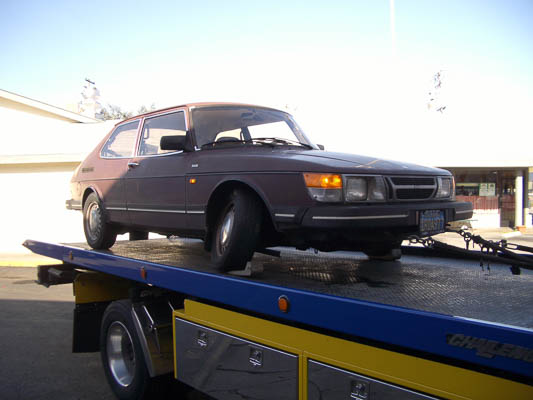
    One day my wife and I were talking with some missionaries sent out from our church.  They were spending the summer in Palo Alto and then were moving to Dallas to train future Wycliffe translators. They were worried their 1979 Saab 99 wouldn’t survive the drive to Dallas.  Even if the car made it, it didn’t have air conditioning which would be tough during summers in Dallas.  They asked us to pray for a solution or at least that the car would make the drive.

    I felt a stirring in my spirit.  I turned to my wife, she saw the expression on my face and nodded. I said to them “Your prayer has already been answered.  We have two cars, but only one is regularly used and the other only needs to be used around town a few times a week.  Lets trade.” The next week we exchanged my 1997 Corolla wagon for their 1979 Saab.  The missionaries were very thankful. One said “This is the nicest car we have ever had. We know it will serve us well.”

    Fast forward a year. An acquaintance was driving me to my work after a church retreat. As we were pulling into the parking lot I started to describe the car I wanted him to drop me next to. As he was looking across the parking lot he said “My car!”.  Turns out the Saab was originally his mom’s. It became his car during school and he used while he was working his first job. He replaced it with a nice Audi when his company had an IPO, and donated it to the church that in turn gifted it to our missionaries. We had a laughed about how it is a small world. A year later I learned Peter was going to leave his company and told my boss. We became coworkers making is a very small world.

    Sometime later I was talking with a good friend who drove a Volvo 240 station wagon that might have been older than my Saab.  We agreed that we had the two ugliest cars in our neighborhood. My car’s red paint had faded to an ugly brownish color, his color was quite splotched.  In the middle of the conversation I realized that I was no longer envious of the cars at my work. I was no longer reading car reviews. I had come to love my old Saab. I was more than satisfied… every time I drove the Saab I remembers how happy and grateful our missionaries were which made me smile. This led me to the following reflections:

    1. When I am continuously exposed to luxury, I start to think it’s normal and I grow discontent with anything less. Unless I mindfully resist the environment I am in, it will affect me. This is a close relative of adaptive hedonism.
    2. An act of generosity can reset my perspective, filling me with joy, thankfulness, and contentment. Swapping my nearly new Toyota for an old Saab had freed me from feeling envy.

    Several years later a tire rod on my Saab snapped as I was merging onto Page Mill Road. Thankful no one was injured as I jerked to a stop in the middle of an interchange.  I had to pay a junkyard to take the car away… there was no value left other than great memories and a life lesson.

    The next week I went out to test drive some cars. My dear wife said “Try whatever you like.  You have been driving the Saab… it would be ok to drive something nicer.” I test drove a wide range of cars including an Audi and a Mazda RX7 that I had lusted after a few years early. I concluded that wanted a Corolla station wagon. Alas, they stopped making them.  I ended up purchasing a VW station wagon which seemed like the most practical option and was fun to drive. After I got it, I briefly considered seeing if our missionaries would be willing to swap a newer VW for my old Corolla.  The VW felt like a sinful luxury and I really missed my Corolla.  After a few months I decided I loved my VW and didn’t need to feel guilty driving a new car.

    In 2020 I learned that my trusty Corolla was still in use. The missionaries had given it to their daughter when she went off to college and it was still providing reliable transportation.

    Cars ownership seems to provide many opportunities to grow in generosity. I earlier wrote about how a car was instrumental in crystalizing my perspective that people are more important than things.

    One person gives freely, yet gains even more; another withholds unduly, but comes to poverty. A generous person will prosper; whoever refreshes others will be refreshed. – Proverbs 11:24-25

  • Travel Tips, Hints and Hacks

    I have always appreciated when people make a collection of tips, hints, or hacks which encapsulate lessons they have learned in short, pithy statements. I really enjoyed Kevin Kelly’s Excellent Advice for Living: Wisdom I Wish I’d Known Earlier and his more recent 50 years of travel hints. Glen Van Peski has numerous “Pro Tips” which get dispensed in person and in his newsletters. Interactions with Glen and the post 83 things i have learned reading /r/onebag have informed and inspired me to write down what I have found useful. The following are my tips for onebag / travel. This is a work in progress and will be updated and cleaned up over time.

    Attitude Matters

    1. You aren’t in control. Your plans will be changed by circumstances. It’s best to be flexible and find joy in the surprises that come. In “the moment” these disruptions will be hard, but often they will be your best memories in a few years.
    2. Being gracious and kind will make things better for you and everyone around you.
    3. Assume that people are good and have the best intentions. Re-evaluate if a particular person continues to behave badly.  Don’t attribute to malice what can be explained by incompetence.
    4. Don’t be afraid of looking stupid. Ask for directions, ask for clarification if you don’t understand, don’t pretend you understand if you don’t. Be curious and learn.
    5. If you don’t like the table in the restaurant, the room in the hotel, whatever, ask if you can change.  They might say no, but they might also say “yes”.  Read about “Rejection Therapy”.
    6. A major part of travel  is to leave stuff behind. The more you leave behind  the further you will advance. – Kevin Kelly
    7. Occasionally “pay it forward”… pay for your drink (or whatever) and leave money to cover the next person.  You might make that person’s day who really needs something good to happen.
    8. Don’t complain, even when it’s justified. If there are issues, record them so in the future you can do a retrospective to see if there are any constructive lessons. The most likely lesson is shit happens and we need to be flexible.

    Disaster Prep

    1. Take pictures of all your critical documents and have it on a cloud accessible drive which doesn’t require your phone for access. This includes IDs, credit cards, important phone numbers, and prescriptions. Make sure the data is stored using zero knowledge encryption and uses multi-factor authentication that isn’t dependent on your phone to access. Ideally this would be a service which uses a token card for authentication / key storage. A decent alternative is to use a service like ProtonDrive which supports revokable, time bound access links with unique passwords. Carry the link and password on a piece of paper you hide. If you lose the paper just invalidate the link and create a new one.
    2. A US$100/100€ bill stash somewhere (hidden wallet, inside phone case, etc) can pay for a taxi ride, food, low cost hotel, etc if your wallets gets stolen or the ATM eats your card.  When you have the option, use ATMs that support NFC which can’t eat your card.
    3. Note down the emergency numbers for the country you are going to in advance.
    4. Don’t feel bad if you are feeling sick or if you don’t feel like completely filling your day. You can likely return some other time.
    5. Don’t assume / be surprised when someplace is closed. Adapts. Always good to have a plan B.

    Transit

    1. These days, missing a flight is “expensive” and time consuming since getting the next flight is often challenging. On the other hand, there a much better things to do than sit around in an airport. The amount of time it takes to get through airports vary so there isn’t a universal rule like “get to the airport 2 hours early”. I have found 1 hour works well for me in most airports (e-tickets, no baggage, TSA-Pre). The optimal answer is more complex.
    2. Noise is fatiguing.  Bring something to reduce the sound: ear plugs, noise isolating in-the-ear monitors, or active noise canceling headphones.
    3. Thinking hard while travel is fatiguing. Rest, read “airplane” books, listen to engaging podcasts, or watch entertaining videos if you want to be fresh when you arrive at your destination.
    4. No one can reach you when on an extended flight. It’s a great time to have an extended, uninterrupted time if you want to do focused work which doesn’t require large amounts of space.
    5. Ice isn’t considered a liquid by security in the vast majority of countries.  You can fill your water bottle up with ice before getting to the airport and get through security.  Once past add water.  If you like cold water. The other option is to stop at a bar or Starbucks after security and ask for ice.  Be nice and leave a tip as a thank you if you didn’t buy something.
    6. Offline maps should work even if you don’t have data. Just remember to download the maps before you need them. Note: I have found Offline Google Maps don’t always work. In the back country I used to like Gaia but find its price has gone up for a shittier product. Organic Maps and mapy.cz are free and look promising.
    7. When facing the possibility of jet lag, make sure you get out in the sunshine first thing in the morning, strive to avoid naps, and push yourself to stay up to bedtime in your new time zone.

    Health, Safety, Hygiene

    1. Use at least SPF 30 sunscreen, and reapply if out for multiple hours. Skin cancer is serious and you need to work to prevent it throughout your life.  If you wait until you are old to be careful, it’s too late. If you are near the ocean, use reef safe sunscreen to protect the wildlife.
    2. Protect your lips with lip balm that includes spf protection.
    3. Bring earplugs. Loud noise (>85db), especially for prolonged durations will ultimately damage your hearing. The damage is accumulative, so you won’t notice it right away. Additionally, noise is fatiguing and can disturb your sleep.
    4. Bringing solid soap and deodorant to avoid the hassle of take out liquids for security checks. Matador’s soap bar bag is a good way to avoid bringing fixed size soap case.
    5. Carry a small first aid kit and know how to use the items as well as how to improvise using daily items you carry. A first aid kit is not only about you. You might not save a life, but you might brighten a person’s day or at least relieve a bit of pain when you share. Maybe you will make a new friend.
    6. Single use superglue is great for closing wounds.
    7. You loose a lot of electrolytes after being sick and when sweating heavily which can lead to cramps. If you aren’t in a major city bring one or 2 sachets of electrolytes with you.
    8. With the possible exception of underwear, clothing doesn’t need to be washed after every use and some other personal care heresies
    9. Rubbing alcohol in a spray bottle doubles as hand sanitizer and disinfectant for smaller wounds. When sprayed in the armpits of shirts combined with hanging the shirt overnight will kill the bacteria and can reduce the frequency you need to do laundry. – Effective but I don’t bother with this anymore.

    Daily Life

    1. Power outlets are often placed in inconvenient locations. If you only change a single device bring an extra long UCB cable. If you charge multiple devices, a small extension cord with moderate length USB cables might be more efficient.
    2. Outlets are often in short supply in airports. Having multiple outlets on your USB power, an extension cord, or outlet expander allows you to share the outlet with others. You might make a friend in the process.
    3. There are times that power isn’t available to recharge your phone which is likely critical to your travel activities. Bring a power bank. Ideally one that has two outlets so you can share if with someone who is desperate. It’s best if the power bank supports passthru through, so you can charge it, and whatever devices are connected to it at the same time.
    4. USB-C to other USB connection adapters are typically more compact than bring multiple cables.
    5. Always bring a pen. Often forms need to be filled out and pens will be in short supply. I recommend the Uniball Vision Elite .5mm Pen which was designed to survive pressure/depressuring of air flights.
    6. Hitchhikers Guide to the Galaxy is right, don’t forget your towel. An ultralight body size towel can also function as a sarong, double as covering clothes in temples, blanket, emergency triangular bandage, sun shade, and when hung from a bunk in a hostel dorm gives a bit of privacy.
    7. A small dry bag can keep items dry in the rain, be used as a laundry bag, stash wet clothes on travel days, hang off your bag to extend volume and protect your things in a down pour. Doing laundry in a drybag works all the time, the sinks are sometimes corroded, can be too tiny or don’t hold water.
    8. Buy/use devices which can be powered either by USB or are 100-240VAC.
    9. Be sure to have the proper power adapter for the countries you will be in. I am very fond of Mogics Adapter MA1 which is a universal adaptor which is just slightly larger than adapters for a single country.
    10. For people in the US, T-Mobile plan is great when traveling internationally to many countries. 5gb of fast data / month with adequate coverage. Using services like Airalo or websites like esimdb.com to purchase e-sims online is fast and easy. The downside is the providers are often second tier or second priority traffic. Typically the best coverage and prices are when you purchase a SIM for a top rated carrier in the country. Often they have kiosks in the airport, but sometimes you have to go into town. In many countries it is much easier to get a physical SIM card rather than getting a e-SIM card.

    Packing – General

    1. Your enjoyment of travel is inversely proportional to the size of your luggage. This is 100% true of backpacking. It is liberating to realize how little you really need. – Kevin Kelly
    2. make a packing list and don’t bring anything which is not on the list
    3. When in doubt, leave it out. You will rarely hear yourself say: “I wish I’d brought more stuff”
    4. Pack and repack in the same locations / order to establish a habit. This will significantly reduce the odds you will leave something behind.
    5. Don’t bring the biggest bag you can… you will just fill it.  Bring a bag which is just slightly smaller than you think you need.  This will help you decide if something is really needed.
    6. Leave your expensive jewelry at home, you don’t need it.
    7. Remember that most places you can re-acquire nearly everything you bring, especially consumables like shampoo, razors, etc. If you are on a long trip only bring what you need for the first few days. For short to moderate length trips bring everything you need so you don’t have to purchase something you won’t use up.

    Clothing

    1. Two days of clothing as all you need for any length trip if you wash them as needed, though many people prefer 3 sets. It’s possible to get by with a single set of clothing… but if you are in a shared space with others, this doesn’t work very well.
    2. Normally a pair of trail runners and light sport sandals which are comfortable when on your feet all day is the right combination of footwear.
    3. Layer your clothing to cover variable conditions. Typically a tee-shirt, button down shirt, sweater or light fleece, rain shell, and a packable puffy jacket will provide comfort from below freezing to the hottest summer day.
    4. Take clothing that can be mix and matched. Don’t bring “outfits” which can’t be combined with your other clothing. Many people go non chromatic (all black, grey, or white). Others have colors which blend.
    5. Clothing doesn’t need to be washed after every use.
    6. Use clothing made from fabrics which can drive overnight. This allows you to wear them all day, wash them just before bed, and wear them the next day. A way to speed drying is once you have squeezed out excess water, roll your wet clothing in a towel and then twist and hold the tightened towel for a few minutes.
    7. Merino Wool is costly but for me is worth the price as it is odor resistant, quick drying and feels very nice. 150gsm fabric is perfect for underwear / tees.
    8. Protect your head from sun with a hat or hoodie because skin cancer  is a serious risk as you age. Your older self with take you.
    9. People notice what you are wearing much less than you do. Don’t fall pry to the spotlight effect.
    10. Even if your clothing matches “locals”, they can tell you are a visitor from your body language, attitudes, etc.  Don’t worry that you look different, but take care to avoid taboos / disrespectful attire. Clothing standards vary, especially when getting out of international class cities.
    11. Dress codes have relaxed since 2020 (COVID). Odds are you don’t need a suit, evening dress, or fancy shoes. Some places in the US and SEA you can get away with sandals, a clean pair of shorts and a nice tee shirt. In most other places, special events, sacred spaces there will have higher standards… typically business casual. In my experience so long as “formal attire” isn’t specified, if you are clean with your hair in order, clothing in good shape (clean, no stains, no holes) is likely acceptable anywhere:
      • running shoes
      • “normal” pants (e.g. no cargo pockets, zipoff legs, etc), knee length skirt or dress
      • button up shirt / blouse, nice sweater, or mono colored tee under a blazer / nice jacket
    12. When in doubt, it’s better to be over dressed than under dressed.

    Food

    1. A folding spoon and/or chopsticks are quite useful when you buy food a grocery stores.
    2. Bring a few resealable ziplock or silicon bags for snacks or sandwiches you make from grocery stores or restaurant leftovers.
    3. If you are cooking while traveling, bring some spices and pick up a small bottle of olive oil once you have cleared security.
    4. Don’t buy dairy products from street vendors that have been out all day without refrigeration. There is a good chance you will spend the next day in the bathroom.

    Misc

    1. Most cities have free walking tours. The first day in a new city take a walking tour to get oriented.
    2. Be willing to pay for local guides. Sometimes they seem expensive, but they are cheap compared to the overall travel costs and can greatly enhance your experience.
    3. Staying in a hotel can be less hassle than renting a place, but after 3 days the extra living space, access to a kitchen, laundry equipment, etc is well worth the extra hassle.
    4. TripAdvisor won’t help you find excellent food / lodging / etc, but it can help you avoid bad options.
    5. Take pictures.  They will greatly help you remember in the coming years.  Many of my strongest good memories persist because I have pictures.
    6. When you use a locker, parking space, etc take a picture of the spot and a second showing the area nearby. The geotag of the picture will get you close, the close up will get you the rest of the way. If the system spits out some sort of receipt, take a picture of it in case it gets lost.
    7. Plan your trips around things that are interesting to you rather than “destinations” or “must see” locales.

    Related Material

  • Wind: estimating speed & chill

    Wind can make it feel significantly colder than the measured air temperature. This is one of the reasons that an ultralight windshirt can seem to provide a significant amount of warmth. On a recent trip to Iceland we face nearly continuous strong winds which required more clothing than I normally wear.  I wanted to recalibrate my expectations of the comfort range for my clothing.  To do this I reviewed how wind impacts temperature perception.

    The first step was to discover what the wind speed was which is required to calculate windchill. Based on weather station data and observations I learned we faced continuous 20mph winds. In some locations the wind was regularly 30mph with gusts which exceeded 45mph.

    I found that high winds seemed to cool me more than wind chill would predict. For example, I am typically comfortable walking in a pair of OR Ferrosi Pants down to freezing… but when facing 25mph winds in 50F temperatures I really appreciated wearing my rain pants which would normally cause me to overheat.

    The following was largely generated via chat-gpt with some additional integration and additions based of some reference material.

    Wind Speed

    There are a number of scientific instruments which will measure windspeed… but they tend to be expensive and somewhat bulky. You can often get wind data through smartphone apps and websites which access weather stations.  It’s also possible to estimate wind speed by observing how the wind is effecting the environment.

    The Beaufort Scale is the standardized scale used to estimate wind speed based on observed conditions at sea or on land. It was originally developed in 1805 by Sir Francis Beaufort, a British naval officer, and has been widely adopted for maritime and meteorological purposes. The scale ranges from 0 to 12, with each level corresponding to specific wind speeds and associated observable effects.

    • Calm: less than 1 mph (0-1.5 km/h)
      • Land Observations: Smoke rises vertically, leaves are motionless.
      • Sea Observations: Sea surface is smooth and mirror-like.
    • Light Air: 1-3 mph (1.6-5 km/h)
      • Land Observations: Smoke drifts, wind direction shown by smoke.
      • Sea Observations: Ripples with the appearance of scales, no foam crests.
    • Light Breeze: 4-7 mph (6-11 km/h)
      • Land Observations: Leaves rustle, wind felt on face, flags start to extend, wind socks less than 45 degree angle
      • Sea Observations: Small wavelets, crests do not break.
    • Gentle Breeze: 8-12 mph (12-19 km/h)
      • Land Observations: Leaves and small twigs in constant motion, light flags extended, wind sock at 45 degree angle.
      • Sea Observations: Large wavelets, crests begin to break.
    • Moderate Breeze: 13-18 mph (20-28 km/h)
      • Land Observations: Small branches move, dust and loose paper raised, flags fly straight out. Smoke blows downwind and may be dispersed.
      • Sea Observations: Small waves with breaking crests, some foam.
    • Fresh Breeze: 19-24 mph (29-38 km/h)
      • Land Observations: Small trees sway, crested waves form on inland waters, windsock will be at a 90 degree angle.
      • Sea Observations: Moderate waves, many whitecaps, some spray.
    • Strong Breeze: 25-31 mph (39-49 km/h)
      • Land Observations: Large branches sway, wires whistle, walking against wind resistance felt. You might need to lean slightly forward to maintain balance and push against the wind. Flag flutters vigorously and may snap in the wind.
      • Sea Observations: Large waves, extensive whitecaps, some spray.
    • Near Gale: 32-38 mph (50-61 km/h)
      • Land Observations: Whole trees in motion, inconvenience felt walking against wind. The wind may push you off balance, especially if it is gusty. You will likely need to exert significant effort to walk into the wind, and side winds might push you sideways.
      • Sea Observations: Sea heaps up, foam blown in streaks.
    • Gale: 39-46 mph (62-74 km/h)
      • Land Observations: Twigs break off trees. Strong winds can make it hard to maintain balance, and you may be forced to stop or hold onto something to avoid being blown over. Gusts can catch you off guard and push you off course.
      • Sea Observations: Moderately high waves, foam begins to be blown in dense streaks.
    • Strong Gale: 47-54 mph (75-88 km/h)
      • Land Observations: Slight structural damage occurs, branches break off trees.
      • Sea Observations: High waves, dense foam streaks, rolling seas.
    • Storm: 55-63 mph (89-102 km/h)
      • Land Observations: Trees uprooted, considerable structural damage.
      • Sea Observations: Very high waves with long overhanging crests, heavy sea spray.
    • Violent Storm: 64-72 mph (103-117 km/h)
      • Land Observations: Widespread damage, You may find it impossible to walk against the wind, and the force could knock you over.
      • Sea Observations: Exceptionally high waves, sea completely covered with foam.
    • Hurricane Force: 73+ mph (118+ km/h)
    • Land Observations: Severe and extensive damage.
    • Sea Observations: Air filled with foam and spray, sea white with driving spray.

    Wind Chill

    The wind chill formula calculates the perceived decrease in air temperature felt by the body due to the flow of air. 

    Wind Chill Temperature (°F)=35.74+0.6215T−35.75(V^0.16)+0.4275T(V^0.16)

    Where:

    • T is the air temperature in degrees Fahrenheit (°F).
    • V is the wind speed in miles per hour (mph).

    In chart form:

    T/V51015202530354045505560
    5048.246.044.643.642.842.041.440.940.439.939.539.1
    4542.339.838.237.036.135.334.533.933.332.832.431.9
    4036.533.631.830.529.428.527.726.926.325.725.224.7
    3530.627.425.423.922.721.720.820.019.318.618.017.5
    3024.721.219.017.416.014.913.913.012.211.510.910.2
    2518.915.112.610.89.38.17.06.15.24.43.73.0
    2013.08.96.24.22.61.30.1-0.9-1.8-2.7-3.5-4.2
    157.12.7-0.2-2.3-4.0-5.5-6.8-7.9-8.9-9.8-10.6-11.4
    101.2-3.5-6.6-8.9-10.7-12.3-13.6-14.8-15.9-16.9-17.8-18.6
    5-4.6-9.7-13.0-15.4-17.4-19.1-20.5-21.8-23.0-24.0-25.0-25.9
    0-10.5-15.9-19.4-22.0-24.1-25.9-27.4-28.8-30.0-31.1-32.1-33.1
    -5-16.4-22.1-25.8-28.6-30.8-32.7-34.3-35.7-37.0-38.2-39.3-40.3
    -10-22.3-28.3-32.2-35.1-37.5-39.4-41.2-42.7-44.1-45.3-46.5-47.5
    -15-28.1-34.5-38.6-41.7-44.1-46.2-48.1-49.7-51.1-52.4-53.6-54.8
    -20-34.0-40.7-45.0-48.2-50.8-53.0-54.9-56.6-58.1-59.5-60.8-62.0
    -25-39.9-46.9-51.4-54.8-57.5-59.8-61.8-63.6-65.2-66.6-68.0-69.2
    -30-45.7-53.1-57.8-61.4-64.2-66.6-68.7-70.6-72.2-73.7-75.1-76.4
    -35-51.6-59.3-64.2-67.9-70.9-73.4-75.6-77.5-79.3-80.8-82.3-83.7
    -40-57.5-65.5-70.6-74.5-77.6-80.2-82.5-84.5-86.3-87.9-89.5-90.9
  • Take Less, Do More

    Take Less, Do More is a refreshing departure from the typical books about voluntary simplicity, ultralight backpacking, or minimalism. Rather than centering on our relationship with “stuff” the book focuses on how we engage the world around us influences our life.  Many books in this genre would go into great detail about  downsizing possessions, selecting the right gear, etc. Glen talks about these things in the chapter entitled “Know Your Gear”… but a much stronger theme through out the book is embracing generosity which is the best counter-narrative to a life focused on consumption.

    The author, Glen Van Peski, is a well know thought leader and innovator in the world of ultralight backpacking. Glen (and his wife Francie) are also some of the most generous people I know. I first “met” Glen on-line in the backpackinglight yahoo groups discussion forum more than two decades ago. I was impressed by his humble spirit, out of the box thinking, and experimental / engineer approach. As I have gotten to know Glen better I found my initial impression to be strengthen, and I have come to appreciate how he leads an intentional, thoughtful life of engagement.

    Throughout the book Glen shared how a life with margin that provides space to  notice and respond to the world around us, especially other people,  produces a rich and meaningful life. That being less conscious of one’s self, and more aware of others is liberating and enriching, far beyond what one experiences if they were only focused on maximizing their happiness.

    Each chapter is built around several personal stories from Glen’s life. From these experiences Glen draws out principles that can be applied, perspectives to shape one’s viewpoint, and/or insightful observations which might help sharpen one’s understanding. Some of the stories I already knew, some I learned while reading the book, all of which I appreciated.

    Side note: I think a great practice is to identify key stories that you want to shape your life, take the time to write them down, and regularly share them with others.

    You don’t need to be into backpacking to enjoy this book. While several of the stories in this book take place on backpacking trips, the stories are about human connection which is universal. “Know Your Gear” is the only chapter that gets into nitty-gritty details. Non-backpackers could skip this chapter, though reading it might expand your perspective. There are better books about how to be an ultralight backpacker, this is a book about life.

    I shared the idea of a shopping diet with Glen. A bit longer write-up about shopping diet.

    Chapter 1 has a story about a trip Glen led to Buckskin Gulch which included Dan Buettner (best known for his work on Blue Zones), Matthew McConaughey, and several other famous people. A great compliment to Glen’s story is Ali Selim’s humorous trip report from the perspective of one of the participants who was doing his first backpacking trip.

    Glen has a website with resources, articles, and the option to subscribe to his newsletter. Gossamer Gear is the the ultralight gear company that Glen started. I would recommend the interview between Glen and Francis Tapon.

    If you enjoy Take Less, Do More, there are several books I would recommend:

    • Lighten Up!,  a short, humorous book about how to lighten what you carry when backpacking. Written by one of the original moderators of the backpackinglight yahoo group.
    • Chasing Hope, a memoir by journalist Nicholas Kristof, who still believes in and practices truth telling. Nicholas care for others comes through. Why am I not surprises that he and Glen are friends 🙂
    • Walk in a Relaxed Manner, A memoir about walking the Camino de Santiago, and the lessons learned on that road.
    • Practicing the Way,  A wonderful take on what a life following Jesus could be like.  A life filled with grace and generosity rather than judgement and self-centeredness.
  • Love > Orthodoxy

    Deep truth transience the human ability systemize knowledge. God’s Spirit cannot be can’t be fully captured by human constructed theological assertions and orthodox creeds. I appreciate why people want to be sure their faith to rooted in the truth. Orthodox creeds provide comfort and a sense of safety, but here lays the danger. A focus on orthodoxy (the “tenants”) will often pull us away from what’s most important: the Spirit working in our hearts, the person of Jesus, and His emphasis on loving God and our neighbors. A wise person once told me that if you are always comfortable with your theology and what you read in the Bible, you are self deceived. We are so unlike God… if we don’t feel struggle and tension, we are missing something, we have formed God in our image.

    In Unity, Freedom, Charity I noted that Christians should unify around what is essential and not use differences in the non essentials to separate ourselves from others. In that post I suggested that an essential Christian theology could be defined by something as simple of the Apostles or Nicene Creed but I am now questioning that these creeds, which are minimalist orthodoxy, will be as useful as I hoped.

    On a trip to Yosemite, my friend David raised an interesting question:

    If you took the beliefs of everyone you know who seems to have a real relationship with Jesus as evidenced by their lives (James 2), what is the intersection of their beliefs?

    David went on to suggest that it would be the null set.  He doesn’t actually believe that, but was taking an extreme position to force me to think. I said surely there would be something, like the Apostle’s creed. David asked me if everyone I thought had a real relationship with Jesus fully embraced the Apostle’s Creed. I realized that there were several people who didn’t. I was reminded of the phrase “People who are saved in spite of their doctrine rather than due to it”.

    What is essential? Before Jesus there were many people of faith who  didn’t know truths contained in the Apostle’s creed yet are held up as examples of faith (Hebrews 11). When asked about faith, the answers Jesus gave failed to include key elements of the Apostle’s creed: Luke 23:39-43, John 3, Mark 1:15, Matthew 22:37-40, Matthew 7:21, John 14:15. Likewise later statements of faith: Acts 16:30-31, Romans 10:9 are rather minimalist. It seems to me that there are just three core elements of an authentic faith which are relational in nature:

    1. Help – I am lost without God
    2. Thanks – God provided when I turned toward Him
    3. Yes – I will follow you

    When I think about Jesus’ life, I don’t see a focus on theology, I see a focus on responding to God and to loving others. While overly simplistic, the WWJD campaign got something really right by using the word “do” rather than “believe”. I appreciate an observation made by John Mark Comer in the book Practicing the Way:

    If a person’s vision of God is distorted… the more religious they become, the worse they become. 

    Orthodoxy provides guardrails to keep us from going too far off track in our beliefs, but it does nothing to keep our heart and soul centered on God. Our goal should be to know Jesus, and for our lives to be transformed to be more like Him. We need to leave room for the Spirit to work, or we will find ourselves in dead orthodoxy and in the company of orthodox religious leaders who worked against Jesus.

    And without faith it is impossible to please him, for whoever would draw near to God must believe that he exists and that he rewards those who seek him.

    Hebrews 11:6 (ESV)
  • Stanford’s Healthy Aging 50+ Conference

    Stanford’s Lifestyle Medicine first Healthy Aging 50+ Conference (Agenda, Videos) was held in Feb 2024 .  I was encouraged to find that my understand of what leads to a fit and healthy life has a great deal of overlap with the material they presented. I wish their site existed 12 years ago, it would have saved me countless hours of research.

    The conference was broken up into sessions which covered several of the “pillars” the program has identified for a healthy life. No matter which pillar was being discussed, the presenters typically brought up other pillars as providing essential support.  The most regularly cited pillars across all the talks:

    • Eat healthy whole food, not packaged junk
    • Move your body throughout the day
    • Get enough sleep

    Toward the end of the day it was noted that  70-80% of chronic illnesses are related to lifestyle choices, emphasizing the power of daily decisions on health outcomes.

    Movement & Exercise

    It was not surprising that the health benefits of  aerobic exercise and strength training were discussed. Of equal importance is to have movement a regular part of daily life. Walking is super helpful. General functional movement throughout the day is really good.  Sitting around in a chair for hours at a time is not health promoting. 

    A number of the presenters  including the 🔎 Starretts talked about creating a movement rich environment which emphasizes accessibility and ease of adoption. Several people talked about  “exercise snacking”, short bouts of health promoting movement through the day which are fun.

    Stability

    What was striking to me was the emphasis on stability, balance, and range of motion. The ability to move on multiple axes at the same time. I was first introduced to the idea that stability should be one of the pillars of an exercise plan by Peter Attia, but had put off focusing on this. During the conference I was reminded of how devastating injuries from falls are for aging individuals. One person said that while we know we will lose strength as we age, so long as we have enough strength to move, stability doesn’t have to decrease. In fact, through practice we can improve our balance. Two tools to evaluate your stability:

    This section had a great influence on me. I have already started to look for opportunities to improve my balance like brushing my teeth while standing on one leg, added jumping rope to my daily activities, and I am now looking for a trainer who specializes in DNS or Pilates.

    Breathing

    Several people talked about the importance of breathing.  The way we breathe affects both our physical and mental states. Breath work can help us focus, prepare us for maximum effort endeavors, and calm us down.

    Paying attention to our breathing can be a powerful diagnostic. It was noted that if you think about taking a one rep maximum breath, we will often shift from a bad posture / position to one that is much better. Likewise, when you find yourself holding your breath, or struggling to take a big breath, it is likely because we are struggling with a mobility, range of motion issue.

    Strong feet

    Feet are the basis of our stability and a key interface to the world. When our feet are weak and sensory deprived, we will lack a solid base.  Sensory feedback and strong feet and ankles help us avoid injury producing falls.

    It was observed that while shoes with large cushions exemplified by Hoka can help feet recover, you wouldn’t want to have your feet wrapped in an oven mitt all the time. It would be good to spend some time barefoot which is good for foot health.

    I personally believe that wearing minimalist/barefoot footwear is extremely helpful for most people.

    Periodization and Recovery

    Several people talked about how providing the body time to recover after exercise is essential. As people age they need more time to recover. Failure to provide adequate recovery not only retards improving performance but can lead to injuries. The best way to protect against overtraining is to use periodization which mixes hard work outs, rest, and more gentle workouts over a period of several weeks.

    Diet

    The Standard American Diet (SAD) is likely a significant contributor to many chronic diseases with its high calorie, low nutritional content. This is not just an issue for the omnivores, because there is a vegan version of SAD which over consumes processed foods, grains, and other starchy vegetables without getting adequate nutritional content found in healthier vegetables.  

    Plant Based Diets

    Many of the presenters recommended a plant based diet including Valter Longo and  Dean Ornish. There is a growing body of evidence that a healthy lifestyle and a plant based diet not only slows the progression of disease, but can actually reverse a wide range of issues including heart disease, metabolic diseases such as type 2 diabetes, cellular aging (telemeters lengthen?!), and partially reverse Alzheimer’s and other neurodegenerative diseases. 

    Mediterranean Diet

     Everyone seems to agree that the Mediterranean Diet is proven to be healthily. The PREDIMED Study is the most cited study on this topic. 

    Ironically, no one knows exactly what a Mediterranean diet is. Rather each person imagines what it is.  How could that be? The intervention in the PREDIMED study was that families were given nuts or olive oil. How did that change people’s diet and lifestyle? We don’t know. It was thought that it encouraged them to eat in a manner that followed traditional diet in the Mediterranean.

    We know that people who live around the Mediterranean have historically been longer lived, and that they share a number of characteristics with other people in “Blue Zones”. What was the diet which enabled so many people to live as long as they have? We don’t know for certain, because their diet was not documented at the time, and people’s memories of eating habits are very unreliable.

    Protein Needs

    There were some lively discussions about the appropriate amount of dietary protein. Those with a focus on performance (especially who work with athletes) seemed to advocate for 1.2g protein / kg of body weight. Those focused on longevity suggested   .5-.8g / kg body weight for people under 65. Everyone noted that people over 65 need more daily protein to slow the loss of muscle.  My conclusions on this topic in my protein post.

    It’s worth noting that just eating protein does not prevent sarcopenia (losing muscle) in aging populations. Building and maintaining muscle requires exercise (which causes the release of insulin) along with 25-30g of protein to stimulate muscle production.

    Fasting and Ketogenic Diets

    Valter Longo discussed the health benefits of fast mimicking diets which can be an effective treatment for a variety of metabolic diseases as well as significantly improving the effectiveness of other cancer treatments.

    While none of the presentations discussed ketogenic diets, there were a number of hallway conversations which noted that there is evidence that this diet can improvement of a number of chronic conditions.

    One of the nutritionists noted that she believes that a plant based (slow carb) diet is the best long term style of eating, but the best diet for someone trying to make short term changes will vary and is dependent on which diet (plant based or keto)  a person can stay compliant with. 

    While not discussed in the conference, I have noticed that there is a vocal group of people who believe that the majority of diseases (physical and mental) have their roots in a maladapted metabolic system (e.g. unhealthy mitochondria) or diet which is causing inflammation. 

    Unsung Heros: Nutritionist

    A number of the doctors at the conference sung the praises of nutritionists. They wanted us to know that nutritionists, not MDs, are the experts when it comes to diet. They spend four+ years focused on this topic, while doctors get a few lectures during med school. 

    Sleep

    I personally didn’t find the panel on sleep particularly helpful. Much of the time was spent making the case that sleep matters which I already knew. 

    What I found most helpful was the observation that the worst thing you can do at night is to stress about sleep. If you wake up in the middle of the night, don’t get anxious. The worst thing you can do is lie and bed worrying about not sleeping. Find something calming to occupy your time until your are sleepy. Meditate, do some yogi, read or listen to a book. What you shouldn’t do is pick up your phone or do things which make you worry.

    Wearables

    Many of the presenters see value in trending data from wearables. For example, the overall direction of resting heart rate, heart rate variability, etc.

    No one recommends using wearables to determine your daily activity. You should decide on your day’s activities based on how you feel, not on your “recovery” or “readiness” score from one of the wearables.  When training, REP is typically more reliable than being in a particular “zone” provided by the wearable. Several people noted that they stopped using wearables because they got overly stressed by the data.

    Most wearable “sleep scores” are terrible. It was noted that the best indication that you got good sleep is that you aren’t tired or sleepy before your normal bedtime.

    Other Topics

    There was a discussion of behavioral change. Rather than provide any notes I would recommend looking at James Clear’s book Atomic Habits or the work by BJ Fogg including his book Tiny Habits: The Small Changes That Change Everything

    Throughout the conversation people noted that warm and rich social connections are key (has as much positive impact on health/life-span and smoking a pack of cigarettes/ day of has a negative impact).

  • Model of Maturity

    The following is an integration of material from Life Model Works and what I have learn while coaching and mentoring people since the 1980s.

    TL;DR

    • We first learn about love from our families. These first lessons inform our attachment style and become a lens we interpret our interactions with others through.
    • We mature in love which starts with accepting love and can grow into us being able to give love to people who are outside our family and even community.
    • A significant part of maturing is learning to manage our emotions which is different from controlling our emotions. This allow us to return to a healthy state.
    • The lack of people who modeled love and/or trauma retards growing in maturity until it is properly processed.
    • Classic “spiritual disciplines” are tools we use to grow and process life. These disciplines help us to turn our emotions into servants rather than our masters, and rewire or brains to have responses like Jesus.

    Love is the Measure and Goal

    We were made by God to experience love in the context of relationships. A concise definition of this sort of Godly love is:

    willing good toward someone else, independent of what you get in return

    This type of love is a verb and requires us to make choices and take actions.  This is a love that is offered with no expectation of a response or reciprocation.  

    The most important task set before each of us by God is learning how to love. Our ability and willingness to love others is the best measure of our maturity.

    Attachments

    God provided parents, marriage, the family to make love concrete. Our relationship with our parents is the first, and often the strongest influence of our understanding of what love is.  These early experiences frames our understanding of love which is called our attachments style. 

    Attachment theory postulates that there are four common patterns for this parent / child interaction. The attachment style we learned from our parent will affect how we form attachments with people and with God later in life. A healthy attachment allows us to take risks.

    ATTACHMENT STYLESParent Unable to LoveParent Able to Love
    Child feels Worthy of LoveDismissive-Avoidant: Often maintain some distance from their partners. They may feel that they don’t need close relationships and can be self-sufficient. They often seek independence and can appear to avoid attachment altogether.
    Secure (Healthy): Comfortable with emotional closeness and are also able to depend on others and have others depend on them. In relationships, they are generally honest, open, and equal, with a balance of giving and receiving.
    Child feels Unworthy of LoveFearful-Avoidant/Disorganized: Desire emotional closeness but tend to feel uncomfortable with emotional intimacy. They often struggle to trust others and to depend on them, fearing being hurt if they allow themselves to become too close.Anxious-Preoccupied: Seek high levels of intimacy, approval, and responsiveness from their partners. They can be overly dependent on their relationships for their self-esteem. They often worry about their partner’s willingness to love them and are generally insecure about their relationships.

    It’s important to note that people are not stuck in any particular attachment style.  It is possible for people to learn to have healthy attachments. Indeed, learning to have healthy attachments is a key aspect of growing into maturity.

    Stages of Development

    Maturing in love starts with accepting love and ends with us being able to give love to people who we have no connection to.  There is a natural progression for people with a healthy / secure attachments. This progression can be broken into stages that are built on top of each other. To truly mature requires developing the skills in each stage before progressing to the next stage.

    • Infant: Learning to receive care and comfort
    • Child: Able to ask for what’s needed. Able to self care.  Learn to work hard. Learning to return to joy from negative emotions
    • Adult: Both centered. Act as yourself and return to joy, and take responsibility for one’s actions
    • Parent: Able to give without looking for anything in return. Nurture your children and help them return to joy
    • Elder: Be a parent to the community. Will adopt those without family.

    Emotional Regulation

    It’s worth noting that healthy attachment requires experiencing separation and cycles of disappointment followed by repair.

    No one can “control” their emotions. Emotions are unconscious and can’t be directly controlled. There is no healthy way to “stop feeling” emotions. That said, it’s possible, in fact healthy, to choose how we respond to our emotions.

    While we can’t control our emotions, a significant part of maturing is learning to manage our emotions which allow us to return to a healthy state, much like an immune system fights off an infection. I like to say our emotions are like the sensors on a car. When emotions rise up it’s a signal saying “There is something you should notice”. Often it means something needs attention. Sometimes it’s an overly sensitive detector. As we mature and make good decisions we are able to down/up regulate our emotions. To see a bit of joy and fan it into something big. To feel a bit of anger, recognize that we are misinterpreting a situation and calm down. In most case, pausing for 30 second to a few minutes before responding to a strong emotion is a good idea.

    Road Blocks to Maturity

    Deprivation

    The lack of healthy attachment (deprivation) will result in a person failing to go through this progression which makes it impossible for them to mature in love. Before a person who has experience deprivation can move forward, they need to experience what they were deprived of. For many, this is experiencing unconditional love. This doesn’t have to be someone who is a “parent” to them. It can come from being a part of a healthy community where the members take care of each other.

    Trauma

    Trauma retards our maturity until it is properly processed.  People often partition off trauma which lets them cope in the moment but causes problems in the future.  Trauma reduces our ability to learn because we are avoiding looking at the issue. Overcoming trauma requires being able to clearly clearly see and grieve over the trauma, and then move forward.

    Overcoming Roadblocks

    The solution, no matter the age of a person, is to develop relationships with people who can form healthy attachments, and then to progressively develop these skills. People can’t progress unless they are in the context of a health community. Thankfully, people who are chronologically adults with extensive life experience can develop skills in months to a year that take a younger individual years to develop.

    Spiritual disciples are the tools we use to grow and process life. These disciplines help us to turn our emotions into servants rather than our masters.

    Additional Material

    Related

    • Who We Are, How We Change
    • Embodiment
    • Essentials of Community