Today, most music content is digital. This content might be stored locally in a computer file system, on CD/DVD media, or is streamed from some service such as Spotify, TIDAL, Apple Music, etc over the Internet. To play this digital content you need a device which as able to read or receive the digital content (a player or receiver).
Ultimately digital content needs to be sent through a Digital to Analog Converter (DAC) to drive speakers. In many products like the headphone jack on most laptops and cell phones the DAC is very low quality. In these cases, using an external DAC can significantly improve the sound quality. DACs might provide line-level analog outputs designed to be fed to traditional stereo equipment or might have a built in amplifier designed drive headphones. Smart speakers and wireless headphones have built in DACs.
There are devices that are just dedicated players/stream-receivers, dedicated DACs, or contain both functions.
Streaming Devices
Today the most common “streaming devices” are computers, cell phones, and the all-in-one self powered wireless speakers. A common approach for audiophiles who have a significant amount of locally stored media is to have a computer which holds their content and runs software like Roon, Apple Music, etc and sends a signal via USB or TOSlink to a DAC and into traditional audio components.
For people who are just using streaming services, or want to separate their computer(s) from their audio equipment there is a wide range or devices. I think one of the best values based on the article wiim mini successor to chromecast puck is the WiiMPro which is $149 and supports hi-rez audio with connections via ApplePlay2, Google Chromecast, Spotify, TIDAL, Amazon Music, and a number of other streaming services. A higher end but reasonably priced alternative is the Bluesound Node. This device supports lossless streaming via Roon, Airplay2, and TIDAL. It also has built in Spotify Connect and supports BlueTooth connections. Additionally, it can accept data via TOSlink and HDMI Arc. The signals it receives can send digital out via TOSlink which bypasses it’s DAC, or via RCA jacks through a decent built-in DAC. It can be configured to automatically select whatever source has most recenting started streaming data.
There is an amazing price range for desktop DACs. They can range in price from less than $100, to $42k?! Like most high end audio, there is a law of diminishing returns. It’s often possible to find less expensive DACs which sound better that moe expensive DACs. I would recommend the following DACs which I have generally arrange in increasing sound quality (and typically increasing price)
Massdrop Liquid Carbon X-Sdac, $349 combines a good quality headphone amplifier with a budget Grace designed DAC into a very nice desktop unit.
Schiit Bifrost, $350-500 depending on options. The Bifrost is an amazing value and I think stands up well to the Gungnir and the DA11 if the rest of your signal chain is single ended.
Audio GD makes a range of products which tend to deliver good value at a variety of price points. Several of their DACs are paired with very respectable headphone amplifiers making them an excellent all-in-one solution for headphone users.
Schiit Gungnir very solid DAC which doesn’t do anything wrong. This would be my under $1000 choice for a DAC.
Lavry DA11 is a very solid DAC. With some high end DACs there is something I will notice and think, wow, this DAC is letting me hear something I haven’t been able to hear with lesser DACs. There is nothing about the DA11 that makes me go “wow”… but there is also nothing that I heard and think “that is wrong”. The DA11 is a very balanced, neutral DAC which does everything well and nothing wrong. It has a respectable built in headphone amplifier that I found drove my HD800 and the LCD-2 adequately, though not as well as high end headphone amplifiers.
Grace m903. I think of the Grace as being very similar to the DA11, slightly better sound quality, with a much better user interface and more features.
Chord Hugo (not desktop.. but this is where I place it)
NAD m51, PS Audio PWD2, Audio GD Master 7, Auralic Vega, and the Metrum Hex are all quite good… I have a slight preference for the GD Master 7.
At the modest end, less expensive DACs made by Centrance and HRT are a good value whose performance in somewhere between the oDac and the Bitfrost. The Musical Fidelity V90 has gotten mixed reviews, with some people claiming it’s amazing, good as any $2K DAC, while others say it just ok. I have read several reviews of Questyle Q192 which suggest it might be worth a look.
Based on reviews other DACs which are worth considering, which I expect would be in the same league (maybe better, maybe worse) than the Lavy DA11 in sound quality would include Benchmark DAC2 HGC, Anedio D2, M2Tech Young DAC, yulong a18, matrix-x. In past years the original Benchmark DAC1 often got good reviews. I don’t understand, I never liked the DAC1.
There are a number of DACs that others might be interested in that should be in the same league (or maybe better) as the PWD2 / M51 / GD M7. They aren’t on my list because of my perceived ROI. This includes the Ayre QB9, Lampizator, Resonessence Labs Invicta, Berkeley Audio Designs Alpha Series 2, Lynx Hilo, and DACs from MSB Tech
One other thing to mention is a sound processor system called the Realiser A8 which gives the experience of listened to speakers or 8-channel surround sound using headphones. They are very cool, but also price ($3k+), but for someone who doesn’t want the music in the middle of the head sense and can’t use speakers for some reason, these are worth giving a listen to.
Nearly all the Portable DACs on the market accept USB input. Some also support Coax or TOSlink. Most of the portable DACs have built in headphone amplifiers. Some DACs are powered from the USB bus which keeps things simple if you are using a laptop of desktop (no batteries to charge or extra power cable) but limits it’s use with phones and tablets that don’t have enough power to run the DAC. Portable DACs I would recommend in order of sound quality:
FiiO E17k ($139) is a decent sounding DAC / amplifier with lots of features and supports both USB and Coax digital in.
EarStudio ES100 is a decent sounding bluetooth reciever combined with a DAC and headphone amplifier. It can also function as a USB DAC. Decent, but not exceptional audio quality, but enables using wired headphones with modern smart phones which no longer have headphone jacks. The amplifier was surprisingly powerful, able to adequately drive Sennheiser HD800.
AQ Dragonfly is perfect for the “road warrior” who needs to travel light. It’s the size of a thumb drive and powered by the USB bus. Absolutely amazing sound quality for the size and price when driving IEM or efficent headphones. I used mine with a USB right angle adapter so the Dragonfly sat flush against my laptop rather than sticking out. The rest of the DACs I list here are better, but not night and day better. When focused on listening your would notice the units below are better, but if music was playing in the background, the Dragonfly’s sound quality wasn’t a distraction. I found combining the Dragonfly with a Headamp Pico Power was a very nice solution for full size headphones such as the HD800.
Geek Out V2 (GOV2) is the most powerful amplifier I have tried that is powered via the USB bus. Had no problem driving full size headphones. Single ended it’s a bit better than the HiFi-M8, but trailing the Chord Mojo. When running balanced, the GOV2 gets very close to the Mojo. Compared to the Mojo, the GOV2 has better dynamics (especially in the lower registers) and slightly better high frequency extension. In every other areas, I found the Mojo better including sense of space, separation, as well as smoother and less fatiguing without giving up too much detail. The GOV2 packaging feels cheap, but doesn’t hinder function. Another review had Geek Out V2 close to the Mojo performance. Geek Out V2 measurements look good. I prefer the Mojo to the GOV2, but the GOV2 is an great value, being just slightly behind the Mojo in terms of sound quality at 1/2 the price. Alas, I believe the crowdsourced company that makes GOV2 might has ceased to exist.
Chord Mojo ($599) is the best sounding portable DAC/amp I have personally heard exept for the Hugo which is 4x it’s cost. The Mojo is also one of the best sounding DAC & amp (portable or desktop, integrated or seperate) I have heard at it’s $600 price point driving my HD800 and Westone 5ES. That said, it is also one of the most over hyped products. It’s good, but it doesn’t compare to top end DACs and amplfiers.
Chord Hugo2 ($2500) is an amazing unit, but it had better be for the money. The Hugo can compete against desktop size units even though it’s small enough to slip into a coat pocket, battery powered, take almost any input or output you could imagine, except no balance output. I would characterize the DAC a bit like my Lavry DA-11… that it didn’t do anything that bothered me (everything was good), but it didn’t blow me away. There are top DACs which I think are better, and several of them are cheaper than the Hugo. The amplifier is decent, but at the Hugo’s price point I would have expected something better. I found the adding a Headamp Pico Power didn’t improve the sounds of the HD800, but it didn’t make it worse. The Sennheiser HDVD600 improved the sound quality, and the Hugo was noticeably behind the Headamp GS-X mk2.
Over the last several years I demo-ed, borrowed, or owned a rather large number of portable DAC/amps. Below are a few portable DACs which I thought were particularly noteworthy. In general, I believe the above units will provide better price performance than these, but others might prefer them to what I listed above:
Ray Samuels Audio Predator and Intruder were noteworthy at one time because they were some of the only DAC/amps which had enough power to drive full size headphone.
Headamp Pico DAC/Amp was one of the first battery powered DAC/Amp capable of driving full size headphone. I found it had a neutral (almost to the point of cold) sound signature in a nice package. I prefered the Dragonfly driving the Pico Power amplifier.
CEnterence HiFi-M8 ($699) is a portable, do everything unit available in a number of configuration, powered by internal batteries, and has an amplifier that is powerful enough to handle even difficult to drive full size headphones and was available with a balance plugs, though the amplifier was single ended. While extremely versatile, I think nearly all the portable DACs I have listed provide superior sound quality.
Resonessence Labs Concero HP ($850) is one of the most expensive USB bus powered DAC. It’s as simple as the HiFi-M8 and Hugo are feature rich. I have not heard one myself, but reports from people I trust say that it is the best sounding USB powered DAC they have heard. I would love to compare it to the Chord Mojo… not sure which would be more pleasing to me.
DACs from iFi have a good reputation. I listened to one of their early models years ago and it was decent but not great. Newer models are likely worth a listen.
Smart phones have nearly killed the portable audio player marketplace. Why carry two devices when one works just fine? the headphone jack on almost all smart phones, if it exists, tends to be fairly low quality, and the Bluetooth implementations are even worse. For people who want good quality audio out of their smart phones or other portable computing devices I suggest using one of portable DACs listed above.
There are a few reasons people choice to use a dedicate portable player. The first reason is that its possible to carry more multiple at a significantly lower price point. The second reason is that the better quality portable players headphone jacks that provide high quality sound.
Fiio is the low price leader while Astell&Kern is unmatched at the high end. Sony, who defined this marketplace continues to make products in this space. Sometimes brilliant, sometimes flawed. I have gotten tired of their uneven execution and stopped considering their products.
Other Devices
The Brennan B2 is versatile CD ripping, audio serving device which can stream to Sonos speakers, drive highly efficient bookshelf speakers with it’s built in 15 watt amplifier, send digital audio streams via TOPSlink or HDMI.
Headphone amplifiers were almost un-heard of until the 1990s, though many receivers and integrated amplifiers had fairly good quality headphone jacks. As headphones have grown in popularity, and fewer people are purchasing classic stereos, headphone amplifiers have emerged as a product category.
The “headphone jack” on smart phones and laptops tends to have mediocre sound quality and doesn’t have enough power to drive audiophile grade headphones. For headphones with modest power requirements, I typically recommend upgrading the “headphone jack” with a good DAC that has an integrated headphone amplifier.
Headphone amplifiers make good sense when a headphone’s power requirement are more than what the source device is capable of producing, or when you are using a device which only does line-level outputs.
The very best amplifiers are nuetral when it comes to tone, low distortion and very responsive which typically means class A amplification with very little use of feedback circuits.
My Choice
Today, I don’t have a dedicated headphone amplifier. Until 2020 I used a portable Chord Mojo DAC/amplifier to drive my Sennheiser HD800. There are better DACs and amplifiers, but I found the Mojo enjoyable to meet my needs. Most of the headphone amplifiers I have used are solid state because I don’t like the hassles of tubes and the temptation to constantly tinker by tube rolling. Today, the only “headphone amplifier” I use is an EarStudio ES100 to drive my Westtone 5ES IEM via bluetooth from my phone.
Solid State
I am a big fan of headphone amplifiers that are based on Kevin Gilmore’s designs which are free to people who build Gilmore amplifier. Headamp is the premium manufacturer of amplifiers based on Kevin’s designs. For several years I owned and used the Headamp GS-X mk2. I think it’s one of the finest amplifiers currently made. Headamp’s prices are high, but seem to reflect the actual cost of manufacturing rather than the typical audiophile profit margins. Headamp also sells the more reasonably priced Gilmore Lite Mk2. It’s also possible to find amplifiers such as the Headamp GS-1 and GS Lite which use Gilmore’s DynaLo circuit on head-fi.org for-sale forum.
There are a fair number of people who like the DIY (or professionally built) headphone amplifiers from amb.org which includes the M^3 which is a competitor to the GS Lite (dynalo), and the beta22 which is a competitor to the higher end/power Gilmore amplifiers. I commonly hear people say Gilmore designs are a bit more transparent and fast, while the AMB designs are a bit more forgiving and “fun”.
Commercially produced solid state amplifiers I would recommend checking out which generally increase in cost and sound quality: JDS Labs Objective2 amplifier which can often be found on MassDrop for less than $100, Schiit Magni, Matrix M-Stage, Schiit Asgard 2, Headamp Gilmore Lite Mk2, a variety of amplifiers made by Audio-GF, Bryston, and Auralic.
The Schiit Ragnarok is quite good. I liked Headamp GS-X mk2 more, but it was close. If the Ragnarok was able to drive my Martin Logan Aerius speakers I would have made the switch to simplify my electronic rack, but I found it wasn’t up to that job.
I have heard good things from people I trust about amplifiers from ECP Audio and but have no personal experience with them. I have read mixed reviews of the Questyle CMA800R, some people think it’s a very good value, and others like the Schiit Magni better. Cavalli Audio made a number of well regarded amplifiers, but the company has stopped making headphone amplifiers for consumers.
Tubes
There are many people who like to use tube based amplifiers, especially with brighter or more forward headphones to tame the sound. Fairly inexpensive tube amplifiers which are a good value are made by Bottlehead, Little Dot, and Schiit. The top end tube amplifiers I would recommend are made by Eddie Current. I really enjoyed both the Super 7 and Balancing Act driving HD800. The amplifier I would love to hear is the discontinued ECP L-2 which has gone rave reviews from people who tend not to rave. Other manufacturers that have gotten good reviews, though I haven’t listened to them enough to have a strong opinion include Donald North Audio, Apex, Cavalli, and Woo Audio.
“Speaker” Amplifiers
Some headphones perform best when paired with an abundance of power. Some people achieve this by using class A amplifiers designed for speakers such as those made by First Watt.
Portable
There are a number of good quality battery powered headphone amplifiers which let you use full size headphones with portable players. My favorite for sound quality is the Headamp Pico Power. Meier and Ray Samuels Audio make several good sounding portable amplifiers. FiiO and iBasso seems to make some of the best lower priced amplifiers. Generally I don’t think portable headphone amplifiers make a lot of sense. Rather I recommend people to use a decent quality portable DAC/player which has sufficiently powerful audio out for your headphones.
Headphones are becoming the dominant way people listen to music as people shift from using records and CDs played through a stereo to streaming services played through a smart phone. Unfortunately, many people are using the earbuds provided with their smart phone, tablet, or laptop which has a significantly lower sound quality than most of the starter stereos from past years.
Using earbuds or headphones doesn’t need to be a sonic step backwards. There are numerous, high quality headphones that can provide superior sound quality at a fraction of the cost of a high-end stereo while preserving convenience and portability.
It’s worth noting that the sound quality of the average smart phone audio jack is poor. I generally recommend using a good quality DAC/player. and in some cases a headphone amplifier might be useful.
My Choice
Updated in 2023
I generally prefer using speakers (currently KEF LS50wireless) but have gone through several seasons of life went the majority of my listening was with headphones. I am currently using three different sets of headphones, actually IEM in addition to our speakers:
Apple AirPod Pros for their convenience. Mostly used when exercising to listen to podcasts and take phone calls.
Etymotic HF3. Used when I want sound isolation, often when on airplanes or trains. Provide ~40db passive noise blocking while being comfortable enough to wear non-stop on 14 hours flights. More sound blocking any of the active noise cancelation headphones I have tried.
HiFiman RE800 Silver. Purchased on sales for $100. Only moderately sound isolating with a fairly neutral and open sound. Use when around home so my music doesn’t bother others but I have some awareness of what’s going on around me.
You can see the headphones I have used / owned in the past on head-fi profile. I would end up with a pair of Stax headphones and using them for several years. Then life circumstances would change and I would be primarily using speakers. I would sell the Stax because I wasn’t using them only to repeat the cycle in the future. I sometimes wonder if I should just store my Stax away because they will come out sometime in the future. The last time I was primarily using headphones I briefly had three summit headphone systems:
Stax SR-009 + BH amplifier. On loan from a friend who was traveling for a year. Favorite but couldn’t justify the cost.
Sennheiser HD800 driven by a Headamp GS-X mk2
Stax SR-007mk1 driven by a KGSSHV amplifier.
I couldn’t see holding onto two high end systems. I decided to sell the Stax for two reasons. First, I could get more money for the Stax. Second, I could drive the Sennheiser HD800 using portable electronic while the Stax required me to be tethered to a wall outlet and large amplifier. After I got married I mostly switched from headphones to speakers to share the listening experience with my wife. I sold the GS-X and continued to occasionally use the HD800 driven by a Chord Mojo. In 2020 I realized I hadn’t used the headphones for more than a year, so I sold them and the Mojo DAC.
“Starter” Headphones
Most people aren’t audiophiles. They don’t want to spend a bunch of time comparing different headphones to find the one that is “best”. For people looking to upgrade their earbuds to something with decent sound quality I typically recommend the following:
HIFIMAN RE-400, $99–>$19 one of the most neutral (accurate) in-the-ear monitors for less than $100 and a steal at $19.
Sennheiser HD 2.30, $54 are fairly comfortable, on the ear headphones with decent sound quality
Etymotic HF3, $79 are in-the-ear monitors which provide excellent sound isolation, excellent sound quality other than slightly weak bass, with microphone if your cell phone still has a headphone jack. The ES2SE is another good option if you don’t need the microphone.
Massdrop is a great place to purchase excellent headphones for budget prices. They might have the headphones listen above for less money. For a set above the headphones listed above I would suggest versions HIFIMAN HE4xx. These headphones are typically around $150 and compare favorably to anything less than $400.
“Audiophile” Headphones
It always best to evaluate audio equipment with the goal to select equipment that you will enjoy. Don’t worry about what other people think.
I think the HIFIMAN HE400S which can often be found for less than $200 might be the best headphone made when considering price / performance. There are certainly better sounding headphones, but you will paying increasingly larger amounts for smaller and smaller sound improvements.
The Sennheiser HE1060/HEV106 is arguably the best headphone system in the world. $55K!? gets you an integrated DAC, amplifier, and a pair of headphones. It’s too pricy for me, so I haven’t bothered to listen to it.
Stax
The best headphones I have personally listened to were Stax SR-009 ear speakers driven by Headamp Blue Hawaii (BHSE) amplifier. This is almost $10K, so I would hope it sounded good. I thought using a Kevin Gilmore Solid State High Voltage (KGSSHV) amplifier was almost as good. The sound quality of the Stax SRM-727 trailed the KGSSHV by a bit but doesn’t require assembly.
I think the Stax SR-007 mk1 driven by either a BHSE or KGSSHV is also excellent. The SR-007 is a bit more laid back than the SR-009 or HD800, though still very detailed, with a warmer, more intimate tone. I know several people who think the SR-007 mk1 is the best headphone on the planet and was not surpassed by the SR-009, except in cost. I don’t share this view, but I can understand it for people who want a different tonal balance.
Sennheiser HD800(S)
Sennheiser HD800 (and the updated version the HD800S) are the very best dynamic headphones made today, and my second favorite headphones after the SR-009. The HD800 are the most comfortable headphones I have used. The HD800 midranges are as good as I have heard from any headphones except the SR-009. The HD800 has the best soundstage I have heard in a pair of headphones, and is more detailed, neutral, and transparent to my ears than any headphone other than the SR-009. Their bass is not “powerful”, but it’s tight and well controlled. They have a bit of artifical “air” / “seperation” which can take away a sense of integration in complex music but makes it easier to analyze what you are listening if that is a desire.
Sometimes the HD800 can be slightly too energetic in the treble, but this is normally more due to a bright DAC and/or amplifier though they do have a spike around 6k. People often suggest using a tube amp. I don’t find tube based amplifier necessary, and my experience a number of tube amplifers round off the HD800 too much. Likewise, some people try to tone down what they perceive as excessive brightness using equalization. In my experience this results in the HD800 sounding flat. Doing EQ is challenging. Some people think the HD800 is too analytical… I don’t think so, but different people have different preferences. I think the come of the best amplifier for them is the Headamp GS-X mk2.
People often talk about how “picky” the HD800 is with the upstream electronics. Often people ask, can HD800 be enjoyed without spending huge amounts of money? My experience is that the HD800 scales well. That is to say that even with $300 electronics (low end Schiit, Matrix m-stage HPA-2, etc) the HD800 can be quite enjoyable. Higher end gear is required to get maximum performance from the HD800.
IEMs
There are a number of CIEM which provide audiophile quality sound including Heir Audio 8.A, Ultimate Ears Custom Reference, or one of the other CIEM covered in Inner Fidelity’s CIEM Hall of Fame. A fairly comprehensive list of IEM can be found at In-Ear Fidelity.
Other Top Tier Headphones
Focus Utopia. I haven’t listened to these expensive headphones myself, but several people I know and trust rank them as some of the very best headphones on the market today. While I am sure they are excellent, nothing makes me believe that I would like them more that the HD800 or Stax -007/009.
Dan Clarke Audio (used to be called Mr. Speakers Headphones). They have a number of headphones at a variety price-point. If I was looking for new headphones they would be on my short list.
Audeze makes a number of headphones. I think they are a bit heavy: in they way they feel on my head and in their tonal balance. I found the models I tried were uncomfortable after extended listening. When it comes to sound quality, I found Audeze headphones had great bass, but I they are missing crystal clear midrange, and open treble, and speed / detail I desire. There are many people who love these headphones.
There are a number of other excellent headphones that I have tried that I don’t recommend because the headphones listed above provide superior sound quality at an equal or cheaper price point. For example: Abys, Beyerdynamics T1, Fostex TH-900, Grado xx-1000, Koss ESP-950, Oppo PM-1, less expensive Stax. The pricy Shure KSE1500 Electrostatic Earphone System would be interesting to someone with $3k who is looking for a highly portable headphone system.
I have written early a bit about the important Christian practice of offering hospitality. Often this hospitality is in the form of opening our homes to others. We we can also extend hospitality beyond our homes by providing meals to others.
In the last 30 years I have been both a recipient of, and a provider of meals delivered to the home. Reasons have varied, the joy of a new birth, the pain of losing someone dear, a life overwhelmed by chemotherapy or other trauma. Providing a meal to doesn’t have to be complicated, just do whatever you can. That said, I think there are a number of things we can do to make the providing a meal deliver the most benefit.
0) When dropping off a meal, be sensitive to the family needs. Sometimes the very best thing is to hand a bag/box filled with the food you are providing to the family at the door, not even go inside. Sometimes when dropping off food, the family would like nothing better for you to come inside and spend some time with them. Take your lead from the family. Make it clear that it’s a priveldge to provide a meal and they are under no obligation to ask you in. but if you don’t have another obligation that you need to get to, that you would happy to spend some time with them.
1) Make sure you know of any dietary restrictions or food allergies so the people you are providing food to can eat it. Some people might need you to avoid peanuts, food containing gluten, foods that have a high glycemic index (diabetics) etc.
2) Deliver food in “disposable” containers. Best if the containers can survive microwave and/or oven use. This saves them the hassle of having to clean the dishes and the sometimes difficult chore of returning the dishes. Extra points if the containers are “re-usable” or compostable.
3) Consider bringing the main dish in two containers. One that is for the first night, and a second which could be used the first night if they are extra hungry (or have a guest), put in the refrigerator to use the following night, or can go strait into the freezer. [Put a date, and name of the item on the container so it’s not a mystery in the freezer.]
4) Select food which doesn’t have to be eaten immediately. It’s great to deliver a hot meal, but sometimes the recipients aren’t able to enjoy it immediately. So make sure the food will be good reheated. Even better, select food that will freeze well. For fresh items that won’t freeze, make sure that it will do well if stored in the refrigerator for a day. For example, if you provide a salad, provide salad dressing in a separate container which can be added just before the salad is eaten so the greens don’t wilt.
5) Within your knowledge of the family and what food others have brought, bring something a bit different that you believe the family will like. Getting lasagna or a casserole every night will get tiresome.
6) Leave a card with a description of the main dish and the recipe (or a URL to the online recipe) or the name of the restaurant. If they really like it, they don’t have to track you down. Having the list of ingredients is also helpful to people who have food allergies.
7) If you have the privilege of bringing food more than once, ask “Would you like the same thing again, or try something new?”
8) Consider bring a dessert. Yeah, it’s not healthy to eat dessert every night, but when we are bringing food, there are other considerations. Home made is nice, but store bought is just fine. Ice cream is always a legitimate dessert 🙂
9) Consider bringing flowers, wine, nuts, cheese, fruit, or something else that compliments the food. You will need to know the people to have a good idea of what would be appreciated.
Christine Pohl has written several books which explore the interaction between community and hospitality.
Meal Train provides an online system to coordinate the delivery of meals.
Let love be genuine. Abhor what is evil; hold fast to what is good. Love one another with brotherly affection. Outdo one another in showing honor. Do not be slothful in zeal, be fervent in spirit, serve the Lord. Rejoice in hope, be patient in tribulation, be constant in prayer. Contribute to the needs of the saints and seek to show hospitality.
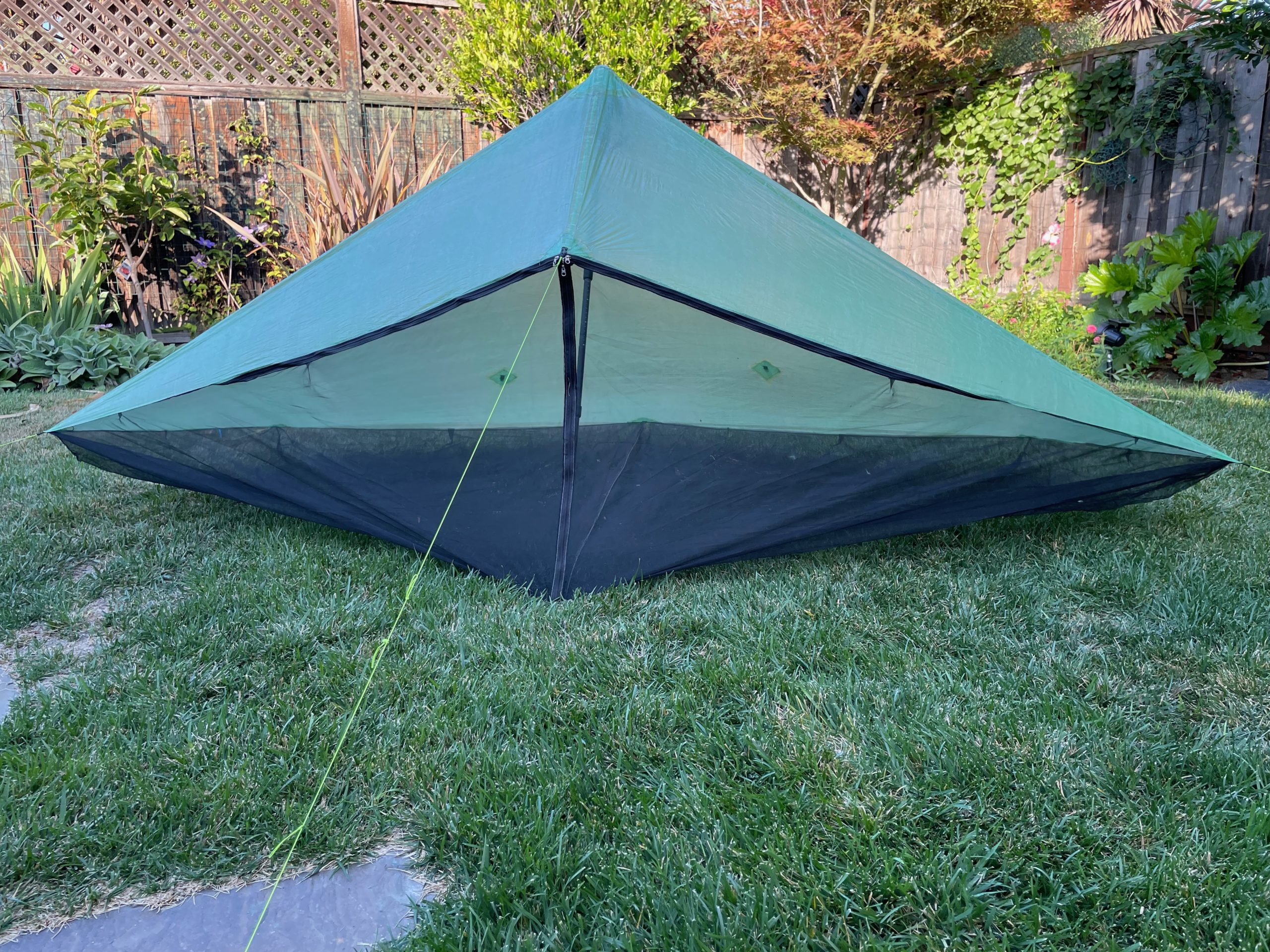
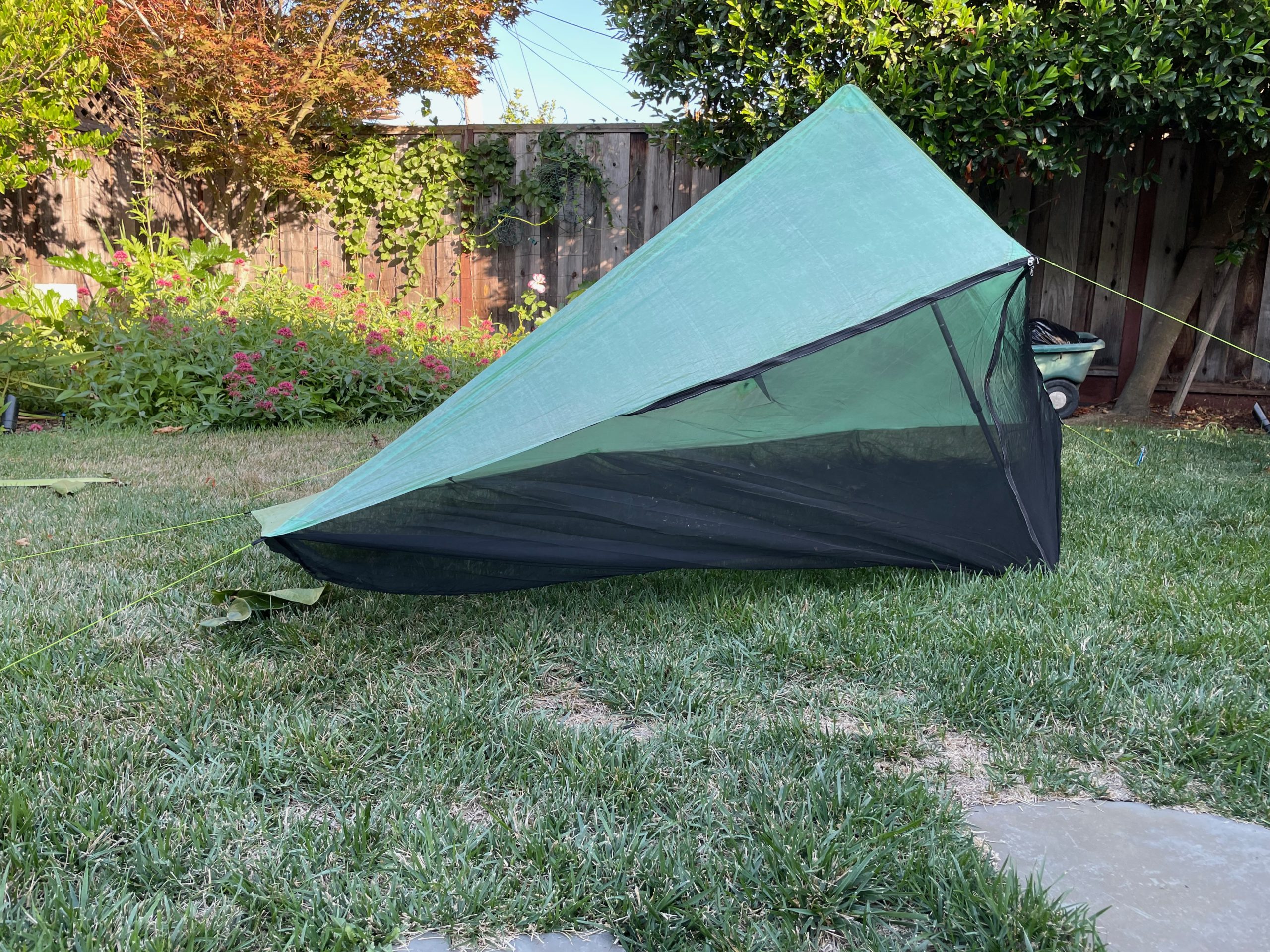
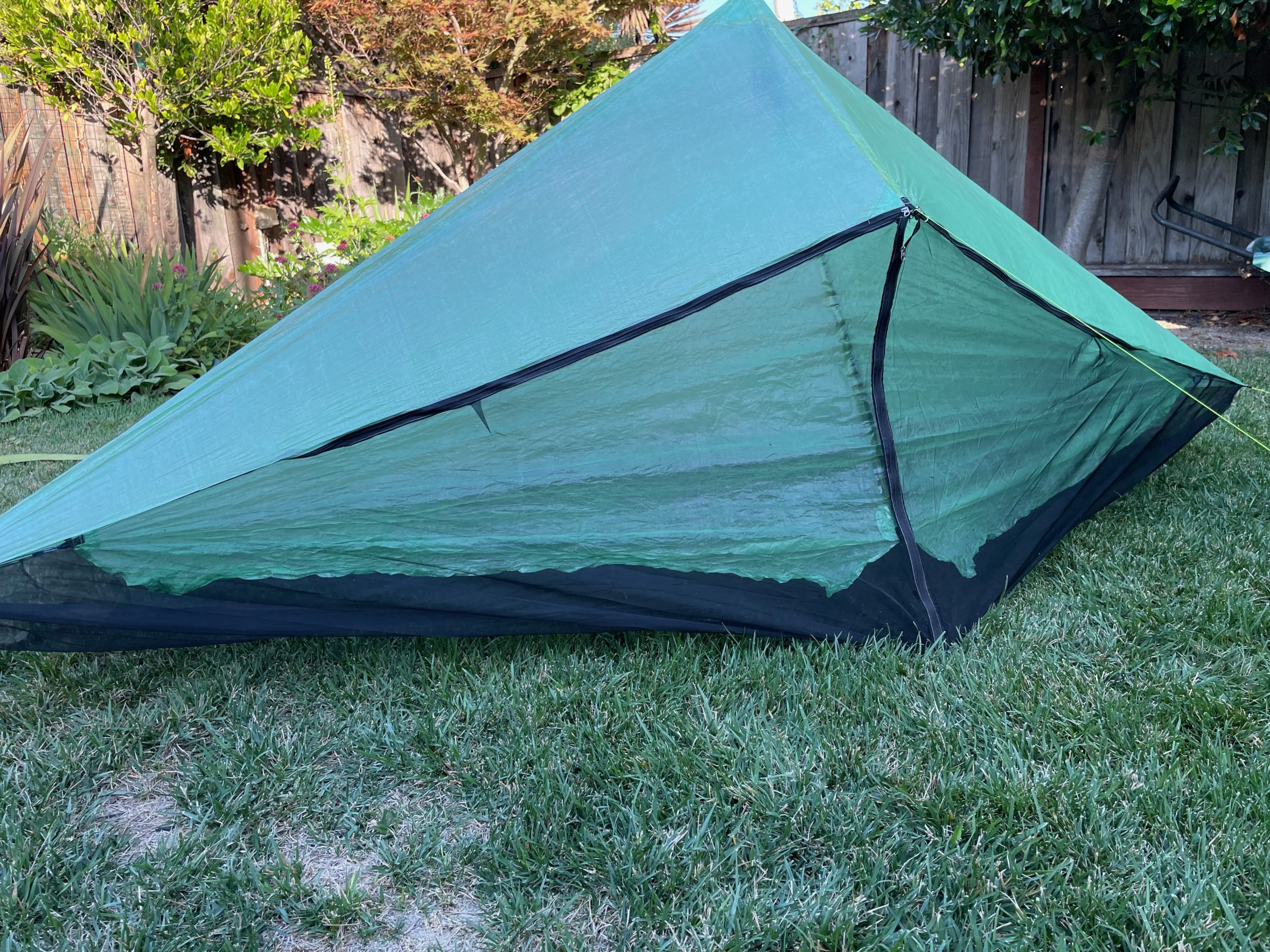
Review Item: ZPacks Hexamid Options: Cuben with Netting Manufacture Year: 2010 Listed weight: Cuben shelter, guylines, and bag 8.9oz Weight as delivered: tarp+attached guylines 8.3oz MSRP: US$259, no longer made
I have a first generation which uses three zippers that meet at the top peak. Joe has now switched to a single zipper to save weight and reduce the risk of zipper failure. The other major change is that the seams in the current generation Hexamid are primary joined by sewing rather than by taping.
Summary
The Hexamid, especially the Cuben + netting model, is an amazing light solo shelter which is fast and easy to set up with a taut pitch. There is adequate of space for one person and gear. While sharing a Hexamid would be possible, I would only do so under exceptional circumstances because I think the roof slope doesn’t leave adequate space for the person furthest away from the door. Obviously, Joe found that it could work for couple on the second half of his five month CDT hike.
Things that I liked:
Super-light weight
Fast, easy setup which results in a taut pitch which has been stable for me in >=35mph winds
Good ventilation
Plenty of bug free space
Things I don’t like:
Entry is too low (28”) to enter without brushed against the top or crawling on the ground
In more extreme conditions not enough protection from side blown rain, though optional doors helps a lot.
No line locks.. but this is easily added by user
If you experience heavy mud or freezing temperatures the netting can get “stuck” in the ground.
My total shelter weight is 17.8oz which includes the Hexamid 8.3oz, optional door 1.5oz, 8 stakes, 2oz, MLD SuperLite Bivy 6oz. This weight doesn’t include 1 GG Lightrek 4 pole 3.9oz. In good weather and low bugs I cowboy camp using the bivy with the Hexamid staying in my pack.
Description
The combination of the ZPacks Hexamid product page, and Tony’s pictures from BPL Pt Reyes Trip (starts at picture #17) gives a pretty good feel for the shelter.
I have a Cuben Hexamid with netting. Since I purchase my Hexamid, Joe has added an extended beak which would be a good alternative to the door, and is now also selling a separate bug tenting with the tarp. While I might have preferred the extended beak, I still prefer the netting being fully integrated with the tarp rather than separate because it provide more bug free space.
There is also an optional 1.5oz “door”. In mild conditions I started using the Hexamid with a Gossamer Gear Polycro groundsheet (1.3oz) which I place inside the shelter on top of the netting. I eventually switched to using a MLD Superlite Bivy with eVENT foot which weights 6oz. I am using the bivy to help keep the foot of my quilt dry (more on this later), to control drafts in colder conditions, and generally keep my quilt contained.
Field Conditions
In the first three years I used the Hexamid in a variety of conditions. From near sea level on the California coast, to 12k ft in the Sierras. I got caught by in a couple of unexpected snow storms. Temperatures have ranged from 15-85F, with a significant number of the nights above dew point which is pretty unusual in my experience. There were a number of nights below dew point so I can talk about condensation. Wind conditions have varied from between completely calm, to clocked at 35mph as the wind was slowing down… I am sure it was quite a bit higher that that at it’s peak. The shelter saw number rain storms, included a three day storm which dropped more than an inch of water in an hour, and a few moderate hail storms.
Performance
Overall performance is quite good considering this is a extremely light weight three season shelter. The netting floor is a surprising idea. Placing a ground cloth over the netting does indeed seem to work if you keep the ground cloth away from the edges. The water runs down the netting on the outside of the ground cloth providing good protection. The one issue that needs to be managed is that wind blown rain that can come through the netting and pool on the top of the ground cloth. I would not want to use this shelter in a real rain storm without some sort of supplemental protection, especially if the wind shifted so it was blowing toward the door rather than the back of the Hexamid. I think could stay dry without supplemental protection when awake, but experience has shown me that I move too much while asleep. I am sure I would wake up with the foot and maybe the head of my quilt soaked if I faced a heavy rain while I slept. Using either a bivy, the optional door, the optional extended beak, or maybe ground cloth with bathtub side and an elastic strap to keep a bag/quilt inside the ground sheet would have worked.
Ease of Setup
This is an easy shelter to pitch. Just follow Joe’s video of setting up the Hexamid. I found that after three attempts I could set up the Hexamid more quickly that Joe does on the video. The only slightly tricky part was getting the pole properly adjusted. The first two times I went to set up the Hexamid I didn’t pull the pole quite forward enough. It’s important for the bottom of the pole to be directly under the front corner of the beak.
There are three supplements I would recommend. First, as Joe recommends, you need to leave approximately 8 inches of slack between the front two guylines. Rather that having to approximate this each time, tied a knot at that exact point. This way I pull the shelter tight, and then drive the stake in at the knot location. Second, I often camp places that are extremely rocky which makes placing stakes challenging. Fixed guylines aren’t ideal. You can retying the staking loop on each trip that needs a varied lengthy, pre-tie a few loops at different lengths, or purchase a set of mini line locks. Finally, I would recommend doing a small shock cord loop for the two pullout for the middle of the shelters walls to insure you don’t over tension them.
Condensation
For whatever reason, many of my trips stayed above dew point, so most night I didn’t have condensation. I did see a number of nights below dew point, but even then, the condensations seemed lighter that I am used to. It seems like Hexamid is a bit less prone to condensation that other shelters I have used. Is because Cuben is less prone to condensation that Sil Nylon or Spinaker?
Rain Protection
A storm was rolling in just as the Hexamid arrived at my home. I set it up with the door facing the direction the wind would be blowing on the theory that this would provide me information about performance in the worst case which can happen if the wind shifts once the shelter is set up. I found the rain protection surprisingly good the first two nights. The first night got some rain, the second night got several hours of hard rain with winds averaging 10mph. While the rain did come through the netting, I found the space from the ridgeline back stay dry. The first night I placed the leading edge of a polycro ground cloth a few inches closer to the door than the top ridge. There was no noticeable moisture accumulation on the ground cloth. The second night the ground cloth was still dry, but the the foot of my quilt did get slightly damp when the wind picked up a bit. The surface dried completely in an hour or so in 50F, 80% humidity so it didn’t get that wet. I expect that if I had deployed the optional door, that the foot of my quilt would have been dry. The third day we have some wind gusts than were around 15 mph which drove rain through the netting on to the top of the ground cloth near my head which accumulated a small puddle. Neither me nor my quilt got wet because we were on top of my pad. I believe if the ground cloth’s leading edge was was under the ridge line rather than pushing under the beak that I wouldn’t have had any accumulation on top of the ground cloth.
I moved the ground cloth so it’s leading edge was at the ridgeline. The netting that was formerly under the ground cloth as well as the ground underneath was almost completely dry in a couple of hours. It seems to me that having a netting floor to help manage moisture might work well. The third night we had some good gusts. I don’t know wind speed but I am sure it was more than 20mph and some very hard rain for around 20 minutes. The rain reached slightly beyond the ridge line and got the edge of my quilt wet. I wish I would have deployed the door. The fourth day and night I deployed the door. We have some very hard rain with wind gusts over 30mphs. I had no problem staying dry though I had to be careful with me feet because the Hexamid narrows at the ends. Based on this experience, I would highly recommend the optional door for more severe weather conditions. Note: One of the biggest challenges I had was because I used a quilt which drapes over the side of the pad.
After 4 days in the rain I shook the Hexamid out and weighed in. It weighted 15.5oz… nearly doubling it’s weight from accumulated water. After hanging two hours in a 55F garage at a 60% humidity the Hexamid was still slightly damp to the touch, weighting 10oz.
On the next several rainy trips I had issues using a flat ground cloth. I couldn’t seem to find the right placement. Either the ground cloth extended too far so water pooled on top of it, or the ground cloth didn’t extend far enough, and my quilt would end up getting wet because there was no ground cloth between it an the wet ground. This included one of the trips where I did use the door to get more space toward the front of the Hexamid. I think a big part of this is that I use a quilt which I leave spread out in warmer weather to ventilate. If I had consistently used the straps on the quilt or being using a traditional sleeping bag, I think I could have found a placement of the ground cloth which would have worked in all by the worst storms.
One thing that helped was making a very shallow “foot pocket” by forming “corners” and slightly raising the side of the polycro with tape. This was helpful because the shape of the Hexamid has the edge of the tarp coming in significantly near the front and back corners. I might be a bit more sensitive to this than some people because my quilt has a very light shell that doesn’t have the best DWR finish. After two years with a number of rainy trips I decided that I was not having fun with my improvised bathtub floor ground sheet. I stayed dry, but keeping my quilt dry was hit or miss. It never got so bad that I was concerned for my safety, but it was troubling. I considered switching shelters or getting one of the custom ground sheet. In the end I decided to get a DWR bivy because there have been a number of trips using the Hexamid, and using other shelters that a bivy would have been helpful, especially on colder trips when the wind got under my quilt. I now have a MLD Superlite bivy with an eVENT foot and don’t bother with a groundcloth. The bivy also makes it really easy to cowboy camp in good conditions.
Wind Performance
There were several trips where the Hexamid faced 15-20mph continuous wind, and >35mph peaks. Hexamid did fine. When staked firmly, the shelter stayed in place with very modest flapping. In the strong winds there was some flattening of the back wall, but not so much that it caused any problems. There was one trip where winds exceeded 40mph for more than an hour. I only have a few inches of deflection. Several of the light weight tents looked like they lost 1/3 of their volume.
Bug Protection
Provided a roomy, bug free space with great ventilation.
Construction & Durability
The Hexamid is well construction. All the seams were taped, the sewing was even, I didn’t find any frayed edges. While well constructed, the Hexamid was not up to the class leading constructions of the Cuben shelters from Mountain Laurel Designs. Ron Bell of MLD has noted that he switched to a special tape that was significantly better than the traditional sealing tape. Besides being more UV resistant, the MLD tape doesn’t seem to stick out as much. When the Hexamid arrived, a piece of the tape for the peak had partially separated from the shelter. A bit of pressure and the tape was re-affixes, apparently no worse for the wear. In 2022 this shelter had around ~80 nights of use, many more nights in the pack because I cowboy camp whenever it’s possible. The shelter still looks to be in fine shape.
I have some concerns about the fabric swatch that you set the tip of the pole into. Joe reports that it did not wear out or get a hole after 5.5 months of use. I am very surprised. Being a cautious person, I put a rubber cap on my pole tip to protect the fabric. This might not be needed. Joe also pointed out that putting a small hole wouldn’t be a big deal because your ground cloth provides protection from moisture, not the netting floor.
I do have a small tear in the floor mesh. The tear wasn’t from the typical source. It’s torn because I grabbed the floor with a gloved hand and thought it was a piece of clothing which was partially stuck under my pad. I jerked hard, heard a rip, and realized that it was the floor, not my shirt.
Joe has switched from taping the seams to doing a double stitch and letting owner seam seal. Time will tell how this effects durability.
Sold in 2022 when I thought I was done with solo trips because I am mostly doing trips with my wife, and when it was just me I wouldn’t mind the extra weight / volume of our Durston x-Mid Pro2. Hmm… the might have been a mistake. The Hexamid was still usable but there were some places where the cuben was showing signs of wear I missed suggesting a limited lifetime left.
Customer Service
My order was processed quickly, and Joe was able to accommodate a “ship by” date so I could take it on my next scheduled outing.
Compared To / Other Options
There are a number of ultralight shelters which might be interesting to someone considering the Hexamid. Additionally, some people will find the combination of a tarp and either a bivy or nest (net tent) effective. The shelters I think are more closely related to the Hexamid with bug netting are listed below.
Gossamer Gear Whisper: Whisper is a palace with super easy entry and exit compared to the Hexamid. Whisper has perimeter bug netting which you combine with a ground cloth. I like being able to pack the groundcloth separately and to be able to replace it when it wears out. Requires two poles. This is the shelter I am now using on solo trips. So far all the trips have had gentle weather so can’t report of it’s performance in storms.
HMG Mid-1. One person pyramid with integrated bug netting and floor. A number of extra tie-outs for want facing more severe weather. 16.8oz. If I didn’t have the Whisper, this is the most likely shelter I would purchase for my use cases. I found entry / exit easy, not phased by some minor storms (haven’t see in serious storm), strait forward pitch.
ZPacks Plex Solo Lite. I think of this as a refined version of the hexamid. Slightly taller (36″ entry), floor, integrated bug netting. Similar pitch characteristics.
MLD SoloMid or MLD DuoMid + MLD Mid Inner Tent. More versatile and much better in harsh weather with more room inside the tarp at nearly twice the weight and expense. The solo innernet provides a smaller space than the inside of the Hexamid. I don’t have experience with the duo innernet, but expect that it would feel more roomy than the Hexamid sleeping on the diagonal. If I still did winter trips this would be on my short list of shelters to replace my Hexamid.
Tarptent Aeon-Li provides a more livable and storm worthy shelter than my original Hexamid with a smaller pitching footprint and a bathtub floor which removes the need for using a bivy… but means cowboy camping is out. Downside is that the stays would require me to pack it vertically in my pack.
Meadow Physics Abode is a streamlined Hexamid with perimeter netting (you do your own floor). It pitches a bit tauted than the Hexamid so should be good in the same conditions I used the Hexamid. Love the simplicity and the lack of a zipper means that it’s lighter with nothing to fail… but it also means the entry is just 18″… too low for my taste.
SMD Deschutes Plus: Updated Wild Oasis. Slightly cheaper than the sil-nylon, netting version ofthe Hexamid. Not as bugproof as the Hexamid since a groundcloth is laid over the netting without being fully sealed. I borrowed the Wild Oasis from a friend and only used it two nights. The Wild Oasis is a bit more temperamental to set up than the Hexamid, and I found it felt a bit cramped. No personal experience with the Deschutes.
SMD Gatewood Cape + Serenity NetTent. Provides rain gear/pack cover in addition to shelter. The NetTent has less space than the Hexamid. The Gatewood Cape/NetTent has an advantage that you can use the items separately. The combination of Gatewood Cape and NetTent was more expensive and heavier than the Hexamid when I purchased it, but I believe is a reasonably good deal now. I tried using the Gatewood Cape. I found it a bit unwieldy as rain gear and a bit small for my taste as a shelter.
LightHeart Shelter (my review of a prototype): Twice the weight and more expensive buys you a larger living area in a true double walled shelter which can give you almost 360 visibility on the nights you don’t need the fly extended. There is also an option with an awning which would be a real plus when facing extended rain. I had some issues with this shelter being blown down in heavy winds. Attaching the spreader bar to the tent fabric should prevent some of the issues I saw.
Other Reviews
Bushwalker Hexamid Review which goes into even more depth than my review about manage in wet conditions
This was original called “Books that Changed Me” but should have been called “Books that I Highly Recommend”, “Mark’s Canon”, or maybe “Books that I Think Should Change Me”. I now have a separate list which is Books that Really Changed Me. In 2024 I added a few books, but didn’t do a full update. Maybe one of these days.
All of these books enriched my life… but most didn’t result in a concrete change in my life. Most of the books on this list did refine my perspective or values in some way. Just because a book is on this list doesn’t mean I agree 100% with it’s content, often it’s books that I don’t agree with that force me to look deeper into issues and learn.
Before I list individual books, I should note that Encyclopaedia Britannica Great Books of the Western World exposed me to a wide range of literature. I grew up taking this series for granted since my home, and the homes of several of my friends had this series on the bookshelf. I just assumed everyone has at least skimmed this great body of literature. I have since learned that isn’t the case. These days, most of these text are online in places like access foundation great books. I would suggest taking a look at this great series. Have you read a book that changed your life? Drop me a line, I will add it to my future reading list.
LIFE
General Topics: For a nice list of life lessons, check out Life’s Greatest Lessons by Hal Urban. The How of Happiness by Sonja Lyubomirsky scientifically examines what factors result in happiness and discovers Americans are pretty clueless. Do you want to be effective in your life? Try applying 7 Habits of Highly Effective People by Stephen Covey and Essentialism by Greg McKeown. Some people would say principles are obvious… but it’s surprising how many of us forget to follow them. Organizing from the Inside Out by Julie Morgenstern helped me tame piles of paperwork and organize our house. Please Understand Me II by Keirsey & Choiniere will help you understand people who are different from you and maybe give you insight into yourself.
Education & Thinking: How to Read a Book by Mortimer Adler is a classic text which will help you become a better reader. How to Solve Itby George Polya is one of the classic books about heuristic. Examples come mostly from geometry, but applicable to almost everything. De Bono’s Thinking Course by Edward de Bono will challenge you to actually think rather than just react. The Courage to Teach by Parker Palmer discusses the interplay between fears, a person’s sense of identity, epistemology, and community.
Heath:The Spectrumby Dean Ornish, MD. An insightful discussion of nutrition and health. Outlive by Peter Attia which has greatly influenced my approach to health, fitness, and nutrition. [Some notes about Attia].
Marriage: I think the bery best single book on marriage is The Meaning of Marriage by the Kellers. The Seven Principles for Making Marriage Work by John Gottman and Nan Silver examines what factors have an emperical connection to good marriages. Fit to Be Tied: Making Marriage Last a Lifetime by the Hybels is filled with good advice and stories to get you started on the right foot. Build your relationship on the right foundation. Marriage Builder by Larry Crabb reveals that we often look to our spouse for needs they can’t possibly meet. Ed Wheat in Love Life describing the different forms of love that should be found in a health marriage. His Need, Her Need by the Harleys explores how men and women often expect different things from a marriage, and suggests that both people learn to meet the needs of their partner. Deborah Tannen explores how men and women use different communication strategies in You Just Don’t Understand.Non Violent Communication by Marshall Roseberg will team you how to get through the thorniest conflicts by listening well and clearly identifying each person’s needs.
Family and Children:The Childhood Roots of Adult Happiness by Edward Hallowell discusses five key steps which lead to contented life. How to Really Love Your Children by Ross Campbell will help you connect with your children and touch your their hearts. Never Mind the Joneses by Tim Stafford is a gracious and encouraging book which suggests 14 core values than any family would be well served to embrace. No Condemnation by Bruce Narrmore exposes how we all tend to use guilt to motivate, how guilt is hugely damaging, and what are the alternatives. How to Talk So Kids Will Listen & Listen So Kids Will Talk by Adele Faber & Elzine Mazlish is a good book on parent child communications, even if it is difficult to read. Want to build you child’s self esteem? Help them develop responsibility, trust, and honor. Discipline Them, Love Them by Betty Chase is fill with practice suggestions. Want to understand how children development? I haven’t read it, but The Scientist in the Cribb sounds like an excellent book. Touchpoints by T. Berry Brazelton does a good job covering the first few years. Your “X” Year Old Series by Louise Bates Ames & Frances Ilg of the Gesell Institute of Human Development are even better, but they start at the first year. For more books on parenting, see my parenting shelf on goodreads.
Finances and Investing: Want a reminder of all the best principles when it comes to managing your money? Personal Finance for Dummiesby Eric Tyson is excellent. I normally hate “dummies” book, but this book is an exception. Even “smart” people will benefit from this book. This has all the solid advice you would hope a parent would pass onto their children. Unfortunately, a lot of parents don’t know many of the things found in this book. Buffettology by Mary Buffet will encourage disciplined investment based on the real value of a stock… but A Random Walk Down Wall Street by Burton G. Malkiel will argue that you are likely get better long term returns (not to mention spend a lot less time) by investing in a few broad index funds. Real Prosperity by Gene Getz and Money Possessions and Eternity by Randy Alcorn looks at finances from a Biblical perspective and asked the question what super-cultural principles govern our relationship to money and possessions.
Essays & Biographies: Holy the Firm by Annie Dillardwill remind to embrace wonder in your daily life. Abandoned to God by David McCasland is an inspiring biography about Oswald Chambers, author of My Utmost for His Highest. Crosswicks Journals by Madeleine L’Engle shows the beauty of life. Light Force by Brother Andrew is a heart breaking and encouraging story of the church in the Middle East and the need to love the people their.
COMPUTER SCIENCE (AND RELATED STUFF)
Programming: Every programmer should read Donald Knuth’s landmark series The Art of Computer Programming. These books lay the foundations of computer science. Pick up a copy of Code Complete by Steve McConnell. This massive tome is filled with lessons all programmers should learn. If this is too huge, and your mostly work in C read Writing Solid Code by Steve Maguire. Be defensive (it not paranoid). Don’t worry about the specific examples, learn the attitude. If you are so anti-Microsoft that you can’t bring yourself to read Writing Solid Code, then try The Practice of Programming by Brian Kerninghan & Rob Pike. I would recommend any of the books by Jon Bentley, especially Writing Efficient Programs and Programming Pearls, Section Edition which will remind you to work on what will make a difference.
Software Engineering: Rob Reed’s ebook How to be a Programmer ebook is a very practical intro into the challenges of working with others on a software project. If you are working with more than a couple of people, Debugging the Development Process by Steve Maguire could save you some headaches. This book is filled with hard won (but often common sense) wisdom about how to organize and supervise effective software development teams. Is your project going to run for more than a couple of weeks? The Mythical Man Month by Frederick P. Brooks is filled with twenty year old lessons which are still applicable today… will we ever learn? Do you manage a team of software developers? Peopleware by Tom Demarco and Timothy Lister will help you appreciate how much the environment you create will effect productivity (and therefore success or failure of your project). Extreme Programming by Ken Beck pushes a number of development principles to their logical conclusion advocating a light weight, incremental development methodology for small and medium size teams.
UNIX, and Networking: Want to learn how the UNIX environment was designed to be used? Pick up a copy of The UNIX Programming Environment Rob Pike & Brian Kernighan. This book won’t tell you about the hundreds of binaries found on Linux or Solaris, but it will teach you how to use a few tools to do a huge amount. Are you a UNIX system programmer? Pick up a copy of Advanced Programming in the Unix Environment by W. Richard Stevens. The best book to understand the core of TCP/IP is TCP/IP Illustrated, Volume I by W. Richard Stevens.
Systems: If you are thinking about writing a server or build a complex system you must read Hints to System Designer by Butler Lampson. If you are serious about architecting complex systems and pick up a copy of Systems Architecting by Eberhardt Rechtin. Systems Engineering and Analysis by Blanchard & Fabrycky is a wellspring of useful information for system builders. Want to write an operating system and don’t know how to get started? Operating System Design: The Xinu Approach by Doug Comer is just want you want. This textbook was designed for classes which took a holistic approach to teaching operating systems. If you have to implement any crypto, Applied Cryptography by Bruce Schneier is excellent: explanations are clear, source code is provided along side the mathematical formulas.
Science and Technology: If you collect data, look at data, or analyze data, pick up at least one of the books by Edward R.Tufte. Tufte has described the three books as being about, respectively, “pictures of numbers, pictures of nouns, and pictures of verbs.” I most often use what I learned in his third book Visual Explanations : Images and Quantities, Evidence and Narrative. The Design of Everyday Things by Donald Norman will remind you that things should be designed for use. The Ecology of Computation edited by B.A. Huberman gives hints as to where computing systems might go in the future (much of which has arrive 30 years later).
CAREER & BUSINESS
Not happy with your job? Try working through the exercises in What Color is Your Parachute by Richard Bolles. This book will encourage you to figure out what you love to do (your vocation) and do that. The money (or at least enough for you survive) will follow. Your career might not change, but you will have a deeper sense of purpose in your day to day work experience. Now, Discover Your Strengths by Marcus Buckingham to help you think about what drives you.Every Good Endeavor by Timothy Keller is the best book I have read on vocation. Drive by Daniel Pink examines what motivates people which is critical to understand, whether you are an “individual contributor”, or a manager. Getting to Yes by William Ury everything you need to know about negotiating. The Innovator’s Dilemma by Clayton Christensen will help you appreciate how radical change can come from technology that is “worse” than the current state of the art, and why companies need to be prepared to cannibalize their own markets. Good to Great by Jim Collins examines how humble leadership and simple methods can turn good companies into great ones. Tipping Point by Malcolm Gladwell is an interesting analysis of how changes occur among people and provides insight into how small things can make a big difference. Leading Change by John Kotter is a must read (or his article which has the same content but more concise) for anyone who is trying to make big changes within an organization. Process Redesign by Arthur Tenner & Irving DeToro is a very practical guide for someone who needs to update and/or formalize organizational processes. Principle Based Organizational Structure by N. Dean Meyer provides a good model for thinking about organizational structure. Leadership is an Art by Max Depree is one of the best books about making a humane and empowering workplace. All I Really Need to Know in Business I Learned at Microsoftby Julie Bick does a great job of capturing the spirit of Microsoft, which I think is one of the best run companies in the world. This book examines how organizational structure can dramatically effect how well a team can perform. The Art of the Start by Guy Kawasaki provides a good survey of the issues related to doing a start-up.
DEVELOPMENT, SOCIAL ACTION, THE POLITICAL WORLD
My philosophy of government has been largely influenced by Second Treatise of Government by John Locke. The State, Justice, and the Common Good by B.J. Diggs is a college reader which helped me think through the core issue of political justice. I tend to agree with Hobbes… that in the natural world, life is poor, nasty, brutish, and short. The question is, how does the transition take place. The Evolution of Cooperation by Robert Axelrod explores how cooperation can emerge in a world ruled by selfishness with no central authority or rule. Most Americans don’t know a lot about US foreign policy. Rise to Globalism by Stephen Ambrose is a good summary and analysis the US foreign policy in the 20th century. If you haven’t studied US foreign policy, you will learn why a lot of people in the “3rd world” dislike the US. When the world turns ugly can we do anything? Lest Innocent Blood Be Shed by Philip P. Hallie suggests there can be hope. During WWII, the entire community of Le Chambon refused to cooperate with the Nazis and helped more than 5,000 Jews escape Nazi camps. This is particularly impressive when you realize that the Le Chambon population before they started their activities was 5,000.
I need to update this topic because it fells very in-complete. Here are a few books that come to mind… I will need to think about it more.
Forces for Good – Leslie Crutchfield & Heather Grant
Knowledge for Action: A Guide for Overcoming Barriers to Organizational Change – Chris Argyris
Economic Gangsters: Corruption, Violence, and the Poverty of Nations – Raymond Fisman, Edward Miguel
The Birth of Plenty – William Bernstein
The Fortune at the Bottom of the Pyramid – C. K. Prahalad
Tribes – Seth Godin
CHRISTIANITY
The Bible: Anything calling itself Christian needs to stand on the Bible. Written over a period of more than 2000 years. God used many humans, in numerous professions, life situations, times, and languages to convey a common theme. Purist will read the Bible in the original languages Hebrew and Greek. Textual analysis has produced texts which are very close to the original text. There are a number of good English translations. The New International Version (NIV) and English Standard Version (ESV) seems to be the most popular for everyday reading. New American Standard (NASB) seems to be one of the more popular for serious study. King James was a great translation in the 1600-1700’s, but it’s language is dated, and it is no more (maybe less) accurate than the more modern translations. If you are investigating Christianity, Don’t start from the beginning. Try reading the book of John, then the book of Romans, and then Genesis.
Seeking Spiritual Truth & Christianity: The books A Search for the Spiritual by James White and Discovery God by Dennis McCallam are brief but excellent guides to the process of exploring spiritual issues. The Reason for God: Belief in an Age of Skepticism by Timothy Keller clearly addresses the most common questions related to the Christian God I hear. The identity of Jesus of Nazareth is the single most important issue when considering Christianity. Is there credible evidence that Jesus of Nazareth is the Son of God? The Case for Christby Lee Strobel attempts to answer this question with interviews between Strobel (a former legal editor at the Chicago Tribune) and scholars on a variety of topics. Together, these interviews explore Jesus’ divinity, and urge readers to reach a verdict of their own. Mere Christianity by C.S. Lewis contains an engaging enquiry into the reasonableness of Christianity. Basic Christianity by John Stott has one of the clearest explanations of the core of the Christian faith.
Christian Living: In recent years, the book that has most effected my is A Praying Life by Paul Miller. We live by grace depending on God’s power. Their are countless books about basics of Christian life. I would recommend the three volume “Good and Beautiful” series by James Bryan Smith. The Life You’ve Always Wanted by John Ortberg is a single book that covers similar material. Walking in Victory by Dennis McCallum will teach you fundamental truths which are the basis of spiritual growth. This book is the bedrock on top of which my early spiritual life was formed. Green Letters by Miles Stanford covers in more depth but less systematically the topics found in Walking in Victory. Experiencing God by Blackaby & King will help you discover what it means to live for God on a minute by minute basis. Celebration of Disciplineby Richard Foster will encourage you to develop a number of basic disciplines. Release of the Spirit by Watchman Nee is a great reminded that growth often involves pain and difficulty, but the fruit is always wonderful. Finding God by Larry Crabb reminds us that nothing is more important that knowing God. The Sacred Romance by Brent Curtis & John Eldredge will remind you that a dangerous walk with God is better than what looks to be a “safe” path. The Practice of the Presence of God by Brother Lawrence taught me that prayer can be like breathing. The only daily devotional which I have found consistently helpful is the Guide to Prayer for Ministers and Other Servants by Rueben Job and Norman Shawchuck. The Believer’s School of Prayer by Andrew Murray will encourage you to be devoted to communication with God. Hearing God by Dallas Willard is one of the more practical books on understand and living within “God’s will”. God’s Strategies in Human History by Roger Forester and V Paul Marston examines God’s sovereignty and man’s responsibility. This is one of the most exegetical books I have ever read. There are a number of excellent books by Kenneth Bailey which will give insight into Jesus’ teachings, life, and costly sacrifice.
A Life of Service: Many Christians have an extremely vital and dynamic spiritual life during their colleges years. This experience is often lose as people transition to the real world of a job, house, family, etc. Following Jesus in the ‘Real World’ by Richard Lamb will encourage you to wrap your life around servicing people. Don’t let career, material success, or your living situation erode your spiritual life. All Christians are called to a life of discipleship. The Dynamics of Personal Follow-up by Gary Kuhne is the best book I have found describing how to help establish a new Christian. Discipleship edited by Billie Hanks and William Shell is a collection of writing on discipleship from leading lights of the twentieth century. An important ministry is helping people become disciples of Jesus. Effective Biblical Counseling by Lawrence Crabb will help you understand why people do things which seem self-defeating, and how to change thinking (and the heart). If you aspire to leadership, you will find Spiritual Leadership by J. Oswald Sanders and The Character of God’s Workman by Watchman Nee extremely challenging. The Wounded Healer by Henri Nouwen will help you understand how to serve out of your weakness. Christian Leadership by Bruce Powers examines how to help people see the need for change and them to step up the the challenge before them.
Evangelism: A classic book is Out of The Salt Shaker and into the World by Becky Pippert. Understanding the basic shape of someone’s beliefs, their world view, is the bedrock of effective communication. We should strive to understand before we say anything. The Universe Next Door by James Sire examines the major world views that deal with the nature of the world we live in. Inside the Mind of the Unchurched Harry and Mary by Lee Strobel is a great help in crossing the cultural gap which exists between many Christians and the contemporary culture. The book is refreshing and direct, with a good grasp of middle America culture.Francis Schaeffer more than any simple individual shaped in intellectual development of popular Christian thinking and apologetics in the late 1970s and the early 1980s. His books were extremely influential on college campuses. Pickup The Complete Works of Schaeffer.
Church and Missions: Too often, the “Church” becomes an hide bound institution that cares more about maintaining the status quo, that to demonstrate God’s love and greatness. The church is the people of God, not a building, a program, or the pastor. There are many books which have been written on this topic. Unleashing the Church by Frank Tilapaugh is the best to explain how one lets the Lord reveal his will for the church by seeing how he is moving the individuals of the church. Without the Lord, the approach found in this book would be considered “bottom up”, but since we have an active and sovereign Lord, this is a book about seeking what the head of the church is doing. Members of One Another by Dennis McCallum provides excellent guidance about how to build a biblical ethos which could transform your community. Organic Discipleship, also by Dennis McCallum will encourage and guide you toward a life of disciple making. Dynamics of Spiritual Life by Richard Lovelace examines the factors which drive renewal. Other excellent books on the church include Missionary Methods: St Paul’s Or Ours? (free the people and let God work), The Body (principles explained through stories), andThe Problem of Wineskins (the interaction between man made structure and God’s kingdom). Glorifying God, praising God’s name (that’s recounting who He is and what He has done… not running around saying “Praise God”) should be the center of a Christian life. A direct outflow of this great purpose is concern for people who have not heard about our Lord. Let the Nations Be Glad by John Piper is a call for Christian missions which is centered around glorifying God’s name. Eternity in Their Hearts by Ron Richardson is a mind-blowing book about how God has revealed Himself to many peoples in the world. This book suggests that a careful cultural study should be done because you will be able to discover culturally relevant ways in which God has prepared to communicate the gospel clearly to people.
FICTION & DRAMA
Fahrenheit 451 by Ray Bradbury explores what happens when books are outlawed, and TV rules. Shockwave Rider by Jon Brunner took the increasing rate of change being experienced in the 1970s and extrapolated into the future. He envisioned a world wide data network which was used by everyone. This was one of the first books which examined the interaction between the “web” and society. The Dispossessed by Ursula K. Le Guin examines the question What is Utopia? Can there really be a stable anarchy among humans? Billiards at Half Past Nine by Heinrich Boll. The Plague by Albert Camus. Crime and Punishment by Fyodor Dostoevsky. Lilith by George MacDonald. 1984 by George Orwell. King Lear, Hamlet, and MacBeth by William Shakespeare. A Wrinkle in Time by Madeleine L’Engle.
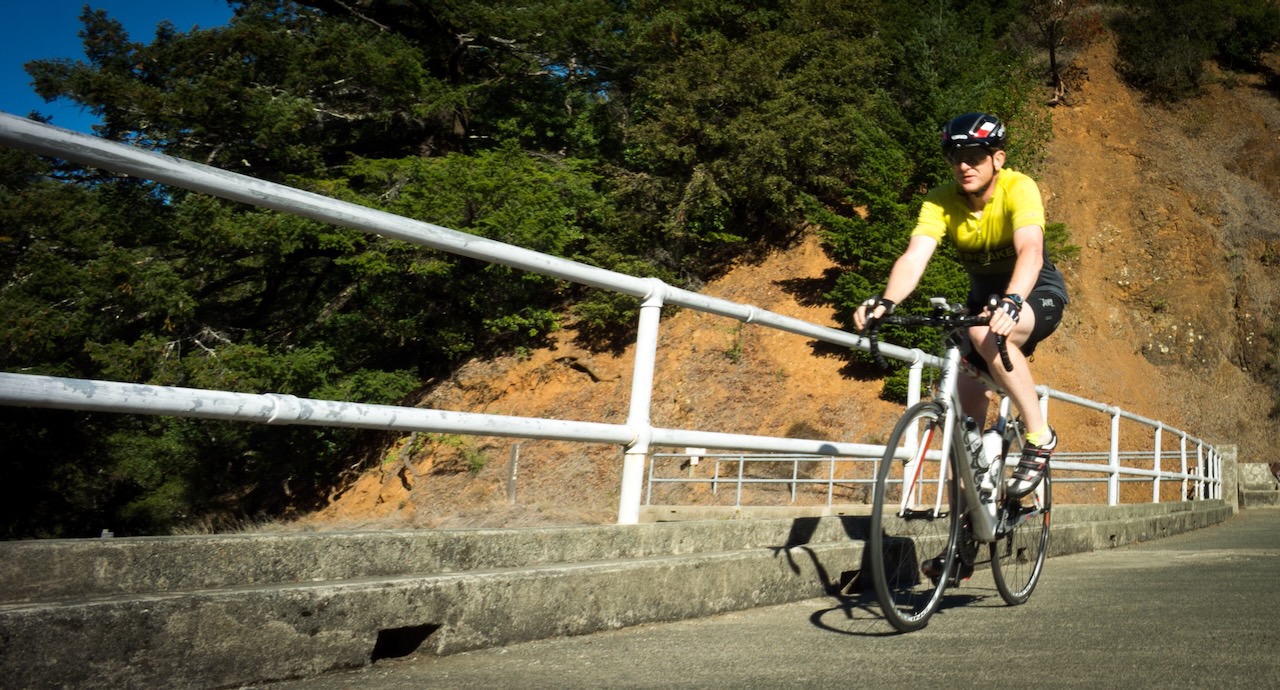
Bicycling can be a life long activity that promotes health and providing a practical form of transportation. Bicycling is extremely energy efficient: 5x walking, and nearly 200x riding in a car by yourself. Check out Robert Förstemannvs toaster for a sense of how much power daily lives consume. I can often reach nearby destinations faster by bicycle than when driving when factoring in traffic, finding parking spot, and walking to my destination. I probably take a bit too much pleasure I as ride pass cars stuck in the morning commute on their way to the office. Just be cautious around cars, bicyclists get 18 miles per micromort while car passengers get 223 miles.
Mid Peninsula Rides
Most of my rides starting from my driveway, so naturally my focus is on rides in the mid peninsula. When I first moved to the bay area I tried most of the Stanford Cycling Club’s Local Routes. Twenty plus years later I am still riding many these routes. My default route is a variant of the “classic loop”, often with an addition of climbing Old La Honda Road (OLH), decent La Honda Road, and maybe going out Canada Road to do some sprint internals. I drop Canada road when time is tight since it’s not as pretty as the rest of the ride. I don’t think I will ever get tired of this route.
Old La Honda is the classic hill benchmark. 8% grade, 3 miles, mostly shade, small number of cars. My experience is that recreational cyclists in good shape can do this in around 30 minutes if they push themselves. I ride with some people with sub 20 minute times… I don’t think I will ever be that fast. My best time is 25:28.
There are a number of “classic” rides with good climbs and nice scenery. When I have extra time I like the route to Pescadero thanks to the refreshments: the Bakery’s wonderful artichoke bread, Duartes food and pies. I don’t drink coffee, but I have been told that the coffee shop there is one of the best in the greater bay area. I also love routes that incorporate climbs on King’s Road and Purissima Creek Road. I tend to avoid Page Mill Road. I find the traffic is a bit more than I like, and the curves on the decent are tighter than I enjoy, and it’s the last place I crashed due to gravel on the road. Other classic climbs include Mt Hamilton, Mt Tam, and Mt Diablo.
Further Afield
The Death Ride provides 15k of climbing over a 129 106 (new route shorter) mile course. The Tahoe Loop is a much gentler ride in the Sierras. This ride come close to living up to its tag line “The most beautiful bike ride”. The Mt Lemon climb just outside Tuscan, AZ is a 6936 ft climb over 30 miles. The Cookie Cabin at the top is a great reward. The decent is fabulous… you can pretty much do the whole thing without pedaling or applying brakes. The Going to the Sun Road in Glacier is briefly open to just walker and cyclists. The GDMBR looks amazing bike packing trip.
Group Rides
The Silicon Valley Bike Collation maintains a list of local bike clubs. Of particular note is Western Wheelers, one of the largest and best organized groups. Several of my female friends tell me that Velo Girls group rides helped gain confidence and enjoy developing their skills. Almost all the local bike shops organize rides. Finally, there are a number of good meetup.com groups. Note: most Bay area cyclists are spoiled, so if there is even a chance of rain, most groups cancel their rides.
My Activities
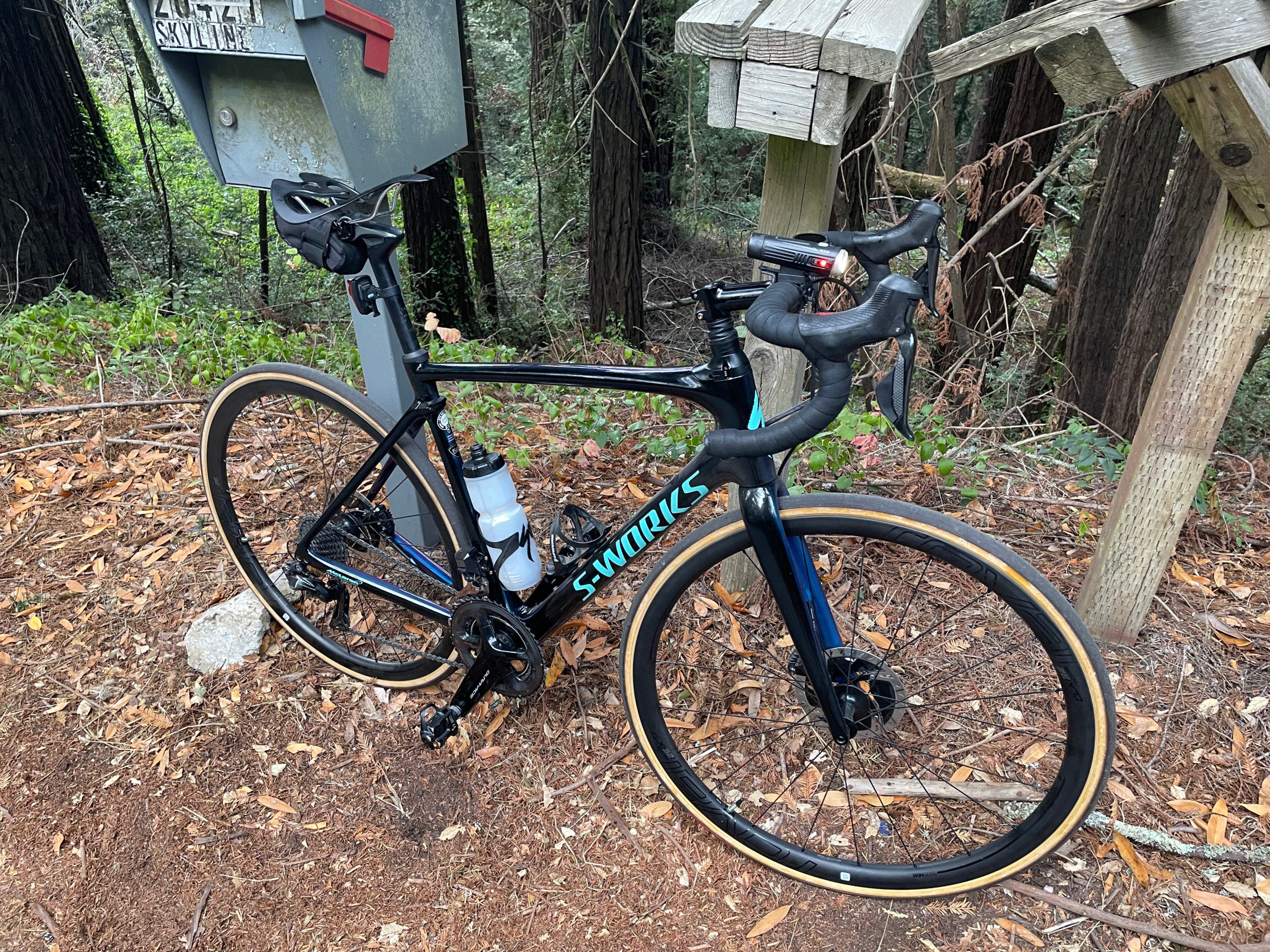
I did a lot of cycling in the 70’s & 80’s… AYH rides (typically class A, B when I was looking for a nice recovery ride) and a bit of racing. I did numerous century rides including the Columbus Fall Challenge and TOSRV. One year I did TOSRV as two double centuries, back to back. The dream was to hit each of the food stops twice each day but the hours the food stops were open made this impossible. In the 1990s I got too busy with life, the amount of touring dropped, my bike became primarily transportation and a source of exercise. In 2003 my daughter started to enjoy bike rides which got me riding for fun again. Around 2010 I started to ride more frequently as was striving to become more fit. The hardest ride I did was Deathride in 2015. I regularly ride up (and sometimes over) Skyline Drive. I am think about doing a bit of gravel.
My Bicycles
I used a Peugeot PX10 from 1975 until 2008. Over the years components failed and were replaced (Simplex to Campy Record detailers, Mafac to Dura-Ace brakes, a couple of wheel changes, several freewheels, a number of chains, etc). I eventually decided that finding parts for a 1970s French bike was too much of a pain. I was also looking forward to lower gearing than 23×45.
In 2008 I picked up a used Trek Pilot 5.2 and gave the PX10 to a friend who loves keeping classic bikes running.
In 2013 I had an accident and thought I needed a new bike (more on this later). Several people recommended getting fitted by by Wade at Spokesman Bicycles. He recommended trying a Cervelo R3 and Specialized Roubaix. The Roubaix was slightly more comfortable, but the R3 felt way more responsive and fun so I purchased it. I found R3 was comfortable enough for endurance rides like death ride, was great for climbing, and handled a lot like a racing bike without being too twitchy. Two years later my R3 was stolen. As I was doing my first test ride (a Giant Defy) I realized I really loved my R3 and decided not to test ride any other bike. I purchased exactly the same bike that was stolen.
Back to my “broken” Trek Pilot. The folks at Palo Alto Bicycling said I could send the frame back to Trek, but this would cost several hundred dollars and Trek would likely decide they wouldn’t repair the frame. I would get a modest amount of credit toward a new Trek bike. The thing was, if I was going to replace this bike, I wasn’t that interested in Trek. After I had purchased my R3 I was trying to figure out what to do with the Pilot 5.2. It was unridable, but seemed too valuable to just junk. On a lark I took it to Chain Reaction Bikes. The owner noted that the carbon on the seat stays were thicker (and sounded different when tapped) than most of Trek’s other carbon bikes. He was pretty sure the frame was ok. I took a chance and sent the frame in. Trek said the frame was OK and repaired the bent derailleur hanger. I donated my repaired Trek to someone who needed a bicycle. In the future I will take a “damaged” frame to Calfee Design in Santa Cruz for a proper assessment.
In 2021 several components of my R3’s drivetrain had worn out and it looks like it was going to take months to source the parts thanks to supply chain issues from COVID. I decided to pick up a new bicycle to use immediately and to repair the R3 as parts became available so I would have a spare. I did test rides on the current Cervelo R-series, Cervelo Caledonia, and a Specialized S-works 2019 Roubaix. I would have liked to try one of the bicycles made by Moot and the 3T Strada ICR but they weren’t available. The Roubaix surprised me. The Roubaix design had been significantly updated making it much more responsive than the previous generation of Roubaix (just slightly less than the R-series) while providing an incredibly comfortable, smooth and controlled ride. My biggest surprise was that I found I likely the Roubaix handling more than the Caledonia. Both Cervelo models are more attractive to my eye, but the comfort + performance of the Roubaix won me over. I normally wouldn’t bother with S-works level build / components, but due to COVID supply issues there were limited choices, and this bike was heavily discounted because the store hadn’t be able to sell it for to years. While I normally won’t be willing to pay for Dura-Ace components, they are noticeably smoother than the mechanical Ultegra level components I normally select. When the battery on DI2 is low, the front derailer stops move before the rear. When the derailer thinks you have been in an accident is goes into crash mode and needs to be reset before you can use it.
Bike “Fitting”
Getting a good fit is important. There are a number of technologies which use video or sensors to get an optimal fit for comfort. good form, and power such as “Guru Fit“. There are also old school fitters whose experience allows the to almost instantly assist people to find a good fit. One friend’s experience which such a fitter:
he watched me walk in had me figured out 80%. 1 minute on a bike and he had perfectly identified how to give me the best fit I have ever had.
I have heard that that Revolutions in Fitness does a good bike fit, but no personal experience.
Other Bicycling Gear
Seats: For many years I used the seat that came from the manufacturer. This mean I used the terribly uncomfortable Brooks saddle for years. People talked about how you would break a Brooks in over time, but it seems to me that the saddle broke me into it. When I purchased the Trek I tried a number of saddles but failed to find one that was sufficiently more comfortable to justify the cost of replacing what came with the bike. I continued to use the saddle provided with the bike until 2013 when I saw a kickstarter project for the Infinity Seat. I purchased one and feel in love. The Infinity seat is the most comfortable seat I have ever used.
Electronics: I used a Garmin 520 bike computer for awhile.. but these days I make do with using my Garmin 955. I have a pair of Power Tap P1 Pedals (2015) because I like objective measures. No longer made. The Garmin Vector pedals use standard Keto cleats, and are lighter. I use a Felix BC21R Bike Headlamp and Cygolite Hotshot Pro 150 (2019) The BC21R uses a removable 18650 rechargeable battery. I don’t love the Felix but it’s getting the job done and the swappable battery is very handy. If you are looking for good recommendations for cycling (actually Tri sports) head over to DC Rainmaker. Ray has amazing reviews and recommendations. I won’t go wrong if you listen to him.
Clothing/Kit: For most of my cycling time I did not wear a bicycling kit. I wore a generic athletic shorts/pants and shirt, and used running shoes on peddles with toe clips. Around 2010 I decided that wearing more traditional bicycle kit would be a good idea. I found that padded shorts were a lot more comfortable that unpadded shorts and found that in many conditions an Icebreaker cycling jersey was better than a running shirt. Later I discovered that the minimalist padding in classic Tri-shorts were just as comfortable is the thicker cycling shorts when I was using an Infinity seat. As I was simplifying my clothing I found that a short sleeve polartec Delta exercise shirt worked really well for me in hot conditions. I have some arm sleeves to protect my arms from the sun. When it drops below 55F, I found adding a GoreWear Shakedry jacket keeps me comfort in rain or just protecting me from the wind.
Your mind is your worst enemy. Do all your thinking before you start riding your bike. Once the pedals start to turn, wrap yourself in the sensations of the ride – the smell of the air, the sound of the tires, the feeling of flight as the bicycle rolls over the road
Shelter selection should be based on how much room you need and the conditions you expect to encounter (rain, snow, wind, bugs, blistering heat, etc). For example, if you only camp in mild weather it would be silly to buy a mountaineering tent designed for expeditions since it will be more expensive, heavier, and not be as well ventilated as a shelter designed for three-season use. If you are camping in the Canadian lake district in June, taking a tarp without any bug protection would be stupid. If you are above tree line in the winter, it would be suicidal not to take a four season shelter designed to handle high winds and snow load. A corollary is that there isn’t one shelter which is perfect for all conditions… so if you adventure out in all seasons you might want to think about owning at least two different shelters. The issues I consider when looking at a shelter are:
appropriate protection in view of the conditions expected
ability to handle snow loads (sidewall angle / material)
blocking spin-drift (solid walls, if not snow skirt)
ventilation (summer want a lot, winter I don’t want ventilation other than high vent)
if double walled can outer wall be set up first
bug protection
user friendly / low hassle
ease of a basic pitch
ease of a storm worthy pitch
ease of entry (I like side rather than front entry)
need to tighten at night? (DCF, spinnaker set and done, SilNylon stretches)
how careful do you need to be when moving (e.g. single or double walled)
The weighting of these factors varies person to person. In fact, my weighting of these factors depends on where I am going to use the shelter. I have noticed that some people tend to gravitate to shelters that are as open as possible. They want to be as fully connected to their environment as possible. I often see these people using flat tarps. Other people want their shelter to be enclosing and protective. Walls and floors are important. While I have used a flat tarp and cowboy camped, I find that I often like some sense of boundaries, especially on solo trips. I know that I could easily live without my “walls”, they can give me a psychological comfort that makes the trip more enjoyable.
Quick Recommendations
I am often asked to recommend a free-standing, two man, three season shelter with two doors. The Durston Design X-Dome 2 is I think best option today. Just 2.7lbs, the space is very usable, easy to pitch, and remarkably weather resistant (especially if you use trekking poles for extra support). The Slingfin Portal-2 is another excellent 2 person which can easily handle 3+ season conditions. For light weight, free standard, 4 seasons, the Slingfin Crossbow 2. Big Agnes Copper Spur 2 Platinum and MSR Hubba Hubba are a bit heavier, not as protective in storms, but can be found in bring-and-mortar stores. A good “budget” tent is the $199 REI Trailmade-2. If the free-standing requirement is removed I strongly recommend selecting one of the better ultralight tarp-tent shelters. My first recommendation would be the Dan Durston’s X-Mid 2P is a versatile shelter is valued priced at $289. Want a do everything shelter that can be used in all four seasons, can be used by two but light enough for solo use? Check out the MLD DuoMid XL plus their inner-net.
My Choice of Shelters
I have used tarps and tarptents on the majority of my trips for the last 20 years. Since 2022 I have used a Durston x-mid pro2 for most of my trips: it is light enough for solo use and large enough for trips with my wife or a friend. Stable enough for 3+ seasons, can be opened up for decent ventilation in warmer weather, and easy to pitch if you use a few tricks. Very livable space. For many years I used the predecessor of ZPacks Plex Solo which was called the Hexamid (my review) for 3-season solo trips in California. I recently started using a Gossamer Gear Whisper for solo trips in similar conditions.
Nothing can beat the price / performance of a sil-poly flat tarp. For completely cheap use a 3 mil plastic sheet. Set a line up which will be the ridgeline. Tie some guylines to the four corners using a sheet bend knot, and stake the corners out. If you want a double wall tent, look for a closeout of a better brand such as Sierra Designs, MSR, or REI at places like Sierra Trading Post. I generally don’t recommend buying used tents unless you know it was well cared for and it is in good shape. Waterproof coating can degraded, fabric can weaken due to extended exposure to UV, and improper care can result in mildew and the PU coating disintegrated due to hydrolyzing.
Classic Scouting / Club Tents
There are a few manufacturers who seem to have captured a significant portion of the “club” market. By this I mean organizations which have a stock of gear which is loaned, or rented at low cost by their members. Clubs typically look for low cost options which can stand up to people who don’t treat the gear carefully. The two largest supplier to clubs seem to be:
Alps: I have no personal experience with Alps, but have a number friends who have used them. Alps seems to be commonly used by the boy scouts and budget conscience folks. They seem to be better made than wal*mart / target / etc specials. They are not as light or as well made as many higher end tends made by companies like Sierra Designs. You should never pay suggested retail price for Alps tents. A bit of careful looking should lead you to prices around 60% of MSRP which makes it a good price / quality ratio. Full price is cheap, but not a good value.
Eureka!: In the 70s, 80s, and maybe later, the Timberline was “the” standard tent used by many boy scouts troops, YMCA outdoor programs, etc for backpacking. They weren’t the lightest free standing tents, but they were value priced and fairly durable. I still have fond memories of timberline tents even though there were better shelters, even then. I have been much less impressed with Eureka’s dome tents, having seen a number fail in strong winds.
When I started hiking as a child everyone knew you should wear hiking boots, ideally made in Italy with Vibram soles and leather.uppers. Only stupid people wore tennis shoes while hiking, though often they were brought for river crossings and for relaxing around camp. This is still a common view in the general public.
When I join traditional hiking or backpacking groups, I often encounter people who think I am irresponsible for wearing trail runners, and that I am crazy when wearing minimalist shoes or sandals. I try to explain that I have literally walked thousands of miles in my minimalist shoes without a problem and that there is some good science suggesting a “barefoot” approach is smart… but people are still concerned.
These days trail runners are the most common footwear worn by people who finish long hikes like the Appalachian Trail, the Pacific Crest Trail, or the Camino De Santiago. Trail runners are simply running shoes that have soles designed to have good traction on trails rather than paved streets. They have many of the same properties of our camp shoes: light weight, comfortable, and more breathable than our boots. They are optimized for comfort rather than protection. I have come to love using trail runners and no longer even own a pair of boots.
Ankle support?
Trainrunners don’t provide what most people think of as ankle support… but most boots aren’t significantly better. Boots typically prevent excessive forward / reverse motion which trail runners do not provide. But in most cases it’s lateral motion that results in ankle injuries. Most boot provide little protection from lateral motion. If the boot doesn’t feel like a ski boot or a mid-calf military jump boot, than it’s most likely not giving you full ankle support.
What most boots and trail runners do provide is a good traction, a heel cup and foot bed which provides a good foundation for your foot, making it less likely that your foot will end up at a bad angle.
Wearing boots provide a sense of invulnerability, which can lead to excessive carelessness about foot placement. Wearing trail runners tends to make people aware (at least at an unconscious level) of the conditions they are walking on. The combination of higher situational awareness, better tactile feedback, and more agile feet, make it easier to place feet and enables people to recover a bad placement before full body weight is applied.
Traction
I have found that in nearly all conditions trail runners provide traction which is good as, if not better than classic, Vibram soled hiking boots. The situations where I have found hard Vibram soles to provide better traction have been where I needed a hard edge and/or lateral stiffness so I could drive the edge of my boot into the ground. For example, when going across a steep hill that doesn’t have a trail or descending some scree fields. In most cases I think the best way down scree is to go strait down (sort of like a cross country skier). When you need a better bite uses your heels rather than the sides of your shoes. I think Vibram might have a slight advantage on wet granite.
Sole protection
Most hiking boots have a heavy, protective shank. If you come down on a pointed rock the pressure is spread over the entire foot. With trail runners, the pressure isn’t spread as evenly, so you can “feel” the rocks you step on. In theory, this could lead to bruising you feet which wouldn’t been good.
I have never bruised the soles of my feet wearing trail runners… but I suppose this could happen to people going over very jagged conditions who have sensitive feet. If bruising is an issue, there are optional “rock guards” which can provide added protection.
Top Protection
On well established trails or hiking in areas that have fairly spare vegetation (high alpine, etc) protecting the tops of your feet isn’t that important. In many cases the added ventilation offsets any lack of protection. Additionally, people wearing lighter weight shoes tend to be a bit more aware of foot placement which reduces potential issues further.
There are some environments where the tops of the feet need more protection than the average trail runner. Places that have extremely broken ground with sharp rocks can tear apart the tops of most trail runners, if not hurt the wearer’s foot. Likewise, travelling through areas that have dense stands of plants that have sharp or pointy edges can go right through light uppers. In these cases it is wise to go with a more protective “upper”. While I haven’t experienced this, I understand there are some places (like the Australian outback) where there are snakes that can bite through most shoes. The final situation where I think this concern could be justified is when doing trail work or engaged in other activities that use large, heavy, sharp tools.
Blisters
Blisters are caused by friction or extended pressure on the skin. One of the common problems is footwear which is too tight or crowds the toes together. Historically boots had wide toe boxes and shoes didn’t. Thankfully there are now a number of companies which make shoes that have recognized the advantage of a wide toe box.
Another common cause of blisters is friction. This is much more common in boots because the uppers tend to be stiffer than trail runners. When you walk the boots will be unyielding which will put pressure on specific areas of a person’s foot. It’s common for blisters to appear in these locations. It is also likely that with the boot not yielding that a person’s foot will slide a bit inside the boot. This creates friction. Worse, most boots don’t let out moisture out which makes the friction worse. The best solution for this is using two pairs of socks with part of the sock with the most texture facing the shoe and foot, and the smoothest part between the socks so the rubbing isn’t directly on your foot.
Comfort Normally Rules
I mentioned that when I join more traditional groups there are people who are concerned when I am wearing trail runners. On the beginning of the trip, these folks are wearing heavy duty hiking boots. Ironically, during the trip they will develop blisters which become so painful they can’t put on their boots. What do they do? They finish the hike in their water shoes, sandals, crocs, or tennis shoes. I try not to point out that by wearing my trail runners I have avoided the crippling blisters while having footwear with good traction.
Foot Freedom and Energy
I find that boots with stiff soles makes it harder to enjoy the environment I am in. I like “feeling” where I am rather than being protected for it. I also love a sense of freedom, and not feeling weighted down. When I switched from heavy hiking boots to lighter shoes I noted that I had more energy at the end of the day. Later, I discovered several papers which examples this:
for every 1 lb of footwear, it’s like carrying an extra 6.4 lb of weight on your back
People often talk about how trail runners are “disposable” and how hiking boots will last forever. My experience was that I got around 3000 miles before I needed to at least re-sole, if not replace my boots. Frank Revelo recorded his experiences with 15 pairs of Belleville Boots concluding he could get at least 2000 miles from each pair.
Area
Trail Runner
Heavy Duty Hiking Boot
Shoe Weight
18oz
70oz
Equiv work for this Weight on Back
7.2 lbs
28 lbs
Cost
$75
$200
Service
400-750 miles
3000+ miles
Cost/Mile
10-19 cents
<6 cents
Break In Period
Practically None
Often 100+ miles
Foot Protection
Moderate to Good
Excellent
Moisture Management
Most are fairly breathable. Your feet will get wet. They will also dry in a few hours of hiking. Gore-Tex trail runners are available.
Most are highly water resistant or waterproof. If they do get wet they stay wet for a long time. Feet tend to be slightly damp because when they are sweating, it is hard for the moisture to escape.
Insulation
Typically no insulation on top. Many models have some amount of mesh which helps keep feel cool and well ventilated. The soles though (often made from light weight foam) tend to be more insulating than heavier boots with dense soles.
Tends to be warm on top. Thick leather or material, and typically thick sock to protect your feet from the boots. In cold weather good. It hot weather you feet sweat and swell which encourages blisters to develop.
Reasons for Boots
As mentioned above, I don’t use boots anymore, but I do believe there are a limited number of situations where boots are the best footwear. There are times when the ankle support of a jump boot is needed, when feet need to be protected from a hostile environment. Crampons typically work better on boots than lighter shoes. Finally, it is possible to complete an extended trip with a single pair of boots. This is important it you are in locations with replacing trail runners every 500 miles will be difficult. Some people think heavy boots are best in cold conditions because they are insulated where trail runners are not.
Hiking Shoes
A compromise between trail runners and boots are hiking or approach shoes. They tend to have the thick, stiff soles of hiking boots, but lighter weight and more breathable uppers.