Category: work

work, team culture, leadership

  • Five Minute Rule

    Even if your are the expert, it’s valuable to take the time to listen to others’ perspectives. Engaging in such discussions can lead to surprising insights or beneficial outcomes for all the participants, including the expert. There are two key reasons for this. First, what is considered common knowledge in one field can often be a fresh, novel idea in another. Second, articulating complex concepts to someone outside your area of expertise can help clarify and strengthen your own understanding.

    When Tellme Networks was formed in 1999, the leadership was very intentional in building what was an exceptional company culture. It’s worth noting that most of my former co-workers went on to work for well regarded start-ups and industry leading companies including Apple, Google, Microsoft, LinkedIn, Invidia, Netflix, and Amazon have comment that Tellme had the best culture they ever experience in a workplace. Often practices were promoted to reinforce our values. One of these practices encouraged people to place a high value on learning, mutual respect, collaboration, and efficiently getting results. I called it the “Five Minute Rule”.

    When new people joined the company we would tell them:

    We are extremely selective in who we hire. If someone is working here, they are one of the best people in whatever field they come from. If someone asks a question or makes a suggestion, always take time to hear them out. You might be surprised by what comes of the conversation.

    When I explained the five minute rule I would often share the following story.

    In the 1980s folks at Xerox Palo Alto Research Center (PARC) built a directory service (think Microsoft Active Directory) that spanned multiple countries and companies.  Connectivity wasn’t always up, and several of the links were quite slow (56Kbit/sec). As a result, updates to the directory were having trouble completing and links were saturated by directory updates. A breakthrough came from the field of epidemiology. What if the directory updates spread like a virus in an epidemic?  This question produced the solution which enabled XNS Clearinghouse to scale beyond any system of its era. A description of what the team discovered can be found in the landmark paper Epidemic Algorithms for Replicated Database. Microsoft Active Directory, created more than a decade later failed to address issues in this paper resulting in operational issues for organizations trying to use the early versions of AD at scale.

    The “five minute rule” was operationalized at Tellme in the following way:

    Everyone was encouraged to ask questions or make a suggestion when they saw something that didn’t make sense to them. It was ok, if not encouraged to cross departments and to “skip levels”.  Line engineers could ask our CFO about the company’s model for revenue recognition,  someone managing external suppliers could ask the director of architecture about the system design. A VP in sales might ask an engineer if they had considered a different framing to a problem.

    The other side of this rule was that if someone came to you with a question or suggestion you should always be willing to take at least five minutes to talk with them.  Ideally the discussion would happen when they approach you. If you were busy, you would schedule time for a conversation within the next week.

    These conversations were always productive with a few possible outcomes:

    • The question / suggestion reveals that there was an improve the “domain expert” could make.
    • The question / suggestion revealed something that hadn’t been clearly communicated. The domain expert found they needed to be more crisp and clear in their communication. The person who asked the question / made a suggestion now has a better understanding of what another team was doing. This leads to deeper trust and alignment between the individuals and the teams.
    • We discovered that there were multiple, legitimate approaches. We would need to agree to disagree of the optimal solution, permit the person doing the work to decide, and then commit across the company to support the plan. Once the decision is made we would remind each other of Barksdale’s “Don’t play with dead snakes“, PARC’s rule, “The person who does the work makes the decision (e.g. don’t bother the driver)”

    I came to deeply appreciate cross domain interaction while working at PARC. Tellme was the first place I saw it purposely built into the culture. I introduced this practice to every team / company I worked with after Tellme.

    Related Content

    The way of fools seems right to them, but the wise listen to advice. – Proverbs 12:15

  • Optimal Group Sizes

    The optimal size of a group is first determined by the function of the group. A group will need the requisite skills, abilities, experience, and manpower to accomplish its goal. In addition to function, there are cognitive and social underpinnings which influence the optimal size of a group. Studies suggest optimal group size tends to cluster around 5, 15, 50 and 150.

    Dunbar’s Number

    Robin Dunbar, an anthropologist and psychologist, proposed that 150 is maximum size of a group that can maintain stable social relationships, where each member knows every other member and how they relate to each other. For a group of this size to remain cohesive, as much as 42% of the group’s time would need to be devoted to maintaining relationships which is can only happen when the group is in close proximity and with strong survival pressures. See the Dunbar’s Number wikipedia article which provides additional background information and optimal social networks (the paper) which provides insight from modeling. 

    Dunbar also identified a sequence of sizes for cognitively efficient social groups: 5, 15, 50, 150, and 500. Each of these sizes represents different layers of social relationships, varying in the strength of these relationships.

    Other Theories

    The largest group size that can maintain effective coherence, deep trust and highly efficient communication is generally considered to be relatively small, typically under 10, though the exact number can vary depending on the context and the nature of the group’s interactions.  It has been suggested that online groups might be able to function effectively at higher numbers of participants. There are a variety of theories and research topics in psychology, sociology, and organizational studies that can help identify factors which determine the optimal size of a group:

    1. Small Group Theory / Dynamics (3-20 members): Research in small group dynamics typically finds that groups of around 3 to 8 members are most effective for tasks requiring close collaboration and communication. In such small groups, members can form strong interpersonal relationships and maintain a high level of mutual understanding.  When the goal is to foster deep connections and effective communication in a community setting the community can grow to around 20 people with smaller groups within the larger community can ensure everyone feels heard and supported.
    2. Communication Network Theory: As group size increases, the complexity of communication channels also increases exponentially, making efficient communication more challenging. Smaller groups allow for more direct and clear communication.
    3. Collective Intelligence Theory: This theory would support a group size that balances diversity of thought with the ability to make collective decisions effectively, which could align with a smaller to medium-sized group.
    4. Steiner’s Model of Group Effectiveness: This model would favor a group size that maximizes productivity (in terms of community support and cohesion) while minimizing losses due to potential group conflicts or inefficiencies.
    5. Social Loafing Theory & Ringelmann Effect: These theories suggest that in smaller groups, members are more likely to contribute actively and take responsibility, which is vital in a community.

    Teams at Work

    When it comes to teams taking on a technical task, Amazon has popularized the idea  of the Two-Pizza Teams, that is effective meetings and teams are small enough that 2 pizzas can feed the gathering.

    Highly functional start-ups can easily grow to 50-150 people and keep good alignment of collaboration across the company. After this alignment tends to pull apart as subgroups interests come into conflict. As a group grows it’s impossible for everyone to recognize, much less “know” each other. Individuals gravitate to only knowing members of their team.

    The most effective strategy when a company is more than 150 people is to identify people who can be interfaces for the other teams. The works best if you have a personal relationship with one or two people in each of the teams who you can build trust with, and who can represent this team to you. This often works best if the person is not the manager or director of that team. Having relationships with people in other teams naturally occurs when people join an organization which was smaller than 50 people, when the company was small enough to know everyone. As the company grows larger, these early team members typically know at least one person in every major group. People who join companies when they are larger, this has to be an intentional activity. Smart companies provide opportunities for people to interact with members of other teams personally, in a context free of work pressures.

    Often a mission is too large to be taken on by a small team. A common solution to this is build a hierarchy of teams with middle managers with one or more directors or executives that leads the group. When (not if) projects fall behind expectations there is a temptation to add additional people. This always ends badly. See the classic book The Mythical Man Model for a description of this.

    The most extreme example I saw of how a large team can be hampered by size was a skunkworks project of around 8 researchers at Xerox PARC that built a product based on a series of tools that were in common use at PARC. At the same time a “clean sheet” product team was assembled to create a very similar product. The product team grew to 250 people and failed to deliver a useful product after two years of work. Eventually that team grew to 750, then downsizes and refocused. After five years they finally produced a product that was mostly competitive with the product the researchers had been selling to customers for the previous five years.

    Often the best solution for taking on larger missions is to have a network of autonomous teams which collaborate. This approach was eloquently discussed in Team of Teams by General Stanley McChrystal.

    Group Sizes at Church

    I have been part of church groups which ranged from a couple of people, to several thousand. It seems to me that

    Discipleship: Discipleship is often portrayed as a one-to-one meeting of a “master” and a “student”, where the master is passing on their experience. While this can work, I have observed that this sort of intentional life transfer works best in the context of a small group where people have both the opportunity to learn, and to share, help, serve, teach each other.

    Life/Community Groups: Truly sharing life with others takes time. People need to be able to share what’s happening with them on at least a weekly basis. This level of sharing can’t happen in the group is more than 15 people or so. More than that, and people don’t have enough opportunities to share.

    Medium Size Groups: Over the last two millennium, churches typically were 50-150 people. This is large enough for the full diversity of gifting to be present while;e small enough that everyone can recognize each other. In meetings of this size there aren’t opportunities for everyone to share with the entire group each week, but it’s small enough that people will have repeated contact with each other to the point they will have some understand of others needs and ways they they could be of service.

    Large Size Groups: In the USA there has been a trend toward mega-churches which are able to efficiently make use of resources. For example excellent teaching, run programs which require a lot of people, build spaces to serve the community, etc. People who only attend these large groups will not find the sort of community that church was designed by God to provide. Many of these churches encourage people to join life groups… but I think this is sub-optimal. First, people might not be ready to join a community group. Second, community groups are too small a context for people to learn about and use their gifting. Medium size groups which are more open are very helpful.

    Other Groups

    Over the years Jackie and I have experimented with the optimal size of a dinner group which has the goal of people getting to know each other and share life. We found that 6 seemed to be optimal in providing diversity while providing opportunities for each person to contributed. Conversations naturally flow with effective turn taking. When the group grows to 8-12 we have seen that a skilled facilitator are able maintain a good environment, but without a facilitator the quieter people often don’t have an opportunity to contribute, and side conversations will start.

    Further Investigate?

    The following are papers and books which examine issues related to how the size of groups impacts the groups function.

    1. What is the Ideal Team Size to Maximize Productivity
    2. how to assemble a team with dunbar’s numbers
    3. dunbar’s number in social architecture
    4. Effective teams for the military is a life or death matter. The core of the military are fire-team and squad. A discussion of how function has impacted the size of a squad.
    5. The Magical Number Seven, Plus or Minus Two: Some Limits on Our Capacity for Processing Information by George A. Miller: While not about group size per se, this seminal paper on cognitive processing limits indirectly informs theories about optimal group sizes, especially in contexts requiring intensive communication and coordination.
    6. Group size and the trust, cohesion, and commitment of group members Shane Drew Soboroff. Dissertations that examines how group size affects trust, cohesion, and commitment in group members.
    7. Why individuals in larger teams perform worse by Jennifer Mueller: examines who as group size increases, individual’s perception of support shrinks.
    8. Communication and Group Decision Making Randy Hirokawa & Marshall Poole. This book provides insights into how group size affects communication and decision-making processes within small groups.
    9. Research of George Homans. Best know for his paper “The Human Group“. This is a foundational text in understanding group dynamics.
    10. Group Dynamics by Donelson R. Forsyth: This comprehensive textbook. Several sections, such as group coherences, collective behavior, and communication talk about how size has an impact.
    11. The Five Dysfunctions of a Team by Patrick Lencioni: Addresses team dynamics, indirectly touching upon group size issues.
    12. Designing Team-Based Organizations by Susan Albers Mohrman, et al.: Discusses organizational design and team size in the context of knowledge work.
    13. Group Creativity: Innovation Through Collaboration by Paul B. Paulus and Bernard A. Nijstad: Explores how group size affects creativity and innovation.
    14. A Meta-Analysis of Group Size Effects in Electronic Brainstorming: More Heads are Better than One – Alan R. Dennis & Michael L. Williams
    15. The Difference: How the Power of Diversity Creates Better Groups, Firms, Schools, and Societies by Scott E. Page: Addresses how diversity in groups, influenced by size, affects performance.
    16. The Wisdom of Crowds by James Surowiecki: This book discusses how large groups can be remarkably intelligent and are often smarter than the smartest people in them
    17. Team of Teams by General Stanley McChrystal: Examines of in the face of a chaotic world, small teams which are given significant autonomy with the ability to partner with other teams are significantly more effective that large, top down organizations.
  • Layoffs Done “Right”

    The recent wave of layoffs within prosperous tech companies has been a wake-up call, especially for younger professionals who have not experienced previous economic downturns. However, those familiar with cyclical business trends or the relentless pursuit of “shareholder value” are neither shocked nor surprised.

    Why Layoffs Happen

    Layoffs often signal that a company’s executives believe there’s a pressing need to recalibrate the balance between the workforce and the firm’s mission or products. This misalignment could occur due to various factors:

    • Unsustainable Business Model: In simple terms, the revenue generated doesn’t justify the costs of product delivery.
    • Product Misalignment: The company may be investing in products that don’t align with its core mission or that are not effectively serving its customers.
    • Irresponsible Hiring Practices: During rapid growth phases, some companies might hire recklessly, resulting in an inflated workforce.
    • Overemphasis on Shareholder Value: When shareholder value becomes the primary yardstick for performance, both employees and customers suffer.
    • Significant change in Market: A company workforce might have been scaled appropriately when a significant change in the economic environment or industry results in scaled back growth. This is often what companies say, even when the previous issues was the primary driver.

    The Consequences of Poorly-Executed Layoffs

    A common mistake is implementing across-the-board cuts based on arbitrary targets, such as reducing the workforce by 10%. This fails to consider that not all teams contribute equally to company misalignment.

    Even worse, when layoffs are solely used to appease market expectations, they often become a recurring issue, indicating a lack of strategic depth in management decisions.

    The Ripple Effect of Multiple Layoffs

    Frequent layoffs can be corrosive to employee morale. After the initial round, those with the most employment alternatives often exit, leaving the remaining workforce vulnerable and increasingly disengaged. The worse mistake the leadership can make is do a light cut, hoping that more cuts won’t be necessary. It’s better to cut deeply once, with confidence that future cuts won’t be needed, though there is still the risk the company / division will completely fail.

    Caveat: Multiple layoffs is not an indication that the first layoff wasn’t done well IF the following layoffs were due to a new change.

    When Layoffs Are Necessary

    In unavoidable situations, leaders need to do more than just cut costs; they must refocus the company on core competencies and critical success factors. A well-planned approach can enhance the leadership’s credibly, and can signal that further layoffs will be unnecessary.

    Best Practices for Conducting Layoffs

    Effective layoffs prioritize human dignity and clear communication. As outlined in TechCrunch’s article on How to Conduct More Compassionate Layoffs, the bad news should be delivered personally by a familiar and respected authority figures.

    A Case Study: Tellme Networks

    Perhaps one of the most conscientious layoffs I’ve experienced was at Tellme Networks. Founded during the tail end of the DotCom bubble, Tellme aspired to revolutionize voice-interface technology by joining the power of the Internet, the ubiquity of the phone, and the ease of voice interfaces long before smartphones and voice assistants were common.  Within two years, the company raised $250 million and built a team of over 200. When the DotCom bubble burst, ad revenues plummeted, and the enterprise business was going too slowly given our staffing. The company was on track to run out of money within 18 months.

    Strategic Pivot

    Faced with this dire situation, Tellme’s leadership undertook rigorous planning to pivot towards a more sustainable, enterprise-focused model. I believe this was when we started using the RIFLE methodology, (SBS case study) though that might have come shortly after the layoff.

    The executives scrutinized every team’s alignment with this new focus and restructured accordingly. Initial target was a 50% staff reduction. Once the analysis was completed, teams were marked to shrink, grow, or eliminated in service of the new focus. In the end, around one-third of the staff were to be laid off, with several others moving to new roles.

    Transparent Communication

    The exec held an offside with all the managers a day before the layoff was to be announced. Thankfully, there were no rumors of a pending layoff before the offsite. The leadership shared the company’s financial outlook, the planned pivot, and the need for an extremely painful layoff. The managers were equipped to answers questions. help people process the upcoming changes, and asked to commit to help make the change proceed smoothly.

    On the day our of the layoff, people who were to transition roles were individually called into a meeting with their current manager.  They were told about a new role that their current manager hoped they would consider. Then they were told  that a major restructuring was going to be announced later in the day which was going to result in their old position being eliminated. They were highly valuable, and everyone in the company hoped they would stay on in a new role. It was hoped that being informed that they still had a job would lessen the impact of the changes.

    The individuals who were laid off were called into 1:1 meetings. They were told that the company was pivoting due to a failed business model and that if something wasn’t done, the company would be out of business in less than 18 months. They were told that being laid off had nothing to do with their performance, and that many of their fellow employees were losing their jobs due to the pivot.

    Once the people who were most directly impacted by the layoff had learned about the changes a company all hands was called. This meeting, and future all-hands is discussed below.

    Respected Treatment

    People who were to be laid off were personally told by someone in the company’s leadership team they personally knew.  This was not a task that was handed off to HR. People were told “Your performance was great… the problem is the company isn’t going to succeed in the current form. We had to make some really painful decisions to drop a lot of what we are doing.”  The discuss was in a private location so the affected person didn’t have to worry about other people seeing their reaction. They were free to exit without having to interact with anyone, and come back later to retrieve their personal items. If they didn’t want to have to come back, they were free to grab their personal items before heading out. No one was “escorted out”.

    Encourage Those that Remained

    Once the people who had been laid off left the building an all hands was called. The key “talking points” of the meeting:

    • Even though we had raised a massive amount of money,  we would run out of cash before achieving profitability. Without a change, we would “fly the plane into the ground” in less than 18 months.
    • The company was pivoting to exclusively focus on servicing enterprises, initially targeting large customers we could completely delight. The execs believed this strategy would result in the company being cashflow positive before we ran out of money.
    • Hadi, one of the company founders and the VP whose teams were most effected by the changes would be resigning. His organization would now report to Matt who was better prepared to help them success given the new focus. Hadi made it clear he still believed in Tellme and would continue to be involved as an advisor.
    • An acknowledgement that this was super painful. We all had friends and coworkers who were laid off. They were great people. No one deserved this.
    • That all the options the people had earned… even if they hadn’t hit a vesting cliff, were vested, paid for by the company, and given to the people laid off.
    • We should do two things from our colleagues that were just laid off:
      • Use our personal networks to help them find jobs.
      • Make Tellme succeed so the hard work they put in (and the stock they now held) would increase in value.
    • Everyone was given the rest of the day (Friday) and weekend to process, and were encouraged to come back Monday ready to engage in the new plan and see success in our work.

    The transparency and respect for employees continue in the weekly all-hands. Each week a graph was displayed that showed past / current / projected cash on hand, revenue, and expenses with commentary from the CFO about how we were executing compared to “the plan”. Everyone knew the goal was to get to cash flow positive before we ran out of cash and how the company was doing. Once a month our CFO would give a mini-course to help everyone understand how businesses function from a financial perspective

    Poorly Executed Layoffs

    In the last few months I have been stunned by the poor execution of layoffs at Amazon and Google. I expect other companies as well. Some people have noted Tellme was able to execute well because it was small. While size makes it easier, I saw layoffs (or furloughing without layoffs at HP in the 1970s) done by large companies in a compassionate and thoughtful manner.

    I am deeply troubled by what I have heard from people I know at Google and Amazon. This included people who were laid off, who have to lay people off, or weren’t directly affected by the process but are now tried to figure out where things will go from here. These have been individual contributors, managers and directors.

    • The people layoff off, nor the people left, lack at clear sense how the company is going to be changing other than belt tightening.
    • People often learned that they had been laid off because as they were performing their jobs (like carrying for production – customer facing services) their account privileges disappeared. In other cases they couldn’t access the building when the came to work in the morning. Minimally I would have thought schedules would have been arranges so that the person who was to be laid off wasn’t the primary on-call / on-duty person for a service.
    • The people who were tasked with delivering the news were not well prepared and were expected to follow a set script. In some cases an unknown HR person delivered the news. Even when the person who was being laid off had a decade long employment record and significant time as a colleague of the person delivering the news they often didn’t have any sense of a personal connection.
    • The people who were laid off have generally not received follow-up from their former managers. There are exceptions. I know several of my friends who are managers have continued to care for their former team members… but most of the people I know who were layoff off have not received this sort of support.

    We can, and should be better than this. To the people who have been treated poorly… I am so sorry. I pray you find a job which allows you to use all your skills and that your next company will treat you will the appropriate respect and care.

    Caveat: Some of these companies decided to execute the layoff in what appeared to be a thoughtless manner due to their concerns about lawsuits and regulatory compliance. They fear miscommunication would lead to discrimination lawsuits, accusations of insider-trading, etc. This is why cuts were selected at a highly level and communicated in a fairly scripted manner. Personally, I would like to think we could treat people more like grown-ups, such as what’s called for in Netflix culture document, but not every company is built this way.

    Key Takeaways

    Layoffs are inherently challenging. Handling layoffs responsibly requires transparent leadership, a strategic focus, and a commitment to treating everyone involved with dignity and respect. Through ethical practices and clear communication, companies can navigate these difficult phases while maintaining their organizational integrity.
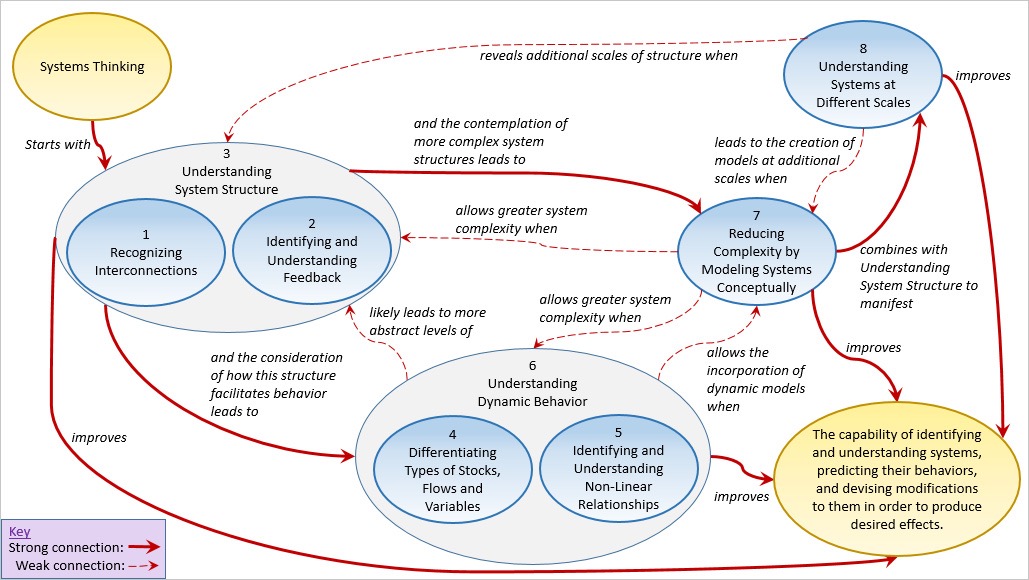
  • Systems Thinking

    I have used systems thinking for most of my adult life. It was at the heart of the infrastructure, services, and human organizations I built. Systems thinking has been a key tool to understand the world around me and to identify the most leveraged way for me to make a positive impact on the world. When I was asked to shared how systems thinking would inform a Human Resources team, I realized I had never written down any thoughts about systems and had never thought about how to explain systems beyond the context of computing systems. This is my starting place.

    Systems thinking is a holistic approach to analysis that focuses on the way that a system’s constituent parts (the elements) interrelate and how systems work over time and within the context of larger systems. Rather than isolating individual components, systems thinking emphasizes the interconnectedness of parts within a whole. Systems thinking  enables people to address complex problems which have emergent behaviors which result from a number of simple feedback mechanisms.  A systems description of systems thinking:

    Figure 3 from A Definition of Systems Thinking: A Systems Approach Ross D. Arnold*, Jon P. Wade. Procedia Computer Science 44 (2015) 669 – 678. 2015 Conference on Systems Engineering Research 

    References

    “Class” Materials

    HR / Leadership Focus

    Related

  • Your Company Isn’t Your Family

    TL;DR – Read the title 🙂

    The HBR Your Company Is Not a Family written by Reid Hoffman, Ben Casnocha, and Chris Yeh  has better prose than what follows here.  If I had found it earlier I wouldn’t have bothered writing this post.

    In the last few months I have chatted with a number of young folks who just got laid off from their first job. When joining “their” company they were told “We are a family”. The company provided meals, social activities, and many other services. Then they received a text informing them they were no longer employed and all their access was revoke. They were shocked and dismayed. I wasn’t  surprised, nor were any of the people who had experienced a business boom / bust cycle.

    Second TL;DR

    • Companies are more like professional sports teams than a family. Companies look out for the good of the company. Employees are resources used to achieve objectives. If someone isn’t helping they are expendable.
    • No company offers long term security or lifetime employment. Select a job because it’s a good match now and has at least a year of “runway”.
    • Family (at least good ones) sticks by you through thick and thin. They always have you back. Everything is faced as a family. No one suffers alone. Cherish your family and give it first priority. Don’t sacrifice your family for work.

    Loyalty?

    There was a titanic shift in business that started in the 1970s. Shareholder / investor returns became a primary (sometimes the only) lens that companies were evaluated by. Loyalty to employees wasn’t important. Care for the customer was variable. Companies that were profitable but not delivering excellent returns on their stock would would often do layoffs, close divisions, reorganize to eliminate redundancies,  close sites, etc to improve their financial metrics. Loyalty to employees no longer mattered.

    People lost jobs not because they weren’t performing, but because the company wanted to cut costs. Being a “company man” with an implicit employment for life disappeared. Companies embraced the “all will” employment. It was during this era that the book “What Color is my Parachute” was released. Executives often got “golden parachutes” while the scores of people laid off were given nothing.

    To be fair, there were some notable exceptions. During a tough recession that hit high tech hard, HP leadership slashed their own comp, asked whoever could afford it, to take a voluntary furlough. Everyone else took a 10% salary cut with a 10% reduction of workdays referred to as “Nine-Day Fortnight”.  Quite different from HP’s announcement in 2022 that they would be laying off 6000 people when the previous quarter posted a 7% profit margin from a $14B revenue stream.

    Choosing a “Safe” Company?

    When I first entered the working world there was still the illusion that working for a “big company” was safer than working for a small company. Most of us had seem small companies close, but the big companies always seemed to have resources to weather unexpected financial storms.  was not interested in join start-up or small companies. I wanted a large stable company where I would have a reliable paycheck and could “pay my dues” and grow my career.  The cracks in this narrative started in the 1970s, and by the 1990s, you would need to be ignorant to believe working for a large company was safe.

    By the 1990s it was clear to me that I shouldn’t expect that “paying my dues” would result in any loyalty from my companies, nor that performing my duties well would guarantee continued employment. This led me to change how I evaluated work opportunities.  My evaluation became:

    1. Would my work promote human flourishing? Would my “customers” have better lives takes to my companies work. Was I going to be leaving our world in better shape than how I found it?
    2. Is this a position that I am uniquely qualified to take? Do I either have the skills and experience required to succeed or the time to develop that experience? Will my strengths be utilized?
    3. Will I be joining a good team. I want to be working with people who will help me grow and learn. I definitely want people who are smarter and better than I am so I can learn from others.
    4. Do I believe that companies finances has at least 1 year, ideally 2 years of runway. I can get up to speed and make a meaningful contribution in 1 year.  2 years is enough time to master a specific role and be ready for something new.
    5. Is my comp enough for me to maintain my current lifestyle.

    A few things that were not criteria

    1. Am I going to make a lot of money / is this going to be an IPO hit?  It’s silly for me to think I can pick a company that will have this sort of success. VCs have access to more information that I do as a prospective employee, and more leverage to make a company succeed and pick winners maybe 1 of out 10 times. It’s unlikely I can pick a winner
    2. Is this a promotion… better title, more salary?  Money isn’t everything. So long as they pay me enough to have the lifestyle I am currently living. Titles aren’t as important as the body of work produced and the relationships that get build when doing excellent work with colleagues.
    3. Is this a company that I can work for until I retire?  The world is changing so quickly… there is no guarantee that large companies that were in the fortune 100 will still be relevant, if even exist in 50 years.

    Prioritizing Family

    As noted in commands for life hospice nurses never hear people say “I wish I would have worked more”.  They hear people say “I wish I hadn’t worked so hard.” so they would have had more time with the people they love and care about.

    Make sure you are spending your time on things that will be valuable throughout your life.

    I will note that there are some seasons of life when work might take time away from family. For example, a critical crunch time where for a week or two you need to put in extra hours to hit a deadline that actually matters. This is not the same as an extended, chronic crunch which is properly called a death march that does no one any good.

    People who are starting a new venture will likely require  taking time and some focus away from family. What’s important is to determine the length of time this will be permitted. Come to an agreement with your family and/or partners about what this duration will be. Set a “checkpoint” date. At the time review how things are going. Do you need to make a change? 

  • HR Isn’t Your Friend

    A common misconception held by first time managers and many employees is that Human Resources, AKA HR, People Team, or whatever is the in-vogue term is these days, exists to support the employees.  Well informed optimists would say HR is called on to look after the interests of both the employees and the organization as a whole. Their responsibilities involve balancing the needs and concerns of these two key stakeholders. 

    In my career many of the individuals in the HR team strive to support employees, but in my experience the HR institution has little regard for employees beyond extracting maximum value. In many companies HR exists to protect the company by minimizing liability and get maximum useful output from the employees. Employee welfare matters only to the extend that it impacts productivities and the company retention targets.

    Making Best Use of HR

    While it’s true that HR teams aren’t on your side, there are numerous ways a good HR team can be helpful and you should take advantages of the services they provide.

    Benefits

    HR Teams typically function as the administrators for benefits programs. Good HR teams will be excellent advocates for employees programs since they know the offerings and helping employee take advantage of the programs improves employee satisfaction against resources already budgeted and will be wasted if not used.

    Policies

    HR teams insure company policies are well documented. Good HR teams strive to insure policies are enforced fairly across the organization, though often there are “golden” people, typically high ranking individuals who get special treatment. The best HR teams advocate for transparency which builds trust and makes it much more likely than policies will be applied in a fair manner .

    Often companies will have a “company manual” which is maintained by the HR team which will hold all the company policies. Whether your company has a manual or not, it’s often useful to ask someone in HR what formal policies exist.  For example, most companies have travel policies which specifies payments, maximum lodging cost (often by location),  modes of transportation the company will pay for, etc.

    Training

    Many companies offer in house training, and/or access to external training and educational resources. These opportunities are often managed by the HR team, though in larger companies departments might have additional resources. Take advantage of these opportunities.

    Recruiting

    The recruiting process is very labor intensive. Writing up positions to be posted. Processing resumes. Reaching out to people who aren’t applying but would be good fit. Screening candidates. Arranging interview schedules. Making sure the candidate feels like they are cared for, are well informed, and are getting feedback. Insuring feedback is processes is happening and a good decision is made. Kindly delivering the offer/no-offer message to the candidate. Educating a candidate what is included in an offer: both good and bad. There are meta processes like developing a good screening system, training people to be effective interviewers, etc.

    In my career I have had mixed experience with folks doing recruiting as part of an HR team. Some people have been superb. They often were involved in the initial “cultural” screening that examine work style / philosophy of the candidate and were able to help the candidate understand the important values of the team they we interviewing for. They made should there were no unnecessary surprises and everything was taken care of. Feedback was provided so I knew what was going well and not so well. If there were areas of concern or alignment which need more conversation. I have also experienced bad recruiters. In one case, they never got back to me after the interview and didn’t return my calls or email to follow-up. I later learned that the hiring manager thought I wasn’t interested in the position.

    Avoid HR For…

    Unlike a lawyer or CPA that you hire, HR personal are not obligated to confidentiality, fiduciary duty, or due care. Their first priority is protecting the company from lawsuits and other adverse situations. They are often required to report things that you would like to keep confidential.

    Conflicts… unless unmanageable

    People on the HR team can be effective mediators but they are no always permitted to do this. .Often company policies and politics can trump a mutually acceptable resolution. If there is a conflict between employees of a company, I would recommend not bring the conflict to HR unless you are prepared to see at least one individual lose their job. 

    How can this go wrong? One example is a young women who felt a coworkers was making inappropriate comments. She was encouraged to talk to HR rather directly address her peer with her concern. In less than a week her peer was terminated with no opportunity to correct the situation. The reporter was shocked and heartbroken with this outcome… the terminated team member was (and is still) a friend.  Before the termination was finalized the two employees talked and came to see  the issue was more a misunderstanding and some insensitivity on the part of the male coworker who would have been happy to change once he knew is relating style could give offense. Alas, once the process was started, the women was not permitted to stop the process.

    Performance Issues… unless termination is likely

    If you are struggling with your job performance, or if you are a manager who is working with an employee who is struggling with their performance I would recommend avoiding HR unless you believe the situation is likely going to end in a termination and want to insure all the rules / procedures are followed. While there are exceptions, HR teams are typically staffed by relatively young people who don’t have a lot of experience coaching people through difficulties and their first duty is to the company, not the employee who is struggling.

    The other thing to note is that sometimes HR doesn’t want someone to be terminated because of the risk of legal action. They rarely understand the wrong person can dramatically impact the entire teams performance. For example 1 problem person on a team of 8 doesn’t reduce the team’s output to 7.5 to 7, it can drop the team to a 5 or less.

  • The Evolution of Cooperation

    Last night I had a spirited discussion with some friends about US politics. One of our friends was expressing a concern that historically the US has been too “nice”, hopeful, helpful. We have created a culture people want to enjoy, but now we will be taken advantage of and ultimately destroyed. We need to be tougher and not be pushed around. I am not sure I would characterize the US as being “too nice”, but I contest that being collaborative is a liability.

    My counter argument is that people are made to collaborate, and maximum value comes when people work together rather than engaging in a winner take all competition. It’s possible for a nation to be collaborative but still thrive even when facing bad actors.

    Brief Update (2021): I recently finished Adam Grant’s book Give and Take which I think is excellent. He argues that often we are not in a zero sum game. and that cooperation can often “increase the size of the pie”. He has a nice section where he describes how effective givers can minimize the impact of people who attempt to take advantages of their cooperative nature.

    The theoretical underpinnings of this viewpoint comes from game theory which is extensively discussed in the book The Evolution of Cooperation by Robert Axelrod. For people who aren’t into books, Leon Seltzer’s article The prisoner’s dilemma and the “virtues” of tit for tat provides a good summary. My super short summary: in a world ruled by selfishness with no central authority or rule, enlightened self interest can lead to effective cooperation in any situation where the participants believe that they will need to interact with each other in the future. In situations where there will be multiple interactions Tit for Tat ends up having the best long term payout. The algorithm is simple. Start by cooperating, and then mirror back the behavior of your competitor. That means “discipline” bad actors, but also “forgive” them if they are willing to cooperating. [A slight variation has a small random probability of cooperating even if the competitor has defected which can break retaliation cycles which out performance pure tit for tat.] Axelrod found that when facing numerous other algorithms, some of which were designed to take advantage of “cooperative” partners, that tit for tat consistent had the best over all returns when playing in multiple round competitions.

    I believe that silicon valley culture is a great example of how this works. In the mid of the 20th century, there were several places that arguably were better positioned than silicon valley to dominate the technology landscape. For example, the Boston area had more capital and a larger educated workforce. Unfortunately for Boston, they also had non-compete employment contracts and people and institutions which were not inclined to collaborate with competitors.

    The former dean of Stanford’s School of Engineering Fred Terman was instrumental in shaping the Bay areas technology landscape to be an open system which welcomes people in, encourages collaboration, and allows many people to succeed base on their merits. Terman later tried to help the research triangle in North Carolina and the area around Austin, TX replicate the successes in Silicon Valley. These effects fell far short of the results in the Silicon Valley. I believe this was primarily due to less willingness to collaborate. A secondary issue was that people were more oriented toward large organizations and struggled to take risks (e.g. less entrepreneurial). Other factors that might have contributed was less access to venture capital and a lower density of talent. I actually think access to capital wasn’t significant, because in the early data of Silicon Valley capital was not established… the east coast had much more.

    A great example of this culture can be seen in the early days of semi-conductors. Competitors gathered weekly at the Wagon Wheel to swap stories and brag about their successes. Sharing took away some competitive advantage, but everyone benefited because really hard problems only had to be solved once, and everyone could move on to the next challenge. One of the best stories from those days was went Intel was having a serious issue. They were betting the company on a new chip. The chip looked good in prototype form but when they went to mass production the yield rate was extremely low. They spent several months trying to figure out what was going wrong. They couldn’t figure it out. In desperation they shared their difficulties with others at the Wagon Wheel. Engineers from Fairchild, arguably Intel’s biggest competitor of the day offered to help if Intel would provide the beer. The engineer sat down discuss the issue. In the end the engineer’s from Fairchild laughed and then said “Find out who on the line is using hairspray, and get them to stop”. Intel did as requests and their yield rates became viable. It turns out Fairchild’s engineers had chased almost an identical problem for a year before they finally narrowed it down when their yields became acceptable when one of their workers was away from the line for several days. The hair coverings both teams were using weren’t fine enough to contain the micro particles from the hairspray escaping.

    For more stories and analysis, check out Steve Blank’s secret history of silicon valley. Technology Review Article Silicon Valley Can’t Be Copied is one of the best articles summarizing what has made the bay area so unique and the home of so many successful startups and Anna Lee Saxenian’s book Regional Advantage identified many of the same characteristics nearly twenty years earlier. Booz-Alan’s analysis identified a Culture of Innovation as being a differentiator, and Accenture attempted to Decode Contradictory Culture Aspects in Silicon Valley.

    It’s worth noting that the Silicon Valley has become a magnet for ambitious, highly skilled individuals. As a result there is a higher density of people who can be the core of a successful start-up than anywhere else in the world. These days it’s not that Silicon Valley grows the people who make amazing start-ups, but rather it has an environment that makes it easier than most places to build a start-up, with a huge number of people who have moved into the area to build the next great startup.

    There is a nice evolution of trust simulation if you want to experiment with different strategies.

  • Why Do Many People’s Faith Drift After College?

    For the last twenty years I have spent a portion of my time each week working with college students at my church. I have generally found the college students’ faith vital with a great interest in making a difference in the world. I have watched these young men and women invest time into serving their communities, devoting time and energy into learning more about God and looking for ways to live out their faith. When I connect up with many of these students several years after they have completed college I typically find folks who still have vital spritual lives who are actively serving in their churches. This is encouraging. Yet, I believe this is the exception. It seems that a large percentage of people who have vital spiritual lives in college end up being “sunday christians”. I have been asking myself and others the question “Why do people see to lose their vitality after college?”

    The first thing I have noticed is that once people leave college, they often leave behind a tight knit and supportive community. Often times, people go from living in close quarters, sharing a dorm or a tiny off campus apartment to a place of their own which doesn’t require day to day sacrifice and interaction with others. The Bible makes it very clear that living in community is very important to ongoing growth… but our culture encourages use to “get a place of our own” rather than look for how to build and deepen community. Secondly, young people are often encouraged to “make a good start” in their field of choice. This often means moving to a new city and starting a job that wants way more than 40 hours / week. People do this to get started and tell themselves that once they get established they will be able to balance life. In the mean time, they have a nice income and have the expectation that the their standard of living should go up now that they are no longer students. So money gets spent. Sometimes consumer debt is rung up, sometimes not. But it is no longer possible to live on the same money that was adaquate during student years because the appatite has grown.

    So is that all there is to it? Keep hanging with friends and don’t get too caught up with money and you will be find? Unfortunately, I think there is more to it than that. I had a wonderful opportunity to talk with a number of church leaders in the last few months. There are two topics which repeatedly come up.

    College Discipleship Often Misses Spiritual Formation

    A number of leaders from the church planting community have noted that college discipleship typically stressed learning disciplines and basic practices, but often failed to get to heart transformation or spiritual formation. This is the very lack which Renovare is trying to encourage. More on this later.

    Vocation and Work

    One of the most common issues is that many people have not been taught to integrate their lives, to understand vocation. So they have a “spiritual life” and a “working/secular” life which don’t get combined. As these two world tug on a person’s heart, the work world often dominates. I tend to agree that this is one of the major issues. The college students that we have explicitly talked with about vocation and integrating faith into all aspects of life have tended to do better in later years.

    I believe that the modern church has been it’s own worse enemy in this regard. While the scripture talks about the priesthood of all believers, we need to quickly divide things into spiritual and secular, and clergy and laity. I believe these divisions make it much harder for people to see it is possible to live an integrated, incarnational life dedicated to service.

    If I may, let me expand on this a bit. I was at the Intersection conference a few weeks ago. This is a conference dedicated to the mobilization of the church and had a track specifically about the workplace being ministry. In the professional track there were a number of very moving discussions where people like Brett Johnson told stories about how business men were learning to be a blessing to their communities through their businesses, touching people spiritual and materially. There are a number of people who have been seeing first hand revival as well as positive economic and development results such as described in The Fortune at the Bottom of the Pyramid: Eradicating Poverty Through Profits by C. K. Prahalad.

    Yet I had a somewhat discouraging discussion with one of the gentleman who was in the pastor’s / mobilizing track. This gentleman is a good hearted pastor who has been looking to help his congregation integrate their lives. He asked a simple question to his fellow pastors. He said: “There is a woman in my congregation who is an executive recruiter and a staffing specialist. She has her own business which is reasonably successful. How can I help her be an effective minister of the gospel?” The answers he got were teach her evangelism and take her on short term mission trips. That’s it!! Yet, here is a women who is in a great position to use her business as a way to minister to people. She can help people find their vocation and calling. She can resist the temptation to place the first qualified candidate in a position to quickly get a commission, and instead work for the long term of getting great matches for people and companies (which in the long term pays dividends). She can work with people to find their skills, there calling, which helps those people be more marketable, and helps the companies hiring them find what they really need. I could go one, but I am sure you can see how there are many ways that she can bless her community while at the same time be even more successful as a business women. Even pastors and mobilizes who are attending a conference which is encouraging integration seem to be missing the mark.

    What To Do?

    Live intergrated lives. Understand that the workplace is as much a ministry as someone who is a fulltime pastor. Your ministry is not just evangelism… it is how you love and serve your coworkers and customers. If is making a difference by bringing character and quality to your work. It is makes good things that will last. There are a number of resources which can be helpful. One of the best books on this subject is Richard Lamb’s Following Jesus in the Real World has been a helpful resource.

  • Business is the Way to Address Poverty

    Many people are aware of the excellent work done by the Grameen bank. They have pioneered micro loans as a way to fuel economic development. A new twist to this is http://kiva.org which is attempting to link donors to the people who are taking the loans. They describe their system as P2P micro loans.

    Over the last few years there have been a number of people who have suggested (rightly I think) that the most effective tool against poverty are jobs, and one of the best creator of jobs are for-profit companies?! A couple hundred years ago this wouldn’t be a suprise. But in our age of corporate greed people seem to have forgotten this. C. K. Prahalad has written widely about how business can eradicate rather than promote poverty. A nice introduction to some of his work can be found in the article The Fortune at the Bottom of the Pyramid which appeared in Booz, Allen, Hamilton’s strategy+business newsletter, issues 26, published in 1st quarter 2002. For significantly more details check out his book The Fortune at the Bottom of the Pyramid: Eradicating Poverty Through Profits. The world bank hosts a private sector development blog which periodically has interesting information posted to it.

    There has been a growing interest in the Christian community in considering how business folks can live out their faith in their work, and turn their jobs into a real vocation. Global Spectrum has been sponsoring the yearly Intersection Conference which brings together pastors, missions thinker, and people from the “secular” world to discuss how their faith can make a positive impact.

  • Why People Leave their Jobs

    Updated in 2020 to include thoughts inspired by Daniel Pink’s book Drive.

    The 7 Hidden Reasons Employees Leave asserts that most managers think their employees switch jobs for better pay, but that better pay is rarely the primary reason people switch jobs.  Most people want to feel Trust, Hope, Worth, Competent. When they have trouble finding these things, they will often seek new opportunities.  The seven reasons listed in the book are:

    1. Unmet expectations
    2. Mismatch skills
    3. lack of coaching and feedback
    4. Limited growth opportunities
    5. Feeling unrecognized or devalued
    6. Overworked 
    7. Loss of confidence in senior leaders

    The subtitle of this book is “How to Recognize the Subtle Signs and Act Before It’s Too Late”.  Most of the book focuses on how to recognize that someone is struggling in these areas and then how to engage the individual before they decide it is time to move on. If someone has decided that it’s time to go, it’s very hard to retain them for an extended period of time. It’s important to address these issues before someone is so demotivated they they start to think about leaving.

    I think Daniel Pink’s book Drive is even more clear explorations of the topic. He suggests that there are three (I would say four) intrinsic motivators.

    1. Autonomy
    2. Mastery
    3. Mission
    4. Team/Community (he lumps this in with mission)

    If people feel these are violated, they become demotivated and you are at risk of losing them.

    • Autonomy is destroyed by micro-management, where people are given tasks from above without explanation. As much as possible you want to ask open ended questions, not tell people what to do.
    • Mastery is destroyed by asking people to spend all their time working on mundane tasks or tasks which are way beyond their capabilities. You want to find tasks which stretch people, and help people learn from their failures.
    • Mission is destroyed when people believe the company can’t make their objective or when they decide the objective isn’t worthwhile. The solution here is often to increase transparency so people can see the factors that can lead to success and what is being achieved. Objectivity is key which means you have to face head on the challenged and acknowledge problems.
    • Team/community is broken when people are isolated, or when the feel their trust has been violated. Rebuilding trust which has been broken is very difficult. It starts with acknowledgement of the problem and a re-engagement. It will also require the person who has lost trust to extend forgiveness. Learning to forgive is one of the most important skills for someone to develop. People aren’t perfect and we will be disappointed. The inability to repair will lead to isolation.

    Drive also points out a final issue which motivates people to leave. Ineffective extrinsic motivation. In creative jobs, financial motivation (pay, benefits, stock) rarely bring about effective motivation, but the perception that these aren’t fair can kill someone’s motivation. In other words, if you comp is more than fair (among people, against the market) you take comp off the table as an issue. Note: this means you don’t need to have the best comp, just good comp. If comp is not competitive you will lose people, and if it is being used as a tool to motivate and retain people, you will likely hold on to people, but not get their best performance.