Category: spiritual

The spiritual realm. Matters of faith, belief, and philosophy

  • In Appreciation of Bono

    I recently came across a wonderful interview which featured Eugene Peterson and Bono talking about the Psalms. I was touched by both mens’ humility, their genuine friendship, and their love for the Psalms.

    There is also a nice follow-up series of mini interviews between David Taylor and Bono called Beyond the Psalms which are inline later in this post.

    Art, U2 and My Life

    I purchased U2 first album, Boy, as soon as it was available at my local record store and became a real fan after U2 played the Agora in April 1981. The concert was great: $12 for seats near the front of a hall that held several hundred other fans. At the time I couldn’t have told you why I liked U2… just that their music moved me.

    Between first hearing Boy and U2 coming to Columbus I became a Christian. Before the concert one of my new Christian friends told me that a number of the members of U2 were Christians. I thought it was cool that a band I was into shared my new found faith, but I wasn’t going to see them because they were Christians. I was going to see them because I liked their music. My criteria wasn’t “gospel music”… it was that the music that moved my heart and told the truth, often music that was about justice, compassion, beauty, hope, or despair.

    I was encouraged to cherish art by the writings of Hans R. Rookmaaker, Francis Schaeffer and the example of a number of Christian men who had been “in the faith” longer than me: Frank, Andy, Joe, Rick, and Doug. I didn’t subject artists or musicians to a narrow theological litmus test to be sure they matched my version of orthodoxy. I looked for truth and beauty and sought art, music, film that inspired or challenged me. I was not interested in passing judgement on the art just because the human creator didn’t conform to my narrow theology.

    That’s not to say that I am a relativism, or that I believe each person has their own truth. I believe in absolute truth and am pretty sure I know what is true :). And yet, I am aware that I could be wrong so nearly every encounter could teach me something. Sometimes an encounter might strengthen my existing belief, sometimes it might lead me to refine or even change what I believed. As Salman Rushdie wrote:

    ideas stood (or fell) because they were strong enough (or too weak) to withstand criticism, not because they were shielded from it. Strong ideas welcomed dissent. “He that wrestles with us strengthens our nerves and sharpens our skill,” wrote Edmund Burke. “Our antagonist is our helper.” Only the weak and the authoritarian turned away from their opponents and called them names and sometimes wished to do them harm.

    This is a long way of saying that I don’t reject or embrace people or their work because the agree or disagree with with me. As a result, I haven’t bother looking for people’s hidden agendas or evaluating their complete theology or trying to gauge if they were a “true Christian”. Rather I ask the question “Is there something here for me to learn or to appreciate?”. In the case of U2, there are numerous songs which have touched me over the years. The day Libby died, U2’s 40 ran through my mind, helping me process my grief and encouraging my heart in a way nothing else did. I didn’t feel the need to ask the question “Are they really Christians?” or “Do they have an orthodox faith?”. I just needed some truth for my heart and they provided it by putting part of Psalm 40 to music.

    Bono is a Shill?

    I shared the video of Bono and Peterson talking with a number of my friends. I was surprised when one of my friends dismissed the video and indicated that they thought that Bono was a shill, not a real Christian. I was surprised by their viewpoint in light of the conversation between Bono and Peterson. I had a generally favorable view of Bono and U2. My friend was so concerned that I decided to look into their concern. After a bit of time my conclusion was that I saw no evidence that Bono is a “shill”. Rather I saw quite a bit of evidence that Bono has an authentic faith.

    An Orthodox Faith

    I found an interview with Bono which discussed some of his experiences growing up, his activism, and then explores the core of his faith. The link to the full interview has been removed, but there is still a clip which discusses Bono’s understand of who is Jesus. What I hear is that Bono believes

    • in a historical Jesus
    • who is the Messiah
    • who was raised from the dead

    This certain meets the requirements of Romans 10:8-9 for an authentic faith. Bono uses an argument much like C.S. Lewis’ Liar, Lunatic, Lord debunking that Jesus was merely a good teacher. Bono certainly has confessed with his mouth what the Bible says is saving faith.

    I also appreciated his understanding of how Christianity is distinct from other religions, namely grace rather than works or karma.

    An Authentic Life?

    I can’t know for certain that Bono’s words reflect what’s in his heart, and I think it’s very dangerous to judge other people hearts because we can’t see them, heck, we have enough trouble understanding our own hearts (Jer 17:9). We can attempt to discern what is inside a person’s heart by their outward actions, to look to see the fruit of the spirit in their lives, but this is a pretty risky endeavor. In the case of Bono I am inclined to say his external life and his words seem largely consistent with someone who is authentically following Jesus.

    • He is not shy to talk about his faith and willing associates himself as a christian even though this identification is likely more of a liability that an asset in collecting fans
    • He has invested his time and energy is advocating for the poor and the powerless, the very thing God asked of his people thousand plus times, Jesus modeled, and the Jerusalem church asked Paul to attended to (and he was delighted to).
    • He seems to have a humility. He regularly talks about how much he needs grace. He takes interest in other people rather being focused on himself.
    • He has a generous spirit
    • He seems to be devoted to his family
    • He expresses a real love of God’s word, seems to know it pretty well, and says he desires to have a life shaped by God.

    Some areas he has been criticized

    • Advocating for the poor while owning several huge homes, a yacht and private jet
    • His business moved countries to avoid taxes while advocating the companies pay their share of taxes
    • Some of his charities seem to spend a significant portion of their money on sponsoring events rather than actually helping people (e.g. overhead ratio).

    Some people say wealth and power corrupt, but I say they just remove people’s restrains revealing what’s in the heart. While Bono is quite rich, it has not turned him into a raging ego-maniac. This suggests a gentle heart. Bono is far from perfect as he is quick to point out himself. He, like the rest of us is in the need of grace. Bono seems to have an understanding of how grace is radical and life changing. He is not religious, but does align himself with Jesus, which is as it should be. We need more people who love Jesus while not being religious.

    Other Material

    A few links I found in the last day or two which I enjoyed:

    Psalm 82 Is a Good Start
    Where the Song Is Singing Me
    Be Brutally Honest (Answer in 1 one Word)
    All Art is Prophetic
    Where Death Died
  • Abortion – No Easy Answers

    The following was extracted from the “preserve life” section of my make a difference post because a paragraph wasn’t enough.

    TL;DR

    • We should compassionately discourage abortions
    • We should be truly pro-life, not just pro-birth
    • Abortion should be permitted when the mother’s life is at risk or in the case of rape
    • Be Humble: We don’t know with absolute certainty when “life” begins nor do we know what legislation will actually be effective. When talking with people who hold a different position strive for understanding. It’s likely you and they actually agree on many things and both of you are trying to care for others. Don’t treat the people holding a different position with contempt.

    I believe that we should do everything possible to compassionately discourage abortions. This starts with empathy for the mother. Abortions are rarely a flip decision or a casually selected birth control method. The vast majority of women seeking an abortion are heart broken, trying to make the best of a bad set of decisions. There are several compassionate ways we can discourage abortions:

    1. Prevent unwanted pregnancies from occurring in the first place. The moralists who advocate abstinence as the solution and talk about people being responsible for their decisions lack empathy and any understanding of the human condition.
    2. Education / advocate for regarding all life as precious. It has been noted that many women who were planning to get an abortion that see a beating heart via an ultrasound decide not to get an abortion.
    3. Support mothers who would like to keep and care for a baby but aren’t ready. Let’s be pro-life. not just being pro-birth. This goes beyond counseling to keep the baby and providing basic baby supplies for the first week or two. It is likely the mother is going to need help for at least several years. Governmental policies in the USA are far less supportive of parents than nearly every other developed country. Start by look at the paid parental leave in the UK and EU. Let’s work on changing our government policies and programs to support families. Let’s make sure that babies spared abortion don’t suffer from “unwantedness” which has a devastating impact. Lets not heap judgement and shame on these unintended parents. They have a hard and honorable job in front of them. I have heard multiple heart-breaking stories about women who decided to keep their child and were told by churches they didn’t want “people like her” in their church.
    4. We need to seriously overhaul the adoption system. There are baby’s than no one is adopting and people who are well suited to be parents and desperate want to get a child but are unable to and often the adoption process costs are a barrier for families that could afford caring for the child if it wasn’t for the high legal fees for the process.

    I think abortion should be permitted in the case of rape or the mother’s health is threatened. There have been a number of stories about how the penalties in states with abortion bands anre sometimes so high, that doctors hesitation leading to mother’s death. What does it say to a woman that we value the life of her unborn child over hers? Likewise, I believe it’s beyond cruel to force a woman to carry to term a baby on top of her suffering the violent and unjust assault to her body and soul. Likewise, Even though I know I won’t have been born if my birth mother decided to get an abortion as she was facing an incredibly difficult situation, I would still advocate that she should have that right.

    I don’t think criminalization is the answer because it seems to punish the people with the least means while the wealthy who can afford to travel have no restrictions. It is ironic that in countries outside the USA with the most liberal laws there are less abortions than where it’s illegal. We don’t understand what legislation will actually preserve life. Just look at how effective prohibition was at stopping people from drinking and getting drunk. When I look that the overall abortion data from across the world, I belief that people generally seek an abortion because they feel they its the best of a bad set of options, typically driven by economic issues. What is the answer? I don’t know other than continuing to fight poverty.

    An important question is when does human life start? The Bible doesn’t tell us for certain when a human life starts. Bible scholars have debated Exodus 21:22-23 for more than a century. Some believe the passage indicate that causing a miscarriage is of less severity than hurting the mother. This would suggest that a fetus is not accorded the same rights as a “person”. Others argue that this is passage is describing a premature birth which proves the fetus is a person. Possible options for when human life starts: a year after being born (some tribal cultures than had low survival rates had this standard), after a nature birth, when the fetus is viable apart from mother (with or without technology), when there is neural activity, when the fetus looks “human”, when the egg implants in the placental, when the egg is fertilized, when a couple had sex because God know what’s coming? We should be humble in asserting when life begins because we don’t really know, though it could be argued, being conservative will likely produce the least harm.

    A modern ethics question is what to do with the extra fertilized eggs which are produced during in vitro procedures. If those eggs are people keeping them frozen seems like it’s in-prisoning innocents and destroying eggs is mass murder.

  • Replace Prayer List with "Cards"

    In the book A Praying Life, Paul Miller asserts that we shouldn’t focus on prayer (the method) but rather God (the object). Miller has a very high view of prayer. He expect prayer to accomplish things. Not because we are somehow manipulating God, but because God cares and prayer is a key way that we communicate with Him. Prayers answered tomorrow? Maybe, or maybe in 20 years, or maybe 2000 years. And your prayers might be answered in a way that you wouldn’t have predicted and might not like, but God will do what’s best. Miller highlights how critical our heart is in prayer, and that prayer will change our hearts. I first read this book in 2011 and I found it disturbing in the best sort of way. This book changed my approach to prayer. I periodically reread it to continue to be reminded of how essential prayer is to life. This post started out as an email with a friend which mixed talking about prayer cards with some situations we both were facing. It took me awhile to turn it into a more generic post.

    Besides challenging my view of prayer, I have adopted several of Miller’s practices. One of those practices was switching from a “prayer list” to “prayer cards” which he discusses in chapter 29 entitled “Keeping Track of the Story”.

    Miller provided several example prayer cards with the follow general description of what he puts on his cards:

    1. The card functions like a prayer snapshot of a person’s life, so I use short phrases to describe what I want.
    2. When praying, I usually don’t linger over a card for more than a few seconds. I just pick out one or two key areas and pray for them.
    3. I put the Word to work by writing a Scripture verse on the card that expresses my desire for that particular person or situation.
    4. The card doesn’t change much. Maybe once a year I will add another line. These are just the ongoing areas in a person’s life that I am praying for.
    5. I usually don’t write down answers. They are obvious to me since I see the card almost every day.
    6. I will sometimes date a prayer request by putting the month/year, as in 8/07.

    One of the things I love about this approach is that by praying the Scripture on the behalf of someone, I can be sure that I am praying for something that is within God’s will. I am in essence, agreeing with what God has already told me would be best. I am just asking for me to see His’ will be done. I find this very encouraging. Wycliffe Bible Translators has a nice articles about How to Pray Scripture Back to God.

    In addition to cards for individuals, Miller encourages people to have cards which are more topical. He provides an outline of a sample deck of prayer cards that allows him to pray through his entire life. Some cards he prays through every day; others he rotate through, using one or two cards a day. How many cards to use for a particular area depends on the shape of your life. It is completely up to you. Here is an example of the cards Miller thought you might want to have:

    • 4–10 family cards (one for each person)
    • 1–3 people-in-suffering cards
    • 1 friends card
    • 1 non-Christian card
    • 1 church’s leadership card
    • 1 small-group card
    • 1 missionary, ministries card
    • 1–3 world- or cultural-issues cards
    • 3 work cards
    • 1 co-workers card
    • 3–5 repentance cards (things I need to repent of)
    • 3–5 hope or big-dream cards

    I have adopted an electronic version of Miller’s cards which I store in Bear. There are many electronic note taking applications would work just as well. Some might use Evernote, Google Keep, Apple Notes, Microsoft’s OneNote, Anytype or specially designed apps like Inner Room. Contents are often sensitive and need to be protected. Given the sensitivity of some of my prayers, I would only use applications that protects the notes from others reading them. Note keeping apps that can keep the notes encrypted include Bear, Obsidian, Anytype, Joplin, Snote, Standard Notes, turtlapp or Apple Notes.

    I have found my electronic “cards” have several advantages over a typical 3×5 card.

    1. It is possible to attach a photo with can bring the person, situation, or group to mind quickly. Many electronic note taking applications have a “card” view which lets you see several cards at once, with the attached photo and the first few words visible. I find the picture often allows me remember my prayer without even looking at the full card. What’s more, the picture often makes me feel a bit more connected.
    2. Since the card is electronic, it can be a bit more dynamic. I feel free to update the card.
    3. I am able to keep track of history on the card. The most current scripture and issues are listed at the top of the card. Older issues are lower on the card. This is a great reminder of how God has been working in the past, which reminds us of His faithfulness.
    4. I always have the cards with me because I always have my phone with me.
    5. There is no danger of losing my cards since they are backed up

    A little tip if you use Bear, or other electronic note system that supports tags. Create a Prayer “Tag” to keep all your cards together. Rather than using a single card for your small group, have a card for each person (or maybe each family), and then use tags to make it easy to pull up a set of cards related to a specific context such as small group, work, missions, online community, etc. For example I have tags Prayer, Prayer/Church Prayer/Neighborhood, Prayer/Family, Prayer/SmallGroup1, etc.

    Below is an example prayer card with details changed to protect the person’s identity

    John Doe

    I Cor 15:58 Therefore, my beloved brothers, be steadfast, immovable, always abounding in the work of the Lord, knowing that in the Lord your labor is not in vain.

    • Sacrificially love even when it seems no hope
    • Continuing reconciliation with family
    • Children thrive in the midst of the chaos

    Answered

    • Repentance for adultery and betrayal of wife and others effected

    First of all, then, I urge that supplications, prayers, intercessions, and thanksgivings be made for all people, for kings and all who are in high positions, that we may lead a peaceful and quiet life, godly and dignified in every way. This is good, and it is pleasing in the sight of God our Savior, who desires all people to be saved and to come to the knowledge of the truth. For there is one God, and there is one mediator between God and men, the man Christ Jesus, who gave himself as a ransom for all, which is the testimony given at the proper time. 

    I Timothy 2:1-6 ESV
  • Build Your Life on Truth

    Objectivity is your friend –Dennis McCallum

    I was born during the transition from modernist era to postmodernism. Like a modernist I believe there is truth in the world which is discoverable and that there are absolutes. Yet, the uncertainty of our postmodern age requires me to acknowledge that knowing what is an absolute rather than situational “truth” can be difficult, if not impossible to determine. I have tried to live an examined life and regularly revisit what I belief in the light of evidence. The last forty years has greatly reduced the number of things I am certain of. I like to say I have many strong beliefs, most of which are loosely held.

    Truth is worth pursuing though it can be threatening and uncomfortable. Truth can demonstrate we are wrong or show we are failing.  Ignorance doesn’t make us less wrong, nor does it save us pain in the long run. It is far better to know for certain what is true, even when unpleasant, because that gives us an opportunity to go in the right direction.  Proverbs 27:6 says “Faithful are the wounds of a friend, but deceitful are the kisses of an enemy.”

    [toc]

    True Truth

    While it is not a popular viewpoint today, I believe in absolute truth, what Francis Schaefer called “true truth”. There is only one reality, one true morality, things are either truth or false. If two people hold conflicting views, they aren’t both right, though both could be wrong. The challenge is discovering what is true. This takes work and humility. Even if someone works to discover what is true, it doesn’t mean they will succeed.

    Some things might be so beyond our ability to understand that we will never really know the truth, we will see only a small portion of the truth and come to an incorrect conclusion. This dilemma is captured in the classic parable describing three blind men who encounter an elephant. Each man touches a different section of the elephant (leg, trunk, side of the body) and comes to a different and wrong conclusion about what the whole elephant looks like. This parable is a call for humility, and also for dialog. If each of the blind share their experiences with others, together they might have a more accurate sense of what the elephant is. We should seek to grow our understanding by listening to other faith / traditions and ask ourselves if they have insights into areas that we have a blindspot.

    Sometimes I hear people use this parable to suggest that all faiths or religions lead to the same place and are equally valid. While this seems like a position of humility, it’s actually the height of arrogance, because the person is assuming they can see the whole and the communities of faith and religion are the blind who can only see a small part of the truth, not realizing they are no different from each other.

    Just as the sighted man is the only person who can tell the story of the elephant,  God is the only one who can fully tell the story of our world. That’s not to say that we can’t use our senses and mind figure things out, but what we discover will be an incomplete and often misleading.

    This brings up an even more unpopular belief. The Bible is true and trustworthy. I reference some of the evidence for this in my post about faith. The ultimate author of the Bible is God who knows more than us. It’s very common for us to favor our experience and beliefs over the Bible, yet God know more than us and loves us more than we love ourselves. When our experience and beliefs disagree with the Bible it’s appropriate to ask if we were misreading the Bible or if we are misinterpreting our experiences or failing to see long term results. 

    The Bible is God’s self revelation and is able to give us insight into things that are either so important to Him that He wants to be sure we know them, or things we wouldn’t be able to discover if we reasoned just from our own experience. The Bible is like a letter from a dear friend. It can inform us, but we have to read the letter in the context or our relationship, based on what we know of our friend. The Bible is wholly true, but it is not a comprehensive textbook or an encyclopedia. For example, I like to say that Genesis is about home, not the house. The stories of a house would talk about how the walls are constructed, list materials and a floor plan. When people talk about their home, there may be some allusions to it’s construction, but the focus is typically on how it was a space that felt safe, a place you long for.

    Love Truth

    I find myself emotionally affected when people purposely attack truth by direct denials, though distortion, or suppression. I am encouraged when I see truth “win out”, especially truth spoken to power. I have come to realize that I view “truth” as being personal, not just objective facts. I believe Parker Palmer has wonderful captured this perspective in the book The Courage to Teach. Rather than seeing truth as a fixed object to be discovered and controlled by a detached observer, Palmer envisions truth as something that emerges within a dynamic relationship—between the knower, the subject, and the surrounding community. In his view, truth is not simply found but is experienced through dialogue, presence, and mutual engagement. Knowing becomes a spiritual and ethical practice, not merely an intellectual one. The subject of study is not a passive object to be dissected but an active participant in a conversation, something that “speaks” when approached with humility and care. Everyone can have something to contribute, not just an isolated expert or the “scientist as high priest” who bestows knowledge to the masses.

    Palmer offers a “community of truth” as a rich metaphor—one in which all participants stand in a living triangle of relationships: knower, subject, and community. Each is essential, and none dominates. In this space, learning is not a matter of accumulating facts but of entering a shared search for meaning. It is a space marked by curiosity, openness, and transformation, where knowledge grows not from authority but from attentiveness and presence. This model invites both teachers and learners into a more humane and holistic vision of education, where the pursuit of truth becomes not a solitary endeavor, but a shared journey.

    How to Seek Truth

    I believe that the Bible is fully true, but just because it’s true doesn’t means that it’s easy for us to understand. The Berean Christian set a good example for all of us:

    Now these were more noble-minded than those in Thessalonica, for they received the word with great eagerness, examining the Scriptures daily to see whether these things were so. Therefore many of them believed, along with a number of prominent Greek women and men.

    Acts 17:11-12

    The Berean Christians were devoted to studying the Bible together because they believed it to be truth from God’s lips. While the Bereans had a belief, a faith, the Bible was God’s true, this wasn’t a blind faith. The things they learned were put to the test and examined to see that it was true. This is different from classic utilitarianism which believes something is true because it works.  Rather, things work because they are true. So what did the Bereans do? They did their best to read and understand the Bible. They would then put their understanding into practice and then see if it “worked”, the way a scientist tests a hypothesis. The Bereans not only gained knowledge by faith, but put that knowledge to work which made the truth personal, experiential, the sort of truth that transformed their lives for the better. This sounds like an exciting and wonderful community to have been part of.

    The Bible authors make it clear than we should have a strong foundation, an examined faith. Paul wrote that we should be the most pitied of men if our faith isn’t based on truth (I Cor 15). Peter calls all of us to have a ready defense, that is to be able to explain what we believe and why  (I Peter 3:15). When I first created my website I posted a description of my faith.  Decades later I find that I am every more sure of my core beliefs, but I have become much less certain about many of the beliefs which aren’t at the core of my faith. The next sections explain why that is.

    Truth… not lies, half truths or secrets

    Truth is the only thing worth standing on.  Lies, falsehoods, secrets, excuses, might seem expedient, but they are like quicksand.  They will drown your life if you walk in them.  Lies can only hurt people and will rot away your heart and conscience.  Secrets limit your ability to share fully with others and damages your inner life until exposed by the healing light of truth and honesty. In recent times stories about superheroes often demonstrate how deadly lies and secrets can be. Secrets and lies used to “protect” a loved one end up hurting more than the truth would have.

    Ultimately, lies and falsehoods will be revealed and brought to light because the Lord knows all. So live your life as if everything you do and say will be broadcast for everyone to see and hear.  Live in the light.  In the end you will give an account to the Lord, and you won’t be able to fool him.  Indeed, many secrets and cover-ups are exposed in this life.  Don’t compromise the truth today because in the face of eternity it is foolish.

    Consistency Between Truths and Life

    If it is foolish not to live based on the truth, why do people live any other way? Sometimes being committed to the truth seems too hard or too polarizing. It seems like it would be easier to stick with “truth” that doesn’t offend others, that everyone is comfortable with, that seems to remove unwanted conflict. Sometimes we do this by ignoring something that is true. Sometimes we do this by telling lies, often small one, that we don’t think will hurt anyone.

    Of course, sometimes we aren’t being purposefully dishonest, we are honestly wrong. We have thought about an issue, maybe studied the particulars and have come to the wrong conclusion. The solution for this is to be willing to honestly look at the facts and be willing to change our position if we find we are wrong. We must not let our pride stop us from admitting when we are wrong. Another common issue is when someone hasn’t thought through a issue, they merely follow “traditions.” This as an unexamined life. The solution is to examine life. Look for facts and data which actually speak into whatever you care about. It is amazing that people who are willing to spend hours researching a purchase or a sports team spend very little time examining their assumptions about life.

    Often times people’s day to day conduct seems to contradict their stated views. This is especially common among religious communities. While some of these people are blatant hypocrites, their actions showing their true hearts, often times people like this do “intellectually” believe their high sounding words even though it doesn’t come out in day to day life. Why is that… are they completely irrational? Typically no. What’s going on is that over time their experience has led them to use ineffective method to get some result. This has resulted in deeply held misbelief that contradicts what some philosophical position they express.

    It is very easy for us to lie to ourselves, to choose to believe something that we should know is not true.  The prophet Jeremiah observed “The heart is more deceitful than all else and is desperately sick; who can understand it?”  Jeremiah goes on to observe that only God can cut through the deceit, and know what is true.  Thankfully, God’s Spirit has given us a new heart and is happy to help us understand what is going on if we are willing to ask him. 

    Limits of Examination: Some Mysteries Can’t Be Uncovered

    When the Bereans’ experiences differed from their understanding of the Bible they didn’t throw out the Bible, nor did they ignore their experiences. Rather, they used the apparent conflict to examine their understanding of the Bible as well as examining how they were evaluating their experiences. Sometimes this sort of careful examination would allow them to resolve the issue.  Sometimes, they would find themselves facing a paradox or a mystery, something that seemed beyond their ability to know. While difficult, these sort of issues did not result in the Berean’s giving up on thinking or trying to understand.

    Os Guiness’ excellent book In Two Minds (an abridged and slightly updated version was called Doubt and then released as God in the Dark) examines healthy and unhealthy ways to examine faith and resolve doubts. Guinness point out that rationality is not in conflict with mystery. Mystery is when we encounter things that are beyond human reason, but it is not against reason. It is a mystery to man and not to God.  In these places the challenge for us is to suspend judgment and not press human reason to answer questions when it has insufficient information, but to trust God because He has shown Himself trustworthy in the areas we can understand. Guinness observed that rationalist (rather than rational examination of faith) result in one of two errors. Either “knowledge without experience” or “experience without knowledge”.  Genuine understanding generates genuine faith, and genuine faith in turn generates genuine experience.  without genuine faith, experience can be easily counterfeited by emotionalism.  Without genuine understanding, what passes for faith can be a counterfeit confidence of purely human origins

    Limits of Knowing: Uncomfortable Truths and Paradoxes

    There are a number of things that make me uncomfortable as I read the Scripture. For example, I am uncomfortable with God apparently ordering genocide. My modern sensibility says this is wrong, always. Yet it seems like God told Israel to do just this.  It doesn’t seem like most of these genocides occurred. One way to resolve this dilemma is to figure out a way that God wasn’t actually telling the Israelites to do what it seems like He was. There may, or may not be merit in a number of these arguments. I am not a Hebrew scholar, nor have I attempted to study this issue in great detail, so I am not comfortable judging these explanations.

    But I think there is an uncomfortable explanation.  What is recorded is exactly what it appears to be. That God did order genocide, and the only reason it didn’t happen was Israel was disobedient.  Can I explain why God would order something that seems to me so wrong? No. Do I think innocent young children should be killed? No. And yet, who am I to stand up and judge God. Do I know more than Him? Am I more good? Do I truly understand what love is, and the consequences of every act and action?  What if a child that God ordered to be killed would have driven a society to depths worse than Hitler, and that killing him would have prevent a greater evil? When God does something or says something that doesn’t make sense to us, we need to remember that we have a limited understanding. Rather than passing judgment, maybe we need to take a step back and let God be God. To let these apparent differences between what we think we understand, and what we see in the Scripture bring us to God in prayer and stretch our hearts. Asking in humility for understanding, but knowing that in this life, there are many things we will not understand. I think the Steve Curtis Chapman song “Questions” does a nice job capturing this stance.

    Progressive Revelation

    Progressive revelation is when truth is revealed in an incremental way. Rather than getting everything at once, things are learned in steps. Sometimes the steps are too large for anyone to make. In these cases, sometimes God, or our chemistry teacher will tell us something that moves us along the path of understanding but isn’t the full truth. Rather, it’s something that has been simplified for us. Once we master the truth in simplified form we can take the next step. I saw a great example of things with a women who was doing Igantian exercises with me.

    Early on in the Ignatian exercises, a dear lady shared something that “God had showed her”. I wanted to jump up and say “No, that’s not possible. Here are five Bible passages that clearly show what you said is wrong.” During these exercises we don’t engage in “cross talk” (e.g. don’t comment on other people’s experiences) but rather stand in witness to what God is doing. Several months later, at the end of the exercises, this women’s life had changed for the better more than any of us. Her sharing at the beginning was what she was able to understand where she was at then. The following months God continued to moved her, showing her more and more truth, growing her understanding. I would bet at the end of the exercises, she would disagree with her earlier statement, yet it was a stage she had to pass through to her greater understanding.

    The Two Books

    the Bible is filled with passages which talk about examining our world can help us understand what is true. Not just facts about the material world we live in, but also more ethereal truths like the nature of God. Theologians called this general revelation. It’s often said the Bible is one book, and the world we live in is the second book. Both books should be read and understood. If they conflict, we should reread both and figure out what we have mis-understood. Maybe it’s a paradox, but it is just as likely we are reading into one of the books rather than letting it speak for itself.

    Unconscious Bias

    Daniel Kahneman’s book Thinking Fast and Slow explores how we use two systems when thinking. The “fast” system is much easier for us to use and is faster… but it is driven by broad generalization. As a result, it’s very easy for us to jump to wrong conclusions and to be influenced by others without even knowing it. There is a nice interview with Dan Ariel about Irrationality, Bad Decisions, and the Truth About Lies. At some later time I will do a stand alone post on what I have learned from Kahneman and other researchers working in this area.

    Application

    • Take time and examine what you believe. If something isn’t working take the time to reflect on your life and your beliefs. Be prepared to admit you are wrong and consider a different perspective.
    • Have the humility to admit you could be wrong. Always consider if your beliefs are falsifiable. Live an experimental life, testing what you think is true.
    • Be willing to speak the truth, even if it is unpopular, or you will be persecuted for speaking the truth.  If you aren’t willing to pay the cost for saying something that needs to be said, who will?
    • Don’t pretend you have everything together.  People often do this because they think people will respect them more.  This is not effective because people can sense you are living a lie.  Be honest and vulnerable.  An authentic life is very attractive.
    • Never assume you know everything and disregard other people’s perspectives. Take the time to really listen to other people… not just prepare your response. See my post about the 5 minute rule.
    • Don’t make people second-guess you.  Make sure people know where you stand, what are your concerns, etc.  We are called to speak truth in love as if seasoned with grace.  This means temper what you say based on what the person needs to hear.   Don’t use the truth as a weapon.

    Further Investigation

    • The God Who is There – Francis Schaeffer
    • God in the Dark – Os Guiness
    • Courage to Teach – Parker Palmer
    • Thinking Fast and Slow – Daniel Kahneman
    • Honesty, Morality & Conscience – Jerry Bridges
    • A Circle of Friends – Robert Wicks
    • Telling Yourself the Truth – William Backus
    • Basic Biblical Counseling – Larry Crabb
    • Lessons from Life – Mark Verber

    Therefore, having put away falsehood, let each one of you speak the truth with his neighbor, for we are members one of another

    Ephesians 4:25

  • Weight of Glory

    Weight of Glory is a sermon delivered by C.S. Lewis  in the Church of St Mary the Virgin, Oxford. The sermon was first published in THEOLOGY, November, 1941, and by the S.P.C.K, 1942. This and several other pieces by Lewis were combined in the book also called The Weight of Glory. Internet Archive and a copy of the Indian edition of this book, and an  audio version.

    I posted a PDF transcript of Weight of Glory in 1988 because it had a significant impact on my faith and life. After many years I received a very polite “Take Down” notice from the copyright holder. I learned that while the copyright had expired in a number of countries, the copyright was still in effect in the USA?! I removed my copy. I will bring it back once the copyright expires in the USA. Someone, hopefully out of the USA, has posted a PDF of the sermon.

    People in Canada and other locations that have a 50 year limit on copyright you can find the Weight of Glory contained in the freely available in the e-book Transpositions and other Addresses.

    There are numerous people who have written about how seeing people as they truly are is will transform how we engage others. For example Jack Kornfield cited Thomas Merton:

    I looked in the eyes of everyone going by and I saw their secret beauty that was born in them that no one can take from them. That magnificence of spirit, soul, whatever you want to call it.” He said, “The only problem would be I wanted to fall down at their feet and worship each one that went by.” He said, “If we could see each other that way there’d be no more need for war and cruelty. The world would be a different place.


  • A Tribute to Doug

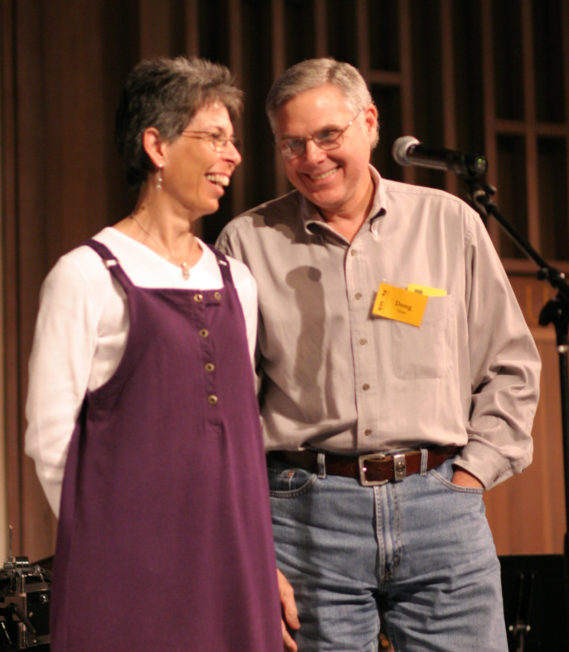
    Today I was deeply sadden by the news that Doug Goins had succumbed to his three year struggle with cancer. Like many people, and especially Candy, I will miss him, and look forward to seeing him in the next life. As I pedaled my way into work today I couldn’t stop crying and thinking about the powerful influence Doug and Candy had on my life. In the midst of the sadness, there was also a joy and thankfulness for Doug’s amazing life. Here are a number of things that came to my mind.

    Help Adapting to the Bay Area

    After living in Palo Alto for a few months I found myself feeling frustrated.  Doug said  “You are suffering culture shock”. I said “that can’t be true, I love it here” Doug then helped me see how there were things in the Bay Area culture that didn’t fit with my values and previous experience. He encouraged me to adjust my expectations, but also to hold onto things that were valuable, even if they didn’t “fit in” with Bay Area culture.

    For example, I was used to spontaneously getting together with people in Columbus. In the Bay Area it seemed like no one was prepared to do something spontaneously. I would suggest getting together with someone, and they would pull out their Day Planner and say “I have 1.5 hours free three Thursdays from now at 7:30pm. Should I pencil you in?”  Doug’s response was different. Like others he was often busy, but he said “I would love to join you but I already have something scheduled tonight, but please keep inviting me to do things spontaneously, and please continue to invite others to do things spontaneously because this is something our community needs.” Doug provided a great example of caring for others and making space for them. Though he was unable to respond to spontaneous invitations, Doug was wonderfully hospitable and made a point to welcome me, and many other people into his life. I took Doug’s encouragement to heart in three ways. The first was I continued to invite people to do things spontaneously. Second, I purposely left a couple of nights unscheduled each week, so there would be room to be available to others when unexpected things came up, to have margin. Third, I tried to invite at least one person to come over for dinner each week.

    A Model of Trusting People and God

    Doug and Candy opened their home for a young couples bible study. My late wife Libby and I had been married for ten years, but we were about the same age as everyone in the group, so we decided to give the group a try. After the study ended we were talking with Doug and Candy in their kitchen. At the end of the evening Doug said to me. “If you are interested, I lead a Sunday school in the west wing of the church. If you would like to take a turn teaching that group, or here in the couples group, I would be happy to give you a slot”.

    In the church I grew up in this would never happen. You had to prove yourself. When one of the church’s elders switched to our house church, he didn’t start teaching until people in our house church got to know him. How could Doug offer to let me teach having just met me? Doug had seen me interact with people during the couples group and had reason to believe I had a decent grasp of the Bible. Odds are that I would do an adequate job… but more than this, He trusted his God. Doug knew that even if I was a crackpot, that God was bigger than me. If I taught something crazy God would use it for good. He trusted that people would know I was wrong, corrections would be made, and everyone would grow.

    Doug’s trust in the Lord enabled him to extend amazing trust to others. To give broken people extraordinary opportunities to try things, to take risks. Sometimes these things went better than planned. Sometimes they “failed” spectacularly… but people always learned, grew, and God was magnified.

    An Authentic Life

    As I got to know people in the young couples group I noticed that there were couples that I was drawn toward, and others than I never got close to.  Some couples looked “great” on the outside. I came to notice that they seemed to have a protective bubble around themselves which kept everything safe. Then there were the people who seemed most influenced by Doug and Candy. The best word I could use for them was “authentic.” Their lives were messy, but they lived with wholeness, honesty and courage that was so attractive. Doug and Candy modeled this authenticity and encouraged others to join them. We watched as a number of couples started to drop their defenses and started to honestly engage with each other, maybe for the first time. I saw numbers lives and marriages transformed. The example made me feel welcome and encouraged us to “keep it real”.

    A Model of Godly Parenting

    I grew up in a non-Christian home, as did many of my friends. Many people I saw who grew up in “Christian homes” seemed worse off. They struggled with legalistic and were often extremely hypocritical. I honestly wondered if it might be better to grow up in a non-Christian home.

    Doug and Candy changed my perspective. I saw what a difference parents could make in the lives of their children. I saw how a mature faith could be a blessing to children rather than a lodestone. Candy and Doug models how to love children. Their example gave me the courage to start a family. Their example and words of wisdom made me a better parent.

    True Ecumenism

    Before getting to know Doug I could be pretty narrow minded when it came to interpreting the Bible and thinking about how a Christian life should be lived. I was happy to tell others how things should be, done, or understood. Doug by example and teaching helps me learn some humility. He helped me see that there are different, but equally valid ways to look at many topics. There are absolute truths, but the number of these is much smaller than the number of things I was prepared to take a stand on. Doug taught me to understand what was essential, and what was just my opinion. Doug taught me how to extent respect to people who looked at the world a bit differently than I did, and to learn from them. Over the years Doug’s humility and gentile spirit inspired me to find common ground with others, to learn from great authors like Henri Nouwen, and to be able to see the faith journeys of others who were seeking the same Lord I was.

    You then, my child, be strengthened by the grace that is in Christ Jesus, and what you have heard from me in the presence of many witnesses entrust to faithful men, who will be able to teach others also.  Share in suffering as a good soldier of Christ Jesus. No soldier gets entangled in civilian pursuits, since his aim is to please the one who enlisted him. An athlete is not crowned unless he competes according to the rules. It is the hard-working farmer who ought to have the first share of the crops. Think over what I say, for the Lord will give you understanding in everything.

    Remember Jesus Christ, risen from the dead, the offspring of David, as preached in my gospel, for which I am suffering, bound with chains as a criminal. But the word of God is not bound! Therefore I endure everything for the sake of the elect, that they also may obtain the salvation that is in Christ Jesus with eternal glory. The saying is trustworthy, for:
    If we have died with him, we will also live with him; 

    if we endure, we will also reign with him;
    if we deny him, he also will deny us;
    if we are faithless, he remains faithful—
    for he cannot deny himself. 

    II Timothy 2:1-13
  • Compassion without Control

    A week ago, a photograph went viral which showed a nypd officer’s act of kindness.  Like many people I was touched by the officer’s act, as well as the response of many people to the picture that had been taken.  Since the picture was taken a more detailed story came out, indicating that the shoeless man’s story is a bit more complex. Cynics might say, the act of kindness was foolish. I think this would be a mistake.

    I often feel a tension when I see someone who appears to be homeless or otherwise in need.  I don’t want to be a fool, to be taken advantage. I don’t want to empower or encourage bad decisions, but I would like to really help them. I am happy to pay a cost if it would make a difference. Sometimes I think I shouldn’t give people help directly, rather I should give my time and money to one of the many organizations that serve marginalize people on the theory that they are more likely to see to it that the money actually helps a person. Yet, I think this is  this is at best an incomplete solution.

    I am seeing that when I am confronted by people in need, it isn’t just about the person or their apparent need. This is also about my heart. The question is “Can I give without strings attached?  Can I let go of the results, give up any sense of control?” A phrase that I recently heard (though I haven’t read the book so I don’t know if it taking about exactly what I am) is love without agenda. I find that I have a very hard time doing this.

    So how do I resolve this tension? My answer recently is with prayer, by being sensitive to how God is moving my heart. The truth is that I can’t know how a gift, act of service, any help I provide might be used or what it will accomplish. I can’t see the future. What might appear good right now, might have unintended negative consequences down the road. Likewise, something that seemed to do good right now might not have a good long term effect. I find Ephesian 2:10 to be a great comfort:

    For we are His workmanship, created in Christ Jesus for good works, which God prepared beforehand so that we would walk in them.

    This suggests to me that there is more at play that just my ability to assess a situation and make a good decision. That God himself is providing opportunities to love and serve. The question is not “what will the outcome be”, but “is this something God is asking me to do now”.  A focus on pleasing God rather than seeing a specific outcome, trusting that God knows what He is doing, and that I have the honor to participate in His grand work. What may appear to be folly right now, but produce untold blessings in the future. Imagine with me that the prodigal son in Luke 15 was a real person rather than a parabolic character. We can be appalled by the prodigal’s conduct, and that his father enabled such bad decisions.  Yet, that story has also  served to be a source of great encouragement and wisdom for nearly 2000 years.

    Let us not lose heart in doing good, for in due time we will reap if we do not grow weary. So then, while we have opportunity, let us do good to all people, and especially to those who are of the household of the faith. (Galatians 6:9-10, NASB)

  • Romans 8 and Christmas Dinner

    In the last couple of weeks I have been thinking a lot about the Bible’s teaching about how we, as Christians are called to live.  I have spent a good bit of time looking at Romans 5-8.  At the core of this passage is our inability to be good or to do anything truly right on our own. Thankfully, God is at work… he forgives us, covers our sins, gives us a new nature, a new heart, a new source of power. This is completed work, though we often try to live as if we are in control and have the abilities in ourselves. When we try to do things from our own strength we will see failure as is described in Romans 7… the harder we try, the worse it is.

    Romans 8:6 says “For the mind set on the flesh is death, but the mind set of the spirit is life and peace”.  So what is the mind set on the flesh.  Is it planning to do bad things?  No, it’s much more. It’s reasoning from our own perspective, trying to control, trying to justify ourselves, trying to do life without God. It’s charting our own course, trying to fix things, make things ok.  Doing this always ends up in a mess.

    I have a couple of friends who have really been struggling with some hard issues.  They need to understand life in the spirit rather than the flesh.  I recently finished reading Becoming a True Spiritual Community by Larry Crabb which talked about how the community can embrace and love someone working through this.  Crabb talks about living in the downstairs (flesh) or upstairs (spirit).  Crabb’s book really encouraged me to come along side these friends.  I have been looking through the rest of our books, trying to find something that would be good for my friends to read, something that would help them to move from a “Yes, I have read Romans 5-8 100s of times” to understanding what they have read.  I know that just a book can’t make that happen, only God can, but often books can be used by God to break through.  Of the books we own, I found that The Normal Christian Life by Watchman Nee seemed to be the best, so I re-read it, to be sure it would be good for my friends as well as to grow my understanding.  I found The Normal Christian Life even better than when I first read it. I wonder if the first time I read it I was doing the “Check.  This is a doctrine I know” rather than letting it really challenge me and grow my understanding. I think it is the single best book I have read about Romans 5-8.

    Since I have been thinking about “life in the spirit -vs- flesh” so much,  I thought I was understanding it pretty well.  Christmas day came.  This is our first Christmas without Libby.  I was intent on doing as much as I could to keep up family traditions, to make the day as normal as I could for Helen.  Almost from the start of the day we were off track. Helen woke up late.  She decided to skip open stockings and go strait to breakfast. We did make waffles for breakfast, but she didn’t want anything else. After opening presents she was still tired and wanted to take a nap.  By the time Helen was up from her nap I was feeling pretty stressed. The minor issue was that while our tradition of going to the Redwood was still possible, but it was going to have to be Henry Cowell, not the preferred Muir Woods.

    The more difficult issue was that I was only going to have 1-1.5 hours to prepare a complicated dinner than I have never made before. I had been worrying about making this dinner for several days. We have a standard Christmas menu that Libby developed over the last 26 years.  Most of the recipes come from the Silver Palate Cookbook.  Not the most complicated recipes, but not simple: orange carrot soup, blueberry chicken, green beans with cashews & parsley, fresh bread, scallop potatoes, chocolate mousse.  Ack!  I couldn’t find the recipe for scallop potatoes, so I had to scramble and find something. Cook’s Illustrated came to my rescue with their 2005 holiday scallop potato recipe.  All of these recipes take a fair bit of labor.  I felt pressure to get to the cooking, but I really wanted to go to the redwoods.  So I push us out the door.  We got in the car and I stepped on the gas hard… maybe speeding the journey by a minute.

    On the drive I thought I had calmed down.  Helen and I started to talk about the week, what we were thinking about, what we had been doing. I was talking with Helen about some of the things I was seeing in Romans, and how I wanted to share them with a couple of friends who didn’t seem to be understanding how it worked.  They were still laboring under “the law” described in Romans 7… trying to fix things that they weren’t capable of fixing.

    Well… about half way through the drive Helen told me during the day I have gone from “Bad Dad” to “Worse Dad”.  Ouch! As we talked it became clear “bad dad” cared more about executing all the family traditions than he did how his precious daughter was feeling. “Worse dad” was getting angry at his daughter for standing between him and successful execution of his plans.  Ugh!!  Here I was, talking about how important the perspective in Romans was, while completely missing the point in my own life.  Rather than “the law” being something from the Bible, it was my list of expectations for Christmas.

    Thankfully, there was time to recover. Helen and I laughed about it. We had a great walk and talk among the redwoods.  While we were walking and then on the return drive I completely forgot about the need to make dinner, I wasn’t feeling any pressure.

    Once we got home I got to work.  The food prep went faster than it should have. We ended up having dinner on time. The meal turned out well.  Helen (and I) thought the the scalloped potatoes were better than any we had made before.. but how could they not be good with 3 cups of heavy cream. The only problem was that I forgot to half the chocolate mousse recipe.  This turned out to be a blessing.  I was able to take mousse for eight over to the Taylors, have enough for Helen and I, some of her friends, and another family of five. Christmas wasn’t the happiest day ever, but we were able to be content, and celebrate the birth of the most important person who ever lived.  Thank you God.

  • Meeting God in the Empty Place – Turning Loneliness to Solitude

    Libby and I used to talk nearly every night.  Often for a couple of hours. The topics varied greatly: basic logistical issues, smoothing over relational friction, concerns weighing on our hearts, big ideas, silly dreams.  Honestly the topics almost didn’t matter, it was having someone to share life with.  It’s been three months since we had a good two way conversation. The last couple of weeks before Libby went home to God she wasn’t really up to talking.  More than anything, I miss those evening conversations.

    When Libby passed from this world it felt like a huge hole was ripped in my soul.  There was an emptiness.  For a week I was numb, but then I felt a huge hunger.  I wanted the hole to go away.  I wanted it to be filled up. I knew that that the emptiness wasn’t going to be filled anytime soon, but that didn’t make the desire, the longing any less.  Ironically, it took more than two months for me to recognize the emptiness has another name, loneliness.

    Each time I talk with someone, it seems like a small bit of the hole is filled in.  Just a shovel full of filling for a 500k sq ft building foundation. At this rate I will die of old age before the hole is fully filled, but after each interaction with someone I have a sense of hope.  That it won’t always hurt this much.  That the emptiness will someday be filled.

    Something more important has come to me though… I have found that I can sit in the emptiness.

    I don’t have to rush out and find someone to fill the hole, nor do I need to throw myself into activity to distract myself.  The emptiness is not pleasant, but it can be transformative.   I can see more clearly my longings. I can hear and seeing God a more clearly and God reveals what I truly believe, what’s in my heart. It’s only when the heart is revealed that healing and lasting change can happen.

    God is not filling the emptiness, but He is meeting me there.  In these moments, the loneliness is transformed into solitude.  No longer is the focus on what is lacking, but a time of looking with God’s eyes. I wish I have better words to describe it, but I don’t.  I can share one of the small ways I have see this change in the last week.  I am very aware of how much I miss Libby and how important community and relationships are.  I am particularly aware than I want to spend time with people who are comforting and encouraging. Even when I am not with these friends, I end up thinking about them.  Typically wondering if it would be ok to call them, or if I am going to make myself a pest by calling too frequently.  As I am pulled from loneliness to solitude, my focus chances.  Rather than being focused on my lack, the loneliness, I find myself thinking about how I can bless others, to love and serve them.  What are their needs, what is God doing in their lives, is there some way to be a blessing to them.  I am seeing God’s heart and it is changing me and I can feel at peace.  I am able to love, not because I hope to get something in return, but because I know that I am loved by God.

    I have wondered, if God is with me always, why do I feel lonely, why not a constant sense of peace.  Couldn’t God fill that hole Himself once and for all.  I think the answer is He could, but He won’t, because it won’t be good.  Partly because we need to sense the emptiness before we stop and turn toward Him.  But I don’t think that’s the only reason.  We were designed to be in relationship with God AND with other people.  We are made for community.  Desiring people in our lives is good. The mistake we make is to try and control how it happens, to arrange things so the hunger is fed rather than trust God to take care of us as we participate in community.

    We are called to follow Jesus’ example.  Choice to love and serve those around us.  Yes, we should welcome the companionship of others, even to ask for it, but ultimately, we have trust that the Lord will take care of us.  To live with open hands, welcoming God to works in our lives. Jesus was deeply involved with people.  He spent most of his waking hours with others.  He would also take time to withdraw, to find quiet times with His father.  But even with perfect commune with His Father, and empowered by the Spirit Jesus experience the difficulties of life just as we do.  We see him cry.  He experienced loneliness, lose, and pain. This used to be a mystery to me.  If you could see God clearly, wouldn’t everything be ok.  Wouldn’t seeing God’s goodness be like a fire that burns everything else away, leaving you in a state of constant awe: content, even happy?  The answer is no.  So long as we live in this broken world, there will be loneliness, pain, suffering, in a word, sorrow. It will be set right, but not yet.  Anyone who is responding to Lord will feel these things.  How could we not because things are not right.

    This is a painful season of life, but it is also exciting because I can see how my life is being changed. While I want the loneliness to end, the hunger to be sated, I find myself appreciating how loss is pull me toward God, and how the loneliness is being transformed into solitude. I believe that in time, much of the acute loneliness will pass, but I pray that the solitude that grows from it will never waver.

    Update 2011/12/30: I just realized that loneliness to solitude is the first section of Henri Nouwen’s excellent book Reach Out.  I would recommend checking this book out for a much clearly discussion of this transition.

  • Purpose in Life

    Libby and I were recently talking about a women she sees each week. Last week the women noted that Libby’s life seems different from hers, and that when Libby prays it seems like God is right there. This women has faced a lot of difficult issues in the last year and is looking for peace. She wanted to know what Libby’s secret was. We thought what has made a difference was that Libby let the tough times deepen her trust in God and transform her character and understands that God uses difficulties (trials) to bring her into a closer walk with Him.

    A nice interview on this topic entitled Preparing for Eternity — On Purpose can be found on Billy Graham’s website. Warren is best known as the author of The Purpose Driven Life.