Category: relationships

  • 27+ Years of Blessing

    Twenty seven years ago Libby and I were married in a school’s multi-purpose room with our friends and family looking on. It was a stressful but happy day. The morning was spent moving Libby’s belongings from the room she had been sharing with a friend to what was to be our new home…  someone needed to move into Libby’s old room ASAP. The afternoon was filled with all sorts of last minute errands to prepare for the wedding. We were one of the first couples in our peer group to get married. We didn’t have friends who would tell us the words we now repeat:

    Do you know then best thing about the wedding?  When it’s done, you are married!! That’s all that matters. All the things that go wrong during the wedding will become favorite memories that you will laugh about five years from now.

    A couple of hours before the wedding Libby returned to the house she had been living in to get cleaned up and get dressed. At the time she lived with 10-12 other women. The house had one good bathroom. Libby was so worried that with everyone getting ready for the wedding she wouldn’t get to take a shower. I assured her that her housemates would make sure she would be prepared in time for the wedding, and that included getting to take a shower. Libby did get to take a shower before the wedding.

    That night we were married, and started a grand adventure together. We were married pretty young… Libby was 21 and still working on her undergrad degree, I was just 22. Libby was fond of saying we were married young, maybe too young, but we choose well.

    In the first few years of our marriage were hard.  Most marriages to go through a difficult patch in the first few years  as the romantic dreams runs headlong into the realities of life together. There were a number of issues in our personal lives, and in life circumstances that seemed overwhelming. There were times when some of these issues seemed like they might crush us and I became resentful, even bitter. In time, God’s mercy became evident, and healing in both our lives took place. I was once again able to see Libby clearly, to understand how precious she was, and how blessed I was to have her in my life. I was delighted to discover that Libby cherish me more than I could imagine. Sara Groves described coming through such a time in her song A Different Kind of Happy. As time has passed, I have come to cherish Libby all the more.

    Five months ago I had to write something for Libby’s memorial program. How do you fit 30+ years of shared life and observations into a couple of paragraphs. How can you possibility figure out what is most important. Maybe someone who is a more gifted writer, who thinks more deeply that me could distill a life into a few paragraphs, but I sure couldn’t. When my dad passed ten years ago I wrote up a short tribute which I called lessons from dad. I wanted to write something like this for Libby because the memorial service program seemed to fall so short of capturing who Libby was… but I was unable to write anything. Today writing something down is coming a bit easier. This entry is my start to do justice to Libby’s memories. To start to pull together something that truly honors the women Libby was. I am sure there is much more to write.  The following are a few of Libby’s characteristics that I believe deserve to be mentioned with a few observations of how I was blessed by Libby.

    This evening a friend wished me “happy anniversary”. These two simple words helped me realize that I had spent the day thinking of Libby… but it wasn’t a weepy sad day, but rather a day where I found myself marveling at how much of a blessing Libby was.  It was a happy anniversary.

    Loyal & Sacrificial Love:

    During high school I  heard Carole King sing “You’ve Got a Friend“. I thought this was my anthem, though I am not sure I actually lived up to all the lyrics. Libby wasn’t particularly fond of the song, but it described her life well. No one could be a finer friend than Libby. She was deeply devoted to all her friends. No effort, no cost, no sacrifice was too large. She did not give up on people, nor would she be driven away, even if you gave her crap in return for the love.  I can think of a number of people that Libby continued to love, support, confront, comfort, even when they responded very badly. Over time she might become fatigued,  her words could take on an edge, she could become prickly, but she wouldn’t give up. Libby was fond of saying “I am on your team.” This statement often preceded statements which could be taken as an attack, but never were. Rather, Libby was willing to enter conflict, something she HATED, if it would help a friend. She was on your team. She would do anything if it would mean that you would be helped.

    I am fond of saying that I married up. No, not in the typical way of marrying someone with more money, education, status, or influence. I mean marrying someone who was better than me, more noble. Libby cherished me. To be honest, this still amazes me, and I am so thankful for her agreeing to marry me. Even when I hurt her deeply, she continue to love me, cherish me. She treated my heart is if it was the most precious object. Careful not to break it, yet willing to be be an attending nurse when painful surgery was required.

    My most vivid memory of this was a conversation we had over twenty years ago. I can still remember exactly where were we sitting. I wanted to make some life changes. She told me that she was sure I was about to make a huge mistake, I was running from things I should turn and face… but she would support me, love me, be at my side even if I continued to make stupid choices. As she expressed her commitment to love me, to stick by my side, it became clear to me what a cost she would pay to support me in a bad decision. I don’t know that I have ever felt so loved. Her love gave me the courage to turn and face the things I was running from. In the ultimate irony, her willingness to sacrifice herself, saved her from experiencing that suffering because her love turned my heart.

    Courage:

    Libby did not shy away from hard things. She was prepared to face them head on.  She might be scared, feel overwhelmed, but if she thought something needed to be done or faced, she would lean into the discomfort. On the surface she had remarkable courage, but her heart was even more courageous. Libby had a very deep negative streak.  She had a remarkable ability to identify anything that could possibly go wrong and some things that couldn’t but she could imagine them breaking as well. Yet in spite of these terrible, worse case possible outcomes, she would find the courage to take a risk and step out to do what she felt she was called to do.

    We would joke about what a good team we made. I am someone who typically assumes everything will work out, so I will sign up to take a risk without counting the cost. I would approach Libby and say “Lets give XYZ a try.” She would wrestle through all her fears and say “Ok.  Let’s do it.”.  I would be fine up until the the hard commitment was requirement, the preverbal “jump off the cliff moment” at which point I found myself saying “Oh my God, what have I gotten us into”. Libby would hold my hand, remind me why it was worth taking the risk and share with me all the issues she had to wrestle through. I would always find my spirit lighted as I laughed at some of the outrageous worse case scenarios she came up with. It was always easier to take a risk when you knew someone who loved you would be at your side.

    A Devotion to God:

    People operate on multiple levels and sometimes all those levels are synchronized well, sometimes things don’t work quite as your would expect.  On many levels, Libby was more devoted to following the Lord than anyone I knew. She desired to build her life around God, around Jesus. She continuously sought for ways to serve and to proclaim Him. Life was ministry.  She wanted to know the Lord intimately. The last ten years of her life she really benefits from the contemplative traditions she learned through Wellspring. She was devoted to practicing listening prayer. She longed to see the Lord clearly, to follow Him, to dance in His presence. Along side of this, Libby has a life long struggle with depression which often made it hard for her to find the joy in her Lord that she desired. One of the great comforts I had when she passed was that she is now seeing the Lord face to face, freed from the effects of sin, able to joyously worship her maker, to dance in His presence.

    Libby’s love for me made me want to cherish her. If I was married to nearly anyone else, they would have become an idol to me. Someone that was more important than anything, including following God. I have seen how that can go so badly wrong in other people’s lives. Thankfully Libby was more devoted to the Lord than to me. When my focus shifted, she pointed me right back to  God. To please her, I needed to please the Lord. Libby was such a perfect provision for me. It was through Libby’s example that I found myself drawn to God. It was through her going to Heaven that I found my heart drawn to God in a new and deeper way.

    I deeply miss Libby and find myself sometimes struggling with loneliness. It would be tempting to try and fill this longing with another person… but I am thankful that hasn’t happened. These last few months without Libby has helped me see more clearly God’s love, and provided me with a growing appreciating of how He cherishes me, how He cherishes all of us, and why Libby was so devoted. I am embarrassed to admit, in the past I might have traded closeness with God for a person who would cherish me as Libby did. I couldn’t do that now. The thrill of seeing God work, the comfort He has provided my heart has been so great. I couldn’t give that up. If there was any chance that a human relationship would take that away, I wouldn’t be interested. For a bit I feared this meant I would never again have a relationship that was as intimate as what I had with Libby. But I know this doesn’t have to be the case. I have Libby’s example. With prayer, with grace, with daily seeking the Lord, it’s possible to love someone dearly, to have them love you, and at the same time be deeply in love with our God. There is a lot I don’t know about the future, but one thing I know, that the Lord is slowly growing my heart, drawing me closer, I am growing more devoted to Him. I find that I am a bit more like Libby each day which makes my heart glad.

    Last vacation before cancer returned. Grand Tetons
  • Being Uncomfortable, Student and Teacher

    I would notice The Courage to Teach by Parker Palmer every time I visited my favorite bookstore. I didn’t picked it up… I am not a teacher. In my mind, teachers are those brave souls who stands in front of students in a school, or in front of the congregation of a church and present a well structured, well scripted stream of information that enlightens and enlivens the audience. I have periodically found myself in a situation where I was called on to formally teach, but only because there was no one else available, not because I am particularly gifted or felt a great desire.
    I don’t remember what ultimately led me to pick up The Courage to Teach, but I am glad I did. Rarely has a book so resonated with me. As I read Palmer’s book, I realized that teaching isn’t restricted to something done in front of a crowd of people. Teaching can also be a collaborative activity in a small group, or even one to one. I realized I aspire to be a teacher in improvisational settings: talking with a coworker about a hard problem they can’t solve by themselves, with my daughter exploring a life choice, or in the aisle of REI discussing the effectiveness of various insect repellents based on scientific data.

    Some teaching is light and easy, little more than passing on information. While this can be enjoyable, I love teaching that can be transformative, that has significance. There is a section of The Courage to Teach which talked about how deep truths that bring about transformation are often paradoxes. Hard to understand, and uncomfortable to sit within. Palmer starts this section saying:

    Holding the tension of paradox so that our students can learn at deeper levels is among the most difficult demands of good teaching… understand that the tension that comes when I try to hold a paradox together is not hell-bent on tearing me apart. Instead, it is a power that wants to pull my heart open to something larger than myself.

    I find myself reflecting on this process, and find that today, I am more a student than a teacher. I am an impatience man. I don’t like paradoxes. I don’t like unanswered questions. I don’t like a multitude of opportunities. I like the definite: decisions, direction, in a word, closure. The more important the issue, the closer an issue is to my heart, the more quickly I want resolution. Resolution rarely come as quickly as I wish. If we are blessed, this movement of the heart might be accomplished in a few hours, but often it’s days, months, years, sometimes even decades.

    Over the last several years, I have hoped to make a vocational change. To find a way to spend more time focused on people, and less on products and technology, to be a teacher in a small setting. This transition has seemingly been blocked. I wonder if this was because I was not ready to be a teacher, rather I needed to first learn to be a good student. Through the lose of Libby God has been teaching me how to be quiet, how to listen, how to be patient, to be a student of life. I still have much to learn, but at least in my own life, I am learning not to rush through things too quickly, even when it’s uncomfortable.

    I hope to be a good teacher some day, but I know I have a long way to go. A good teacher is willing to suffer along side the student as the learning process unfolds. In fact, a good teacher often needs to help the student by helping them stay in an uncomfortable place. While I have become more willing to sit in these hard places in my own life, I struggle greatly when people I care about are suffering. I want to “fix the problem”. I will tend to rush them because I am uncomfortable, not because it is what will be the best for them. I pray that I learn to sit with others in those difficult places, to listen in silence while those hard paradoxes opens hearts, to support them in love while their hearts struggle and then finds true healing.

    Last Monday I would have said that I am making progress, that maybe I am starting to learn what it takes to be a good teacher. That afternoon I chatted with a good friend and found that I still have so much to learn. I had a expectation that I would be helping my friend. Instead I didn’t listen, and said things that were completely unhelpful, exposing how off I was. The critique “Waiting your turn to speak is not the same thing as listening” strikes very close to home. After the conversion I found myself wondering if there was any hope, would I ever learn to listen? Could I help others? Thankful, I believe there is hope.

    First came a question the next day. “When you speak before listening is that the end of it, or do you recognize your mistake and step back?” The previous day I had thought myself to be ready to teach and share something useful, but I completely missed what was happening in my friend’s life. Yet, the story didn’t end there. I was able to recognize I was missing something. I was able to recognize that rather than being a teacher in that moment, I was a student being taught through my friend’s life and words. In the end, I believe I was able to offer some encouragement and help while I was learning from them.

    Next came an essay at the end of the book Spiritual Formation which discussed Henri Nouwen’s view of spiritual formation. Nouwen saw spiritual life is a journey, as a series of spiritual movements from this quality to that, from things that enslave and destroy to liberation and life. Nouwen’s books often articulate these movements and highlight that the transformation is brought about by the Spirit. This suggests that just recognizing the immediate movement and responding to it is sufficient. I found this comforting, because it’s more about being in the moment that building of one thing on top of another. The following was the description of how Nouwen’s approach to spiritual formation changed:

    In his early years as a priest who offered spiritual direction and supervision to seminarians and members of religious orders, Nouwen counseled others to follow the classical disciplines in order to climb the ladder of divine ascent in progressive stages of unification. Climbing Jacob’s ladder, step by step, toward spiritual perfection is a common image and motif in classical stage theory. Nouwen had read John of the Ladder, the sixth-century ascetic who sought perfection in the desert, and Nouwen despaired of ever reaching the top. By the time he arrived at Notre Dame as a professor of pastoral psychology, he had turned the ladder of ascent on its side and taught spiritual formation as a series of horizontal movements of the heart, back and forth, that require daily devotion and discipline, with the goal of human wholeness rather than divine perfection.

    The third encouragement came the following day from a TED video by Brian Goldman entitled Doctors make mistakes. Can we talk about that?. Goldman is calling for a radical change in the medical community: to acknowledge that being perfect, that never making mistakes is not possible. That the community should embrace mistakes and learn from them, and find better ways for people to work together as a team. Goldman’s talk made me think of a conversation with a dear friend who is an extremely gifted counselor. In talking about the counseling process she said “It’s not a set of skills, techniques or formal education. More important that any skill is to love the person in front of you, and to listen with an expectation that God is speaking into the situation.” She often tells the people she is not concerned about being right, rather she is concerned that together, they can find what is true. She has great confidence that this can happen, because God is in the room, providing light and love.

    Finally, as I was driving home I found myself listening to the song A Different Kind of Happy by Sara Groves which speaks about how good it is to look honestly at life with someone else, how sharing together transforms lives and relationships. When I listen to this song, the first thing that comes to mind is Libby and how much I appreciated sharing life with her. Libby is gone from this earth, but I still experience the sharing of life. The Bible talked about how all who follow Jesus are part of the “Body of Christ”. That a hallmark of true faith is loving one another. I am so grateful to have experienced this profoundly in the last few months. Much of the love and support has come from people who are part of my local church, people who live in the bay area. But there are people who live more distantly that have helped me experience that different kind of happy. Dear friends who called / visited from Columbus, Phoenix, Boston, DC, and Anaheim. Timely words from friends spread across the world. A text message, Skype or email that came when I most needed help. Words from Russia, China, Taiwan, Singapore, India, and Thailand.

    My take away? There is hope. It’s possible or be a student, a learner, a teacher, because God is good. He cares for us and will lead us to truth and wholeness if we humbly turn our eyes to Him.

    But everyone must be quick to hear, slow to speak and slow to anger; for the anger of man does not achieve the righteousness of God. — James 1:19-20

  • Hospitality

    A month or so ago, I learned that there were several homeless people who attend my church, PBC.  I was bowled over by this.  Not that people are homeless.  I know this is a reality.  What surprised me was that we had people who were part of our church community who did not want to be homeless but were.  I recognize that there are some people we can’t immediately help. Some are homeless because they are running away from things they must first turn and face, others are dealing with medical issues with no easy answers. My observation is that this is not the case with most of the people our church finds in our midst. Several of these people were responsibly employee a few months ago. Several I talked with were laid off due to a downsizing or a company closing down. They are looking for work, some have even found work, but in the mean time they were unable to pay their rent and are now living in their cars hoping to save up enough to rent a place.

    We can help address the issue of homelessness within our community. I am not expecting our church to fix this as an institution, but rather people who know these folks to open their homes, offering them use of a bathroom and a spare bedroom or at least a pad to sleep on.  Not everyone might be up to helping someone with the issues that put them on the street, but many of us are able to do something.  I have no way to know for certain, but I would guess that there are at least a couple hundred extra rooms in the homes of people in our church, and only tens of people who need a place.

    I am hopeful that as our church is more aware of the needs, that this will get addressed because I believe in our people, that they will love their neighbor and help.  But this seems to be a symptom of something gone wrong.

    Our church runs a summer leadership institute for young folks. Each year, a number of them need a home to stay in during the summer.  These are low maintenance  people who are a joy to be around.  They are exploring what God might have them do.  Can you think are a more exciting person to have join your household for a brief season.   It has certainly been a joy for our family to host students. Our only complaint is that they are so busy with their activities, that we saw less of the students than we would have like to. Inspite of how great it is to have these students, each year is takes time to find each of them housing.  I would have thought people would be fighting for the opportunity to have one of these students live with them.  I would have thought that housing would be addresses the first week the need was announced with the only trouble being that someone would have to  tell people they don’t get a student even though they want one, but that’s not what generally happens.  It takes weeks to find housing that will work.

    The more I think about, the more I think we have let our hospitality muscles weaken.  I wonder if part of this is that we set our expectations too high.  We think that unless we are Marta Stewart, serve gourmet meals, having the house perfectly clean and organized, we can’t have people over.  So we don’t share meals with people, we don’t open our homes and the community suffers.  I wonder though, if part of the problem is that we don’t recognize the important of community and we let our lives get consumed with busyness. That we don’t see how much more vital life is if we are sharing our meals, our time, our lives with other people, people who aren’t part of our immediate family.  Not just seeing people at weekly meetings, but daily.  I wonder if due to lack of exercise, our hearts have grown a bit weak.  If this is the case, maybe we need to start small.  Think of one act we could do each week.  Do that for awhile and see if God has us take another step, until our hearts are as big as Jesus’ heart.

    Ironically, I am finding my interest in hospitality some what at odds with my minimalist leaning.  On the one hand, I would love to live in a smaller place, have less furniture. Yet, if we are going to be hospitable, I need space to share.  It would be good to have an extra bed that can be offered up.  So along the path to a more minimalist life, I find our family deciding to add things in as well.  The most recent decision was to give away the futon in study (it’s a fine couch, but not so great to sleep on), and replace it with a comfortable bed so the room is a more welcoming and comfortable guest room.

    The topic of hospitality has historically been a very important practice in the church. Even in the mid-20th century, there were numerous books like  Open Heart, Open Home. For several decades it seems like the topic of hospitality has been at best, a back burner issue in most churches. I am encouraged though, It seems in some circles there is a re-awaking to the importance of hospitality and seeing the connection between our hearts and how we use our homes.

    I know there is a lot for me to learn about hospitality, but the best way to learn is practice, so that’s what I am trying to do. It would be good if I didn’t feel as stressed about cooking food for others, but I will get over this, and in the mean time, I don’t feel bad about bring carry out food rather than homemade when that is going to work better. I want to have a heart which is open and welcoming. This is a work in progress.  I pray that in a year I will have more thoughts than “Hospitality is important”, but right now that’s all I can offer. While hospitality often involves opening our homes for others, we can also provide hospitality to others by delivering meals.

    I believe hospitality is very important.  Jesus seemed to think this was important.

    Then the King will say to those on his right, ‘Come, you who are blessed by my Father; take your inheritance, the kingdom prepared for you since the creation of the world. For I was hungry and you gave me something to eat, I was thirsty and you gave me something to drink, I was a stranger and you invited me in, I needed clothes and you clothed me, I was sick and you looked after me, I was in prison and you came to visit me.’ “Then the righteous will answer him, ‘Lord, when did we see you hungry and feed you, or thirsty and give you something to drink? When did we see you a stranger and invite you in, or needing clothes and clothe you? When did we see you sick or in prison and go to visit you?’ “The King will reply, ‘I tell you the truth, whatever you did for one of the least of these brothers of mine, you did for me.’

    Matthew 10
  • Meeting God in the Empty Place – Turning Loneliness to Solitude

    Libby and I used to talk nearly every night.  Often for a couple of hours. The topics varied greatly: basic logistical issues, smoothing over relational friction, concerns weighing on our hearts, big ideas, silly dreams.  Honestly the topics almost didn’t matter, it was having someone to share life with.  It’s been three months since we had a good two way conversation. The last couple of weeks before Libby went home to God she wasn’t really up to talking.  More than anything, I miss those evening conversations.

    When Libby passed from this world it felt like a huge hole was ripped in my soul.  There was an emptiness.  For a week I was numb, but then I felt a huge hunger.  I wanted the hole to go away.  I wanted it to be filled up. I knew that that the emptiness wasn’t going to be filled anytime soon, but that didn’t make the desire, the longing any less.  Ironically, it took more than two months for me to recognize the emptiness has another name, loneliness.

    Each time I talk with someone, it seems like a small bit of the hole is filled in.  Just a shovel full of filling for a 500k sq ft building foundation. At this rate I will die of old age before the hole is fully filled, but after each interaction with someone I have a sense of hope.  That it won’t always hurt this much.  That the emptiness will someday be filled.

    Something more important has come to me though… I have found that I can sit in the emptiness.

    I don’t have to rush out and find someone to fill the hole, nor do I need to throw myself into activity to distract myself.  The emptiness is not pleasant, but it can be transformative.   I can see more clearly my longings. I can hear and seeing God a more clearly and God reveals what I truly believe, what’s in my heart. It’s only when the heart is revealed that healing and lasting change can happen.

    God is not filling the emptiness, but He is meeting me there.  In these moments, the loneliness is transformed into solitude.  No longer is the focus on what is lacking, but a time of looking with God’s eyes. I wish I have better words to describe it, but I don’t.  I can share one of the small ways I have see this change in the last week.  I am very aware of how much I miss Libby and how important community and relationships are.  I am particularly aware than I want to spend time with people who are comforting and encouraging. Even when I am not with these friends, I end up thinking about them.  Typically wondering if it would be ok to call them, or if I am going to make myself a pest by calling too frequently.  As I am pulled from loneliness to solitude, my focus chances.  Rather than being focused on my lack, the loneliness, I find myself thinking about how I can bless others, to love and serve them.  What are their needs, what is God doing in their lives, is there some way to be a blessing to them.  I am seeing God’s heart and it is changing me and I can feel at peace.  I am able to love, not because I hope to get something in return, but because I know that I am loved by God.

    I have wondered, if God is with me always, why do I feel lonely, why not a constant sense of peace.  Couldn’t God fill that hole Himself once and for all.  I think the answer is He could, but He won’t, because it won’t be good.  Partly because we need to sense the emptiness before we stop and turn toward Him.  But I don’t think that’s the only reason.  We were designed to be in relationship with God AND with other people.  We are made for community.  Desiring people in our lives is good. The mistake we make is to try and control how it happens, to arrange things so the hunger is fed rather than trust God to take care of us as we participate in community.

    We are called to follow Jesus’ example.  Choice to love and serve those around us.  Yes, we should welcome the companionship of others, even to ask for it, but ultimately, we have trust that the Lord will take care of us.  To live with open hands, welcoming God to works in our lives. Jesus was deeply involved with people.  He spent most of his waking hours with others.  He would also take time to withdraw, to find quiet times with His father.  But even with perfect commune with His Father, and empowered by the Spirit Jesus experience the difficulties of life just as we do.  We see him cry.  He experienced loneliness, lose, and pain. This used to be a mystery to me.  If you could see God clearly, wouldn’t everything be ok.  Wouldn’t seeing God’s goodness be like a fire that burns everything else away, leaving you in a state of constant awe: content, even happy?  The answer is no.  So long as we live in this broken world, there will be loneliness, pain, suffering, in a word, sorrow. It will be set right, but not yet.  Anyone who is responding to Lord will feel these things.  How could we not because things are not right.

    This is a painful season of life, but it is also exciting because I can see how my life is being changed. While I want the loneliness to end, the hunger to be sated, I find myself appreciating how loss is pull me toward God, and how the loneliness is being transformed into solitude. I believe that in time, much of the acute loneliness will pass, but I pray that the solitude that grows from it will never waver.

    Update 2011/12/30: I just realized that loneliness to solitude is the first section of Henri Nouwen’s excellent book Reach Out.  I would recommend checking this book out for a much clearly discussion of this transition.

  • Lessons from Dad

    As I reflect on my father’s life, and can’t help but be struck by what a powerful influence he was on me.  I fear that while my adolescent rebellion against him was mild, it was long lived.  It took me a long time to see my father clearly.  I regret not seeing my father for the man he was earlier in my life, and I regret not spending more time with him when I had the chance.  I don’t recall my dad giving me many words of advise, but his life, his example, spoke volumes.

    Loyalty & Family

    Family was of supreme importance to my dad.  Even when his wife divorced him to marry his best friend, he never spoke a harsh word about either of them to me.  He supported their decisions in my sister and my  lives.  It was clear that he wanted my sister and I to have a good family experience with our mother and step father, and would do nothing to undermine that experience.  I think it was extremely important to him to be supportive of his children.  While my dad could be critical, he was always supportive of me as a person.  He made it clear that my sister and I should be committed to the other, and always look out for each other.  He was overjoyed to be a grandparent.  In an age where families drift apart, he worked hard to stay close not only with his sister and children, but with his nieces and nephews as well.

    Simplicity

    My dad loved simplicity in all things.  The first place you could observe simplicity was his lifestyle.  Unlike many people, he always lived well within his means.  He didn’t feel compelled to upgrade, update, or otherwise “keep up with the Jones”.  If the clock radio purchased in 1972 continued to provide the time and had a functioning alarm,  there was no reason to replace it.  He never seemed to worry about brands or status symbols, he was just concerned that “the job would get done”.

    Dad also looked for simplicity in his professional life.  I think he believed that if a solution, device, principle, etc wasn’t simple enough to be explained on one or two napkins, then you had the wrong approach and were making things too complex.  He was always suspicious of people who tried to attack difficult problems with extremely complex solutions.

    Love Nature

    My finest times with my dad were in the outdoors.  He loved to hike, backpack, fish, and canoe.  He loved watching animals in the wild, especially birds.  Dad could sit for hours watching birds.  I remember him telling me of a series of meetings he had at Xerox PARC.  Almost nothing was initially accomplished because the conference room looked out over a field where there were a number of hawks soaring and hunting.  He just couldn’t tear his attention away from the hawks and focus on the physics at hand, and didn’t regret this at all.

    My father had a deep respect for the natural world.  He found time to enjoy the world God has created, and spent time learning about the wonders of creation.  He took the time to read the works of great naturalists and spent time in the wild observing and learning with his own senses.  I think he had a great sense of wonder, and loved to discover and explore.  This continues even after his first stroke with naturalist lead trips.

    The Beauty and Value of Science

    My dad was an scientist and an experimentalist. Why speculate when you could give it a try, measure the results, and then draw your conclussions from real data. While I am naturally more comfortable in the world of mystery and mysticism, my dad taught me to value the concrete. To look at real data. To run experiments and look at the results rather than relying exclussively on intuition.

    Humble Service

    My dad was a brilliant man… evident from an early age.  He never finished high school because he was selected by a Ford Foundation for a special scholarship program and sent to Yale.  He continued on to Rochester, and then to University of Colorado to finish his PhD.  He was working in the field of integrated optics before people knew it was a field. His rapid wit was recognized by anyone who spend more than a few minutes with him.  Yet he was never arrogant.  He had a sense that his intellect and abilities were a gift, something that should used, not bragged about.

    Respect for Others

    I never saw Carl put other people down.  That’s not to say that he couldn’t be blunt, but that he addressed real issues he thought could or should be fixed. He didn’t snipe at people are make statements for the purpose of hurting others. You didn’t have to wonder if he was trying to manipulate you or hide things. What you saw was what you got. Carl was forthright when speaking to others. 

    Carl was quick to hear other people out, and liked to bring the best out of others. He loved collaborating with others, and had no problem letting others take the lead in areas where they were stronger than he was. He also was happy to give people a chance, even if they hadn’t proven themselves yet. Just after I had gotten my drivers license he some family to visit just outside of Pittsburgh, PA. Some of my best friends had just moved to Pittsburgh to attend CMU… I hoped to visit them.  So off we went. Once we got to the cousins home my dad gave me the keys, told be when to be back, and sent me on my way. This doesn’t sounds like a big deal… but I had a brand new license and had spent all my time in an automatic transmission car. He was giving me his brand new stick car to drive when I had less than 1 hour of time driving a stick where the streets were flat, while Pittsburgh is notoriously hilly. Somehow I got to CMU and back on time without crashing his car… but I wasn’t confident that this would be the outcome… but Carl thought it was worth the risk.

    Charity

    I grew up knowing that charity was important.  I saw my father’s example, giving time and money to charities that he thought were worthy.  At an early age I was encouraged to donate portion of the money I received for my birthday and holidays to an appropriate charity. 

    Emotional Honestly & Communication

    Alas, this was a lesson that I mostly learned through a negative example.  Like many men of my father’s generation, he has a very hard time telling people how he felt.  It was extremely difficult for him to say “I love you”, or “I am proud of you”.  These are words that I longed to hear, and never heard directly from his lips.  While it was hard for him to be honest about his feelings with the person in question, he was able to be honest with others.  So while he might have a hard time telling my sister how much he respected my sister’s commitment to her kids, he was able to tell me and his wife.

    Watching my dad struggle with expressing emotions taught be the importance on learning to be emotionally honest with people, especially the people who are most important to me.  I don’t want people to long for an encouraging or affirming word from me, which I desire to give, but find myself unable to speak.

    A Rolex… a touchstone?!

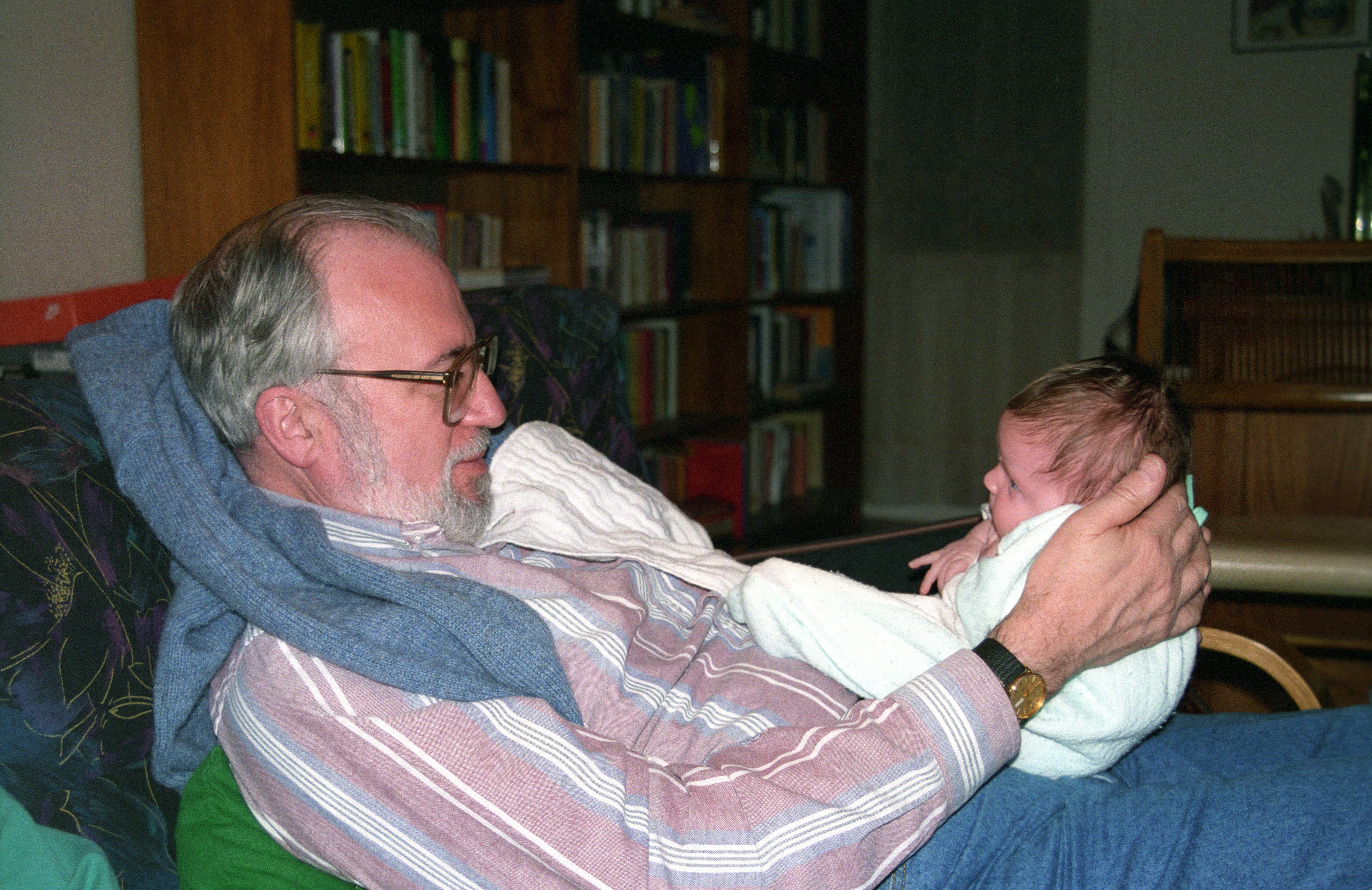
    One of my most prized possessions is a Rolex watch that was my dad’s. Now if you knew my dad or you read the above text you would likely say “Carl owned a Rolex?”  Indeed, for as long as I can remember, dad only wore the most basic analog (he was and optics guy) Timex that most likely cost $10. So how does a Rolex fit in? It was a gift that he received when one of his students completed his PhD. Did dad switch to this fancy new watch? Nope. He kept wearing his Timex because it got the job done. Did he ever wear the Rolex? Yes, when his wife or friends requested that he wear a nicer watch when going to formal events. Why do a love this watch? Because it represents for me his commitment to quality, his profession, and to his students, and that fact that he would have never purchased the Rolex for himself. You can tell when I am really missing my dad. My $15 digital (I am a computer guy) Timex is replaced for a day or two with the Rolex.

    Facts and Figures