Gaye, our primary hospice nurse stopped by today, even though it’s her day off. She believes that Libby is in her last hours based breathing patterns and several other indicators. We have been jumping between being unspeakable sad, in a numb disbelief, and brief periods of joy as we remember together what a blessing Libby has been to us all an look forward to her struggle to end with her in Jesus’ caring arms. We had a particularly nice bit of time with Gay, Janice, and Jon & Charina as Helen and I shared the story of the 5 bears.
Last night was very tough because Libby was having some trouble breathing and was coughing through the night. Some additional medicine and a repositioning seems to have made her more comfortable. Libby seems to be without pain for which we are very thankful.We appreciate your prayers.
Libby’s strength is waning. This is very hard, but we are so grateful that Libby is comfortable and at peace. This is a vast improvement from confusion and restlessness of Tuesday. We can’t begin to than you for your prayers.
Libby’s body seems to be giving up the fight. Her breathing is more erratic, and her limbs are generally not following orders, but Libby seems to be taking it in stride. Yesterday afternoon we needed to move Libby to change the sheets. We asked if she could move her arm. Nothing happen, though you could see concentration of her face. We gave her time because we knew she wanted to try to do it herself. After a minute or two she shifted her eyes to us. I knew that look. There was sadness but also a slight bit of humor. When something is so absurd that you have to laugh. I asked “You you want us to help you move”. You could see in the eyes and the most slight nod the answer was “Yes please. The traitorous arm is not following the orders.” Libby has a little Gumby which she tells me is a reminder “to be flexible”. We really need to keep this in mind these days.
Even in the midst of this you can tell Libby is still there and listening. Most of the time she is laying back with her eyes closed. But sometimes something that is said as we share the day with her, maybe reading a note from one of you, or a visitor saying hello, or just reminiscing together as a family, her eye pop open and you can tell that she heard and wants to respond, even if she doesn’t have the energy to say anything. The sweetest thing is watching her face. Until yesterday afternoon the full smile continued to bloom, though she is losing energy for even that. Last night when Helen kissed her mom before going to bed you could see the smile in her eyes. Libby’s lips only came up on one side but you knew it would have been a smile. When I said goodnight, she tried to pucker her lips for a kiss. The lips didn’t do what she wanted, but the message was clear. This morning Libby still seems comfortable and is resting. Her eyes are still loving, though she seems to have lost the strength to smile.
We continue to muddle along. Folks have dropped off food which has been helpful for two reasons. The first is that it’s hard to get excited about cooking, I would rather be keeping Libby company. Secondly, Libby is a much better cook that me. I was reminded of that when I made a small cake this morning. The corners were a bit more crisp than they should be, and the middle was a bit softer than ideal… but it is reasonably tasty in will go well with the Grater’s ice cream my mom arranged to be delivered here today. So it will be cake and ice cream rather than our traditional popcorn when we watch NCIS tonight.
–Mark
Philippians 4:4-7
Rejoice in the Lord always. Again I say, rejoice! Let everyone see your gentleness. The Lord is near! Do not be anxious about anything. Instead, in every situation, through prayer and petition with thanksgiving, tell your requests to God. And the peace of God that surpasses all understanding will guard your hearts and minds in Christ Jesus.
Today Libby had a good morning and early afternoon. She had a sense of peace and wasn’t confused. We really appreciate your prayers.
Yesterday was a heartbreaking day. Libby didn’t want to drink anything. Her breathing was very slow. She was confused and unable to communication without extreme effort. When she wasn’t sleeping she seemed like she was in a different world. When people visited she was able to rouse for a minute or two to greet them, sometimes with a couple of mumbled words, sometimes just a look. Then she would fall back into the other world or into sleep.
Last night was the first night we had a nurse stay with us overnight as well as the first night Libby slept in the hospital bed that was just delivered. Libby, Helen, and I all slept reasonably well last night, and today has been much better. The morning started with seeing a double rainbow through the window. Better still, Libby has been much more alert. She has even been able to utter several full sentences. As you might expect, she wasn’t inclined to use her energy to clearly ask for things like “I am hot, help me with the blankets”, or “I would like to sit up more, please raise the bed”. These things we were still left to interpret minute expressions. How did she use her worlds? To bless others: express appreciate, tell people that she loved them, words from from her heart. Libby has also been much less confused. When talking with Libby, you could see the fire behind the eyes, even if the words were brief.
Libby spent the later morning with our friend Alice who have been a great help while I ran Helen to an appointment. This afternoon I read Libby emails, Facebook postings, and Caring Bridge guestbook entries that were left for Libby. She really appreciated the messages sent in by everyone. This was topped off by a Skype video call from our friend Laura who lives in Russia during which Libby found the energy to talk more than she has for several days.
We know that this won’t last long, but for the time being, we are really enjoying BEING with Libby.
For the last year Libby has enjoyed A Guide to Prayer For All Who Seek God. Today was the first day I was able to read the week’s devotional to Libby. I found it very appropriate, so I I will close with it’s affirmation from John14:1-3:
Let not your hearts be troubled. Believe in God; believe also in me. In my Father’s house are many rooms. If it were not so, would I have told you that I go to prepare a place for you? And if I go and prepare a place for you, I will come again and will take you to myself, that where I am you may be also.
Last night we thought Libby had a couple of weeks. Things seem to be progressing way faster than we expected. We believe that we are counting the time remaining in a small number of days. The hospice nurse observed that they often see with their younger patients that they stay at a high function level for longer, but when their strength fails then go downhill very quickly. This certainly seems to be what’s going on.
This has been a very hard day so far. Helen and I spent a good bit of the afternoon remembering what a blessing Libby has been to us, and reminding Libby how much of a blessing she is to us. I would ask you to be praying for all of us to have a sense of peace, and confidence that Libby will be seeing something wondrous soon.
Rev 21
Then I saw a new heaven and a new earth; for the first heaven and the first earth passed away, and there is no longer any sea. And I saw the holy city, new Jerusalem, coming down out of heaven from God, made ready as a bride adorned for her husband. And I heard a loud voice from the throne, saying, “Behold, the tabernacle of God is among men, and He will dwell among them, and they shall be His people, and God Himself will be among them, and He will wipe away every tear from their eyes; and there will no longer be any death; there will no longer be anymourning, or crying, or pain; the first things have passed away.” And He who sits on the throne said, “Behold, I am making all things new.” And He said, “Write, for these words are faithful and true.” Then He said to me, “It is done. I am the Alpha and the Omega, the beginning and the end. I will give to the one who thirsts from the spring of the water of life without cost.
A bit more than a week ago Libby’s brother Andy, my sister Marilyn, and my mother Anne flew into town to visit and likely to say goodbye in person. The following day we have a gathering with around 80 close friends. We didn’t plan a program of any sort, we just wanted to hang out with some dear friends. We were delighted that a number of our friends who live in the bay area were able to stop by. Our only regret was not being able to spend more time with each of the people there. The time was made even more delightful but the appearance of several friends from out of town that we had no idea would be coming. If that wasn’t enough we had some very thoughtful friends who couldn’t come (they are in Taiwan and Russia) , but ordered food or flowers which was delivered to the potluck.
The time at the “party” was bittersweet. It’s lovely to see friends and to introduce people who we love to each other. At the same time, we couldn’t escape the fact that this gathering was so Libby could attend one more party with friends, since it’s unlikely she will be able to attend any more parties on this earth.
It looks like the timing of the party was fortuitous. In the week that followed the party we have seen Libby’s energy drop significantly. Libby more likely won’t have been up for a party the following weekend. Libby is spending an increasing amount of time either sleeping or resting in quiet.
The hospice folks provided a useful booklet that describes the process that people go through as they are releasing from this life. While none of us can know how much time is left, it seems that Libby is starting to show characteristics of someone whose time is counted in weeks rather than months.
The most pronounced thing is that she is easily confused and is having an increasingly hard time communicating. At times this has been humorous, we have repeatedly laughed as a family, but it is also heartbreaking. She is now struggle with a lot of routine tasks. We have moved her from using a laptop to an iPad because she was finding she couldn’t successfully use the laptop. Windows, Outlook, and the Facebook Web UI were just too confusing. Libby is still reading these a bit on the iPad but it’s unlikely she will have the energy to generating email, Facebook posts, or CaringBridge messages. I will try to keep things up for her.
People have asked what to pray for. My request would be calmness and a sense of peace for us. Three years ago Libby said “I am not done yet”. There were things she felt called to do, to finish. In the last month or two Libby has had a quiet confidence that she has been able to do what she needed to do. That God would take care of those things not yet finished. I can see Libby’s confidence in God’s love, and that she is looking forward to His warm embrace. She had a real sense of peace. In the last few days the difficulties communicating and confusion about what is going on has taken away some of that peace. We would ask that she recapture the peace she had been feeling.
–Mark
Psalm 8
The Lord’s Glory and Man’s Dignity.
For the choir director; on the Gittith. A Psalm of David.
1O Lord, our Lord,
How majestic is Your name in all the earth,
Who have displayed Your splendor above the heavens!
2From the mouth of infants and nursing babes You have established strength
Because of Your adversaries,
To make the enemy and the revengeful cease.
3When I consider Your heavens, the work of Your fingers,
The moon and the stars, which You have ordained;
4What is man that You take thought of him,
And the son of man that You care for him?
5Yet You have made him a little lower than God,
And You crown him with glory and majesty!
6You make him to rule over the works of Your hands;
You have put all things under his feet,
7All sheep and oxen,
And also the beasts of the field,
8The birds of the heavens and the fish of the sea,
Libby and I were introduced to the idea of hospice several years ago by several friends and later learned a bit more from the book Dying Well by Ira Byock. It seemed to both of us that hospice was a great idea. That toward the end of life to make sure the quality of the time was maximized, rather than trying to keep life as long as possible, without regard to the dignity of the patient or the quality of their time. This prospective was reenforced by reading the book Dying Well by Ira Byock.
A few weeks ago Libby switched to hospice when we learned that there were no reasonable treatments left for the brain. Unfortunately, hospice and insurance tends to be a bit legalistic. They don’t want you to do things like chemo, even if chemo might be the most effective way to manage symptoms and improve quality of life. There was some hope that chemo for the liver growth might be an effective way to reduce the pain Libby was feeling with minimal side effectives. We arranged for Libby to start the chemo treatment a day before she switch to hospice knowing that hospice would be OK with finishing a treatment that was already started.
This week we were to assess how much the chemo helped. If it helped, Libby was going to do one more round. Unfortunately doing another round of chemo would mean we would have to temporarily pull Libby from the hospice system because you aren’t allow to start treatments like chemo and still be considered a hospice patient (e.g. moving to hospice could be considered premature).
This week we got the results about the effectiveness of the most recent round of chemo for the liver. As far as we can tell, it was completely ineffective. The liver cancer activity level increased significantly during the chemo treatment. Thankfully, Libby has very minimal side effects from the chemo, so at least she didn’t have a significant drop of quality of life for an ineffective treatments. It is clear more than before that hospice is the right thing.
The hospice folks are great. Everyone we have met views their hospice work as a calling. They are focused on helping the patient (and family) make the most of the time they have left. The hospice folks have been very understanding about Libby’s energy levels. They have been quick to point out ways to save energy (like using a wheel chair and then providing one) so what little energy Libby does have can be invested in things that matter. A second area they have been really helpful is pain management. For the last three years Libby has been struggling with finding treatments that would relieve her pain while still allowing her to think and function. Thanks to some changes the hospice folks suggested, Libby is now reporting average pain levels of 2 rather than 4 or more (on the 1-10 scale) that she has had for more of the last three years. We are very thankful for this change because not only is the pain less, but she has more energy for activities.
Last weekend we took a quick trip to happy hollow (san jose zoo) which we hadn’t been to in years. We used a wheelchair so Libby wouldn’t get overly tired. We had a great time remembering Helen’s youth. Helen’s first comments were about how she remembered everything being so much bigger. We had a great time. In the coming weeks we are looking to do a lot more little things that are fun for our family, but not to taxing for Libby. Visits (coffee, meals, etc) with friends and family, short trips in the bay area, etc. Next weekend we will be enjoying some family visiting and a party with friends and the family in town.
In 2001 I created a list I called “Books that Changed Me.” That list was renamed “Books I Recommend“. While I believe the books in that list were worth reading, I can’t honestly say most of them have changed me. This list was inspired by a post by Peter Turnkey about books that aren’t just great, but actually changed his life. I wasn’t the only one Peter inspired, Kevin Kelly also posted Books that Changed My Life. I am glad that Glen Van Peski has joined in posting his changed me booklist.
The following is a list of books which I can directly tie to specific and significant changes I made in my life. I have put all these books on my goodreads “changed-me” shelf. I also have a list of books I plan to re-read… some of which will likely end up on this list. I updated this post in October 2023.
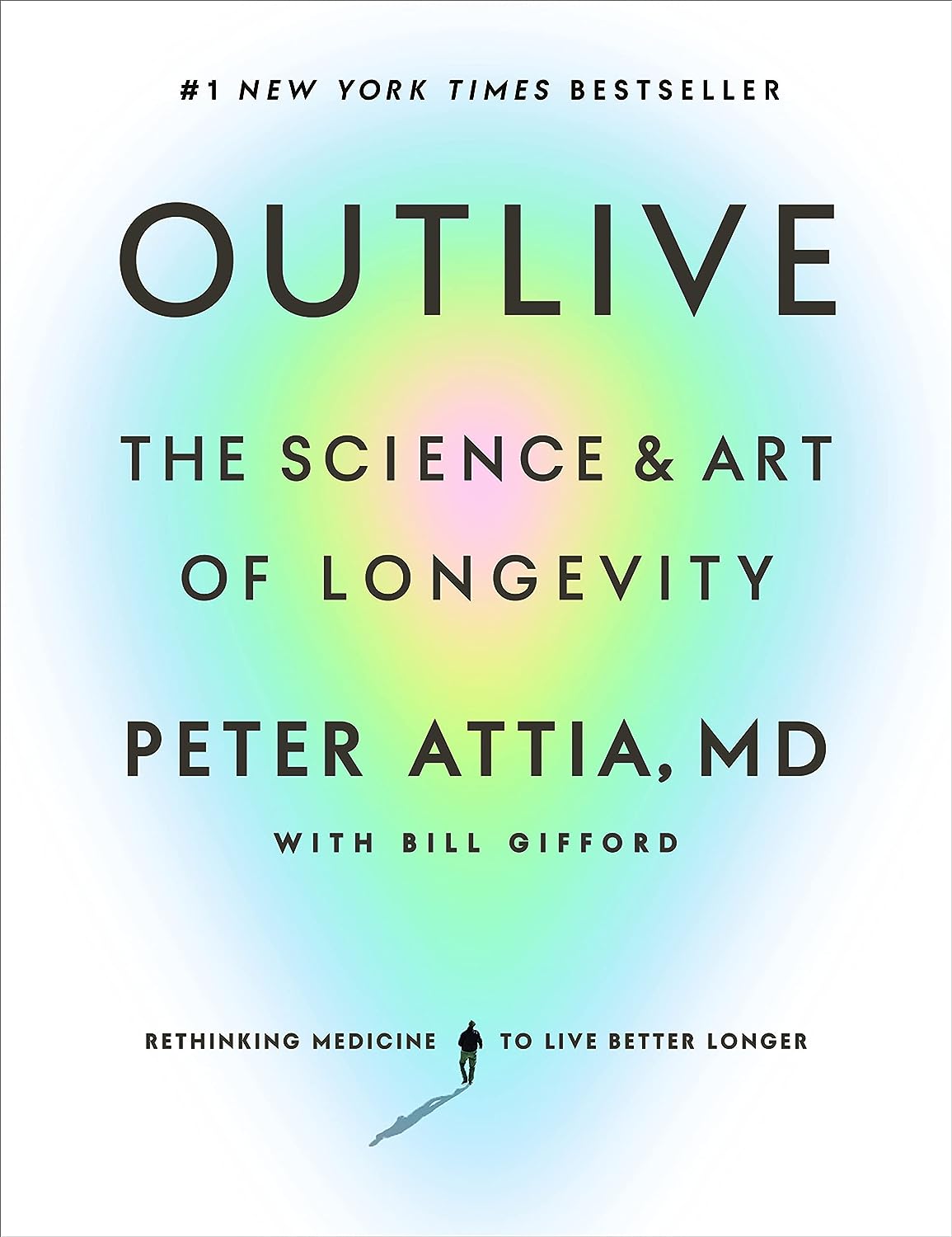
Outlive by Peter Attia distills much of what I have learned in the last several years as I have tried to understand what practices would lead to a good health span. Attia has moved me to be more proactive with my health, especially when it comes to early detection / testing. His idea of training for the “centenarian decathlon” informs my fitness goals, and am doing more training in zone 2. Some notes about Attia.
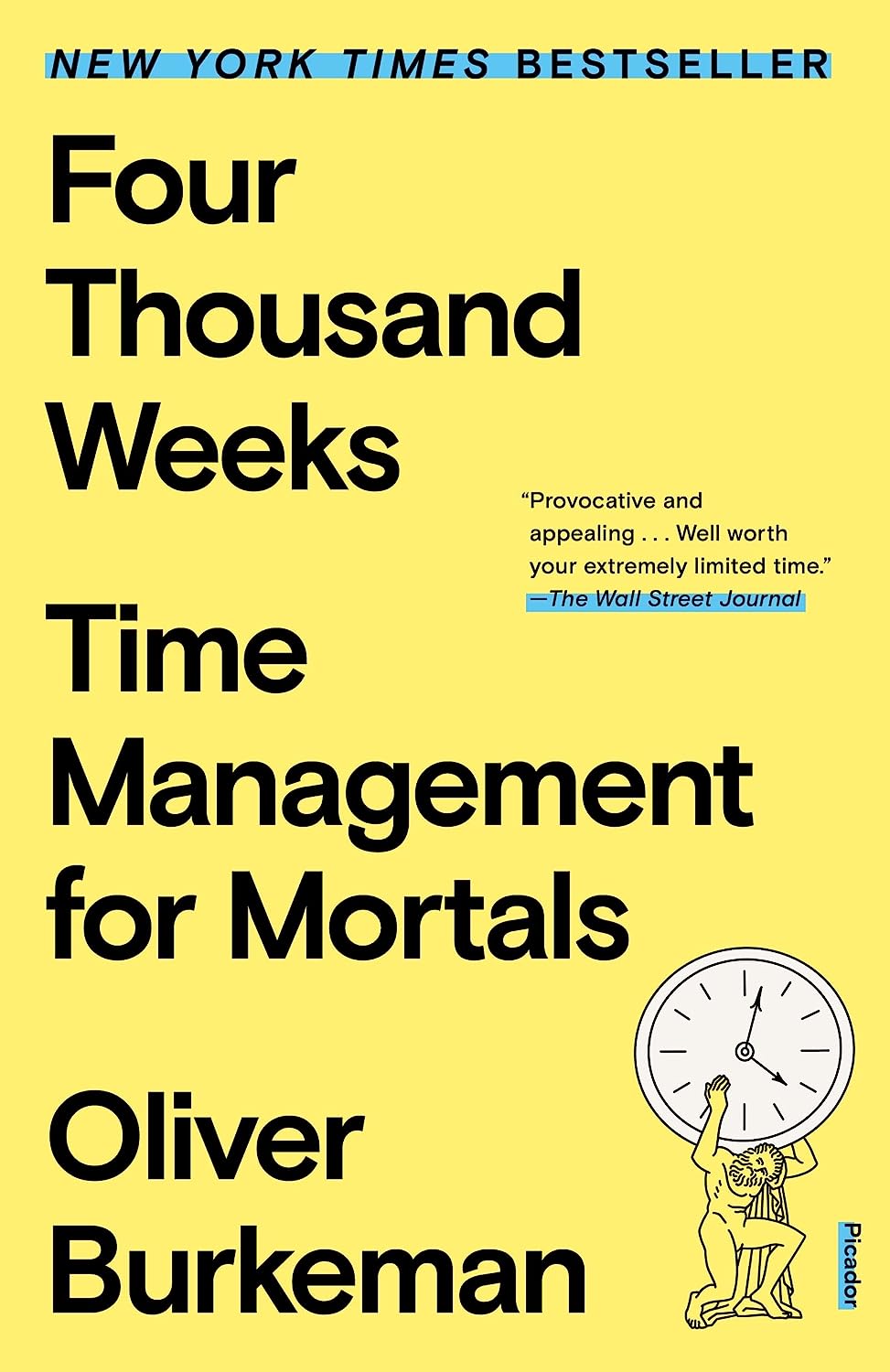
Four Thousand Weeks by Oliver Burkeman is quite different from the typical book about time management or productivity. Burkeman argues that people focus on productivity are often avoiding the fact that they are finite. There will not be enough time to do everything they want to do, and being more productive will not make a substantial difference in their experience. Rather, people would be best served to become comfortable with their limitations and choose what they will do, and let go of the things they can’t accomplish. I think the author wrong about how an eternal life would chance the equation, but I don’t have an alternative to offer at this time. This book helped me relax, to leave more slack in my life, and to make sure I choose to spend my time on things that matter to me, even if they weren’t “productive” or likely to have a “significant impact”. Good companions for this book are Essentialism by Mckeown, and How to Inhabit Time by James Smith.
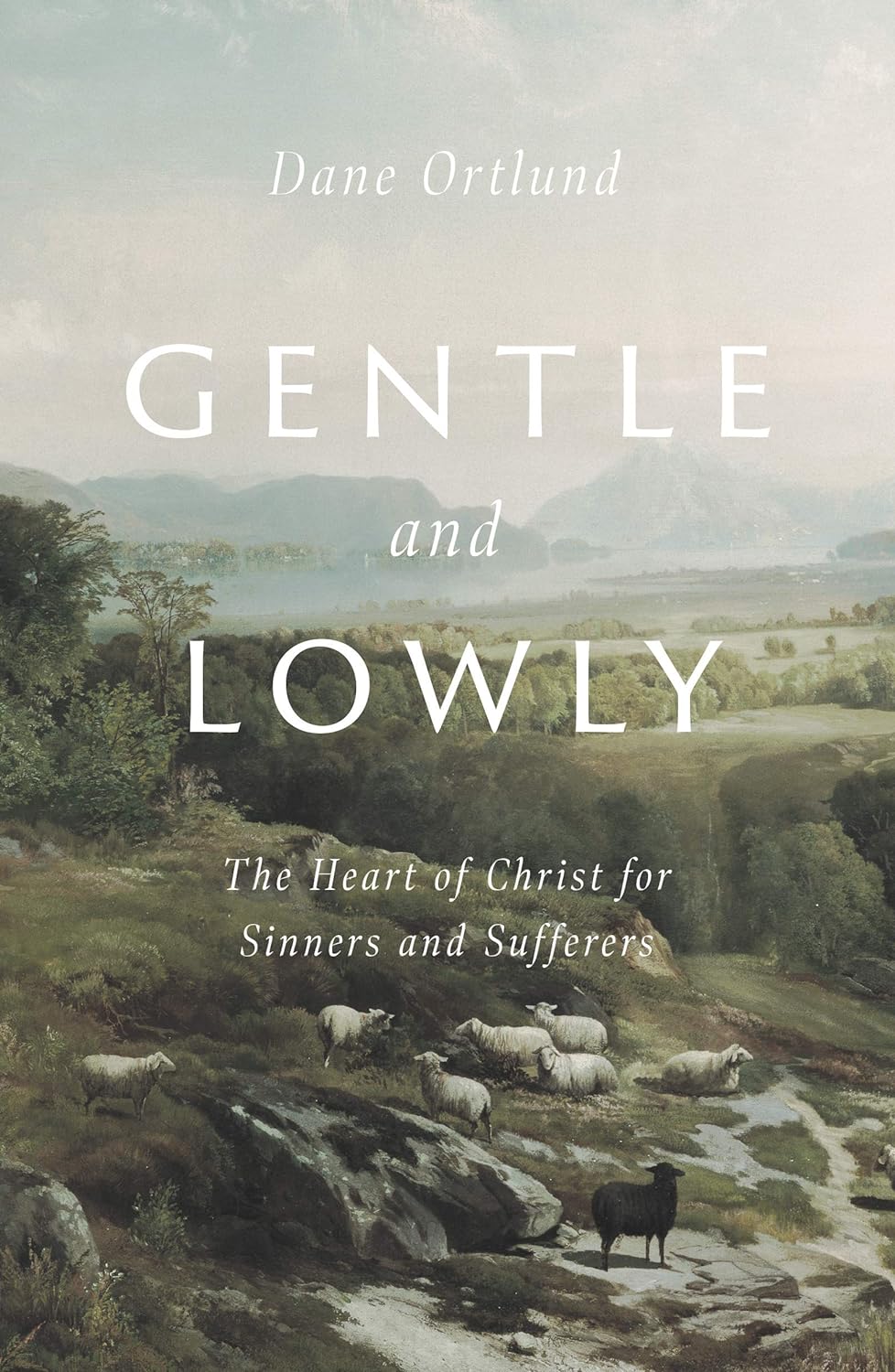
Gentle and Lowly by Dane Orthlund is a beautiful treatise about God’s love and mercy. Ortlund takes aim at how it’s common to look at God’s forgiveness as a legal transaction which happened in the past. This books makes the case that it is much more dynamic, personal, which is experienced in the present. I was very touched by his observation that most people are a spring ready to be release anger and wrath by the smallest issue and we have to work to accumulate grace, but God is just the opposite, His love spills out at the slights prick while it takes a great deal to bring out His anger. The book has lead me to pray more, strive to shift from anger to love as my default response, and to seek to find and build community centered on grace. Too many churches fail to see and live in response to God’s loving presence. Good companions to this book are Keller’s The Prodigal God, and Manning’s The Ragamuffin Gospel.
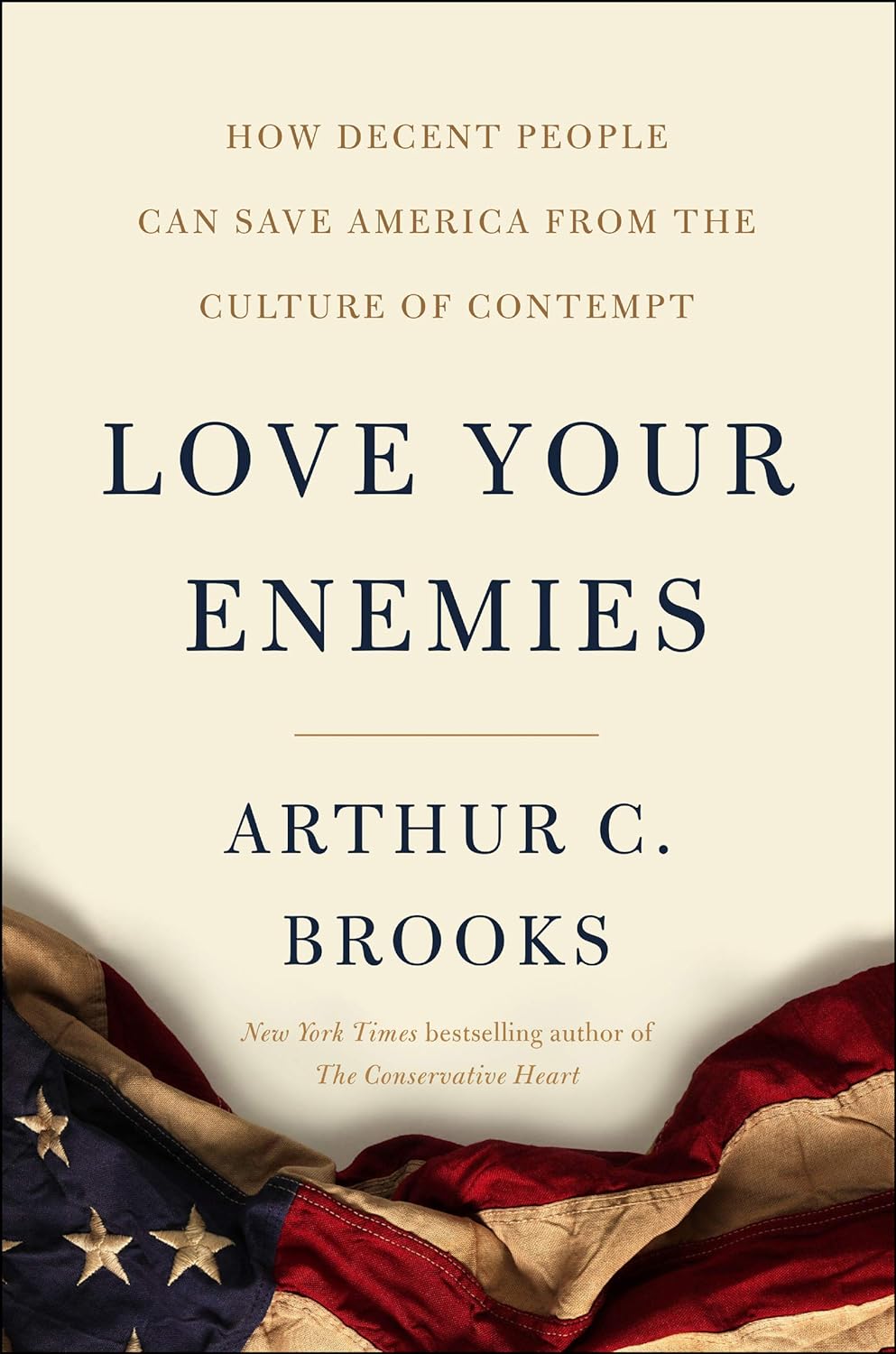
Love Your Enemies by Arthur Brooks calls on the reader to abandon contempt in politics, or really any dialog and focus on core issues. He notes that often groups’ values aren’t so different, but the way they are looking at the problem is framed differently. Brooks recommends connecting using stories, not just data. Show respect and call out members of your “tribe” when they are disrespectful. This book got me to reexamine people and organizations that I used to write-off. What I found surprised me… often we wanted the same thing. We both wanted justice and to see humans thriving. I was able to see that these “others” were not sinister characters bent on domination, but fellow humans who cared about others doing their best to address real problems in the world. I didn’t necessarily agree with their “root cause analysis” or their solutions, but I could see that it was a good will effort, and often could see how their solutions could be complementary to what I thought was right. This book put into writing what Doug Goins taught me with his life. If you want additional material, check out books by the Gottman’s, Marshall Rosenberg’s book Non Violent Communication, and Miroslav Volk who explores the relationship between “us” and “them”.
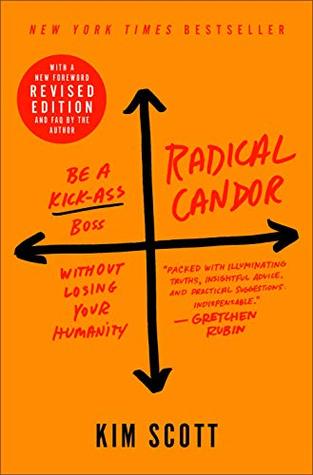
Radical Candor by Kim Scott touched on many of the things I have tried to engender at work with more incisive analysis and practical suggestions. Kim’s focus on feedback, coupled with a class I just completed increased the frequency of me being kind rather than nice, that is sharing hard feedback that someone needed to hear and being better, listening to the feedback people gave me, and going out of my way to solicit feedback. I have changed some of meetings management practices with more to come. Make sure you get the revised edition. It has some excellent clarifications and notes about how to roll out a program built around Radical Candor.
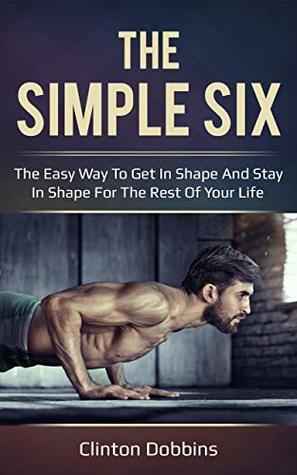
The Simple Six by Clinton Dobbins is a good book for someone who is trying to establish a regular strength based exercise routine which is sustainable over the long term using primarily body weight exercises. A key to establishing a new habit is to keep it simple and achievable. This books provides just that. Six simple movements (with 3-4 alternatives for each of the big-6). While each of the movement families can be done without equipment, a pull-up bar and a kettlebell are helpful. A five day / week schedule is provided which is easy to follow, requiring around 30 minutes / day, rotating what muscles get the most focus so you don’t need to worry about rest days. As the author indicates, the key is consistency and patience. For someone who already has an effective fitness routine this book is likely not very useful. There are numerous books which provide a more detailed description of the motions, a larger list of exercise options, more details about how to scale the sets as you gain proficiency. I purchased this book because I found many plans were too complicated, or depended on free weights which I no longer have access to. So why read this book? It provides a simple formula enables a solid started. It will take several month to establish an effective habit and start to see results. Only after you have the basics mastered and are consistent will you need to worry about scaling the exercises and need some variety.
DevOps Handbook by Kim, Debois, Humble & Willis is the best examination of the underlying principles and insights which is at the heart of effective DevOps. Many of their observation might seem counter-intuitive, but they back up their conclusions through both theory and case studies. In my 30+ years of being at the intersection of development and operations I have seen first hand much of what is described in this book. What this book did for me was to give me a more effective way to communicate what has been primarily tacit knowledge and helped me re-prioritized work to enable sustainable teams. The book The Phoenix Project is a novel which tells the story of a company that discovers effective DevOps. The book Team Topologies is an excellent companion which will help you understand the interplay between organizational structures and the systems the teams are building.
Every Good Endeavor by Timothy Keller. The best book I have read on vocation. Keller captures the tension that we all feel between being made to work and that we live in a broken world where nothing works as it should. Work can be deeply satisfying, it can also be great source of frustration which grind us down. Keller makes the case for working hard, but to remember that our ultimate hope is in the new world that God will be making. A new world that is connected to the world we live in now, that will be material, not some ethereal cloud filled world. Keller explains that all work, be it the humble work of a house cleaner or a trauma surgeon are not just necessary but valued by God, and should be valued by all of us. This book played a significant role in moving me from being ready to quit the world of high tech start-ups to looking for a new job in the industry I had been happy to leave a few years before. Recently I enjoyed John Mark Comer’s book Garden City which touches on several of the same themes.
A Praying Life by Paul Miller. We shouldn’t focus on prayer (the method) but rather God (the object). Miller has a very high view of prayer. He expect prayer to accomplish things. Not because we are somehow manipulating God, but because God cares and prayer is a key way that we communicate with Him. Prayers answered tomorrow? Maybe, or maybe in 20 years, or maybe 2000 years. The answers won’t be in a way that you predicted and might not like, but God will do what’s best. Miller highlights how critical our heart is in prayer, and that prayer will change our hearts for the better. I found this book disturbing in the best sort of way. This book changed the way I prayer and moved me to make prayer cards.
The 4-Hour Body by Timothy Ferriss. I am not fond of this book. I think Ferriss’ claims over reach and some assertions are just wrong. That said, this book started me on a path to rethink what I thought I knew about health, fitness, and nutrition. I think the conception of minimum effective dose is important for people with busy lives, and learned to appreciate that the metabolic system is very complex. This book started me on a path of make high intensity interval training as standard part of my exercise program. I think Attia’s book is much better, and that Body by Science covers HIIT much better than the 4 Hour Body.
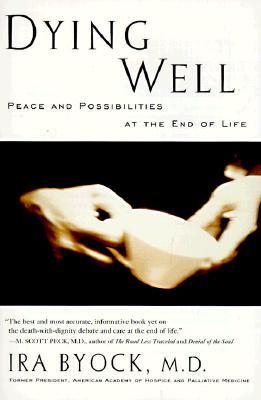
Dying Well by Ira Byock. This book starts with the story of how Ira experienced his father’s death. This is followed by numerous stories about his hospice patients and their families. This book grew a desire in my heart to care for Libby in our home in her last weeks of life and prepared me for much of what I experienced. I am so glad I took a very active part in carrying for Libby in her last days, and that she passed in our home rather than in some institutional hospital.
The Courage to Teach by Parker Palmer. So many themes which are integrated into my life. Teach out of identity and core not technique. Fear and alienation are the enemies of effective teaching. Greater truths are often paradoxes. Trying to resolve paradoxes too quickly short-circuits learning. The tension from paradoxes can leave us open to learning and grow, this is painful but can be endured in the company of love. Finding truth as a community centered around a subject rather than “objective facts” and experts. Teaching from a microcosm. This books gave me a new vocabulary, helped me be more open to other people’s perspective, and to be patient when facing paradoxes and other hard to understand situations.
Leadership is an Art by Max Depree is one of the best books about making a humane and empowering workplace. I read this book during a time that I was feeling weary. Managing people was taking a lot of time and I wasn’t sure I was adding any value. I wondered if I could be more productive by returning to an individual contributor role. I read this book and was re-invigorated. This book renewed a hope that I could have a positive impact on the people I was managing.
Organizing from the Inside Out by Julie Morgenstern helped me tame piles of paperwork and organize our house. In our modern life it seems like we have way to much stuff to manage. This book suggests simple but practices tools and techniques to organize things. I am particularly fond of (and regularly use) her “Kindergarten” principle… everything should have a place to be put away right by where where they will be used. Since reading this book I have also come to appreciate simplifying my stuff is even more effective than organizing my stuff.
The Innovator’s Dilemma by Clayton Christensen has had a deep impact on the way I think about technology, products and the decisions I have made at work. I tend to be an idealist. I tend to want the “best” solution. The Innovator’s dilemma helped me finally understand why “worse is better” in many cases. I think anyone working in the technology field needs to expect radical change that will come from technology that is “worse” than the current state of the art and to be prepared to cannibalize existing products and markets by embracing these distributive technologies.
The Sacred Romance by Brent Curtis & John Eldredge. Control is an illusion. Rather than working to control life it is better to fully embrace God and trust that He will be true to his nature and take us on the journey we need. What’s best for us is never the most pleasant. This book helped me consider what was really important to me, what was I putting my energy and hopes into. This book helped me realize that some of the things I was driving for would never provide the results I hoped for and should be abandoned.
Hints to System Designer by Butler Lampson isn’t a book, it’s a paper from SOSP. There is still a lot of art when it comes to building effective systems. Butler does a great good capturing many of the factors which should be considered by a system designer. Anyone who does system design should be familiar with this paper or expect to make mistakes which have been known about since the 1960s. I have spent most of my career building systems. More than any single book or paper, Butler’s hints have provided inspiration and guidance for my professional career. A great follow on to Butler’s paper is Systems Architecting by Eberhardt Rechtin which has a wonderful section of heuristics commonly used in systems architecture. Systems Engineering and Analysis by Blanchard & Fabrycky is a wellspring of useful information for system builders, and Design Patterns provides a useful set of patterns to consider if you are stuck decomposing a problem.
The One Minute Manager Meets the Monkey by Kenneth H. Blanchard. Like all of Blanhard’s books, the core ideas could easily fit into a page or two of text but instead is communicated in a lengthy parable. The heart of this book is you empower people by encouraging them to do their own work rather than taking their work on yourself, e.g. delegate. During meetings there are “monkeys” (e.g. tasks) which will end up on someones back. A fatal mistake made by managers is that they hold onto the “monkeys” when they tell people to wait while the manager reviews the plan, provide feedback on a proposal, “clean up” the document, etc. This is fundamentally dis-empowering. I read this book during a time when I felt overwhelmed by work. I was trying to mentor and coach people, but I was regularly blocking people’s forward progress by offering to review work (that didn’t really need an extra review cycle).
20 Things I Want My Kids to Know by Hal Urban. I first read this book in 1992 at a time that I had just realized that I wanted to have children. I enjoyed Hal’s list of lessons he wanted to pass on to his kids. Reading this book prompted me to think more deeply about what was important to me and made me realize that I wanted to bless any children I had with the wisdom I had gained in life, in the hopes that they could benefit from my life experience. This book lead me to live a more examined life and to take the time to write down lessons I have learned. This blog would likely not have existed if I didn’t read this book.
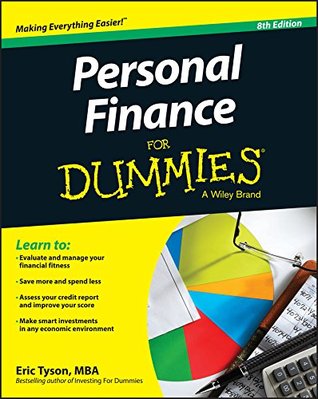
Personal Finance for Dummiesby Eric Tyson is a basic, but excellent book on personal finance. I normally hate “dummies” book, but this book is an exception. I read this book when I was feeling weighed down by our finances, though I now realize was a very minor debt. This book helped me think systematically about what we were doing with our finances, helped refine a plan to retire all our debt, and convinced me the need to save and invest for the future. Since I read this book, I have read a number of other books about personal finance and investing. While several of these books gave me a deeper understanding of the topics, none have contradicted what I learned in this book. Personal Finance for Dummies has all the advice I would hope a parent would pass onto their children about money. Unfortunately, a lot of parents don’t know many of the things found in this book or don’t think to teach their children how to effectively manage their money.
Advanced Programming in the Unix Environment and TCP/IP Illustrated, Volume I by W. Richard Stevens. Stevens had an amazing ability to simply and clearly explain technical topics that can be quite complex. While I knew quite a bit about the TCP/IP protocol stack, and UNIX system programming, these two books helped pull these topics together in a more complete way that I could have on my own, or by reading several other books. I still find myself regularly reaching for one of these two books.
Lest Innocent Blood Be Shed by Philip P. Hallie has the message there can be hope, even in dark times. During WWII, the entire community of Le Chambon refused to cooperate with the Nazis and helped more than 5,000 Jews escape Nazi camps. There was no one hero… rather the whole community engaged in a conspiracy of goodness. Whenever I start to think that it’s impossible for a community to tackle a difficult issue, I find myself reflect what this community was able to achieve and find hope. There is a good documentary about this community called Weapons of the Spirit.
The Ecology of Computation edited by B.A. Huberman is an out of print collection of papers which I believe gives hints as to where computing systems who go in the future. Agoric computing, software agents, and other approaches which are now entering the mainstream were discussion in this book. More than any other computer science text, this book fired my imagination, and made me consider that there were revolutionary approaches which might be able to address righteous problems that couldn’t be solved by brute force. Reading this book was one of the factors that lead me to take a job at Xerox’s Palo Alto Research Center (PARC).
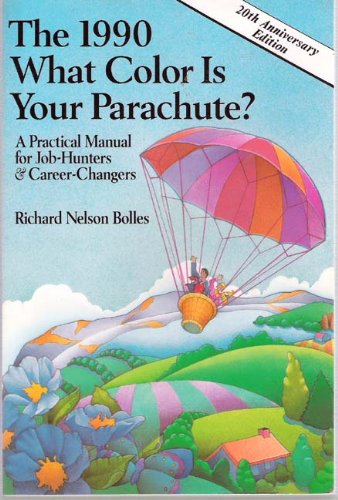
What Color is Your Parachute by Richard Bolles came out in 1970 at a time that many businesses were downsizing and people in the middle of their careers found themselves out of work. This was in an era that people expected life time employment from large companies. Bolles’ book was an encouragement to consider what a job seeker wanted to do for their next season of life. As a direct result of doing the exercises in this book my wife selected her career, I changed workplaces, and we moved across the country. While this book can be useful to people at any stage of life, it is most helpful to someone who has had sufficient life experience to reflect on what they have done. This book encourages the reader to figure out what they are called to do (a vocation) and do that. The money (or at least enough for you survive) will follow. You might not be rich materially, but you will be rich in experience and quality of life. Sometimes people say do a job you love, but I prefer to say do a job that is meaningful, that has impact, and you you will love the job. When I first worked through the exercises in the early 1990s, I didn’t change my career, but I had a deeper sense of purpose in my day to day work experience. Doing some of the exercises lead Libby to become an audiologist and us to move to the Bay Area.
Writing Efficient Programs by Jon Bentley. I originally read this book as a pre-print for a class taught by Jon on software engineering. I was deeply influenced by the four fundamentals rules: code simplification, problem simplification, relentless suspicion, and early binding which first appeared Elements Programming Style (which I have never read… much to my shame). I can see the influence of this book on every major piece of code I have written as well as how I approach systems which need to be sped up. My single biggest take away was to focus my attention on what will make the biggest difference. For example, if a program is spending all it’s time in I/O, don’t improve the sorting algorithm, go after the I/O subsystem.
Perspectives on the World Christian Movement edited by Ralph Winter and Steven Hawthorne. This is a massive 700+ page tome which is a collection of 136 articles which examine Christianity and missions through the lens of Biblical theology, history, culture, and strategic analysis. The combination of this book and the class that used it as a textbook changed not only my views on Christian missions, but changed the way I engage life. The Biblical section helped me understand how I was part of an ancient movement that has been shaping the flow of history which culminates in the world properly worshipping the Lord, and that mission is temporal in nature. The section on culture helped me see how I valued my culture above others and that is bigotry. I was challenged to learn more about other cultures and find value in how those cultures differed from my own. I learned that communication is rooted in one’s world view, and to bridge that gap one needed to understand the context of the people you are communicating with. I learned to appreciate how organizational structures are more (or less) appropriate for different tasks and that one size doesn’t fit all. Finally, I learned that God was concerned for the whole world, the whole man, and that the history of missions doesn’t have a good track record doing either of these things. I learned how throughout history there have been awful things, and great things, done in the name of missions which gave me an appreciation for the need to critically examine projects I might be involved with… and of course, that just sitting back wasn’t an option.
No Condemnation by Bruce Narrmore. I first read this book in 1984. Until I read this book I thought motivating people via guilt was one of the most effective ways to bring about change. I came to see how destructive guilt motivate was, and how it was unlike to sustain deep change in the long run. I try to reread this book every few years. Each time I am reminded how easy it is to use guilt to motivate, how guilt is hugely damaging, and what are effective and life giving alternatives to guilt.
Marriage Builder by Larry Crabb is a significant reason I enjoy my marriage today. Crabb’s core thesis is that the reason most marriages struggle is that the partners are looking for the other person to meet our needs, to fill up a void in our lives that only God can fill. This book calls us to trust God to meet our core needs, and out of that dependence to choose to love, serve, and sacrifice for our spouse. I know that when I keep this in mind, that I am a better husband to my wife. Crabb challenged my assumption that my wife was going to somehow “complete me”, but rather encouraged me to consider her a companion on a journey. Many of the principles which Crabb applies to marriage are equally true in other relationships. While The Marriage Builder had a profound impact on me, I would now recommend Tim Keller’s The Meaning of Marriage instead because I think it is more comprehensive and balanced. For younger folks still in the dating stage, I recommend the book Loveology.
The Evolution of Cooperation by Robert Axelrod explores how cooperation can emerge in a world ruled by selfishness with no central authority or rule. Axelrod demonstrates that enlightened self interest can lead to effective cooperation in any situation where the participants believe that they will need to interact with each other in the future. These lessons can, and should be applied to personal, corporate, national, and international interactions. After reading this book I noticed that I was much less likely to take an all or nothing approach when dealing with others, and was more more likely to look for win-win options. Most important, this book gave me hope. The Marshall Rosenberg’s book Non Violent Communication does a good job demonstrated how this often works in inter-personal relationships.
Rich Christians in an Age of Hunger by Ron Sider. Extremely challenging to an upper midclass kid who was suround by affluences and a consumer oriented culture. His suggestion of a progressive tithe and not growing lifestyle at pace with income has influenced my relationship with money. I am more of a consumer that I would like to be, but this book has helped keep my life in perspective, and to avoid buying into our consumer culture. I think Randy Alcorn’s book Money, Possessions and Eternity is a great companion.
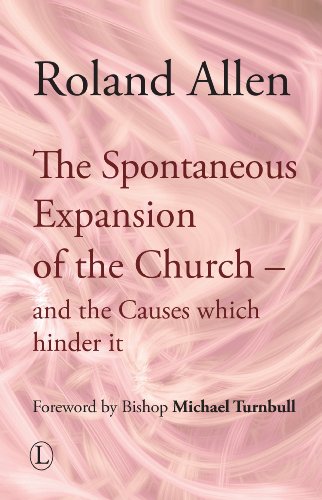
The Spontaneous Expansion of the Churchby Roland Allen looks at the growth of the early church. Roland argues that the church doesn’t need complex structures and systems to be effective. Rather the church needs to free its members to follow after God. Too often, church leadership trying to control what is happening and how it’s happening. This is a mistake. The church is a group of people who are together, trying to follow after God and responding to what they are learning. This books resulted in me being much more laid back when in leadership roles within the church, and has lead me to select a church that favors less control and more empowerment. I think the out of print book The Church Unleashed by Frank Tillapaugh did a great job explaining what this might look like in a “modern” church in America.
The Dynamics of Personal Follow-up by Gary Kuhne is the best book I have found describing how to help establish a new Christian. This book helped me appreciate what core truths and life practices were important in the life of a new Christian, why it was important to purposefully pass these core practices on, and gave me a framework to help someone new in the faith become more established. I also learned to appreciate how people grow in different ways and that what someone might need in one stage of life, will likely be different in the next stage of life. Finally, Dynamics of Personal Follow-up provided me a basic framework to think about how people grow. I have taught classes based on material from this book and used much of Kuhne’s material when mentoring people.
Please Understand Meby Keirsey and Bates. I discovered this book in 1981 at local book store. At the time I realized that I didn’t have very good insight into myself or the people around me. This book introduced me to the Myers-Briggs personality classification system. After reading this book, I had a better understanding of myself, both my strengths and my weaknesses. My appreciation of people who were different from me grew significantly and I was able to start thinking of them as different rather than “plodding” or “insensitive”. I came to realize that there was great value in people who were more systematic than me, or who cared more about truth than people. There is an updated version of this book called Please Understand Me II which I recently reread. The most recent time though I got even more out of this book. In the past I would read the description of my type (ENFJ) be be pleased. I liked the description. This time through I asked for each characteristic three questions. First, is this describing my experience? Second, is this a picture of wholeness, a reflection of something that is true, of the Lord, or is this brokeness. Third, how is this something that that can stand between me and the Lord: be it something good that becomes an idol, or something that is directly contrary to the Lord. Asking these questions has been quite a blessing. There isn’t a lot of scientific evidence of the accuracy of Myers-Briggs. There are better personality sorts now, but I haven’t felt compelled to use them.
Walking in Victory by Dennis McCallum, one of the founders of the church I attended as a new Christian. This book distills most of the teaching I heard early in my Christian faith about the nature of spiritual growth. These teachings had a significant role in shaping how I view the world and understand what it means to live as a Christian. I learned this material for handouts, articles, and in-person lectures. This book was written later based on those materials. I believe that there are better books for many of the topics that are covered in this book. For example, I think Green Letters by Miles Stanford has more depth on many of the topics. The Normal Christian Life by Watchman Nee explains Romans 5-8 is much great detail. Release of the Spirit by Watchman Nee gives a much more complete explanation about how trials and suffering refine our character. The Practice of the Presence of God by Brother Lawrence and A Praying Life by Paul Miller are much better explaining a life of prayer. The Sacred Romance by Brent Curtis & John Eldredge is much more effective at capturing the personal nature of a walk with God. Never the less, the materials in this book are extremely valuable in understanding the foundations of basic, Christian spirituality.
The Bible God and numerous human authors collection over 2000 years. The writers are a varied lot from a diverse set of professions, life situations, times, languages, and styles. Throughout my early life I had an intense dislike for what I thought was Christianity. When I finally took the time to read the Bible I found something completely different from what I expected. The book of John introduced me to a very different sort of Jesus, someone that I could respect and wanted to know. The book of James told me that if Christianity was true, that people’s lives should change, and that hypocrisy wasn’t something that should be associated with Christianity. These two sections of the Bible started me on my journey as a Christian which has affected my entire adult life. Over the years I have read the Bible through several times. Some sections are incredibly boring, others are hard to understand, still others are shocking, yet I find myself regularly challenged and encouraged. The Bible has shaped my life in countless ways. The first change was to give me hope. When I entered college I had pretty much given up on people and any hope for this world. I tried to avoid relationships and was looking for ways to get away from humanity so when everything fell apart I could take care of myself. Studying the Bible encouraged me to re-engage the world and do what I could for my fellow man. God’s concern for the powerless has made me more compassionate and motivated me to work with internationals and refugees. Thru my adolescence I tended to view people in a very black or white way. Either people where worthy of respect and 100% trustworthy, or they where idiots who had nothing value to say or contribute. The frank portrayals of great men of faith, who were deeply flawed helped me realize that I can’t expect perfection from anyone, but rather I should cherish and learn from any good I see in others. Most important, I learned the importance of forgiveness… both receiving it and being willing to extend it. Over time I learned that I should understand that I needed to view the Bible as progressive revelation were the community of faith was taught something, and then once that was established the next step was taken much the way that high school chemistry and different from graduate courses. Finally I came to realize that the Bible shouldn’t be treated as a textbook, but an evolving story. For example, Genesis is not about how God built the world (how to build a house) but what was happening in the world he create (the story of home).
How to Solve It by G. Polya taught me to be more explicit in how I worked through righteous problems and helped me see that there were numerous tools, heuristics, that could be used. I got me to think about which tool/heuristic was most likely to to bring me to a solution, and provided a list of alternative approaches in the one I choose is failing to deliver results.
Walden by Henry David Thoreau crystalized for me how a simple and reflective life was desirable. For a time I thought about moving somewhere remote to build my own cabin and live a simple, off grid life. I never did this, but Thoreau emphasis on a life filled with meaning, looking for truth, and appreciating community over getting caught up in “modern” society’s expectations had a deep influence on my life. Unlike many books on this list, I can’t identify a specific event or change that this book brought about in my life, but I can see it’s influence over the years in many ways.
Whole Earth Catalog by Stuart Brand was a wonderful collection of articles, reviews, and product descriptions. I came across this book in my high school years. It transported me (living in the midwest) to the alternative culture (hippie, progressive, …) of the west coast. I learned a lot about about sustainable technologies and social activism. I heard someone else say this was a bit like google in a paperback book long before google existed. I would agree with this description. All versions are now available online.
Shockwave Rider by Jon Brunner took the increasing rate of change discussed in Future Shock and extrapolated that into the future. He envisioned a world wide data network which was used by everyone. Since everything was in the network (web), privacy was also extremely limited. Being able to manipulate (hack) data in the web gave people incredible power. The rate of change was so quick that most people had significant problems coping. Everyone need to take anti-anxiety meds to cope. Many lived “plug in lifestyles” which is characterized by surface relationships, moving for career development, and living in communities which looked identical in whatever city they were living in. This book also touched on the topic of the misguided tendency to pursue knowledge without wisdom. This book deepened my interest in computing, made me think about pursuing wisdom not just knowledge, and gave me an appreciation that technology is a two edged sword. Before reading this book I deeply believed that technology was the answer to all problems. This book tempered my enthusiasm for technology and made me look for unintended consequences.
Libby and I were recently talking about a women she sees each week. Last week the women noted that Libby’s life seems different from hers, and that when Libby prays it seems like God is right there. This women has faced a lot of difficult issues in the last year and is looking for peace. She wanted to know what Libby’s secret was. We thought what has made a difference was that Libby let the tough times deepen her trust in God and transform her character and understands that God uses difficulties (trials) to bring her into a closer walk with Him.
I enjoyed the article The Cellular Church which takes a look at Saddleback Church and the small groups that power it. Gladwell s known for the books “Tipping Point” and “Blink”.
At the end of July I quit working for Tellme fulltime and starting consulting with a number of companies. The plan was the consulting to be a short term thing until I was able to get a company started with a friend. Long story short, the company didn’t look like it was going to come together and a didn’t enjoy consulting. There are a lot of start-ups which have recently launched. I chatted with sixteen companies. Most didn’t have credible business plans and/or had weak teams. There were a few start-ups which looked interesting, though most didn’t fire my imagination. In the end, I joined metaweb which is a a spin-off of applied minds (applied mind featured in newsweek). metaweb is now a free standing, venture funded company. I joined metaweb because the team has a number of people I want to work with, and they have what I think is a “big idea”. I can’t say a lot about what we are doing, though we are fully web 2.0 buzzword compliant. One big change is that metaweb is the SOMA district of San Francisco. This is the first time in 24 years that work is more than a 30 minute walk from home. Well, actually it is a 25 minute walk, but there is a one hour train ride in the middle of the walking. I am hoping that the time in the train will be good for reading and reflection, something that modern life tends to crowd out.