Category: personal

posts that are about my life

  • Confirmation Bias and Shoes

    I have been reading Thinking Fast and Slow which I would highly recommend. If you have read a summary and think you know what’s in the book you are wrong. I think it takes example after example to actually internalize how easily we are influenced by things we don’t notice. I am writing up some personal notes but they aren’t done. This is a placeholder using an experience I had today.

    I need to replace my trail runners. I have very hard to fit feet. I had narrowed down the choices to Altra Superior 4.5 and Inov-8 G 270. I have been wearing Altras for several years, but they keep tweaking the shoe which means I never know if the next shoe I purchase from them will work as well as the previous. They also wear out more quickly than I would like.

    I was excited by the Inov-8. First, Inov-8 don’t change shoe designs. I wore their Flyroc-310 for several years… the 14th pair was just like the first. Second, they were using space-age materials which was suppose to add durability and performance. I read that they were using an improved foam which has better energy returning properties. They had updated the design of the 260 G including a wider toebox, which seemed like it would fit my foot. The 260 G toebox was a bit too narrow for me. Seemed like a winner.

    So… I took these shoes out for several runs. It seemed to me that the Inov-8 was was performing better than the Altras… they felt more energetic and had a better “ride”. Later I put one of each on a foot and walked around. Both feet were happy… nothing stood out, but when I was concentrating on the feel, I prefered the Inov-8.

    Then I looked at metrics gathers from RunScribe sensors. The Altras were performing better. More efficient, lower shock and braking Gs, slightly better form. Hmm… later I put one of each on my feet and went for a run while listening to an engaging podcast. I set an alarm so that 3/4 of the way through the run I would pause to consider which foot felt better. When the alarm went off I had forgotten which foot had which shoe. My assessment… the right foot felt a tiny bit more comfortable. When I got home I looked down. The right foot was the Altra.

    So it seems my expectation (and hope) that the Inov-8 was going to be superior made me look for confirmation this was true. Objective metrics suggested that the Altra were better. My attempt to do a pseudo blind test resulting in a slight preference over the Altras. Was this a new confirmation bias? I don’t trust myself to know.

    What am I doing? The Altras are cheaper and Jackie prefers their color… so that’s what I am going to use for now. If I have trouble finding the Altra Superior 4.5 in the future, I know the Inov-8 270 G will be an acceptable alternative.

  • Replace Prayer List with "Cards"

    In the book A Praying Life, Paul Miller asserts that we shouldn’t focus on prayer (the method) but rather God (the object). Miller has a very high view of prayer. He expect prayer to accomplish things. Not because we are somehow manipulating God, but because God cares and prayer is a key way that we communicate with Him. Prayers answered tomorrow? Maybe, or maybe in 20 years, or maybe 2000 years. And your prayers might be answered in a way that you wouldn’t have predicted and might not like, but God will do what’s best. Miller highlights how critical our heart is in prayer, and that prayer will change our hearts. I first read this book in 2011 and I found it disturbing in the best sort of way. This book changed my approach to prayer. I periodically reread it to continue to be reminded of how essential prayer is to life. This post started out as an email with a friend which mixed talking about prayer cards with some situations we both were facing. It took me awhile to turn it into a more generic post.

    Besides challenging my view of prayer, I have adopted several of Miller’s practices. One of those practices was switching from a “prayer list” to “prayer cards” which he discusses in chapter 29 entitled “Keeping Track of the Story”.

    Miller provided several example prayer cards with the follow general description of what he puts on his cards:

    1. The card functions like a prayer snapshot of a person’s life, so I use short phrases to describe what I want.
    2. When praying, I usually don’t linger over a card for more than a few seconds. I just pick out one or two key areas and pray for them.
    3. I put the Word to work by writing a Scripture verse on the card that expresses my desire for that particular person or situation.
    4. The card doesn’t change much. Maybe once a year I will add another line. These are just the ongoing areas in a person’s life that I am praying for.
    5. I usually don’t write down answers. They are obvious to me since I see the card almost every day.
    6. I will sometimes date a prayer request by putting the month/year, as in 8/07.

    One of the things I love about this approach is that by praying the Scripture on the behalf of someone, I can be sure that I am praying for something that is within God’s will. I am in essence, agreeing with what God has already told me would be best. I am just asking for me to see His’ will be done. I find this very encouraging. Wycliffe Bible Translators has a nice articles about How to Pray Scripture Back to God.

    In addition to cards for individuals, Miller encourages people to have cards which are more topical. He provides an outline of a sample deck of prayer cards that allows him to pray through his entire life. Some cards he prays through every day; others he rotate through, using one or two cards a day. How many cards to use for a particular area depends on the shape of your life. It is completely up to you. Here is an example of the cards Miller thought you might want to have:

    • 4–10 family cards (one for each person)
    • 1–3 people-in-suffering cards
    • 1 friends card
    • 1 non-Christian card
    • 1 church’s leadership card
    • 1 small-group card
    • 1 missionary, ministries card
    • 1–3 world- or cultural-issues cards
    • 3 work cards
    • 1 co-workers card
    • 3–5 repentance cards (things I need to repent of)
    • 3–5 hope or big-dream cards

    I have adopted an electronic version of Miller’s cards which I store in Bear. There are many electronic note taking applications would work just as well. Some might use Evernote, Google Keep, Apple Notes, Microsoft’s OneNote, Anytype or specially designed apps like Inner Room. Contents are often sensitive and need to be protected. Given the sensitivity of some of my prayers, I would only use applications that protects the notes from others reading them. Note keeping apps that can keep the notes encrypted include Bear, Obsidian, Anytype, Joplin, Snote, Standard Notes, turtlapp or Apple Notes.

    I have found my electronic “cards” have several advantages over a typical 3×5 card.

    1. It is possible to attach a photo with can bring the person, situation, or group to mind quickly. Many electronic note taking applications have a “card” view which lets you see several cards at once, with the attached photo and the first few words visible. I find the picture often allows me remember my prayer without even looking at the full card. What’s more, the picture often makes me feel a bit more connected.
    2. Since the card is electronic, it can be a bit more dynamic. I feel free to update the card.
    3. I am able to keep track of history on the card. The most current scripture and issues are listed at the top of the card. Older issues are lower on the card. This is a great reminder of how God has been working in the past, which reminds us of His faithfulness.
    4. I always have the cards with me because I always have my phone with me.
    5. There is no danger of losing my cards since they are backed up

    A little tip if you use Bear, or other electronic note system that supports tags. Create a Prayer “Tag” to keep all your cards together. Rather than using a single card for your small group, have a card for each person (or maybe each family), and then use tags to make it easy to pull up a set of cards related to a specific context such as small group, work, missions, online community, etc. For example I have tags Prayer, Prayer/Church Prayer/Neighborhood, Prayer/Family, Prayer/SmallGroup1, etc.

    Below is an example prayer card with details changed to protect the person’s identity

    John Doe

    I Cor 15:58 Therefore, my beloved brothers, be steadfast, immovable, always abounding in the work of the Lord, knowing that in the Lord your labor is not in vain.

    • Sacrificially love even when it seems no hope
    • Continuing reconciliation with family
    • Children thrive in the midst of the chaos

    Answered

    • Repentance for adultery and betrayal of wife and others effected

    First of all, then, I urge that supplications, prayers, intercessions, and thanksgivings be made for all people, for kings and all who are in high positions, that we may lead a peaceful and quiet life, godly and dignified in every way. This is good, and it is pleasing in the sight of God our Savior, who desires all people to be saved and to come to the knowledge of the truth. For there is one God, and there is one mediator between God and men, the man Christ Jesus, who gave himself as a ransom for all, which is the testimony given at the proper time. 

    I Timothy 2:1-6 ESV
  • Build Your Life on Truth

    Objectivity is your friend –Dennis McCallum

    I was born during the transition from modernist era to postmodernism. Like a modernist I believe there is truth in the world which is discoverable and that there are absolutes. Yet, the uncertainty of our postmodern age requires me to acknowledge that knowing what is an absolute rather than situational “truth” can be difficult, if not impossible to determine. I have tried to live an examined life and regularly revisit what I belief in the light of evidence. The last forty years has greatly reduced the number of things I am certain of. I like to say I have many strong beliefs, most of which are loosely held.

    Truth is worth pursuing though it can be threatening and uncomfortable. Truth can demonstrate we are wrong or show we are failing.  Ignorance doesn’t make us less wrong, nor does it save us pain in the long run. It is far better to know for certain what is true, even when unpleasant, because that gives us an opportunity to go in the right direction.  Proverbs 27:6 says “Faithful are the wounds of a friend, but deceitful are the kisses of an enemy.”

    [toc]

    True Truth

    While it is not a popular viewpoint today, I believe in absolute truth, what Francis Schaefer called “true truth”. There is only one reality, one true morality, things are either truth or false. If two people hold conflicting views, they aren’t both right, though both could be wrong. The challenge is discovering what is true. This takes work and humility. Even if someone works to discover what is true, it doesn’t mean they will succeed.

    Some things might be so beyond our ability to understand that we will never really know the truth, we will see only a small portion of the truth and come to an incorrect conclusion. This dilemma is captured in the classic parable describing three blind men who encounter an elephant. Each man touches a different section of the elephant (leg, trunk, side of the body) and comes to a different and wrong conclusion about what the whole elephant looks like. This parable is a call for humility, and also for dialog. If each of the blind share their experiences with others, together they might have a more accurate sense of what the elephant is. We should seek to grow our understanding by listening to other faith / traditions and ask ourselves if they have insights into areas that we have a blindspot.

    Sometimes I hear people use this parable to suggest that all faiths or religions lead to the same place and are equally valid. While this seems like a position of humility, it’s actually the height of arrogance, because the person is assuming they can see the whole and the communities of faith and religion are the blind who can only see a small part of the truth, not realizing they are no different from each other.

    Just as the sighted man is the only person who can tell the story of the elephant,  God is the only one who can fully tell the story of our world. That’s not to say that we can’t use our senses and mind figure things out, but what we discover will be an incomplete and often misleading.

    This brings up an even more unpopular belief. The Bible is true and trustworthy. I reference some of the evidence for this in my post about faith. The ultimate author of the Bible is God who knows more than us. It’s very common for us to favor our experience and beliefs over the Bible, yet God know more than us and loves us more than we love ourselves. When our experience and beliefs disagree with the Bible it’s appropriate to ask if we were misreading the Bible or if we are misinterpreting our experiences or failing to see long term results. 

    The Bible is God’s self revelation and is able to give us insight into things that are either so important to Him that He wants to be sure we know them, or things we wouldn’t be able to discover if we reasoned just from our own experience. The Bible is like a letter from a dear friend. It can inform us, but we have to read the letter in the context or our relationship, based on what we know of our friend. The Bible is wholly true, but it is not a comprehensive textbook or an encyclopedia. For example, I like to say that Genesis is about home, not the house. The stories of a house would talk about how the walls are constructed, list materials and a floor plan. When people talk about their home, there may be some allusions to it’s construction, but the focus is typically on how it was a space that felt safe, a place you long for.

    Love Truth

    I find myself emotionally affected when people purposely attack truth by direct denials, though distortion, or suppression. I am encouraged when I see truth “win out”, especially truth spoken to power. I have come to realize that I view “truth” as being personal, not just objective facts. I believe Parker Palmer has wonderful captured this perspective in the book The Courage to Teach. Rather than seeing truth as a fixed object to be discovered and controlled by a detached observer, Palmer envisions truth as something that emerges within a dynamic relationship—between the knower, the subject, and the surrounding community. In his view, truth is not simply found but is experienced through dialogue, presence, and mutual engagement. Knowing becomes a spiritual and ethical practice, not merely an intellectual one. The subject of study is not a passive object to be dissected but an active participant in a conversation, something that “speaks” when approached with humility and care. Everyone can have something to contribute, not just an isolated expert or the “scientist as high priest” who bestows knowledge to the masses.

    Palmer offers a “community of truth” as a rich metaphor—one in which all participants stand in a living triangle of relationships: knower, subject, and community. Each is essential, and none dominates. In this space, learning is not a matter of accumulating facts but of entering a shared search for meaning. It is a space marked by curiosity, openness, and transformation, where knowledge grows not from authority but from attentiveness and presence. This model invites both teachers and learners into a more humane and holistic vision of education, where the pursuit of truth becomes not a solitary endeavor, but a shared journey.

    How to Seek Truth

    I believe that the Bible is fully true, but just because it’s true doesn’t means that it’s easy for us to understand. The Berean Christian set a good example for all of us:

    Now these were more noble-minded than those in Thessalonica, for they received the word with great eagerness, examining the Scriptures daily to see whether these things were so. Therefore many of them believed, along with a number of prominent Greek women and men.

    Acts 17:11-12

    The Berean Christians were devoted to studying the Bible together because they believed it to be truth from God’s lips. While the Bereans had a belief, a faith, the Bible was God’s true, this wasn’t a blind faith. The things they learned were put to the test and examined to see that it was true. This is different from classic utilitarianism which believes something is true because it works.  Rather, things work because they are true. So what did the Bereans do? They did their best to read and understand the Bible. They would then put their understanding into practice and then see if it “worked”, the way a scientist tests a hypothesis. The Bereans not only gained knowledge by faith, but put that knowledge to work which made the truth personal, experiential, the sort of truth that transformed their lives for the better. This sounds like an exciting and wonderful community to have been part of.

    The Bible authors make it clear than we should have a strong foundation, an examined faith. Paul wrote that we should be the most pitied of men if our faith isn’t based on truth (I Cor 15). Peter calls all of us to have a ready defense, that is to be able to explain what we believe and why  (I Peter 3:15). When I first created my website I posted a description of my faith.  Decades later I find that I am every more sure of my core beliefs, but I have become much less certain about many of the beliefs which aren’t at the core of my faith. The next sections explain why that is.

    Truth… not lies, half truths or secrets

    Truth is the only thing worth standing on.  Lies, falsehoods, secrets, excuses, might seem expedient, but they are like quicksand.  They will drown your life if you walk in them.  Lies can only hurt people and will rot away your heart and conscience.  Secrets limit your ability to share fully with others and damages your inner life until exposed by the healing light of truth and honesty. In recent times stories about superheroes often demonstrate how deadly lies and secrets can be. Secrets and lies used to “protect” a loved one end up hurting more than the truth would have.

    Ultimately, lies and falsehoods will be revealed and brought to light because the Lord knows all. So live your life as if everything you do and say will be broadcast for everyone to see and hear.  Live in the light.  In the end you will give an account to the Lord, and you won’t be able to fool him.  Indeed, many secrets and cover-ups are exposed in this life.  Don’t compromise the truth today because in the face of eternity it is foolish.

    Consistency Between Truths and Life

    If it is foolish not to live based on the truth, why do people live any other way? Sometimes being committed to the truth seems too hard or too polarizing. It seems like it would be easier to stick with “truth” that doesn’t offend others, that everyone is comfortable with, that seems to remove unwanted conflict. Sometimes we do this by ignoring something that is true. Sometimes we do this by telling lies, often small one, that we don’t think will hurt anyone.

    Of course, sometimes we aren’t being purposefully dishonest, we are honestly wrong. We have thought about an issue, maybe studied the particulars and have come to the wrong conclusion. The solution for this is to be willing to honestly look at the facts and be willing to change our position if we find we are wrong. We must not let our pride stop us from admitting when we are wrong. Another common issue is when someone hasn’t thought through a issue, they merely follow “traditions.” This as an unexamined life. The solution is to examine life. Look for facts and data which actually speak into whatever you care about. It is amazing that people who are willing to spend hours researching a purchase or a sports team spend very little time examining their assumptions about life.

    Often times people’s day to day conduct seems to contradict their stated views. This is especially common among religious communities. While some of these people are blatant hypocrites, their actions showing their true hearts, often times people like this do “intellectually” believe their high sounding words even though it doesn’t come out in day to day life. Why is that… are they completely irrational? Typically no. What’s going on is that over time their experience has led them to use ineffective method to get some result. This has resulted in deeply held misbelief that contradicts what some philosophical position they express.

    It is very easy for us to lie to ourselves, to choose to believe something that we should know is not true.  The prophet Jeremiah observed “The heart is more deceitful than all else and is desperately sick; who can understand it?”  Jeremiah goes on to observe that only God can cut through the deceit, and know what is true.  Thankfully, God’s Spirit has given us a new heart and is happy to help us understand what is going on if we are willing to ask him. 

    Limits of Examination: Some Mysteries Can’t Be Uncovered

    When the Bereans’ experiences differed from their understanding of the Bible they didn’t throw out the Bible, nor did they ignore their experiences. Rather, they used the apparent conflict to examine their understanding of the Bible as well as examining how they were evaluating their experiences. Sometimes this sort of careful examination would allow them to resolve the issue.  Sometimes, they would find themselves facing a paradox or a mystery, something that seemed beyond their ability to know. While difficult, these sort of issues did not result in the Berean’s giving up on thinking or trying to understand.

    Os Guiness’ excellent book In Two Minds (an abridged and slightly updated version was called Doubt and then released as God in the Dark) examines healthy and unhealthy ways to examine faith and resolve doubts. Guinness point out that rationality is not in conflict with mystery. Mystery is when we encounter things that are beyond human reason, but it is not against reason. It is a mystery to man and not to God.  In these places the challenge for us is to suspend judgment and not press human reason to answer questions when it has insufficient information, but to trust God because He has shown Himself trustworthy in the areas we can understand. Guinness observed that rationalist (rather than rational examination of faith) result in one of two errors. Either “knowledge without experience” or “experience without knowledge”.  Genuine understanding generates genuine faith, and genuine faith in turn generates genuine experience.  without genuine faith, experience can be easily counterfeited by emotionalism.  Without genuine understanding, what passes for faith can be a counterfeit confidence of purely human origins

    Limits of Knowing: Uncomfortable Truths and Paradoxes

    There are a number of things that make me uncomfortable as I read the Scripture. For example, I am uncomfortable with God apparently ordering genocide. My modern sensibility says this is wrong, always. Yet it seems like God told Israel to do just this.  It doesn’t seem like most of these genocides occurred. One way to resolve this dilemma is to figure out a way that God wasn’t actually telling the Israelites to do what it seems like He was. There may, or may not be merit in a number of these arguments. I am not a Hebrew scholar, nor have I attempted to study this issue in great detail, so I am not comfortable judging these explanations.

    But I think there is an uncomfortable explanation.  What is recorded is exactly what it appears to be. That God did order genocide, and the only reason it didn’t happen was Israel was disobedient.  Can I explain why God would order something that seems to me so wrong? No. Do I think innocent young children should be killed? No. And yet, who am I to stand up and judge God. Do I know more than Him? Am I more good? Do I truly understand what love is, and the consequences of every act and action?  What if a child that God ordered to be killed would have driven a society to depths worse than Hitler, and that killing him would have prevent a greater evil? When God does something or says something that doesn’t make sense to us, we need to remember that we have a limited understanding. Rather than passing judgment, maybe we need to take a step back and let God be God. To let these apparent differences between what we think we understand, and what we see in the Scripture bring us to God in prayer and stretch our hearts. Asking in humility for understanding, but knowing that in this life, there are many things we will not understand. I think the Steve Curtis Chapman song “Questions” does a nice job capturing this stance.

    Progressive Revelation

    Progressive revelation is when truth is revealed in an incremental way. Rather than getting everything at once, things are learned in steps. Sometimes the steps are too large for anyone to make. In these cases, sometimes God, or our chemistry teacher will tell us something that moves us along the path of understanding but isn’t the full truth. Rather, it’s something that has been simplified for us. Once we master the truth in simplified form we can take the next step. I saw a great example of things with a women who was doing Igantian exercises with me.

    Early on in the Ignatian exercises, a dear lady shared something that “God had showed her”. I wanted to jump up and say “No, that’s not possible. Here are five Bible passages that clearly show what you said is wrong.” During these exercises we don’t engage in “cross talk” (e.g. don’t comment on other people’s experiences) but rather stand in witness to what God is doing. Several months later, at the end of the exercises, this women’s life had changed for the better more than any of us. Her sharing at the beginning was what she was able to understand where she was at then. The following months God continued to moved her, showing her more and more truth, growing her understanding. I would bet at the end of the exercises, she would disagree with her earlier statement, yet it was a stage she had to pass through to her greater understanding.

    The Two Books

    the Bible is filled with passages which talk about examining our world can help us understand what is true. Not just facts about the material world we live in, but also more ethereal truths like the nature of God. Theologians called this general revelation. It’s often said the Bible is one book, and the world we live in is the second book. Both books should be read and understood. If they conflict, we should reread both and figure out what we have mis-understood. Maybe it’s a paradox, but it is just as likely we are reading into one of the books rather than letting it speak for itself.

    Unconscious Bias

    Daniel Kahneman’s book Thinking Fast and Slow explores how we use two systems when thinking. The “fast” system is much easier for us to use and is faster… but it is driven by broad generalization. As a result, it’s very easy for us to jump to wrong conclusions and to be influenced by others without even knowing it. There is a nice interview with Dan Ariel about Irrationality, Bad Decisions, and the Truth About Lies. At some later time I will do a stand alone post on what I have learned from Kahneman and other researchers working in this area.

    Application

    • Take time and examine what you believe. If something isn’t working take the time to reflect on your life and your beliefs. Be prepared to admit you are wrong and consider a different perspective.
    • Have the humility to admit you could be wrong. Always consider if your beliefs are falsifiable. Live an experimental life, testing what you think is true.
    • Be willing to speak the truth, even if it is unpopular, or you will be persecuted for speaking the truth.  If you aren’t willing to pay the cost for saying something that needs to be said, who will?
    • Don’t pretend you have everything together.  People often do this because they think people will respect them more.  This is not effective because people can sense you are living a lie.  Be honest and vulnerable.  An authentic life is very attractive.
    • Never assume you know everything and disregard other people’s perspectives. Take the time to really listen to other people… not just prepare your response. See my post about the 5 minute rule.
    • Don’t make people second-guess you.  Make sure people know where you stand, what are your concerns, etc.  We are called to speak truth in love as if seasoned with grace.  This means temper what you say based on what the person needs to hear.   Don’t use the truth as a weapon.

    Further Investigation

    • The God Who is There – Francis Schaeffer
    • God in the Dark – Os Guiness
    • Courage to Teach – Parker Palmer
    • Thinking Fast and Slow – Daniel Kahneman
    • Honesty, Morality & Conscience – Jerry Bridges
    • A Circle of Friends – Robert Wicks
    • Telling Yourself the Truth – William Backus
    • Basic Biblical Counseling – Larry Crabb
    • Lessons from Life – Mark Verber

    Therefore, having put away falsehood, let each one of you speak the truth with his neighbor, for we are members one of another

    Ephesians 4:25
  • The Joy of a Good Argument

    Jackie says “Weee….”, Mark says “Whatever”. We are different

    Not a week goes by when Jackie and I don’t have a serious argument…. and I am so thankful for this because our arguments grow our understanding and character. The root of our arguments is often that we see the world from different perspectives.  As we argue, we learn more about each others life experiences, cultural background, and personality. I am learning how ego-centric my perspective is, and sometimes learn that what I think is true is merely an opinion, or worse, plain wrong. Together we are learning what is truth and good.

    Sometimes I discover an apparent disagreement isn’t a disagreement. Rather, we are talking about the issue from a different perspective. In these cases I learn that I am being too sensitive and/or too narrow in how I think and talk. Sometimes I am jumping to conclusions and misjudging what Jackie is saying. Sometimes the argument reveals how one of us (or sometimes both of us) are wrong. We find that our biases or fears were making it difficult to see the truth. Often we find a viewpoint we can agree on. Sometimes we agree to disagree. In these cases we have struggled through the issue enough to recognize and respect each others perspective, but have not been persuaded to adopt the other’s perspective.

    Myers-Briggs classifies me as a “J”, while  Jackie is a “P”.  I like plans, closure, and certainty. Jackie likes freedom, experience, and possibilities. There are strengths and weaknesses to each of our approaches. By working together we help each other have a richer and more balanced life experience.

    Jackie Helps me Let Go of the Illusion of Control

    I want a safe life which I control. I know that this is an illusion, that there are many things outside my control, but that doesn’t stop me from trying to keep life safe and controlled.

    Jackie pulls me out of my safe comfort zone. She is always after me to try new things even when the outcome is uncertain or could be embarrassing. Jackie encourages me to take risks. This is not something that comes to me naturally. I don’t like failing or doing things poorly. I don’t want to look silly or foolish. While this is “safe”, it often means there are great opportunities that I would miss with my risk adverse approach. G. K. Chesterton wisely noted that “Anything worth doing is worth doing badly.”

    Jackie reminds me to live in the present and trust God’s provision. She tells me to not worry about tomorrow; for tomorrow will care for itself. Each day has enough trouble of its own. (Matt 6:34).

    Finally, Jackie reminds me that no matter how carefully I plan for the future, I have little control over what will ultimately happen. That planning 5-10 years in the future is great hubris and typically a waste of time, just as  James 4:13-16 says Come now, you who say, “Today or tomorrow we will go into such and such a town and spend a year there and trade and make a profit”— yet you do not know what tomorrow will bring. What is your life? For you are a mist that appears for a little time and then vanishes. Instead you ought to say, “If the Lord wills, we will live and do this or that.” As it is, you boast in your arrogance. All such boasting is evil.

    I Help Jackie Hold Course

    Jackie is much more impacted by her emotions and immediate circumstances than I am. If things get uncomfortable, or seem not to be working well, she is very quick to change direction. If a new opportunity comes up, she sometimes forgets promises or commitments that were made earlier.

    I help keep Jackie anchored and moving forward when things get difficult.  I remind her that just because things are getting uncomfortable doesn’t means she is going the wrong direction. I help Jackie practice what Ignatian exercises refers to as the discernment of spirits,  When it’s “dark”,  be patient, don’t change directions, keep going the same way until there is enough light to adjust direction.

    My role is often to help Jackie not feel overwhelmed by her emotions, but to hold firm to what she knows.  As Eph 4:11-16 states: And he gave the apostles, the prophets, the evangelists, the shepherds and teachers,  to equip the saints for the work of ministry, for building up the body of Christ, until we all attain to the unity of the faith and of the knowledge of the Son of God, to mature manhood, to the measure of the stature of the fullness of Christ, so that we may no longer be children, tossed to and fro by the waves and carried about by every wind of doctrine, by human cunning, by craftiness in deceitful schemes. Rather, speaking the truth in love, we are to grow up in every way into him who is the head, into Christ, from whom the whole body, joined and held together by every joint with which it is equipped, when each part is working properly, makes the body grow so that it builds itself up in love.

    Additional Thoughts

    TED Talk by Margaret Heffernan entitled Dare to Disagree.

    Iron sharpens iron, one man sharpens another.

    Proverbs 27:17
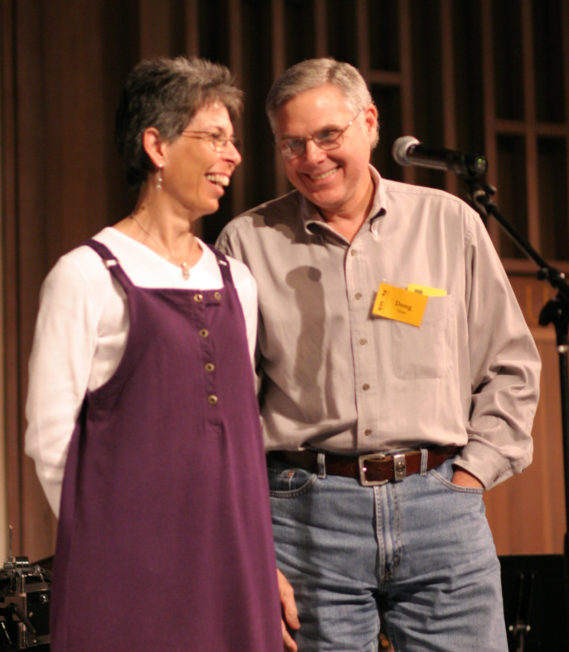
  • A Tribute to Doug

    Today I was deeply sadden by the news that Doug Goins had succumbed to his three year struggle with cancer. Like many people, and especially Candy, I will miss him, and look forward to seeing him in the next life. As I pedaled my way into work today I couldn’t stop crying and thinking about the powerful influence Doug and Candy had on my life. In the midst of the sadness, there was also a joy and thankfulness for Doug’s amazing life. Here are a number of things that came to my mind.

    Help Adapting to the Bay Area

    After living in Palo Alto for a few months I found myself feeling frustrated.  Doug said  “You are suffering culture shock”. I said “that can’t be true, I love it here” Doug then helped me see how there were things in the Bay Area culture that didn’t fit with my values and previous experience. He encouraged me to adjust my expectations, but also to hold onto things that were valuable, even if they didn’t “fit in” with Bay Area culture.

    For example, I was used to spontaneously getting together with people in Columbus. In the Bay Area it seemed like no one was prepared to do something spontaneously. I would suggest getting together with someone, and they would pull out their Day Planner and say “I have 1.5 hours free three Thursdays from now at 7:30pm. Should I pencil you in?”  Doug’s response was different. Like others he was often busy, but he said “I would love to join you but I already have something scheduled tonight, but please keep inviting me to do things spontaneously, and please continue to invite others to do things spontaneously because this is something our community needs.” Doug provided a great example of caring for others and making space for them. Though he was unable to respond to spontaneous invitations, Doug was wonderfully hospitable and made a point to welcome me, and many other people into his life. I took Doug’s encouragement to heart in three ways. The first was I continued to invite people to do things spontaneously. Second, I purposely left a couple of nights unscheduled each week, so there would be room to be available to others when unexpected things came up, to have margin. Third, I tried to invite at least one person to come over for dinner each week.

    A Model of Trusting People and God

    Doug and Candy opened their home for a young couples bible study. My late wife Libby and I had been married for ten years, but we were about the same age as everyone in the group, so we decided to give the group a try. After the study ended we were talking with Doug and Candy in their kitchen. At the end of the evening Doug said to me. “If you are interested, I lead a Sunday school in the west wing of the church. If you would like to take a turn teaching that group, or here in the couples group, I would be happy to give you a slot”.

    In the church I grew up in this would never happen. You had to prove yourself. When one of the church’s elders switched to our house church, he didn’t start teaching until people in our house church got to know him. How could Doug offer to let me teach having just met me? Doug had seen me interact with people during the couples group and had reason to believe I had a decent grasp of the Bible. Odds are that I would do an adequate job… but more than this, He trusted his God. Doug knew that even if I was a crackpot, that God was bigger than me. If I taught something crazy God would use it for good. He trusted that people would know I was wrong, corrections would be made, and everyone would grow.

    Doug’s trust in the Lord enabled him to extend amazing trust to others. To give broken people extraordinary opportunities to try things, to take risks. Sometimes these things went better than planned. Sometimes they “failed” spectacularly… but people always learned, grew, and God was magnified.

    An Authentic Life

    As I got to know people in the young couples group I noticed that there were couples that I was drawn toward, and others than I never got close to.  Some couples looked “great” on the outside. I came to notice that they seemed to have a protective bubble around themselves which kept everything safe. Then there were the people who seemed most influenced by Doug and Candy. The best word I could use for them was “authentic.” Their lives were messy, but they lived with wholeness, honesty and courage that was so attractive. Doug and Candy modeled this authenticity and encouraged others to join them. We watched as a number of couples started to drop their defenses and started to honestly engage with each other, maybe for the first time. I saw numbers lives and marriages transformed. The example made me feel welcome and encouraged us to “keep it real”.

    A Model of Godly Parenting

    I grew up in a non-Christian home, as did many of my friends. Many people I saw who grew up in “Christian homes” seemed worse off. They struggled with legalistic and were often extremely hypocritical. I honestly wondered if it might be better to grow up in a non-Christian home.

    Doug and Candy changed my perspective. I saw what a difference parents could make in the lives of their children. I saw how a mature faith could be a blessing to children rather than a lodestone. Candy and Doug models how to love children. Their example gave me the courage to start a family. Their example and words of wisdom made me a better parent.

    True Ecumenism

    Before getting to know Doug I could be pretty narrow minded when it came to interpreting the Bible and thinking about how a Christian life should be lived. I was happy to tell others how things should be, done, or understood. Doug by example and teaching helps me learn some humility. He helped me see that there are different, but equally valid ways to look at many topics. There are absolute truths, but the number of these is much smaller than the number of things I was prepared to take a stand on. Doug taught me to understand what was essential, and what was just my opinion. Doug taught me how to extent respect to people who looked at the world a bit differently than I did, and to learn from them. Over the years Doug’s humility and gentile spirit inspired me to find common ground with others, to learn from great authors like Henri Nouwen, and to be able to see the faith journeys of others who were seeking the same Lord I was.

    You then, my child, be strengthened by the grace that is in Christ Jesus, and what you have heard from me in the presence of many witnesses entrust to faithful men, who will be able to teach others also.  Share in suffering as a good soldier of Christ Jesus. No soldier gets entangled in civilian pursuits, since his aim is to please the one who enlisted him. An athlete is not crowned unless he competes according to the rules. It is the hard-working farmer who ought to have the first share of the crops. Think over what I say, for the Lord will give you understanding in everything.

    Remember Jesus Christ, risen from the dead, the offspring of David, as preached in my gospel, for which I am suffering, bound with chains as a criminal. But the word of God is not bound! Therefore I endure everything for the sake of the elect, that they also may obtain the salvation that is in Christ Jesus with eternal glory. The saying is trustworthy, for:
    If we have died with him, we will also live with him; 

    if we endure, we will also reign with him;
    if we deny him, he also will deny us;
    if we are faithless, he remains faithful—
    for he cannot deny himself. 

    II Timothy 2:1-13
  • Recommended Books


    This was original called “Books that Changed Me” but should have been called “Books that I Highly Recommend”, “Mark’s Canon”, or maybe “Books that I Think Should Change Me”. I now have a separate list which is Books that Really Changed Me.  In 2024 I added a few books, but didn’t do a full update. Maybe one of these days.

    All of these books enriched my life… but most didn’t result in a concrete change in my life. Most of the books on this list did refine my perspective or values in some way. Just because a book is on this list doesn’t mean I agree 100% with it’s content, often it’s books that I don’t agree with that force me to look deeper into issues and learn.

    Before I list individual books, I should note that Encyclopaedia Britannica Great Books of the Western World exposed me to a wide range of literature. I grew up taking this series for granted since my home, and the homes of several of my friends had this series on the bookshelf. I just assumed everyone has at least skimmed this great body of literature. I have since learned that isn’t the case. These days, most of these text are online in places like access foundation great books. I would suggest taking a look at this great series. Have you read a book that changed your life?  Drop me a line, I will add it to my future reading list.

    LIFE

    General Topics: For a nice list of life lessons, check out Life’s Greatest Lessons  by Hal Urban.  The How of Happiness by Sonja Lyubomirsky scientifically examines what factors result in happiness and discovers Americans are pretty clueless. Do you want to be effective in your life? Try applying 7 Habits of Highly Effective People by Stephen Covey and Essentialism by Greg McKeown. Some people would say principles are obvious… but it’s surprising how many of us forget to follow them.  Organizing from the Inside Out by Julie Morgenstern helped me tame piles of paperwork and organize our house. Please Understand Me II by Keirsey & Choiniere will help you understand people who are different from you and maybe give you insight into yourself.  

    Education & Thinking:  How to Read a Book by Mortimer Adler is a classic text which will help you become a better reader.  How to Solve It by George Polya is one of the classic books about heuristic.  Examples come mostly from geometry, but applicable to almost everything. De Bono’s Thinking Course by Edward de Bono will challenge you to actually think rather than just react. The Courage to Teach by Parker Palmer discusses the interplay between fears, a person’s sense of identity, epistemology, and community.

    Heath:  The Spectrum by Dean Ornish, MD. An insightful discussion of nutrition and health. Outlive by Peter Attia which has greatly influenced my approach to health, fitness, and nutrition. [Some notes about Attia].

    Marriage:  I think the bery best single book on marriage is The Meaning of Marriage by the Kellers. The Seven Principles for Making Marriage Work by John Gottman and Nan Silver examines what factors have an emperical connection to good marriages.  Fit to Be Tied: Making Marriage Last a Lifetime by the Hybels is filled with good advice and stories to get you started on the right foot.  Build your relationship on the right foundation. Marriage Builder by Larry Crabb reveals that we often look to our spouse for needs they can’t possibly meet.  Ed Wheat in Love Life  describing the different forms of love that should be found in a health marriage.  His Need, Her Need by the Harleys explores how men and women often expect different things from a marriage, and suggests that both people learn to meet the needs of their partner.  Deborah Tannen explores how men and women use different communication strategies in You Just Don’t Understand. Non Violent Communication by Marshall Roseberg will team you how to get through the thorniest conflicts by listening well and clearly identifying each person’s needs.

    Family and Children: The Childhood Roots of Adult Happiness by Edward Hallowell discusses five key steps which lead to contented life. How to Really Love Your Children by Ross Campbell will help you connect with your children and touch your their hearts.  Never Mind the Joneses by Tim Stafford is a gracious and encouraging book which suggests 14 core values than any family would be well served to embrace. No Condemnation by Bruce Narrmore exposes how we all tend to use guilt to motivate, how guilt is hugely damaging, and what are the alternatives.  How to Talk So Kids Will Listen & Listen So Kids Will Talk by Adele Faber & Elzine Mazlish is a good book on parent child communications, even if it is difficult to read.  Want to build you child’s self esteem?  Help them develop responsibility, trust, and honor.  Discipline Them, Love Them by Betty Chase is fill with practice suggestions.  Want to understand how children development? I haven’t read it, but The Scientist in the Cribb sounds like an excellent book. Touchpoints by T. Berry Brazelton does a good job covering the first few years. Your “X” Year Old Series by Louise Bates Ames & Frances Ilg of the Gesell Institute of Human Development are even better, but they start at the first year.  For more books on parenting, see my parenting shelf on goodreads.

    Finances and Investing:  Want a reminder of all the best principles when it comes to managing your money?  Personal Finance for Dummies by Eric Tyson is excellent. I normally hate “dummies” book, but this book is an exception.  Even “smart” people will benefit from this book.   This has all the solid advice you would hope a parent would pass onto their children.  Unfortunately, a lot of parents don’t know many of the things found in this book. Buffettology by Mary Buffet will encourage disciplined investment based on the real value of a stock… but A Random Walk Down Wall Street by Burton G. Malkiel will argue that you are likely get better long term returns (not to mention spend a lot less time) by investing in a few broad index funds. Real Prosperity by Gene Getz and Money Possessions and Eternity by Randy Alcorn looks at finances from a Biblical perspective and asked the question what super-cultural principles govern our relationship to money and possessions.

    Essays & Biographies:  Holy the Firm by Annie Dillard will remind to embrace wonder in your daily life.  Abandoned to God by David McCasland is an inspiring biography about Oswald Chambers, author of My Utmost for His Highest. Crosswicks Journals by Madeleine L’Engle shows the beauty of life. Light Force by Brother Andrew is a heart breaking and encouraging story of the church in the Middle East and the need to love the people their.

    COMPUTER SCIENCE (AND RELATED STUFF)

    Programming: Every programmer should read Donald Knuth’s landmark series The Art of Computer Programming.  These books lay the foundations of computer science.  Pick up a copy of Code Complete by Steve McConnell. This massive tome is filled with lessons all programmers should learn.  If this is too huge, and your mostly work in C read Writing Solid Code by Steve Maguire.  Be defensive (it not paranoid).  Don’t worry about the specific examples, learn the attitude.  If you are so anti-Microsoft that you can’t bring yourself to read Writing Solid Code, then try The Practice of Programming by Brian Kerninghan & Rob Pike.  I would recommend any of the books by Jon Bentley, especially Writing Efficient Programs and Programming Pearls, Section Edition which will remind you to work on what will make a difference.  

    Software Engineering: Rob Reed’s ebook How to be a Programmer ebook is a very practical intro into the challenges of working with others on a software project.  If you are working with more than a couple of people, Debugging the Development Process by Steve Maguire could save you some headaches.  This book is filled with hard won (but often common sense) wisdom about how to organize and supervise effective software development teams.  Is your project going to run for more than a couple of weeks?  The Mythical Man Month by Frederick P. Brooks is filled with twenty year old lessons which are still applicable today… will we ever learn?  Do you manage a team of software developers?   Peopleware by Tom Demarco and Timothy Lister will help you appreciate how much the environment you create will effect productivity (and therefore success or failure of your project).  Extreme Programming by Ken Beck pushes a number of development principles to their logical conclusion advocating a light weight, incremental  development methodology for small and medium size teams.

    UNIX, and Networking: Want to learn how the UNIX environment was designed to be used?  Pick up a copy of  The UNIX Programming Environment Rob Pike & Brian Kernighan.  This book won’t tell you about the hundreds of binaries found on Linux or Solaris, but it will teach you how to use a few tools to do a huge amount.  Are you a UNIX system programmer?  Pick up a copy of Advanced Programming in the Unix Environment by W. Richard Stevens.  The best book to understand the core of TCP/IP is TCP/IP Illustrated, Volume I  by W. Richard Stevens.

    Systems: If you are thinking about writing a server or build a complex system you must read Hints to System Designer by Butler Lampson.  If you are serious about architecting complex systems and pick up a copy of Systems Architecting by Eberhardt Rechtin.  Systems Engineering and Analysis by Blanchard & Fabrycky is a wellspring of useful information for system builders.   Want to write an operating system and don’t know how to get started?  Operating System Design: The Xinu Approach by Doug Comer is just want you want.  This textbook was designed for classes which took a holistic approach to teaching operating systems.  If you have to implement any crypto, Applied Cryptography by Bruce Schneier is excellent: explanations are clear, source code is provided along side the mathematical formulas.

    Science and Technology: If you collect data, look at data, or analyze data, pick up at least one of the books by Edward R.Tufte.  Tufte has described the three books as being about, respectively, “pictures of numbers, pictures of nouns, and pictures of verbs.”  I most often use what I learned in his third book Visual Explanations : Images and Quantities, Evidence and Narrative.  The Design of Everyday Things by Donald Norman will remind you that things should be designed for use.  The Ecology of Computation edited by B.A. Huberman gives hints as to where computing systems might go in the future (much of which has arrive 30 years later).

    CAREER & BUSINESS

    Not happy with your job?  Try working through the exercises in What Color is Your Parachute by Richard  Bolles.  This book will encourage you to figure out what you love to do (your vocation) and do that.  The money (or at least enough for you survive) will follow.  Your career might not change, but you will have a deeper sense of purpose in your day to day work experience.  Now, Discover Your Strengths by Marcus Buckingham to help you think about what drives you. Every Good Endeavor by Timothy Keller is the best book I have read on vocation. Drive by Daniel Pink examines what motivates people which is critical to understand, whether you are an “individual contributor”, or a manager. Getting to Yes by William Ury everything you need to know about negotiating. The Innovator’s Dilemma by Clayton Christensen will help you appreciate how radical change can come from technology that is “worse” than the current state of the art, and why companies need to be prepared to cannibalize their own markets.  Good to Great by Jim Collins examines how humble leadership and simple methods can turn good companies into great ones.  Tipping Point by Malcolm Gladwell is an interesting analysis of how changes occur among people and provides insight into how small things can make a big difference. Leading Change by John Kotter is a must read (or his article which has the same content but more concise) for anyone who is trying to make big changes within an organization. Process Redesign by Arthur Tenner & Irving DeToro is a very practical guide for someone who needs to update and/or formalize organizational processes. Principle Based Organizational Structure by N. Dean Meyer provides a good model for thinking about organizational structure. Leadership is an Art  by Max Depree is one of the best books about making a humane and empowering workplace.  All I Really Need to Know in Business I Learned at Microsoft by Julie Bick does a great job of capturing the spirit of Microsoft, which I think is one of the best run companies in the world. This book examines how organizational structure can dramatically effect how well a team can perform.  The Art of the Start by Guy Kawasaki provides a good survey of the issues related to doing a start-up.

    DEVELOPMENT, SOCIAL ACTION, THE POLITICAL WORLD

    My philosophy of government has been largely influenced by Second Treatise of Government by John Locke.  The State, Justice, and the Common Good by B.J. Diggs is a college reader which helped me think through the core issue of political justice.  I tend to agree with Hobbes… that in the natural world, life is poor, nasty, brutish, and short.  The question is, how does the transition take place.  The Evolution of Cooperation by Robert Axelrod explores how cooperation can emerge in a world ruled by selfishness with no central authority or rule.  Most Americans don’t know a lot about US foreign policy.  Rise to Globalism by Stephen Ambrose is a good summary and analysis the US foreign policy in the 20th century.  If you haven’t studied US foreign policy, you will learn why a lot of people in the “3rd world” dislike the US.  When the world turns ugly can we do anything?  Lest Innocent Blood Be Shed by Philip P. Hallie suggests there can be hope.  During WWII, the entire community of Le Chambon  refused to cooperate with the Nazis and helped more than 5,000 Jews escape Nazi camps. This is particularly impressive when you realize that the Le Chambon population before they started their activities was 5,000.

    I need to update this topic because it fells very in-complete. Here are a few books that come to mind… I will need to think about it more.

    • Forces for Good – Leslie Crutchfield & Heather Grant
    • Knowledge for Action: A Guide for Overcoming Barriers to Organizational Change – Chris Argyris
    • Economic Gangsters: Corruption, Violence, and the Poverty of Nations – Raymond Fisman, Edward Miguel
    • The Birth of Plenty – William Bernstein
    • The Fortune at the Bottom of the Pyramid – C. K. Prahalad
    • Tribes – Seth Godin

    CHRISTIANITY

    The Bible:  Anything calling itself Christian needs to stand on the Bible.  Written over a period of more than 2000 years.  God used many humans, in numerous professions, life situations, times, and languages to convey a common theme.  Purist will read the Bible in the original languages Hebrew and Greek.   Textual analysis has produced texts which are very close to the original text.   There are a number of good English translations.  The New International Version (NIV) and English Standard Version (ESV) seems to be the most popular for everyday reading.  New American Standard (NASB) seems to be one of the more popular for serious study.  King James was a great translation in the 1600-1700’s, but it’s language is dated, and it is no more (maybe less) accurate than the more modern translations.  If you are investigating Christianity, Don’t start from the beginning.  Try reading the book of John, then the book of Romans, and then Genesis.

    Seeking Spiritual Truth & Christianity: The books A Search for the Spiritual by James White and Discovery God by Dennis McCallam are brief but excellent guides to the process of exploring spiritual issues.  The Reason for God: Belief in an Age of Skepticism by Timothy Keller clearly addresses the most common questions related to the Christian God I hear. The identity of Jesus of Nazareth is the single most important issue when considering Christianity.  Is there credible evidence that Jesus of Nazareth  is the Son of God?  The Case for Christ by Lee Strobel attempts to answer this question with interviews between Strobel (a former legal editor at the Chicago Tribune) and  scholars on a variety of topics.   Together, these interviews explore Jesus’ divinity, and urge readers to reach a verdict of their own.  Mere Christianity by C.S. Lewis contains an engaging enquiry into the reasonableness of Christianity.  Basic Christianity by John Stott has one of the clearest explanations of the core of the Christian faith.

    Christian Living:  In recent years, the book that has most effected my is A Praying Life by Paul Miller. We live by grace depending on God’s power. Their are countless books about basics of Christian life. I would recommend the three volume “Good and Beautiful” series by James Bryan Smith. The Life You’ve Always Wanted by John Ortberg is a single book that covers similar material. Walking in Victory by Dennis McCallum will teach you fundamental truths which are the basis of spiritual growth. This book is the bedrock on top of which my early spiritual life was formed. Green Letters by Miles Stanford covers in more depth but less systematically the topics found in Walking in Victory.  Experiencing God by Blackaby & King will help you discover what it means to live for God on a minute by minute basis.  Celebration of Discipline by Richard Foster will encourage you to develop a number of basic disciplines.  Release of the Spirit by Watchman Nee is a great reminded that growth often involves pain and difficulty, but the fruit is always wonderful.  Finding God by Larry Crabb reminds us that nothing is more important that knowing God.   The Sacred Romance by Brent Curtis & John Eldredge will remind you that a dangerous walk with God is better than what looks to be a “safe” path.  The Practice of the Presence of God by Brother Lawrence taught me that prayer can be like breathing.  The only daily devotional which I have found consistently helpful is the Guide to Prayer for Ministers and Other Servants by Rueben Job and Norman Shawchuck.  The Believer’s School of Prayer by Andrew Murray will encourage you to be devoted to communication with God. Hearing God by Dallas Willard is one of the more practical books on understand and living within “God’s will”.  God’s Strategies in Human History by Roger Forester and V Paul Marston examines God’s sovereignty and man’s responsibility.  This is one of the most exegetical books I have ever read. There are a number of excellent books by Kenneth Bailey which will give insight into Jesus’ teachings, life, and costly sacrifice.

    A Life of Service:  Many Christians have an extremely vital and dynamic spiritual life during their colleges years.   This experience is often lose as people transition to the real world of a job, house, family, etc.  Following Jesus in the ‘Real World’  by  Richard Lamb will encourage you to wrap your life around servicing people.  Don’t let career, material success, or your living situation erode your spiritual life.  All Christians are called to a life of discipleship. The Dynamics of Personal Follow-up by Gary Kuhne is the best book I have found describing how to help establish a new Christian. Discipleship edited by Billie Hanks and William Shell is a collection of writing on discipleship from leading lights of the twentieth century.  An important ministry is helping people become disciples of Jesus. Effective Biblical Counseling by Lawrence Crabb will help you understand why people do things which seem self-defeating, and how to change thinking (and the heart).  If you aspire to leadership, you will find Spiritual Leadership by J. Oswald Sanders and The Character of God’s Workman by Watchman Nee extremely challenging. The Wounded Healer by Henri Nouwen will help you understand how to serve out of your weakness. Christian Leadership by Bruce Powers examines how to help people see the need for change and them to step up the the challenge before them.

    Evangelism:  A classic book is Out of The Salt Shaker and into the World by Becky Pippert. Understanding the basic shape of someone’s beliefs, their world view, is the bedrock of effective communication.  We should strive to understand before we say anything.  The Universe Next Door by James Sire examines the major world views that deal with the nature of the world we live in.  Inside the Mind of the Unchurched Harry and Mary by Lee Strobel is a great help in crossing the cultural gap which exists between many Christians and the contemporary culture. The book is refreshing and direct, with a good grasp of middle America culture.Francis Schaeffer more than any simple individual shaped in intellectual development of popular Christian thinking and apologetics in the late 1970s and the early 1980s. His books were extremely influential on college campuses.  Pickup The Complete Works of Schaeffer.

    Church and Missions: Too often, the “Church” becomes an hide bound institution that cares more about maintaining the status quo, that to demonstrate God’s love and greatness.  The church is the people of God, not a building, a program, or the pastor. There are many books which have been written on this topic. Unleashing the Church by Frank Tilapaugh is the best to explain how one lets the Lord reveal his will for the church by seeing how he is moving the individuals of the church.  Without the Lord, the approach found in this book would be considered “bottom up”, but since we have an active and sovereign Lord, this is a book about seeking what the head of the church is doing. Members of One Another by Dennis McCallum provides excellent guidance about how to build a biblical ethos which could transform your community. Organic Discipleship, also by Dennis McCallum will encourage and guide you toward a life of disciple making. Dynamics of Spiritual Life by Richard Lovelace examines the factors which drive renewal.  Other excellent books on the church include Missionary Methods: St Paul’s Or Ours? (free the people and let God work), The Body (principles explained through stories), and The Problem of Wineskins (the interaction between man made structure and God’s kingdom).  Glorifying God, praising God’s name (that’s recounting who He is and what He has done… not running around saying “Praise God”) should be the center of a Christian life.  A direct outflow of this great purpose is concern for people who have not heard about our Lord.  Let the Nations Be Glad by John Piper is a call for Christian missions which is centered around glorifying God’s name. Eternity in Their Hearts by Ron Richardson is a mind-blowing book about how God has revealed Himself to many peoples in the world. This book suggests that a careful cultural study should be done because you will be able to discover culturally relevant ways in which God has prepared to communicate the gospel clearly to people.

    FICTION & DRAMA

    Fahrenheit 451 by Ray Bradbury explores what happens when books are outlawed, and TV rules. Shockwave Rider by Jon Brunner took the increasing rate of change being experienced in the 1970s and extrapolated into the future. He envisioned a world wide data network which was used by everyone.   This was one of the first books which examined the interaction between the “web” and society. The Dispossessed by Ursula K. Le Guin examines the question What is Utopia?  Can there really be a stable anarchy among humans?  Billiards at Half Past Nine by Heinrich Boll.  The Plague by Albert Camus.  Crime and Punishment by Fyodor Dostoevsky.  Lilith by George MacDonald.  1984 by George Orwell.   King LearHamlet, and MacBeth by William Shakespeare.  A Wrinkle in Time by Madeleine L’Engle.

  • Compassion without Control

    A week ago, a photograph went viral which showed a nypd officer’s act of kindness.  Like many people I was touched by the officer’s act, as well as the response of many people to the picture that had been taken.  Since the picture was taken a more detailed story came out, indicating that the shoeless man’s story is a bit more complex. Cynics might say, the act of kindness was foolish. I think this would be a mistake.

    I often feel a tension when I see someone who appears to be homeless or otherwise in need.  I don’t want to be a fool, to be taken advantage. I don’t want to empower or encourage bad decisions, but I would like to really help them. I am happy to pay a cost if it would make a difference. Sometimes I think I shouldn’t give people help directly, rather I should give my time and money to one of the many organizations that serve marginalize people on the theory that they are more likely to see to it that the money actually helps a person. Yet, I think this is  this is at best an incomplete solution.

    I am seeing that when I am confronted by people in need, it isn’t just about the person or their apparent need. This is also about my heart. The question is “Can I give without strings attached?  Can I let go of the results, give up any sense of control?” A phrase that I recently heard (though I haven’t read the book so I don’t know if it taking about exactly what I am) is love without agenda. I find that I have a very hard time doing this.

    So how do I resolve this tension? My answer recently is with prayer, by being sensitive to how God is moving my heart. The truth is that I can’t know how a gift, act of service, any help I provide might be used or what it will accomplish. I can’t see the future. What might appear good right now, might have unintended negative consequences down the road. Likewise, something that seemed to do good right now might not have a good long term effect. I find Ephesian 2:10 to be a great comfort:

    For we are His workmanship, created in Christ Jesus for good works, which God prepared beforehand so that we would walk in them.

    This suggests to me that there is more at play that just my ability to assess a situation and make a good decision. That God himself is providing opportunities to love and serve. The question is not “what will the outcome be”, but “is this something God is asking me to do now”.  A focus on pleasing God rather than seeing a specific outcome, trusting that God knows what He is doing, and that I have the honor to participate in His grand work. What may appear to be folly right now, but produce untold blessings in the future. Imagine with me that the prodigal son in Luke 15 was a real person rather than a parabolic character. We can be appalled by the prodigal’s conduct, and that his father enabled such bad decisions.  Yet, that story has also  served to be a source of great encouragement and wisdom for nearly 2000 years.

    Let us not lose heart in doing good, for in due time we will reap if we do not grow weary. So then, while we have opportunity, let us do good to all people, and especially to those who are of the household of the faith. (Galatians 6:9-10, NASB)

  • Darwin Awards… Maybe We are Stupid Too.

    For numerous years the Darwin Awards have documented the amazing stupidity of some people. I know many people who like to read these stories and laugh and cry at the sheer stupidity reported. Why do so many of us seem to like the Darwin Awards? I wonder if it lets us feel a bit smug, a bit arrogant, a “I  know I am better than those idiots.  Yes, that’s a pretty low bar, but I know I would never be that stupid.”

    I have been wondering if we should offer some sort of new award. One that we all qualify for. I am not sure what to call it.  Maybe “I’m with stupid, because I can’t get away from myself.” What got me thinking about this was seeing a post by an old acquaintance warning that cops in a local county were ticketing people for not wearing seat belts. My reaction was “Who is so stupid that they don’t wear a seat belt? Don’t they know that seat belts save countless lives?” Alright, not countless, the upper bound is around 12,000 people/year in the US plus much larger number that would have been spared injuries.  I posted a snarky response.

    I was tempted to pile on even more, noting that failing to wear a seat belt is almost as stupid as smoking cigarettes which would be a double slam since several people on the thread smoke. I could justify commenting on smoking because the data about negative consequences from smoking is clear and staggering. Before I added this comment,  heap even more judgement on, God prodded me, pointing out that not only was I being arrogant and judgmental, but that I am no smarter.

    I regularly do things I know are stupid.  I wish it wasn’t true,  but I can be just as stupid and irrational as the next guy. I have just been lucky that my stupidity hasn’t ended my life, gotten me a ticket, or resulted in some chronic condition… yet, I think. So what stopped me dead in my tracks? What did God whisper in my ear?  “Yeah, you would never do something stupid like that.  You wouldn’t let your weight get to an unhealthy level or let your life get so sedentary that basic exercise wipes you out.  Need I continue?”  No need. I am perfectly capable of making a fairly long list now that I have gotten started. The next that came to my mind “I won’t be so stupid to put off going to the dentist when I have a simple cavity which would be a minor pain. I would rather wait a year or so until I have a killer tooth ache, I have to go in and have an emergency root canal which is an order of magnitude more money and pain.”  I could go on, but you get the point.  Hmm… I can be pretty stupid.

    Recently I have enjoyed sharing a fascinating study that has been repeatedly performed with identical results. That giving money away often makes people happier than spending it on themselves. The punchline that I love is that after at least one of these studies, the participants were gathered together at the end of the day. The results were shared. People told stories from their day which confirmed the results. Just before leaving, the participants where asked the question “If you could choose which group  you would be placed in, which would it be?”  78% said, “The group that can spend them money on themselves.” My immediate reaction to this is “How could they be so stupid? They just participated in a study that demonstrated that they would be happier if they gave the money way!!” And yet, how often do I do something equality stupid… where I have data, facts, truths, that I know are correct, but I take actions that are contrary to them. My daughter sometimes says “I am not so smart”, typically just after she found herself doing something that she knew wasn’t going to work. I often say “What am I going to do with you?” and then I try to comfort her and remind her that I will always love her, no matter what stupid thing she does. But I could just as easily be saying “I don’t know what to do with me” because I regularly do things I know are stupid, just like my daughter. I am just better at hiding them than she is.  There are a number of  books that explore the dynamic of how people find themselves doing things that they know are stupid or wrong such as Mistakes Were Made and Vital Lies, Simple Truths.

    So what do we do?  How do we see our own self deception and stop it. Well, knowing it is there, and having the humility to admit it may be good, but that doesn’t fix the problem. Do we spend a bunch of time introspecting?  I don’t think that works too well. Jeremiah 17:9 states that “The heart is more deceitful than all else and is desperately sick; Who can understand it?“. This suggests that self examination is likely to have limited success.

    Jeremiah suggests there is an answer in the following verse:  “I, the LORD, search the heart, I test the mind, Even to give to each man according to his ways, according to the results of his deeds.” My first observation is that God does understand what’s going on. It is possible for Him to reveal the truth to us. In Philippians 3 Paul encourages his readers to press forward  in view of God’s love. And then there is this short phrase, “and if in anything you have a different attitude, God will reveal that also to you“. Paul has confidence, that if there is a problem, God will bring up it. Thankfully, it seems he brings our attention to the most important things, not everything. A good friend is fond of saying that she is never surprised when sin in her life is pointed out. What surprises her is how little is pointed out… that God is gracious with us and only bring up things that need attention now, rather than crushing us with a complete and full understanding of our sin.
    So, how does God reveal a different attitude? Sometimes it’s something dramatic like a vision or a dream. Sometimes, it’s like a breeze, whispering in our ear. Maybe a particular verse in the Bible comes to mind and we realize it’s talking about us rather than someone else. Maybe it’s when we stop and look at what we actually have done and the results from those actions. I am amazing how easy it is to repeat actions that consistently don’t produce the result we hope for, yet we continue doing the same thing, with an irrational hope that somehow it will go better the next time.

    Most often though, I think we hear God’s voice through our  community and friends. From people who seek and speak truth. The more we embrace community and transparency, the more likely it is that we will get the help we need. We need people who will speak into our lives. It’s too easy for us to blind ourselves to the truth. And the scary thing is that once we start to deceive ourselves,  ignoring what we know to be true, all too often we do this more and more. A little step, at little step, and eventually we find ourselves completely lost. The first chapter of the book of Romans talks about a slide into insanity which starts simply be refusing to be grateful.

    The scripture is filled with passages that talk about how if we don’t use what is given, that not only do we not get more, but we often lose what we already have.  I have seen this happen in many people’s lives. Several months ago I was talking with a friend who was just waking up after a couple of years of profound self deception. During this time he had engaged in conduct that he, and everyone who knows him was shocked by. He imperiled everything that he thought was valuable. What shocked me more than the depths he had fallen into was how he had completely lost track of some very basic truths. Things I had seen him live out, things I had seen him teach others. Yet, as I was talking to him one evening, stating things I had heard him say in the past, he was surprised. He said “I have never thought about it that way before.” WRONG!  He had. But he had forgotten. What was going on? He didn’t use it, so he lost it. What he had was taken away. Thankfully, that’s not the end of the story. Over the next several weeks he continued to seek others input, to seek God’s face. Several weeks later I saw the beginnings of a changed man. Someone who had a long road ahead of him, but a road that would not just restore him to the place he was before his fall, but ultimately would take him to a place of deeper understanding and maturity. There are profound, very painful consequences from what this man did. I have no idea what the full ramifications will be in this life, but I am confident that in the end of time, God will bring healing and comfort to all effected. That every tear will be dried.

    One of the things I noticed in this man’s life, and in mine as well… that when were we are actively involved in a community with others who are committed to transparency and speaking truth, that we did better. That those first, small steps  away from truth were often adverted when the correction was relatively easy, and the consequences were slight. A very good reason to cherish and cultivate relationships with people who are committed to truth, to honestly, and have the courage to speak lovingly into our lives. This has also been a good reminder that it’s important to be willing to initiate those uncomfortable conversations if we see  those who are dear to us are starting down a path that won’t end well.

    and let us consider how to stimulate one another to love and good deeds, not forsaking our own assembling together, as is the habit of some, but encouraging one another; and all the more as you see the day drawing near.
    Hebrews 10:24-25
  • transform common regrets into commands for life

    In the last  month or so I have repeatedly seen a list of the 5 most common regrets a hospice nurse has heard people express at the end of their lives. Julie’s 100 year old grandmother had just two items which overlap “spend more time with family” and “listen more”. It’s worth noting that there were two regrets absence from every list “I wish I made more money” and “I wish I spent more time at work”.

    Paul Graham smartly turn this into a short list of commands which he keeps at the top of the todo list. It’s rare that I feel  I can improve any article Paul has posted, but this time I would suggest a more active and expansive version of Paul’s commands would be appropriate. 

    Top RegretsPaul’s CommandsMy CommandsReasoning
    I wish I’d had the courage to live a life true to myself, not the life others expected of me.Don’t ignore your dreamspursue your callingbecause your calling often goes beyond what you can dream, and true integrity is more valuable than gold
    I wish I hadn’t worked so hard.don’t work too much1. spend your time on what really matters
    2. practice sabbath / always have slack
    because not working is not the same as resting and you want to invest your time in what is most important to you.
    I wish I’d had the courage to express my feelings.say what you thinkspeak the truth in lovebecause we want our words to be heard and effective
    I wish I had stayed in touch with my friends.cultivate friendshipscultivate friendships, but be receptive to all peoplebecause people are more important than things and people can surprise you (in a good way)
    I wish that I had let myself be happier.be happyembrace joy and gratitudewhich is independent of circumstances. Remember happiness = experience – expectations
    n/an/astay fit and take care of your healthyou will have more experiences to share at the end of your life

    All of these commands feeds into the most important command: grow in love

    “Teacher, which is the great commandment in the Law?”
    And Jesus said to him, “You shall love the Lord your God with all your heart, and with all your soul, and with all your mind.” This is the great and foremost commandment. The second is like it, “You shall love your neighbor as yourself.”

    Matthew 22:36-39
  • The Value of Vulnerability

    Recently, a number of people have expressed appreciation for my willingness to be “real” about life, to be vulnerable. I have had had two reactions to this feedback. On the one hand, I want to say “Of course, there is no other rational way to live”. On the other hand, I want to say “Really? I am doing that? That’s great!” I didn’t used to live this way, but I guess it’s become a habit that I don’t think about.

    This past week I have been reflecting on how I came to choose to be vulnerable… and yes, it’s a choice. Early in my marriage with my late wife Libby we had some big problems. At the time I was sure 99% of our marital problems, ok, maybe 90% of our problems were due to Libby. Of course this wasn’t the case. We started marriage counseling with Louie Basso. At the time, Libby was struggling with severe clinical depression. Louie referred Libby to a physician for anti-depressants which made a huge difference in her life, but Louie knew that Libby’s depression wasn’t the sole issue in our marital struggles. It didn’t take him long to get “my number” which was scary. I thought was pretty good at keeping people at a safe distance and keeping my weaknesses hidden. I most likely was, but Louie was very good a cutting through that sort of crap. I was the opposite of someone who was vulnerable. I lived a very controlled, self protected life. I could never show weakness. I could never fail to accomplish something. I always needed to be the best, or at least in the top 5%. Louie challenged me to be honest and open. I still remember when his words started to penetrate.  He said:

    You are pretending to be stronger than you are, thinking that is what people want.
    When you do this, you are lying. You are hurting yourself and those you love.
    The people who love you will not be driven away by your weakness.
    In fact, being authentic, showing your weaknesses is attractive.

    In my heart, I knew he was right, but that didn’t mean change was easy. Louie’s continued encouragement / counsel, Libby and several of my closest friends showed me love, acceptance, and tried to help me stay aware of my tendency to hide my weaknesses, to pretend like I had infinite resources to handle anything. They would call me “Super Mark”. They would ask if I was wearing my costume with the giant “S” under my flannel shirt. Sometimes they would joke about phone booths.

    As I  reflected on the topic of vulnerability this past week a pair of TED talks given by Brene Brown came up in my podcast queue. I would highly recommend these videos, well worth the 35 minutes it would take to watch them. [While I normally don’t refer to someone I don’t know by their first name, that seems overly familiar, I will in the rest of this post for brevity.] Brene’s first talk was call the Power of Vulnerability. I found myself laughing through the whole talk… that nervous sort of laugh when you realize that someone might as well be talking about you. I saw so much of my past self in her talk. Her second talk, Listening to Shame continues her story… how she had to deal the consequences of 4 million people having watched the first TED talk in which she talked very openly about her struggles to be vulnerable.

    In Brene’s first TED talk she shared that one of the most important things for people is to have a sense of connection with others, and that when she examined thousands of data points she had collected, she realized that the people who experienced connection with others were whole hearted. People who had the courage to be vulnerable. They knew they were imperfect, but they could deal with themselves and others with compassion. They embraced vulnerability, and that made them beautiful. They didn’t see vulnerability as something awful or something wonderful, it was just something that is necessary. They understand that there are no guarantees, that sometimes being vulnerable would result in pain,  hurt, lose, but it was worth the risk because they believed that in spite of their imperfections, they were worthy of connection. Brene went on to describe how this research brought her to the point of a breakdown, or more euphemistically, a spiritual awakening. She spend a year working with a counselor wrestling with the implication of her research. She described how she lost the battle against vulnerability but in the process won her life back.

    My process of learning to be vulnerable was not as quick. I wish I could say it was weeks or months. I would be happy if it was just the year that Brene described in her TED talk. It took me several years to make significant progress, with constant encouragement from those who loved me. I guess I was more willing than Brene to continue to fight against vulnerability, even though it was a foolish fight. Eventually though, I came to understand that without vulnerability, there couldn’t be deep joy, belonging, or authentic love. I came to realize that I was living my life in constant fear. I was sure that if people really knew me, that they would reject me. This fear created as much separation and alienation as real rejection.

    Brene describes this fear as shame. Shame is the voice that tells us that it is too risky to be vulnerable. It started by saying “you aren’t good enough”, and if that fails, it tries “who do you think you are”. Ironically, this sense of shame, this fear, produces as much separation as real rejection. In fact, it’s maybe worse because when you choose to be vulnerable, and you are rejected, there is an opportunity to learn, to change, to grow, and try again. If you don’t expose yourself, you will never know. There is no chance for it to get better. When I came to understand that I had nothing to lose, and a lot to possibly gain, I started to slowly, carefully, reveal the person I truly was. I started to practice vulnerability. I thought, worst case, I would learn that my fears were accurate. At least then I would know for certain what I was dealing with. At best, Louie was right, I would find that people accepted my imperfections, and I would know they authentically care for me, that I would experience true community, connection.

    I started to lower my guard. I started to be willing to show my weaknesses. The reactions from people was mixed. There were some people who judged me. There were people who moved away from me, clearly troubled or threatened. But there were many more people, especially Libby and my closest friends who showed me the most amazing acceptance and love. I found that rather than being repelled by my weakness, they drew in closer. They stood by me, offered help, support, companionship.  I experienced a life that was much more connected. Life got 1000% better.

    A couple of years later we moved to a new city and found ourselves in a new church. We joined a small group and started to build new friendships. After a few months Libby and I noticed a pattern in what couples we were attracted to, and were starting to develop a closeness with. Their lives were messy. We could see that they were struggling with a host of issues. They weren’t always positive… we would hear about pain, heartache, struggles. You know what? It was attractive. We knew who they were. They didn’t live in a self protective bubble that kept everything at a safe distance. We realized that the lessons we had learned before moving were critically important. We didn’t want to forget them, to slip into a pattern of self protection. Together we made a commitment to live as openly and honestly, vulnerably as we knew how.

    The first test of this resolve came a few months after we had moved. Libby’s mother passed away. We flew back to Columbus for the funeral. When we came back Libby was struggling with unresolved feelings related to her mom. We decided to talk with Lynne, one of our pastors who specialized in counseling. The first meeting with her was SCARY. It seemed like she saw right into our hearts. Not only did she ask questions about the things we presented and expected to talk about, but she asked questions that touched on things that we weren’t comfortable thinking about, much less letting anyone else know about. We could have decided that she was too scary, too perceptive, too discerning. Instead, we realized that she was a women who loved people, who wanted to come along side and help. We also realized that she was commitment to living honestly, to be vulnerable. Rather than fear exposure,  we decided that we would seek it out, and who better than someone who seemed to see things we weren’t even aware of. After the immediate counseling issue was resolved we continued to seek this dear women out as a friend. Over the years Lynne became one of our most cherished friends. We found her insight liberating, and her vulnerability refreshing.

    In Brene’s second talk, “Listening to Shame”, she suggests that shame is focused on self. Shame said “I am bad”. She contracts shame to guilt. Guilt said “I did something bad”, a focus on behavior. Brene went on to say that shame said “I am a mistake” where guilt says “I made a mistake”. Shame destroys the opportunity for connectedness where guilt lets us compare what with did against what we want which is adaptable. While I think she makes a very good point, I think she doesn’t go far enough. Shame is indeed extremely destructive, but guilt can also be quite corrosive. Even the briefest examination of the topic of guilt would more than double this post, so I won’t. I will suggest the most excellent book called  No Condemnation by S. Bruce Narramore which has the subtitle Rethinking Guilt Motivation. The people who taught me the most about vulnerability and wholehearted living, Lynne and Louie, recommended this book to me and often assigned reading from it when they taught classes.

    Brene talked about what happens when you put shame in a petrie dish. She observed that if you dose the dish with empathy, shame stands no chance. It can’t grow. If you want to shame to grow, just add secrecy, silence, and judgement. I am committed to a life of vulnerability… to fight against shame, and encourage others to choose to be honest, vulnerable, courage. It is tempting to think “when I get things together, when I am sure things will work, when I am sure I will succeed, then I will let people in, then I will let people see the real me”. There are two problems with this. First, it’s unlikely to ever happen. Second, that’s not what  people want to see. What they want to see is honesty, they want to see people who dare greatly, who take risks. I would encourage everyone to choose to live with authenticity. Live in the light.  My deepest regrets are the times I don’t do this.

    This is how one should regard us, as servants of Christ and stewards of the mysteries of God. Moreover, it is required of stewards that they be found faithful. But with me it is a very small thing that I should be judged by you or by any human court. In fact, I do not even judge myself. For I am not aware of anything against myself, but I am not thereby acquitted. It is the Lord who judges me. Therefore do not pronounce judgment before the time, before the Lord comes, who will bring to light the things now hidden in darkness and will disclose the purposes of the heart. Then each one will receive his commendation from God.

    1 Corinthians 4:1-5 ESV

    Not that I have already obtained this or am already perfect, but I press on to make it my own, because Christ Jesus has made me his own. Brothers, I do not consider that I have made it my own. But one thing I do: forgetting what lies behind and straining forward to what lies ahead, I press on toward the goal for the prize of the upward call of God in Christ Jesus. Let those of us who are mature think this way, and if in anything you think otherwise, God will reveal that also to you. Only let us hold true to what we have attained.

    Philippians 3:12-16 ESV