Category: personal

posts that are about my life

  • Midlife Reset (Part II) – Money

    In part I shared several of the changes that had a high impact on my mid-life reset in 2011 after my wife passed. Ten years later I am even more confident that those were were worthwhile. In this post I am going to reflect on several decisions I made ten years ago. This is a description, not a perscription. My views have evolved over the last ten years. My next post will share how I would approach similar decisions today.

    TL;DR

    • Value financial independent
    • Financial security and freedom is more important that total freedom regarding time
    • Find a job that pays well and that can have a positive impact on the world.

    As the first year of my sabbatical was drawing to a close I asked the question, “What’s next?”  I knew I wanted my life to have meaning and significance. I had really benefitted from having time to care for myself. I was really enjoying working with people at church especially the young adults, and having time to walk along side people who were struggling with difficult circumstances. I would love to continue doing exactly what I had been doing. I wondered, would it be possible? Could I “afford” to continue my lifestyle which was focused on loving people in the present moment?

    Financially Independent!

    I was inspired by Your Money or Your Life focus on life energy and Mr Money Mustache example of financial freedom. My first thought was to figure out how to be financially independent and then I could use my time as I wished. Could I lower my expenses and reinvest my assets into something that would produce enough income to live on?

    Historically a 4% withdraw from the market is sustainable factoring in market growth and inflation, but I like more certainty and like to plan for the likely worst case. I built a model using  numbers from the worst contingous 30 year period of time (1969-1998). General inflation was 5%. Stock market returns were 7%.  Housing in USA didn’t appreciate significantly, in the bay area appreciation was at least 5% (didn’t find hard numbers, this is an approximation).  On top of this I assumed social security wouldn’t pay out, I would receive no inheritance from family, and  medical costs would raise faster than the general inflation rate. If my living expenses were less than 2% of my total assets, I would be “safe”.

    I wanted to be sure that I could stop working for a paycheck, and  that I would never have to work. My thinking was if I run out of money in the future, I would have to go for a minimum wage job because my technical skills would be too far out of date to be relevant. I would rather work a few years with a high salary than work many years at a low salary at the end of my life.

    I looked  at my spending over the previous years. My spent was significantly higher than the typical FIRE advocate. I knew that any budget which had me spending less money was just a theory. Until I lowered my spend for a couple of years I couldn’t be certain what my burn rate would be. My saving had not hit my “number”, so I was going to have to find a source of income to close the gap.  I  wanted to figure out a strategy to be financially secure.

    I discovered that if I extracted the money in my house, moved to a low cost area, and lived in a minimalist home I could hit my number. I told myself that I couldn’t move for several years. I rationalized this decision saying that I didn’t want to disrupt my son’s life after losing his mother. While true, it’s also true that I didn’t want to move out of the bay area for several of my own reasons: I love how accessible the outdoors are, having Stanford next door, my community, and I didn’t want to lose the freedom that I thought money provided me (described below). I decided that I would make moderate attempts to lower my spend, but not make  changes which impacted my “freedom”.  I wouldn’t become ultra-frugal.  Once I went back to work my saving would grow quickly and/or I could revisit leaving the bay area once my son had launched into life and had make himself a home.

    Enjoy the Freedom and Security that Money can Provide

    Ten years ago I would have said I am not too concerned  about money, I am just a responsible planner and don’t want to be a burden to others. I don’t drive a Porsche, vacation at exclusive resorts, or have multiple homes.  I am a Toyota Corolla person. Getting the Prius with the leather seats and a sunroof was an almost sinful splurge justified by it being the last car Libby would drive. Vacations were primarily camping at national parks or visiting friends and/or family. We purchased a house 20 years ago in a decent neighborhood that had been built to provide affordable starter homes in the 1950s. The neighborhood demographic reflected this when we moved in with  a mix of people in the “trades” and working professionals. Now most of the original owners seem to have moved to Oregon where retired life is cheaper, and the new owners are primarily high tech engineers.

    I couldn’t have told you at the time, but money was still a dominate factor in my thinking. My luxury was freedom from financial worry (though I still worried about the future) or constraint. I didn’t need to budget because income normally exceeded spending and we had a good size buffer. We had enough money to care for ourselves, give generously, and save for a future retirement. I couldn’t go out and purchase a luxury sports car, boat, are vacation cabin, but I had no desire to do that. We  regularly support charities, and could also give a large gift that would put some fundraiser over the top. If there was something we thought was important we could just fund it. For example, the not-for-profit medical facility that Libby work for would really benefit from a rather expensive piece of equipment, but there was no  budget for it. We donated money to the practice so they could purchase the equipment. 

    When Libby considered going back to school to get an AuD money wasn’t a consideration. She didn’t need the degree and it wasn’t likely to increase her pay or job opportunities, but she wanted to continue her mastery of the field. When I wanted to improve my fitness through cycling I learned that the gold standard for guiding  training would be to use a power meter. At the time power meters  + bike computer  cost around $1800.  Using heart rate and time  is almost as  effective as training with power.  The equipment to measure and track heart rate could be acquired for less than $100. I went with the power meter since that was the “best” approach.

    Bottom line: I  valued the freedom not having a budget more than the freedom to spend my time on exactly what I wanted to be doing. Hmm.. I said I was inspired by Your Money or Your Life, but it didn’t seem to impact now. My future self was inspired, but my current path was going in a different direction.

    Work on Something That Pays Well and Has Impact

    It seemed like the responsible course of action was to re-enter the working world and earn a salary. The open question was what sort of work. Timothy Keller’s book Every Good Endeavor was particularly encouraging. I was very touched by his observation that excluding immoral / criminal “work”, no work is more honorable than any other. The humble cleaner contributes to humankind’s thriving just as a surgeon does. That said, I wanted to maximize my impact. Brian McLean’s Everything Must Change helped me consider the different areas / issues I could work on that would Make a Difference. After much thought, conversations, and prayer I found myself planning to once again work on large scale computing.

    Why did I return to working on computing infrastructure? Part of the reason is that I have developed significant mastery. I am  proud of the teams and services I have built over the years. I  cherish  feedback from a former coworker that he trusted me as much as anyone he has ever worked with to design, build and operated complex computing infrastructure. This was significant since he has worked with some of the top leaders in at places like Apple and Google. I also felt that working in high tech gave me a large amount of leverage. Being ability to touch millions (if not billions) of people’s lives. Other options might have allow me to personally impact another persons life, but I told myself that total impact was better from my high tech world.

    Another factor was that all the other paths I considered would require significant time back in school which would cost money and then “reward” me with a significantly lower salary when I started a new career.  I wasn’t prepared to admit it at the time, but I really didn’t want to take such a large step “backwards”. There is the popular saying “Do what you love and the money will follow”. My guiding principle over the years has been slightly different

    if there are multiple worthwhile things you can do, choice what will pay well.

    I first made this decision in college. I was interested in psychology and  computer science. Clinical psychologists need years of school and then would receive a modest salary. I could work as a computer scientist with little additional school for good pay with the possibility of large payouts due to stock options. I could pursue psychology as a hobby for little money: read books, attend seminars, help people through peer counseling, coaching, etc. Pursuing computer science as a hobby would have required me to buy expensive hardware. The decision seemed obvious at the time.

    So as a middle aged person I decided I would return to the world of high tech startups where I would receive high compensate enabling me to maintain my lifestyle and save enough  to be able to retired in my 60s.  As always I wanted to work on something that had high impact and encouraged thriving. I won’t work on a product I think is junk or that I think hurts society. For example, I won’t work for a company that promotes porn or gambling. I have no interest in working for Facebook. In the previous couple of years I found  improving health and fitness really made a difference in the quality of my life. Working on a product which was targeted at improving health seemed like an excellent way to have a high impact on a large scale.  My job search target:

    • location: short commute from home. I didn’t want to waste time in a commute and I had come to really enjoy a mostly carless existence
    • product: something that would positively impact people’s health
    • role: something that would leverage my experience
    • size: somewhere between 20-200 people
    • team: people I could learn from an enjoy working with

    I found several companies that seemed to fit this profile. The first company I found had a role open that was a bit different from what I had done in the past. They took me on conditionally, a bit like an internship. After around 6 months it was clear it wasn’t a good match. I quit and renewed my search. A few weeks later I stumbled across an opening at 23andMe. They were close enough that I could jog to work, had a role that matched my skills, and had a long term strategy which could really make a difference in health care. I was back to the world of work.

    Did the Plan Work?

    It’s ten years later. What I set out to do has been accomplished

    • My son has “launched” and seemed to be doing well in Washington state.
    • My savings and investments continued to grow. By my old standard (even in light of current inflation and the stock market dip) I have saved enough to retire out of the bay area while retaining my freedom from budgeting. With my new perspective (will be in my next post), I can afford to “retire” and stay in the bay area if I chose to for now. If/when the 23andMe stock starts to be evaluated like a drug discovery company (or just recovers to the IPO price) I can afford to retired in the Bay Area using my original formula or maybe I will need to sell everything and move someplace significantly cheaper.
    • I have been able to enjoy  financial freedom for the last ten years. The only complication is that my  wife Jackie loves to radically improve houses. We don’t have money to buy all the houses she wants to renovate.

    If I had decided to switch to a field like clinical psychology I would  be just starting my second career.  It would be several more years for me to reach  mastery.  I would need for work for at least ten years before I would be financially independent.  So it seems like I chose well. Or did I?

    Around the time I was making the decisions I have written about here, I posted Money Advice.

    Read midlife reset part III to see how my thinking has changed in the after ten more years of life.
  • Certainty

    I am troubled by the increasingly polarized “discussions” I hear on many podcasts, in social media, and in person. I am not just talking about politics. I see the same sort of thing when people are discussing diets, system architectures, training programs, or child raising. Often I see people making bold, absolute claims. They will often cite others who hold the same position. They are so sure of themselves. Anyone who holds a different perspective is at best an idiot, and at worse evil. I would recommend the book Love Your Enemies which discusses what can be done about this.

    In the past other people’s certainty would catch my attention. If their position was different from mine it would make me pause and ask the question “What have I missed?”. I would engage and ask questions.

    I have started to process these statements quite differently. When I hear people making absolute statements I will tread more carefully and possibly disengage. I have concluded that when people make such strong claims, it is a sure sign of the Dunning Kruger Effect. DKE a cognitive bias by which people with lower expertise have a tendency to over estimate their expertise. [A nice article about DKE by Mark Manson]

    When I am just starting to learn a new topic I know I am ignorant. As I gain some knowledge my confidence grows. Often within a few months, certainly within a year I am convinced that I have got a strong grip on the content. I know I was a poster child for DKE in my twenties. Below are just two examples of this. After several decades of life I hope I am no longer so suseptable, but I can’t be certain.

    • After studying cognitive science for a few months I challenged one of my professors because he was advocating a position that my “common sense” and “study” concluded was too simple to product meaningful results. In those days he couldn’t “prove” his approach, computing was much less powerful. Today GPT suggests he might have been right 🙂
    • I read a book called Green Letters about a year into my Christian faith. The first chapter was called “Time” and explored how it took time for people to develop. It had the following text:
      • We might consider some familiar names of believers whom God obviously brought to maturity and used for His glory — such as Pierson, Chapman, Tauler, Moody, Goforth, Mueller, Taylor, Watt, Trumbull, Meyer, Murray, Havergal, Guyon, Mabie, Gordon, Hyde, Mantle, McCheyne, McConkey, Deck, Paxson, Stoney, Saphir, Carmichael, and Hopkins. The average for these was fifteen years after they entered their life work before they began to know the Lord Jesus as their Life, and ceased trying to work for Him and began allowing Him to be their All in all and do His work through them.
    • I thought about all that I had accomplished in my first year as a new Christian. In my mind I was pretty advanced. I had surged past several of my peers. I was sure that I wasn’t too far behind these heavy-weights. Surely it was possible to hit the sort of maturity Stanford talked about in just a few years. 15 seemed excessive. More than thirty years later I know these great men and women are still far more advanced than I am, and that I was an arrogant child in those early years.

    Thankfully, I was raised to practice continual learning. I would continue to drive myself to learn and master a field. As time proceeded I ran into more and more situations where I discover I missed something. My strong positions needed caveats. Rather than looking for evidence that confirms my beliefs, I start looking for exceptions to my perspective. This is called the scientific method. Constructing experiments which can falsify our beliefs. Several times I had to abandon a position and start over.

    These days you will rarely hear me make absolute statements. I am all too aware of my limitations. I have learn at least a bit of humility. I hold most of my positions less firmly. There are some which I still have extreme confidence in, but the number of these is quite small, and I am open to be convinced I am wrong but strong enough evidence. That is to say that these beliefs are falsifiable. I have come to understand that there are limits to what I can be certain of, and am careful not to go too far. I have written a bit about this in my post about truth.

    Back to my “friends” who loudly make absolute statement. Their certainty is a sign to me that they really don’t have a clue. I also suspect they are have taken up residence in an echo chamber where everyone else has the same perspective. It’s nearly impossible for people in this position to rethink their position since there is such strong peer pressure to conform.

    Rather than arguing I will ask a simple question. “Is there any information or evidence that would make you question your position?” If they can’t come up with anything I will typically try to disengage. If they can identify something, there is room for an interesting interchange.

    Good Alternative: Strong Opinions Held Loosely

    I first heard this phrase on  Peter Attia‘s wonderful podcast The Drive. The guests are typically at the top of their fields, with both academic and practical experience in the topic they are discussion with Attia. For example someone who is well published, with a PhD in nutrition science, and also held weight lifting records discussing the interplay of nutrition and training. This guest, and nearly all the other guests rarely make any absolute statements. The guests often caveat their observations. They offer tentative conclusion, often indicating gaps that they hope studies will drill into sometime in the future. Often they suggest experiments which could either support, or falsify their theory. This is the sign of a real expert rather than someone who just thinks they know something.

    The other thing I have enjoyed with several of Attia’s guests is that they are offering a perspective which is slightly out of step with commonly accepted positions of the general professional community. I think this is because professional communities can operate a bit like echo chambers. Once a belief or perspective gets established, it’s difficult to displace, even when the is data which contracts the belief. In the book The Structure of Scientific Revolutions Thomas Kuhn described how fields go through periodic paradigm shifts. I think Attia often select people who work will ultimately lead to such a shift. They aren’t crazy, out on the fringe folks, but rather people who have been insiders who are rethinking what was “accepted” as scientific fact.

    Nice article about certainty is an illusion from fs.blog.

    For every complex problem there is an answer that is clear, simple, and wrong.

    H.L. Mencken
  • Midlife Reset (Part I)

    I recently talked with a student I mentored years ago about some mid-life course corrections he was considering. This prompted me to think about my mid-life transition in 2011-2012 as I grappled with losing Libby to cancer. The follow is a remembrance of what changed then, and how I think about these issues ten years later.

    TL;DR

    • Live in the now. Leave slack and hold your plans lightly.
    • Take care of your health. Life is more enjoyable and you are more able to care for others
    • Prioritize loving people. Initiation and be present
    • Simplify! Focus on the essential so you don’t waste your time on lessor things
    • Spend time in nature to have your perspective adjusted and experience awe.

    There is also a part II about perspective on money 10 years ago, and part III what I am thinking now.

    Live Now, Hold Plans Lightly

    In 2009 my wife was diagnosis with breast cancer. We knew she wasn’t going to beat the cancer, but we had hopes (plans) that she would be able to see our junior high aged child graduate high school and successfully launch into life. Unfortunately, Libby’s health declined  more quickly than we expected.  After a couple of years we knew that Libby wasn’t going to be able to see our child finish high school. In the spring of 2011 we thought we still had a few years.  We made a plan to proceed with a “normal life” for our child’s sake, and that when there was around a year left for me to stop work and doing whatever would be most meaningful to Libby.  We did decide that all our vacations would be to places on Libby’s “bucket list”. That summer we took the one and only such trip: Alaska. In September Libby’s health took a sudden turn for the worst and we realized we didn’t have a year left, likely just a few months. I took a short term leave of absence from work to care for Libby. It turned out we had just a few weeks before she died.  All my plans fell apart.

    After a few months my short term leave was ending and returning to work was looming.  I wasn’t sure how to hold everything together when I returned to work. I shared my feelings with a  friend. He asked “Are you going back to work now because you need the income or just because that was your plan?” I indicated that finances didn’t force me to immediately return to work. He encouraged me to take a year away from work and not worry or plan for the future. I immediately I felt a huge relief. I contacted my boss who graciously accepted my resignation.  Over the next year I was free to attend to daily life. I enjoyed the time so much that I extended my break from work into a three year sabbatical.

    I decided that during my break I wanted to step away from the “go go” Bay Area culture. When I moved to the Bay Area in 1992 I noticed that that people overfilled their calendars with a heavy bias toward succeeding in their career. A response to “Want to get a beer / ice cream / whatever this evening?” was “My daytimer has a 90 minute slot open 3 Thursdays from now at 7:30, should I pencil you in?”. I tried to resist the drive to be consumed by activity and leave time to care for others. I set aside a couple of evening each week which I won’t pre-schedule, so I could have slack to response to unexpected needs or opportunities. Over the years I had allowed the slack time to be filled up, often by work that wasn’t completed during the day. I also noticed that I was so intent on “making a difference” that I experienced what Watchman Nee called “The Thing in Hand”: being over committed and unable to response to an opportunity which were infinitely better.

    I decided that I wanted to be quick to respond to immediate needs and slow to make long term commitments. I was inspired by the story of the “good Samaritan”. I felt challenged to think about how to engage the world around me. In the story a number of people were too busy, or maybe too callus, to care for someone in need, while the hero of the story took the time to care for a stranger. During my sabbatical I committed myself to be  open to whatever opportunities that came up.

    I was deeply moved by the book A Praying Life by Paul Miller and inspired to cultivating a more contemplative life rooted in prayer. This seemed like a great antidote to the over committed lifestyle. I signed up for a nine month  Ignatian Exercises program at the Mercy Center. As a result of these influences I found that I was more grateful and more accepting of others. My perspective had shifted from asking the  question “What do I want to happen?” to “What is God doing? How can I participate?”

    In the following 10 years I got pulled back into the frenetic bay area lifestyle working for start-ups. I filled my calendar with more activities than was wise and found myself trying to figure out how to have the most impact in the world. Alas, I stopped looking to see what God was doing. I am striving to move back to a more contemplative life that is committed to loving my neighbor without an agenda, being less planned and more open to what God is doing.

    Take Care of Your Health

    Early in my sabbatical by son was concerned about my health and said he didn’t want to become an orphan. This broke my heart! The issue that concerned him wasn’t major, but I was stressed, overweight and out of shape. I knew this would ultimately shorten my life and reduce what I would be able to do.  I decided I needed to take better care of myself.

    The video 23.5 Hours produced by Reframe Healthlab motivated me to walk rather than drive whenever possible.  I walked for at least an hour each day. My walks often combine a bit of exercise, completing an errand, and maybe talking to a friend, listening to a podcast, praying, or just enjoying being outside. I found that besides  improve my fitness, walking encouraged me to slow down and be more connected. I found the time helped me be more mindful.

    I joined a gym and started working out,  improved my diet, and worked to get more sleep.  I found that as  my strength increased and my body composition improved that I felt better, had more energy, was sick less, able to take on all sorts of challenges that might have seem “too much” in the past.   I also came to recognize that I function very poorly when in pain or sick. When I am healthy it is much easier for me to care for others. I have written up some details about having a healthy and fit life.

    Today I am over 60, and am still gaining strength and continue to have small improvements in my body composition. I am a fan of Dr. Peter Attia‘s take on optimizing for healthspan and training for the  centenarian olympics. I believe It’s well worth spending 1-2 hours per day in physical activities that promote health. This might seem like a lot of time, but the benefits are well worth the time, even for people who are “very busy”. I have let busyness impact my sleep, not been as careful to avoid foods I am allergic to, and allows stress to build which has resulted in me experiencing migraines. I am developing some new habits that will ensure better sleep and avoiding health issues brought on by my food allergies.

    Prioritize Loving People: Initiation and Presence

    Jesus said that the greatest commandment was to love God and to love others. If this is the greatest commandment, then we won’t go wrong centering our lives around building loving relationships. Articles about regrets people had at the end of their lives highlighted that most people work too much, and love too little. I have so much I would like to share about the nature of love, but that will have to wait for another day. For now let me provide a basic definition. Love is  willing  good toward someone else, independent of what you get in return. Love doesn’t have room for “keeping score” or taking revenge. Love is about caring for another person.

    Libby’s and my relationship was far from perfect, there was genuine love in both directions. Losing Libby was a huge blow. On top of this, many of Libby and my friends pulled away after Libby died. I guess they weren’t sure how to relate to a young widower. Very few people initiated time with me. I wondered if this was because they saw me as too needy.

    I discovered that the lack of initiation had nothing to do with me, it’s a common experience in the Bay area.  I asked 47 people how many times someone (besides me or a family member) had initiated personal time with them in the past month outside of a work context. Only 2 people could identify this happening more than once! Several people then said “I haven’t initiate time either.  I want to change that.” This led me to conclude that initiating time with others is vital to building loving relationships.  I made a goal to initiate time with at least one person each day: share a meal, take a walk, work out at the gym, or just connect over the phone.

    I found that  presence is the greatest gift we can offer people. When we are with someone  they are our focus. We aren’t thinking about what opportunities we are missing. We are attentive to the person we are with without any second thoughts. Recently a friend noted that being present with others in the midst of difficult situations was often the path to finding “Hidden Gold”, where we discover something amazing that we won’t have seen unless we were with people in the midst of difficulties.

    Over the last ten years my initiating with others had wained and really dropped during COVID. There are a number people that I call at least once / week to catch up and a few people I regularly get together with in the area. In the last several years my amazing wife Jackie has kept me engaged with other by initiating gatherings, reminding me to initiate with others, and her engaging spirit whenever we are out. Jackie and I try to have others over at least once a week, mixing old friends and new acquaintances. We have found that having 6 people together is a really great dynamic. More than 6  always end up with multiple conversations happening at the same time. During COVID we set up our back patio so it was possible to have people over for a meal, talk, and maybe watch a movie while maintaining physical distance with good air flow. Of course I try to spend time with my family. My favorite time during the week is Saturday morning when Jackie and I hike together for a few hours and have an uninterrupted time to share our hearts with each other. I still recognize the value of being presence and strive to deeply listen. I am working to break my tendency to lookup information on my phone related to the conversation. 

    Simplify

    My dad taught me to appreciate simplicity in all things. During my mid-life reset I decided to simplicity my life. To focus on what was important and strive to remove what wasn’t adding value. I tried to apply this in all areas of life. I started by adopting a minimalist approach to my possessions. Holding on to what added value and getting rid of what wasn’t useful or life giving. I then tried to apply this same approach to many areas of life along the lines discussed in the book Essentialism. I worked to simplify my theology, or more exactly, I focused my thinking on key truths and chose not to be so sensitive to the things of lessor weight. No exactly compromise, but to be less insistent. I have regularly seen the benefits of subtraction and also seen how hard it is.

    Today I see many advantages which have come from embracing simplicity as a value. I see the freedom and ease of life that having less stuff has provided. We have watched several friends spending a number of painful months figuring out of what to purge and downside in preparation for moving. We have seen other friends whose weekends are often filled with chores to care for their home, cars, and stuff. Largely due to embracing a more minimalist life, Jackie and I were able to easily move our entire household over a weekend with just one day of preparation, and later to do experiments as a digital nomad with just a couple of days preparation (packing and prepping our home to be used by someone else via AirBnB). A focus on what is most essential and looking for simple answers has brought more peace into my life, and I think has enabled me to work well with a larger group of people.

    Spend time in Nature

    I have written a page about how it’s extremely beneficial to spend time in “nature”.  I have little to add here. My mid-life reset included make time each day to walk, run or ride my bicycle among trees and nature. To be refreshed daily, rather than only making time on the weekends for outdoor activities. I have continued to keep this practice and am incredability thankful that I live in area that natural beauty is so easily accessed. When I feel stuck, frustration, when I am facing what seems to be intractable problems, I found walking among the trees in a local park helps me reset my perspective and gives me hope. When feeling completely overwhelms, seeing the powerful and untamed waves on the coast settles my heart. I often experience a sense of awe and wonder.

    Read midlife reset part II

  • Respectful Presence

    TL;DR

    Treating others as valuable by taking the time to really listen and to be present in the moment is one of the most impactful practices anyone can engage in. Not thinking about what’s next. Not thinking about how to respond, but giving people our whole attention.

    A friend was telling me about how he had been learning to be present with others. Rather than trying to arrange his life so that he only had “pleasant” experiences, he was taking on whatever circumstances came his way. He was  finding “hidden gold”  nearly every day in his encounters with family, friends and coworkers. The hidden gold was the opportunity to be present, and really listen to people. Often these opportunities existed because there was some difficulty that he wished the other person hadn’t experienced but if the unfortunate circumstance hadn’t occurred, they likely wouldn’t have been talking. These encounters resulting in a feeling of connectedness, with others feeling that they were cared for, that they were loved. In the process he was discovering amazing things about other people’s lives. As he was describing this experience he asked the question:

    Is it really this simple? Just to be with people and listen to them? In my personal and professional life no one ever told me how powerful this is.  Do people just not see it or is it so obvious that no one thought to tell me?  No, that’s not it, because so few people do this.

    My answer was that it really is that simple. I noted that I have encounter material advocating the importance of presence and listening, but that it is something that seems to be under appreciated, and practiced even less than it is acknowledged.

    The first time I remember being challenged to be more present was when I read the  Oswald Chambers biography Abandoned in God which described how he was present with people even when “better opportunities” showed up. The book suggested Chambers was present with Jesus which led him to be attention to others. While I was inspired by the description of Chambers, I was had little success being so focused on others. 

    Igantian Exercises. These exercises were designed to help people experience Jesus in a real and personal way.  Along the way, we were taught how to be present with the other participants. Each week  we were reminded that besides our journey with Jesus, that we were there to witness the journey others were on which required us to avoid  interfering with or commenting on someone else’s experience, to avoid crosstalk. I chafed under the no crosstalk rule but in the end I came to see how powerful it could be. Rather than imposing what I thought someone should attend to, I got to witness God doing amazing things in someone’s life.  I described this in my post about nature of truth and progressive revelation:

    Early on in the Ignatian exercises, a dear lady shared something that “God had showed her”. I wanted to jump up and say “No, that’s not possible. Here are five Bible passages that clearly show what you said is wrong.” During these exercises we don’t engage in “cross talk” (e.g. don’t comment on other people’s experiences) but rather stand in witness to what God is doing. Several months later, at the end of the exercises, this women’s life had changed more for the better than any of us. Her sharing at the beginning was what she was able to understand where she was at then. The following months God continued to moved her, showing her more and more truth, growing her understanding. I would bet at the end of the exercises, she would disagree with her earlier statement, yet it was a stage she had to pass through to her greater understanding.

    For several years after doing the Ignation exercises I kept being present with others at the forefront of my mind and tried to practice it each day. I still failed, sometimes spectacularly like when I found myself speaking rather than listening and when I was more focused on my plans than being present. Alas, I got busy with work and forgot to stay focused on listening and being present. There was so much that I “needed” to get done. I didn’t “have time” to listen, to slow down and be present. During this time I found my life became poorer, and I didn’t have a sense of excitement, looking forward to what I might discover each day. Thankfully, I have once again been reminded of how important it is to respectfully listen and to be present. I am once again finding life a great adventure. Some material that has really helped me:

    Stephen’s Ministry Training. Stephen’s ministry is a global which trains people to “walk along side” people in need. The program emphasizes not “fixing” peoples problems but being with them. Much of the training is about how to listen well and help others find their own answers.

    Karen Seidman‘s training offered to some of the leadership team when I was working at 23andme. Karen models effective listening, showing respect, and being present. She had excellent material about trust, growth, listening, and providing effective feedback. Along the way she shared her experiences with how deep listening – listening for the values/positive intent under the surface can enable effective engagements and significantly increase the likelihood of being able to influence people who would normally dismiss your concerns. She encouraged us to listen for understanding, getting to the “Yes! You Understand!”, which is best accomplished when we assume good intent: looking for shared values, and with a desire to bless others. Side note: She reminding me of  Chris Argyris’ ladder of inference and introducing me to David Rock’s scarf-model which I have found very helpful. Finally, I will comment the short meditation The Moment of a LIfetime.

  • A “Digital Nomad” Experiment

    TL;DR

    • A digital nomad lifestyle is a great way to figure out your preferences, interests, passions, and values, but generally is not the best way to pursue what you discover. Most digital nomads settle somewhere to build community.
    • For many people, the increased opportunities to learn and grow outweighs the nomadic life “tax” for a season of life.
    • Life as a digital nomad requires you to minimize stuff so that you can increase the possibility of new experiences.

    [toc]

    I became intrigued by the digital nomad lifestyle in the 1980s. I got to know a number of the early digital nomads, and followed many more via blogs / websites. My minor claim to fame was that Rolf Potts noted in his book Vagabonding that my travel light page provided useful information. The majority of the digital nomads I got to know “settled down” after 2-4 years, almost all within 10 years. The most cited reason for “settling down” was because they had discovered what was most important to them was deep connections, and that the best way to pursue that was to live someplace where they could build a community. An example of this is Mark Manson who wrote a piece about his experience as a digital nomad and after 8 years settled into a city. Four Thousand Weeks (chapter 13: The Loneliness of the Digital Nomad) has insights into how external constraints can make it easier to build community resulting in greater joy. The spiritual aspects of this are nicely explored in the book The Power of Place.

    I have experimented working as a “digital nomad” over the years. In the last couple of years I lived as a nomad in Portland, Charlotte, Ashville, Denver, and Santa Cruz. Next will be several locations outside the US. I have been using my “nomad” trips as a way to explore new cities to determine if the next season of life will continue to be based in Mountain View, CA or new city. Rather than reading about possible locations I believe it’s better to check out a location for 1-2 months to get as sense of an area and then lived there for 6-12 months before making a hard commitment.

    The first half of 2022 our home was going to be under utilized due the household (except me) taking an extended trip to see family in Taipei, an extended vacation in Europe, and spending time in Santa Rosa to work on a property. This seemed like a perfect time to let someone rent our home via AirBnB which would provide net positive cashflow while provide an opportunity for me to further experiment with a digital nomad life. I work full time for HashiCorp, a remote first company which makes it easy to live pretty much anywhere. Much of my work is meetings with people who are primarily in timezones associated with the Americas which encouraged me to stay in those timezones.

    As previous trips, the core of what I will use fits into a 23l, carry-on size bag. I am staying in AirBNBs which have a kitchen so I can prepare my own meals. Originally I was thinking spending the first month in San Jose Costa Rica, but that isn’t going to work out. I will have to try Costa Rica at some later date. Over the next four months I am staying in seven places, three cities, not counting our vacation. The following is a combination of the lessons I learned on past trips and current trips.

    There is a “moving” tax

    Each move requires around five hours beyond the actual travel time. This includes time to clean out fridge and pack, load/unload baggage, assess a new place, unpack, and prep a new kitchen for real cooking.  Emotionally, it seems like it takes two or three days to adjust to a new physical location, and maybe a week before life within the abode is fully settled.

    There is a “new” tax

    We have refined / optimizing our home and life to support our activities. The utensils we use are easily accessible in the kitchen.  Supplies are ready to go and near where they are used. We know the most efficient path to destinations, where to acquire everything needed, what parks have easy access / adequate parking, safe bicycling routes, etc. Daily friction has been minimized.

    Each geographical location change requires several weeks to adjust on the basics. During the first couple of weeks normal “life maintenance” activities like getting groceries, exercising, etc take significantly more energy than when doing these activities in a location that is well known. For example:

    • groceries shopping requires you finding a store has the products you are looking for (some of which might not be available in any of the stores) and then you need to figure out the stores layout. What is a 10 minute frictionless trip to a “home groceries store” could be a 30 minute exercise of frustration which results in only part of a shopping list filled.
    • running requires finding a good route. Once you have a new route you need to memorize it. Eventually you might have enough context to be able to improvise your routes. When home it’s possible for the run to be almost fully on automatic, allowing the time to be focused on the experience or something you are thinking about rather where is the next turn I need to make, oops… I missed it, can I continue this way or do I need to backtrack?

    After the first few weeks the most common activities will proceed smoothly, but there will continue to be friction each time you try to do something that you haven’t tried in the new location.

    I know people who move daily or weekly. That wouldn’t work for me. I would want to spend at least two month in a location which provides time to get through the learning curve and to have time to enjoy a location.

    Sidenote: High quality Internet service is critical. I have been spoiled by AT&T Fiber. When Internet service has been flaky (thanks Comcast) it really disrupts productivity and produces significant stress which spill into all of life.

    Need “Recovery Time” from “Work”

    In the last two years my work has been filled with a lot of collaborative meetings over zoom. While I typically feel energized when meeting in person, meet over zoom typically leaves me feeling emotionally exhausted. Others have written about the cost of zooming. When “daily life” doesn’t have a lot of friction, it provided time for me to “recharge”. I could then jump into “fun” without realizing that work had taken a fair amount emotional energy.

    The “new” tax resulted in my daily activities often costs emotional energy rather than provide a time to recharge. As a result it’s hard to really “enjoy” a new location on the days I am working. I discovered that it was hard to even enjoy eating out on workdays because when I am tired from work it’s hard to eat healthy food.

    During a vacation I can enjoy a “go-go” agenda filling up almost every spare moment. It’s different when I am working remotely. On the days I am not working (the weekend) I need some time to recharge. I have been able to enjoy my new location, but I only have energy for a few activities or experiences. Then I need a recharge so I am ready to work the next week.

    I can explore an area more completely in a couple of weeks during a vacation than a couple of months while I am working.

    Workspace matters

    For much of my professional life, I have done a fair bit of work using a laptop which was actually sitting on my lap. I could sit in our living room or anywhere that had a comfortable chair or couch.  I have come to realized that when I was doing that work,  I was typically doing focused work. Real-time collaboration was typically not required. When I needed close collaboration I would go into “the office”.

    In the world of remote work I have found that my laptop screen does not have enough real-estate. I need at least a second high resolution screen which can hold “my work” while the laptop screen is used for video conferencing. At home I use a 27 inch 4K display mounted right above my laptop which works quite well.

    When traveling I initially tried using an iPad Air via Sidecar as my second monitor, but that didn’t work so well. First, I want more real estate. Second, I found that the connection to the iPad was unstable and I had to reset it several times each day due to marginal WiFi in many AirBnBs.  Later I realized I should have used a USB to tether the iPad. I switched to using a portable 14” 4K display which is tethered to my my laptop via a USB-C cable. I have found the portable screen’s connect is stable and it’s lighter and more transportable than an iPad. Displaying at full resolution makes the characters too small for my poor eyes, so I scale the display. I don’t have a way to mount it above my screen, so it sits to the side. When I look at it – for example when taking notes during a meeting, I am looking away from the camera on my laptop which can mis-communicate that I am not paying attention. I now know there are second screens that can attach to my laptop. If I was flying between locations I would make do, but since I was driving between locations, I retrieved the folding desk I use at home and my 27″ monitor which easily fit in our car’s trunk for transport. The desk is small enough I can set up just about anywhere. This allows my workspace to be just like home wherever I am.

    When working remotely in a space that doesn’t have walls and door that separate me from others I find myself distracted and not able to focus fully on the people in the virtual meeting. Using earbuds/headphones can lessen this need, but I find myself very self conscience in these situations which impacts my ability to be present, and focus on the people I am meeting with.  I learned of the article “The invisibility cloak illusion: People (incorrectly) believe they observe others more than others observe them” from a Hidden Brain podcast which reinforced my concerns of doing private things in public spaces. My solution now is to only book locations which proves me with a work space that gives me walls and a door between me and other people.

    The Challenge of Community

    I value community. Regularly moving locations can make forming and maintaining community very challenging. I keep in contact with my closest friends with weekly “walking” phone calls. We have found talking while we walk in our neighborhoods or nearby parks works better than zoom calls. I think this is because zoom calls require us to process visual signals which is taxing, but the fidelity isn’t good enough to get useful signal.

    As a nomad you will need to purposefully engage and initiate to find community. We have found that when we jump in, volunteer to help, initiate time that a fair number of people (outside the Bay Area) are happy to engage. Leverage your interests, passions, hobby, and professional networks to find community. The traveling entrepreneurs I know often look for workspace, professional societies, and alumni organizations to tap into. They have found that if they offer to host gathers for the group they are quickly welcomed. We have attempted to meet people via meetup.com (mostly hiking groups) and by attending a local church. We try a new church each week until we find one that practices grace and hospitality. So notes about finding a good church. Besides attending Sunday morning worship we will attempt to join some sort of mid-week activity to get to know people on a personal level. We expect most of the relationships we start will be short lived, but they have been rewarding. Ten years ago I wrote about how I discovered the benefits of being open to surprising relationships and still find this to be true.

    One thing we really miss when being digital nomad is that it can be difficult to host gatherings. Many AirBNB agreements ban “parties” or even having a guest or two. It’s also challenging to find a reasonable cost airbnb which is well suited to hosting gathers.

    Some people are using their nomad experience to build community. They do this by staying in shared housing which is filled with other digital nomads. When they “click” with others, they select their next destination as a team. Over time small clusters of people become a roaming band.

    AirBNB Expectations

    People have different standards. This can be obvious when reading AirBNB reviews. Some people talk about how nice a place is and how well it was cleaned, but others complain about the same location. While the conditions might be different I believe this is more of a reflection of people’s expectations. Some people are expecting the same sort of care found in high end hotels where every surface has been scrubbed by professional cleaners. Other people’s standards would be more typical of someone’s personal home. For example, most people would clean surfaces like counters, sinks, floors, etc on a regular basis, but generally don’t completely unload their cabinets each time they are cleaning their home.

    Renting our Place Out While Nomading

    Over the years we have simplified our “stuff”. This enabled us to box up and move most of our “personal” items into the garage in a couple of hours. There are a few pieces of art that we couldn’t replace which we moved into a protected space, one closet and one cabinet that we left personal items with with a sign which said “personal”. Otherwise we left all our family gear for our guests to use and enjoy. We have found guest generally treated out stuff with respect. A few things were broken, much like what would have happened if we were living at home.

    We have experimented with what to leave in the fridge and cupboard. I though leaving our complete collection of spices, oils, staples, and maybe some goodies in the fridge would be appreciated. Jackie suggested just the bare basics would be better. I have come to believe Jackie was mostly right, that a much more curated and “fresh” set of supplies is preferred with the fridge being sparkling clean on the inside.

    When people are staying in your place, everything that has ever been an issue for you, even if it happens only once every six months will happen to your guest within the first few days. It’s likely a few new things will happen that have never occurred in the past or you never noticed. It’s critical to have someone who is local, available, and can help care for your guests. Quick and friendly response is often more important than immediate resolution. Many of the issues were very simple. I expect that if people were in their own home they would have figured things out themselves and not asked for help.

    People don’t read “manuals” or long documents. If you want to impose rules or restrictions it’s best to have something that convenes that “just in time”. For example, one place I stayed in put a small dowel which stopped a closet door from opening. This let me know that space was for their private items. The space didn’t need to be secured. I was going to respect their space. There were a few spaces in the same place that didn’t have this treatment which I mistook to be available to me until I later read the manual.

    What I am  Using (Minimalism)

    I have been using being a nomad as a way to further explore minimalism. I am using my typical travel/packing list with “high sweat exercise”, and “sunny” added. All of my “personal” items fits in a 23L daypack. Since I am often driving rather than flying between location I have decided to bring some additional items. I am bringing both my personal and work laptops (Apple MacBook Pros). For the first part of the trip I will also have a 26L daypack filled with various documents and office supplies to prepare my tax return. Finally, I am bringing some family gear which is also discussed below.

    Entertainment

    • Roku stick. Nearly everyplace we have stayed has a smart TV with an accessible HDMI slot. Rather than having to configure the smartTV with our streaming services we just connect the Roku stick to the WiFi and immediately have all our content configured and ready to go.
    • Bluesound Flex Speakers: Configured as a stereo pair. Surprising good sounding for their size. Allows us to listen to music together without cringing at the sound quality of standard TVs or the speakers on the iPhone.

    Fitness

    I originally decided to bring some fitness equipment to avoid having to find a gym. I am back to doing a slightly modified “simple 6” workout and riding my bicycle. Items carried include:

    • Withing Body Weight Scale: Isn’t letting me change it’s WiFi network. My solution was rename my iPhone to be the same as our home network, set the password to be the same as home, and turn on hotspot compatibility mode. This allows the scale to update via my phone’s Hotspot.
    • adjustable kettlebell
    • door-jam pull-up bar
    • bicycle
    • helmet
    • cycling shoes
    • Pump
    • chain lube
    • charger for bicycle di2
    • oLight magnetic battery charger for lights and power meter peddles

    Transporting these items is a slight hassle. I would prefer heavier weights, but they won’t fit in the Mini Cooper. If I was going to be a digital nomad “full time” I would either need to development a body weight only workout plan or join a gym near wherever I was staying. For my last stay I joined a gym to get heavier weights, a rowing machine, and a pull up bar because my door jam bar didn’t fit where I was staying.

    Kitchen, Food

    I (later we) are cooking most of out meals rather than eating out. I am bringing a number of kitchen items which are often absent in the places I have stayed:

    • Kitchen scale
    • SodaStreamer + 1L water bottle (to avoid purchasing bottled soda water)
    • Sharp chef and paring knives (because most places have dull, crappy knives)

    I am transporting whatever food hasn’t been consumed and a few staples in a folding cooler and a large re-usable shopping bag. Staples I am carrying:

    • Favorite teas
    • Red Pepper Flakes
    • Cajun Spice
    • Curry
    • Olive Oil
    • Good Balsamic Vinegar
    • Sliced Raw Almond (which I roast as needed) 
    • Mustard
    • Garlic
    • Ginger
    • Lemon Juice

    Sleep

    I initially left my ChiliPad behind. Since I am by myself right now I can drop the temperature of the room I am sleeping in without making Jackie uncomfortable. I hoped this would let me sleep as well as I do with the ChilliPad. No such luck. I am finding that without the ChilliPad I wake up each time I transition from REM sleep and am less rested at the end of the night. This has confirmed to me that the ChilliPad is really been useful. Furthermore, my resting heart rate has been higher during this time. The second half on this journey I am using my ChiliPad and find I am sleeping better.

    The Story Continued

    My wife and I continued to travel for several years after this post was made. For several of the destinations we flew rather than drove. In those locations we left all the extras behind. Everything I used was in a 23l daypack. Within the first couple of days in a new city I would find a gym to join and gave up cycling as a sport since it was not particularly transportable when flying. Instead, I focused on running and using an indoor rowing machine.

  • Against Contempt

    TL;DR

    Contempt is extremely corrosive and will destroy relationships and society if not countered. Rather than encouraging people to repair a breach, contempt encourage people to separate, widening the gap. The solution is to truly listen to people you disagree with, looking for how you share values “the why” even when you disagree about what’s the best course “the what”.

    When an issue comes up repeatedly via multiple sources I take it seriously and strive to figure out what I can do.  Contempt is the most recent issue that has surfaced in my life. I am striving to remove contempt from my life and encourage people I am interacting with to do the same. This post is an attempt to take the battle against contempt beyond the people I regularly interact with in person.

    Often I will read a book which leads me to other books. It is not surprising that common themes emerge for books which are clustered together in this way. However… when I find a common theme emerging from multiple books which I came to from different sources I take notice. This suggests that either the issue is quite common, or that it is an issue that providence, fate, God, (whatever you want to call it) is asking me to pay attention to.  Contempt has been a significant feature in several excellent books I have read in the last month which came to me through varied sources:

    • Freakonomics interview of Arthur Brooks  prompted me to read his book Love Your Enemies. A call to not just be tolerant and be polite, but to actively care for others and to look for shared values. Reading this book helped me recognize spots of contempt in my life, which ironically included the organization that Brooks was the president of for 10+ years, the American Enterprise Institute. Learning something of Brook’s values has me taking a second look at their materials. I don’t necessarily agree with their positions, but I am learning from them rather than dismissing them.
    • Many people in my church are reading Saving Us, Katharine Hayhoe’s book about climate change. In this book Katharine suggests that only 7% of the US population are hard core climate change “deniers”: people who have taken a stand based on identity, and will be very hard (if not impossible) to effectively engage with. She encourages her readers to engage with everyone else by finding common values, and then show how those values naturally lead to working on the issue which have beneficial outcome rather than focusing on “climate change”. The book also touches on  the science of climate change, and actions people can take.
    • For years I have intended to read Miroslav Volk’s writings due to Tim Keller regularly citing Volk. I found an audio version of Volk’s book Flourishing freely available  from Mountain View public library’s digital service.  In this book Volk discusses of how all the “universal” religions, and especially Christianity, call followers to treat everyone well, not just their “tribe” because our values are universal, not just for our people. As he noted from the Bible, rain falls on righteous and the wicked, so we should shown respect  and  embrace “the other” recognizing God created and cares for all people, not just “our people”. I really appreciated his description of how religious identity can be weaponized by taking something universal and shrinking it down to serve a “local” cause in a process that Os Guinness called “cultural containment” in the book The Gravedigger Files.
    • A conversation with a friend as he was wrestling to assess his marriage encouraged me to re-read John Gottman’s  Seven Principles Making Marriage Work which has an extensive discussion of the corrosive impact of contempt on relationships, and identifies contempt  as the worst of the four horsemen of the apocalypse.  A brief summary of Gottman’s work.

    Contempt has become increasingly common since the 2016 presidential election season. I see people not just disagreeing with each other, but going a step further to attack each other and attribute bad, immoral, or evil motivation to people taking a different perspective. As this has continued I have seen the “middle” get hollowed out and people going to more and more extreme positions. Many people who I considered “reasonable” are taking increasingly extreme positions.  Especially heart-breaking is to see people attributing terrible attributes to the  opposing side, which then excuses them from doing exactly the same thing.  The short version of this is “They hate people, so I will hate on them”.  I have heard people I know and love say:

    • All republicans are liars. They are all racist at best, Nazis at worse. Well, except the 14 that voted to condemn Trump…. but the rest of keeping quiet. I can’t trust anyone who is a republican.
    • The liberals want to turn us into a socialist society which would rob  us of our freedom and remove God from society. We have to stop them by any means necessary.
    • The core of the media and Hollywood are part of the Illuminati. They have literally sold their souls to the devil (a real being) in exchange for success. You can’t trust anything they say and resistant anything they advocate. One encounter like this prompted me to write about Bono

    When discussing COVID related issues like masks and vaccines are not approached as a matter of science, but have become a marker of identify, with hatred if not violence flaring up when people from the two different camps encounter each other.  I have seem people who have been friends for 10-20 years stop talking to each other because one voted for Trump and the other opposed Trump. I have heard stories of this happening within families. I know several churches that are being torn apart by the forced described in the article the evangelical church is breaking apart.

    If you want to have an impact rather that merely feeling smug and self righteous I would encourage you to join me in the struggle to respectfully listen to “the other”, assuming they have good intent, even if their ideas are different from yours. Find common ground and work to solve problems! Beside the books above I would recommend the following resources could help develop your listening skills, resisting contempt, and to be more present with others:

    • Communication Skills Workbook
    • Nonviolent Communication – Marshall Rosenberg suggests that more conflicts can be resolved if all the parties take the time to understand what the other person‘s needs are and clearly explain their needs. Marshall explains that once all parties understand the others needs, they are willing to find accommodations so that the other parties can meet there reasonable needs.

    Why do you pass judgment on your brother? Or you, why do you despise your brother? For we will all stand before the judgment seat of God; for it is written, “As I live, says the Lord, every knee shall bow to me, and every tongue shall confess to God.”

    Romans 14:10-11 ESV (read the whole chapter)
  • In Appreciation of Bono

    I recently came across a wonderful interview which featured Eugene Peterson and Bono talking about the Psalms. I was touched by both mens’ humility, their genuine friendship, and their love for the Psalms.

    There is also a nice follow-up series of mini interviews between David Taylor and Bono called Beyond the Psalms which are inline later in this post.

    Art, U2 and My Life

    I purchased U2 first album, Boy, as soon as it was available at my local record store and became a real fan after U2 played the Agora in April 1981. The concert was great: $12 for seats near the front of a hall that held several hundred other fans. At the time I couldn’t have told you why I liked U2… just that their music moved me.

    Between first hearing Boy and U2 coming to Columbus I became a Christian. Before the concert one of my new Christian friends told me that a number of the members of U2 were Christians. I thought it was cool that a band I was into shared my new found faith, but I wasn’t going to see them because they were Christians. I was going to see them because I liked their music. My criteria wasn’t “gospel music”… it was that the music that moved my heart and told the truth, often music that was about justice, compassion, beauty, hope, or despair.

    I was encouraged to cherish art by the writings of Hans R. Rookmaaker, Francis Schaeffer and the example of a number of Christian men who had been “in the faith” longer than me: Frank, Andy, Joe, Rick, and Doug. I didn’t subject artists or musicians to a narrow theological litmus test to be sure they matched my version of orthodoxy. I looked for truth and beauty and sought art, music, film that inspired or challenged me. I was not interested in passing judgement on the art just because the human creator didn’t conform to my narrow theology.

    That’s not to say that I am a relativism, or that I believe each person has their own truth. I believe in absolute truth and am pretty sure I know what is true :). And yet, I am aware that I could be wrong so nearly every encounter could teach me something. Sometimes an encounter might strengthen my existing belief, sometimes it might lead me to refine or even change what I believed. As Salman Rushdie wrote:

    ideas stood (or fell) because they were strong enough (or too weak) to withstand criticism, not because they were shielded from it. Strong ideas welcomed dissent. “He that wrestles with us strengthens our nerves and sharpens our skill,” wrote Edmund Burke. “Our antagonist is our helper.” Only the weak and the authoritarian turned away from their opponents and called them names and sometimes wished to do them harm.

    This is a long way of saying that I don’t reject or embrace people or their work because the agree or disagree with with me. As a result, I haven’t bother looking for people’s hidden agendas or evaluating their complete theology or trying to gauge if they were a “true Christian”. Rather I ask the question “Is there something here for me to learn or to appreciate?”. In the case of U2, there are numerous songs which have touched me over the years. The day Libby died, U2’s 40 ran through my mind, helping me process my grief and encouraging my heart in a way nothing else did. I didn’t feel the need to ask the question “Are they really Christians?” or “Do they have an orthodox faith?”. I just needed some truth for my heart and they provided it by putting part of Psalm 40 to music.

    Bono is a Shill?

    I shared the video of Bono and Peterson talking with a number of my friends. I was surprised when one of my friends dismissed the video and indicated that they thought that Bono was a shill, not a real Christian. I was surprised by their viewpoint in light of the conversation between Bono and Peterson. I had a generally favorable view of Bono and U2. My friend was so concerned that I decided to look into their concern. After a bit of time my conclusion was that I saw no evidence that Bono is a “shill”. Rather I saw quite a bit of evidence that Bono has an authentic faith.

    An Orthodox Faith

    I found an interview with Bono which discussed some of his experiences growing up, his activism, and then explores the core of his faith. The link to the full interview has been removed, but there is still a clip which discusses Bono’s understand of who is Jesus. What I hear is that Bono believes

    • in a historical Jesus
    • who is the Messiah
    • who was raised from the dead

    This certain meets the requirements of Romans 10:8-9 for an authentic faith. Bono uses an argument much like C.S. Lewis’ Liar, Lunatic, Lord debunking that Jesus was merely a good teacher. Bono certainly has confessed with his mouth what the Bible says is saving faith.

    I also appreciated his understanding of how Christianity is distinct from other religions, namely grace rather than works or karma.

    An Authentic Life?

    I can’t know for certain that Bono’s words reflect what’s in his heart, and I think it’s very dangerous to judge other people hearts because we can’t see them, heck, we have enough trouble understanding our own hearts (Jer 17:9). We can attempt to discern what is inside a person’s heart by their outward actions, to look to see the fruit of the spirit in their lives, but this is a pretty risky endeavor. In the case of Bono I am inclined to say his external life and his words seem largely consistent with someone who is authentically following Jesus.

    • He is not shy to talk about his faith and willing associates himself as a christian even though this identification is likely more of a liability that an asset in collecting fans
    • He has invested his time and energy is advocating for the poor and the powerless, the very thing God asked of his people thousand plus times, Jesus modeled, and the Jerusalem church asked Paul to attended to (and he was delighted to).
    • He seems to have a humility. He regularly talks about how much he needs grace. He takes interest in other people rather being focused on himself.
    • He has a generous spirit
    • He seems to be devoted to his family
    • He expresses a real love of God’s word, seems to know it pretty well, and says he desires to have a life shaped by God.

    Some areas he has been criticized

    • Advocating for the poor while owning several huge homes, a yacht and private jet
    • His business moved countries to avoid taxes while advocating the companies pay their share of taxes
    • Some of his charities seem to spend a significant portion of their money on sponsoring events rather than actually helping people (e.g. overhead ratio).

    Some people say wealth and power corrupt, but I say they just remove people’s restrains revealing what’s in the heart. While Bono is quite rich, it has not turned him into a raging ego-maniac. This suggests a gentle heart. Bono is far from perfect as he is quick to point out himself. He, like the rest of us is in the need of grace. Bono seems to have an understanding of how grace is radical and life changing. He is not religious, but does align himself with Jesus, which is as it should be. We need more people who love Jesus while not being religious.

    Other Material

    A few links I found in the last day or two which I enjoyed:

    Psalm 82 Is a Good Start
    Where the Song Is Singing Me
    Be Brutally Honest (Answer in 1 one Word)
    All Art is Prophetic
    Where Death Died
  • You never know when a NPR marketplace story will be useful

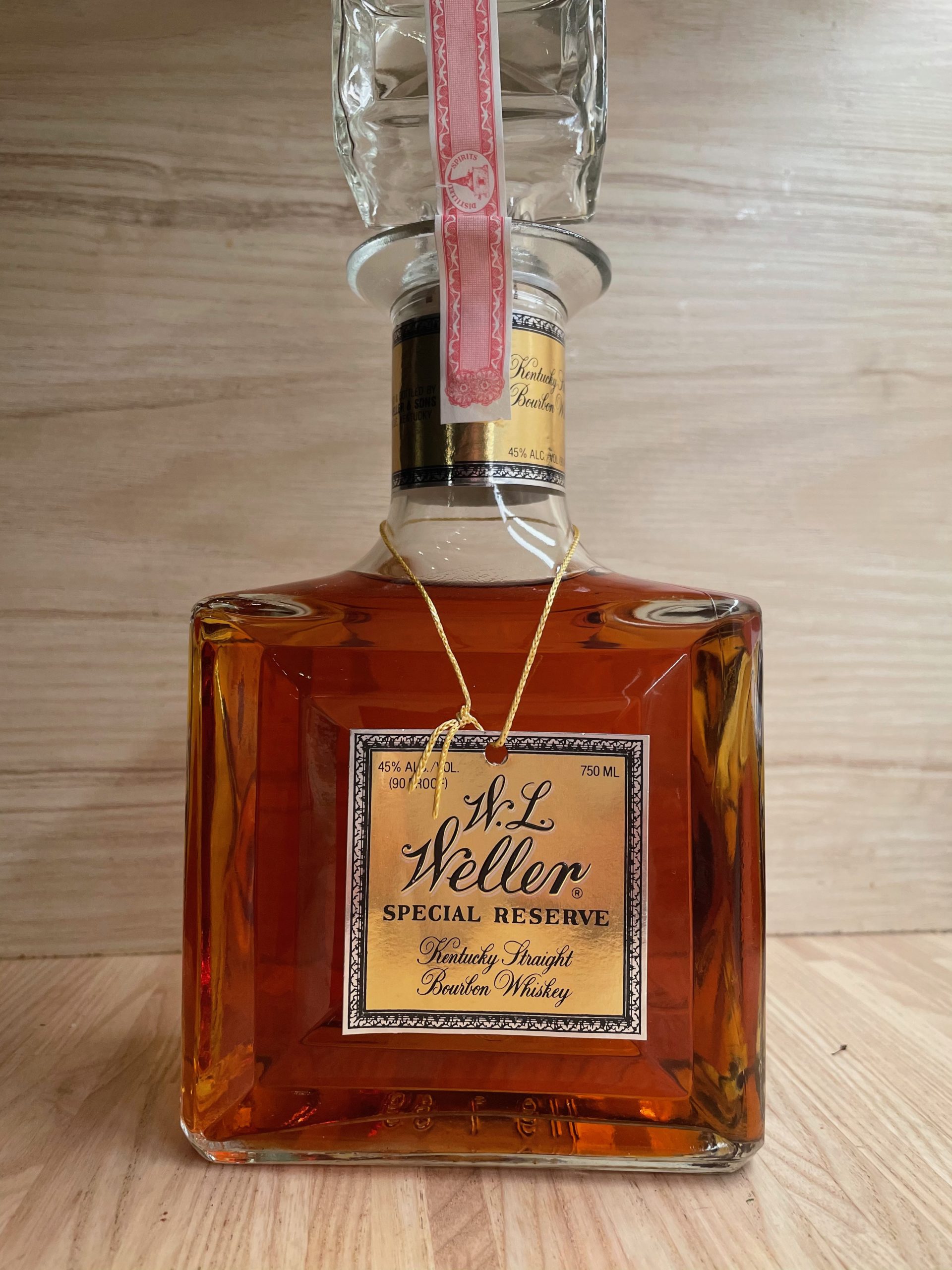
    Last month I heard a story on NPR’s marketplace show about how policies concerning bourbon illustrate the long standing urban-rural divide in our country. It was an interesting piece, but not one I expected would have any impact on my life.

    A month later some good friends were cleaning out their liquor cabinet and offered several of their friends the opportunity to take a few bottles. I looked through what they had. Most of the liquor we wouldn’t use, but they did have a bottle of bourbon. We use bourbon when making mulled wine, bread pudding, and bourbon ball cookies.

    The bourbon bottle looked fancy. I recalled a bit of the story on marketplace. I thought to myself “Is this that crazy expensive bourbon?” I told my friend about the story and used Google to find the story. Ah, the expensive bourbon was called Pappy Van Winkle, and it looked like we could buy bourbon made by WL Weller for around $70. Since it’s wasn’t absurdly valuable, I took the bourbon home.

    Something was rattling around in the back of my head. The story about Pappy’s talked about how the retail price was reasonable but because it was produced in limited amounts, the street price was often much higher, much like tickets to some concerts. I wondered if this bottle was worth more that $70. I texted a picture of the bottle to a friend of mine who loves bourbon and asked him if he knew anything about the bottle I had.

    It turns out it’s made by the same distillery as Pappys. It’s not worth $10,000 a shot, but the bottle was conservatively worth $1500. He indicated he would love to buy the bottle from me for that price, but offered to help me find someone who would pay top dollar. He thought it could go for more than $2000. This bourbon probably should not go into a mulled wine, bread pudding, or cookies.

    At this point there were several things I could do. I could try and maximize profits and find someone who would pay top dollar for the bourbon. I could give the bottle of bourbon back to my friends and let them figure out what to do. I could’ve opened it to find out what a $1500 bottle of bourbon taste like.

    My solution with a three-way win. I offered the bottle to my bourbon loving friend for $1500 since that was what he thought it would be worth to him. We could’ve made more money, but I’d rather my friend be able to enjoy something that he might not otherwise have had a chance to try. He along the few friends agreed to buy the bottle. Next I checked with the original owner of the bottle and found out what their favorite charity was, which turns out to be SV Habitat for Humanity. You can guess who just got a check for $1500. My friends were delighted, because something that they gave away because it was just taking up space funded something they deeply believe in. What did I get? A fun story, and the satisfaction of making some connections.

    As for the rich in this present age, charge them not to be haughty, nor to set their hopes on the uncertainty of riches, but on God, who richly provides us with everything to enjoy. They are to do good, to be rich in good works, to be generous and ready to share, thus storing up treasure for themselves as a good foundation for the future, so that they may take hold of that which is truly life.

    I Timothy 6:17-19
  • Favorite Movies

    A friend recently asked “If you could watch only one movie, what would it be?” This is an incredibly hard question. In the end, my answer was the documentary Weapons of the Spirit, a story of the town Le Chambon that sheltered around 5,000 jews during the Nazi occupation. The cinematography isn’t amazing but the story is compelling. The story isn’t about a larger than life hero, but a conspiracy of goodness and the power of a community.

    Hope

    Life can be hard, and sometimes it seems like evil prospers while good suffers. I appreciate movies which remind me that love, goodness and truth can triumph over hate, evil and lies. The following movies can be tough to watch but have a message that it’s worth fighting for goodness, and what seems impossible, can be possible.

    Gentle

    People are amazing, and the connections between people are precious. I can enjoy movies which capture the simple joys of family and friendship or humble excellence.

    Guilty Pleasure

    Movies which are just fun. Some have too much violence but you just want to cheer for some of the characters. Sometimes the plot is so ridiculous that the movie is hilarious.

    Classics

    Movies that I saw multiple times growing up and just assume everyone has watched at one time or another.

    Our World

    Movies or DVDs about the amazing world we live in.

    • Blue Planet (2001)
    • Planet Earth (2006)
    • An Inconvenient Truth (2006)
    • The National Parks: America’s Best Idea (2009)
    • March of the Penguins (2005)
    • The Biggest Little Farm (2018)
    • Wild Life (2023)

    Check Out

    Recommended by trusted friends but not watched yet

    • Sunshine (1999)
    • The Seventh Seal
    • Castaways on the Moon

    Related

  • Make a Difference

    These are notes I made for myself when I was considering a career change many years ago. Last week several friends indicated an interest my notes so I am sharing them here. At some point I would like to flesh this list out with more references.

    [toc]

    NGOs and other mission driven organizations tend to focus on one, or maybe a few core issues. The reason for this is obvious… trying to take on all the world’s problems would be too hard. The focus must be narrowed or nothing could be accomplished. The same is true for people. You can’t make a difference if your focus is too wide. You need to decide what you desire to change. If you don’t have a focus, you can’t hit a target.

    The counterpoint is no issue exists in isolation. The world we live in is a very complex system. It’s hard to address a single issue independently of it’s context. That means to make sustainable progress in one area, you often need to work on related issues. Sometimes, working on a related problem is the most effective way to address a specific issue.

    Core Objectives

    Preserve Life

    If someone is dead, there isn’t much you can do for them. Deep poverty is at the root of many issues. Over time the percent of people in crushing poverty has decreased, but the number of people has staying largely the same due to population growth. Today, something like 20% of the world’s population is at severe risk from poverty.

    • starvation – short term: relief, feeding programs / long term: agricultural development, land reform, attack underlying poverty
    • illness – clean drinking water, effective prevention, universal primary health care, drugs discovery / cures for disease, work on life extension
    • exposure – short term: emergency shelter; long tear: building affordable housing, economic development which makes housing affordable
    • accidents, etc – emergency services like police, fire, search and rescue, improving safety of things that take lives (product safety)
    • suicide – interventions, counseling, hope
    • individual violence – rule on law, mediation, etc
    • state violence – diplomacy, replace lethal technology with targeted & non-lethal options

    Death penalty: Data indicates that the death penalty is not an effective deterrent. It’s also clear that the use of the death penalty is not wielded in a justice way in the US, so minimally legal reform is needed. I lean toward abolishing the death penalty since we have numerous example of innocent people being erroneously convinced… with no way to reverse that. Even if someone is guilty I am divided. On the one hand I believe in the value of each human and the chance for redemption. On the other hand some crimes are so heinous and permitting the perpetrator to live poses a grave risk to society.

    Abortion: I believe that we should compassionately discourage abortions. We should support be truly pro-life, not just pro-birth, and avoid devastating impact of “unwantedness”. I think abortion should be permitted in the case of rape or the mother’s health is threatened, even though I know I won’t have been born if my birth mother decided to get an abortion. I don’t think criminalization is the answer. What is the answer? I don’t know. We don’t know for certain when life begins nor do we know what legislation will actually be effective. Look at how effective prohibition was at stopping people from drinking and getting drunk.

    Euthanasia: I believe terminating a life because it’s not “high enough quality” / “productive” is wrong. Who says when a life isn’t worth living. How do they know? There are numerous people that some would say should be terminated who had a profound impact and/or found joy in spite of some severe condition.  At the same time, medical technology has enabled us to preserve a physical body, even when it seems all traces of a person are gone. In other words, the person being “alive” is an illusion, while at the same time causing great expense and possible pain for those left behind. Everyone is going to face physical death… we should ensure that when that time comes that it is as humane as possible. I believe in a hospice approach is appropriate at some point.

    Have Life’s Physical Necessities / Poverty

    What is a necessity? This is a hard question to answer because people’s expectations can vary so much based on what they have been exposed to. It is often said that “yesterday’s luxury are today’s necessity”. I believe that many people, after being exposed to images of a rich lifestyle, have allowed their desire for affluence to cloud their judgment about what is necessary. I certainly am not a good judge of what is “necessary”. Before the industrial revolution, necessities seemed to included water, food, clothing, and shelter. Many of these items are listed above under “Preserve Life”. Today, some amount of health care is likely added to the list and access to communication / computing technology.

    It seems to be that the very best way to insure that everyone has the basic necessities of life is for there to be a robust, economic eco-system. While capitalism has been very effective, I believe unconstrained capitalism in our modern, technologically leveraged world is leading to winner take all outcomes which are not good. Likewise, I think measuring business exclusively by “shareholder value” is a serious problem. On the other side, so called planned economies are a total train wreck.

    Property rights seem to be a key ingredient a healthy system, but unbounded rights seems to lead to unjust distribution which ultimately harms the majority of people. Not sure what the right balance is. The bible has the concept of Jubilee years which forced a redistribution of land. While land was wealth, it was also a key enabler for people to generate wealth (farming). So I think Jubilee was more about insuring everyone had opportunities to earn a good living rather than a sharing of wealth.

    There are science informed lessons at poverty action lab which was formed by several luminaries from real world economics community. There is an online course produced by the Coalition Alleviating Poverty Silicon Valley.

    • Access to capital: micro finance, banks, etc
    • Affordable housing: building programs, lower cost techniques like 3d printing
    • Accessible tools / technology:
    • Affordable / Sustainable / Healthy Power: Much of the world is still using wood and kerosene to cook, heat, and light their homes. These fuels are expensive, produce particles which in a constrained space hurt health, and often are not sustainable. Electrification via solar is part of the solution: barefoot college
    • Good government policy
    • Effective distribution systems. Famines to date haven’t been inadequate global food supply, but food not getting distributed to those in need.
    • some sort of safety net for those people that can’t make it on their own without help. There is fairly good data that suggests providing this doesn’t not reduce peoples interest in working. Maybe carrying the people who are an exception (able to work but rather be lazy) is a small price to pay to be sure everyone is ok.
    • Technology development: Often technology can address problems. For example, our food yields are 3-4x what they were at the start of the 20th century. Material goods are generally more available in higher quality for less money. Blueprints of sustainable tech/machines opensourceecology.org

    Basic Freedoms and Core Human Rights

    People are entitled to basic freedoms and justice. At the core is the rule of law. If the law isn’t king, controlling the actions of both individuals and the state, no one will truly have durable rights. Basic security and property rights are the bedrock of a functional society. Without these basic rights people are reluctant to make a personal investment because any results can be taken away by government, criminal elements, or others by the force of arms. In particularly unstable locations making any progress increases the odds that a person will be targeted. Throughout history, there have been people who viewed “conquest” as a means to accumulate wealth. Unfortunately, this method is worse than a zero sum game, since not only is there a loser and a winner, but the pot gets smaller because value is destroyed during most confrontations. “Trade” is far superior since it can actually grow the wealth for everyone, but the results take longer to experience and doesn’t work when there is no security. See The Birth of Plenty for the connection between economic development and property rights.

    One attempt to capture what are these basic rights is the UN’s Universal Declaration of Human Rights. While I appreciate the entire list, I think it is a bit more expansive than what I would consider “core” rights, but I haven’t spent enough time in study and consideration to make my own list.

    What can be done?

    • legal reform to insure fairness (so people trust rather than take into their own hands)
    • police to enforce rules fairly
    • civil society – avoid polarization and keeping people focused on solving problems
    • peacemaking (negotiations or military/police)
    • peacekeeping (military or non violent witnesses)
    • advocacy – for the disempowered
    • economic development
    • transparency for power holders (remove asymmetric knowledge) – press, government and private projects such as sunlight foundation

    Insure Sustainability of Life

    We are called to be stewards of the earth. We need to live not just for our generation, but for the generations that follow us. Having luxuries today which would deny those who come after us the basics of life is immoral. Over the years many people have worried about depletion. So far, we seem to have engineered around things are produced plenty. Can this continue?

    • Climate Change – Our planet is warming due to human activity and this is causing more severe weather events. See the skeptical science for the evidence and rebuttals to many of the classic myths to suggest this isn’t the case. Address by minimizing the production of green house gasses, finding ways to sequester carbon, and possibly engineers to reflect more of the sun rays. Check out climate labs, read Saving Us for other ideas.
    • Healthy Environment- regulation, protection, cleanup: see environmental defense fundconservation.org, nature.orgworld resource institute
    • Resource Depletion – changing consumption patterns, renewable products/energy, conservation, green tech
    • Q: Can developing nations skip over fossil fuel strait to green energy in a cost effective way which doesn’t hurt, maybe helps their economic growth?

    Meaningful Life

    There is more to life that just physical existence. People need to have the opportunity to see beyond the day-to-day physical life that they live. Life is more than eating, sleeping, and working. I believe humans are wired for “meaning”. When people lose all sense that their lives have meaning, hope drains aways which has a negative impact on the individual, and can corrode society when this is wide spread. Since I am coming from a Christian perspective, many of solutions come from that tradition.

    • isolation / loneliness – community, church, etc
    • beauty – good design, art, music, theater, access to nature, etc.
    • finding mastery – education, internships, communities of learning
    • finding purpose – coaching, leadership training
    • have impact – build businesses and organizations which promote thriving/flourishing: programs and products which benefit others
    • ignorant of spiritual principles – evangelism, teaching, church planting, mentoring / discipling, counseling

    Be Joyful

    Ultimately, we would like everyone to experience contentment and joy. This goes beyond having our basic needs met. In fact, it can exist in the face of great deprivation. Part of being joyful is loving others. If someone is concerned only about themselves, they will never find happiness or joy. There is good evidence that many people don’t know what will make them happy: ex: give or spend $50… which will make you happier. – need to know what will make them happy and practice those things. Flow, http://www.authentichappiness.org, etc.

    Key Enablers

    Hmm… right now I have these listed as enablers but I could easily argue for them to be core objectives as well. For the time being I will leave them as enablers, because I think they cut across a number of the objectives listed above. I suspect that trying to solve any or all of the above issues will fail because our world is a system and addressing things as individual issues rather than working the system will fail. More thought is required.

    Child Development

    The first three years of life is critical when it comes to setting.  Harlem Children’s Zone has been very effective. See research by Todd R. Risley.

    Education

    Education is a powerful enabler… but does not guarantee a good outcome since the content of education and how people then use their education can become either a force for good or for evil. Great good has come from education, but educated people have also stood by and let great evil be done by others if not led the way (see observations of Michael Polanyi). How to improve the linkage between doing good and education?

    Strong Families & Communities

    Humans are social creatures. We were made to be in community. Family is one of the core building blocks for an effective community. Family does not necessarily equal the American “nuclear” family… especially given how many American families have blown up. There is good evidence that intact families are extremely beneficial.

    Arts, Music, Culture

    Humans are made to create and have the capacity for great expressions. Often music, poetry, and other art can touch the heart in a way that nothing else can. I love the thought “beauty is a tangible encounter with God’s goodness” which can energize and give hope.

    Women’s Rights

    In much of the developing world, half the human resources, women, are not empowered. Changing this could be powerful as detailed in girleffect.org

    Open Society

    Track down research on correlations between society trends and terrorism. Seems like terrorism is more closely linked with repressive governments than with poverty which is the classic link.

    Systems

    Problems cannot be solved by the same level of thinking that created them. – Albert Einstein

    Making a difference starts by recognizing a problem and ends when the overall situation has been improved. The challenge is that many issues are inter-related. To solve one issue, often means you have to deal with a number of related issues. Often times, working on these related issues might be more effective than focusing on a specific area.

    Also need to consider what motivates people and not prompt things in a way that produces un-intended side effects. See Drive by Pink for rewards basis & intrinsic motivation.

    An Alternative Approach

    Since I made this list I have wondered if there might be a more humble way to have impact: to in the moment love my neighbor without a plan or agenda. Some musing about what this would look like was in my post relational openness. At some point I will write something about the exponential impact of love to further develop this thought.

    Other Questions / Ideas

    Birth of Plenty

    Book has an amazing graph showing huge raise in standard on living since 1820. Claims that this was powered by four factors:

    1. Property rights (which include civil rights)… otherwise tragedy of the commons
    2. Scientific method
    3. open source funding – capital market
    4. efficient communication and transportation infrastructure… and access to developments happening elsewhere

    Why is Africa Broken?

    Gapminder illustrates that from statistics, several countries is Africa looked to be in a better place than say, South Korea in the 1960s, but since then South Korea is approaching the western world in terms of life expectancy, etc while several African nations have made little progress. Bottom Billion by Paul Collier examines some of the issues. Interesting discussion about Will Money Solve Africa’s Problems. A suggestion from an atheist that maybe missionaries would help africa more than aid. Colonialism where rich natures use a developmenting nation to develop themselves rather than aiding that nation continues, even if not via direct run. Interesting paper Global patterns of ecologically unequal exchange: Implications for sustainability in the 21st century

    Meritocracy Oriented Society

    I have suspected for a long time that societies that let wealth be passed from generation to generation without a strong check tend to suffer.

    http://www.paulgraham.com/credentials.html

    I believe in a meritocracy, I don’t believe in the society run by technocrats. It’s easy for technocrats and policy wonks to become isolated, caught up in their ideologies. Time after time we have seen the value of the wisdom of crowds. We need to find a way to harvest the collective wisdom of the community without falling into popularism. To benefit from the diversity.

    Businesses for Impacts

    The only way to have sustainable impact is for something to be a government program of self supporting business.

    See How Much does Deeps Purpose impact Bottom Line. useful observation

    • Heroism: The desire to change the world and society.
    • Discovery: The challenge of adventure and innovation characterized by entrepreneurs willing to work 24/7 in search of the new or unknown.
    • Excellence: When achieving high standards matters more than short-term performance.
    • Altruism: When a company serves customers, employees, and others first and assumes that profit will follow.

    Small Ways

    The Rest

    • Is the market efficient for these things?
    • we don’t have good leaders?  what would a good leader look like?
    • population – a problem due to resource consumption or not an issue?
    • Inheritance… needs some sort of limitation, otherwise in-equalities too far
    • Limited resources?  Or does increased efficiency take care of this
    • What about pride, greed, sloth
    • keep power honest – press, investigation, politics
    • How to we move data –> knowledge –> wisdom –> effective action
    • the-gospel-and-the-poor
    • Everything Must Change by Brian McLaren
    • Copenhagen Consensus – Economy analysis
    • Effective Altruism, GiveWell
    • sabbath year -vs- effective capital market