Category: outdoors

the great outdoors

  • Barefoot & Minimalist Shoes

    Our feet are well engineered and actually do a better job at removing stress from knees and hips than cushioned shoes. Traditional shoes with heels forces you into an unnatural position which is more likely to result in injury. There are a number of experienced long distance hikers and ultra-runners who use minimalist sandals or trail running shoes, logging thousands of miles / year for decades without injuries. If you have been using traditional shoes and want to give minimalist shoes a try, go for it, but don’t rush it. Learn about proper form and transition slowly as you build the muscles to move in a new way.

    [toc]

    My Experience

    I was born with deformed feet. I was in casts for the first couple years of my life and then custom orthotics until my 20s. I had significant problems finding shoes that were comfortable. When I ran more than a mile or walked more than 10 miles I would have knee and/or hip pain. In 2005 a coworker who was trained in the Alexander Technique encouraged me change how I walked and use minimalist shoes. The transition produced some soreness because I was using new muscles and needed to stretch my Achilles tendon, but once I made the shift I found that my knee pain disappeared. As my strength and fitness improved I was able to carry my backpack for 45 miles on a long summer day and run a marathon without pain. Well, at least no pain in my knees or hip… my leg muscles were sore for a couple of days after the marathon :).

    Since 2005 I yearly log around 2500-4000 miles walking, hiking, backpacking. Since 2012 I also have been yearly logging 1000-1500 miles running. All of that with minimalist shoes or sandals. Other than some stubbed toes while wearing sandals or 5fingers, I have just one foot injury.

    I developed plantar fasciitis in 2020 when I pushed my feet too much. I ran increasing hard everyday, tried jogging with a 40lb pack, and switched to new shoes that I now know don’t work for me.

    To recover I spend several months wearing a cushioned running shoes. Within a couple of months the actuate pain was gone, but my feet were still hurting, especially first thing in the morning. After six months I decided the cushioning wasn’t resolving the issue. I switched back to my minimal Luna Venado Sandals. Within a couple of months my feet were back to normal and I was able to start to run regularly. After a while I tried the Xeno Mesa again and noticed my feet were not happy. I am not sure why, but Xeno shoes (and sandals) soles just don’t work for me.

    I typically wear Shamma sandals, but when I need shoes for rugged conditions I switch to Inov-8 Trailfly 270 which are zero drop, but with a 12mm stack aren’t exactly minimalist. I wear a pair of Vivobarefoot Gobi II when I need to be dressed up.

    Why Minimalist / Bio Mechanism

    There have been numerous articles such as You Walk Wrong (slightly questioned in Your shoes are killing you), Going Barefoot is Good for the Sole, Why You Should Spend Time Walking Barefoot Everyday, A Moderate Approach to Minimalist Shoes, and a podcast by Peter Attia with Irene Davis from the Harvard/Spaulding Running Center which promote the benefits of going barefoot or wearing minimalist shoes. 

    The Harvard Skeletal Biology Lab has a lot of information about foot strikes and biomechanics. For example a paper about how Foot strike patterns and collision forces in runners were less with barefoot runners. The book Born to Run tells the story of people who run barefoot (or in minimalist sandals) for their entire lives. Other studies have suggested that while running is more efficient on the balls of our feet, that walking with heel strikes is more efficient. Another interesting paper is on The Effect of Running Shoes on Lower Extremity Joint Torques. It’s should be noted that a running stride is different from a walking/hiking stride.

    As I have read numerous studies I am convinced that people who grew up going barefoot or wearing minimalist shoes are better off than people who grew up wearing traditional shoes. When properly trained, I think most people benefit from minimalist shoes when running. When walking, the benefits from barefoot / minimalist shoes aren’t as compelling for people whose feet have been constrained by traditional shoes for a few decades. The combination of weak muscles and limited toe splay might make it challenging to adapt and fully benefiting from minimalist shoes.

    I have noticed after years of using minimalist shoes than when I am feeling foot pain, I am typically using bad form. The pain is like a warning light I am doing something wrong. Most recently it was the outside of my left foot was sometimes sore. After some self observation I noticed I was rolling that foot a bit to the outside. For the next few days I was more intentional about foot placement. The pain went away.

    Fully Barefoot

    Some people go fully barefoot not just when walking, but running, backpacking over terrain which many would expect to be painful.  There are a variety of resources such as barefooters.org. barefootted.com,  and The Barefoot Hiker. I don’t have anything to add on this topic because I don’t got barefoot except in my home and at the beach. There are numerous studies demonstrating that unshod and minimalist running involve different biomechanics from each other (examples here, here, here and here). While there’s not as much literature involving walking, the same appears to be true.

    Five Fingers

    vibram fivefingers has been a cult hit. The soles of five finger shoes looks like the bottom of our foot, down to a separation between the toes. There is a nice beginner’s guide to five fingers for people getting started with these shoes.

    There were many things I loved about wearing Five Finger shoes. The first was a sense of freedom, and the sensory experience on walking in them. I felt more connected to my environment. I felt more free. I also loved that I stopped getting blisters between my toes.

    The major problem I found with Five Fingers was that I was regularly stubbing my toes. A more traditional shoe spreads the force of impact over all the toes making it much less likely that one toe will be traumatized. There were some additional minor issues. The first was several members of my family teased me about how ugly the five fingers were. Second, they take longer to put on because you have to line your toes up. Finally. the original model used a mesh on the upper that let trail dust into the shoes. After an hour or so the dust would start to function like sandpaper forcing me to stop and clean off my feet. I found the Five Finger Spyridon addressed this problem. I used the Spyridon for trail running, hiking, and backpacking for several seasons.

    Minimalist Sandals

    After Born to Run was published, there are a number of companies that started making minimalist versions of Huaraches sandals such as Shamma, Earthrunners,  Luna, Unshoes, and Bedrock. There are also so minimalist sandals that don’t have the toe-post including unshoes pah tempe, feelgrounds pathway, xeno, and some of the sports sandals from paisley running sandals.

    Minimalist Shoes

    The most minimal shoes are the classic, sole-less, suede moccasins. When I starting using minimalist shoes there weren’t many options. Besides moccasins the only choices were ballet slippers, track shoes, the martial arts oriented Feiyue shoes and Terra Plana which seem to be the predecessor of Vivobarefoot which made tennis shoe with a replaceable sole that zipper on/off. All of these shoes were ok for walking around town, but all had serious traction issues in the back country. My first minimalist shoe made by Terra Plana.

    I believe Inov-8 was the first company to make minimalist shoes specifically made for outdoor sports. These shoes had zero drop,  relatively thin soles and lot of flexibility. I went through 14 pairs of the moderately “heavy” Inov-8 Flyroc 310 before trying other trail running (and for me backpacking) shoes.

    These days there are lots of companies that make minimalist shoes which are sports / outdoor oriented. Main stream companies like New Balance, Merrell and Nike have minimalist models. I have enjoyed running in the Merrill Vapor Gloves. Of course Vivobarefoot continues to make excellent shoes. Vibram has expanded from 5finger to the minimalist Furoshiki sneaker – but I hear they are too narrow in the toes. Xero Shoes are popular with many people, but hurt my feet. Peluva also makes a five toed shoe. LEMs Shoes are beloved by many.

    Dressing Up

    There are a number of small manufacturers that make minimal / zero drop shoes that are appropriate for more “dressed up” situations such as business meetings or a night out. Besides Vivobarefoot, I have tried LEMs ShoesSoft Star, Tadeevo. Other shoes that would be worth a look include Ahinsa, Freet Barefoot, Hike Footwear, Joe Nimble, Jim Green and Sense of Motion. Carets make a zero drop shoe (though not minimalist) classic dress shoe for men. Arcopedico makes some attractive minimalist shoes for women. In today’s evolving sense of style, historically “casual” shoes which can be minimalist like espadrille, driving loafers, etc are often acceptable, if not fashion forward.

    Other Material

  • Tarp-tents and Other Ultralight Shelters

    Today  there is a wide range of ultralight shelters including traditionally designed tents using exotic materials to move them into the ultralight weight classification. Many of the ultralight shelter designs came from people’s experiences on long thru hikes combined with a desire to find the lightest possible shelter while still providing adequate protection. I think the sweet-spot value sweet spot are single wall tarptents made from SilPoly. You can save weight by upgrading to a shelter made from DCF. A big advantage of SilPoly and DCF over the classic SilNylon is the lack of stretch so you don’t have to constantly re-tighten the shelter to maintain a taut pitch. These single wall shelters are extremely light weight, and when well designed can handle severe weather, and provides a bug free space which enables me (and I expect others) to have a more restful night. There are a number of other types of shelters, one of which might be better for you. See fitmytent.com to see how interior space of different shelters compare to each other.

    My Choice

    I use a Durston x-mid pro2 which is light enough for solo use and large enough for trips with my wife or a friend. Stable enough for 3+ seasons, can be opened up for decent ventilation in warmer weather, and easy to pitch if you use a few tricks. I now also have a Gossamer Gear Whisper shelter for solo trips when I want to minimize my load.

    Quick Recommendations

    I can’t recommend one shelter as being the “best”. Giving equal weighting to the weight, usable size (See Andrew’s article about calculation usable space and the related space spreadsheet), small footprint, ease / speed of pitch, bug protection, survive high winds, rain protection, and ventilation, there is no clear winner. Add price and the field flattens even more. Depending on how you weight these issues will result in a different shelter being “the best”. Here are my favorite:

    • Durston X-Mid2 Pro 20oz, $639, A two person, hiking pole shelter. Plenty of room for two. Likely can handle light 4-season weather (not extreme snow), easy to pitch.
    • MLD SoloMid (or DuoMid) XL with inner bug-netting which can be thought of as a “some assembly required” tarp-tent. Doesn’t do anything perfectly, but can handle just about any conditions you might encounter.
    • Six Moon Designs Gatewood Cape $135, 10oz, combined with the Serenity NetTent $125, 12oz provides shelter, rain gear and pack cover in a versatile package. There are better shelters and better rain gear but this is a great system for some people. I find it a tad too small for my taste, but it is workable and beloved by many.
    • Tarptent Notch Li solo 20oz, $599 provides a very usable space which is more storm worthy than ZPacks shelters and feel more roomy that the SoloMid.  Inner tent is small but useable and can be set up after the outer tent is up. A good first look review of the Notch Li. Need room for two? Check out the Stratospire Li.
    • HMG Mid-1 solo 16.8oz, $599. One person pyramid with integrated bug netting and floor. A number of extra tie-outs for want facing more severe weather. Sets up with a single pole.

    Limitations of Tarp-tents

    Tarp-tents are ideal when facing moderate weather conditions combined with a desire for a bug free space. There are shelters that provide more protection, or are lighter weight, but few that will match a tarptent’s overall performance. There are a number of situations that I think there are better shelters:

    • Extreme Conditions.  Most of these shelters don’t handle extreme conditions well.  What’s extreme?  For me, winds consistently above 35 mph, standing water, or real snowfall. A little snow isn’t a problem, but when there is enough to pile up and get blown in to the shelter most ultralight designs just aren’t appropriate with a possible exception of pyramid tarps.
    • People who can’t control their movement and therefore need something to keep them from repeatedly rubbing against the condensations on the shelter walls. This is often a problem with kids.
    • People that can’t be gentle with gear, or who are extremely accident prone… e.g. will fall on top of their shelter several times due to coordination issues or carelessness.

    Managing Condensation

    People are often concerned about condensation in single walled shelters which most ultralight shelters are. My experience is condensation is not a big issue in well designed ultra light shelters which have adequate ventilation and reasonably steep sidewalls. Those made from Dyneema (formally called cuben) seem to have less issues with condensation.

    Pretty much any night that the temperature drops significantly you will get some condensation (in the worse cases a fair bit), but so long as you don’t repeatedly brush against the walls the water won’t be a significant issue. In heavy winds or rains some water will shake off, but most will stay on the walls, or roll down to the edge without falling on you. The worse condensation will be nights were you have cold rain which cools your shelter, but the ground under the shelter is warm so ground moisture condenses on the shelters walls/roof. In the morning you wipe the inside of the shelter down with a bandana or pack towel and you are fine.

    Some people perspire significantly more than others and might find that they will have more condensation that others using the same shelter, in the same conditions. Obviously two people will generate more moisture than one person.

    SMD has a nice article about Getting the Most from your Ultralight tent. BPL’s single wall shelters and condensation has useful information.

    Floors

    Floors in ultra light shelters can be convenient, specially for people new to ultra light shelters or when you really need your shelter to be sealed against bugs or other crawling creatures, but they are rarely adequate if you are facing standing water which can’t be avoid in some locations (like the flat midwest during a thunderstorm). There was a nice posting by Ron Moak about the limitations of ultralight bathtub floors.

    Tarp Systems

    A close relative of the ultralight shelter / tarp tent are flat tarps combined with “netting” tents, and  shaped tarps combined with optional bug netting and/or floors. While these shelters weight more than an similarly size ultralight shelter, they have a couple of advantages. The first is that the bug netting can be pitched separating from the tarp which is great when there are bugs and good weather. Secondly with the floor separate from the canopy it’s easy to replace a damaged floor, you can pack your “dirty floor” separately, and most importantly, it’s easily to manage wet unless there is standing water. When it’s raining hard you can go strait into your shelter and close the door. Sort of like a vestibule, but larger. The excess water can typically be absorbed by the the ground. Finally, most shaped tarps are more storm worthy than most tarp-tents, especially when facing heavy winds.

    Ultralight Solo for the Sierras

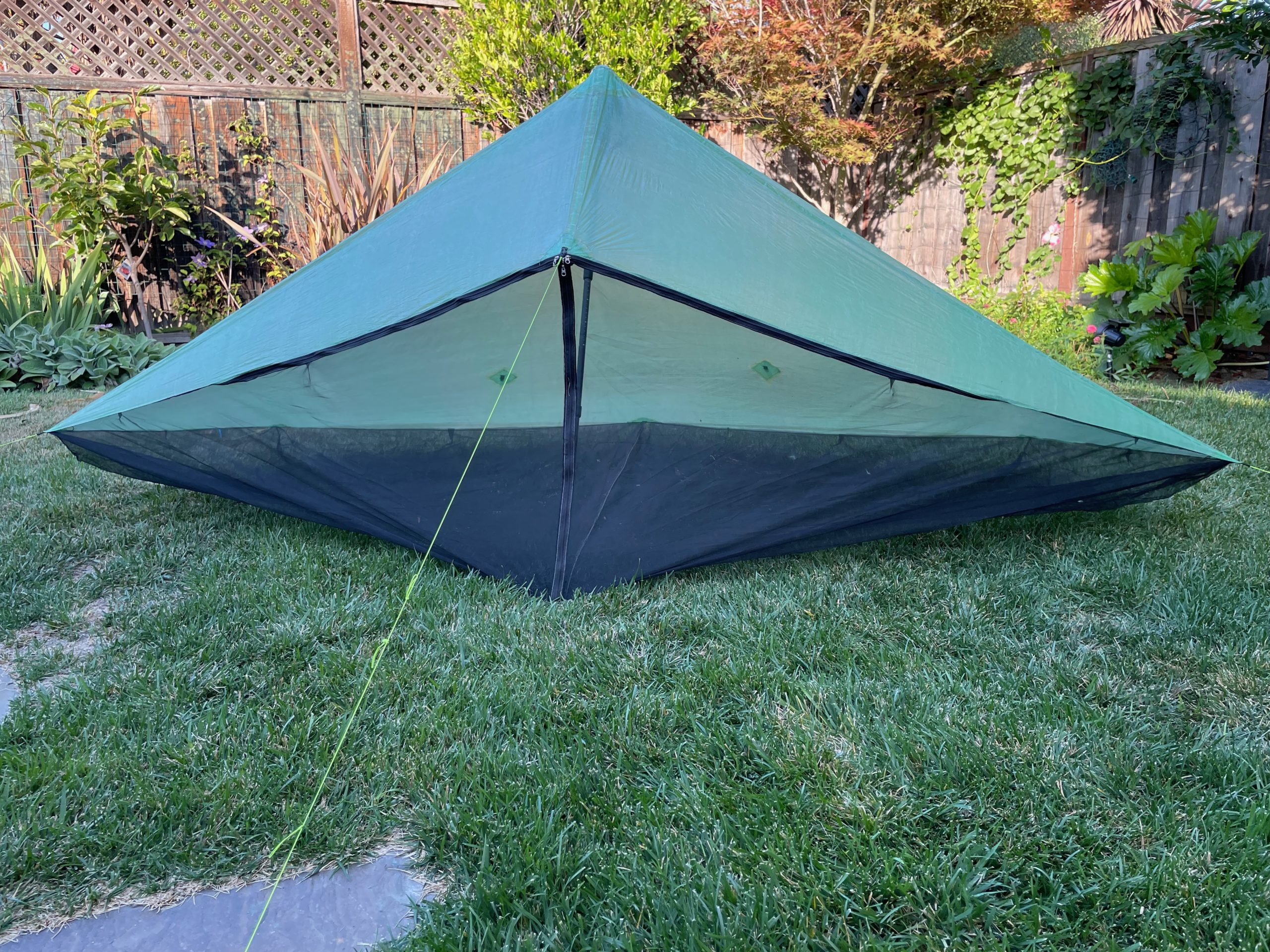
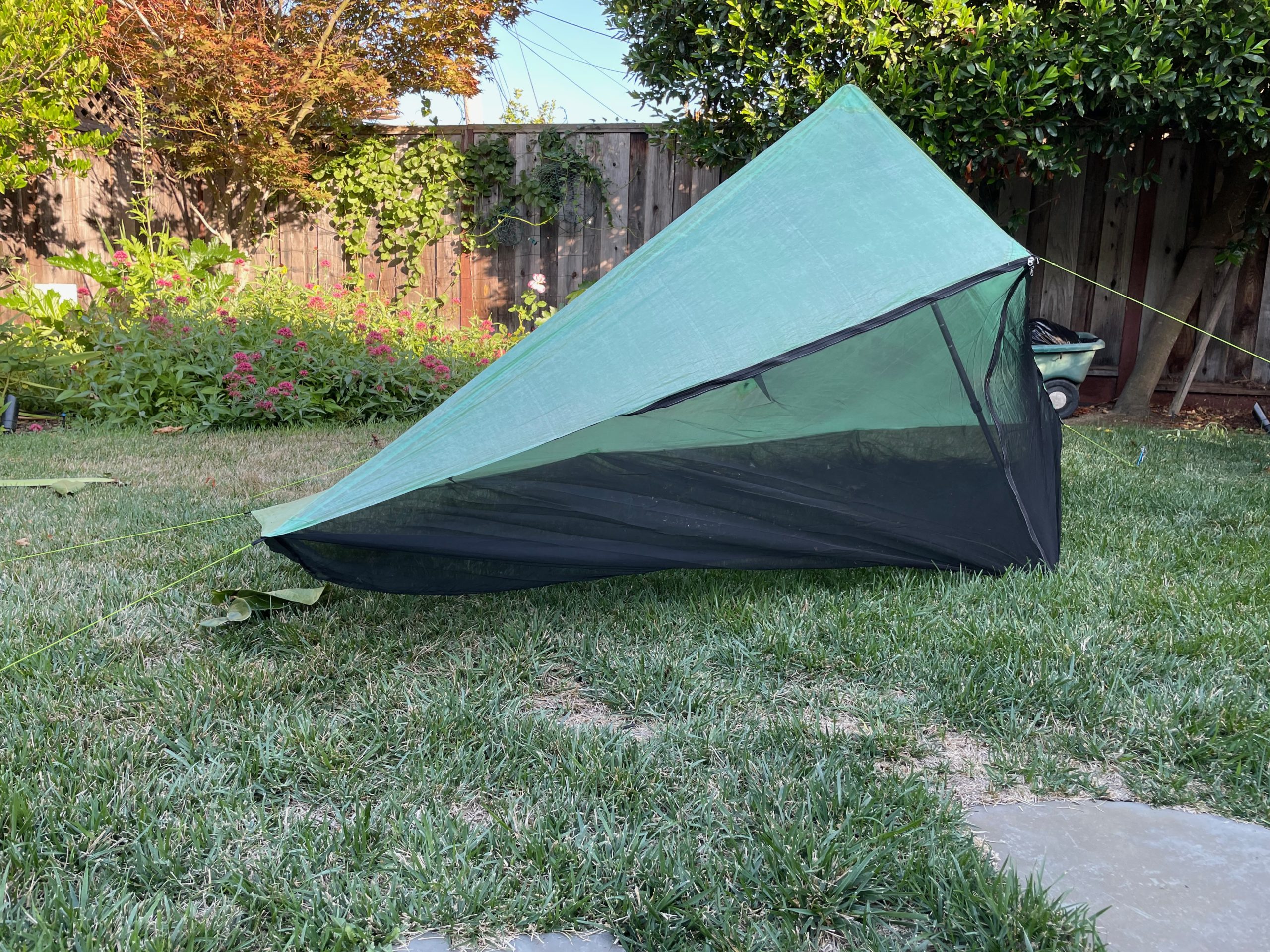
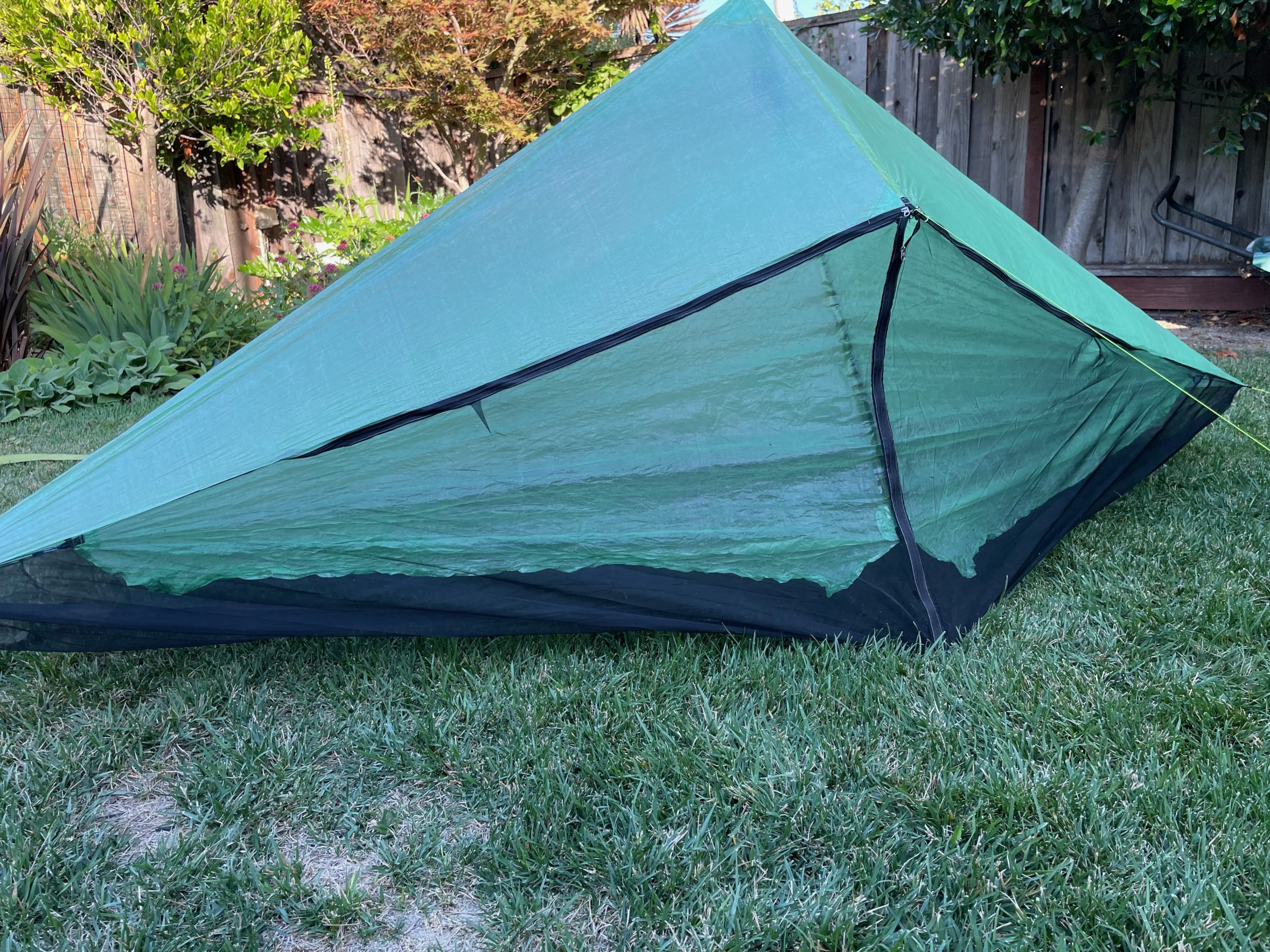
    I used the original Zpacks Hexamid for many years. I found it nearly ideal for three season trips in the Sierras. It provide adequate protection from weather, a bug free, for just over 8oz. The only downside for me was the entry was lower than ideal (28″). When I decided to purchase new solo shelter, the Hexamid was no longer made and began to look something like the hexamid. I like the design and taut pitch of the Meadow Physics Abode but the entry was even lower. If I was better at sewing I would made a montmolar shelter. In the end, I purchased a Gossamer Gear Whisper shelter. It’s light, easy access, plenty of room, with protection from flying insects. I like that it has no floor which makes managing in the rain easier than an integrated floor. Other good options are the Zpacks Plex Solo, Durston X-Mid Pro1, and HMG Mid-1. If I didn’t need bug protections I would have go with the OG MLD SoloMid or consider the minimalist Ounce Designs.

    Other Options

    I don’t track the market these days. I would recommend look at BPL Editor’s Recommendations, The Trek’s Best Shelters, or Adventure Allan‘s shelter gear guides.

    Some ultralight shelters I have used, are still made and worth a look:

    • Gossamer Gear The One: 21oz, $299. A single person shelter with plenty of  room for me that’s fairly easy to use. I used the first version for a couple of years. I had troubles getting a really taut pitch. The current model has been updated and I understand pitches better.
    • LightHeart Gear shelters. I wrote up my experiences with a Solo+Awning.   A diamond shaped floor that makes use of two hiking poles. This shelter provides a double walled solo shelter with a lot of room, good views when the fly is pulled back, good insect protection, and decent weather protection.There are some good discussions at lightheart@whiteblaze and lightheart@bpl.  I wouldn’t trust this shelter in high winds, but in places that have some wind protection it would be very nice. This shelter is very similar to the Wanderlust Nomad.
    • Tarptent Double Rainbow (DR): ~32sq ft + 20 sq ft vestibules, 40oz, $299. Very usable shelter for two that weighs less than 2.5lbs. The design keeps netting between you and the sil-nylon which might accumulate condensation virtually eliminated the danger of getting condensation on your sleeping bag. Adequate living space for two 6ft people, though the top is narrower than the floor so you have to be a bit careful not to bump the sides near the top of the shelter. Typically purchased with a bathtub style floor which can be relaxed for better ventilation. There are a pair of high vents which are slightly helpful with the vestibules are closed. The DR can be pitched free starting if you have a pair of long hiking poles or it can be staked down (what I did most of the time). Double vestibules have a fabric extender which lets you turn them into rain porches. If you expect to face strong winds get wind stabilizer anchors added. Can be pitched in under 4 minutes.  The DR, especially if you add extra guy points can survive surprised harsh conditions as described in this thread about Tarptent Double Rainbow in strong winds. I am comfortable using the DR in anything but a real snowfall.
    • Tarptents has a number of other shelters which are attractive and well designed shelters.
    • Six Moon Designs makes a number of ultralight tarp-tents. My favorite is the Skyscape which stands up to wind better than the Lightheart Solo. I found it fairly easy to set up and provides a comfortable living space. On paper Six Moon Designs shelters are nice, but for whatever reason I never used one of their shelters for more than a few trips.  If they bring back the 16oz Dyneema version of the Skyscape, I would be very tempted.
    • Warmlite was the first tunnel tent (1958? – history link) made of light weight Sil-Nylon. IMHO it was decades before there were commercial tents that matched the weight / performance. I haven’t used one of these tents since then early 2000s. They are pricy compared to the above shelters, but some people might fine them useful.

    Historical

    BPL’s Single Wall Tents: State of the Market gives a nice summary of the options in 2008. They also did a Floorless Shelter Review and  Single Wall Tents & Shelters Review in 2004. There are some shelters I thought worth noting which are no longer made.

    • Tarptent Squall: One of the lightest 2-person shelter of it’s day: 23oz for a floorless shelter with flying bug protection, 30oz with a sewn in floor. I found the Squall Classic to be one of the fastest shelters to set up. It had simple but elegant design with beautiful lines. Plenty of room for two people sleeping, but only one can sit up at a time. Later, Gossamer Gear Squall Classic made a spinnaker cloth version. This saved weight, but didn’t pitch as well due to the lack of stretch of the spinnaker material.
    • MSR Missing Link : lots of room for two people in this 37sq ft shelter + a huge overhang. But this weights more than 3lbs (1lb more than most of the other ultra-light shelters). There are some people who have a fondness for this shelter, but I was disappointed in it’s performance in any sort of storm. I never owned this shelter, but have been on several outings where the people with me were using a Missing Link and had problems.
    • Six Moon Designs Europa: A light weight, single walled tent for two people (36oz). This hybrid shelter has most of the advantages of a double walled shelter at the weight of a single walled tent. It is natural for me to compare this shelter to my favorite, the Squall2. Advantages for the Europa are slightly better ventilation, it’s a bit easier to keep dry during a rain storm and it is less likely for you to brush against condensation on the body of the shelter. I found that the Europa is a bit harder to get a good pitch, doesn’t pitch as taut, and therefore isn’t as good in high winds. The Europa has more square footage, but doesn’t have sidewalls that are as steep or as much headroom of the Squall2. There was a nice review comparing the squall2 and six moon designs europa.
    • Wanderlust made a number of light weight shelters that were loved by their owners. Alas, this cottage business got overwhelmed seemed to stop doing business in 2003. If you want a Wanderlust shelter, check out Lightheart Gear which has a very similar design.

    Budget Options

    There are several Chinese companies which makes clones of US based cottage designs such as 3fulgear which are often very affordable through aliexpress. I have no personal experience but see them referenced on /r/ultralight with generally favorable comments.

  • ZPacks Hexamid

    Review ItemZPacks Hexamid
    Options: Cuben with Netting
    Manufacture Year: 2010
    Listed weight
    : Cuben shelter, guylines, and bag 8.9oz
    Weight as delivered: tarp+attached guylines 8.3oz
    MSRP: US$259, no longer made

    I have a first generation which uses three zippers that meet at the top peak. Joe has now switched to a single zipper to save weight and reduce the risk of zipper failure. The other major change is that the seams in the current generation Hexamid are primary joined by sewing rather than by taping.

    Summary

    The Hexamid, especially the Cuben + netting model, is an amazing light solo shelter which is fast and easy to set up with a taut pitch. There is adequate of space for one person and gear. While sharing a Hexamid would be possible, I would  only do so under exceptional circumstances because I think the roof slope doesn’t leave adequate space for the person furthest away from the door. Obviously, Joe found that it could work for couple on the second half of his five month CDT hike.

    Things that I liked:

    • Super-light weight
    • Fast, easy setup which results in a taut pitch which has been stable for me in >=35mph winds
    • Good ventilation
    • Plenty of bug free space

    Things I don’t like:

    • Entry is too low (28”) to enter without brushed against the top or crawling on the ground
    • In more extreme conditions not enough protection from side blown rain, though optional doors helps a lot.
    • No line locks.. but this is easily added by user
    • If you experience heavy mud or freezing temperatures the netting can get “stuck” in the ground.

    My total shelter weight is 17.8oz which includes the Hexamid 8.3oz, optional door 1.5oz, 8 stakes, 2oz, MLD SuperLite Bivy 6oz.  This weight doesn’t include 1 GG Lightrek 4 pole 3.9oz. In good weather and low bugs I cowboy camp using the bivy with the Hexamid staying in my pack.

    Description

    The combination of the ZPacks Hexamid product page, and Tony’s pictures from BPL Pt Reyes Trip (starts at picture #17) gives a pretty good feel for the shelter.

    I have a Cuben Hexamid with netting. Since I purchase my Hexamid, Joe has  added an extended beak which would be a good alternative to the door, and is now also selling a separate bug tenting with the tarp. While I might have preferred the extended beak, I still prefer the netting being fully integrated with the tarp rather than separate because it provide more bug free space.

    There is also an optional 1.5oz “door”. In mild conditions I started using the Hexamid with a Gossamer Gear Polycro groundsheet (1.3oz) which I  place inside the shelter on top of the netting. I eventually switched to using a MLD Superlite Bivy with eVENT foot which weights 6oz. I am using the bivy to help keep the foot of my quilt dry (more on this later), to control drafts in colder conditions, and generally keep my quilt contained.

    Field Conditions

    In the first three  years I used the Hexamid in a variety of conditions. From near sea level on the California coast, to 12k ft in the Sierras. I got caught by in a couple of unexpected snow storms. Temperatures have ranged from 15-85F, with a significant number of the nights above dew point which is pretty unusual in my experience. There were a number of nights below dew point so I can talk about condensation. Wind conditions have varied from between completely calm, to clocked at 35mph as the wind was slowing down… I am sure it was quite a bit higher that that at it’s peak. The shelter saw number rain storms, included a three day storm which dropped more than an inch of water in an hour, and a few moderate hail storms.

    Performance

    Overall performance is quite good considering this is a extremely light weight three season shelter. The netting floor is a surprising idea. Placing a ground cloth over the netting does indeed seem to work if you keep the ground cloth away from the edges. The water runs down the netting on the outside of the ground cloth providing good protection. The one issue that needs to be managed is that wind blown rain that can come through the netting and pool on the top of the ground cloth. I would not want to use this shelter in a real rain storm without some sort of supplemental protection, especially if the wind shifted so it was blowing toward the door rather than the back of the Hexamid.  I think could stay dry without supplemental protection when awake, but experience has shown me that I move too much while asleep. I am sure I would wake up with the foot and maybe the head of my quilt soaked if I faced a heavy rain while I slept. Using either a  bivy, the optional door, the optional extended beak, or maybe ground cloth with bathtub side and an elastic strap to keep a bag/quilt inside the ground sheet would have worked.

    Ease of Setup

    This is an easy shelter to pitch. Just follow Joe’s video of setting up the Hexamid. I found that after three attempts I could set up the Hexamid more quickly that Joe does on the video. The only slightly tricky part was getting the pole properly adjusted. The first two times I went to set up the Hexamid I didn’t pull the pole quite forward enough. It’s important for the bottom of the pole to be directly under the front corner of the beak.

    There are three supplements I would recommend. First, as Joe recommends, you need to leave approximately 8 inches of slack between the front two guylines. Rather that having to approximate this each time, tied a knot at that exact point.  This way I pull the shelter tight, and then drive the stake in at the knot location. Second, I often camp places that are extremely rocky which makes placing stakes challenging.  Fixed guylines aren’t ideal. You can retying the staking loop on each trip that needs a varied lengthy, pre-tie a few loops at different lengths, or purchase a set of  mini line locks.  Finally, I would recommend doing a small shock cord loop for the two pullout for the middle of the shelters walls to insure you don’t over tension them.

    Condensation

    For whatever reason, many of my trips stayed above dew point, so most night I didn’t have condensation. I did see a number of nights below dew point, but even then, the condensations seemed lighter that I am used to. It seems like Hexamid is a bit less prone to condensation that other shelters I have used. Is because Cuben is less prone to condensation that Sil Nylon or Spinaker?

    Rain Protection

    A storm was rolling in just as the Hexamid arrived at my home. I set it up with the door facing the direction the wind would be blowing on the theory that this would provide me information about performance in the worst case which can happen if the wind shifts once the shelter is set up. I found the rain protection surprisingly good the first two nights. The first night got some rain, the second night got several hours of hard rain with winds averaging 10mph. While the rain did come through the netting, I found the space from the ridgeline back stay dry. The first night I placed the leading edge of a polycro ground cloth a few inches closer to the door than the top ridge. There was no noticeable moisture accumulation on the ground cloth. The second night the ground cloth was still dry, but the the foot of my quilt did get slightly damp when the wind picked up a bit. The surface dried completely in an hour or so in 50F, 80% humidity so it didn’t get that wet. I expect that if I had deployed the optional door, that the foot of my quilt would have been dry.  The third day we have some wind gusts than were around 15 mph which drove rain through the netting on to the top of the ground cloth near my head which accumulated a small puddle. Neither  me nor my quilt got wet because we were on top of my pad. I believe if the ground cloth’s leading edge was was under the ridge line rather than pushing under the beak that I wouldn’t have had any accumulation on top of the ground cloth.

    I moved the ground cloth so it’s leading edge was at the ridgeline.  The netting that was formerly under the ground cloth as well as the ground underneath was almost completely dry  in a couple of hours. It seems to me that having a netting floor to help manage moisture might work well.  The third night we had some good  gusts. I don’t know wind speed  but I am sure it was more than 20mph and some very hard rain for around 20 minutes. The rain reached slightly beyond the ridge line and got the edge of my quilt wet. I wish I would have deployed the door. The fourth day and night I deployed the door. We have some very hard rain with wind gusts over 30mphs. I had no problem staying dry though I had to be careful with me feet because the Hexamid narrows at the ends. Based on this experience, I would highly recommend the optional door for more severe weather conditions. Note: One of the biggest challenges I had was because I used a quilt which drapes over the side of the pad.

    After 4 days in the rain I shook the Hexamid out and weighed in. It weighted 15.5oz… nearly doubling it’s weight from accumulated water. After hanging two hours in a 55F garage at a 60% humidity the Hexamid was still slightly damp to the touch, weighting 10oz.

    On the next several rainy trips I had issues using a flat ground cloth. I couldn’t seem to find the right placement. Either the ground cloth extended too far so water pooled on top of it, or the ground cloth didn’t extend far enough, and my quilt would end up getting wet because there was no ground cloth between it an the wet ground. This included one of the trips where I did use the door to get more space toward the front of the Hexamid. I think a big part of this is that I use a quilt which I leave spread out in warmer weather to ventilate. If I had consistently used the straps on the quilt or being using a traditional sleeping bag, I think I could have found a placement of the ground cloth which would have worked in all by the worst storms.

    One thing that helped was  making a very shallow “foot pocket” by forming “corners” and slightly raising the side of the polycro with tape. This was helpful because the shape of the Hexamid has the edge of the tarp coming in significantly near the front and back corners. I might be a bit more sensitive to this than some people because my quilt has a very light shell that doesn’t have the best DWR finish. After two years with a number of rainy trips I decided that I was not having fun with my improvised bathtub floor ground sheet. I stayed dry, but keeping my quilt dry was hit or miss. It never got so bad that I was concerned for my safety, but it was troubling.  I considered switching shelters or getting one of the custom ground sheet. In the end I decided to get a DWR bivy because there have been a number of trips using the Hexamid, and using other shelters that a bivy would have been helpful, especially on colder trips when the wind got under my quilt. I now have a MLD Superlite bivy with an eVENT foot and don’t bother with a groundcloth. The bivy also makes it really easy to cowboy camp in good conditions.

    Wind Performance

    There were several trips where the Hexamid faced 15-20mph continuous wind, and >35mph peaks. Hexamid did fine.  When staked firmly, the shelter stayed in place with very modest flapping. In the strong winds there was some flattening of the back wall, but not so much that it caused any problems. There was one trip where winds exceeded 40mph for more than an hour. I only have a few inches of deflection. Several of the light weight tents looked like they lost 1/3 of their volume.

    Bug Protection

    Provided a roomy, bug free space with great ventilation.

    Construction & Durability

    The Hexamid is well construction. All the seams were taped, the sewing was even, I didn’t find any frayed edges. While well constructed, the Hexamid was not up to the class leading constructions of the Cuben shelters from Mountain Laurel Designs. Ron Bell of MLD has noted that he switched to a special tape that was significantly better than the traditional sealing tape. Besides being more UV resistant, the MLD tape doesn’t seem to stick out as much. When the Hexamid arrived, a piece of the tape for the peak had partially separated from the shelter. A bit of pressure and the tape was re-affixes, apparently no worse for the wear. In 2022 this shelter had around ~80 nights of use, many more nights in the pack because I cowboy camp whenever it’s possible. The shelter still looks to be in fine shape.

    I have some concerns about the fabric swatch that you set the tip of the pole into. Joe reports that it did not wear out or get a hole after 5.5 months of use. I am very surprised.  Being a cautious person, I put a rubber cap on my pole tip to protect the fabric. This might not be needed. Joe also pointed out that putting a small hole wouldn’t be a big deal because your ground cloth provides protection from moisture, not the netting floor.

    I do have a small tear in the floor mesh.  The tear wasn’t from the typical source. It’s torn because I grabbed the floor with a gloved hand and thought it was a piece of clothing which was partially stuck under my pad. I jerked hard, heard a rip, and realized that it was the floor, not my shirt.

    Joe has switched from taping the seams to doing a double stitch and letting owner seam seal. Time will tell how this effects durability.

    Sold in 2022 when I thought I was done with solo trips because I am mostly doing trips with my wife, and when it was just me I wouldn’t mind the extra weight / volume of our Durston x-Mid Pro2. Hmm… the might have been a mistake. The Hexamid was still usable but there were some places where the cuben was showing signs of wear I missed suggesting a limited lifetime left.

    Customer Service

    My order was processed quickly, and Joe was able to accommodate a “ship by” date so I could take it on my next scheduled outing.

    Compared To / Other Options

    There are a number of ultralight shelters which might be interesting to someone considering the Hexamid. Additionally, some people will find the combination of a tarp and either a bivy or nest (net tent) effective. The shelters I think are more closely related to the Hexamid with bug netting are listed below.

    Gossamer Gear Whisper: Whisper is a palace with super easy entry and exit compared to the Hexamid. Whisper has perimeter bug netting which you combine with a ground cloth. I like being able to pack the groundcloth separately and to be able to replace it when it wears out. Requires two poles. This is the shelter I am now using on solo trips. So far all the trips have had gentle weather so can’t report of it’s performance in storms.

    HMG Mid-1. One person pyramid with integrated bug netting and floor. A number of extra tie-outs for want facing more severe weather. 16.8oz. If I didn’t have the Whisper, this is the most likely shelter I would purchase for my use cases. I found entry / exit easy, not phased by some minor storms (haven’t see in serious storm), strait forward pitch.

    ZPacks Plex Solo Lite. I think of this as a refined version of the hexamid. Slightly taller (36″ entry), floor, integrated bug netting. Similar pitch characteristics.

    MLD SoloMid or MLD DuoMid + MLD Mid Inner Tent. More versatile and much better in harsh weather with more room inside the tarp at nearly twice the weight and expense. The solo innernet provides a smaller space than the inside of the Hexamid. I don’t have experience with the duo innernet, but expect that it would feel more roomy than the Hexamid sleeping on the diagonal. If I still did winter trips this would be on my short list of shelters to replace my Hexamid.

    Tarptent Aeon-Li provides a more livable and storm worthy shelter than my original Hexamid with a smaller pitching footprint and a bathtub floor which removes the need for using a bivy… but means cowboy camping is out. Downside is that the stays would require me to pack it vertically in my pack.

    Meadow Physics Abode is a streamlined Hexamid with perimeter netting (you do your own floor). It pitches a bit tauted than the Hexamid so should be good in the same conditions I used the Hexamid. Love the simplicity and the lack of a zipper means that it’s lighter with nothing to fail… but it also means the entry is just 18″… too low for my taste.

    SMD Deschutes Plus: Updated Wild Oasis. Slightly cheaper than the sil-nylon, netting version ofthe Hexamid. Not as bugproof as the Hexamid since a groundcloth is laid over the netting without being fully sealed. I borrowed the Wild Oasis from a friend and only used it two nights. The Wild Oasis is a bit more temperamental to set up than the Hexamid, and I found it felt a bit cramped. No personal experience with the Deschutes.

    SMD Gatewood Cape + Serenity NetTent. Provides rain gear/pack cover in addition to shelter. The NetTent has less space than the Hexamid. The Gatewood Cape/NetTent has an advantage that you can use the items separately. The combination of Gatewood Cape and NetTent was more expensive and heavier than the Hexamid when I purchased it, but I believe is a reasonably good deal now. I tried using the Gatewood Cape. I found it a bit unwieldy as rain gear and a bit small for my taste as a shelter.

    LightHeart Shelter (my review of a prototype): Twice the weight and more expensive buys you a larger living area in a true double walled shelter which can give you almost 360 visibility on the nights you don’t need the fly extended. There is also an option with an awning which would be a real plus when facing extended rain.  I had some issues with this shelter being blown down in heavy winds. Attaching the spreader bar to the tent fabric should prevent some of the issues I saw.

    Other Reviews

    Bushwalker Hexamid Review which goes into even more depth than my review about manage in wet conditions

    My recommended shelters for general information and other options.

  • Bicycling

    Bicycling can be a life long activity that promotes health and providing a practical form of transportation. Bicycling is extremely energy efficient: 5x walking, and nearly 200x riding in a car by yourself. Check out Robert Förstemann vs toaster for a sense of how much power daily lives consume. I can often reach nearby destinations faster by bicycle than when driving when factoring in traffic, finding parking spot, and walking to my destination. I probably take a bit too much pleasure I as ride pass cars stuck in the morning commute on their way to the office. Just be cautious around cars, bicyclists get 18 miles per micromort while car passengers get 223 miles.

    Mid Peninsula Rides

    Most of my rides starting from my driveway, so naturally my focus is on rides in the mid peninsula. When I first moved to the bay area I tried most of the Stanford Cycling Club’s Local Routes. Twenty plus years later I am still riding many these routes. My default route is a variant of the “classic loop”, often with an addition of climbing Old La Honda Road (OLH), decent La Honda Road,  and maybe going out Canada Road to do some sprint internals.  I drop Canada road when time is tight since it’s not as pretty as the rest of the ride. I don’t think I will ever get tired of this route.

    Old La Honda is the classic hill benchmark.  8% grade, 3 miles, mostly shade, small number of cars. My experience is that recreational cyclists in good shape can do this in around 30 minutes if they push themselves. I ride with some people with sub 20 minute times… I don’t think I will ever be that fast. My best time is 25:28.

    There are a number of “classic” rides with good climbs and nice scenery. When I have extra time I like the route to Pescadero thanks to the refreshments: the Bakery’s wonderful artichoke bread, Duartes food and pies. I don’t drink coffee, but I have been told that the coffee shop there is one of the best in the greater bay area. I also love routes that incorporate climbs on King’s Road and Purissima Creek Road. I tend to avoid Page Mill Road. I find the traffic is a bit more than I like, and the curves on the decent are tighter than I enjoy, and it’s the last place I crashed due to gravel on the road. Other classic climbs include Mt Hamilton, Mt Tam, and Mt Diablo.

    Further Afield

    The Death Ride provides 15k of climbing over a 129 106 (new route shorter) mile course. The Tahoe Loop is a much gentler ride in the Sierras. This ride come close to living up to its tag line “The most beautiful bike ride”. The Mt Lemon climb just outside Tuscan, AZ is a 6936 ft climb over 30 miles. The Cookie Cabin at the top is a great reward. The decent is fabulous… you can pretty much do the whole thing without pedaling or applying brakes. The Going to the Sun Road in Glacier is briefly open to just walker and cyclists. The GDMBR looks amazing bike packing trip.

    Group Rides

    The Silicon Valley Bike Collation maintains a list of local bike clubs. Of particular note is Western Wheelers, one of the largest and best organized groups. Several of my female friends tell me that Velo Girls group rides helped gain confidence and enjoy developing their skills. Almost all the local bike shops organize rides. Finally, there are a number of good meetup.com groups. Note: most Bay area cyclists are spoiled, so if there is even a chance of rain, most groups cancel their rides.

    My Activities

    I did a lot of cycling in the 70’s & 80’s… AYH rides (typically class A, B when I was looking for a nice recovery ride) and a bit of racing. I did numerous century rides including the Columbus Fall Challenge and TOSRV. One year I did TOSRV as two double centuries, back to back. The dream was to hit each of the food stops twice each day but the hours the food stops were open made this impossible. In the 1990s I got too busy with life, the amount of touring dropped, my bike became primarily transportation and a source of exercise. In 2003 my daughter started to enjoy bike rides which got me riding for fun again. Around 2010 I started to ride more frequently as was striving to become more fit. The hardest ride I did was Deathride in 2015. I regularly ride up (and sometimes over) Skyline Drive. I am think about doing a bit of gravel.

    My Bicycles

    I used a Peugeot PX10 from 1975 until 2008. Over the years components failed and were replaced (Simplex to Campy Record detailers, Mafac to Dura-Ace brakes, a couple of wheel changes, several freewheels, a number of chains, etc). I eventually decided that finding parts for a 1970s French bike was too much of a pain. I was also looking forward to lower gearing than 23×45.

    In 2008 I picked up a used Trek Pilot 5.2 and gave the PX10 to a friend who loves keeping classic bikes running.

    In 2013 I had an accident and thought I needed a new bike (more on this later). Several people recommended getting fitted by by Wade at Spokesman Bicycles. He recommended trying a Cervelo R3 and Specialized Roubaix. The Roubaix was slightly more comfortable, but the R3 felt way more responsive and fun so I purchased it. I found R3 was comfortable enough for endurance rides like death ride, was great for climbing, and handled a lot like a racing bike without being too twitchy. Two years later my R3 was stolen. As I was doing my first test ride (a Giant Defy) I realized I really loved my R3 and decided not to test ride any other bike. I purchased exactly the same bike that was stolen.

    Back to my “broken” Trek Pilot. The folks at Palo Alto Bicycling said I could send the frame back to Trek, but this would cost several hundred dollars and Trek would likely decide they wouldn’t repair the frame. I would get a modest amount of credit toward a new Trek bike. The thing was, if I was going to replace this bike, I wasn’t that interested in Trek. After I had purchased my R3 I was trying to figure out what to do with the Pilot 5.2. It was unridable, but seemed too valuable to just junk. On a lark I took it to Chain Reaction Bikes. The owner noted that the carbon on the seat stays were thicker (and sounded different when tapped) than most of Trek’s other carbon bikes. He was pretty sure the frame was ok. I took a chance and sent the frame in. Trek said the frame was OK and repaired the bent derailleur hanger. I donated my repaired Trek to someone who needed a bicycle. In the future I will take a “damaged” frame to Calfee Design in Santa Cruz for a proper assessment.

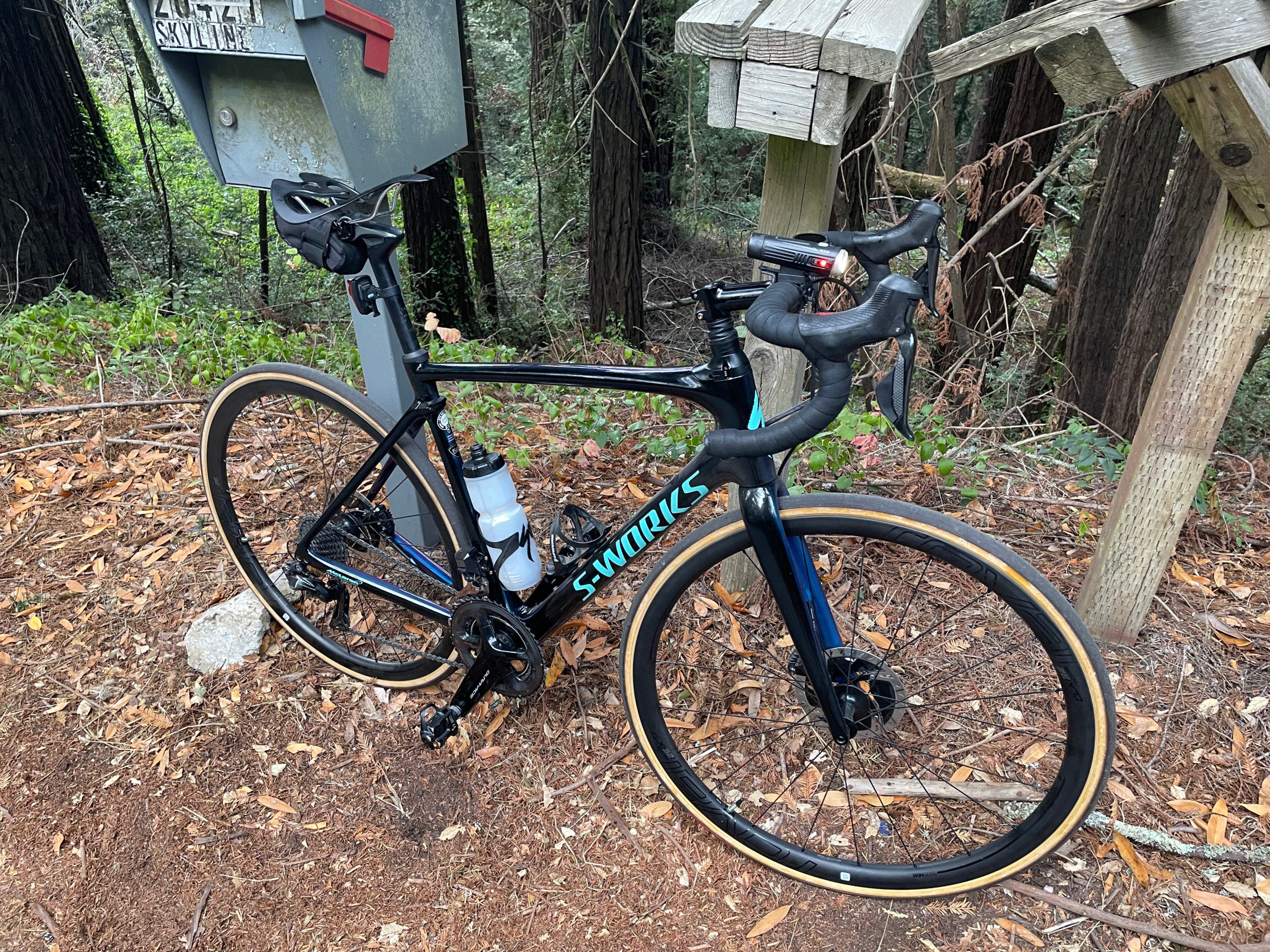
    In 2021 several components of my R3’s drivetrain had worn out and it looks like it was going to take months to source the parts thanks to supply chain issues from COVID. I decided to pick up a new bicycle to use immediately and to repair the R3 as parts became available so I would have a spare. I did test rides on the current Cervelo R-series, Cervelo Caledonia, and a Specialized S-works 2019 Roubaix. I would have liked to try one of the bicycles made by Moot and the 3T Strada ICR but they weren’t available. The Roubaix surprised me. The Roubaix design had been significantly updated making it much more responsive than the previous generation of Roubaix (just slightly less than the R-series) while providing an incredibly comfortable, smooth and controlled ride. My biggest surprise was that I found I likely the Roubaix handling more than the Caledonia. Both Cervelo models are more attractive to my eye, but the comfort + performance of the Roubaix won me over. I normally wouldn’t bother with S-works level build / components, but due to COVID supply issues there were limited choices, and this bike was heavily discounted because the store hadn’t be able to sell it for to years. While I normally won’t be willing to pay for Dura-Ace components, they are noticeably smoother than the mechanical Ultegra level components I normally select. When the battery on DI2 is low, the front derailer stops move before the rear. When the derailer thinks you have been in an accident is goes into crash mode and needs to be reset before you can use it.

    Bike “Fitting”

    Getting a good fit is important. There are a number of technologies which use video or sensors to get an optimal fit for comfort. good form, and power such as “Guru Fit“. There are also old school fitters whose experience allows the to almost instantly assist people to find a good fit. One friend’s experience which such a fitter:

    he watched me walk in had me figured out 80%. 1 minute on a bike and he had perfectly identified how to give me the best fit I have ever had.

    I have heard that that Revolutions in Fitness does a good bike fit, but no personal experience.

    Other Bicycling Gear

    Seats: For many years I used the seat that came from the manufacturer. This mean I used the terribly uncomfortable Brooks saddle for years. People talked about how you would break a Brooks in over time, but it seems to me that the saddle broke me into it. When I purchased the Trek I tried a number of saddles but failed to find one that was sufficiently more comfortable to justify the cost of replacing what came with the bike. I continued to use the saddle provided with the bike until 2013 when I saw a kickstarter project for the Infinity Seat. I purchased one and feel in love. The Infinity seat is the most comfortable seat I have ever used.

    Electronics: I used a Garmin 520 bike computer for awhile.. but these days I make do with using my Garmin 955. I have a pair of Power Tap P1 Pedals (2015) because I like objective measures. No longer made. The Garmin Vector pedals use standard Keto cleats, and are lighter. I use a Felix BC21R Bike Headlamp and Cygolite Hotshot Pro 150 (2019) The BC21R uses a removable 18650 rechargeable battery. I don’t love the Felix but it’s getting the job done and the swappable battery is very handy. If you are looking for good recommendations for cycling (actually Tri sports) head over to DC Rainmaker. Ray has amazing reviews and recommendations. I won’t go wrong if you listen to him.

    Clothing/Kit: For most of my cycling time I did not wear a bicycling kit. I wore a generic athletic shorts/pants and shirt, and used running shoes on peddles with toe clips. Around 2010 I decided that wearing more traditional bicycle kit would be a good idea. I found that padded shorts were a lot more comfortable that unpadded shorts and found that in many conditions an Icebreaker cycling jersey was better than a running shirt. Later I discovered that the minimalist padding in classic Tri-shorts were just as comfortable is the thicker cycling shorts when I was using an Infinity seat. As I was simplifying my clothing I found that a short sleeve polartec Delta exercise shirt worked really well for me in hot conditions. I have some arm sleeves to protect my arms from the sun. When it drops below 55F, I found adding a GoreWear Shakedry jacket keeps me comfort in rain or just protecting me from the wind.

    Bits of Cycling Fun

    Rule 6: Free your mind and your legs will follow…

    Your mind is your worst enemy. Do all your thinking before you start riding your bike. Once the pedals start to turn, wrap yourself in the sensations of the ride – the smell of the air, the sound of the tires, the feeling of flight as the bicycle rolls over the road

    Velominati’s The Rules


  • Shelters

    Shelter selection should be based on how much room you need and the conditions you expect to encounter (rain, snow, wind, bugs, blistering heat, etc). For example, if you only camp in mild weather it would be silly to buy a mountaineering tent designed for expeditions since it will be more expensive, heavier, and not be as well ventilated as a shelter designed for three-season use. If you are camping in the Canadian lake district in June, taking a tarp without any bug protection would be stupid. If you are above tree line in the winter, it would be suicidal not to take a four season shelter designed to handle high winds and snow load. A corollary is that there isn’t one shelter which is perfect for all conditions… so if you adventure out in all seasons you might want to think about owning at least two different shelters.  The issues I consider when looking at a shelter are:

    • appropriate protection in view of the conditions expected
      • ability to handle snow loads (sidewall angle / material)
      • blocking spin-drift (solid walls, if not snow skirt)
      • ventilation (summer want a lot, winter I don’t want ventilation other than high vent)
      • if double walled can outer wall be set up first
      • bug protection
    • user friendly / low hassle
      • ease of a basic pitch
      • ease of a storm worthy pitch
      • ease of entry (I like side rather than front entry)
      • need to tighten at night? (DCF, spinnaker set and done, SilNylon stretches)
      • how careful do you need to be when moving (e.g. single or double walled)
    • how much visibility of your environment
    • usable space (sloping sidewalls can limit this) given number of people. See Andrew’s article about calculation usable space and the related space spreadsheet and the nice visualization at fitmytent.com
    • footprint size (smaller for more usable space good)
    • weight
    • how it looks (I like clean lines)
    • lifetime (a discussion about the lifespan of DCF)
    • cost

    The weighting of these factors varies person to person. In fact, my weighting of these factors depends on where I am going to use the shelter. I have noticed that some people tend to gravitate to shelters that are as open as possible. They want to be as fully connected to their environment as possible. I often see these people using flat tarps. Other people want their shelter to be enclosing and protective. Walls and floors are important. While I have used a flat tarp and cowboy camped, I find that I often like some sense of boundaries, especially on solo trips. I know that I could easily live without my “walls”, they can give me a psychological comfort that makes the trip more enjoyable.

    Quick Recommendations

    I am often asked to recommend a free-standing, two man, three season shelter with two doors.  The Durston Design X-Dome 2 is I think best option today. Just 2.7lbs, the space is very usable, easy to pitch, and remarkably weather resistant (especially if you use trekking poles for extra support). The Slingfin Portal-2 is another excellent 2 person which can easily handle 3+ season conditions. For light weight, free standard, 4 seasons, the Slingfin Crossbow 2. Big Agnes Copper Spur 2 Platinum and MSR Hubba Hubba are a bit heavier, not as protective in storms, but can be found in bring-and-mortar stores. A good “budget” tent is the $199 REI Trailmade-2. If the free-standing requirement is removed I strongly recommend selecting one of the better ultralight tarp-tent shelters. My first recommendation would be the Dan Durston’s X-Mid 2P is a versatile shelter is valued priced at $289. Want a do everything shelter that can be used in all four seasons, can be used by two but light enough for solo use? Check  out the MLD DuoMid XL plus their inner-net.

    My Choice of Shelters

    I have used tarps and tarptents on the majority of my trips for the last 20 years. Since 2022 I have used a Durston x-mid pro2 for most of my trips: it is light enough for solo use and large enough for trips with my wife or a friend. Stable enough for 3+ seasons, can be opened up for decent ventilation in warmer weather, and easy to pitch if you use a few tricks. Very livable space. For many years I used the predecessor of ZPacks Plex Solo which was called the Hexamid (my review) for 3-season solo trips in California. I recently started using a Gossamer Gear Whisper for solo trips in similar conditions.

    Options

    Cheap

    Nothing can beat the price / performance of a sil-poly flat tarp. For completely cheap use a 3 mil plastic sheet. Set a line up which will be the ridgeline. Tie some guylines to the four corners using a sheet bend knot, and stake the corners out. If you want a double wall tent, look for a closeout of a better brand such as Sierra Designs, MSR, or REI at places like Sierra Trading Post. I generally don’t recommend buying used tents unless you know it was well cared for and it is in good shape. Waterproof coating can degraded, fabric can weaken due to extended exposure to UV, and improper care can result in mildew and the PU coating disintegrated due to hydrolyzing.

    Classic Scouting / Club Tents

    There are a few manufacturers who seem to have captured a significant portion of the “club” market. By this I mean organizations which have a stock of gear which is loaned, or rented at low cost by their members. Clubs typically look for low cost options which can stand up to people who don’t treat the gear carefully. The two largest supplier to clubs seem to be:

    • Alps: I have no personal experience with Alps, but have a number friends who have used them.  Alps seems to be commonly used by the boy scouts and budget conscience folks. They seem to be better made than wal*mart / target / etc specials. They are not as light or as well made as many higher end tends made by companies like Sierra Designs. You should never pay suggested retail price for Alps tents. A bit of careful looking should lead you to prices around 60% of MSRP which makes it a good price / quality ratio.  Full price is cheap, but not a good value.
    • Eureka!: In the 70s, 80s, and maybe later, the Timberline was “the” standard tent used by many boy scouts troops, YMCA outdoor programs, etc for backpacking. They weren’t the lightest free standing tents, but they were value priced and fairly durable. I still have fond memories of timberline tents even though there were better shelters, even then. I have been much less impressed with Eureka’s dome tents, having seen a number fail in strong winds.

    Other Information

  • Boots or Trail Runners

    When I started hiking as a child everyone knew you should wear hiking boots, ideally made in Italy with Vibram soles and leather.uppers. Only stupid people wore tennis shoes while hiking, though often they were brought for river crossings and for relaxing around camp. This is still a common view in the general public.

    When I join traditional hiking or backpacking groups, I often encounter people who think I am irresponsible for wearing trail runners, and that I am crazy when wearing minimalist shoes or sandals. I try to explain that I have literally walked thousands of miles in my minimalist shoes without a problem and that there is some good science suggesting a “barefoot” approach is smart… but people are still concerned.

    These days trail runners are the most common footwear worn by people who finish long hikes like the Appalachian Trail, the Pacific Crest Trail, or the Camino De Santiago. Trail runners are simply running shoes that have soles designed to have good traction on trails rather than paved streets. They have many of the same properties of our camp shoes: light weight, comfortable, and more breathable than our boots. They are optimized for comfort rather than protection. I have come to love using trail runners and no longer even own a pair of boots.

    Ankle support?

    Trainrunners don’t provide what most people think of as ankle support… but most boots aren’t significantly better.  Boots typically prevent excessive forward / reverse motion which trail runners do not provide. But in most cases it’s lateral motion that results in ankle injuries. Most boot provide little protection from lateral motion. If the boot doesn’t feel like a ski boot or a mid-calf military jump boot, than it’s most likely not giving you full ankle support.

    What most boots and trail runners do provide is a good traction, a heel cup and foot bed which provides a good foundation for your foot, making it less likely that your foot will end up at a bad angle.

    Wearing boots provide a sense of invulnerability, which can lead to excessive carelessness about foot placement. Wearing trail runners tends to make people aware (at least at an unconscious level) of the conditions they are walking on. The combination of higher situational awareness, better tactile feedback, and more agile feet, make it easier to place feet and enables people to recover a bad placement before full body weight is applied.

    Traction

    I have found that in nearly all conditions trail runners provide traction which is good as, if not better than classic, Vibram soled hiking boots. The situations where I have found hard Vibram soles to provide better traction have been where I needed a hard edge and/or lateral stiffness so I could drive the edge of my boot into the ground. For example, when going across a steep hill that doesn’t have a trail or descending some scree fields. In most cases I think the best way down scree is to go strait down (sort of like a cross country skier).  When you need a better bite uses your heels rather than the sides of your shoes. I think Vibram might have a slight advantage on wet granite.

    Sole protection

    Most hiking boots have a heavy, protective shank. If you come down on a pointed rock the pressure is spread over the entire foot. With trail runners, the pressure isn’t spread as evenly, so you can “feel” the rocks you step on. In theory, this could lead to bruising you feet which wouldn’t been good.

    I have never bruised the soles of my feet wearing trail runners… but I suppose this could happen to people going over very jagged conditions who have sensitive feet. If bruising is an issue, there are optional “rock guards” which can provide added protection.

    Top Protection

    On well established trails or hiking in areas that have fairly spare vegetation (high alpine, etc) protecting the tops of your feet isn’t that important. In many cases the added ventilation offsets any lack of protection. Additionally, people wearing lighter weight shoes tend to be a bit more aware of foot placement which reduces potential issues further.

    There are some environments where the tops of the feet need more protection than the average trail runner. Places that have extremely broken ground with sharp rocks can tear apart the tops of most trail runners, if not hurt the wearer’s foot. Likewise, travelling through areas that have dense stands of plants that have sharp or pointy edges can go right through light uppers. In these cases it is wise to go with a more protective “upper”. While I haven’t experienced this, I understand there are some places (like the Australian outback) where there are snakes that can bite through most shoes. The final situation where I think this concern could be justified is when doing trail work or engaged in other activities that use large, heavy, sharp tools.

    Blisters

    Blisters are caused by friction or extended pressure on the skin. One of the common problems is footwear which is too tight or crowds the toes together. Historically boots had wide toe boxes and shoes didn’t. Thankfully there are now a number of companies which make shoes that have recognized the advantage of a wide toe box.

    Another common cause of blisters is friction. This is much more common in boots because the uppers tend to be stiffer than trail runners. When you walk the boots will be unyielding which will put pressure on specific areas of a person’s foot. It’s common for blisters to appear in these locations. It is also likely that with the boot not yielding that a person’s foot will slide a bit inside the boot. This creates friction. Worse, most boots don’t let out moisture out which makes the friction worse. The best solution for this is using two pairs of socks with part of the sock with the most texture facing the shoe and foot, and the smoothest part between the socks so the rubbing isn’t directly on your foot.

    Comfort Normally Rules

    I mentioned that when I join more traditional groups there are people who are concerned when I am wearing trail runners. On the beginning of the trip, these folks are wearing heavy duty hiking boots. Ironically, during the trip they will develop blisters which become so painful they can’t put on their boots. What do they do? They finish the hike in their water shoes, sandals, crocs, or tennis shoes. I try not to point out that by wearing my trail runners I have avoided the crippling blisters while having footwear with good traction.

    Foot Freedom and Energy

    I find that boots with stiff soles makes it harder to enjoy the environment I am in. I like “feeling” where I am rather than being protected for it. I also love a sense of freedom, and not feeling weighted down. When I switched from heavy hiking boots to lighter shoes I noted that I had more energy at the end of the day. Later, I discovered several papers which examples this:

    for every 1 lb of footwear, it’s like carrying an extra 6.4 lb of weight on your back

    [Legg SJ, Mahanty A. Energy cost of backpacking in heavy boots. Ergonomics.1986 Mar;29(3):433-8.]

    Trail Runners vs Heavy Hiking Boots

    People often talk about how trail runners are “disposable” and how hiking boots will last forever. My experience was that I got around 3000 miles before I needed to at least re-sole, if not replace my boots. Frank Revelo recorded his experiences with 15 pairs of Belleville Boots concluding he could get at least 2000 miles from each pair.

    Area  Trail Runner  Heavy Duty Hiking Boot
    Shoe Weight18oz70oz
    Equiv work for this Weight on Back7.2 lbs28 lbs
    Cost$75$200
    Service400-750 miles3000+ miles
    Cost/Mile10-19 cents<6 cents
    Break In PeriodPractically NoneOften 100+ miles
    Foot ProtectionModerate to GoodExcellent
    Moisture ManagementMost are fairly breathable.  Your feet will get wet.  They will also dry in a few hours of hiking.  Gore-Tex trail runners are available.Most are highly water resistant or waterproof.  If they do get wet they stay wet for a long time.  Feet tend to be slightly damp because when they are sweating, it is hard for the moisture to escape.
    InsulationTypically no insulation on top.  Many models have some amount of mesh which helps keep feel cool and well ventilated. The soles though (often made from light weight foam) tend to be more insulating than heavier boots with dense soles.Tends to be warm on top.  Thick leather or material, and typically thick sock to protect your feet from the boots.  In cold weather good.  It hot weather you feet sweat and swell which encourages blisters to develop.

    Reasons for Boots

    As mentioned above, I don’t use boots anymore, but I do believe there are a limited number of situations where boots are the best footwear. There are times when the ankle support of a jump boot is needed, when feet need to be protected from a hostile environment. Crampons typically work better on boots than lighter shoes. Finally, it is possible to complete an extended trip with a single pair of boots. This is important it you are in locations with replacing trail runners every 500 miles will be difficult. Some people think heavy boots are best in cold conditions because they are insulated where trail runners are not.

    Hiking Shoes

    A compromise between trail runners and boots are hiking or approach shoes. They tend to have the thick, stiff soles of hiking boots, but lighter weight and more breathable uppers.

    So what’s your choice?


  • Hiking Boots (and Shoes)

    Historically people wore heavy weight boots for backpacking, trekking, etc.  Your feet need to be protected, and what could do a better job that a  heavy boot which will help prevent sprained ankles and give excellent support? 

    Actually, most boots don’t give good “ankle support”.  The sides of the boot are flexible.  Only extremely stiff boots like the modern, hard plastic telemark ski boots or mid-calf jump boots actually provide good ankle support.  What actually helps protect your ankle in good quality hiking boots are a high quality heel cup, a well formed foot bed, and good traction.  This helps prevent your foot from suddenly shifting which is the source of most ankle injuries.

    A special case for using boots is when you need your feet protected in a dangerous environment. The classic example of this is steel toed boots warn on construction sites.

    Historically hiking boots were very heavy and used full leather on the uppers. These days, boot uppers are often a mixture of leather, nylon, and even plastic. If you need truly heavy duty boots I would recommend full leather boots with a Norwegian welt made in Europe, ideally by Italian companies like Scarpa.

    Most of the companies which “back in the day” used to only sell 5lb all leather boots make light weight hiking boots and shoes. These boots and shoes tend to be much more durable than trail runners and “walking” shoes. They also tend to have stiffer soles which is useful when facing terrain which benefits from a good “edge” and lateral stiffness.  There are a number of old favorites which see to make popular light weight boots and shoes:

    Most people can get away will lighter weight boots. I converted to using trail runners around 2001, so I can’t provide recommendations about specific products.

    There are some people who strongly advocate for the modern military boot, noting that it has been significantly improved from the boots of years gone past that were appropriately disparaged. A detailed longterm review of Belleville Boots.

  • Socks

    Appropriate socks help keep your feet at a comfortable temperature and play a large part in preventing blisters.  Blisters come from the combination of friction, moisture, and temperature. You want socks which wick moisture away from you feet and minimize the amount of friction between the sock and your foot which is often best accomplished by using two socks. I think nylon and wool are the best materials for socks, and cotton is really terrible.

    My Choice

    I primarily use Darn Tough Ultralight No-Shows which have lasted >=4000 miles before needing to be replaced. and recently added in Xoskin anklet toes socks which seem to resist odor reasonably and are effectively preventing blisters between my toes. My first pair develop a hole that was easily repaired after 640 miles. At 800 there are some small holes in the highest friction area (between my hammer toe ) but they are still working well. On my forth pair… average 1200 days of use, way less than my darn tough dock but longer than a pair of trail runners but longer than most toe socks I have tried. This has been mostly wearing sandals… I expect they might last longer inside shoes. In cool and wet weather I will sometimes wear light socks combined with Rocky Gore-Tex over socks. In cold conditions I have found vapor barrier socks to be extremely useful.

    Sock “Fit”

    Keep in mind that there needs to be enough room in your shoe for your feet and the socks you select. Socks which are too thick for your shoes will crowd your feet and result in blisters just as quickly as your feet sliding around.  I would strongly recommend trying a variety of different socks and figure out what works best for you. Socks are cheap and will often mean the difference between a miserable blister plagued trip, and one with comfortable feet.

    Double Socks for Hiking

    Conventional wisdom for people wearing hiking boots is to wear a heavy wool sock, with an very light weight inner liner. Dr. Murray Hamlet of the Army Cold Weather Research Center confirmed this with an extensive testing of a variety of sock systems. The first set of these tests was documented in the report Impact of Sock Systems on Frequency and Severity of Blister Injury in a Marine Recruit Population.

    Hamlet and team found that a thin liner sock made of CoolMax, and a thicker sock made of wool&polypro (fuzzy side out) had a significantly reduced the frequency of blisters. This is because the slipping is happening between the socks rather than between the foot and the sock. TechSpun sells the socks designed by Hamlet.  Besides TechSpun there are a variety of companies which sell high quality wool or wool blend backpacking socks including Bridgeport, Dahlgren, Darn Tough Socks, Fox River, SmartWool, Thorlo, Wigwam.

    Lighter Socks

    People carrying lighter loads and using trail runners or walking shoes often prefer socks that have less bulk. Since lighter shoes tend to flex with the foot, an inner / outer sock combination isn’t as critical as when using boots. Some people find double socks are helpful with trail runners. Some low bulk ways to get double socks include using a pair of knee high stockings + a light outer sock, two pairs of nylon dress socks,  WrightSocks DoubleSocks, or X-Socks (I have no experience with).

    Single socks I would recommend for trail runners include Darn Tough running socks, xoskin socks, Injinji toe socks, Smartwool Adrenaline, asics running socks, Inov-8 Mudsoc (coolmax), and the Bridgedale X-Hale Multisport Socks (multi-fabric blend).

    Extreme Conditions

    I have a pair of posts which address footwear (which includes socks) in particularly wet or cold conditions.

    Cheap

    Use a double pair of nylon dress socks.

  • Trail Runners

    For most conditions provided you are carrying less than approximately 40 lb, I would strongly recommend trying trail running shoes because they can be quite comfortable and will be lighter than the more traditional hiking shoes or boots. I have heard people express concerns about hiking in trail runners. I will observe that if your survey people who complete the long trails like the AT & PCT you will find the vast majority wore trail runners. I wrote up a brief comparison of using trail runners vs boot.

    There are lots of good trail running shoes on the market these days.  There are a number of factors you should consider when looking at a trail runner:

    • Fit: If the shoes don’t fit you, skip them. You need to find shoes which fit the shape and volume of your foot. Pay particular attention to how well the heel box hold you and if there is enough space around your toes. Some people buy shoes that are 1-2 sizes larger than normal, in a narrower width to give their toes maximum space.
    • Foot Support: You should start with a wet foot test to figure out what cushioning and control features you might want. But keep in mind that the Cochrane meta analysis indicates that control features don’t seem significant reduce injuries. Advocates of minimalist shoes would argue that you should address this issue through effective conditions rather than using a crutch for the rest of your life.
    • Type of Sole:  The sole of the shoe will determine what some of terrain you will have good traction and how durable the sole will be. Softer materials typically have better traction on hard / flat surfaces but wear more quickly. Deep / aggressive soles with lugs are the best for variable terrain, especially when there is loose materials.
    • Ventilation: In most cases you will want a highly ventilated shoe to let your feet breath. There is a trade off for the ventilation which is external moisture can get in, and extreme ventilation (light mesh) will not protect your feet from thorns and other pointy plant material.

    If there is an athletic shoe manufacturer that seems to make shoes that fit you well, I would look to see if they make a “trail running” model, and try that. If there is no manufacturer that you are more inclined, you might see what shoes are recommended by the wet foot test at runners world and/or check out the descriptions and reviews on running warehouse. The following are some of the popular manufacturers that I have had experience with.  Note: the models listed in the next section are likely out of date.  I have found shoes that work really well for me, so I typically am not following shoes too closely anymore:

    • Altra: Maybe the most popular sure among light weight backpackers. Good traction, wide toe box. Offer a variety of stack hieghts/cushion options. The Altra Superior was my default shoe between 2017-2022.
    • Hoka: Very popular with ultra-runners and long distance backpackers. Lots of cushion. I personally don’t like them because the stack is too high for me. I like minimalist shoes.
    • Inov-8: Inov-8 was one of the first companies to make minimalist shoes for the outdoors. They developed a significant cult following popular among fell runners, ultra-runners, ultralight backpackers, and with some adventure racers. Their lightest shoes are about as close as you can get to going barefoot while having something on your feet. One really nice thing about Inov-8 is that they have committed not to make gratuitous changes to models, and will keep making old models until it is no longer economically feasible. I wore 14 pairs of Inov-8 315 flyrocs… the last pair was the same as the first. The Trailfly 270 G became my standard shoe in 2022. I get ~1200 miles before they wear out, around 3x more than most trail runners.
    • La Sportiva: Makes trail runners and good approach shoes (like TX line)
    • Montrail: Velocity line on trail runners were quite popular with the light weight backpacking community. In particular, the  Hardrock and Vitesse models. Montrail tends to have a more generous toe box than many other manufacturers. In the past years Montrail seems to be losing their way makes shoes which doesn’t seem to compare favorability to previous years designs.
    • New Balance: Seem to have been one of the earliest manufacturers that embraced trail runners by introducing the  M801AT. This was a great line of shoes, but NB kept change the design.  They were good through the M804-807 depending on who you ask but but the M808-809 really sucked. Hopefully NB will learn the lesson and not play with working designs until they break them.  I don’t have experience with NB current shoes, thought I might give one of their minimalist shoes a try soon. New Balance is one of the few manufacturers which offers there shoes in a wide range of widths… so if you have a particular wide or narrow foot, I would start with New Balance.
    • Norda: New company that I have no personal experience with. Have read they are taking a materials first approach to improve durability for shoes which last >1000 miles.
    • Salomon: Makes a number of shoes lines which might be of interest including the XA, Speedcross, and Amphibian. Salomon shoes tend to run wide through the entire shoe. The fast lacing system is interesting, but it limited customizing fit by changing lacing and it’s hard to repair in the field.

    Manufacturers that I don’t have a lot of experience with recently, but are worth a look include Adidas (Supernova), Asics, Brooks (Trail Addiction), Mizuno (Wave Ascend), Nike, Saucony (Peregrines), Topo. There are also a number of minimalist trail runners.

    The site runrepeat.com has excellent reviews

    I have other notes about footwear.

  • Sandals

    There are a number of people who have found using sandals or water shoes to be highly effective.  They provide excellent ventilation for your feet, and are ideal when you are in wet conditions because they don’t hold water against your feet.  The downsides of using sandals or water shoes are that your feet get really dirty and most sandals don’t protect your toes.

    I really like Luna Venado Sandals for street running and walking on city streets. I have used them in the back country, but they don’t have a lot of traction. If I am in the back country I often switch to a pair of Luna Oso Flaco Sandals. Enough ground feel that they don’t feel “dead” when I run in them, but enough traction to use in the back country. Bedrock Cairn 3D Sandals are the best pure hiking sandals I have found: grippy on the top and bottom but a bit dead feeling. Fairly compact for packing, weights about the same as a minimalist trail running.

    Keen  makes a wide range of shoe including sandal like shoes with a toe guard. I wore them for many use to protect my toes. Last time I looked the Clearwater was their lightest model. Many people seem to love the durable but heavy Chaco Sandals, which are a bit like taking a the sole from a really heavy duty boot and put sandal straps. I don’t use them because they have a very pronounced arch support ridge which hits me in exactly the wrong place. Teva and Xero Shoes make a wide variety of sandals which can be used for a wide variety of activities. Beside Luna and Bedrock, Earthrunners, Unshoes, and I am sue a number of companies make minimalist versions of Huaraches running sandals. Mayflyultralight made an ultralight sandal which doesn’t have a strap between your toes. There was a nice set of mini reviews of minimalist running sandals on reddit.