Category: money

  • Wealth

    Most people in the developed world have no idea how wealthy we are when compared to the sweep of human history. Even when people know this, it’s easy to take what we have for granted, and to forget to be thankful for the lives we are able to lead. I oscillated between feeling deep gratitude and contentment for my life situation, worrying about whether I will be able to maintain what I have as the world changes around me, and occasionally feeling dissatisfied with what I have and desiring more?! I wrote this post as a reminder to myself, I hope it might be useful to others as well.

    [toc]

    By all measures I am wealthy. I worked hard for what I have, but I recognized that grace (some might say luck) has played a substantial role in where I am today. I know that I have won the geographic, genetic, and “era” lotteries. I strive to keep perspective. One thing I have found helpful is to engage in the practices of gratitude and generosity. These help keep me grounded and reduces my tendency to let my wealth draw me away from dependence on God. It is said that we often value the gifts we receive more than the giver, who is the real prize. I often fall into this mindset, and then I wake up and realize nothing better than when I clearly see, feel, and experience God’s uncoditional love. Life is best when God’s love fills my heart and drives my life.

    What is Wealth?

    First, I would like to draw a distinction between “rich” and “wealth”. The term “rich” is typically focused on  income and consumption.

    Wealth is a holistic term. Salih Bloom in the book The 5 Types of Wealth: A Transformative Guide to Design Your Dream Life  notes while most people equate wealth with their financial state, there are four other ways we can be “wealthy”

    • Financial: Not lacking material needs
    • Time: Spend time on what we desire.
    • Social: Engage with people and activities as we desire.
    • Mental: Not pressed down by trauma or fear.
    • Physical (Health): Robust health and access to treatments when facing injury or disease.

    There is no universal definition of what it means to be “wealthy” because the concept is highly subjective and circumstantial, and shaped by cultural, social, and personal factors.  It is possible to talk objectively about someone’s relative wealth, but most people experience wealth subjectively. For these people, wealth may be best defined not by how much they have, but by how much they feel is enough to live the life they desire.

    Compared to What?

    Most people who are wealthy when compared to the majority of humanity don’t consider themselves wealthy. This is because people make comparisons to their “normal” experience.  Much of the time people interact with people who are of similar economic class, so they think of themselves as just average. Second, almost everyone knows someone who has more than they do.  Those are the wealthy people.

    For example, the average salary for a successful software engineer in the Bay Area puts them in the top 1% of the world, 10% in US, 20% in the Bay Area.  But they are making around the same as their coworkers, and  they know celebrated engineers who make three times what they earn each year. They find several of their desires, like purchases a home, out of reach, so they don’t think of themselves as wealthy.

    Era of Wealth

    Extreme poverty, which is experienced by 10% of the current world, was experienced by nearly 80% of the people living in the 1700s!

    The opportunity and material wealth in the 20th and 21st centuries is like nothing man had previously experienced.  People who today are above the worldwide lowest 25% have better lives than the rich a few centuries ago.

    A “middle class life” in the current world, what many people in the US would be considered being at the poverty line, is largely superior to what royalty experienced in the 1700s. We have climate controlled buildings, health care, a huge variety of food and goods of a quality and nature that couldn’t be imagined two hundred years ago. In many countries we have a rule of law so you don’t have to worry that just because someone has more power than you, that they are free to take whatever they want. The ability to travel vast distances safely in hours which enables us to have incredible experiences.

    For more details see the article we live like royalty and don’t know it, which is part of what I hope will be an excellent series How the System Works.

    Geography of Wealth

    The following is mostly for people in “the west”:  US, Canada, Europe.  We have won the geographical lottery. Being a citizen in our country virtually gaurentees that we are well off compare to most people in the world.

    • In the US an income of 35k (which is 90% of the residences of the USA) puts us in the top 10% world wide.
    • An income of 60k, which is what 35% of the US, puts someone in the top 1% of the modern world.
    • An income of 500k puts someone in the top 1% of the US
    • An income of $1M puts someone in the top 1% of the Bay Area.

    Damage of “Comparision” Fueled by Media

    I mark the airing of the TV show Lifestyles of the Rich and Famous hosted  a major turning point. It has been estimated that up to a billion people have been exposed to the shows content: ostentatious spending.

    People who used to consider themselves rich were exposed to extreme wealth for the first time. Envy started to creep in.  This has become even more of a problem with the advent of social media. People who use social media are bombarded with images of people with more than they have… or at least look like they have more. People curate their feeds to highlight their peaks, if not using generative AI to provide a completely false picture.

    I have heard numerous antidotal stories about how access to mass and/or social media moved whole communities from being generally happy and content to unhappy an discontent.

    What We Have is a Gift

    I often hear very successful people tell stories about they are responsible for their success. That they worked harder and smarter than other people. Whether or not this is true, their success also came from “luck” or “grace”. In almost all cases these people had advantages that they take for granted. One has to ask if they were an orphan, born in Sub-Saharan Africa, could they have possible accomplished what they did. Typically the answer is “No”.

    It’s worth remembering the observation “For who sees anything different in you? What do you have that you did not receive? If then you received it, why do you boast as if you did not receive it?”  – 1 Cor 4:7 (ESV)

    I believe the apostle Paul expressed the attitude of contentment that we should strive to adopt

    But godliness with contentment is great gain. For we brought nothing into the world, and we can take nothing out of it. But if we have food and clothing, we will be content with that. – 1 Timothy 6:6-8 (NIV)

    I am not saying this because I am in need, for I have learned to be content whatever the circumstances. I know what it is to be in need, and I know what it is to have plenty. I have learned the secret of being content in any and every situation, whether well fed or hungry, whether living in plenty or in want. I can do all this through him who gives me strength. – Philippians 4:11-13 (NIV)

    True Wealth

    Blessed are you who are poor, for yours is the kingdom of God — Luke 12:32

    Why did Jesus say this? Poverty is in no way “noble”.   Deprivation is not good. The answer can be found in Proverbs 30:8-9

    Keep falsehood and lies far from me; give me neither poverty nor riches, but give me only my daily bread. Otherwise, I may have too much and disown you and say, ‘Who is the Lord?’ Or I may become poor and steal, and so dishonor the name of my God.

    As we accumulate wealth, it becomes easier and easier to “take care of ourselves”. As we do this, we trust in what we have accumulated. Our security comes from our wealth. Wealth often corrupts character as people feel empowered to go the way they want to rather than seeking God.

    Psalms 23 describes how God desires to richly bless us, but we often don’t see what He is doing or believe that He is caring for us. Rather we make our own way and in doing that, settle for what’s second best, a counterfeit of God’s true blessing.

    A Challenging Example

    Years ago I read the biography of George Müller (1805–1898). George had an abiding trust in God and prayer.  He felt called by God to care of orphans. He founded The Ashley Down Orphanage in Bristol, England which cared for over 10,000 orphans during his lifetime. What was remarkable was he never solicited funds but relied entirely on prayer. Needs were met through unsolicited donations, often arriving at the last possible moment. Müller had an extraordinary faith in God’s provision.  Every day he was looking for God to show up, and God did.

    Other People’s Thoughts

  • Housing

    The cost of housing in the US has been rising faster than inflation since the 1960s. For an investor who either owns real estate, or has enough money to invest, this is good news. For someone needing housing, this is bad news, and is a significant, if not the primary factor driving homelessness. Two articles that discuss the connection between housing costs and homelessness:

    There are numerous factors which have lead to the ever increasing cost of housing.  In the US, the most fundamental issues is a 4-8 million homes shortfall1. There is more demand than supply. This will continue until there is more housing or less people. Fannie Mae’s The U.S. Housing Shortage from a Local Perspective noted that the contributing factors vary, e.g. there will not be a one size fixes all.

    Another factor is the shifting of population. It has been noted that several cities have become “magnets” which attract people producing a combination of jobs and services which attract people to the city. In locations which limit geographical expansion, this produces significant upward pressure on the cost of housing. This is a problem not just in the US, but also in “desirable” cities across the world that employ a significant number of people and/or destinations known for a good quality of life, nice weather, etc. In some of these cities like Lisbon, real estate investors now own a significant portion of the housing which is often being offered up as short term housing.

    Regulations (and Unintended Affects)

    There have been many regulations created to encourage home ownership, safe housing, affordable housing, and that the elderly aren’t forced to move out of their homes as they age.

    Homes are a Principal Investment Vehicle

    US tax code encourages people to invest in real estate for good reason. Home ownership has become one of the most powerful tools for people to build familial wealth.  For many people, their house is their major investment and their primary “retirement account”.  They have a strong incentive to protect the value if their house. Anything that might reduce their homes values will be opposed.

    As a result, home owners typically fight against new housing, especially high density housings.  This is often referred to as not in my backyard (NIMBY). Adding housing potentially alters supply/demand. Second, the added housing might change the character of the neighborhood making it less desirable.

    Improved Building Standards

    Starting in the 1970s building codes were significantly strengthened and a tenant rights was put into law. The idea seemed good. Landlords should be required to insure their housing was safe and well maintained.

    Unfortunately, a significant portion of the rentals could not be brought up to these standards in a cost effective manner, providing the profits the landlords sought.  As the standards came in, these properties were often sold, improved, and then came back on to the market as upscale housing which was sold rather than rented. Often multi-tenant spaces were updated to provide more space for a smaller number of people. The result was that the supply of rental properties actually shrunk, driving prices up.

    Rent Control

    Rent control was intended to stop landlords from rapidly raising the rent on people, forcing them out of their homes.

    While noble in intent, it has not necessarily accomplished what was desired. First, many people do not stay in the same home for long enough time to benefit from rent control. There is an incentive for people to stay in housing, even when it does not suit their current needs.

    Rent control often reduces inventory because the return on the investment is capped by rent control. Landlords have incentives to take their rental units off the market and sell them. For a discussion about this, listen to the Freakanomics podcast  Why Rent Control Doesn’t Work (Replay)

    Single Family Zoning

    Many areas are zoned R1, that it single family residence. This limits housing density and limits the number of housing units that can be built. In many locations, the land is actually more costly than the home. Limiting a significant amount of the land to single family homes significantly limits what can be built.

    Tax Caps / Prop 13

    California Prop 13 was “sold” as a way to insure the elderly wouldn’t be driven out of their homes by rising real estate taxes. Unfortunately, businesses more than elderly home owners benefitted from this. As a result, long time home owners and savvy business have been able to keep their real estate taxes low, but people who have purchased housing more recently carry a disproportionate tax burden.

    Ineffective Low Cost High Density Housing

    I have heard it said that single family housing is a luxury that society can’t afford. IN many countries the majority of the housing are apartment building. A quick way to produce significant amounts of housing would be to construct cost managed, high density housing. In much of Europe is a key part of why there is affordable housing.

    In the USA, projects were attempted and largely failed. Rather than providing safe, affordable housing, the projects were often dangerous places that were not well maintained. They became “owned” by violent gangs which were so dangerous that the police would only enter in force.

    Several low cost housing projects I am familiar with have been quite expensive to tax payers. While the rents or purchase price have been “affordable”, the cost of construct was quite high. Sub 400sq ft places than cost almost 500k, modest home that cost almost $800k to construct.

    In the 1950s across communist nations many people were successfully housed by the building of ugly, but functional apartment buildings called Panelák. I am not sure why there is such a stark difference. Researching this might reveal keys to making this sort of housing to work well.

    Failure to Improve Efficiency

    The last 100 years has seen huge productivity improvements in most manufacturing fields. Housing was keeping up with these improvements until the 1950s when productivity stopped (maybe even regressing a bit) while other sectors continued to improve.  As a result, housing costs increased relative to other costs.

    Housing is  still a mostly one off construction, done on site with skilled workers. This method of construction has not been able to benefit from scale, quality improvement, nor the worker simplification / specialization than has made other manufacturing processes more efficient and productive.

    There have been several attempts to address this with factory produced (modular, prefab) homes. So far, this hasn’t produced the benefits that have been expected.

    There are some promising prefab homes. One of the more encouraging from both a design and price standpoint was covered in a business insider article and homes made by the company VMD are promising.

    What Could Be Done

    Update  Building Regulations

    Create a two tier building code system. The first that enables building safe, economical housing for people seeking a modest existence. For example, many building regulations require new construct to have 200amp (or more) power. While this might be necessary for a luxury home filled with electrical devices, a very livable home could be constructed that uses much less power.  A second tier of regulations would be available to insure homes met higher standards which are desired by “middle class” consumers.

    Ironically, Most Americans want less regulation, until a building burns down and people die, then they ask the government, how could this happen, how could you allow this unsafe condition? There’s no upside to government employees in less regulation, only potential downside. 

    Cohousing / Tiny Houses

    Cohousing attempts to build housing which supports and is informed by the community which will use the space. Cohousing creates common spaces to be used by the community which often reduces the amount of space needed by individual families.  In recent years, cohousing has been combined with prefab “TinyHouses” to lower the cost and increase the speed to creating new housing.

    There have been several non profit organizations which have been building sustainable cohousing communities specifically designed to address issues of homelessness. One great example of this are SquareOne Villages which are primarily in Eugene, OR and the Community First! Village described in the NYT piece Can a Big Village Full of Tiny Homes Ease Homelessness in Austin?

    Permit RV

    While no one is thrilled by it, RVs have become “affordable housing” in several high cost areas.  Often the people using RVs struggle to find safe places to part their vehicles. Cities are increasingly forbidding RVs to be parked on residential streets, and typically bar people using an RV which are parked on private property. RV Parks are rarely found in urban areas, and are typically expensive.

    Allowing people to use an RV parked on private property and having city provided areas that have affordable water, sewage, and power options could provide cost effective housing. I have been amazed to discover that while I am permitted to park an RV on my property, I am not permitted to let anyone stay in the RV. Portland is one of the few cities which seems to have a reasonable policy.

    HomeShare

    The Home Sharing Program in San Mateo County has been successfully running for 50 years. This program connect people who have extra space in their homes with people in the need of housing. The housing is provided for an affordable rent and/or services provided by the renter. I know several elderly whose are provided space in exchange for someone who can help them take care of the house, do grocery shopping, and occasionally provide transportation to doctors appointments.  This program inspired HomeShare Oregon

    Changing Tax / Loan Policies

    Changing favorable tax treatment of property is not something that is likely to change anytime soon. People who have benefited from the favorable tax treatment of housing would fight against losing it. Furthermore, changing this quickly could have a devastating impact to people who financial planning was dependent on the current policies. If this was to. be changed, it would need to be done somewhat gradually, with some sort of grandfathering.

    Another issue is 1031 which allows taxes to be differed if property is sold and then replaced with property of equal or larger value. This provides incentive for someone to grow their property footprint. The “new” property can be several properties. This encourages a consolidation of property into the hands of “successfully” property companies.

    Finally, loans are readily available to people with sufficient assets and income to purchase real estate. This make it fairly strait forward for people of means to acquire multiple properties. The US could establish policies such as in Taiwan, which will not grant real estate loans to people who already own property.

    1. The US is short more than 4 million homes: analysisAffordability crisis: United States needs 4.3 million more homes – Jun 22, 2023The Housing Shortage Is Larger Than You Think: Part 1The Housing Shortage Is Larger Than You Think: Part 2 ↩︎
  • Generosity > Greed

    I have been fortunate to have several people in my life who exemplify generosity and inspire me to follow in their footsteps. In the last year I have been challenged and encouraged by Glen Van Peski’s Take Less, Do More, a class on The Practice of Generosity at Bridgetown, and the book Giving is the Good Life.

    As I was reflecting on the material from the Generosity class I was reminded of a series of experiences from around twenty years ago:

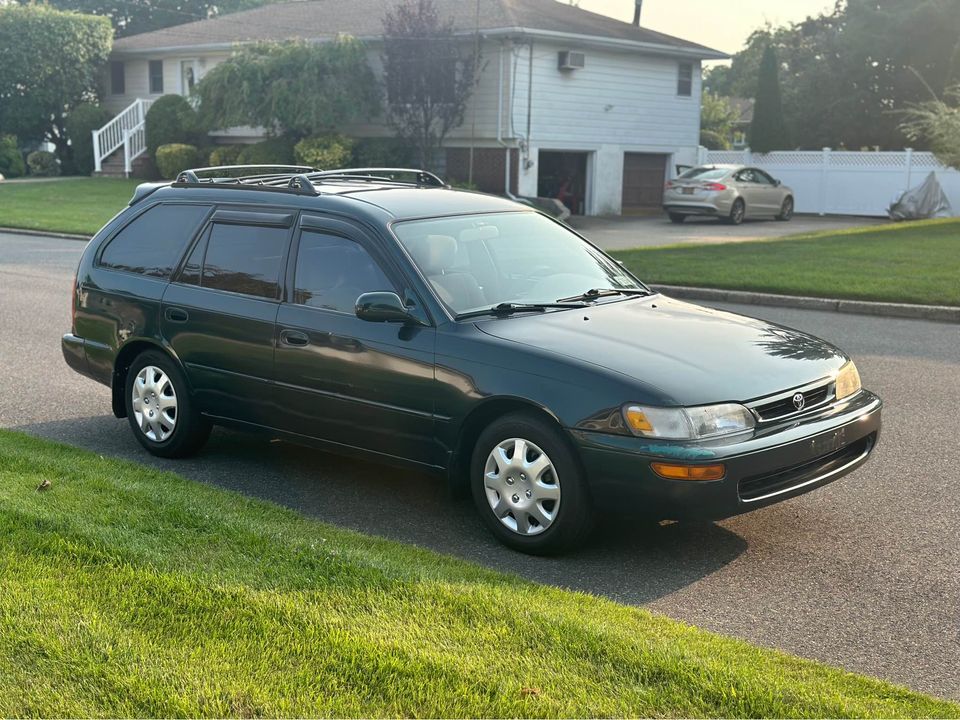
    My first couple of cars were compact Japanese sedans that were pre-owned. I was delighted to have a car that was reliable and safe. For nearly 15 years my wife and I shared a car. 1997 we decided to get a second car when I regularly had to travel further than was practical on my bicycle. We purchased a new Toyota Corolla wagon which became my wife’s car during the week, and the car we used for family activities. Our Mazda 323 became “my” car. A couple years later we determined the Mazda wasn’t safe. We replaced the Mazda with a Toyota Camry.  The Camry became my wife’s car, and the car we used going someplace as a family. I “inherited” the Corolla which delighted me. I really love the Corolla, the Camry seemed too big.

    In 2000 I was working for an early stage startup. Many of my coworkers came from startups that had done very well. Our parking lot was filled with cars paid for by IPOs. Mostly Audis, a good number of BMW and Mercedes Benz, a sampling of higher end Lexus, several Porsche, at least one Jag, Lotus, Range Rover, and a Hummer (real, not a H2). I noticed these cars, but it didn’t seem to affect me. I loving my little Corolla station wagon. It was very reliable,  functional and was the perfect size.

    As I was constantly exposed the these cars my contentment slowly eroded.  I started to become  envious of the people with those nice cars.  I told myself those cars were too expensive and didn’t have a good ROI. Then I found myself reading reviews about performance cars, looking for what cars provided the best performance per dollars and could be reliable enough to be a daily driver. Then I started to consider what I might do when our company had a successful exit. I thought, “I have worked hard. maybe it would be ok to purchase a nice car.” I found I was spending an increasing amount of time thinking about cars even though our cars were completely adequate.

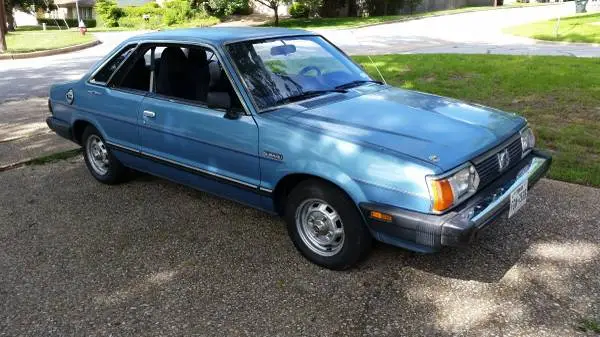
    One day my wife and I were talking with some missionaries sent out from our church.  They were spending the summer in Palo Alto and then were moving to Dallas to train future Wycliffe translators. They were worried their 1979 Saab 99 wouldn’t survive the drive to Dallas.  Even if the car made it, it didn’t have air conditioning which would be tough during summers in Dallas.  They asked us to pray for a solution or at least that the car would make the drive.

    I felt a stirring in my spirit.  I turned to my wife, she saw the expression on my face and nodded. I said to them “Your prayer has already been answered.  We have two cars, but only one is regularly used and the other only needs to be used around town a few times a week.  Lets trade.” The next week we exchanged my 1997 Corolla wagon for their 1979 Saab.  The missionaries were very thankful. One said “This is the nicest car we have ever had. We know it will serve us well.”

    Fast forward a year. An acquaintance was driving me to my work after a church retreat. As we were pulling into the parking lot I started to describe the car I wanted him to drop me next to. As he was looking across the parking lot he said “My car!”.  Turns out the Saab was originally his mom’s. It became his car during school and he used while he was working his first job. He replaced it with a nice Audi when his company had an IPO, and donated it to the church that in turn gifted it to our missionaries. We had a laughed about how it is a small world. A year later I learned Peter was going to leave his company and told my boss. We became coworkers making is a very small world.

    Sometime later I was talking with a good friend who drove a Volvo 240 station wagon that might have been older than my Saab.  We agreed that we had the two ugliest cars in our neighborhood. My car’s red paint had faded to an ugly brownish color, his color was quite splotched.  In the middle of the conversation I realized that I was no longer envious of the cars at my work. I was no longer reading car reviews. I had come to love my old Saab. I was more than satisfied… every time I drove the Saab I remembers how happy and grateful our missionaries were which made me smile. This led me to the following reflections:

    1. When I am continuously exposed to luxury, I start to think it’s normal and I grow discontent with anything less. Unless I mindfully resist the environment I am in, it will affect me. This is a close relative of adaptive hedonism.
    2. An act of generosity can reset my perspective, filling me with joy, thankfulness, and contentment. Swapping my nearly new Toyota for an old Saab had freed me from feeling envy.

    Several years later a tire rod on my Saab snapped as I was merging onto Page Mill Road. Thankful no one was injured as I jerked to a stop in the middle of an interchange.  I had to pay a junkyard to take the car away… there was no value left other than great memories and a life lesson.

    The next week I went out to test drive some cars. My dear wife said “Try whatever you like.  You have been driving the Saab… it would be ok to drive something nicer.” I test drove a wide range of cars including an Audi and a Mazda RX7 that I had lusted after a few years early. I concluded that wanted a Corolla station wagon. Alas, they stopped making them.  I ended up purchasing a VW station wagon which seemed like the most practical option and was fun to drive. After I got it, I briefly considered seeing if our missionaries would be willing to swap a newer VW for my old Corolla.  The VW felt like a sinful luxury and I really missed my Corolla.  After a few months I decided I loved my VW and didn’t need to feel guilty driving a new car.

    In 2020 I learned that my trusty Corolla was still in use. The missionaries had given it to their daughter when she went off to college and it was still providing reliable transportation.

    Cars ownership seems to provide many opportunities to grow in generosity. I earlier wrote about how a car was instrumental in crystalizing my perspective that people are more important than things.

    One person gives freely, yet gains even more; another withholds unduly, but comes to poverty. A generous person will prosper; whoever refreshes others will be refreshed. – Proverbs 11:24-25

  • People are More Important Than Things

    I am forever thankful to my friend Craig and an unnamed housemate who helped me to understand that I had to choose whether I loved people or things more.

    I purchased my first car on a Thursday afternoon and proceeded to drive it to where my house church was meeting.  Right after the meeting ended my friend Craig asked if he could borrow my car. There was a young lady who lived 10 miles away who needed to get home soon.  Craig wanted to talk with her, and if he didn’t drive her, it was going to be several weeks before they would get their next chance.

    This was my new car. I had only driven it about a mile. I wanted to drive it.  On the other hand, I had been carless for a couple of years and had housemates loan me their cars. I was grateful for their kindness and felt it wouldn’t be right to refuse my friend.  I handed him my key and joined a conversation with someone who lived in the house we were meeting in.

    When the conversation ended, I realized that everyone  had headed to a restaurant / bar we would frequent after the meeting.  I wouldn’t be able to join them and had to walk around 3 miles back to my home.  I was pretty grumpy. A couple of hours later my housemates started to return from the restaurant having clearly enjoyed the time hanging out with each other. I was really starting to regret loaning Craig my car.  I was thinking “It’s fine to share, but it was foolish to loan out my car.  Look what I missed out on.”

    Then a phone call came.  It was Craig.  He told me he has been in an accident. This was believable.  We used to say that the strongest evidence that guardian angels exist is that Craig had never been in an accident. I wanted to scream “You crashed my new car?  I only got to drive it one mile before you destroyed it?!”, but I didn’t. I was relieved that Craig was calling me rather than  police officer showing up to report Craig’s death or severe injury.  I had lost a friend less than a year earlier to a tragic traffic accident.

    I clamped down my anger and the words  “Are you ok?  Where are you? Do you need us to pick you up?” spilled out of my mouth.  Craig told me that he could get home.  The left front quarter panel was damaged, but he was able to pull it away from the wheel so he could drive it home.  I said “Thank God you are ok.  That’s the most important thing. Get home and we can figure out next steps later.” 

    As the phone call ended one my housemates said in a self satisfied voice “That’s why I don’t loan my car to others.”

    In that instant I knew I was at a crossroad.

    I had the example of several of my housemates  who had freely shared their cars with me.  I respected their character and saw how they cared for others. They were people I admired and wanted to be like.  They were willing to take the risk of their things being damaged.  Then there was this other housemate. His life was characterized by selfishness. He protected all his possessions and wasn’t willing to share. He was a negative role model. Someone who I didn’t want to be like.

    Without thinking I said  “And that’s why I am going to continue to loan my car out.”  Thankfully I stopped my outburst before I finish my thought  “because I don’t want to be a selfish #$^!% like you” and he didn’t catch how condescending I was toward him in that moment.

    From that day on I committed to care more about people than my things. That when I loaned things out to do it with the mindset that I was giving the item away.  So if it was damaged or not returned I would be ok, and if it came back in good shape I could rejoice.

    Craig wasn’t in an accident. He thought it was a funny prank.  When I learned my car was ok I was tempted to kill Craig, but decided to forgive him, and to be thankful that I had learned a valuable life lesson. For a couple of decades Craig was embarrassed by his prank… to which I always told him I am ever so grateful he did it because it was a crystallizing moment which has been instrumental in my life. In the years since that incident I continue to loan things to Craig 🙂

  • Retired

    Retirement: A stage of life when you are able to invest time without being constrained by the need to earn a salary. It becomes easier to pursue things that you think are truly worthwhile without having to make compromises. It’s possible to be “retired” and be working a job that pays you a salary if you aren’t dependent on keeping the salary.

    I expect people who read my Midlife Reset Revisited post wouldn’t be surprise that I retired July 29, 2022 after working in technology for 43 years. That’s something like 100k “work hours” and 30k hours in meeting.

    I had the privilege of working with some extraordinary people at several great institutions. I had a front row seat to major technological changes… sometimes helping them along. Much of our work stood on the shoulders of giants whose work in the 1960s and 1970s still provides wise guidance such as Butler Lampson’s Hints for Computer System Design. I had the joy of mentoring numerous students and employees. I am grateful that I could be an industry advisor to several projects associated with the CS department at UC Berkeley. It’s gratifying to see how the ideas developed in the ROC, RADlab, Tier, and like projects have spread. My workplaces have included two universities, Xerox PARC, and seven startups, five of which “succeeded” by going public or by being acquired by Google or Microsoft. Along the way we built some remarkable systems and some wonderful friendships.

    To be effective in most technical fields required many hours outside “work hours” invested in continual learning. Every 4-5 years there seems to be a new technology or approach to learn and master. Until recently I had enjoyed expanding my “systems” mastery. A signal that it was time to make a change was that I was happy to spend time learning about most any topic but distributed systems. I knew it would be useful to refresh my knowledge of container orchestration, to learn about Raft even though I paid the cost to understand Paxos, etc. I just couldn’t bring myself to do it. Yet I was eager to be reading about economics, sociology, theology, striving to understand the Krebs cycle… oh my, so much to learn, so few years left.

    I also started to notice how much of my mindspace work took: the time spent in showers, on walks, in the middle of longer bike rides, and those nights I couldn’t sleep thinking about how to advance our field or overcome a challenge at work. Rather than being energizing as it had been, it was feeling like a burden.

    My wife Jackie has been encouraging me to embrace “life” as discussed in the classic book Your Money or Your Life and not worry so much about money. It’s time to invest in what I find truly life giving. My desire is to spend more time thinking about the “human heart” and mind, less about technology. To have more time to invest in my family, local community, neighborhood, church, and some NGOs I have periodically assisted. I want to live rest of my life with wisdom, leveraging all I have learned and experienced so far investing into other people as described by Richard Rohr in Falling Upward and Arthur Brooks in Strength to Strength. I nearly made this transition 10 years ago, but I flinched.

    Short Term

    Health: I am going to step up my exercise and physical activity. Time to reactivate Strava. Times are going to be slow. After a year of stagnation it will take some time to make new PRs, but it will be fun to have more time to run, cycle and lift some weights. I will have time to join Jackie learning Tai Chi. I am making appointments for various checkups that I should have done awhile ago, and revisit my game plan for a healthy and fit life.

    Backpacking: It’s been almost a year since I have taken a backpacking trip.  I am going to find some places that aren’t burning and get away to enjoy some natural beauty and solitude. First stop Ventana. When did it become so hard to get wilderness permits for the Lost Coast?! Emigrant Wilderness in the next month. Hopefully I will be able to join a good friend on a section or two of the AT this fall.

    Learning: There are many topics I want a deeper understanding. Some study will be on my own. Some will leverage community college. This fall I am hoping to take a psychology course that my daughter is taking.  Maybe she will be a study buddy. One thing I realized is that there are more books I want to read than I have years left. I am going to focus on reading what I think will be valuable, and not feel compelled to finish a book just because I started it.

    Connections: I am going to take some time to visit family than I rarely see and meet some family members I have never met. I will have more time to spend with people from our church and neighborhood. I expect we will be having people overa couple times a week for the rest of the year. Groups of six are really great. If you have 8 or more you end up with multiple conversations. Now that I have more slack I am going to restart the “whose my neighbor?” experiment that I did when I took a sabbatical from work ten years ago.

    Contemplation: Make space to listen to my heart, to God, and to the people around me. Being more intentionally grateful, and more attentive to what’s happening around me, and living more in the moment. More consistent in my prayer life, and working through some material about pilgrimages and personal transformation in preparation for walking the Camino De Santiago, aka The Way of Saint James.

    Medium Term

    Travel: in next couple of years we are going to visit places that might be home for our next season of life. We don’t know where we will ultimately settle… leading candidates now are the Mountain View/Los Altos, Berkeley, Santa Rosa, Santa Cruz. Portland, San Jose Costa Rica, Lisbon, Portugal… but all that could change in the next two years. We will spend 1 month “scouting” locations over the next year or two. Within a couple of years we hope to narrow the options down to a few places. We plan to spend 6 months in each location before planting ourselves.

    Walk the ~500 mile Frances Camino in May 2023

    Close out work lessons?: Over the years I have made notes about all I have learned about building reliable systems. I abandoned turning my notes into finished documents years ago… but I know some people who are working on formalizing something similar. Maybe with a bit of a break from technology and management I will have enough interest to put just a bit more time into my old field.

    Long Term

    The general vector is to get better at loving God, loving neighbors and growing in faith. The specifics are still in process. My current page will give a brief snapshot of whatever is top of mind right now.

    Love is patient and kind; love does not envy or boast; it is not arrogant or rude. It does not insist on its own way; it is not irritable or resentful; it does not rejoice at wrongdoing, but rejoices with the truth. Love bears all things, believes all things, hopes all things, endures all things.Love never ends. As for prophecies, they will pass away; as for tongues, they will cease; as for knowledge, it will pass away. For we know in part and we prophesy in part, but when the perfect comes, the partial will pass away. When I was a child, I spoke like a child, I thought like a child, I reasoned like a child. When I became a man, I gave up childish ways. For now we see in a mirror dimly, but then face to face. Now I know in part; then I shall know fully, even as I have been fully known. So now faith, hope, and love abide, these three; but the greatest of these is love.

    I Corinthians 13:4-13 (ESV)
  • Midlife Reset (Part III) ReThinking 10 Years Later

    TL;DR

    • Community is better than being self-sufficient
    • Transformed lives are better than many lives impacted but not self propagating
    • We are adaptable
    • We can be content and grateful with just the necessities
    • Why Worry?

    My three rethinking posts (part 1, part 2, and this one) were written at the end of December 2021, but I delayed posting until plans for my retirement had been settled. I think anyone reading this would realize I was transitioning and didn’t want to send that signal before my boss and company were ready for others to know.

    Independence –> Interdependence

    For most of my life I have strived to be independent. To be able to take care of myself. In high school I imagined being self sufficient, living off the grid: to grow my own food and to get power from renewable sources. Throughout my adult life I have had thoughts of living on a sailboat or in an RV, having everything I needed for life in a small, movable space. I wanted a small cocoon of safety and security, a core I could always trust.

    The simple / off-grid / independent dream was fueled by fears rather than maximizing what I most wanted. My fears didn’t want to be dependent on others who might fail me. I also wanted to be free from the fear of failing others who depended on me. You can’t be totally independent and also be an integral part of a community. You have to welcome help and provide for others when you are able. I have discovered my deepest joy has come from being in a healthy community and having good personal relationships. Relationships built on love that has no agenda. An independent life might be “free” and “safe”, but it is also impoverished.

    I have found building a strong community requires time and the parties to have a willingness to engage. Ten years ago it seemed inconceivable to leave an existing community and start over. Ironically, the community I wanted to keep was fraying, and I was successfully building a new community. After Libby died many of my friends pulled away. A few years later when I switched churches to join Jackie many of my friends from the old church were  too busy to get together.  Jackie and I found that when we initiated and invested we have been able to build a new community. Our new community doesn’t have the depth I experienced in the past, but it is deepening as time goes on.

    A VC I recently met (and has just exited the Bay Area) observed that a lot of people come to the bay area from across the world to make their fortune and leave their mark. That’s what he did. They are so focused on their mission (and often lacking interpersonal skills) that relationships are purely instrumental… it’s all about extending a professional network.  You can get a first meeting, but you won’t hear from people for a second meeting if you aren’t a useful connection. My daughter told me about how she would regularly be snubbed by people as soon as they  realized that she wasn’t someone who could connect them to other high tech people who could help their career. On top of this is a busyness caused by the drive to succeed. Even my most intentional friends often get caught up in the busyness. If these weren’t enough of a challenge, there is the high cost of living which makes the area more transient than many locations. The local ethos makes it hard to build and maintain healthy communities.

    Jackie and I recently spent six weeks in Santa Rosa. We attended several meet ups, talked with some neighbors, and attended a few churches. Santa Rosa Christian Church did an amazing job welcoming us. Even though they knew we were just evaluating the area they were happy to engage. I found people in Santa Rosa significantly more open than the people I encounter in Mountain View. We later found Portland to be even more community oriented.

    For the last thirty years I have tried to resistant some of the more toxic aspects of the bay area culture. I have tried to be a light in the darkness. I am tired. There are many things that are great about the bay area, but community is a definite negative. The time we spent on Santa Rosa felt a bit like being welcomed home. We haven’t settled our long term plans, but we will be exploring where to base the next season of life. We would like to be be someplace where people prioritize deep personal relationships and community.

    High Impact Now –> Exponential Future

    I have always wanted to have a positive impact on the world and leave it in a better condition than I found it.  I tend to be a utilitarian.   I thought about this in terms of an equation 

    total good = number-of-people-impacted * positive-impact

    Estimating number of people is fairly strait toward. Quantify  impact is hard. I  think people’s lives have a physical, mental, spiritual, and a relational component. I have always been unsure how to balance these things. Equally weighted? Is there is a priority order? Maybe there is a minimize level required after which it’s better to impact other areas. How to factor in diminishing returns?

    I have come to see that focusing on small acts on love is the key to lasting and significant impact to human flourishing.

    When I look at the Bible, when I look at Jesus teachings and life, I don’t see admonitions in terms of maximizing good. I see a focus in a much smaller domain. How we are treat our neighbor and our family.  One could say it was a tactical focus. Part of me is inclined to say “Ah… that’s because they didn’t have the technology we have today that gives us huge leverage.  Back then you could only influence a small number of people personally, now we can touch millions, if not billions of people.” While technology, the printing press, phones, computers, etc provides leverage and it impacts individuals, it doesn’t transform. The impact is not self sustaining.

    Sidenote: I just finished reading the book  Four Thousand Weeks which has lot to contribute to the topic of working on things that matter, though there are some misses because he doesn’t understand the interplay between finite and eternity. I haven’t incorporated any of observations from his book in this post.

    I have noticed that I get a greater sense of satisfaction from helping one person personally than working on a project that potentially impacted millions of people. Why was that? Could it be hinting a something I might have been missing? I was reminded about the power of compounding.  Jesus’ focus on his 12 disciples not the crowd. Robert Coleman captured this beautifully in the book The Master Plan of Evangelism. At the beginning, the strategy seems slow and ineffective, but over time it literally touched the whole world. While a bit artificial there are several videos which try to show how one simple act of kindness (love) can spread virally and the movie Pay it Forward. Love is an unlimited resource because it comes from God. It is the only resource that grows as you share it. Living a simple and loving life which slowly leads to transformation in other individuals will bring about more goodness than doing something that impacts millions of people but doesn’t replicate beyond that. This is a topic I will write more about later (first attempt posted).

    Ten years ago I decided to look for an opportunity to work on a product which would positively impact millions of people. One of the best places to do that is in a bay area high-tech company. I believe the work I contributed to at 23andMe had a small impact while I was there, and will have a profound impact to millions of people in the future due to the amazing database and how I think that will impact drug discovery. I am going to shift my focus from making high impact products to finding ways to bring the transforming power of love into the hearts of people. This is best accomplished through personal interaction. Few will see the impact of this sort of “work”, but I believe it will have a larger long term impact that something that would be seen by millions of people today.

    We are Adaptable

    Jackie regularly encourages me to stop planning/worrying and to live in the present. She tells me that  if something has to change in the future, we will adapt. This often comes up when talking about savings / long term investments but this comes up in a number of areas. My default is to save money for the future. Jackie is more interested in finding ways to make the most of the moment. She isn’t advocating being wasteful, but rather optimizing decisions for what we see now, rather than what might be in the future.

    Ten years ago I was learning a lot about how people experienced grief and worked through significant trauma.  One common lens for this was looking at people’s happiness. Studies had repeatedly discovered that in the face of a difficult situation, most people recover and return to a baseline happiness within 9-18 months. In the field of positive psychology this is referred to as adaptive hedonism.  We get used to a new normal. If you come into a lot of money there is a brief boast, but then it feels normal. Likewise, suffer an extreme lost, such as losing use of legs will initially be crushing and continue to have implications throughout life. Loss aversion makes it seem even more horrible. Yet, most of people who have experienced this loss return the approximately the same level of happiness and contentment they had before the loss. There are some people that these sort of losses actually have a transformative effect, where they are actually better after the loss.

    As with grief, we adapt to our changing financial situation. The difference between “want” and “need” is a few weeks. That is to say that something which you consider a luxury becomes a “necessary” once you have gotten used to it. This is an example of adaptive hedonism. This can also work in reverse. While we fear losing material wealth, so long as we have “the basics” discussed below, we are able to adapt. In some cases, we might do better because we have been freed from an excessive focus on what we used to have.

    People who adhere to stoic philosophy encourage devotees to regularly deprive themselves to experience that they are OK with less. To systematically desensitize loss aversion. Having these experiences can greatly reduce fears.  This is closely related to learning to be content with the basics I described below. One of the way I practiced this was spending a bit of time as a digital nomad. I only had what was easily carried on my back and stayed in a very basic studio apartment. My time wasn’t as pleasant as home, but it was perfectly fine.

    I used to assume that my standard of living had to be maintained. Likewise I used to say that I can’t plan on spending less until I had actually done it. Yet I have lived a more frugal life. Jackie regularly reminds me that we can adapt. Rather than wasting time worrying about the future, constantly evaluating decisions today to ensure we can maintain our current standard of living, I will focus on living in the present, being generous, and trust in God’s goodness and the ability to adapt that God has built into every person.

    With Food, Clothing, and Shelter I Will be Content

    While I don’t desire typical “luxuries”, I have a tendency to strive to have more than “just the basics”. I can lose track of what is actually required for a good and rich life. The apostle Paul wrote in I Tim 6:8 “But if we have food and clothing, with these we will be content.” I like a modern variant

    What’s the worst that can happen? Well, the worst that can happen is that I’d have a backpack and a sleeping bag, and I’d be eating oatmeal. And I’d be fine. I think if you do that once or twice … you don’t necessarily have to live like that, but knowing that you can be content is tremendously empowering.

    Kevin Kelly quoted in Tim Ferris Blog

    Survey is after survey has found that people’s “happiness quotation” increases with wealth until they have  adequate food, clothing, and shelter.  Additional wealth does not reliably increase people’s happiness after that. Some of the most unhappy people I know have amassed a fortune, yet they don’t seem to enjoy the fruits of their labor. This suggests thats we should strive to achieve basics, and tread carefully if we strive beyond that.   

    Our modern society expectations have been strongly influenced by media produced in the US which has popularized a “middle class” lifestyle, if not the lifestyles of the rich and famous. Much of the world now has expectations that go beyond the basics Paul talked about: a subsistence diet and clothing to wear which provides adequate protection from the elements. The modern “basics” include “tasty” meals, a wardrobe, a house with running water, electricity, heat, and likely air conditioning. The cost of these modern “basics” in most US cities is $50-70k/year. There are people who feel they have a “rich life” living well below these numbers. For example advocates of FIRE, like Mr Money Mustache enjoyed a “rich life” spending less than $30k / year, and there are folks who have moved to other countries happily living on less than $20k / year. Of course location changes what is possible as does health care. There are high expense areas like San Francisco, where the basics are going to be more expensive. A room just large enough for a mattress and access to a bathroom and kitchen can easily cost >$1000/month.

    People often expect that the better off they are financially, the happier they will be. Ironically, the people with the most life experience know in their hearts this isn’t the case. I often ask people near the end of their lives for some of their happiest memories. More often than not, the memories they share are during a period of time that were financially challenging. Not deprivation — they  knew they didn’t have to go hungry — but  they only had money for the “basics”. I would hear about an ultra-budget recipe that was “so good”, stories of how some device was jerry-rigged to keep working, cuddling under a blanket to keep warm in the winter, funny activities they engaged in to make “ends-meet”. Each of the stories typically included how they drew closer to the family or community.

    I know when I think about some of my happiest times I was living with just the basics. My first year of college didn’t go well, so I stopped school ramped up my part-time “student” (or is that slave wage) job.  For a couple of  years I lived in a house with a dozen other guys that had one shower and slept in a homemade bunk bed with around three feet between my mattress and the ceiling. I didn’t own a car and had a small number of possession.  I ate meals that were generally rice and beans or ramen noodles , with splurges that included eggs,  mac&cheese, or tuna fish, because those were affordable and easy to prepare foods. I didn’t feel deprived, because my peers were living in a similar manner. It was enough. I wasn’t thinking about acquiring more things or making more money.  I was in a community, and had a purpose.

    In retrospect I could have had a higher standard of living. Once I switched to working full time I could have afford to have an apartment of my own, purchased some nice furniture, etc. Instead I was sharing a portion of my wages with people who had less than I did. I would cover friends when we went out for a beer after evening meetings or taking them out for a meal at a restaurant. What gave me joy was not spending money on myself but using my “extra” money to bless others.

    In more recent years I have taken retreats or mini-sojourns where I lived very basically leaving most of my material goods behind.  I had one or two changes of clothing, something to sleep on, and the most basic kitchen utensils. Did this pose any problem? No, it felt liberating.

    Ten years ago in the midst of a lot of struggle and change I decided that freedom to spend money without worry was the freedom I craved. At that time I forgot something that I have known for years. To be content and not to want more is a greater freedom. As I have been consciously working to spend less I have been finding my contentment growing. For example, my shopping diet felt challenging at the beginning. The diet was preventing me from buying things I wanted, that I had some sense I needed. After a few months the diet did not feel restrictive. It felt like freedom. It gave me a powerful tool to push against the consumerism which surrounds us.

    True story, Word of Honor: Joseph Heller, an important and funny writer now dead, and I were at a party given by a billionaire on Shelter Island.

    I said, “Joe, how does it make you feel to know that our host only yesterday may have made more money than your novel ‘Catch-22’ has earned in its entire history?” And Joe said, “I’ve got something he can never have.” And I said, “What on earth could that be, Joe?” And Joe said, “The knowledge that I’ve got enough.” Not bad! Rest in peace!”

    Kurt Vonnegut, The New Yorker, May 16th, 2005

    These people didn’t allow wealth to clarify what’s important nor understand true wealth.

    Today I strive to be grateful that I have adequate food and shelter, and not to worry beyond today. The gratitude is going well, the staying focused on today is a work in progress ;).

    Planning Worry isn’t Fruitful

    I used to say that I didn’t worry about money. I am just  a responsible planner. The truth is I put quite a bit of my sense of security and well being into the money I had accumulated. My finances are in a much better shape than the average American, but I still find myself thinking about, worrying about  money. Was I having troubles paying for food or shelter? No. Was there something I “needed to do” but couldn’t afford it? Again, the answer was no.  What was I worrying about? Would I have enough money to maintain my current lifestyle when I was 95 years old without being a burden to others. That’s kind of crazy. I want enough money to be able to shield myself from unnecessary pain, and have enough of a buffer that I can weather any financial storm. I was looking for security that I can only come from trusting a loving, omnipotent God.

    Accurately predicting what the world will be like 50 years out is nearly impossible. We know the economy will change, companies will grow and/or shrink, old companies will fail, new companies will come into existence. For example, Exxon is the only company that was  the top 20  of Fortune’s 500 list  in 1960 that is still in the top 20 today. Of the current top 20, only six of the companies even existed in 1960, that doesn’t include Walmart which was formed in 1962. Powerful companies from the 1960s like  US Steel  (5th in  1960)  is now 172nd. Next, there is no telling what will happen with inflation, bank stability, world stability, etc.   It’s also difficult to predict what an equivalent of a “current lifestyle” would be. Some things which sound like science fiction might be considered basics of life, while things that are currently high value luxuries might be undesirable. Finally, my values, my expectation of lifestyle might radically change.

    The Bible is filled with admonitions to trust God. To remember that He cares for us and loves us. That He created a world that was filled with a natural bounty to provide for our needs. Psalm 23 is one of the most commonly quoted passage along these lines. In the Sermon on the Mount (Matt 6:27) Jesus observed “And which of you by being anxious can add a single hour to his span of life?” Bible is also filled with stories of how wise men saved during prosperous times which enabled  their community to thrive when the days were more difficult. One of the most striking stories was how God used Joseph to save an entire region during an extended drought.

    What’s an appropriate level of planning and savings?  I am still working on that, but I know it’s more trusting God and less planning than I have in the past. I often try to control circumstances in the hope that this will bring happiness and safety. I know this is foolish. Control circumstances  is at best illusionary. Striving for happiness detracts from experiencing joy which is far better. Absolute security can only come from trusting a loving and omnipotent God. It seem I learn these lessons, forget them, and then have to re-learn them every few years.

    What’s Next?

    I don’t expect radical changes in our lifestyle. We will continue on our slow but steady path toward a simpler life. We know that unless there is a huge surprise we can afford our current lifestyle for several years even if we had no new money coming in. After that? I am sure things will change, but I am not sure how.  Our investments might go up (our portfolio went up over 20% during first part of the pandemic?!) or down (my 23andme stock dropped >90% post IPO). We don’t know what will happen to the rental market. Property which is cash flow positive now could end up being a money sink.

    If money is getting tight we will sell our home and use that to live the years we have left. I expect that the sale of our home would enable us to live in a low cost city in the USA, or “affordable” country like Portugal.  Maybe my 23andMe stock evaluation will skyrocket when their drug discovery pipeline brings new drugs to the marketplace. In that case, our struggle will be to find ways to give  money away.  Maybe there will be some sort of economic disaster which leaves only enough money to move into a small camper,  live with relatives in Taiwan, or move into a tiny apartment. Any of those options would be ok. I know that I can be content with the basics and that Jackie and I will together build a community.

    Come now, you who say, “Today or tomorrow we will go into such and such a town and spend a year there and trade and make a profit”— yet you do not know what tomorrow will bring. What is your life? For you are a mist that appears for a little time and then vanishes. Instead you ought to say, “If the Lord wills, we will live and do this or that.”

    James 4:13-15 ESV
  • Midlife Reset (Part II) – Money

    In part I shared several of the changes that had a high impact on my mid-life reset in 2011 after my wife passed. Ten years later I am even more confident that those were were worthwhile. In this post I am going to reflect on several decisions I made ten years ago. This is a description, not a perscription. My views have evolved over the last ten years. My next post will share how I would approach similar decisions today.

    TL;DR

    • Value financial independent
    • Financial security and freedom is more important that total freedom regarding time
    • Find a job that pays well and that can have a positive impact on the world.

    As the first year of my sabbatical was drawing to a close I asked the question, “What’s next?”  I knew I wanted my life to have meaning and significance. I had really benefitted from having time to care for myself. I was really enjoying working with people at church especially the young adults, and having time to walk along side people who were struggling with difficult circumstances. I would love to continue doing exactly what I had been doing. I wondered, would it be possible? Could I “afford” to continue my lifestyle which was focused on loving people in the present moment?

    Financially Independent!

    I was inspired by Your Money or Your Life focus on life energy and Mr Money Mustache example of financial freedom. My first thought was to figure out how to be financially independent and then I could use my time as I wished. Could I lower my expenses and reinvest my assets into something that would produce enough income to live on?

    Historically a 4% withdraw from the market is sustainable factoring in market growth and inflation, but I like more certainty and like to plan for the likely worst case. I built a model using  numbers from the worst contingous 30 year period of time (1969-1998). General inflation was 5%. Stock market returns were 7%.  Housing in USA didn’t appreciate significantly, in the bay area appreciation was at least 5% (didn’t find hard numbers, this is an approximation).  On top of this I assumed social security wouldn’t pay out, I would receive no inheritance from family, and  medical costs would raise faster than the general inflation rate. If my living expenses were less than 2% of my total assets, I would be “safe”.

    I wanted to be sure that I could stop working for a paycheck, and  that I would never have to work. My thinking was if I run out of money in the future, I would have to go for a minimum wage job because my technical skills would be too far out of date to be relevant. I would rather work a few years with a high salary than work many years at a low salary at the end of my life.

    I looked  at my spending over the previous years. My spent was significantly higher than the typical FIRE advocate. I knew that any budget which had me spending less money was just a theory. Until I lowered my spend for a couple of years I couldn’t be certain what my burn rate would be. My saving had not hit my “number”, so I was going to have to find a source of income to close the gap.  I  wanted to figure out a strategy to be financially secure.

    I discovered that if I extracted the money in my house, moved to a low cost area, and lived in a minimalist home I could hit my number. I told myself that I couldn’t move for several years. I rationalized this decision saying that I didn’t want to disrupt my son’s life after losing his mother. While true, it’s also true that I didn’t want to move out of the bay area for several of my own reasons: I love how accessible the outdoors are, having Stanford next door, my community, and I didn’t want to lose the freedom that I thought money provided me (described below). I decided that I would make moderate attempts to lower my spend, but not make  changes which impacted my “freedom”.  I wouldn’t become ultra-frugal.  Once I went back to work my saving would grow quickly and/or I could revisit leaving the bay area once my son had launched into life and had make himself a home.

    Enjoy the Freedom and Security that Money can Provide

    Ten years ago I would have said I am not too concerned  about money, I am just a responsible planner and don’t want to be a burden to others. I don’t drive a Porsche, vacation at exclusive resorts, or have multiple homes.  I am a Toyota Corolla person. Getting the Prius with the leather seats and a sunroof was an almost sinful splurge justified by it being the last car Libby would drive. Vacations were primarily camping at national parks or visiting friends and/or family. We purchased a house 20 years ago in a decent neighborhood that had been built to provide affordable starter homes in the 1950s. The neighborhood demographic reflected this when we moved in with  a mix of people in the “trades” and working professionals. Now most of the original owners seem to have moved to Oregon where retired life is cheaper, and the new owners are primarily high tech engineers.

    I couldn’t have told you at the time, but money was still a dominate factor in my thinking. My luxury was freedom from financial worry (though I still worried about the future) or constraint. I didn’t need to budget because income normally exceeded spending and we had a good size buffer. We had enough money to care for ourselves, give generously, and save for a future retirement. I couldn’t go out and purchase a luxury sports car, boat, are vacation cabin, but I had no desire to do that. We  regularly support charities, and could also give a large gift that would put some fundraiser over the top. If there was something we thought was important we could just fund it. For example, the not-for-profit medical facility that Libby work for would really benefit from a rather expensive piece of equipment, but there was no  budget for it. We donated money to the practice so they could purchase the equipment. 

    When Libby considered going back to school to get an AuD money wasn’t a consideration. She didn’t need the degree and it wasn’t likely to increase her pay or job opportunities, but she wanted to continue her mastery of the field. When I wanted to improve my fitness through cycling I learned that the gold standard for guiding  training would be to use a power meter. At the time power meters  + bike computer  cost around $1800.  Using heart rate and time  is almost as  effective as training with power.  The equipment to measure and track heart rate could be acquired for less than $100. I went with the power meter since that was the “best” approach.

    Bottom line: I  valued the freedom not having a budget more than the freedom to spend my time on exactly what I wanted to be doing. Hmm.. I said I was inspired by Your Money or Your Life, but it didn’t seem to impact now. My future self was inspired, but my current path was going in a different direction.

    Work on Something That Pays Well and Has Impact

    It seemed like the responsible course of action was to re-enter the working world and earn a salary. The open question was what sort of work. Timothy Keller’s book Every Good Endeavor was particularly encouraging. I was very touched by his observation that excluding immoral / criminal “work”, no work is more honorable than any other. The humble cleaner contributes to humankind’s thriving just as a surgeon does. That said, I wanted to maximize my impact. Brian McLean’s Everything Must Change helped me consider the different areas / issues I could work on that would Make a Difference. After much thought, conversations, and prayer I found myself planning to once again work on large scale computing.

    Why did I return to working on computing infrastructure? Part of the reason is that I have developed significant mastery. I am  proud of the teams and services I have built over the years. I  cherish  feedback from a former coworker that he trusted me as much as anyone he has ever worked with to design, build and operated complex computing infrastructure. This was significant since he has worked with some of the top leaders in at places like Apple and Google. I also felt that working in high tech gave me a large amount of leverage. Being ability to touch millions (if not billions) of people’s lives. Other options might have allow me to personally impact another persons life, but I told myself that total impact was better from my high tech world.

    Another factor was that all the other paths I considered would require significant time back in school which would cost money and then “reward” me with a significantly lower salary when I started a new career.  I wasn’t prepared to admit it at the time, but I really didn’t want to take such a large step “backwards”. There is the popular saying “Do what you love and the money will follow”. My guiding principle over the years has been slightly different

    if there are multiple worthwhile things you can do, choice what will pay well.

    I first made this decision in college. I was interested in psychology and  computer science. Clinical psychologists need years of school and then would receive a modest salary. I could work as a computer scientist with little additional school for good pay with the possibility of large payouts due to stock options. I could pursue psychology as a hobby for little money: read books, attend seminars, help people through peer counseling, coaching, etc. Pursuing computer science as a hobby would have required me to buy expensive hardware. The decision seemed obvious at the time.

    So as a middle aged person I decided I would return to the world of high tech startups where I would receive high compensate enabling me to maintain my lifestyle and save enough  to be able to retired in my 60s.  As always I wanted to work on something that had high impact and encouraged thriving. I won’t work on a product I think is junk or that I think hurts society. For example, I won’t work for a company that promotes porn or gambling. I have no interest in working for Facebook. In the previous couple of years I found  improving health and fitness really made a difference in the quality of my life. Working on a product which was targeted at improving health seemed like an excellent way to have a high impact on a large scale.  My job search target:

    • location: short commute from home. I didn’t want to waste time in a commute and I had come to really enjoy a mostly carless existence
    • product: something that would positively impact people’s health
    • role: something that would leverage my experience
    • size: somewhere between 20-200 people
    • team: people I could learn from an enjoy working with

    I found several companies that seemed to fit this profile. The first company I found had a role open that was a bit different from what I had done in the past. They took me on conditionally, a bit like an internship. After around 6 months it was clear it wasn’t a good match. I quit and renewed my search. A few weeks later I stumbled across an opening at 23andMe. They were close enough that I could jog to work, had a role that matched my skills, and had a long term strategy which could really make a difference in health care. I was back to the world of work.

    Did the Plan Work?

    It’s ten years later. What I set out to do has been accomplished

    • My son has “launched” and seemed to be doing well in Washington state.
    • My savings and investments continued to grow. By my old standard (even in light of current inflation and the stock market dip) I have saved enough to retire out of the bay area while retaining my freedom from budgeting. With my new perspective (will be in my next post), I can afford to “retire” and stay in the bay area if I chose to for now. If/when the 23andMe stock starts to be evaluated like a drug discovery company (or just recovers to the IPO price) I can afford to retired in the Bay Area using my original formula or maybe I will need to sell everything and move someplace significantly cheaper.
    • I have been able to enjoy  financial freedom for the last ten years. The only complication is that my  wife Jackie loves to radically improve houses. We don’t have money to buy all the houses she wants to renovate.

    If I had decided to switch to a field like clinical psychology I would  be just starting my second career.  It would be several more years for me to reach  mastery.  I would need for work for at least ten years before I would be financially independent.  So it seems like I chose well. Or did I?

    Around the time I was making the decisions I have written about here, I posted Money Advice.

    Read midlife reset part III to see how my thinking has changed in the after ten more years of life.

  • Shopping Diet Retro June 2020

    I strive to be grateful for my material possessions and not fall into the trap of consistent consumption. For the last several years I limit my purchases to consumables and replacing items that wore out for most of the year, aka a shopping diet. Think of this as intermittent fasting applied to purchasing.

    When I break from my shopping diet every 6 months or so, I normally review items that have accumulated on my “wishlist”. Typically 70% of the items that made it on to my list get dropped, they just don’t feel compelling after the “cooling off period”, 20% stay on the list, they seem relevant but aren’t compelling. 10% of the items on the list I decide to purchase. Then I take some time to reflect on my spending patterns to see what I can learn. This year my lessons were:

    1. Mindset has an huge impact on behavior
    2. I can be lured into “retail therapy” just like everyone else.
    3. Retail therapy give a small boast to a sense of control, this is fleeting
    4. Pausing the shopping diet only needs to be for a week to process wishlist
    5. During the break only purchase items that are already on my wishlist. New items should go on to my wishlist to be reviewed in my next break after a cooling off period.

    Mostly Compliant “Before”

    I was doing pretty well on my shopping diet for the first part of 2020… then it started to fall apart around two months into shelter in place. More on this later. Until May I avoided falling into a shopping mindset, successful resisted calls to “check out great deals” or spend a lot of time researching products I would ultimately conclude I didn’t need. There were some purchases made that weren’t consumables:

    • Merrell Men’s Vapor Glove 4 Sneakers (2 pairs), and Hoka Trail Runners to replace worn out runners – actually, maybe these are consumables 🙂
    • Battery for 2012 MacBook Air – only ran when plugged in
    • Several books selected by reading group, not available through the library
    • Pixel2 for trip to Europe that was later canceled. Buying a refurbished Pixel and using Google Fi for a month would have been cheaper than Verizon roaming charges and less hassle than getting multiple local SIM cards. My first generation iPhone SE battery is mostly dead so the Pixel is now my primary phone.

    Shelter in Place

    Like most people, “shelter in place” changed my day to day life. The biggest change was in-person gatherings were replaced by Zoom calls. Using the built in speaker on my MacBook was OK when it was just me, but when Jackie and I were doing calls with groups it just didn’t seem to be working. I purchased a Jabra 510 Bluetooth speaker. It didn’t help significantly, but ended up being extremely useful when then the speaker in Jackie’s old MacBook Pro died.

    During the shutdown it wasn’t possible to go to the gym. I didn’t want to lose fitness and gaining weight. For a couple of months I was running (Little Sprint Intervals) which was helping overall fitness, but I could tell I was slowly losing muscle in my upper body. I thought about doing a pure body weight exercise, but I felt overwhelmed by the countless possibilities I found on the web and in the recommended book Overcoming Gravity: Systematic Gymnastics Bodyweight. In May I decided to going with something simpler:

    We also picked up a Pulse Oximeter on the theory that it would be one of the best measures of whether going into the hospital would be prudent.

    Compliance Breakdown

    Stuck at home during shelter in place and not meeting with people face to face led to more time using the computer. When I can’t DO things, I tend to research things. For example, since my favorite locations for backpacking were closed and international travel was near impossible, I look at sites about backpacking and travel. Alas, many sites which are about activities ends up having a fair amount of content about the gear one uses for the activity. I found myself reading more gear posts then I have for several years, which led me to want to buy, even though I was previously happy with the items I currently owned and I won’t be able to use the items I purchased given shelter in place. My rationalizations:

    • This company might not survive, I should get this item now
    • Supply chain might be disrupted, it might be a year before I could purchase this
    • People are losing jobs… buying things supports companies I believe in

    I also justified several purchases saying “this really needs to be replaced” when it was clear it could hang on for months or years. In reality, I was just looking for things that I could control, or that would give me that little dopamine rush of making a purchase:

    • Voormi River Run Shirt
    • Outlier Slim Dungarees to replace a pair that my wife tells me was worn out.
    • GORE Wear R7 Goretex Shakedry Hooded Rain Jacket to replace ArcTeryx Norvan SL which I ebayed because the zipper isn’t waterproof
    • GoalZero Sherpa 100AC + SUAOKI 60W folding Solar Array (sort of like people buying too much toilet paper… prepping for things going badly).
    • Breville BOV800XL Toaster/Oven to replace our Krupps Toaster Oven that was still working but was having a problem with the door
    • Mohu Leaf Antenna… old antenna was failing to work, but we weren’t really needing it because we rarely watch TV
    • Grilling tools. Ours went missing, but could have used kitchen utensils
    • Glass Storage Container to replace cracker acrylic canister
    • Bucky 40 Eye Mask because old one was falling apart but still working
    • Booties

    Shopping Month: Too Much License

    For the last few years I have a month when I give myself permission to purchase items which aren’t replacement or consumables. This year there was only two items I would have purchased following my normal process:

    • Sony RX100 Mk VI Camera + Batteries because I want optical zoom and better low light performance than a camera phone.
    • Voormi River Run Shirt (which I purchased before the break month)

    This year I was in a “shopping mindset” which started during the shelter in place. I had a hunger to buy things. There were a number of items from my wishlist that I had deferred in past years and would have continued to defer, but since I was in a shopping mindset I choice to buy:

    • RunScribe to get better analytics to understand my running stride.
    • Second Patagonia Thermal Weight Hoody
    • Dreem2 to improve sleep
    • Obihai Obi200 VoIP Adaptor: lets me send and receive faxes over Google Voice
    • Small Buddha Board to exercise some creativity

    Worse, I found myself looking at “deals” posted on social media and doing all sorts of product research which led me to make a surprising number of impulse purchases. When I started my retro I realized what was happening, and was able to return several of my purchases which I really didn’t need. Here is what I purchased:

    • Tom Bihn Synik-30 for extra room on trips that the Synapse was just a smidge too small and the ease of the full zip opening would be nice.
    • Sharge Portable USB Charger to consolidate my on the go charging needs into single device
    • USB-C Battery Pack since I have a number of devices that are USB-C now.
    • Used Google Chromebook ($150 dollar experiment) to see if I could live on just a Chromebook… getting tired of Apple’s prices and my 2012 Air is really feeling slow.
    • Ventilated Back Panel for GG Gorilla
    • Water Bottle Fanny Pack because my wife really wanted me to retire my Patagonia 15L Ultralight Courier Bag… she said it made me look like a homeless person.
    • Replacement Milwaukee battery… old ones weren’t holding charge as well as they used to
    • Drop 40L Backpack… returned. My 2009 Gossamer Gear Gorilla is fine.
    • Six Moon Designs Gatewood Cape & NetTent… returned. My 2010 Zpacks Hexamid still gets the job done.
    • Titanium Double Walled Water Bottle… returned. No better than my 2013 Zojirushi.
  • Shopping Diet + A Retro

    We live an an era which encourage us to consume ever more products, always looking for what would be better than what we have. I strive to be content with adequate shelter, clothing, and food and grateful for the material possessions which grace my life. One of the ways I fight against the drum beat of rampant consumerism is by going on a shopping diet. The idea of a shopping diet has been around for awhile. Two example of this were NYT articles Shoppers on a ‘Diet’ Tame the Urge to Buy and My Year of No Shopping.

    A shopping diet is when you choose to stop purchasing anything that isn’t essential for a period of time. Think of this as intermittent fasting applied to purchasing. Most people seem to diet for between 3 months to a year. My definition of essential is food, household consumables like cleaning supplies, toilet paper, razor blades, and items that regularly wear out like tires for my bike and running shoes. I do permit myself to purchase gifts for others, items that are to be given away such school supplies for under-resourced students, and household goods my wife asks me to pick-up for one of her projects (typically something for the garden).

    In the middle of 2016 started my first diet. I didn’t purchase anything for myself for 12 month except to replace (1:1) items that wore out or broke. I did buy food, pay for activities, and I let myself purchase kindle books on my wishlist whose price had dropped to below $2.

    I was amazed at how much of an impact the shopping diet had on my time and focus. I started to experience that “owning less is good, wanting less is better”. I was able to resist many impulses to buy things just by reminded myself I was on a shopping diet. If the temptation was particularly strong I would place the item on a wishlist. When I ended my first shopping diet after a year I reviewed the items on my wishlist (there were over 100 items). What I found (and continue to find as a have done additional diets):

    • 70-80% of the items were no longer desired. If I would have given into my impulse the item would likely have been used briefly and then put on a shelf. I move the items from my wishlist to a “Rejected” list. Interestingly, there are several items that re-appear on my wishlist over the years only to be rejected and second or third time after a “cooling off” period.
    • 10-20% of the items I didn’t have an immediate need for, but are still desired. Those get moved to my public “Stuff” or “Home” wishlists that my family uses when they want to purchase a present I would appreciate.
    • 5-10% of the items on my wishlist that I would immediately use and I purchase during my shopping diet break.

    After a year I ended my diet. I thought it had provided a good reset to my consuming behavior, but I found shopping started to take more of my time and energy after several months, so toward the end of 2017 I restart my shopping diet as a lifestyle. I am on the shopping diet for six months, take a short break, and then restart the diet. During the break I review the previous six months to see if there are any lessons I need to learn. Initially I permitted myself to purchase “whatever made sense” during my break which resulting in me picking up things I really didn’t need. These days (still doing this practice at the end of 2024) I only permit myself to purchase items that were on my wishlist before I took the break. If there is something that catches my attention during the break it goes onto the wishlist to be considered during my next break.

    This post was written at the end of my second shopping diet. The lessons I have learned:

    • “technology news” and “social media” is increasingly covert advertising
    • many of my impulses to purchase items are short lived
    • my shopping and purchasing desires are often driven by ego rather than need
    • I over optimize for the “perfect”

    After several years I wrote up an additional shopping diet retro 2020 because after several years of being fairly compliant with my shopping diet I repeated violated my diet in a six month period of time. I learned when stressed I can fall for the allure of retail therapy and the “therapy” wasn’t very helpful. Note to self: when I find myself doing a lot of product research and shopping, I need to ask the questions “What is stressing me? What feels out of control? How am I having trouble trusting God?”

    Tech News and Social Media is Advertising

    It seems that many of the news outlets, blogs, twitter feeds etc which used to feature information seem to be filled with “reviews” and “news” which promotes consumer products.  For example, in a recent week almost 1/3 of the articles in lifehacker were about products which are now on sale. Maybe it’s always been that way and I am just noticing this trend but I think this is a trend of advertising appearing as content. For example, why is there articles about the 2018 Miata getting a boast in horsepower in a blog about computer technology?! I am sure several of the articles I see now see are paid “product placement”. Even if I didn’t ultimately purchase one of these items, it ended up taking time as I researched the deal and spent time wondering if this was something I might need. Now I just ignore any “deals” I see. In the next few months I am going to see if I can modify my news sources and filtering rules to be more about important ideas and technologies, and less about new consumer products that someone thinks I should buy.

    Desire is Often Short Lived

    I have found a shopping diet very liberating. It seems I am often exposed to “great deals”, “must have products”, etc which would often have me considering purchasing an item which I had no idea I needed or desired minutes before I saw the advertisement or read the “news” story. During the shopping diet I was committed to not purchasing things, so it was much easier to ignore these bids for my attention, especially sales that ran for a limited time.

    Sometimes I wasn’t able to just dismiss the appeal of an item. Rather than break my diet, or spend lots of time researching it, I would drop the item into a wishlist and then put it out of my mind. This week I finished my diet and looked at  the wishlist accumulated over the last six months.  I immediately was able to dismiss nearly 70% the items on the list. A “cooling off” period from my initial purchase impulse allowed me to I realized that I had no need or lasting desire. Around 10% of the items I decided to purchase because they were still desirable and I would immediately put them to use. The last 20% were still desirable, but I wouldn’t immediately use. I left them on the list for future consideration.

    Shopping can be Drive by Ego

    One item on the wishlist I dismissed  was the very pricy shure kse1500 electrostatic headphone system. Finding this on my wishlist surprised me. A few years ago I decided that a pair of Sennheiser H800 headphones driven by a Chord Mojo DAC was my “end-game” headphone system. [Since then I downsides to some much less expensive IEM] Great headphones are a waste because I would rather use speakers so Jackie and I can enjoy the music together.  Why was I tempted to purchase some pricy headphones that I wouldn’t use that much?

    The first reason I considered purchased these headphone was driven by my curiosity. I was interested to see if these headphones were as wonderful as reviews suggested, and how my perceptions compared to the people who wrote such positive reviews. Second, I was experiencing a bit of  FOMA… what if these reviews were correct?  Maybe I was missing out of some amazing sounding headphones which could bring me musical bliss. Third, these appealed to an imagined future life which allowed me to have superior sound quality while having great freedom of movement. Unfortunately, while all three of these reasons made purchasing these headphone attractive, that was an even stronger reason these headphones had ended up on my shopping list. I wanted to be an expert consumer.

    I realize I take a fair bit  of my identity from having good taste and from having a comprehensive knowledge of a product space. I felt compelled to find “the very best” items. Ugh. This is about ego and identity. That I know what is world class.

    When I think about the legacy I want to leave, it’s not that I am an expert consumer, it’s that I have made this world a better place and had a positive impact on people I encounter. Being an expert consumer is not something that significantly advances either of these things. I don’t want to spend my time refining my ability to be a good consumer. I don’t want to invest countless hours creating and then maintaining web pages about products that people consume. Going forward I want to minimize or eliminate time writing product reviews or maintaining product lists. I want to spend my time investing in people.

    I Over Optimize for the “Perfect”

    I am rarely content if something is just “getting the job done”. I generally want to use things which are “perfect”. While I keep the total number of object I own down, it doesn’t guarantee that I am not being driven by materialistic hunger or that my mind is focus on better things. I can obsess over whether I have selected exactly the right item. If I am not 100% happy with something I am willing to continue to search for the perfect item. Sometimes this means that I continue to purchase a type of product even after I have one that is getting the job done. If I find something that is better, I eBay or gift my existing items to someone who could make good use of it and purchase the improved item.

    An example of this behavior is I have a backpack which I have been using since 2009. It works fine (Gossamer Gear Gorilla). There are a few things that could be improved. In the following 10 years I have likely tried 5-6 packs to see if I could find one that I like better. So far, nothing has been sufficiently better that it made sense to change to a new pack. This is exacerbated if I have some big adventure planned. My first instinct is to ask “How should I optimize my gear?” I am striving to be content if my gear will “get the job done”. I am seeing progress… I don’t immediately go out and purchase new gear for a new adventure, but it’s still a strong inclination.

    A Less Radical Approach?

    Rather than an extended diet, you could do a short term shopping pause. In the minimalist community it common to hear people talk about the “one item in, one item out.” Another variance of this for people who have a gear heavy hobby is that changing gear has to be financially neutral. This is often implemented by having all hobby related purchases (and profits from ebay) going through a paypal account. These practices do stop the ever growing pile of stuff, and lead to more mindful consumption. I would suggest that we don’t want to be more mindful consumers… we want to be creators and producers. A shopping diet is a complete reframing rather than a way to limit excesses.

    Another approach is to ask 7 simple questions before buying something.

    As for the rich in this present age, charge them not to be haughty, nor to set their hopes on the uncertainty of riches, but on God, who richly provides us with everything to enjoy. They are to do good, to be rich in good works, to be generous and ready to share, thus storing up treasure for themselves as a good foundation for the future, so that they may take hold of that which is truly life.

    I Timothy 6:17-19
  • Money Advice

    A number of my younger friends have asked for advice regarding personal finance. This is an attempt to summarize what I know. If you want more in-depth information I would suggest checking out my goodreads “personal finance” shelf. UPDATED in 2024 to reflect some changing thoughts about real estate, the under performance of bonds as a hedge against the stock market, having a “rich life”, and a some resources to grow generosity.

    [toc]

    People are more Important than Things: Don’t Make Money an Idol

    In the grand tapestry of life, people hold a value that eclipses money or any material asset we may accumulate. The principle should be simple: love people and use things, not the reverse. While money and possessions are valuable resources, the danger lies in fostering an unhealthy relationship with them, thereby transforming a blessing into a destructive force. An early life lesson for me was to choose to share with others, even if it meant my possessions or money were at risk.

    Contrary to some interpretations that equate material wealth with divine favor, religious texts like the Bible caution against the pitfalls of financial idolatry. In the New Testament, I Timothy 6:10 states, “For the love of money is a root of all kinds of evil.” Jesus himself frequently cautioned against the perils of greed through his parables. In my personal experience, an obsessive focus on wealth often correlates with deteriorating personal relationships and diminishing character. As Proverbs 30:8 succinctly advises, we should aim to be “neither poor nor rich.”

    If you’re interested in delving deeper into the biblical perspective on wealth, consider reading Money, Possessions, and Eternity by Randy Alcorn and Jesus and Money by Ben Witherington III.

    Consumer Culture and the Illusion of Happiness

    Today’s consumerist culture perpetuates a cycle of dissatisfaction, pushing us to desire more instead of appreciating what we already have. Research, including studies like “$50k is the cost of happiness” which indicates that beyond meeting basic needs such as shelter, food, clothing, and healthcare, additional wealth doesn’t equate to additional happiness. This number varies by location, some places in the US the number is between $75k-110k due to high housing costs, Moreover, studies have shown that spending money on others produces more happiness than spending money on self. See detailed results from their experiments. Intriguingly, even when told that spending small windfalls on others promoted more happiness than spending money on themselves, college students said they would choice to spend money on themselves. There is a plethora of intriguing research on the psychology of charity, a topic deserving its own dedicated discussion.

    Taking Action: Re-center Your Priorities

    1. Reflect on What Matters Most: Take inspiration from the wisdom of individuals who have reached the twilight of their lives. Their insights often point to the importance of relationships over material gains. My summary in commands for life.
    2. Cultivate Gratitude: Practicing gratitude can bring about a profound shift in your outlook, focusing your attention on what you have rather than what you lack.
    3. Mindful Spending: Adopt strategies to make your purchasing decisions more intentional. For example, stick to a pre-made shopping list, delay any impulsive buys by at least 24 hours, or embark on a “shopping diet,” limiting your purchases to essentials for a specific timeframe.
    4. Embrace Minimalism: Looking at the philosophy of minimalism promoted by people like Joshua Becker of Becoming Minimalist blog. Clear material clutter out of our lives so we can focus on what’s truly important.

    By refocusing on what truly holds value—our relationships, our character, and our contributions to the world—we can break free from the dangerous idolatry of wealth and material possessions.

    Make more than you Spend: Don’t be a Debtor

    You should never spend more than you earn. This means avoiding unsecured debt. There are several reasons to avoid debt. First, being in debt means that we lose freedom and have obligations which control us. Romans 13:8 says “Owe nothing to anyone except to love one another”. Second, being in debt carries a huge psychological weight that most people underestimate. One of the more stressful times in my life was when I wasn’t sure if I could sell the house I owned for as much as I owed on the mortgage. The day I sold the house and paid off the mortgage felt like one of the most liberating days in my life. There are studies which show the stress from financial concerns actually lower a personal’s cognitive ability.

    Often times people will go into debt because they are unwilling to wait until they have been able to save enough money to make an outright purchase. There is a great SNL skit about don’t buy if you don’t have the money. Take on debt only when the debt is a “good investment”. One example of this taking a mortgage out on a piece of property which is worth more than the loan. Another place that might make sense to take on some debt is to fund investments in the future such as education or starting a business. But even when there is good long-term value in the investments, care should be taken to minimize long-term debt and be sure that they long term returns are worth the debt.

    Action

    • Don’t buy things you can’t afford :). Most of the time going into debt isn’t about money management, it’s about learning how to be content.
    • Use debit cards rather than credit cards, or if you using credit cards pay off new charges each month.
    • If you are in debt, the make the minimum payment on all accounts which you owe except the one with the highest interest rate. Pay off that debt as quickly as you can, and then move on to the next highest interest rate debt until you have cleared all your debts. If the interest rates are about the same, pay off the smallest debts first so you feel like you are making progress.

    Track Your Money: Otherwise Nothing will Change

    If you’re uncertain about where your money is going, chances are you’re not in control of your spending. In such cases, you’re inadvertently allowing others to dictate your financial choices, and rest assured, they aren’t prioritizing your best interests. Implementing thoughtful changes requires a clear understanding of your money’s journey

    Harness Technology for Financial Tracking

    While traditional pen-and-paper methods can work, modern electronic systems offer a more efficient way to monitor your finances. Most banking institutions now provide free online access to your transactions. If yours doesn’t, consider switching to a bank that does. Personally, I use Simpifi for tracking my finances, but I don’t love it. There are many viable alternatives. Websites like Nerdwallet, Wallethacks, and Wirecutter offer insightful recommendations for financial management applications.

    Categorize and Evaluate Your Spending

    After you’ve gathered data on recent expenditures, the next step is categorization. Tools like Mint’s “Trends” make this simple. This not only helps you understand where your money is going, but also lays the foundation for intentional spending. Reflect on the following questions to evaluate your habits:

    • Is my spending aligned with my values?
    • How is my spending contributing to my well-being?

    Build a Realistic Budget

    Creating a budget shouldn’t be an arbitrary exercise; it needs to be rooted in reality. Start by identifying areas where you’re overspending. Then, pinpoint specific expenses that can be reduced or eliminated. Use this information to formulate a realistic budget. The goal is to have some money left over at the end of this process, which we’ll discuss further later in this document.

    Actions:

    1. Choose a Financial Tracking Method: Select an application or system to track your financial data and input the necessary information.
    2. Analyze Current Expenditures: Break down your spending into categories to gain insight into your habits.
    3. Formulate a Budget: Use your spending analysis to create a budget that aligns with your financial goals and values.
    4. Regularly Compare and Adjust: Consistently measure your actual spending against your budget, making adjustments as needed.

    Advanced Strategies:

    • Plan for Recurring One-Time Expenses: Identify expenditures that occur periodically but not regularly, such as gifts, and incorporate them into your budget.
    • Future-Proof Your Budget: Make provisions for durable goods that will eventually wear out, saving a little every month to replace them when the time comes.

    By following these guidelines and taking a proactive approach, you’ll be well on your way to achieving financial well-being, putting you in the driver’s seat of your own financial journey.

    Be Generous, Remember that It’s All God’s

    The Bible teaching that everything is God’s, and that we are to be good stewards of what He entrusts into our care. We should enjoy God’s provision and take care of our needs, but we need to remember that it’s not ours to waste, but rather to invest for good. As Ephesians chapter 4 makes clear, we work not just for our needs, but to have something to share. The the Old Testament era God called His people to give a 10% tithe directly to the temple, another 10% to support community celebrations, and 10% every three years to support the poor directly. These tithe were to be from the first fruits. In other words, the people weren’t to start with their “needs” (which is often hard to separate from wants) and give the leftovers to God, but setting aside the tithe up front, and to live on what remains. While we are not bound by the mosaic law, it would be wise to be informed by their practice, understanding that God is wise and not capricious in what He asked His people to do.

    Our spending and our sense of what is a need tends to increase as we have more money. In surveys done in the US, the number one reason for not giving more is because people felt they can’t afford giving money away. Yet the percent of income given by the very poor is more than 3 times the very rich, even though they have much less money.

    Growing up, my family insisted that if we received a gift of money, that a portion was to be given to a charitable endeavor and some put into savings.  Later in life I was exposed to a variety of Christian teachers who advocated 10% of income should be given away, 10% saved, and the remaining 80% is what to live on. I think the 10/10/80 is a good starting point, though I think the percent giving and saving should increase as income rises. Ronald Sider in Rich Christians in an Age of Hunger makes a very compelling case for a graduated tithe sometimes called a reverse tithe. Rather than a giving a fixed percent of income, he encourages a mindset of stewardship: everything is God’s. Rather than our income being “ours” to spend on ourselves, it is God’s to be used for what is important to Him. Sider suggests that as our income grows above the poverty line, that an increasing large percentage should be given away.

    I would agree with Sider that as our income increases we should spend a decreasing percentage on daily consumption, but besides giving money away, saving/investing for the future is also appropriate. The money saved and invested is not necessarily for ourselves. Having money in savings allows us to response not just to unexpected personal needs, but also help out others.

    Action

    • If you aren’t giving 10% of your income away, make a plan (e.g. cut expenses) so you have money to give away.
    • Don’t know where to give money? Check out GiveWell
    • Keep your receipts for when you do taxes
    • Strengthen you generosity muscles. Be inspired by Glen Van Peski’s Take Less, Do More, read the book Giving is the Good Life, work through the material from The Practice of Generosity

    Advanced

    • If you are giving away 10% already. consider adopting a  graduated tithe
    • Open a donor directed charitable giving fund such as Fidelity’s Giving Fund (Schwab and several other companies offer similar programs). This allows you to donate money at the time you received it (getting the tax benefit) but give money to an appropriate charity as you decide what is a worthy cause. Giving too much at one time to a charity can “break” them.
    • Open a bank account which is tied to a debt card which is dedicated to helping others. Each month (or each pay check) deposits a fixed percetage of your income to this account. Once money is in this account it’s not “yours”, it’s others. When you come across others in need, use your debit card to help them out without worry… you have saved money for this very need. This wonderful idea came from Glen Van Peski.

    Saving for the Future: Don’t be Foolish

    Life is filled with surprises. A wise person saves money to smooth over the difficult times. The Bible is filled with stories of how wise men saved during prosperous times which enabled them and their community to thrive when the days were more difficult. One of the most striking stories was how God used Joseph to save an entire region during an extended drought.

    While droughts don’t usually effect us as directly as they did Joseph, we have our modern challenges. Our transportation breaks down, a surprising health issue, a good friend in need. Having savings can allow us to raise to these sorts of challenges without falling into debt.

    I think it’s very important to remember that what you are saving isn’t yours, it’s God’s. The money in your savings may very well be for your needs in a time of trouble, but it might also be for someone you come in contact with. By remembering that God provided the abundance that allowed you to save, you will avoid to  temptation to put your trust in the saving rather than in God.

    Actions

    • Memorize Psalm 23 as a reminder of God’s care for you
    • If you have no savings, go back to your budget and figure out what expenses you can cut so you can set aside 10% of your income
    • Set a saving goal. I would recommend at least $1000. Conventional wisdom suggests that you should have between 3-6 months of your essential living expenses in savings. Use a high interest savings account. Nerdwallet and I am sure other sites track those with the best rates.
    • Once you have several months of living expenses saved, work on long term investments discussed below.

    Start Saving Early: Compounding Is Your Friend

    When people are at the start of their career, retirement seems a long way off. But investing for retirement is best started as early as possible.  This is because interest and investments compound over time (compounding calculator).

    Imagine if a 22y-old invested $6000/year for five years ($30k total) with a 8% return (what the stock market has done over long durations). They would have more than a million dollars when they hit 70 years old. If this person decided they were going to put off saving for as long as possible and then start contributing $6k/year they would need to save from age 45 until 70 to have approximate the same amount of money when they reached 70. This has them paying out nearly 5x the amount of money ($150k) over 5x the number of years to accumulate the same amount of money at 70.

    Hint for parents: One way to bless your children is that as soon as they are earning money, offer to match the money they earn (up to the maximum limit for the yearly Roth contribution). This will be less than what needs to be declared to the IRS as a gift and will get them started saving at a time that money is typically tight for them.

    Action

    • If your employer offers 401K or 403B plan, take advantage of the plan so long as their plan allows the money to be invested in low overhead index funds. If you company offers matching do whatever you can to get all the matching offered. This is “free money”. If you can afford it, make the maximum tax deductible contribution.
    • Open a IRA (or Roth-IRA) account if you don’t have one. I like Fidelity, Charles Schwab, and Vanguard Group. There are several other firms which have a quality products recommended by the balance, nerdwallet. Start with an account that has no fees.
    • Contribute as much money as you can to a Roth-IRA or traditional-IRA that is permitted by law. For most people reading this post the limit is $6k / year. For someone who is just starting their career (your tax rate is fairly low) I generally would recommend going with a Roth-IRA. If you are just getting started and haven’t figure out your investment strategy, I would recommend putting 100% of your money into Fidelity’s Total Market Fund. As you get closer to retirement age you will want to have a more balanced portfolio… but you have time to figure this out.

    Buy a House?

    Part of the classic “American Dream” is owning one’s own home. In the past, home ownership has been one of the most powerful ways for family to build wealth, but it’s not a guarantee. Part of what fueled the mortgage crisis of 2009 was people purchasing homes they couldn’t afford assuming that the value of the house would continue to rise and that in the future they could re-finance based on the increased value of their home. Like all purchases, I think no one should purchase a home whose cost is more than they can afford.

    There is often the question of buy or rent. The first exercise I think everyone should do before answering this question is compare the cost of a home to the cost of renting. Historically people suggest comparing equally sized homes but I don’t think that’s right. You should compare the rental place you need now, to the house you want to own a few years from now. The total cost of the house should be calculated (mortgage + property taxes + HOA + upkeep + insurance – deduction of mortgage/property taxes from state/federal taxes).

    There are several reasons to consider renting rather than buying. In many markets, renting ends up being cheaper even when factoring in the equity you are building. This is especially true if you want to sell and move to a new place in less than five years… the average time it takes for the accumulated equity which match the expenses from the loan (origination fees, points), real estate agent commissions, etc. The second reason is freedom / ease of change. If you want to change the size, quality, or location of your residents, terminating a least is much easier and taxing than selling a home you own. Third,  you are freed from having to deal with many of the hassles associated with home ownership such as the maintenance to counter the inevitable decay and breakdown experienced by all physical objects.

    There are several reasons it can make sense to purchase a home. In some places the fully loaded cost of buying a house is cheaper than renting. Second, home ownership can be a hedge against inflation… so even if the house is more expensive now, if rental prices are rising, a fixed rate mortgage will ultimately be cheaper than the rent. A third reason to purchase a home is to create a space that meets your specific needs. Forth, real estate is often a good investment.

    Real estate is often one of the best investments you can make. First, the government provides tax incentives which don’t exist for other investments. The interest on your mortgage can deducted from your income when calculating your taxes and when you sell the house a single person gets to deduct $250k (married $500k) of any profits of any capital gains you made. Second, the investment, especially if the property provides both housing for yourself and rental income does double duty: provides an instrument for long term investment while potentially offsetting your monthly expenses. Third, your gains are potentially highly leveraged. Most people buy a house using a mortgage. If the value of the home grows more quickly than the mortgage interest (nice mortgage calculator) you benefit from the total appreciate of the property, even though you only paid for a small portion of the property. Few people purchase stock on margin because a dip in value and the risk of being called exposes the investor to great risk. So long as house payments are being made, there is no risk of being called with a mortgage, and in most cases home values don’t drop and stay down for an extended period. There have been several long term studies which suggest that homes in good areas tend to increase in value around the at similar rate as the stock market (faster in places like the SF Bay Area) while having the stability / safety of a classic bond. Finally, it is well documented that there is currently a housing shortage in much of the USA. So long as you live in a city with a housing shortage, there is a good chance that the real estate will have a good appreciation.

    If you decide to purchase a property take your time. People who know real estate will say there are three things to consider: location, location, location. This is because you can easily change the house but you can’t change the neighborhood. The best neighborhoods tend to appreciate at a faster rate and hold their value better during a downturn. Personally I would add “trees” to “location” because more trees makes the home and neighborhood more pleasant, and you can’t add trees quickly. Understand the characteristics of the local neighborhoods, walkability vs ease of other transportation for your daily activities. Consider what you want in terms of size, style, age, layout, etc. What sort of yard you want, or no yard. Visit open houses with whomever you might be purchasing the property with. Make notes about what you like, and don’t like. Determine how much work you are willing to put into the home. Do you want a turn-key. you just move in, a place that will be ok now and you will do bits of remodeling as you go, or a place that needs so much work either you choice to live somewhere else during the remodel (effectively doubling your housing cost), or live in the house which is more like camping while the remodel is going.  Just remember, remodels always take more money and time than anyone predicts.

    How to Invest for the Future

    Generally people split their long term investments between cash, bonds, stocks, property, and in some cases a business. The general rule of thumb is that the best long term returns come from the stock market, but the stock market has more volatility than other options. Since 1941 the stock market has averaged around 11.5%/year (with some years losing significant value) with inflation running around 3.7% (so 7.8% returns). The worst 30 year period was 1968-1998 where inflation was 5% and the stock market was 7% (2% returns). For people who are home owners, I generally recommend that the rest of their investments are not in real estate. Money in stocks and bonds will often have superior returns (unless you are in the Bay Area), are more liquid, and require little or no maintenance.

    I recommend using a passive investment strategy for stocks / bonds.  Many people think a more active management will result in better return.  Some people do a ton of research in the attempt to pick the very best stock. Other people outsource this work to a financial advisor they trust or a well respected mutual fund that is actively managed.  I would recommend not doing these things.  First, active management results in fees which eat into any gains you might have made and can result in taxable events.  More important, while many people can beat the general market over the short term, the book A Random Walk Down Wall Street documents there are only two big named investors who have beat the general market over the long term:  Warren Buffet and Peter Lynch. Since this book was written there are a few very exclusive hedge funds that have beat market over the long term. Exclusive is that the minimum investment in their fund was 5 million dollars plus other factors required to qualify to invest in the fund. You are much more likely to win a large lottery than you are to beat the market over the long term, and this is also true for most finances professionals. It’s possible to beat the market for a modest period of time, but in the end, the market will do better than whatever strategy that you choose. That’s because no one can successfully time the market.  People have a tendency to believe that they are able to choose when to buy and sell to maximize profits. No one can predict the future and so you only think (incorrectly) that you know the best time to take an action.

    One of the simplest passive investment strategies is called the three fund portfolio. Originally developed by John Bogle who started Vanguard Group and continues to be popularized by bogleheads. Money is split between very low overhead index funds which track over overall US stock market, international stocks, and bonds. Given today’s global market, some people use two fund, a US total index and a bond index fund.  A general rule of thumb seems to be the percent in the stocks should be 120 – your age.  So if you are 30, 90% should be in stocks, with just 10% in bonds / cash.

    Starting in 2022 there have been some who question whether using bonds as a hedge against the stock market makes sense. In 2022 bonds fell at the same time as stocks fell, and the bonds did not perform as well as stocks in the “up” years. It is likely a combination of inflation, high interest rates, and the current US monetary policy that resulted in bonds not being an effective hedge. Many financial experts seem to be recommending having a smaller percent of money in bond compared to Bogle’s guidelines, and using alternative hedges. I am not sure what a good alternative is.

    My best recommendation right now for people who are “retired”. Have around 3-5 years of your retirement “income” in something that is fairly liquid and not tied to the stock market. Right now this would be a combination of CDs and high interest saving accounts. Leave the rest of your money in index funds. Historically, when the market has had a large downturn, it recovery within three years. By having a 5 year buffer, you should be able to avoid selling stocks when they are down.

    Once every six months determine if your percent allocation (stock, bond, cash) is what you want and if not, do exchanges to get the ratio where you want if to be.  If you don’t own your home, you might what to consider a forth fund / REIT for your portfolio which tracks residential property. If you own a home this might not be necessary since many people have a significant portion of their net worth tied up in their home.

    The final bit of advise I would give is to “keep disciplined”.  Fear of lose often drives people to buy high and sell low.  They buy high because they see huge gains made by everyone else and they fear losing out and so invest just as an issue peaks.  Then the bubble bursts, the stock falls, and it looks like they are losing all sorts of money.  Eventually panic sets in and the stock is sold after it has lost value.  Investing in the stock market needs to be done for the long term. The market goes up and down over time, but it continues to gain value over time. It’s best to put your money in, and then do your very best not to track the changes except for the purpose to rebalancing your investment allocation. In almost every case of a market downturn, the overall market has recovered in three years.

    Action

    • Learn about a passive investment strategy and decide based on your risk tolerates the appropriate allocation of your resources.
    • Establish an every 3-12 months rebalancing exercise
    • Don’t look at how your investments daily! Check them periodically for the purpose of rebalancing. Constantly watching your investments will only cause anxiety and likely lead you to taking foolish actions.

    Real Estate as an Investment

    Real estate, especially residential property can be an excellent investment. Homes you rent out can provide cash flow, offset income taxes, and have long term appreciation. Across the USA homes have appreciated on average 2.5%/year. For the last 30 years, the Bay Area real estate has had returns similar to the stock market with much less volatility. Like when you purchased real estate for your home, the interest on the loan can be used to offset taxes. Furthermore, the house “depreciation” can offset the money generated by rent. Even though the house + land value appreciated, the wear-and-tear of the house lets you claim a yearly depreciation. When you sell a property you can defer capital gains by purchasing another property of equal or greater value by doing a 1031 exchange. This doesn’t have to be a 1 for 1 exchange, you could purchase two smaller properties whose total value exceeds the property you sold. The first downside is that rental properties are never “passive income”. There will inevitably been issues around maintenance and tenants that will pop up on its own schedule…. likely when you are busy with other things. Hiring a property management firm (typically 5-10% of rent) can deflect many of these issues, but you will still get pulled in some of the time. The other thing to keep in mind is that people (who aren’t you) will be living in your property. They might not behave as you would but you will be often limited in what you can say and do. Since the 1980s tenants rights and landlord responsibilities have increases. The other thing to keep in mind is that property is not liquid. Turning property into cash can be time consuming and is an all or nothing transaction (you can’t do partial sales). For someone who loves working on houses, investing in rental properties is typically a smart investment that provides needed housing to the community.

    Envisioning Retirement

    Many people think they will work until 65-70, and then retire. Others expect to work until they can’t work any longer due to physical limitations. I think it’s more productive to think of retirement as moving to a stage of life where what we do isn’t constrained by the need to produce income. It’s good to “retire” as early as we can. Not to have a life of idle leisure, but so you are free to invest your time in things that are truly worthwhile without being constrained by what salary you might make. Long term savings can also be used to start a business, launch a non profit organization, or become an endowment for a foundation.

    How much should you save for retirement?  Conventional wisdom is the “4% rule”. The simple form of this is multiply your yearly spend by 25 and that’s roughly your target. Super conservative people use a 2% rule. You can reach financial independence more quickly if your lower your spend because this lets you save more money now and lowers the total amount of money you need to save. For example, if you switch from a cell plan of $85/month to a $45/month “budget” plan, you are not only able to put $480 dollars into your saving account each year, but you are reducing the amount you need to save by $25,000. Drop a 1 starbucks / day habit would reduce your total saving target by almost $27,000!! For more thoughts check out  Financial Samurai’s How much should my net-worth be based on income.

    I hope social security will be part of my income stream during retirement, but I am not sure I will benefit from it. I fear that as a larger percent of the populate is above retirement age, that the money collected from people working won’t be enough to pay benefits. This could break social security. For people born in 1960 or later, there are three options for starting social security. The longer to wait to get social security, the larger the monthly payments are. Assuming social security continues to function the optimal time to start social security will depend on how long you expect to live (or social security breaks down)

    • Start Early (62) – benefits until 78 years
    • Normal (67) – benefits until you are 79-84 years
    • Delayed (70) – benefits collected to >=85 years

    Action

    • Check out Mr Money Mustache or other advocates of finance independence, retire early (FIRE). You don’t need to adopt this viewpoint, but it is very good food for thought. Many people assume that their current (or higher) spending patterns is mandatory to be happy. Many people have found that “downsizing” their spend was initially painful but ended up be great.
    • Consider the counter-point to “retirement thinking” raised by Randy Alcorn in Money, Possessions, and Eternity. In the light of eternity and a God who cares for us, would it make sense to save less and be more generous today?
    • Consider if you would like to start a business, invest in real estate, etc. Take care to do something you want to invest your life into, not just because you think it will make money. Remember the first rule “People are more important than things (e.g. money)”.
    • Get a sense of what social security (if it doesn’t go bankrupt) might payout.
    • Identify your “retirement” (financial independence) target, sometimes referred to as your ”number” which was popularized by the book Your Money or Your Life. For some generic numbers you could use something like the nerdwallet retirement calculator.

    Insurance

    In the USA, the number one reason for families to file for bankruptcy or to become homeless is medical debt. The reality is likely worse because medical debt is often hidden in consumer debt. No one can predict medical health. Someone can appear to be completely healthy only to find themselves in the hospital racking up tens of thousands of dollars of expense a day. I think it is fairly irresponsible not to carry medical insurance in countries that don’t have good national health care. Often times people look for plans which have low deducible. While low deductible is nice, I generally encourage people to pay much close to attention to the catastrophic coverage. Whenever possible I encourage people to select plans which cover 100% of the expensive once a deductible is reached. With serious conditions, it is very possible to accumulate >$1M of medical expenses in a year. A plan which covers 80% of expenses means $200k is owned by an individual. I also encourage paying close attention to the drug coverage because for most people, they spend more money on the medicines than on the doctor visits. An alternative to classic health insurance are healthcare cost sharing organizations such as Christian Healthcare Ministries. One of the reasons people move out of the US during retirement is that many countries have health outcomes which are as good as the US, the doctors are easier to access, and the cost is a fraction of insurance in the US.

    Beyond medical insurance is home and auto insurance. Like medical insurance it’s most important to protect yourself against what you can’t afford. So if you are driving an old car you can afford to replace, it likely make sense just to carry liability insurance.

    Automate Your System

    Tim Ferriss has a good guest blog post by Ramit Sethi about building an automated personal finance system. The punch line is that a without an automated system we are facing more financial decisions that we are able to process in a wise manner. Rather than having to face those decisions one at a time, we should put our finances on “automatic” as much as possible. The classic example of this is rather than each month deciding if / how much money to save, set-up an automate transfer into a saving account for some reason, set amount. You don’t have to think about it, it just happens.

    Buy Happiness / Have a Rich Life

    There is a nice video clip by Joshua Becker which discusses how to use money to increase happiness which is based on the paper Prosocial spending and buying time: Money as a tool for increasing subjective well-being. They assert that once someone’s basic needs are met there are three ways that money can increase happiness (and added things, purchasing luxuries wasn’t one of them).

    • purchasing meaningful experiences (especially that are shared with others)
    • spending money that benefits others
    • spending money so you can use your time for things that are valuable to you

    When I think of my “optional spending” I typically consider the return on investment. I consider the hours of enjoyment vs the cost. Anything that provides an hour of enjoyment for less than $5 seems like a great deal. For example, I spend around $12k on stereo equipment and music which gave me quite a bit of enjoyment over the years. When I last calculated the cost, it was $1.72 / day, which was $0.40 / hour of enjoyment. The $12k might have seemed like a lot of money, but it was actually cheaper than purchasing a nice cup of coffee every workday.

    There was an interesting conversation between Tim Ferris and Ramit Sethi about living a rich life. If you are living paycheck to paycheck the conversation between these two high net worth individuals could be off putting… but I think their conversation could be helpful to anyone who has achieved basic financial security. While listening to this podcast I realized I feel like I am living a rich life. What’s a rich life for me? First on the list is being hospitable. Having some space in our home for others. Hospitality typically doesn’t take a lot of money: an extra pound of fish and rice to have more people for dinner, a bottle of table wine or some flowers to enliven a shared meal, covering the cost of a few appetizers (or dinner) at a restaurant when out with friends. These would be classified as purchasing experiences and pro-social spending. More expensive would be to plan and fund a vacation or trip for friends and/or family. Here is an exercise to explore what a rich life is for you.

    What to do at the End?

    You are going to die, and you can’t take your money with you. Odds are if you are reading this, that time is a far away but it’s worth thinking about. Some people desire to leave a large inheritance for their children. I strongly recommend against doing this. First, the time people most benefit from money is earlier in their lives such as funding educational opportunities or when trying to purchase a first house. If your kids are waiting until you die, they will already be at a retirement age. Yes, it might be useful, but hopefully they have saved for this time and your money isn’t going to materially affect the rest of their life. Second, there is evidence that large transfers of material wealth between generations tends to have a corrosive impact on the later generations. There is a tendency to behave in an entitled manner which impacts a willingness to work hard and to experience joy.

    I would encourage providing your children a good start and great memories so by the time you pass they are fully independent and doing well. At the end give them a gift, but send most of your material wealth to charities that will continue good works you believe in.

    Other Material