Category: health

Posts related to health: exercise, fitness, nutrition, etc.

  • Water Treatment & Containers

    Next to staying warm, the most important survival and comfort factor is drinking an adequate amount of safe water. This often means you need to carry water and be prepared to treat water. Not all locations have a continuous supply of safe water. Failure to treat the water can result in severe illnesses which would minimally make your trip less enjoyable, and in the worse case be life threatening. Death is likely after three days without water.

    My Choice

    Every water treatment option has compromises in terms of speed, simplicity, reliability, and ease of you. Periodically I change my system because my weighting of the tradeoff changes. In the back country I typically carry a SmartWater bottle for drinking, and use a Platypus to hold dirty water which I filter through a HydraPak 28mm Filter Kit. I have a few doses of Aqua Mira or Micropur tablets as a back-up and to purify my collection water container. On group trips I use the HydraPak in-line filter between a 3L Big Zipper SL and a Platypus Water Tank as a gravity filter.

    Pro tip: many of the modern filters need the fibers to be wet to function. A day before your trip make sure they flow. If not, they will typically be good after soaking in water for an hour.

    In urban areas I tend to carry a Zojirushi Double Walled Mug because it can easily be used one handed, locks so it doesn’t open accidentally, pours at the perfect speed, the mouth is wide enough for ice cubes, and liquids stay fairly warm or cold for 24 hours.

    How Much Water?

    Knowing how much water you need is important so you have enough but don’t carry several extra pounds of unneeded water. There has been a lot of mis-information about how much water people need. Overhydration in endurance sports can result in hyponatremia. The best rules of thumb are to drink when you feel thirsty and to pay attention to when you pee. If you are peeing every hour you are drinking too much. If you can’t remember the last time you had peed, or when color of your pee is dark, you aren’t drinking enough. Also keep in mind that if you are sweating a lot you will be losing electrolytes. If you loose too many electrolytes will you start to cramp. If you are expecting high heat / activity levels bring an electrolyte supplement. I like lemon flavored powders that I can add to my water that have little or no sugar.

    I developed a sense of my water needs by repeatedly running an experiment. I would weighing myself naked, get dressed. engaged in activities at different MET intensities and temperatures (no peeing during the experiment and any consumption was measured, and accounted) for 1-4 hours, removing clothing, drying with a towel, and then weighing myself measure weight loss due to sweating / perspiration / breathing. I lost 1L every three hours when it’s 30-60F and I am moderately active (MET 3-6), around 1L for every 1.5-2 hours 60-80F, and 1L every hour when it’s more than 80F.  When >9 METs water lost was 3x my normal rate. When I gave chat-gpt the prompt “what’s the rate of water loss in humans at different MET and temperatures? How does variance of humidity effect this?” I got results compatible with my self experimentation and some added nuance.

    Water Treatment

    Water can be contaminated by biological, chemical, and radioactive components. Some would add micro plastics to this list. In most of the US and the EU the municipal water is “safe” from all contaminates, e.g. you can drink from the “tap”. There is a risk of chemical (lead) contamination in older buildings if their plumbing used lead. The only treatments which effectively remove lead are charcoal filters or reverse osmosis. The safety of water varies in other countries, often better in cities than rural locations. Chemical contamination is more likely downstream from large scale agriculture and mining which is beyond the scope of this post. In these locations it’s best to use water which is bottled / “imported” from outside the area. The rest of this post focuses on biological contaminates because that is what is the most common issue in the back country.

    In the back country of the US (streams, lakes, rivers) the the most common issues are typically larger organisms: bacteria, cysts, etc. If the water is particularly cloudy, chemical and UV treatments are are less effective with these, especially cysts and bio-films. Outside the US, you might also need to deal with even smaller organisms like viruses. A basic filter is not effective, you need a “purifier” filter. The good news is that chemical and UV are highly effective against these smaller organisms, so often people will filter and then use chemical or UV to be completely sure the water is safe. The best place to take water is from the top 1/2 inch of a lake. Constant exposure to UV light from the sun tends to purify the top layer of a fixed body of water.

    Chemical Treatments

    Chemical treatments are small, light weight, and don’t clog. First, let me suggest that you should skip to common chemical treatments of iodine and bleach. Both chemical are more effective than nothing… but both chemicals are less effective than Chlorine Dioxide water purification. I like Chlorine Dioxide because it is effective and has less of a “taste” than most other chemical water treatment. Just after treatment, the water can taste a bit like pool water just after treatment and becomes less pronounced if given a bit of time to “breath”. In clear water it’s fully effective in 30 minutes, in cloudy water everything but cysts are killed in 15 minutes, with the cysts taking up to 4 hours to neutralize. I often used Kaytadyn Micropur tablets because they are so simple. I have also used  Aqua Mira treatment drops. There are a few other chlorine dioxide based treatments tablets made by Aqua Mira, and the MSR MIOX system. The tablets from Aqua Mira and Kaytadyn have three times the chemical load of the suggested dose using Aqua Mira drops making them more effective but also having a stronger taste.

    Squeeze / “In Line” filters

    Squeeze filters have become quite popular since they filter as fast and pumps with less work. The downside is that you need a large contain to hold “dirty” water. Many companies set filters which attach to soft bladders that you squeeze to push the water through the filter.  HydraPak, Katadyn  BeFree, and Sawyers Squeeze are what I have had some experience with, but there are a number of other options these days. I have also heard some gook things about the Platypus Quick Filter. There was a post on reddit of someone who has been testing 5 different filters. Water can be moved through these filters in a variety of other ways beyond squeezing:

    • Gravity filters: originally either DIY used by backpackers or very heavy systems designed for base camps.  A number of companies now sell purpose designed gravity filters that are appropriate for backpacking including the Platypus Gravity Works,  MSR Autoflow and Katadyn Basecamp.  I like the feeder for the Platypus, but I think the clean reserve is less than ideal. The Platypus Water Tank is much better because it can sit on the ground with the opening toward the top.
    • In-line hydration: You typically had to create suction with your mouth to pull the water through. This is fine around town at lower elevations. If you are slightly out of breath after a long climb, and you are at 14k ft, having to apply sufficient suction can be very difficult. The exception to this was the The Geigerrig hydration system let you use a small hand pump to pressurize watch so it would flow through am filter and literally squirt when the activating a “bite value” allowing the filter to be “in-line” of a hydration system.
    • Straws: Sometimes built into hardside water bottles or look like large straws you stick into a water source such as those made by LifeStraw.

    Pump Filters

    Pump based water filters used to be the go-to water filter system used by backpackers. They are very well suited to situations when water hard to access, like in very shallow pools. They are effective, long lasting, and some have charcoal elements which will remove some chemicals and improve water taste. Filters tend not to catastrophically fail, but as the age they can filter 4x slower than a new filter. If you use a filter when the nights get below freezing, make sure to either fully drain your water filter, or keep it warm so it doesn’t freeze. Filters are particularly useful if you are in locations which are hot and have few sources of water. You can “camel up”, drink as much water as you can at the source so you don’t have to carry it.

    UV / Solar

    Recently, a number of products have come to market that use UV light to purify water. The most popular is the SteriPEN which is now owned by Katadyn.  The nice thing about the using UV light is it will purify reasonable clear water in something like 60 seconds. Just scoop up the water and turn on the UV source. When the water is cool and good tasting, this can be quite the treat. The downside of the UV systems are that they don’t work well with cloudy water, and the systems is prone to fail, particularly in colder conditions. It you decide to use a UV system, bring a a backup system. Most UV systems needs a wide mouth container so the typical Playtpus bladders don’t work with it.

    Solar water disinfection (SoDis) is a highly effective way to treat water in sunny locations if you aren’t on the go. Simply fill up a plastic 2 litter or smaller bottle with water, and put it in the sun. In full sunlight it will be safe to drink in 6 hours.

    Boiling Water

    Three minutes of boiling water is also highly effective went dealing with biological containments. The downside is that you might need to carry extra fuel, and in hot weather, you don’t get safe, cold water to drink.

    No Treatment?

    There is significant evidence that poor personal hygiene (e.g. not washing hands during food prep) is the most significant source of contamination in the back country, so some people don’t purify their water sources. I think this is an unnecessary risk and don’t recommend this approach. One of the early scholarly look at this was performed in 1984 about  Giardia Lamblia and Giardiasis in Sierra Nevada and a more recent study from UC Davis from 2003 seems to indicate that the water in most of the high sierras is still pretty clean.  You can read their technical article An Analysis of Wilderness Water in Kings Canyon, Sequoia, and Yosemite National Parks for Coliform and Pathologic Bacteria. Related articles include Cyst acquisition rate for Giardia lamblia in backcountry travelers to Desolation Wildereness and Evidence based Medicine in the Wilderness: The Safety of backcountry Water.

    Water Containers

    When engaged in activities away from home or the office it is good to have water readily available.

    Nalgene & Plastic Water Bottles

    Nalgene water bottles have been one of the most iconic and commonly used water bottles. This is understandable because they are nearly indestructible, don’t give beverages a “taste” like aluminum can,  and have a wide mouth which makes them easy to fill. Boiling water doesn’t melt them which make them particularly useful in the winter as hot water bottles.

    Also popular are sports bottles that are flexible enough to squeeze with sealing squirt tops which was originally popularized by cyclists. There are several companies which make insulated bottles, but I haven’t found any which can keep my drink cold or hot for more than an hour.

    Empty bottled-water containers are a cheap and lighter alternative to the classic Nalgene water bottle and are surprisingly durable. They are also a good size to hang on your shoulder strap (adventurer racer style) which gives easily access and can provide a bit of weight to counter balance your pack

    In recent years people have become concerned about polycarbonate based plastic which might pose a threat to pregnant women and young children. Nalgene now makes a number of bottles which don’t leach chemicals into water.

    Metal Containers

    Metal canteens were a commonly used water container for outdoor pursuits before plastic water bottle became available. In recent years they have been making a come-back as people are concerned about plastic leaching harmful chemicals into their drinks, a desire for containers which are ultra durable, and with the advent of the double walled vacuum container the ability to insulate.

    For modest amounts of water I think metal containers can work well, but when the amount of water exceeds 1L I believe it’s best to use lighter weight water containers.

    Some of the more popular metal water bottles include those made by  Hydro FlaskKlean Kanteen, Yeti. I am very fond of the double walled insulated water bottles made by Zojirushi. Snowpeak makes some beautiful titanium water bottles.  There was a thread on reddit with a discussion about good titanium water bottles.

    Water Bladders

    Platypus was one of the first companies to make flexible bladders designed to carry water and other beverages. The original models could be folded up into a small space when empty and were hand held with a small opening for filling and drinking.  The narrow mouth could be a problem since it was challenging to clean, dry, and in some situations fill. Since those early days a number of other companies now make flexible water containers including Vapur, Hydrapak, and MSR.

    There have been a number of innovations, largely related to the openings. Several companies have paired the soft side bladders with larger opening to make then easier to fill and clean. There is also significant cross over between  water bladders and hydration systems discussed below.

    Hydrations Systems

    Camlbak might have been the first company to make a hydration system. They combined a flexible water bladder which could be kept inside a backpack with a plastic tube and “bite” valve that allows the user to drink without using their hands.

    Several other companies including Platypus now make hydration systems. For several years I used the Platypus 3L Big Zip SL. It is light, durable, and collapsible, and competively priced.  Today, I use a pressurized system made by Geigerrig.

    Other Information

    BPL’s ultralight water treatment options,  and their older Water Quality Technologies and Trends. The most complete review I have seen, but no longer published was the US Army’s Commercially Available Water Treatment (via archive.org)  That site does have a number of resources about safe water.

    Low Cost

    If you aren’t moving much and it’s sunny, you can put the pop bottle filled with water in the sun.  The sun’s UV will kill off biological threats within 6 hours. Otherwise, Aqua Mira or boiling will be the cheapest in the short term.
  • Bicycling

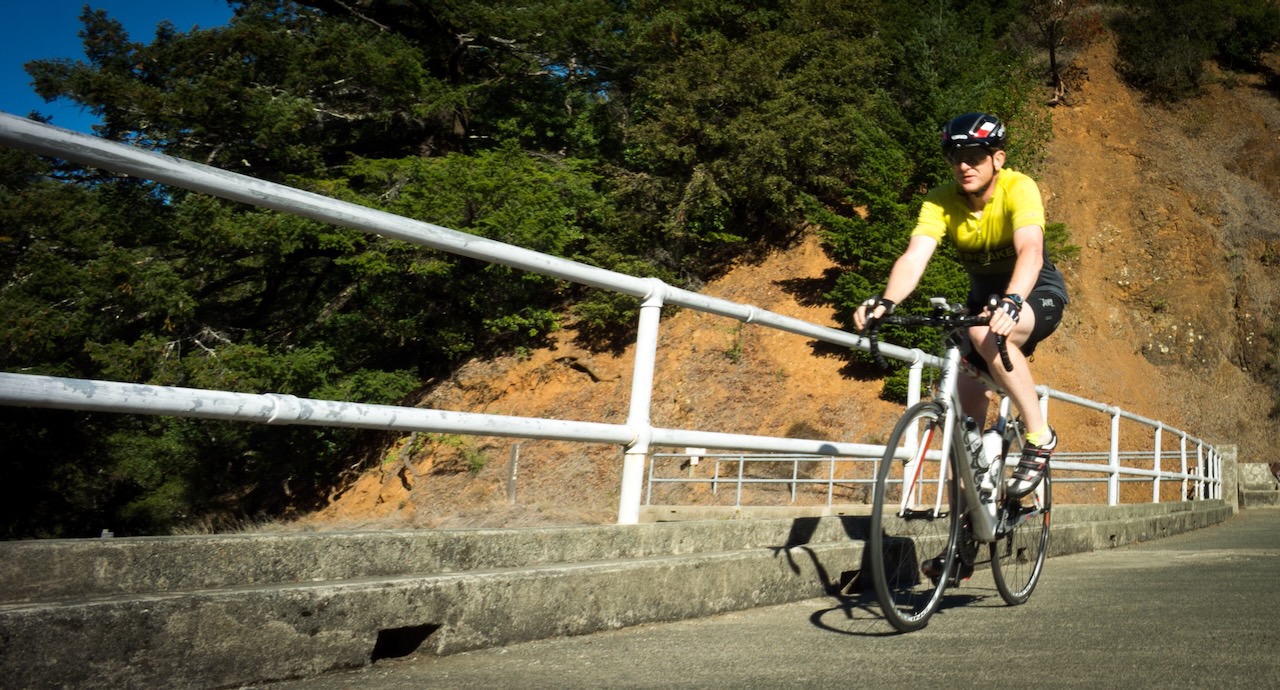
    Bicycling can be a life long activity that promotes health and providing a practical form of transportation. Bicycling is extremely energy efficient: 5x walking, and nearly 200x riding in a car by yourself. Check out Robert Förstemann vs toaster for a sense of how much power daily lives consume. I can often reach nearby destinations faster by bicycle than when driving when factoring in traffic, finding parking spot, and walking to my destination. I probably take a bit too much pleasure I as ride pass cars stuck in the morning commute on their way to the office. Just be cautious around cars, bicyclists get 18 miles per micromort while car passengers get 223 miles.

    Mid Peninsula Rides

    Most of my rides starting from my driveway, so naturally my focus is on rides in the mid peninsula. When I first moved to the bay area I tried most of the Stanford Cycling Club’s Local Routes. Twenty plus years later I am still riding many these routes. My default route is a variant of the “classic loop”, often with an addition of climbing Old La Honda Road (OLH), decent La Honda Road,  and maybe going out Canada Road to do some sprint internals.  I drop Canada road when time is tight since it’s not as pretty as the rest of the ride. I don’t think I will ever get tired of this route.

    Old La Honda is the classic hill benchmark.  8% grade, 3 miles, mostly shade, small number of cars. My experience is that recreational cyclists in good shape can do this in around 30 minutes if they push themselves. I ride with some people with sub 20 minute times… I don’t think I will ever be that fast. My best time is 25:28.

    There are a number of “classic” rides with good climbs and nice scenery. When I have extra time I like the route to Pescadero thanks to the refreshments: the Bakery’s wonderful artichoke bread, Duartes food and pies. I don’t drink coffee, but I have been told that the coffee shop there is one of the best in the greater bay area. I also love routes that incorporate climbs on King’s Road and Purissima Creek Road. I tend to avoid Page Mill Road. I find the traffic is a bit more than I like, and the curves on the decent are tighter than I enjoy, and it’s the last place I crashed due to gravel on the road. Other classic climbs include Mt Hamilton, Mt Tam, and Mt Diablo.

    Further Afield

    The Death Ride provides 15k of climbing over a 129 106 (new route shorter) mile course. The Tahoe Loop is a much gentler ride in the Sierras. This ride come close to living up to its tag line “The most beautiful bike ride”. The Mt Lemon climb just outside Tuscan, AZ is a 6936 ft climb over 30 miles. The Cookie Cabin at the top is a great reward. The decent is fabulous… you can pretty much do the whole thing without pedaling or applying brakes. The Going to the Sun Road in Glacier is briefly open to just walker and cyclists. The GDMBR looks amazing bike packing trip.

    Group Rides

    The Silicon Valley Bike Collation maintains a list of local bike clubs. Of particular note is Western Wheelers, one of the largest and best organized groups. Several of my female friends tell me that Velo Girls group rides helped gain confidence and enjoy developing their skills. Almost all the local bike shops organize rides. Finally, there are a number of good meetup.com groups. Note: most Bay area cyclists are spoiled, so if there is even a chance of rain, most groups cancel their rides.

    My Activities

    I did a lot of cycling in the 70’s & 80’s… AYH rides (typically class A, B when I was looking for a nice recovery ride) and a bit of racing. I did numerous century rides including the Columbus Fall Challenge and TOSRV. One year I did TOSRV as two double centuries, back to back. The dream was to hit each of the food stops twice each day but the hours the food stops were open made this impossible. In the 1990s I got too busy with life, the amount of touring dropped, my bike became primarily transportation and a source of exercise. In 2003 my daughter started to enjoy bike rides which got me riding for fun again. Around 2010 I started to ride more frequently as was striving to become more fit. The hardest ride I did was Deathride in 2015. I regularly ride up (and sometimes over) Skyline Drive. I am think about doing a bit of gravel.

    My Bicycles

    I used a Peugeot PX10 from 1975 until 2008. Over the years components failed and were replaced (Simplex to Campy Record detailers, Mafac to Dura-Ace brakes, a couple of wheel changes, several freewheels, a number of chains, etc). I eventually decided that finding parts for a 1970s French bike was too much of a pain. I was also looking forward to lower gearing than 23×45.

    In 2008 I picked up a used Trek Pilot 5.2 and gave the PX10 to a friend who loves keeping classic bikes running.

    In 2013 I had an accident and thought I needed a new bike (more on this later). Several people recommended getting fitted by by Wade at Spokesman Bicycles. He recommended trying a Cervelo R3 and Specialized Roubaix. The Roubaix was slightly more comfortable, but the R3 felt way more responsive and fun so I purchased it. I found R3 was comfortable enough for endurance rides like death ride, was great for climbing, and handled a lot like a racing bike without being too twitchy. Two years later my R3 was stolen. As I was doing my first test ride (a Giant Defy) I realized I really loved my R3 and decided not to test ride any other bike. I purchased exactly the same bike that was stolen.

    Back to my “broken” Trek Pilot. The folks at Palo Alto Bicycling said I could send the frame back to Trek, but this would cost several hundred dollars and Trek would likely decide they wouldn’t repair the frame. I would get a modest amount of credit toward a new Trek bike. The thing was, if I was going to replace this bike, I wasn’t that interested in Trek. After I had purchased my R3 I was trying to figure out what to do with the Pilot 5.2. It was unridable, but seemed too valuable to just junk. On a lark I took it to Chain Reaction Bikes. The owner noted that the carbon on the seat stays were thicker (and sounded different when tapped) than most of Trek’s other carbon bikes. He was pretty sure the frame was ok. I took a chance and sent the frame in. Trek said the frame was OK and repaired the bent derailleur hanger. I donated my repaired Trek to someone who needed a bicycle. In the future I will take a “damaged” frame to Calfee Design in Santa Cruz for a proper assessment.

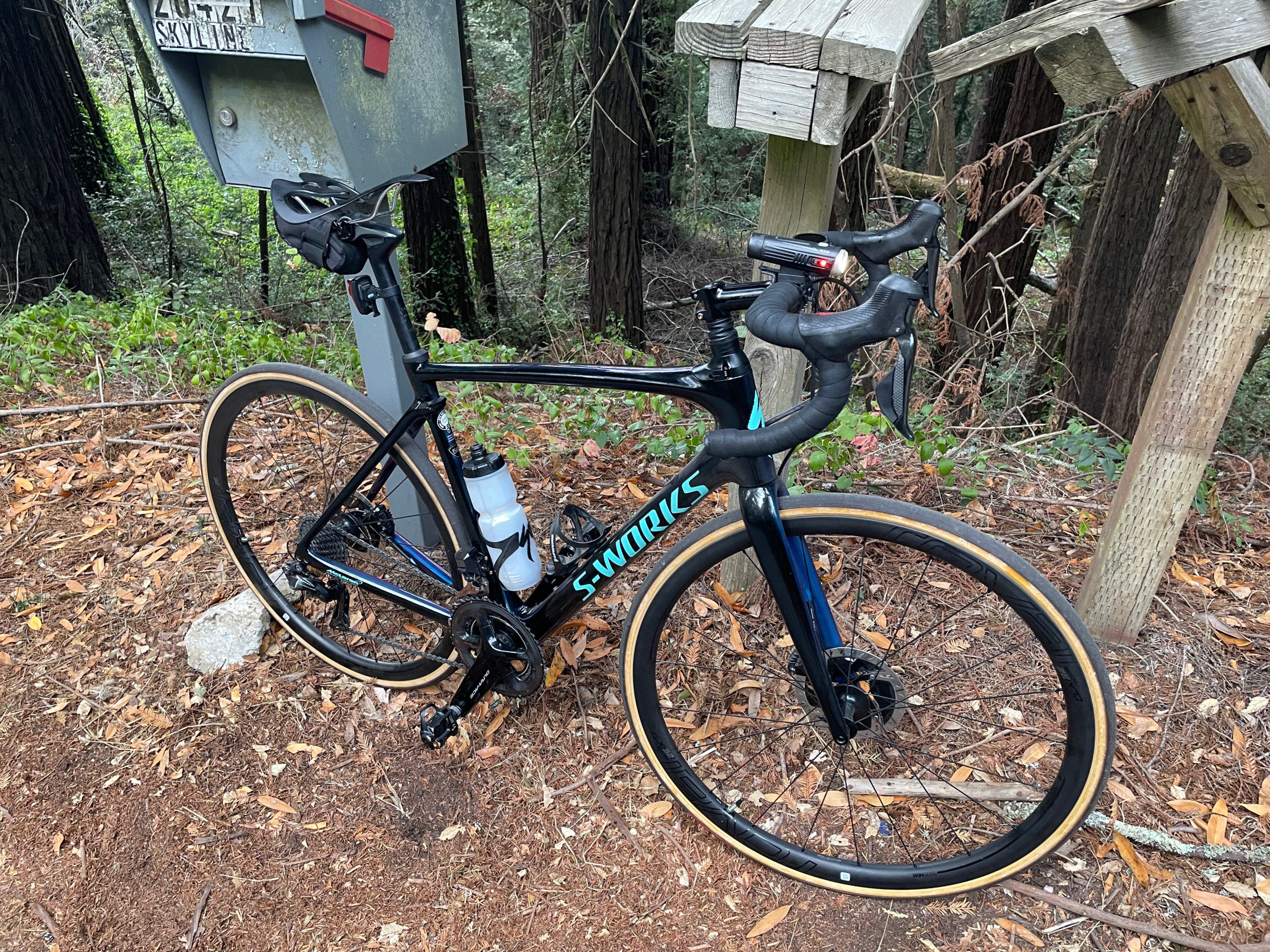
    In 2021 several components of my R3’s drivetrain had worn out and it looks like it was going to take months to source the parts thanks to supply chain issues from COVID. I decided to pick up a new bicycle to use immediately and to repair the R3 as parts became available so I would have a spare. I did test rides on the current Cervelo R-series, Cervelo Caledonia, and a Specialized S-works 2019 Roubaix. I would have liked to try one of the bicycles made by Moot and the 3T Strada ICR but they weren’t available. The Roubaix surprised me. The Roubaix design had been significantly updated making it much more responsive than the previous generation of Roubaix (just slightly less than the R-series) while providing an incredibly comfortable, smooth and controlled ride. My biggest surprise was that I found I likely the Roubaix handling more than the Caledonia. Both Cervelo models are more attractive to my eye, but the comfort + performance of the Roubaix won me over. I normally wouldn’t bother with S-works level build / components, but due to COVID supply issues there were limited choices, and this bike was heavily discounted because the store hadn’t be able to sell it for to years. While I normally won’t be willing to pay for Dura-Ace components, they are noticeably smoother than the mechanical Ultegra level components I normally select. When the battery on DI2 is low, the front derailer stops move before the rear. When the derailer thinks you have been in an accident is goes into crash mode and needs to be reset before you can use it.

    Bike “Fitting”

    Getting a good fit is important. There are a number of technologies which use video or sensors to get an optimal fit for comfort. good form, and power such as “Guru Fit“. There are also old school fitters whose experience allows the to almost instantly assist people to find a good fit. One friend’s experience which such a fitter:

    he watched me walk in had me figured out 80%. 1 minute on a bike and he had perfectly identified how to give me the best fit I have ever had.

    I have heard that that Revolutions in Fitness does a good bike fit, but no personal experience.

    Other Bicycling Gear

    Seats: For many years I used the seat that came from the manufacturer. This mean I used the terribly uncomfortable Brooks saddle for years. People talked about how you would break a Brooks in over time, but it seems to me that the saddle broke me into it. When I purchased the Trek I tried a number of saddles but failed to find one that was sufficiently more comfortable to justify the cost of replacing what came with the bike. I continued to use the saddle provided with the bike until 2013 when I saw a kickstarter project for the Infinity Seat. I purchased one and feel in love. The Infinity seat is the most comfortable seat I have ever used.

    Electronics: I used a Garmin 520 bike computer for awhile.. but these days I make do with using my Garmin 955. I have a pair of Power Tap P1 Pedals (2015) because I like objective measures. No longer made. The Garmin Vector pedals use standard Keto cleats, and are lighter. I use a Felix BC21R Bike Headlamp and Cygolite Hotshot Pro 150 (2019) The BC21R uses a removable 18650 rechargeable battery. I don’t love the Felix but it’s getting the job done and the swappable battery is very handy. If you are looking for good recommendations for cycling (actually Tri sports) head over to DC Rainmaker. Ray has amazing reviews and recommendations. I won’t go wrong if you listen to him.

    Clothing/Kit: For most of my cycling time I did not wear a bicycling kit. I wore a generic athletic shorts/pants and shirt, and used running shoes on peddles with toe clips. Around 2010 I decided that wearing more traditional bicycle kit would be a good idea. I found that padded shorts were a lot more comfortable that unpadded shorts and found that in many conditions an Icebreaker cycling jersey was better than a running shirt. Later I discovered that the minimalist padding in classic Tri-shorts were just as comfortable is the thicker cycling shorts when I was using an Infinity seat. As I was simplifying my clothing I found that a short sleeve polartec Delta exercise shirt worked really well for me in hot conditions. I have some arm sleeves to protect my arms from the sun. When it drops below 55F, I found adding a GoreWear Shakedry jacket keeps me comfort in rain or just protecting me from the wind.

    Bits of Cycling Fun

    Rule 6: Free your mind and your legs will follow…

    Your mind is your worst enemy. Do all your thinking before you start riding your bike. Once the pedals start to turn, wrap yourself in the sensations of the ride – the smell of the air, the sound of the tires, the feeling of flight as the bicycle rolls over the road

    Velominati’s The Rules


  • Backpacking

    The following posts can provide an overview for someone who is thinking and trying backcountry / “wild” backpacking for the first time. I plan to write up something about what changes on hut-2-hut, hostel-2-hostel treks, but haven’t gotten around to that yet. For the time being I have notes I wrote up about walking the Camino de Santiago.

    I generally take an ultralight approach to backpacking. There are people who carry less, and carry a lot more than me, but I think most of this information would be useful for any approach. Paul’s outdoor guidebook is more complete than the notes I have written up.

    I have some older web pages which need to be updated, but might have useful bits

    My personal 3 seasons packing list

  • Exercise and Modern Society

    In the last few years I have not been taking care of myself.  Libby was often needing to go to treatment or a doctor’s appointment several times each week.  Adding one more trip seemed too much, so I just never got around to scheduling appointments with my doctor, dentist, etc. I wasn’t eating as well as I should. My backpacking trips drop to almost zero because I wasn’t comfortable leaving Libby for more than a day.  The only exercise I got was riding my bike to/from work.

    I have known that I should be taking better care of myself. There is good evidence about how diet effects both the quality and quantity of life.  There has also been a lot of research into the effects of exercise. There is a fascinating screen cast about how 30 minutes of walking makes a big difference in people’s health. Click the link because it’s really interested, and for some people, I hope life changing. There is Growing Evidence of Links Between Exercise and Mental Acuity. There is also well documented evidence that exercise helps control both depression and anxiety. I have seen some of these effects in my own life. I find my mind sharper after I have exercised and I feel more ready to face the day. Several years ago I developed a habit of taking 1-2 days personal retreats when life seemed to be getting away from me. These retreats would be solo backpacking trips where I was walking 20+ miles each day. This is a fairly significant physical workout. Often times, solutions to problems I have been struggling with for weeks would jump into my mind as I was walking. Part of this was likely the solitude, but I think the physical activity played a part in this as well.

    After Libby went home to her Lord, Helen made it very clear that I was to take care of myself because she had no desire to be an orphan. Her concern broke my heart and gave me the motivate to get serious.  I did a personal assessment and I realized I was in pretty poor shape. I decided I needed to visit my doctors and dentist, start eating better, lose some weight, and I really needed to get more exercise. I wanted to believe that my daily life provided me with enough exercise, but clearly it had not been working out. I hate the idea of exercise for exercise sake, but I have the need for some serious catch-up.

    So, for the first time in my life, I joined a gym.  I met one of their trainers and got a basic assessment.  I was in even worse shape that I realized. I learned that my scale at home was under reporting my weight by eight pounds. It’s going to be some serious work to get to where I should be.  As I surveyed the instruments of torture contained within the gym’s walls I realized I didn’t have any idea how to use the machines, and certainly no idea how to design a workout to get back into shape. I decided to sign up for several sessions with a trainer so I wouldn’t break myself.  I suppose I could use some iPhone app like iMuscle or GAIN, or follow something simple like Vic Magary’s minimalist fitnesss guide, but having a human being who could watch what I was doing seemed like a good idea.
    I have been going to the gym six days a week since the end of November.  The trainer has kept me pushing to my limits but not going so far that I break myself. There have been days that I am not sure that I could turn the steering wheel to drive the car home from the gym, or when I got home I wasn’t sure I could lift a glass filled with water to my mouth, but I was able to do these things.  I hope and pray that in several months I will be in reasonable enough shape that the gym won’t need to take up as much time and energy as it is right now. I can see progress: my heart no longer continues to race for tens of minutes after I stop exercising and I have dropped more than a percent of body fat. I have also noticed that I am feeling better, and it seems like it’s easier to concentrate. Maybe there is something to the healthy body / mind connection.
    Enter curmudgeon model… seem to have been doing that a lot in these recent blogs:

    When I was a kid I wasn’t into team sports, but I was active.  Yes, there was a lot of reading, building electronics, and hang out with friends, but I also walked or rode my bike as transportation, using manual tools to build things, climbed trees, and regularly went backpacking/climbing.  I wasn’t a jock, but I was fit.  Somehow all of those muscles are gone.  I suppose it was life getting more busy.  Well, that, and I dose of simple laziness. I also think a major contributor is that more and more life seems to be spent interacting with electronic devices rather than the real world.

    This has gotten me thinking about exercise in modern society.  Many of my coworkers regularly go to the gym just as I am now.  We pay for the privilege to do hard work.  Often times, we are doing this in somewhat dark smelly places, even before the sun has come up. Some of us go beyond that and pay someone to push us further and harder than we think we can go. I find myself imagining in a conversation with one of the jews from Moses’ time.  I tell them what I am doing and they say:


    אז תנו לי לקבל את זה מצר, אתה בוחר להיות עבד לאדון עבד במשך מספר שעות ביום.
    אתה לא צריך לעשות את זה. אז אתה נותן כסף כדי לעשות לך את זה השתגעת

    alright, maybe not that (any Hebrew I knew when I was 13 is completely gone), this was google translate attempt of going english -> hebrew from the text

    So let me get this strait, you are choosing to be a slave to a slavemaster for several hours a day.  You don’t have to do this.  You are giving them money to do this to you?  Are you crazy?

    There was a time than nearly everyone engaged in hard physical labor in the course of their daily lives. They didn’t have power tools, electric kitchen appliances, cars, etc. The day was spent moving.   Muscles got built from daily activities. People looked forward to when the hard labor would end, and they could rest. Often people dreams of jobs that didn’t require them to have to engage in such back breaking work.  These days, many of us spend our whole day of “work” sitting.  Maybe we get up and walk around the office a bit to talk with people.  Some people don’t bother doing this, Skype, Jabber, or AIM remove the need to move.  While we are sitting around our physical bodies are getting weaker and weaker.  When work is done can we enjoy our leisure?  Nope.  We now need to get through traffic (sitting in our cars) to get to a gym, where we pay for the freedom to exercise in the comfort of a gym.  Something seems a bit off here.

    I find myself wondering how we can back to lives that are more integrated and don’t have us sitting around so much. There are things like the sit/stand desks, but that doesn’t see enough to me. I don’t have any great ideas. Maybe something will come to me, or maybe one of you have some ideas.  Care to share?

    As for me, I am going to the gym for awhile. I have a Costco $319/2years membership to 24hour fitness.  The money has been spent, so I should take advantage of it, or it just goes to waste. If I had done a month to month membership it would have been easy to rationalizing quitting the gym after a couple of months “to save money”.  I have also resolved never to let myself get back into such an awful state but also not to let exercise get out of control. I have see many people who try to build strength beyond what is needed or their bodies could handle. Rather than getting healthier, they are limping around with injuries from their excercise. A good cautionary tale was just in the NYT about how yoga can wreck your body. Well, it’s off to the gym now for my next round of torture.