The conference was broken up into sessions which covered several of the “pillars” the program has identified for a healthy life. No matter which pillar was being discussed, the presenters typically brought up other pillars as providing essential support. The most regularly cited pillars across all the talks:
Eat healthy whole food, not packaged junk
Move your body throughout the day
Get enough sleep
Toward the end of the day it was noted that 70-80% of chronic illnesses are related to lifestyle choices, emphasizing the power of daily decisions on health outcomes.
Movement & Exercise
It was not surprising that the health benefits of aerobic exercise and strength training were discussed. Of equal importance is to have movement a regular part of daily life. Walking is super helpful. General functional movement throughout the day is really good. Sitting around in a chair for hours at a time is not health promoting.
A number of the presenters including the 🔎 Starretts talked about creating a movement rich environment which emphasizes accessibility and ease of adoption. Several people talked about “exercise snacking”, short bouts of health promoting movement through the day which are fun.
Stability
What was striking to me was the emphasis on stability, balance, and range of motion. The ability to move on multiple axes at the same time. I was first introduced to the idea that stability should be one of the pillars of an exercise plan by Peter Attia, but had put off focusing on this. During the conference I was reminded of how devastating injuries from falls are for aging individuals. One person said that while we know we will lose strength as we age, so long as we have enough strength to move, stability doesn’t have to decrease. In fact, through practice we can improve our balance. Two tools to evaluate your stability:
This section had a great influence on me. I have already started to look for opportunities to improve my balance like brushing my teeth while standing on one leg, added jumping rope to my daily activities, and I am now looking for a trainer who specializes in DNS or Pilates.
Breathing
Several people talked about the importance of breathing. The way we breathe affects both our physical and mental states. Breath work can help us focus, prepare us for maximum effort endeavors, and calm us down.
Paying attention to our breathing can be a powerful diagnostic. It was noted that if you think about taking a one rep maximum breath, we will often shift from a bad posture / position to one that is much better. Likewise, when you find yourself holding your breath, or struggling to take a big breath, it is likely because we are struggling with a mobility, range of motion issue.
Strong feet
Feet are the basis of our stability and a key interface to the world. When our feet are weak and sensory deprived, we will lack a solid base. Sensory feedback and strong feet and ankles help us avoid injury producing falls.
It was observed that while shoes with large cushions exemplified by Hoka can help feet recover, you wouldn’t want to have your feet wrapped in an oven mitt all the time. It would be good to spend some time barefoot which is good for foot health.
Several people talked about how providing the body time to recover after exercise is essential. As people age they need more time to recover. Failure to provide adequate recovery not only retards improving performance but can lead to injuries. The best way to protect against overtraining is to use periodization which mixes hard work outs, rest, and more gentle workouts over a period of several weeks.
Diet
The Standard American Diet (SAD) is likely a significant contributor to many chronic diseases with its high calorie, low nutritional content. This is not just an issue for the omnivores, because there is a vegan version of SAD which over consumes processed foods, grains, and other starchy vegetables without getting adequate nutritional content found in healthier vegetables.
Plant Based Diets
Many of the presenters recommended a plant based diet including Valter Longo and Dean Ornish. There is a growing body of evidence that a healthy lifestyle and a plant based diet not only slows the progression of disease, but can actually reverse a wide range of issues including heart disease, metabolic diseases such as type 2 diabetes, cellular aging (telemeters lengthen?!), and partially reverse Alzheimer’s and other neurodegenerative diseases.
MediterraneanDiet
Everyone seems to agree that the Mediterranean Diet is proven to be healthily. The PREDIMED Study is the most cited study on this topic.
Ironically, no one knows exactly what a Mediterranean diet is. Rather each person imagines what it is. How could that be? The intervention in the PREDIMED study was that families were given nuts or olive oil. How did that change people’s diet and lifestyle? We don’t know. It was thought that it encouraged them to eat in a manner that followed traditional diet in the Mediterranean.
We know that people who live around the Mediterranean have historically been longer lived, and that they share a number of characteristics with other people in “Blue Zones”. What was the diet which enabled so many people to live as long as they have? We don’t know for certain, because their diet was not documented at the time, and people’s memories of eating habits are very unreliable.
Protein Needs
There were some lively discussions about the appropriate amount of dietary protein. Those with a focus on performance (especially who work with athletes) seemed to advocate for 1.2g protein / kg of body weight. Those focused on longevity suggested .5-.8g / kg body weight for people under 65. Everyone noted that people over 65 need more daily protein to slow the loss of muscle. My conclusions on this topic in my protein post.
It’s worth noting that just eating protein does not prevent sarcopenia (losing muscle) in aging populations. Building and maintaining muscle requires exercise (which causes the release of insulin) along with 25-30g of protein to stimulate muscle production.
Fasting and Ketogenic Diets
Valter Longo discussed the health benefits of fast mimicking diets which can be an effective treatment for a variety of metabolic diseases as well as significantly improving the effectiveness of other cancer treatments.
While none of the presentations discussed ketogenic diets, there were a number of hallway conversations which noted that there is evidence that this diet can improvement of a number of chronic conditions.
One of the nutritionists noted that she believes that a plant based (slow carb) diet is the best long term style of eating, but the best diet for someone trying to make short term changes will vary and is dependent on which diet (plant based or keto) a person can stay compliant with.
While not discussed in the conference, I have noticed that there is a vocal group of people who believe that the majority of diseases (physical and mental) have their roots in a maladapted metabolic system (e.g. unhealthy mitochondria) or diet which is causing inflammation.
Unsung Heros: Nutritionist
A number of the doctors at the conference sung the praises of nutritionists. They wanted us to know that nutritionists, not MDs, are the experts when it comes to diet. They spend four+ years focused on this topic, while doctors get a few lectures during med school.
Sleep
I personally didn’t find the panel on sleep particularly helpful. Much of the time was spent making the case that sleep matters which I already knew.
What I found most helpful was the observation that the worst thing you can do at night is to stress about sleep. If you wake up in the middle of the night, don’t get anxious. The worst thing you can do is lie and bed worrying about not sleeping. Find something calming to occupy your time until your are sleepy. Meditate, do some yogi, read or listen to a book. What you shouldn’t do is pick up your phone or do things which make you worry.
Wearables
Many of the presenters see value in trending data from wearables. For example, the overall direction of resting heart rate, heart rate variability, etc.
No one recommends using wearables to determine your daily activity. You should decide on your day’s activities based on how you feel, not on your “recovery” or “readiness” score from one of the wearables. When training, REP is typically more reliable than being in a particular “zone” provided by the wearable. Several people noted that they stopped using wearables because they got overly stressed by the data.
Most wearable “sleep scores” are terrible. It was noted that the best indication that you got good sleep is that you aren’t tired or sleepy before your normal bedtime.
Throughout the conversation people noted that warm and rich social connections are key (has as much positive impact on health/life-span and smoking a pack of cigarettes/ day of has a negative impact).
When I first hear the Japanese term shinrin-yoku, which is forest bathing in English, I pictured a outdoor onsen that was in the middle of a forest, or maybe a deep soaking tub which was part of an outdoor bathroom attached to a hide-away cabin in the woods.
I was wrong. I failed to read the definition or any articles about the practice. If I would have done this I would learn that forest bathing isn’t about taking a water bath when in the forest, rather it’s being bathed in the atmosphere of the forest. To be surrounded by trees and nature. The practice is lingering in nature while paying attention to your surroundings.
I now know that I have been practicing forest bathing for years. At least weekly, more frequently when I was feeling stressed, I would take a couple of hours, sometimes more, to get away from from hectic, technology driven life to walk among the trees.
On these walks I notices within a few minutes my whole posture relaxes. I find myself breathing a bit deeper, walking a bit slower. It seems like a weight has been taken off my shoulders. I strongly recommend the practice to everyone. There have been numerous studies about how getting outdoors is good for health.
Until recently I believed that I needed to get somewhere that felt like wilderness to experience the benefits of forest bathing. I thought that the minimum effective dose was a trail that was several miles long, with no city noise, and no building being visible. In the last few months Jackie and I have walked several places that didn’t have these characteristics, but seemed to have a similar effect.
I found that building that blended into the scenery didn’t interfere with the rejuvenating sense the forest bath. I also discovered than I didn’t need to have a long trail, or even feel completely away from the city. Hearing cars (so long as alarms aren’t blaring) was fine, so long as they weren’t in my line of sight. Examples of places that provided a wonderful experience included walking in Portland’s Japanese garden and around Fresh Pond (reservoir) in Cambridge, Massachusetts. I also discovered that the effect for me is accelerated when I am under a canopy of trees.
Do you find your soul and spirit rejuvenated when you walk among trees, in nature? Have you made it a regular practice?
The heavens declare the glory of God, and the sky above proclaims his handiwork. Day to day pours out speech, and night to night reveals knowledge. There is no speech, nor are there words, whose voice is not heard. Their voice goes out through all the earth, and their words to the end of the world.
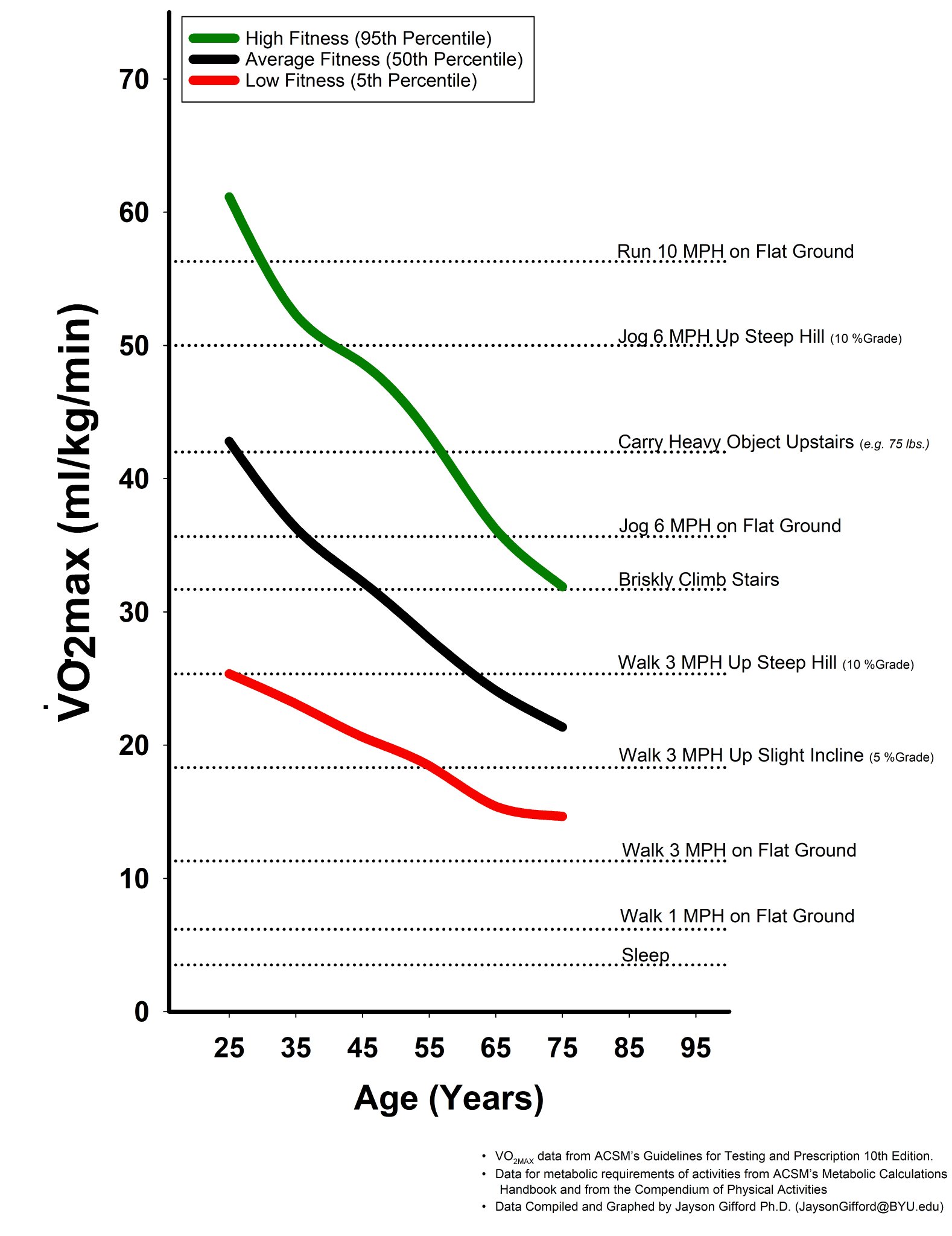
Athletes, especially those who engage in endurance activities are typically familiar with VO2max because it’s a useful predictor of their performance in races. As we age, VO2max is also a good predictor of what physical activities we will be able to engage in, so I think it’s useful for everyone to be aware of.
What is VO2max?
VO2max is a measurement of a person’s ability to take in and use oxygen. It is impacted by how effective their lungs are to transfer O2 from the air to blood, how effective the heart is to deliver the blood to muscles (volume per beat and maximum heart rate are the keys), and the muscles ability to utilize the oxygen. It’s worth noting that often VO2max is described as milliliters of oxygen per minute per kilogram of body weight so losing weight will often raise someone’s VO2max.
What is a “Normal” VO2max
I think it’s useful to know what “normal” is, and to see how it changes generally in people. I think we should select a target based on the activities we want to be able to engage in rather than settling for “average”.
Humans who have been training throughout their lives tend to have their VO2max peak when they are around 30 years old. After 30, VO2max has a tendency to drop. The individuals health and training determine how quickly VO2max drops. For people who have not trained before they were 30, it is possible to increase VO2max beyond what they achieved at 30. Once an individual is trained, their VO2max will drop over time.
10% / decade after someone is 30 is the common figure if an individual is not training
5% / decade is what is often cited for people maintaining training.
Recorded data from training individuals suggests that well trained individuals lose around 5% / tens years between ages 30-60, after 60 even with continued training people loss 8-10% / decade.
VO2max can spiral down more quickly toward the end of life because people aren’t active, their VO2max drops, which makes it harder for them to be active, and the cycle continues.
To have a sense of a VO2max required for other activities, you can consult the Compendium of Physical Activities (PDF) or their website which lists the approximate METs generated by activity. Multiple METs by 3.5 to get VO2max required.
How to Measure VO2max
The gold standard is performed in a sports performance laboratory by measuring oxygen consumption via Indirect Calorimetry. This involves wearing a mask which measure the O2 you breath in, and the CO2 that you exhale while running on a treadmill or riding a bicycle as quickly as you are able. This test typically costs >$200 and has to be done in a lab. In the Bay Area DexaFit has an office in San Carlos, Silicon Valley Sports Medicine in Campbell, and the UCSF Human Performance Center do VO2max tests. Calibre makes a mask that claims to be nearly as accurate as lab equipment.
There are a number of methods which are pretty accurate that don’t require the expensive laboratory equipment. A number of methods and the accuracy are described in the show notes from podcast #223 Peter Attia AMA #39 VO2 max and more. A few methods I would recommend considering
Garmin (FirstBeat) method of VO2max… e.g. let your watch estimate it for you. Apple Watch also estimates VO2max… I have no idea how it’s accuracy compares, though online posts in 2023 by people who did treadmill tests compared to the Apple Watch suggest it’s less accurate than Garmin.
While not as accurate as the proceeding three tests, the Rockport Walk Test is easy to perform, especially by people who haven’t been regularly training.
Warm up for around 10 minutes
Walk as quickly as you can on a flat surface or treadmill for 1 mile. Don’t jog!
Record the time it took and your heart rate at the end
enter these numbers into the Rockport Calculator and get an estimated VO2Max (+/- 10%).
How to Increase VO2Max
A meta analysis of training to increase VO2max found the biggest gains over multiple months were several intervals of 3-5 minutes with an active rest in-between. A recent study found HIIT training was the most effective way to increase VO2max in the cohort they trained. Closely related, a meta analysis found sprint intervals (SIT) to be the most effective method to increase mitochondrial density / function. The protocol discussion on Attia’s AMA suggested 4 cycles of 4 minutes exercise at VO2max followed by 4 minutes of active rest. If you are looking for a minimum effective dose, one study found that doing 2 20-second all out sprints a couple of times a week was an effective way to boast VO2Max.
For cyclists, using power is the easiest way to plan workouts. See an introduction to training with power by Dr. Andrew Coggan, one of the experts in this field.
I have been starting to look into how training your breathing could significantly improve VO2max and endurance. There are several devices such as the o2trainer might be useful as well as breathing training.
There is some evidence that suggests that rowing might be the best way exercise to maintain VO2max in the later years. I suspect this is because it provides a more complete (full body) workout when compared to a number of endurance activities while being low impact and having a very low incidences of accidents which might require someone to stop training for a period of time.
Setting a VO2max Goal
Peter Attia encourages most people to train for the centenarian olympics. In AMA 39 he discussed how VO2max is often something that limits what people are able to do as they age.
So lets say someone wants to be able to climb stairs and speed walk when they hit 100 which would require a VO2max of 32. Assuming they regularly train the following is what their VO2max needs to be in the proceeding decades.
Age
VO2max
Possible Activities
30
58
Run 10mph
40
55
50
52
60
50
jog 6mph up a hill
70
45
run 8mph on level ground, carry heavy objects up stairs
When I first started to learn about nutrition, I found a lot of conflicting information about protein. The USFDA recommendations were low. Advice to body builders was high. There seemed to be differing views about optimal timing, the minimum effective dose, maximum effective dose, etc. Yesterday I listed to podcast #224 ‒ Dietary protein: amount needed, ideal timing, quality, and more | Don Layman, Ph.D. – Peter Attia. The discussion between Attia and Don Layman crystalized everything I had read over the years, and a quick email with Don confirmed my understand.
TL;DR
Older adults who are actively training should consume 2 grams / 1 kg of LEAN body weight. People generally don’t know their lean body weight, so the most common recommendations assume 20% body fat in males resulting in a recommendation of 1.6 grams / 1 kg of body weight, which is .73 grams / 1 lb body weight. For women at 33% body fat, this would be 1.4 grams / 1 kg of body weight, which is .63 / 1 lb body weight.
Younger folks who are actively training, or older adults not actively training should consume 1.2g/kg, or .54g/lb lean body weight.
Younger folks who are not actively training should avoid eating a caloric surplus (duh) and keep protein to around .8g/kg to minimize cancer risk.
Minimum effective dose in adults is around 20-25 grams / meal. Less than that you are you feeding other systems, but not triggering muscle synthesis which you really want!!
Maximum effective dose for muscle synthesis is around 50 grams. Above that, it’s turned into fuel for organs or saved as fat. In rare cases, larger amounts of protein can be consumed at one time if it is slowly metabolized such as casein proteins.
In the first 3 months of new training, get protein within 2 hours. Otherwise timing doesn’t matter
Make sure your first, and last meals have adequate protein. Ideally approach the maximum dose in your first meal.
Background
Protein is needed by the body. The body needs around 300 grams of “new” protein / day. Most of this comes by way of recycling within the body. As we age, the recycling becomes less effective requiring us to consume more protein.
There are a wide variety of proteins which our body produces from over 20 different amino acids. There are nine essential amino acids that our body can’t produce. We need to consume them. The protein we eat gets broken down and then used.
It is useful to think about dietary protein as a vitamin containing essential amino acids. The % of macro-nutrients in our diet from protein isn’t so important. What’s critical is that we are consuming enough (e.g. it’s an absolute number).
For adults (>25) it’s critical to consume enough essential amino acids, which we typically get through the consumption of protein, to drive muscle synthesis. Protein (for this purpose) is not so important in younger folks whose muscle synthetic is driven by hormones.
The absorption rate of protein affects the optimal amount of protein consumed at one time. See article about protein anabolic responses.
To maintain and regain muscle, older people need more dietary protein than do younger people; older people should consume an average daily intake in the range of 1.0 to 1.2 g/kg
The per-meal anabolic threshold of dietary protein/amino acid intake is higher in older individuals (ie, 25 to 30 g protein per meal, containing about 2.5 to 2.8 g leucine) in comparison with young adults.
Protein needs vary based on individual goals, such as building muscle, maintaining it, or improving body composition. Calculating protein intake based on lean body mass or an adjusted ideal body weight is preferred to avoid unrealistic targets for individuals with higher body fat percentages. While the Recommended Dietary Allowance (RDA) for protein is 0.8 grams per kilogram of body weight per day, this amount is widely considered inadequate for optimal health. The RDA is based on nitrogen balance studies, which have significant limitations.
I asked chat-gpt (4o model) optimal protein for building and maintaining muscle. Here was it’s response:
Protein Needs Based on Lean Body Mass (LBM)
Category
Protein Intake (g per kg LBM)
Protein Intake (g per lb LBM)
Under 25, Actively Training (Strength & Resistance)
2.0 – 2.7 g/kg
0.9 – 1.2 g/lb
Over 60, Actively Strength Training
2.2 – 3.0 g/kg
1.0 – 1.4 g/lb
Age 30, Active but Not Strength Training
1.5 – 2.0 g/kg
0.7 – 0.9 g/lb
Age 65, Active but Not Strength Training
1.8 – 2.3 g/kg
0.8 – 1.0 g/lb
Other Considerations
Strength trainees (young and old) need more due to high muscle turnover and the need to maximize muscle protein synthesis.
Older adults (especially over 60) require more protein per unit of LBM due to anabolic resistance.
Non-strength training active individuals need less protein than resistance trainers but still require adequate amounts for recovery and lean mass preservation.
Protein Distribution: Spread intake across 3-5 meals per day, ideally 20-40g per meal, to maximize muscle protein synthesis.
Leucine Content: Include high-leucine sources (e.g., whey protein, eggs, lean meats) to enhance muscle-building signals.
Strength Training Matters: Resistance training significantly enhances the muscle-preserving effects of protein, especially in older adults.
I am a fan of Dr. Peter Attia who is a physician focused on the science of longevity. He strives to help his patients simultaneously improving lifespan (delay the onset of chronic disease) and healthspan (quality of life). In 2023 he released the book Outlive where he systematically explains his approach to healthcare which is focused on prevention (sneak peak… exercise is the most powerful tool) and personalization. He has a podcast call The Drive where he interviews people whose work can inform anyone interested in long term health and fitness.
Attia is science oriented and he is willing to re-think his positions when data contradicts his beliefs. He isn’t overly certain, saying he has “strong opinions which are loosely held.” He has written a nice series on studying studies which discusses how to read and evaluation the quality of published research which often has flaws.
I have been inspired by his idea of training for the centenarian decathlon (additional details in AMA 39 and Drive #261, videos of some of the exercises). Identify what you want to be able to do when you are in your 90s such as lifting a child to decorate a tree. Backcast what fitness needs to be achieved earlier in life in view of the typical loss of strength due to aging and drop of VO2max. Your training program should strive to improve your fitness so that your fitness level bisect the backcast projection. Once you are at the level (and maybe a bit more as a buffer), it’s ok to ride the enviable decline. Make sure you don’t injure yourself while training.
Some of my fondness likely comes from confirmation bias. Attia’s material is very close to many of the conclusions I reached when I was trying to understand what leads to a healthy life. I captured my conclusions in Health and Fitness in One Post.
Metabolic Disease (a spectrum of everything from hyperinsulinemia to insulin resistance to fatty liver disease to type 2 diabetes). These are arguably the most preventable diseases through diet and exercise. Metabolic disease also contributes to atherosclerotic and possibility neurodegenerative diseases and some forms of cancer.
Atherosclerotic Disease (comprised of cardiovascular disease and cerebrovascular disease). I haven’t personally studied this group of diseases. It’s the next thing I want to study. Number one on all cause mortality.
Cancer: until there are major breakthroughs early detection is key. Survival once the cancer has metastasized is poor and hasn’t significant improved in 70 years, though there are some promising approaches that might finally result in breakthrough treatments
Neurodegenerative Disease (Alzheimer’s disease being the most common). As far as I can tell, there are no effective treatments. While there are some theories and ideas of how to prevent, there are not strong causal links.
Attia has a framework of exercise includes four areas which provide unique benefits:
Stability: Balance, efficient movement. This is particularly important as people age because it reduces the likelihood of injuries due to falling. Some forms of yoga, Pilates, and Dynamic Neuromuscular Stabilization (DNS) are examples. Having good stability is key to training without injuring yourself.
Strength: Developing muscle strength. The more strength you have the easier it is for you to engage in heavy work. It is easier to build strength when we are young, and we have a tendency to lose strength as we age. BUT there are a numbers of studies that show people who are in their 60s (and older) can gain strength with training.
Aerobic Efficiency which focuses on metabolic “base” (zone 2): improving mitochondrial function which is key to your ability to burn fat, reduce the risk of diabetes, and be able to sustain endurance. Cycling, running. and rowing are some of the best options for zone 2 workouts.
Anaerobic peak: High Intensity (zone 5): Builds your metabolic systems ability to handle peak exertion and grows VO2max. Often part of an high intensity interval (HIIT) protocol.
Nutritional Biochemistry
The area of diet and fasting is one of the areas that Attia demonstrates his strong opinions held loosely. His position has shifted since I started to follow him. First, the things which have been consistent
Except for people who are food insecure, one of the biggest health threats is eating too many calories. Excess calories is a huge driver of metabolic diseases, and contributes to the other horseman
Sugar is a lot like a poison to our metabolic system. Minimize it.
Get enough protein to maintain and build muscles. The amount of protein we need goes up as we age
When I first starting to reading material by Attia he had a strong beliefs which including the following (which he has backed away from)
Adopting good nutritional practices (the right diet) can significantly improve overall health / longevity
Fasting is a useful technique for almost everyone to optimize health
While not advocating it for everyone, Peter lived a strict keto diet for several years and wrote about the benefits.
With the publishing of Outlive his position is slightly different
Bad nutrition can really hurt health, good nutrition doesn’t significantly improve health
Extended fasts are useful when people have severe metabolic issues, but the typical lost of muscle is not worth the benefits for most people.
Intermittent fasting can be useful if it helps someone avoid eating too much food, but has little or no additional value over eating the same number of calories spread out over a longer period of time.
Effective contact tracing combined with quarantining individuals at risk is highly effective with the least impact to most people’s lives.
COVID vaccines are highly effective. If you over 30 you should get one. For healthy people under 30, COVID has had very low mortality rate which has lead some people to recommend skipping it. Most medical professionals recommend getting a vaccine for the under 30, and I think it’s wise because it significantly lowers the likelihood of long COVID which can be devastating.
Masking slows the spread of COVID, but there are social costs to masking. Mask, or don’t mask to achieve desired impact, not as a way to signal political identity (for or against).
There are bad actors who are spreading misinformation, unless there is a peer reviewed paper from experts, don’t believe it.
Just because people are sharing misinformation doesn’t mean those people are bad actors. They could have been taken in. Take the time to understand and assume good intent.
The best COVID response I have see is in Taiwan, an island nation of 21 million people (about the same as the state of Florida). Early in the pandemic Taiwan required people entering the country quarantine for 14 days and then everyone was free to continue on with life. Any break out cases were contact traced with people possibly impacted quarantined. When the number of infections started to climb Taiwan instituted a 2-week lock down and mask wearing. Other than those 2-weeks people have been completely free to move around, large public gatherings have continued, masks not required. There was excellent government support. Taiwan has a national health care system which is accessible to all. Financial support was provided to people who were quarantined. Quarantines were “enforced” with Geo-Fencing of people’s phones and large fine if people violated their 14 day quarantine. The results? Taiwan had 2 deaths and 40 infections in the same period that Florida had 150 deaths and 12,000 infections even though the vaccination rate is similar.
I have growing increasingly frustrated by the politicalization in the USA when it comes to COVID. Vaccines and masking have become tools to signal political identity rather than tools whose use is driven by good science. Worse yet, it seems like conversations about this topic is dripping with contempt. Can we move this back to a discussion of public health like when we were battling polio?
There is strong evidence of the following:
Vaccines are an effective means of limit the spread and lessen the impact of infections. Before vaccines, many children did not live into their teen years. The history of vaccines in western culture dates back to 1700s (Asia the 1500s?). Famous successes include the elimination of smallpox (Catherine the Great an early advocate); diphtheria, cholera and typhoid control; and the near elimination of polio.
The COVID vaccine is a vaccine developed by scientists, just as the previous vaccines that most of us have trusted in the past. People are not being injected with poison or micro chips. The development process was accelerated and the testing was streamlined compared to the past, but at this point we have far more data about safety and efficacy in the field after a year than that traditional testing would have produced. In other words, the COVID vaccine is as safe and as effective as other vaccines. BTW: A Brief History of mRNA vaccines is fascinating. Katalin Karik is a real hero in the story!
In very rare cases vaccines cause severe reactions which can impact people’s health. First of all, there are allergic reactions which can lead to shock. This is why you are asked to sit for 20 minutes after your shot. If you have a reaction like that a shot of adrenalin will stop the reaction and with a dose of Benadryl no damage is done. Other reactions are myocarditis (inflammation of the heart muscle) and pericarditis (inflammation of the lining outside the heart) which is usually mild and goes away on its own. Finally, there are blood clots, a condition called thrombosis with thrombocytopenia syndrome which happens to women younger than 50 on the J&J vaccine. (Just avoid this vaccine!) Since 100’s of million people have had the vaccines, these serious side effects are very rare. Statistically, the “average” person will have better health outcomes by taking a vaccine, but these with the serious side effects still have a benefit from the vaccines. If they do not have the vaccine, Covid19 tends to cause these same serious effects in these people and can lead to hospitalization.
All of “evidence” that vaccines are responsible for diseases like autism has been discredited. The sample size of the original study was 8 with no controls or determination when the autism symptoms started! There is a big difference between causation and coincidence. There was a good paper that evaluates the original study link between vaccines and autism. There is the attempt explain the increase in autism over the past decades by blaming factors like vaccines, but in fact autism is a genetic disorder which seems to be caused by the increasing age of fathers like down syndrone is related to the age of mothers.
Physical distancing and wearing masks slow the transmission of viruses in general, and COVID in particular. Masks preventing the spread of respiratory infections have been common doctrine for more than 100 years. Masks have been demonstrated to be effective with COVID in a randomly assigned trial. [Full paper]. Paper about mask impacting upper bound on one-to-one exposure to infectious human respiratory particles. N95 are the best, surgical masks are more effective than double layer cloth masks. Single layer cloth masks are more a fashion statement than an effective tool. A common issue with most masks is that they don’t seal very well. Aaron Collins, aka mask nerd, a mechanical engineer who specializes in nano materials has produced a number of documents and videos reviewing and ranking masks. Projectn95 is a clearing house for informational about PPE and COVID tests.
Against this are some observations that I don’t have randomized controlled experiments but I believe to be true:
Wearing mask is causing significant stress for all people, but especially children because it makes it much harder to connect with others.
In several Asian country wearing masks in public has been somewhat common in public since SARS and has not disrupted society and connections. That said, when with family, eating in restaurants, attending classes, etc masks come off.
Lockdowns and other restrictions disproportionally impact the most vulnerable people because they have not been able to work remotely, often lost jobs, and when working are at elevated risk due to their regular contact with others.
Schools being closed has been very hard on the children, and extremely difficult for parents, especially single parents, and have been extremely difficult for teachers to teach. Germany has been able to keep their schools open by using better ventilation and masks, unlike many US school districts.
There is growing evidence that unmasked children in school tend not to be a large vector of COVID being spread. Closing schools or place extreme distancing protocols seems to harm the children far more than it has stopped the spread of COVID.
The scientists I know believe the evidence we have today favors a natural process bring COVID to humans. There are several scientists who have questions this conclusion. Several of the papers by these scientists have been built on faulty data or assumption. Most have not been written by people who specialize in this field. Likewise, they have not gone through the peer review process, rather have been released as positional papers, editorials, or letters to the editor. Examples of some questionable reasoning:
We should have found it animals. It took 15 years after SARS to find these links. There are some close relatives of Covid19 have been already been found in nature.
the Wuhan lab has very poor protocols and controls. The lab in question was built by the French at BioHazard Level 4, is reported by visiting researchers to use excellent safety protocols. The director is well regarded by all of the leaders in the field. Counter-point is that there are entrenched interests which are inclined to cover-up mistakes and we should continue to be open minded about the origin.
Mis-Information
Covid has killed more people who have received the vaccine than who haven’t received the vaccine is simply not true. Since less than 50% of the world’s population has been vaccinated this is preposterous at a world level, since the vaccines are widely known to reduce the death rate from COVID. In Israel where 85% of the population (9.3 million) has been vaccinated, there are more vaccinated people than unvaccinated. But of course more people unvaccinated are dying than vaccinated even in absolute numbers. On October 1, 2021 the number of serious Covid cases in Israel was 644, with 472 unvaccinated, 123 with two shots and 49 boosted. In the week previous to October 1, 129 people died of Covid, 65% unvaccinated (84), 26% one or two shots (34) and 8% with booster (1). So even in Israel with 85% vaccinated, more unvaccinated die than vaccinated. This shows that the hypothesis that more vaccinated people die of Covid than unvaccinated is wrong, even in a population where 85% of the people are vaccinated. (Israeli data is more reliable than US data because they have universal healthcare and good record keeping.)
Questionable Position
Great Barrington Declaration signed by folks who are bucking against the common narrative of the larger medical community. I find myself sympathetic to their position, but have some concerns about their reasoning. First, we have evidence of re-infection which suggest herd immunity will never be achieved.
Some of the countries which did early masking / lockdowns has worse outcomes than countries that were looser. Of course there are many factors which impacted both infection rates and mortality rates. Any way to understand which factors have what prepositional impact?
At the end of 2020 models suggested risk of death from COVID vs flu was lower under 14, higher above 14, growing significantly the higher the age. How has another year of data plus better treatment changed these numbers?
To Deepen understanding of science method (and frequent failures) in the medical space
Eyeglasses in USA typically expensive due to monopoly. There are mail-order options for around $30 unless you have a complex prescription
I find Titanium frames, especially make by Flexon extremely durable
I am so grateful that I live in an era that can correct many issues related to poor vision!! It’s easy to take glasses for granted, but for thousands of years, people born with poor eyesight had to find ways to muddle through life, never seeing things clearly.
I have worn eyeglasses since I was three years old. I am told the first night I had my glasses I was amazed to discover stars in the night sky. I still love to gaze at stars. In high school I was struggling in several classes until we realized that my prescription needed to be updated. Once I had new glasses, and could see the board more clearly and my grades improved. More recently I started to have increased number of migraines and was having trouble driving at night. I discovered that my glasses had become progressively more clouded. I now have new lens and these issues have improved.
In several countries, it’s possible to purchase eyeglasses for less than US$10, but if you go to a typical optometry clinic in the USA you will likely be quote several hundred dollars for something basic, and more than a thousand if you do high quality frames and want high quality lens which are complex (e.g. progressives). VSP insurance can drop this cost significant, but is still quite expensive.
The reason for these high prices? The company Luxottica has a virtual monopoly on eyeglass frames with more than 80% of the world wide market sold under a wide range of brand names.
There are several companies in the US that have tried to make glasses more affordable. The price leader is Zenni Optical whose cheapest frames are US$6 and a full package with basic lens can be less than US$30. A company that has gotten a lot of press is Warby Parker that focuses on stylish / hip glasses at a reasonable price with a good try at home program and return policy. Originally an Internet only company, they now have showrooms in multiple locations.
I still typically use a local optometry clinic. Alpine Optical fit my wife well when other opticians failed. Mountain View Optometry has good customer service and carries frames made by Flexon which are not available through low cost outlets. Flexon makes the only frames that I haven’t broken in a year of wearing. My previous pair of frames were worn daily for 9 years. This year they were retired to be my backups, and I have a new pair of Flexon frames which my wife tells me are much better looking.
There are a number of companies that made frames for specialized activities and sports which provide more protection. For people with moderate prescriptions, there are lots of choices. I have heard good things about Roave. Unfortunately I have a very strong prescription. For prescriptions that are stronger than -6, check out Sports Optical. They were able to make a strong prescription with progressive lens that dropped into Rudy Project Ketyum frames.
Every few years I try Photo-gray and Transitions lens which automatically darken in sunlight. I was disappointed with their performance until I tried Transitions XtrActive Polarized which goes from almost clear and unpolarized to 90% light blocking that is polarized. The only downside is that when in a car they don’t transition much due to UV blockage in the windshield.
I hope that in the future there will be even more effective ways to help vision. There is some promising work with partial cellular reprogramming was able to reverse cellular aging and address age- and injury-induced blindness in mice.
Every Saturday Jackie and I take at least a couple hours to walk in one of the parks in our area or we might be further afield at some state or national park. Within a few minutes of beginning our walk I can feel myself relaxing. I periodically go on solo backpacking trips, my version of a personal retreat. Not only do I come home refreshed, but often I will have insight into how to resolve what had been an intractable problem.
My first choice for a vacation is to spend time in the outdoors which has included around 90% of US national parks. My outdoor activities are primarily:
running: 9-45 miles/week depending on season and training program
walking, hiking, backpacking: 12-17k steps daily walking, at least one >6 miles walk with Jackie, large range on special activities
bicycling: 0-150 miles/week depending on how much running and hiking I am doing
When I was younger, I spent quite a bit of time canoeing, climbing, fly fishing, kayaking, sailing, and a variety of winter activities such as skiing. I have dabbled with geocaching. I am no longer regularly engaging in these activities.
Keep close to Nature’s heart, yourself; and break clear away, once in a while, and climb a mountain or spend a week in the woods. Wash your spirit clean from the earth-stains of this sordid, gold-seeking crowd in God’s pure air. It will help you in your efforts to bring to these people something better than gold.
Over the last several years I have tried to answer the question “What is a Healthy Lifestyle?”. The following is a summary of what I have learned (with some minor updates in 2024). My conclusions seem to overlap a fair bit with what is advocated by Stanford Lifestyle Medicine, Dr Peter Attia and the insights from Blue Zones. Caveat: blue zones might be due to errors in records rather than actual longevity… a good article from Attia about What We Can Learn From the Blue Zones.
I believe the current medical model (what Attia refers to as Medicine 2.0) is broken with it’s focused on managing symptoms rather than addressing root causes and putting too little emphasis on prevention. I have come to believe that the majority of chronic conditions people struggle with including a number of mental issues are caused by either unhealthy mitochondria, unhealthy gut microbiome, and/or chronic inflammation. Proper sleep, diet, and exercise is the best “medicine” for these issue. Two doctors who have been been quite outspoken on this topic are Chris Palmer and Casey Means.
TL;DR
Develop strong social connections
Sleep: get at least 6 hours, or maybe 7.5 hours since that is what experts say.
Eat natural / whole / “real” foods: Avoid big surpluses of energy and minimize sugar
Move! Be Active – Walk at least 7k steps. Don’t sit for hours in a row.
Exercise: Low and high intensity which includes resistance training, stability, and range of motion
Be Mindful: Live in the moment, manage stress, cultivate a attitude of gratitude
Push beyond your comfort zones, including periodically engage in fasting or fast mimicing diet
By applying these principles I am in better condition in my 60s than I was for most of my adult life. I dropped 50 lbs in a couple of years while increasing my muscle mass. My body fat dropping from >32% (obese) to 15% (fit) measured by DEXA… though in the last few years gone up a bit. Working on that now :). I went from not being able to run 1 miles without pausing to completing the big sur marathon, did all five passes on the deathride, and completed backpacking trips covering more than 90 miles in 2 days with >25k ft elevation change. I was unable to do a pull up and now can do a number of pull ups with a 25lb backpack and can squat twice my bodyweight.
Left (30 years old) / Right (57 years old)
I can’t stress enough that you are never too old to “train”. There are numerous studies about how people who are in their 60, 70, and 80s were able to significantly improve their physical condition and quality of life by adding some well designed exercises.
Have Strong Social Connections
The Harvard / MassGeneral Adult Development Study started in 1939 has studying the the lives of two cohorts and now their children found that the strongest predictors of a healthy (and happy) life was an individual’s quality of social relationships. Researcher Susan Pinker found that the secret to living longer may be your social life due to the correlation between social connections and people who are 100+ years old / live in the “Blue Zones”. Strong social connections have as much impact on all cause mortality as smoking!
For me social connections come from four sources: family, church community, work, and long term friends… many of whom I met in school. A key to keeping connections is taking initiative! Inviting people over for dinner or for a hike. Calling people up on the phone just to connect. Don’t wait for someone to contact you. Find ways to serve your community which involves person to person interactions.
Eat Healthy Foods
Michael Pollan, who wrote a number of excellent books on food distilled his nutritional insights into three simple rules: “Eat food. Not too much. Mostly plants.” By “food” Pollan means real food—vegetables, fruits, nuts, whole grains, and meat and fish—rather than what he calls “edible food-like substances” found in the processed-food aisles of the grocery store. Lifehacker’s the only three things everybody agrees on aligns with Pollan, highlight two specifics to avoid and doubles down on more vegtables. What’s the optimal mix of meta-nutrients? Whatever works for you. A combined Stanford and NIH study found that when it come to weight lose, that neither low fat or low carb was superior. My read of all Cochrane’s findings about diets and time restricted feeding (intermittent fasting) is that none are significantly better than another in terms of health outcomes. What’s important is not to eat too much. The biggest issue for most people is compliance. Use whatever approach works for you and realize it likely won’t work for others. My rules:
Eat as many non-starchy vegetables as you can, especially those that have deep colors. The caloric density of these vegetables is small enough that you will not eat too much. The vegetables are packed with health promoting micro nutrients and nutritional building blocks. This will also get your fiber consumption up to an healthy level. Fiber is critical to your micro-biome health. These days I strive for 50% (by weight) of my food to be these sort of vegetables.
Avoid highly processed food including white flour based bread & pasta, processed meat, food filled with ingredients you can’t pronounce. Eliminate all “foods” which are high in trans-fats. There is significant evidence that trans-fats have a negative impacts to health.
Minimize the sugar in your diet, and eliminate any products that have added sugar. There has been significant evidence since the 1960s that sugar is directly linked to a number of health issues including heart disease. There is a very strong connection between fructose and metabolic disease. Fruit with the skin is ok in moderation because it has many good micro nutrients. I believe berries and pomegranates are some of the healthiest fruits. Avoid fruit juices.
Minimize the calories you drink. In particular alcohol, sodas, and fruit juices which pack a lot of calories and spike blood glucose levels.
Eat enough protein to maintain your muscles. A good rule of thumb for adults is .7 grams/1lb of your lean body weight will allow you to maintain your muscles as you age. For more info, see my Protein post.
If you eat meat, focus on cold water fish and pasture raised / grass fed animals
If the vegetables and protein don’t give you enough calories: focus on whole foods which contain resistant starch, beans, lentils, and/or nuts. Be aware that nuts are very calorie dense. Learn what food will make you feel more satiatied.
Make sure you get at least 3g of omega-3, keep omega-3 to omega-6 ratio between 1:1 and 1:2, and 10g of essential fatty acids each day.
Eliminate alcohol, or if you do want to occasionally drink, do it in the company of others. All evidence is that alcohol is toxic to the body. An occasional glass of wine which enhances an evening with friend and/or loved ones is a reasonable tradeoff.
Consider taking a few supplements to insure your are getting all the mineral and vitamins you need. Our food and water has less of these important building blocks than they used to.
A great resource for thinking about healthy eating is Reframe Health Lab’s Healthy Eating page which contains links to a short screencast and several resources available on the Internet. It’s worth noting shifting to a mostly plant based diet (eat your vegetables!) is not only good for your health, but for the planet as well because of the inefficiencies of animals converting feed into tissue we eat. For example, cows require at least 8x the amount of feed as we get by consuming them.
I have tried a variety of diets: south beach, the zone, ketogenic, basic 30, vegan, with and without intermittent fasting. Most diets I was on for at least 3 months, some for more than 6 months. I didn’t find any diet significantly better regarding weight management or optimizing bio-markers after 3 months. I did find a ketogenic diet was slightly more effective at reducing visceral fat. This is evidence that a vegetarian (or pescetarian) which is primarily unprocessed vegetables can reverse heart disease, diabetes, cellular aging, and might be protective of Alzheimers. Keto diet can been effective at managing epilepsy and diabetes.
My “diet” when I am trying to lose weight is never to run a deficit which is more than 21-31cal/1lb of body fat which is what a typical person’s metabolism can extract in a normal day according to one analysis, maybe as high is 31cals. I strive to get enough protein for building muscles which is around 113 grams / day and at least half my food by weight are vegetables. Normally this means calories are fairly evenly split between carbs, fats, and protein.
While I believe nutrition and food quality is important. I am skeptical of the value of supplements. Repeatedly I have seen attempts to “distill” important elements from food fail to deliver on their promises. A recent study found Vitamin, Mineral, and Multivitamin Supplementation failed to show significant impact Preventing Cardiovascular Disease and Cancer. That said, a number of nutritionists I talk with tell me that a multi-vitamin is likely useful. No matter how expensive the vitamins you are taking cost, almost all the core ingredients are coming from a few factories in India and China. I have been told Centrum is reasonably priced with decent quality control. The supplements I take are fish oil for omega-3, 5g of creatine monohydrate, a multi-vitamin, and an some sort of electrolyte drink like LMNT which prevents leg cramps I used to get at night.
Sleep >6 Hours
There is ever increasing evidence that sleep is absolutely critical to a mentally and physically healthy life. Sleep scientists believe healthy adults need between 7-9 hours of quality sleep each night and children require even more sleep. Kevin Kelly wisely said “If you can’t tell what you desperately need it’s probably sleep.” While we don’t yet fully understand all of the ways sleep impacts our health, there are a number of important processes that are primarily activate while you sleep, particularly during the deep, delta wave stage such as:
Release of human growth hormone which is critical to fighting the effects of aging and repairing damage
The glymphatic system clears toxins and “trash” from the brain which might contribute to Alzheimer’s and other neurological disorders.
I experienced the importance of sleep first hand when after a nine month period of sleeping <4 hours/night my body rebelled. For a week I was so exhausted I couldn’t get out of bed for more than an hour. After I partially recovered my boss recommended The Promise of Sleepwritten by a pioneer in sleep researcher. I learned my lesson, but the damage was done. It took me more than 10 years to be back to “normal”. BTW: Matt Walker seems to have picked up the mantle of the leading sleep advocate.
I am now very careful to get enough sleep. When I cut my sleep short I am very aware of it the following day. The days following a night that I didn’t get enough sleep my resting heart rate rises by around 10 bpm one my heart rate variability falls around 10 points for several days and I have a tendency to gain weight. There are numerous things which help me sleep well:
Go to bed at a consistent time
Get up at a consistent time which provides enough rest. I am not shocked awake by an alarm, I naturally wake up.
Use a chilipad (eight sleep is a more advanced product) keeps me at the right temperature for good sleep. People need to lower their body temperature 2-3 degrees F to fall asleep.
Use a mask over eyes to keep the “room” dark while sleeping
Take a calming walk in evening avoid things that will aggravate me
Limit bright light (especially computer screen) 1-2 hours before bed.
Associate bedroom with rest… e.g. don’t do work in the bedroom, no TV
Avoid caffeine after lunch
Avoid eating food, especially junk food, within a several of hours of bed.
Take a warm shower.
When (not if) I wake up in the middle of the night, not to stress about it.
Some folks with chronic pain report that PEMF mats help them sleep and recover.
A further note about what to do when you wait up in the middle of the night. First, don’t pick up your phone and start doom scrolling. You won’t get back to sleep. Second, don’t get anxious, lying in bed hoping to fall back asleep. Find something to calm your body and mind. Things which seem to help people:
Engage in calming meditation / breathing / relaxing practices
Listen to some calming music / audio book / podcast
“Mentally” take a “walk”, imagine walking a route that you have strong memories of. For me, it’s a walk from my mother-in-laws home in Taipei to Daan Park or through Portland’s Japanese garden.
Get up, go to another room, and doing something calming like read a book or do yoga until you are sleepy.
Avoid frequently changing time zone or having a life which doesn’t align so you are most active when the sun is out. There are numerous studies which have found being out of sync with the sun throws off your circadian rhythms which has a negative impact to physical and mental health. For NASA lovers, check out a summary of their research applied to designing sleep spaces.
Finally, don’t trust wearable’s analysis of your sleep. I have tried several. Even the Muse device mischaracterized my sleep. Better to pay attention to how rested you feel. Wearables are useful to notice long term trends (like RHR) but shouldn’t be used to determine what you are going to do on a specific day (e.g. recovery scores).
Stay Active… Move!
Our bodies are made to move and our brains are made to direct that movement. Through most of history this was a given. Life was filled with physical activity. This is only true today for “blue collar” and agriculture jobs. I find it fascinating that the jobs that are often considered least desirable might be the best for our health and wellness.
For those of us with “office jobs”, e.g. we sit on our butts most of the day, one of the most natural and health promoting activities is walking. Walk at least 30 minutes each day, getting a total of >=7,500 steps. There is a huge advantage of getting to just 5-7K rather than they typical sedentary 3K. It is also highly recommended to walk right after you eat because it can help with glycemic control. There is evidence that significant benefits drop off at around 12k steps and don’t have any impact to mortality after 17k. My personal experience is when I am walking 15K steps / day everything seems to be a bit better. Besides the physical benefits, walking engages our brain, strengthen our creativity, improves cognitive function, and ability to focus. It’s best if you walk outdoors to get the benefits of movement and the exposure to nature.
Minimum effective dose from mortality data suggests 150 minutes / week (vigorous exercise counts double). Maximum returns seems to be around 600 minutes / week (study).
Exercise
In 2024 I have become convinced that developing and maintaining stability and range of motion is absolutely key to long term healthspan. It is well documented that for people over 65, falls resulting in injury have a devastating impact to both lifespan and Healthspan. A lack of stabilty leads to injury. See the book Built to Move for many practical ways to improve your stability. If you aren’t experienced at strength training, or you regularly get injured, you likely lack stability and are moving wrong. Find a good coach who can help you develop stability and move correctly. I have read that DNS and “real” pilates are very effective. In the next year I plan to learn more about this.
V02Max is likely the best overall measurement of overall fitness. There is no shortcut to increase it. Increased VO2Max is highly correlated with a longer Healthspan and lifespan. The most cite protocol for increasing VO2Max is a doing 4 4-minute sprint at whatever level you can maintain with a 3-4 minute recovery between. There is evidence that the minimum effective does are 2 20-second maximum effort sprints with a 4 minute recovery. For more information, see my V02Max page.
I strive to engage in exercise that encourages high V02Max, high metabolic function, and preserving my strength. Numerous professional trainers and researchers (for example 80/20 endurance training) recommend that exercise is best performed at two level. The majority of your exercise should be performed in zone 2 (description of zone 2) where you can fully rely on energy from your mitochondrial and you are using type I (slow twitch) muscles. Exercising at this level improves your ability to burn fat, clear lactate, and improves mitochondrial function. This has been used in some cases to address type II diabetes. The recommendation is 3-4 times a week, for between 60-90 minutes for each session. It’s worth noting that people whose day to day life involves significant movement: manual work in the yard, cleaning houses, doing construction, etc likely get plenty of zone 2 activity. There is an excellent article by Iñigo San Millán about training in zone 2 as well as a a very informative podcast (best in video form to see graphs). It is worth noting that not everyone can put this much time into zone 2 training. If your time is tight, you might want to give up the zone 2 training and focus on improving VO2Max as discussed in the podcast with Ben Greenfield & Ulrich Dempfle.
On top of the “base” zone 2 work, It is recommended that people engage in 2 sessions / week of between 30-60 minutes train sessions targetting zone 5, e.g heavy work. This is often done via high intensity internal training. The minimum effective dose seems to be 2 20 second all out sprints with a 3-4 minutes rest in between. Vigorous exercise has many positive impacts. It helps control stress hormones, strengthens the circulatory systems and metabolic systems. Experts have a a wide variety of protocols / specifics for this sort of exercise, but what’s most important is consistency. Pick activities that you will stick with.
Your strength will degrade as your age so you should make sure you are working on building / maintaining your strength. Peter Attia encourages people to think about Healthspan rather than lifespan and training for the centenarian olympics which is not a sporting event, but being able to engage in activities such as catch a great-grand child that wants to leaping into your arms and places a suitcase in the overhead storage area on a plane. For a bit of inspiration watch this heart warming video.
Some people are really into stretching. I haven’t found a lot of value in stretching as a specific activity. What I have found is that it’s important that the body is warmed up before do something really strenuous. This could be stretching, mobility focused exercise, or just taking it easy for the first 10 minutes.
The last thing to keep in mind is that we often componsate for weakness or pain by changing the way we move. If you are having issues with chromic injury, work with someone who can help you analyze the way you move / perform tasks.
My personal routine is running and/or biking everyday. 6-7 days a we I do “zone 2” for 60-90 minutes (running or biking). 2 days / week I do HIIT sessions of ~60 minutes biking or using a rowing machine (warm-up, 4 4×4 (4 minutes zone 5, 4 minutes active recovery), 10 minutes threshold pace, cool down. I found this produced significantly better adaption for me than similar duration static workout at threshold pace or a more compressed time doing tabata intervals. Five days a week I do the The Simple Six for basic strength. I generally get in 12k steps each day not counting my runs. Whenever possible I turn meetings into walking meetings, and time with friends and family are often walking in our neighborhood or on hikes. Whenever possible I walk or biking rather than using a car (grocery shopping, commuting to work, etc).
Practice Mindfulness and Attend to Mindset
Thanks to Paul Roy to mentioning that something should be added…
Mindfulness has been a practice in every major culture and religion for millennia. I am drawn to the Christian mindfulness practices which is closely related to the practice of Christian meditation. In more recent times there has been a growing enthusiasm in secular society for mindfulness fueled by a body of scientific evidence that intentional mindfulness re-wires our brains for the good, producing improved physical and mental health. Mindfulness is incorporated in a number of therapeutic programs. There is stunning imagery from fMRI scans while people practice these disciplines showing changes in the areas of the brain that are activated. Mindfulness can improve empathy and gratitude which in turn leads to more joy in everyday life which has a significant protective effect on health. Gratitude and joy, unlike happiness, are not dependent on external circumstances, but rather are an internal response which we can choose.
It’s also important to point out that our mindset can directly impact our physical health via the placebo effect discussion in an episode of the hidden brain.
Jackie and I take a several hour hike in a forest at least once a week, typically Saturday morning. Several times a week we try to take a walk around sunset to enjoy the changing sky. We regularly will take longer duration trips to destinations known for their natural beauty.
Push Beyond Comfort Zone
Chronic stress is unhealthy, but an appropriate amount of acute stress encourages adaption. Humans are the most adaptable species on the planet. Our adaptability comes from our bodies natural ability to physiologically adapt to highly varied conditions as well as our ability to transform the environment we live in. Civilization has favored adapting our environment to provide a “comfortable” experience rather than encouraging people to exercise their physiological adaption “muscles”. I believe we need to periodically move outside our comfort zones so our body doesn’t “get lazy” and adapts to changes. Example of the adaptability we should cultivate:
High Intensity Interval Training (HIIT) produces better performance improvements than more static training in short periods of time.
Short duration exposure to heat (sauna) and cold (ice baths)
Periodically engage in either a fast or fast mimicking diet. I personally believe for people with a health metabolism, a 5 day fast quarterly is good. People fighting against metabolic disease might benefit for doing this on a monthly basic. Do some research, and then talk with your doctor.
This post provides a foundation to live a healthy life, but it’s not what life should be focus on. These items (other that social connection) merely enable to you engage in a meaningful life, they will not provide meaning.
Or do you not know that your body is a temple of the Holy Spirit within you, whom you have from God? You are not your own, for you were bought with a price. So glorify God in your body.
I define sports watches and wrist worn instruments which collect and display information that grants insight about health, fitness, and/or physical activities. My experience is that in most cases Garmin make the category leading watches. There are also “smart watches” which can be used as sport watches, but they focused on integration with smart phones, and are typically sub-standard for serious use with sports.
I would recommend checking out Ray Maker’s Buyer’s Guide if you are looking to purchase a sports watch. Ray publishes amazingly in-depth reviews. I have found Ray’s reviews are spot on for all the gear I have used and he has experience with many more products that me and tracks the industry much more closely that I do. The Quantified Scientist Youtube channel does reviews from a health accuracy perspective,
I have been impressed with the accuracy of Garmin metrics. I have compared it’s numbers (like calories burned) to the same data collected while I was at a performance measurement lab… the results were within 2% which is much better than the 20% or worse I saw from other systems.
I generally don’t recommend Fitbit unless people want basic activity tracking and have friends already in the Fitbit eco-systems. I started with Fitbit, but found them inaccurate except for basic step counting. Polar was a leader years ago, but gave up their lead. Suunto tends to lag Garmin in overall features, but can be good for endurance sports / activities. Apple iWatch is more featureful, but the battery life is too short for my taste, lack buttons which are important when your fingers are sweaty and you don’t want yo be distracted having to look at the screen. I don’t find it’s sports metrics are as good as Garmin… thought they have the potential to be as good or better.
As mentioned in my Gear post, I love my Garmin 955: a do everything watch which is light enough to wear everyday. It has decent integration with phones and provides every fitness and activity tracking feature you could want including SpO2. Fenix is a more expensive, metal case (more durable but all heavier) variant, which might have additional features such as downloadable maps.
Garmin 255 Watch: Superior to to the older 935 in every way: more advanced features, cheaper, lighter. It has most of the features of the 955. Ironically has a better feature set than some of the current Fenix models.
Garmin Vivoactive3 are cheaper, smaller, and I think more attractive. I would recommend this watch to anyone who doesn’t want to track multi stage events such as triathlons, are willing do without some of the more advanced fitness metrics, and don’t need route following navigation. You can download IQ apps that supports navigation, but it’s not integrated into the core of the watch. The Vivoactive4 and Venu are a step up, but I don’t think worth the extra cost.
Apple iWatch is now the most popular smart watch. It has great integration between the iPhone and the the iWatch, but the combination of it’s poor battery life (2 days best case, much less running GPS), touchscreen interface that doesn’t respond to sweaty fingers, and the so/so accuracy recording high excursion exercise stopped me from using an iWatch 1 I won in a raffle. Later models have better accuracy, and the Ultra model has a larger battery and added a button but still no support for power meters. For many people the iWatch is a great option.
Garmin Instinct is a watch designed for people who are more interested in trips into the back country than doing a triathlon. It looks like a Casio G-Watch. Has most of map/routing features of the Fenix 5 but lacks many of the more advanced sports metrics and no smart phone integration.
Suunto Ambit3 Peak was released in 2014 but is still champ when it comes to battery life with 1 min sampling of GPS: 200 hours run time, and almost a month run time with GPS turned off. Nice long-term review for hikers.
COROS Pace 2 is a lowest cost triathlon watch. Lots of good features in the watch itself including running power, but the app and external integrations are still weak.
Amazfit Bip (and other models) amazing prices. Decent phone integration / notifications, warns you when you loose connection with your phone (why doesn’t the iWatch do this yet?!!), always on display, great battery life: 4 days if using all the feature and some runs using GPS to >30 days if you don’t use GPS and display updates 1/minute. Big downside is the heart rate sensor is extremely poor, often off by +/-25% making it completely useless. There are some open source downloads which provide additional features.