Author: mark

  • Backpacking: Getting Started

    Part of Mark’s Backpacking Guide

    One of my joys has been introducing people to backpacking and wilderness experiences. Some people love it, others just couldn’t adjust. They were too used to climate controlled environments, were scared of wild life, and wanted a modern bathroom. Other “city people” jump right in and get into the spirit of things.

    TL;DR

    • Find a local person who can help and be an informal “guide”.
    • Don’t go to an outdoor store and buy “everything you need”. Check around to see what you can borrow and think about what you use in daily life that would work.

    A great example of a city girl who took to backpacking was Cyndy. On her first backpacking trip (also her first real camping trip) she adapted to the backpacking life quickly. One small example. The first night she used her plate, bowl, cup and multiple utensils, and cleaned the cup between different beverages. She watched a few of us the first night.  The second night she just used her bowl and a spoon, licking it clean between courses, used it for her hot chocolate, and finish up with hot tea which pretty much cleaned the bowl up. She recognized that while she might not do this at home, there were a lot less dishes to wash. Most people, enjoy the experience of backpacking, but have a few  issues they need to work through. This articles attempts to identify several of the common issues that people new to backpacking might struggle with.

    Find Someone Experienced

    I generally recommend taking your first few backpacking trips with someone who is experienced. A live person on site is vastly superior to static advice from a web page or book. So the very first step I generally recommend is to find someone local who can help you get started. There are a number of way to go looking for experience backpackers. Personally, I favor a light or ultralight approach to backpacking. This is not yet the norm, so it take a bit more work to find someone with this sort of orientation. I would suggest checking out some of the online forums I list on my light-weight backpacking resources page. Find an online community that is comfortable and then ask who on the list is near you and interested in helping a beginner.

    If you are planning to take a more traditional (heavy-weight) approach, then there are a number of ways to find experienced people.

    • Find the nearest outdoor / outfitting store and see what groups have posting information on their bulletin board or classes offered by the store.
    • Nature oriented organizations like the Sierra Club often have a backpacking section
    • Local adult education or park & rec departments
    • Women empowerment groups often run backpacking class
    • Regionally organized electronic communities like meetup.com will often have local backpacking groups

    Are You Ready to Go?

    There are two broad classes of people who are interested in learning about backpacking. The first are people who are already used to spending time outdoors and in natural settings. This would include people who are avid day hikers, serious birders, camper, outdoor climbers, or hunters. An interest in backpacking typical comes from a desire to extend time in the outdoors or reach destinations that aren’t possible without backpacking. If you are experienced with the outdoors, you will want to skim the next section or even skip it and pick up again at the Preparing for Your First Trip.

    There are numerous people I have talked with in the past who have spent their entire lives in a climate control environment. They had almost no experience in the outdoors, but became interested in backpacking because it sounded interesting, exciting, challenging, or maybe romantic. If this describes you, then I would generally suggest that you work your way up to backpacking rather than jumping directly into backpacking.

    Take a Day Hike

    I think the first step toward exploring backpacking is getting some experience with day hiking. Start by selecting an area close by where you can take extended day hikes (~10 miles) and which might also offer the possibilities of 1 or 2 night hike-in overnighters. People in your area should be able to suggest good destinations. Take a day hike. If you have never taken a day hike before, go with someone who has some experience. Anytime you are more than a few miles into the wilderness it is recommend to carry the fourteen essentials (map, compass, sunglasses, sunscreen, extra food, water, extra clothing, flashlight, first aid kit, fire starter, matches, knife, whistle, bug protection). If you don’t know how to use a map and compass make sure you go with someone who does. Ask them to teach you, and agree never to separate.

    Try Camping

    If you have never been camping before, take a camping trip where you can drive up to the campsite. Get the experience of sleeping out in the open or in a tent, laying on a backpacking sleeping mat (foam, thermarest, etc) rather than on a thick mattress that you likely have at home. The nice thing about car camping is that you don’t need to worry about how heavy or big items are. So it’s easy to use items from your day to day life. You can use your kitchen pots and a portable grill to cook over. If you don’t already own a warm sleeping bag you could use a number of warm blankets or quilts to sleep under. Many people love camping… if you do, then exploring backpacking makes good sense. If you hate camping, then stick with day hikes.

    Experience “Weather”

    Take a long day hike when the weather is not perfect. Why? Some people have no experienced spending time outdoors when the weather isn’t pleasant. If it’s raining, activities are often postponed. When backpacking, the weather can change during the trip and you are stuck with bad weather. You don’t need to enjoy bad weather, but you need to be able to tolerate it. Otherwise stick with day hikes.

    Ok… You enjoy walking in the outdoors, and you don’t mind sleeping out and getting a bit dirty. Rain doesn’t scare you. Great! It’s very likely you will enjoy backpacking. 

    Preparing for Your First Trip

    Now is the time to get ready for your first trip. I recommend taking your first few trips with someone who is an experienced backpacker. That way you will have someone who can help you get over any problems you encounter early on when you are learning a lot. That said, it’s good to learn a bit before you go. I suggest read a book that presents a common-sense approach to backpacking. This will help you avoid many mistakes. At some point this guide will be finished and have everything that necessary to give the reader a good start. For people who hate reading, I would recommend Allen & Mike’s Really Cool Backpackin’ Book which is short, fun read with humorous illustrations. For additional options see my  backpacking resources.

    Planning Your Trip

    Used to have a nice page about this but it somehow got misplaced. You will need to:

    • find a location
    • possibly aquire permits
    • arrange transportation (and make sure cars work when you return – protect hoses from marmots 🙂
    • plan to acquire water
    • identify possible campsites
    • understand expected conditions (temperature, wind, precipitation, etc)

    Make Sure Shoes Fit

    The biggest joy killer I have seen has when someone didn’t have comfortable footwear. Especially bad is when someone who lives in running shoes and sandals  goes out and gets a brand new pair of heavy weight hiking boots just before leaving on a trip because that’s what they are suppose to wear. They end up with monster blisters, hot and tired feet, and maybe a bruised shin if the boots are really wrong. And then they have to walk with those same feet the next day. Ugh! People should use shoes or boots that have have worn for a while before they head off into on a backpacking trip. If a pair of shoes isn’t comfortable enough to wear non stop around town for several days, they aren’t going to be good on a broken trail while carrying a backpack. As I have noted on my recommended footwear page, unless a heavy pack is being carried, trail runners (or even running shoes) are often very appropriate for backpacking.

    Carry a Comfortable Backpack

    One of the most common complaints from new backpackers is that the destination was great, but the hike was no fun at all. Often times, the same people who not have had any problems if it had been a day hike. What’s the different? They were carrying a backpack. This is something I understand very well from personal experience. When I was growing up, I was able to do 30 mile day hikes, but I was unhappy after 5 miles backpacking, and was dead after 10 miles. I thought that pain on the trail was the cost of getting into the back country. I was wrong… but it took more that 20 years for me to discover than I didn’t have to be in pain.

    The most common issue is that a first time backpackers carry too much weight. There have been a number of studies that find carrying more than approximately 10% of a person’s lean body weight will be fatiguing. While most people can carry 30-40% of their body weight, this should not be the goal. The solutions is to carry less and to carry lighter weight items.  In the next section I will address taking the right things.

    The second most common issue is that the backpack doesn’t fit well. Sometimes this is because the backpacking isn’t well adjusted. Sometimes it’s because the backpacking being used is the wrong size or shape.  This should be easy to catch before going on a trip. Have someone experience adjust the pack and load it up with say 10% of the persons body weight. If they notice the pack or find it annoying, try something different.

    The final issue reason I have seem backpacks be really uncomfortable is because a pack is being used way beyond it’s design criteria. I have often seem people who are enamored with ultra light thru-hikers, adventure racers, etc so they pick up some ultralight backpack such as the frameless packs made by GoLite. Then these same people try to stuff 35-40lbs into said packs. What happens? Pain. Don’t carry more weight in a pack than it was design to comfortably carry.

    Bring the Right Stuff

    I have numerous other pages about selection light weight and performant gear. I start by helping a new backpacker make a  gear list and do a “pack” check before we leave town. During the pack check we remove everything from the pack, discuss if the item is useful (removing those that aren’t) and identify anything that might be missing. I think it’s best for a pack check to be done by someone who is an experienced light weight backpacker who will be able to encourage a newbie to leave behind things that aren’t needed, without pushing the newbie too far out of their comfort zone. Hardcore ultra light backpackers are sometimes not so sensitive.

    I generally suggest that people start out by borrowing or renting as much specialized gear as possible until they have enough experience to know that they enjoy backpacking and have a good sense of what they want. When purchasing I gear I strongly recommend purchasing items while are well suited for your area and weather conditions you expect to face. If you decide to wander far from home later you can buy gear designed for specific conditions at that time. Especially as you are starting backpacking, examine items you have for other activities, camping, running, kayaking and consider if they will be useful for backpacking. Many clothing or safety items work well in many contexts. Some general camping equipment works well for backpacking, but often times, camping items will be too heavy or bulky for backpacking. If you have to purchase things, do what you can to keep costs down

    I encourage experiences backpacker to hold onto some extra gear that they would be willing to loan out. I realize this is not within everyone’s means, but it is an excellent tool when trying to help people get started.

    Stay Comfortable: Don’t Overheat or Freeze

    A big part of staying comfortable is bring the right clothing, but understanding how activity level impacts thermo-regulation is just as important. Most people focus on staying warm enough, but when you are exercising a bigger issue is often being too warm and sweating. When doing a hard push up a hill, you need 1/4 the amount of insulation as when you are sitting around in the identical conditions. Make sure you understand how engaging in aerobic exercise radically alters how much insulation you need and that the moisture you generate while sweating can sap your energy and really chill you when your activity level drops.

    Get a Good Night Sleep

    Getting a good night sleep is extremely important. Even if a day was difficult, a good night sleep can make it easy to set aside the previous problems and start afresh. Many  experienced folks, especially those with the mental toughness to thru-hike will say you just lay down and go to sleep. If you can’t sleep, then you haven’t worked enough during they day. But this doesn’t work for everyone, especially someone who is backpacking for the first time. It’s only natural for a first time backpacker to be a bit anxious which makes it harder to sleep.

    Rather than write a lot of text here I would suggest reading my stand alone article Getting a Good Night Sleep in the Outdoors. The first section covers a number of the psychological factors I should have cover in the above section but didn’t.  The second section explore what sort of foundation (e.g. pad, hammock, etc) might be needed. The final suggestion is about how to stay warm enough at night, a common problem for first time backpackers.

    Physical Fitness

    The more fit you are, the better time you can have. Be sure to warm up before you start hiking at full pace. Take good care of your feet with ideas from Footwork Publications. Several years ago I have found the book Conditioning for Outdoor Fitness by Musnick & Pierce valuable. A number of people have reported that  training in Tai ChiThe Alexander Technique, or Feldenkrais Method ( feldenkrais materials) has been useful, especially after an injury.

    Avoid Common Mistakes

    Below are common mistakes I have seem people make on their first trips:

    1. Wearing boots or shoes that you just purchased
    2. Bringing too much water when the are water sources along the path
    3. Bringing too little water when it’s hot and there aren’t good sources along the path
    4. Starting too late and end up lost in the dark
    5. Assuming that a pack that feels comfortable after wearing for a couple of minutes will continue to be comfortable after several hours.
    6. Bringing a first aid kit, but having no idea how to use it.
    7. Wearing heavy cotton clothing
    8. Not bringing a map, or bringing a map without knowing how to read it
    9. Planning for the weather you hope you will see rather than what the forecast indicates might happen
    10. Not listening to the ranger’s advise
    11. Forgetting to tell people where you are going and when to expect you back
    12. Carrying lots of useless stuff. In the bay area it’s common for people to bring way too many high tech gadgets.

    Additional Material

    I have a list of other backpacking resources that will be helpful. In particular, take a look at Andrew Skurka’s Beginner Backpacker’s Advice which I think is better that what I have written.
  • Outdoors in the Winter

    The following are rather incomplete notes I have made at one time or another about being in the outdoors in the face of cold, snowy conditions, with a focus on backpacking. It is not as complete as most of my posts about backpacking, though it will likely slowly improve when I stumble across something I don’t want to forget. In my youth I regularly went backpacking in extreme cold weather (e.g. daytime high 0F at best, howling winds, even colder nights). I spent several decades in more temperate winter conditions, e.g. lows between -10F and 20F, days 0-35F. Since 2015 I am doing almost no winter backpacking. My wife doesn’t enjoy it, and while I love solo backpacking through shoulder season, I find solo winter trips no fun.

    I would recommend the following books as a good source of information related to winter activities.

    Web resources that I found informative

    Other books which might be good but I haven’t read them include:

    Safety Issues

    Winter conditions can be harsh and can be dangerous. The first building blocks for a safe winter outing are basic survival skillsfirst aid (especially treatment of cold related injuries) and pay close attention to the weather and environmental conditions. There are a few issues which are primarily applicable in the winter.

    Snow Blindness & Sun Burns: It is very easy to get a bad sun burn in the winter, especially when engaged in alpine activities. High altitudes means there is less atmosphere to filter out the suns rays. The cold weather keeps your skin cool which means you don’t feel the burn as quickly as you would in hot weather.  Finally the snow will reflect a fair amount of sunlight which means overall glare is worse than it would in snow free environments, and that you can burn skin which overhead shade would normally protect (like the underside of your nose and chin).. Make sure you protect any exposed skin with sun screen.  Wear sun glasses or shaded goggles with >99% UV filtering. Nothing is worse than buring your eyes and experiencing temp snow blindness.  Pretty much kills the trip. Don’t take a chance, wear sunglasses.
    Exposure: Often times winter conditions are cold, dry, and windy. The mildest risk is chapped skin. Worse is frostbite and hypothermia. Prevention is the best solution for these issues.  In colder conditions you need to keep your skin covered and pre-heat your air. More about them below.

    Avalanche Safety: You need to read the terrain and manage your risk of being caught in an avalanche.  The most danger locations are on north faces on slopes which are between 30-45 degrees. Clean signs of danger of broken or bent trees, concave bowls, gullies, etc.  If you need to cross high risk areas, you should send people across one at a time. Once the first person gets across, they should watch the following folks until everyone gets across. You should know properly self arrest. There is a helmet cam video of a guy going down in an avalanche which is pretty sobering.

    Snow Rescue: Equipment (shovel, probe, beacon, avalung) and methodology.

    Carbon Monoxide Poisoning: Running stoves in confined spaces can be dangerous, but is sometime necessary. Butane / Propane mixed with side jets produce less carbon monoxide than other stoves.  Read the five part series Stoves, Tents, Carbon Monoxide.

    Stay Warm: Understand Thermal Mechanics

    You body core needs to maintain a temperature of 98.6 F (plus or minus around 8 degrees). Beyond this narrow range you are in serious danger. [Reference to core temp chart]. A naked human sitting in 32F conditions would be reduced to a state that they couldn’t take care of themselves in less than 20 minutes.  In 32F water this takes less than 1 minute.

    Most of the following sections text is just an outline.  For more content, check out BPL’s article about Thermoregulation. Additional insights can be gained by exploring the theory of heat loss and cooling and the behavior animals use to stay warm in the books Life in the Cold by Peter Marchand and Libby Walker and Winter Ecology by James Halfpenny. The book The Hot Brain by Carl Gisolfi discussion development in view of the the need of thermoregulation for the brain to function effectively. If you want to see a clear mathematical models for much of this see the open textbook Body Physics. There is an interesting paper about Thermal Efficiency of a Human Being.

    Heat Generation

    The two large sources of heat are “excess” heat generated as your metabolize food and heat generated as your muscles perform work. An “average” person’s base metabolism generates around 70 Kcal an hour. Heavy aerobic activity can increase this by nearly an order of magnitude.  If you are getting cold, getting active can really warm you up.  The activity doesn’t even need to involve large movements, simple isomorphic exercises can do the trick and minimize cooling convection that activities like jumping jacks would cause.

    Both your basic metabolism and the energy for exercise is coming from the food you eat. To keep your body warm, you need to make sure you are eating enough food and are well hydrated to keep your body’s system working well. While not required, I typically recommend eating hot meals and drinking hot drinks. I think the amount of energy you get from the food’s heat is small compared to the energy packed into the food, but most people find hot food is more appetizing and gives them a psychological boast. It goes without saying that while alcohol might make you feel warmer, your will actually lose heat faster because your capillaries are more relaxed, causing more blood flow near the surface of your skin.  Skip alcohol and enjoy your hot chocolate with extra cream or butter.

    You can also use external sources of heat. The sun transfers around 1000watts / square meter via radiation.  So standing in the sun (when it’s available) can do a lot to help you stay warm. Sitting near a fire or stove can be somewhat helpful but care must be taken not to overheat and then start to sweat. I have found chemical heating pads (typically sawdust & iron filings) provide a moderate amount of heat and can be useful. I have been  disappointed with the performance of the reusable, salt based hand warmers because while providing a pleasant warmth, which could be held in my hand, the amount of heat wasn’t enough to really help when I was cold and they lasted less than two hours. There are also solid fuel hand-warmers, and hand-warmers that make use of liquid fuel like the jon-e line.  The liquid fuel seemed to put out more heat. In extreme color this was my favorite type of hand-warmer but with both you need to be careful about carbon monoxide accumulation that they other handwarmers don’t have. The most common external heat source I use on a regular basis are hot water bottles. Boil water in a pot and then pour the water into a water container. I normally don’t use Nalgene water containers. Winter camping is the one exception because most light weight water containers will melt. The lightest container I have found that doesn’t melt are gatoraid bottles… but I don’t normally use them because I don’t know if the plastic is likely to leech chemicals when heated by the boiling water. The best places I have found to use the water bottle is between my legs where it can heat the blood in my femoral arteries which then warms the rest of my body.

    The Bodies as a HVAC System

    Blood works like a radiator system.  Can be used to cool the core and warm extremities. Note: this means that if you can heat one section of the body (especially where you have a large artery, you can help warm your whole body.  In colder weather the body constricts the blood vessels in extremities to reduce the speed that you lose heat. The one extremity were no constriction happens is your head. This is why wearing a hat and something to protect your neck is extremely important when trying to stay warm.  There is a old saying “You feet are cold?  Put on a hat”. As you can see, there is a lot of truth in that saying.

    Radiation

    In warm, still conditions, you you lose 50-60% of your heat through radiation.  Radiation is much less of a factor in windy conditions, or in colder weather when you are wearing thick clothing layers. When wearing thick layers of clothing the radiation energy is captured by, and retained in your outer layers.  1-2 inches of material will capture most of your radiated energy.  It is possible to retain a significant portion of your radiated energy through the use of reflective materials such as what is used in emergency blankets.

    Conduction

    Conduction cooling is when you loose your warmth by touching something. In most cases this is only an issue for your feet and sometimes your hands. You feet will be conducting heat through the soles of your shoes, and you sometimes touch items with your hands.  See the clothing sections about how to protect your hands and feet. In cold winter having a foam pad to stand on can be a great help in staying warm.

    Convection

    You can think of convection as conductive cooling through the movement of fluids (liquid or air).  You heat up the fluid, and then it moves away, pulling in colder fluids. Water is 24 times more effective at moving heat than air.  This is why getting wet can be so dangerous in cold weather. This means you want to stay dry. If you get wet, your first priority should be to dry off. Convection is also why you want a good seal on the edges of your insulation layer, especially the neck. Otherwise hot air will escape through your neck which pulls color air in at the bottom, creating a chimney effect.

    Evaporation/Breathing

    In colder weather, <0F, the combination of evaporation from your breath and convection cooling from warming up air on the way to your lungs and they exhaling the air you just warmed can use up almost 1/2 of the energy produced by a basic metabolism. According to one scientific paper, you can lose 1/4 of your heat if engaged in heavy work with rapid breathing. Having a scarf or a 3M air warming mask can be very helpful by pre-warming incoming air and keeping the humidity up.  If I was regularly facing extreme cold I would give a Polarwrap a try, but for now alternate between a PolarBuff, scarf, and 3M warming mask.

    Retaining Your Heat

    Two of the most important ingredients for staying warm are covered in the next two sections on having the right clothing and making sure that you have adequate shelter.

    Stay Dry: Water moves heat 24x more effectively than dry air.

    Use sit/standing pads: The ground is cold. If you are standing around, stand on a foam pad to minimize heat lose from the soles of your feet. If you are sitting down, sit on a foam pad.

    Make good use of insulators you have: If are are careful not to get it wet, you can use your sleeping bag for more than sleeping. Get into your sleeping bag to warm up. If you are careful you can do many things such as cook from the comfort of your sleeping bag. You can wear your sleeping bag as a shawl or cape. You can wrap yourself in your foam pad.

    Stay away from alcohol. Yes, your hands a feet “feel warmer”, but you are interfering with a number of body system which will keep you warm.  Alcohol does significantly more harm than good. Also keep in mind that alcohol doesn’t free a 0F… so if you have alcohol which has been chilling and is below freezing, you could do yourself some real damage by trying to drink it.

    At some point I might move specific information about clothing into this page.  For the time being, check out my Outdoor Clothing and consider using vapor barriers. As those pages discuss, avoid sweating / don’t over insulate. Use layers. Not just your torso but also your head and hands. It’s much easier to dry out a glove system which includes a liner, a WP/B shell, and a some sort of insulated mitten with a highly breathable shell.

    There are some good hints other places:

    Shelter

    Western man has come to take shelter for granted. We live in houses, we often travel in cars. We are often unaware of how much protection we derive from these shelters. Even the best clothing system can’t fully protect us from extreme conditions.  There are typically three types of shelters that are used in the back country:

    Tents: Do not use double walled tents which have a mesh inner tent. Either use double walled tents which have a solid fabric inner tent or single walled tents to cut down airflow and keep spindrift out of your living area. You want a high vent to let moisture rich air to escape before it condenses on your tent and turns to frost. In many locations winds are much higher in the winter and you need to worry about snow load. This means you want tents that pitch very taut and have steep walls, and have sturdy pole systems. In most cases I would recommend not letting a lot of snow accumulate on your shelter.  This means getting out and shoveling snow. Not the most fun, but you just need to do it.

    Tarps: Pyramid, Hex, or Tipi shaped tarps can work well. Some are made to function with small stoves. You can dig out the “floor” for extra room. You should bury the edges to seal out the wind if it doesn’t have a snow skirt. Note that during heavy snows, the snow tends to slide down the slides of pyramids and accumulate which will slowly collapse the edges of your shelter unless you shovel it off.

    Snow Structures: It can be significantly warmer in a snow cave or igloo than in a tent.  You should know how to dig a snow cave. There is a book (which I haven’t read) about How to Build an Igloo.

    Know how to use snow anchors and other ways to Ditch Your Stakes (Mike Clelland)

    I have a few reviews and more information on my Winter Shelters page.

    Winter Camping Life

    Managing water supply. Pre-form snowballs you can drop into the pot. Hot water bottles at night are morning seed water. Black dromedary bag in sun to conserve fuel. Add snow to bladder inside your jacket if snow is clean for daytime water without boiling.

    winter-sleeping-systems-trying-vbl

    Going to bed

    Camping in snow

    how to dry clothing in winter (link broken content not in archive.org) included lots of good tips. some I recall socks over your shoulders when walking, or by your stomach when in your sleeping bag. wrap damp clothing around a sealed hot water bottle

    stoves: in many cases you will be melting snow for water. this will take a lot more fuel and you really want a larger pot. butane in canister stoves liquifies at 31F. You can use upright stoves colder than that if you keep the canister warm (like inside your jacket). Now that PowerMax fuel canisters are gone, I generally recommend liquid fuel for extreme cold.

    Various Hints

    Some of these should be incorporated into the sections above

    • In extreme cold always wear liner gloves. When it gets really cold your skin can “stick” to metal which is very unpleasant. If you are always wearing liner gloves this won’t happen
    • Traveling in deep snow (except when skiing where the ratio between up and down isn’t skewed toward up) will be much slower than “hiking” and takes more energy. Plan accordingly.
    • Big rocks and trees can hold warmth compared to freezing air. In deep snow you will often find yourself postholing more than normal near them.
    • There is a lot less daylight in the winter than summer. You will likely be in your shelter, awake longer than during the summer. You will likely be using artificial light more than summer trips and cold weather affects batteries.
    • Use external battery packs for your lights so the batteries can stay warm under your coat.
    • If you need to go to the bathroom, do it, don’t wait around.  Bring a pee bottle so you don’t have to go far. Mentioned in Going to bed… but it’s worth repeating. Some people recommend pouring out the pee bottle immediately so it won’t get too full and you don’t run the risk of it freezing. When you do dump out your pee bottle be consistent were you dump it some you don’t use that area for snow to be melted into water.
    • Before you go to bed fill a pot with snow and then make a number of snowballs and leave them by the door so getting water in the morning is as easy as possible.
    • Take only freeze dried food. Anything that has any moisture will freeze really solid in extreme cold.
    • Don’t forget that food won’t spoil, so feel free to bring butter, etc which you can melt into your foods.
    • Tent poles can freeze together. You might need to warm them up to separate them. I have normally used the backwash from a stove. Jerry Goller claims that if he gets a mouth full of warm spit putting the pole in his mouth warms it enough to come apart. I am not going to try this until I hear a number of people say this works without freezing their face.
    • Expect snow storms so make sure you know where things are in case a snow storm covers them up. Items like skis, poles, snowshoes should be placed into the snow standing up rather than lying down so they are easier to find.
    • Never wear so much insulation that you feel hot or start to sweat. If you are starting to feel warm ventilate, remove a layer, or drop your activity level. Realize that then engaged in heavy work you need 8x less insulation as when you are asleep, and less than 4x the insulation when you are gently walking around.
    • Know the early signs of hypothermia and be on the lookout. Once you are fully hypothermia you will typically no longer be thinking clearly enough to recognize the signs.
    • If in sub freezing temperatures for extended times, either use a vapor barrier liner or an over-quilt which is sufficiently warm to shift dew point into the quilt, beyond your down sleeping bag.
    • Even when it is below freezing, putting you sleeping bag in the sunlight (protected from the snow underneath) can warm it up enough to release accumulated moisture. It’s good to have the inside black color.
    • Don’t trust that other people’s footprints are a safe trail. I have found people are not great at navigating and just because someone has taken a route doesn’t mean it is a good one. Use your map and compass (or GPS).
    • Put your boots under your pillow or in a sealed in a waterproof bag in your bag to keep them from freezing. This isn’t so much to avoid the discomfort of putting your feet into something cold as much as if your boots freeze solid, it may be nearly impossible to get your feet into them.
    • If you are using vapor barrier socks during the day, make sure your feet get to dry out overnight in your sleeping bag.

    Snowshoes

    Type of snowshoes…

    “Features” or Characteristics

    • Float: How many square inches of surface space your snowshoes have. Powered needs the most float. Ice or hardpack need little or no float.
    • Traction: The harder the snow (or ice), the more you need traction features. Most snowshoes have crampon like teeth under the ball of your foot. Some have teeth under your heel, some turn the whole frame into traction (MSR Lightning).
    • Weight -vs- Float: all things being equal, get the lightest snowshoes you can find.
    • Binding: My experience is that the binding don’t make that much of a difference unless you are spending the majority of your time traversing an extended hillside. On long traverses in the same direction having a more ridged binding that keeps you foot positioned seems to take a bit less energy.

    Interesting Snowshoes

    Traction Devices

    Ski: Nordic

    Skins, Wax, Waxless

    Ski: Downhill

    When I started to ski a lot the Olin Mark IV the hot ski!  In 2005 I discovered modern shaped skis. They rock! This dates me and indicates that I wasn’t following ski trends  🙂 

    Granite Chief or Cosmos in Tahoe for boots

    Telemark Tips

    Tools&Misc

    Ice Axes

    IceBox – making igloo blocks the easy way

    Goggles… I typically either use DIY glacier glasses or very traditional downhill ski goggles. There are a variety of high performance sun glasses (many with interchangable lens) that provide basic protection. There are several light weight options for people wanting more protection than wrap around sunglasses:

  • Books that Really Changed Me

    In 2001 I created a list I called “Books that Changed Me.” That list was renamed “Books I Recommend“. While I believe the books in that list were worth reading, I can’t honestly say most of them have changed me. This list was inspired by a post by Peter Turnkey about books that aren’t just great, but actually changed his life. I wasn’t the only one Peter inspired, Kevin Kelly also posted Books that Changed My Life.  I am glad that Glen Van Peski has joined in posting his changed me booklist.

    The following is a list of books which I can directly tie to specific and significant changes I made in my life.  I have put all these books on my goodreads “changed-me” shelf. I also have a list of books I plan to re-read… some of which will likely end up on this list. I updated this post in October 2023.

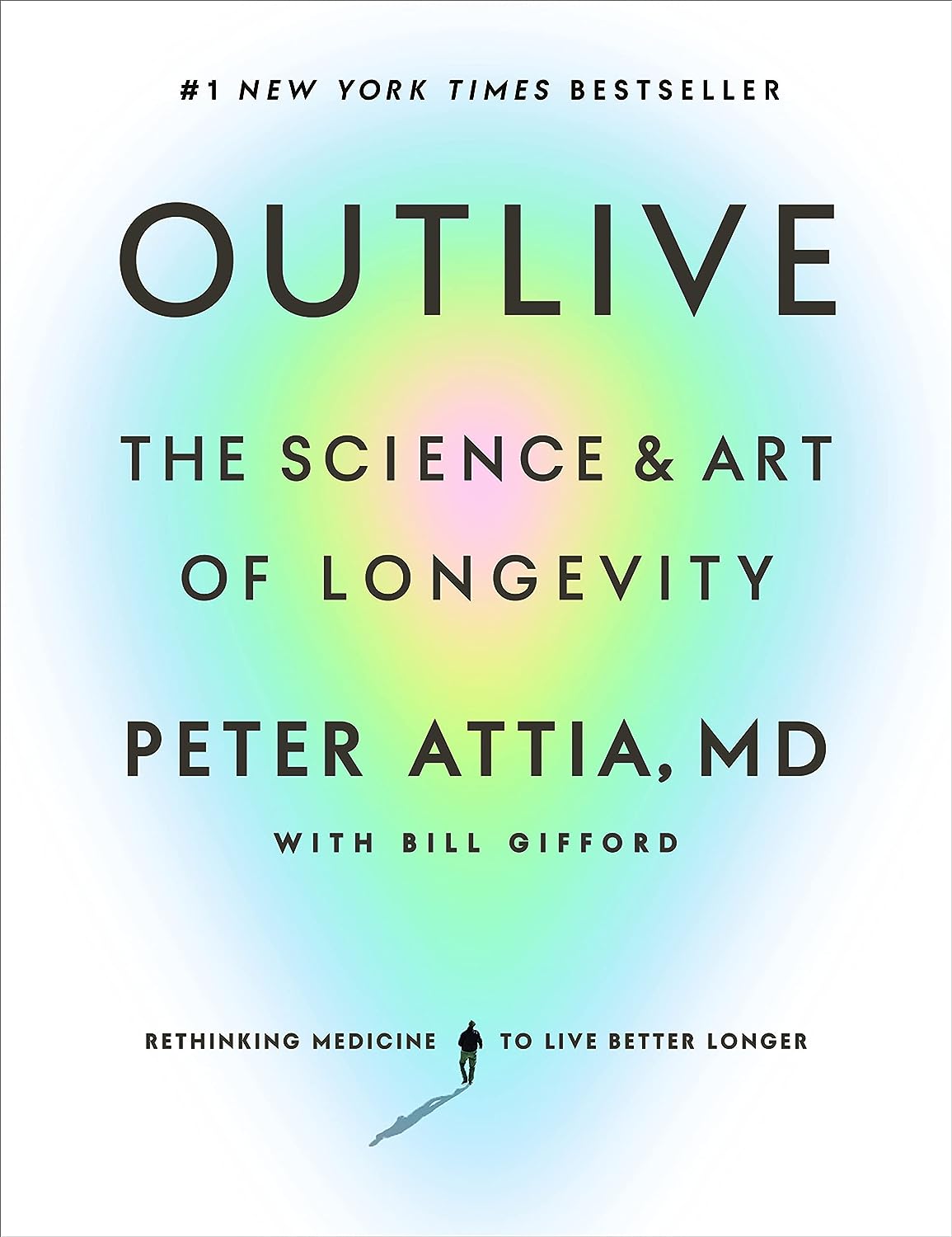
    Outlive by Peter Attia distills much of what I have learned in the last several years as I have tried to understand what practices would lead to a good health span. Attia has moved me to be more proactive with my health, especially when it comes to early detection / testing. His idea of training for the “centenarian decathlon” informs my fitness goals, and am doing more training in zone 2. Some notes about Attia.

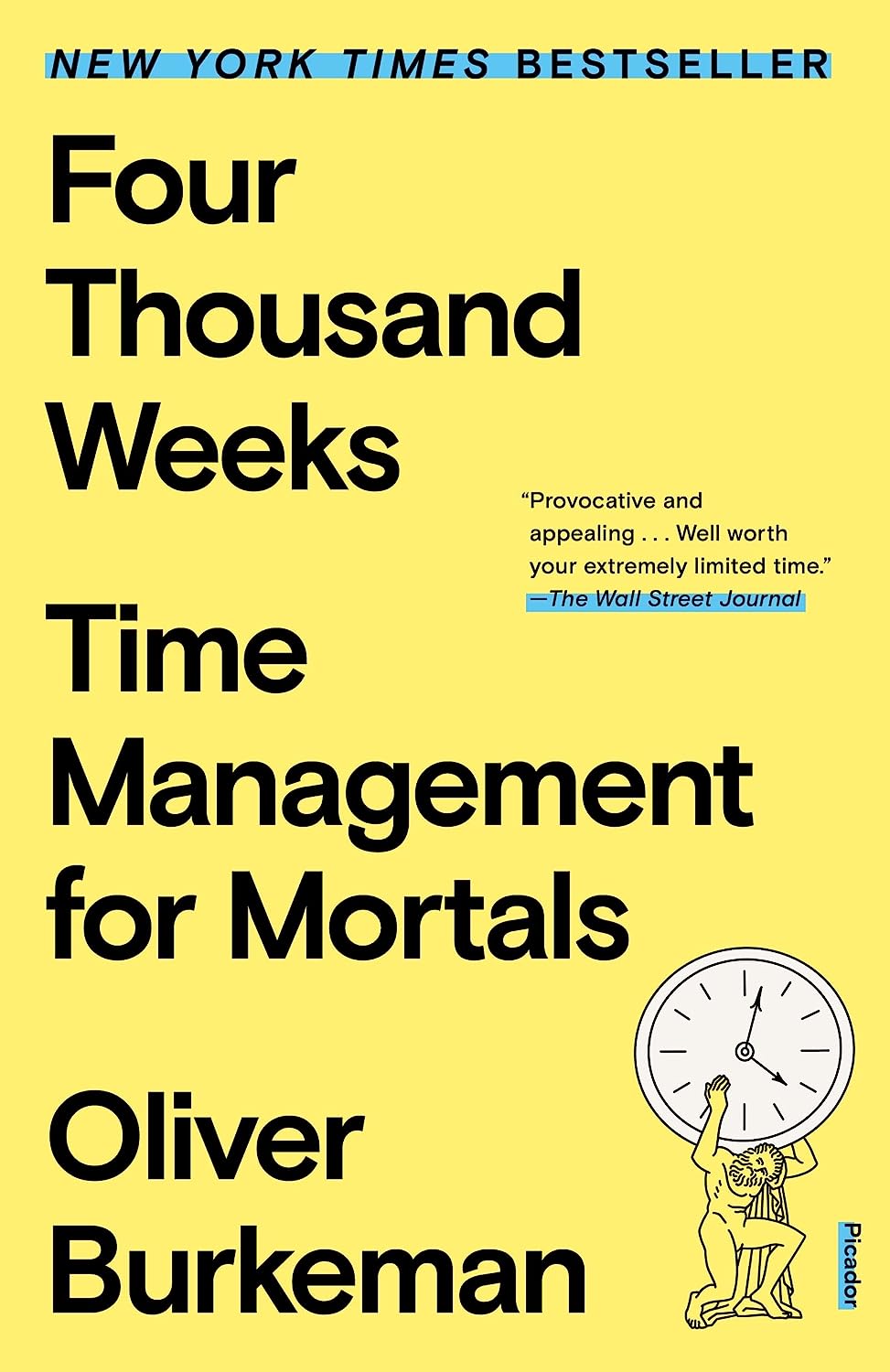
    Four Thousand Weeks by Oliver Burkeman is quite different from the typical book about time management or productivity. Burkeman argues that people focus on productivity are often avoiding the fact that they are finite. There will not be enough time to do everything they want to do, and being more productive will not make a substantial difference in their experience. Rather, people would be best served to become comfortable with their limitations and choose what they will do, and let go of the things they can’t accomplish. I think the author wrong about how an eternal life would chance the equation, but I don’t have an alternative to offer at this time. This book helped me relax, to leave more slack in my life, and to make sure I choose to spend my time on things that matter to me, even if they weren’t “productive” or likely to have a “significant impact”. Good companions for this book are Essentialism by Mckeown, and How to Inhabit Time by James Smith.

    Gentle and Lowly by Dane Orthlund is a beautiful treatise about God’s love and mercy. Ortlund takes aim at how it’s common to look at God’s forgiveness as a legal transaction which happened in the past. This books makes the case that it is much more dynamic, personal, which is experienced in the present. I was very touched by his observation that most people are a spring ready to be release anger and wrath by the smallest issue and we have to work to accumulate grace, but God is just the opposite, His love spills out at the slights prick while it takes a great deal to bring out His anger. The book has lead me to pray more, strive to shift from anger to love as my default response, and to seek to find and build community centered on grace. Too many churches fail to see and live in response to God’s loving presence. Good companions to this book are Keller’s The Prodigal God, and Manning’s The Ragamuffin Gospel.

    Love Your Enemies by Arthur Brooks calls on the reader to abandon contempt in politics, or really any dialog and focus on core issues. He notes that often groups’ values aren’t so different, but the way they are looking at the problem is framed differently. Brooks recommends connecting using stories, not just data. Show respect and call out members of your “tribe” when they are disrespectful. This book got me to reexamine people and organizations that I used to write-off. What I found surprised me… often we wanted the same thing. We both wanted justice and to see humans thriving. I was able to see that these “others” were not sinister characters bent on domination, but fellow humans who cared about others doing their best to address real problems in the world. I didn’t necessarily agree with their “root cause analysis” or their solutions, but I could see that it was a good will effort, and often could see how their solutions could be complementary to what I thought was right. This book put into writing what Doug Goins taught me with his life. If you want additional material, check out books by the Gottman’s, Marshall Rosenberg’s book Non Violent Communication, and Miroslav Volk who explores the relationship between “us” and “them”.

    Radical Candor by Kim Scott touched on many of the things I have tried to engender at work with more incisive analysis and practical suggestions. Kim’s focus on feedback, coupled with a class I just completed increased the frequency of me being kind rather than nice, that is sharing hard feedback that someone needed to hear and being better, listening to the feedback people gave me, and going out of my way to solicit feedback. I have changed some of meetings management practices with more to come. Make sure you get the revised edition. It has some excellent clarifications and notes about how to roll out a program built around Radical Candor.

    The Simple Six by Clinton Dobbins is a good book for someone who is trying to establish a regular strength based exercise routine which is sustainable over the long term using primarily body weight exercises. A key to establishing a new habit is to keep it simple and achievable. This books provides just that. Six simple movements (with 3-4 alternatives for each of the big-6). While each of the movement families can be done without equipment, a pull-up bar and a kettlebell are helpful. A five day / week schedule is provided which is easy to follow, requiring around 30 minutes / day, rotating what muscles get the most focus so you don’t need to worry about rest days. As the author indicates, the key is consistency and patience. For someone who already has an effective fitness routine this book is likely not very useful. There are numerous books which provide a more detailed description of the motions, a larger list of exercise options, more details about how to scale the sets as you gain proficiency. I purchased this book because I found many plans were too complicated, or depended on free weights which I no longer have access to. So why read this book? It provides a simple formula enables a solid started. It will take several month to establish an effective habit and start to see results. Only after you have the basics mastered and are consistent will you need to worry about scaling the exercises and need some variety.

    DevOps Handbook by Kim, Debois, Humble & Willis is the best examination of the underlying principles and insights which is at the heart of effective DevOps. Many of their observation might seem counter-intuitive, but they back up their conclusions through both theory and case studies. In my 30+ years of being at the intersection of development and operations I have seen first hand much of what is described in this book. What this book did for me was to give me a more effective way to communicate what has been primarily tacit knowledge and helped me re-prioritized work to enable sustainable teams. The book The Phoenix Project is a novel which tells the story of a company that discovers effective DevOps. The book Team Topologies is an excellent companion which will help you understand the interplay between organizational structures and the systems the teams are building.

    Every Good Endeavor by Timothy Keller. The best book I have read on vocation. Keller captures the tension that we all feel between being made to work and that we live in a broken world where nothing works as it should. Work can be deeply satisfying, it can also be great source of frustration which grind us down. Keller makes the case for working hard, but to remember that our ultimate hope is in the new world that God will be making. A new world that is connected to the world we live in now, that will be material, not some ethereal cloud filled world. Keller explains that all work, be it the humble work of a house cleaner or a trauma surgeon are not just necessary but valued by God, and should be valued by all of us. This book played a significant role in moving me from being ready to quit the world of high tech start-ups to looking for a new job in the industry I had been happy to leave a few years before. Recently I enjoyed John Mark Comer’s book Garden City which touches on several of the same themes.

    A Praying Life by Paul Miller. We shouldn’t focus on prayer (the method) but rather God (the object). Miller has a very high view of prayer. He expect prayer to accomplish things. Not because we are somehow manipulating God, but because God cares and prayer is a key way that we communicate with Him. Prayers answered tomorrow? Maybe, or maybe in 20 years, or maybe 2000 years. The answers won’t be in a way that you predicted and might not like, but God will do what’s best. Miller highlights how critical our heart is in prayer, and that prayer will change our hearts for the better. I found this book disturbing in the best sort of way. This book changed the way I prayer and moved me to make prayer cards.

    The 4-Hour Body by Timothy Ferriss. I am not fond of this book. I think Ferriss’ claims over reach and some assertions are just wrong. That said, this book started me on a path to rethink what I thought I knew about health, fitness, and nutrition. I think the conception of minimum effective dose is important for people with busy lives, and learned to appreciate that the metabolic system is very complex. This book started me on a path of make high intensity interval training as standard part of my exercise program. I think Attia’s book is much better, and that Body by Science covers HIIT much better than the 4 Hour Body.

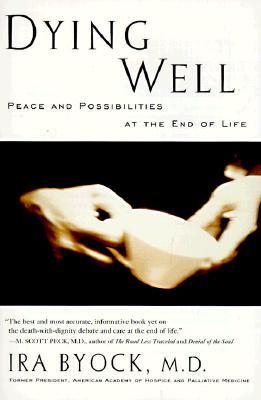
    Dying Well by Ira Byock. This book starts with the story of how Ira experienced his father’s death. This is followed by numerous stories about his hospice patients and their families. This book grew a desire in my heart to care for Libby in our home in her last weeks of life and prepared me for much of what I experienced. I am so glad I took a very active part in carrying for Libby in her last days, and that she passed in our home rather than in some institutional hospital.

    The Courage to Teach by Parker Palmer.  So many themes which are integrated into my life. Teach out of identity and core not technique. Fear and alienation are the enemies of effective teaching. Greater truths are often paradoxes. Trying to resolve paradoxes too quickly short-circuits learning. The tension from paradoxes can leave us open to learning and grow, this is painful but can be endured in the company of love.  Finding truth as a community centered around a subject rather than “objective facts” and experts. Teaching from a microcosm. This books gave me a new vocabulary, helped me be more open to other people’s perspective, and to be patient when facing paradoxes and other hard to understand situations.

    Leadership is an Art  by Max Depree is one of the best books about making a humane and empowering workplace. I read this book during a time that I was feeling weary. Managing people was taking a lot of time and I wasn’t sure I was adding any value. I wondered if I could be more productive by returning to an individual contributor role. I read this book and was re-invigorated. This book renewed a hope that I could have a positive impact on the people I was managing.

    Organizing from the Inside Out by Julie Morgenstern helped me tame piles of paperwork and organize our house. In our modern life it seems like we have way to much stuff to manage. This book suggests simple but practices tools and techniques to organize things. I am particularly fond of (and regularly use) her “Kindergarten” principle… everything should have a place to be put away right by where where they will be used. Since reading this book I have also come to appreciate simplifying my stuff is even more effective than organizing my stuff.

    The Innovator’s Dilemma by Clayton Christensen has had a deep impact on the way I think about technology, products and the decisions I have made at work. I tend to be an idealist. I tend to want the “best” solution. The Innovator’s dilemma helped me finally understand why “worse is better” in many cases. I think anyone working in the technology field needs to expect radical change that will come from technology that is “worse” than the current state of the art and to be prepared to cannibalize existing products and markets by embracing these distributive technologies.

    The Sacred Romance by Brent Curtis & John Eldredge. Control is an illusion. Rather than working to control life it is better to fully embrace God and trust that He will be true to his nature and take us on the journey we need. What’s best for us is never the most pleasant. This book helped me consider what was really important to me, what was I putting my energy and hopes into. This book helped me realize that some of the things I was driving for would never provide the results I hoped for and should be abandoned.

    Hints to System Designer by Butler Lampson isn’t a book, it’s a paper from SOSP. There is still a lot of art when it comes to building effective systems. Butler does a great good capturing many of the factors which should be considered by a system designer. Anyone who does system design should be familiar with this paper or expect to make mistakes which have been known about since the 1960s. I have spent most of my career building systems. More than any single book or paper, Butler’s hints have provided inspiration and guidance for my professional career. A great follow on to Butler’s paper is Systems Architecting by Eberhardt Rechtin which has a wonderful section of heuristics commonly used in systems architecture.  Systems Engineering and Analysis by Blanchard & Fabrycky is a wellspring of useful information for system builders, and Design Patterns provides a useful set of patterns to consider if you are stuck decomposing a problem.

    The One Minute Manager Meets the Monkey by Kenneth H. Blanchard. Like all of Blanhard’s books, the core ideas could easily fit into a page or two of text but instead is communicated in a lengthy parable. The heart of this book is you empower people by encouraging them to do their own work rather than taking their work on yourself, e.g. delegate. During meetings there are “monkeys” (e.g. tasks) which will end up on someones back. A fatal mistake made by managers is that they hold onto the “monkeys” when they tell people to wait while the manager reviews the plan, provide feedback on a proposal, “clean up” the document, etc. This is fundamentally dis-empowering. I read this book during a time when I felt overwhelmed by work. I was trying to mentor and coach people, but I was regularly blocking people’s forward progress by offering to review work (that didn’t really need an extra review cycle).

    20 Things I Want My Kids to Know by Hal Urban. I first read this book in 1992 at a time that I had just realized that I wanted to have children. I enjoyed Hal’s list of lessons he wanted to pass on to his kids. Reading this book prompted me to think more deeply about what was important to me and made me realize that I wanted to bless any children I had with the wisdom I had gained in life, in the hopes that they could benefit from my life experience. This book lead me to live a more examined life and to take the time to write down lessons I have learned. This blog would likely not have existed if I didn’t read this book.

    Personal Finance for Dummies by Eric Tyson is a basic, but excellent book on personal finance.  I normally hate “dummies” book, but this book is an exception. I read this book when I was feeling weighed down by our finances, though I now realize was a very minor debt. This book helped me think systematically about what we were doing with our finances, helped refine a plan to retire all our debt, and convinced me the need to save and invest for the future. Since I read this book, I have read a number of other books about personal finance and investing. While several of these books gave me a deeper understanding of the topics,  none have contradicted what I learned in this book. Personal Finance for Dummies has all the advice I would hope a parent would pass onto their children about money. Unfortunately, a lot of parents don’t know many of the things found in this book or don’t think to teach their children how to effectively manage their money.

    Advanced Programming in the Unix Environment and TCP/IP Illustrated, Volume I  by W. Richard Stevens. Stevens had an amazing ability to simply and clearly explain technical topics that can be quite complex. While I knew quite a bit about the TCP/IP protocol stack, and UNIX system programming, these two books helped pull these topics together in a more complete way that I could have on my own, or by reading several other books. I still find myself regularly reaching for one of these two books.

    Lest Innocent Blood Be Shed by Philip P. Hallie has the message there can be hope, even in dark times.  During WWII, the entire community of Le Chambon refused to cooperate with the Nazis and helped more than 5,000 Jews escape Nazi camps. There was no one hero… rather the whole community engaged in a conspiracy of goodness. Whenever I start to think that it’s impossible for a community to tackle a difficult issue, I find myself reflect what this community was able to achieve and find hope. There is a good documentary about this community called Weapons of the Spirit.

    The Ecology of Computation edited by B.A. Huberman is an out of print collection of papers which I believe gives hints as to where computing systems who go in the future. Agoric computing, software agents, and other approaches which are now entering the mainstream were discussion in this book. More than any other computer science text, this book fired my imagination, and made me consider that there were revolutionary approaches which might be able to address righteous problems that couldn’t be solved by brute force. Reading this book was one of the factors that lead me to take a job at Xerox’s Palo Alto Research Center (PARC).

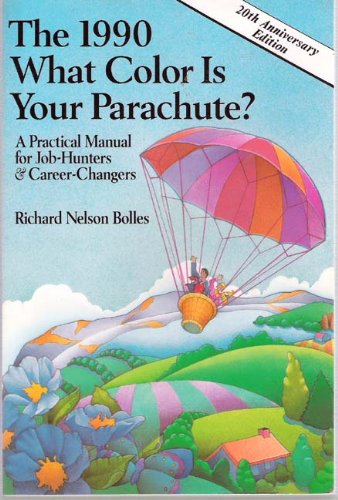
    What Color is Your Parachute by Richard  Bolles came out in 1970 at a time that many businesses were downsizing and people in the middle of their careers found themselves out of work. This was in an era that people expected life time employment from large companies. Bolles’ book was an encouragement to consider what a job seeker wanted to do for their next season of life. As a direct result of doing the exercises in this book my wife selected her career, I changed workplaces, and we moved across the country. While this book can be useful to people at any stage of life, it is most helpful to someone who has had sufficient life experience to reflect on what they have done. This book encourages the reader to figure out what they are called to do (a vocation) and do that. The money (or at least enough for you survive) will follow.  You might not be rich materially, but you will be rich in experience and quality of life. Sometimes people say do a job you love, but I prefer to say do a job that is meaningful, that has impact, and you you will love the job. When I first worked through the exercises in the early 1990s, I didn’t change my career, but I had a deeper sense of purpose in my day to day work experience. Doing some of the exercises lead Libby to become an audiologist and us to move to the Bay Area.

    Writing Efficient Programs by Jon Bentley. I originally read this book as a pre-print for a class taught by Jon on software engineering. I was deeply influenced by the four fundamentals rules: code simplification, problem simplification, relentless suspicion, and early binding which first appeared Elements Programming Style (which I have never read… much to my shame).  I can see the influence of this book on every major piece of code I have written as well as how I approach systems which need to be sped up. My single biggest take away was to focus my attention on what will make the biggest difference. For example, if a program is spending all it’s time in I/O, don’t improve the sorting algorithm, go after the I/O subsystem.

    Perspectives on the World Christian Movement edited by Ralph Winter and Steven Hawthorne. This is a massive 700+ page tome which is a collection of 136 articles which examine Christianity and missions through the lens of Biblical theology, history, culture, and strategic analysis. The combination of this book and the class that used it as a textbook changed not only my views on Christian missions, but changed the way I engage life. The Biblical section helped me understand how I was part of an ancient movement that has been shaping the flow of history which culminates in the world properly worshipping the Lord, and that mission is temporal in nature. The section on culture helped me see  how I valued my culture above others and that is bigotry. I was challenged to  learn more about other cultures and find value in how those cultures differed from my own. I learned that communication is rooted in one’s world view, and to bridge that gap one needed to understand the context of the people you are communicating with. I learned to appreciate how organizational structures are more (or less) appropriate for different tasks and that one size doesn’t fit all. Finally, I learned that God was concerned for the whole world, the whole man, and that the history of missions doesn’t have a good track record doing either of these things. I learned how throughout history there have been awful things, and great things, done in the name of missions which gave me an appreciation for the need to critically examine projects I might be involved with… and of course, that just sitting back wasn’t an option.

    No Condemnation by Bruce Narrmore. I first read this book in 1984. Until I read this book I thought motivating people via guilt was one of the most effective ways to bring about change. I came to see how destructive guilt motivate was, and how it was unlike to sustain deep change in the long run. I try to reread this book every few years. Each time I am reminded how easy it is to use guilt to motivate, how guilt is hugely damaging, and what are effective and life giving alternatives to guilt.

    Marriage Builder by Larry Crabb is a significant reason I enjoy my marriage today. Crabb’s core thesis is that the reason most marriages struggle is that the partners are looking for the other person to meet our needs, to fill up a void in our lives that only God can fill. This book calls us to trust God to meet our core needs, and out of that dependence to choose to love, serve, and sacrifice for our spouse. I know that when I keep this in mind, that I am a better husband to my wife. Crabb challenged my assumption that my wife was going to somehow “complete me”, but rather encouraged me to consider her a companion on a journey. Many of the principles which Crabb applies to marriage are equally true in other relationships. While The Marriage Builder had a profound impact on me, I would now recommend Tim Keller’s The Meaning of Marriage instead because I think it is more comprehensive and balanced. For younger folks still in the dating stage, I recommend the book Loveology.

    The Evolution of Cooperation by Robert Axelrod explores how cooperation can emerge in a world ruled by selfishness with no central authority or rule. Axelrod demonstrates that enlightened self interest can lead to effective cooperation in any situation where the participants believe that they will need to interact with each other in the future. These lessons can, and should be applied to personal, corporate, national, and international interactions. After reading this book I noticed that I was much less likely to take an all or nothing approach when dealing with others, and was more more likely to look for win-win options. Most important, this book gave me hope. The Marshall Rosenberg’s book Non Violent Communication does a good job demonstrated how this often works in inter-personal relationships.

    Rich Christians in an Age of Hunger by Ron Sider. Extremely challenging to an upper midclass kid who was suround by affluences and a consumer oriented culture. His suggestion of a progressive tithe and not growing lifestyle at pace with income has influenced my relationship with money. I am more of a consumer that I would like to be, but this book has helped keep my life in perspective, and to avoid buying into our consumer culture. I think Randy Alcorn’s book Money, Possessions and Eternity is a great companion.

    The Spontaneous Expansion of the Church by Roland Allen looks at the growth of the early church. Roland argues that the church doesn’t need complex structures and systems to be effective. Rather the church needs to free its members to follow after God. Too often, church leadership trying to control what is happening and how it’s happening. This is a mistake. The church is a group of people who are together, trying to follow after God and responding to what they are learning. This books resulted in me being much more laid back when in leadership roles within the church, and has lead me to select a church that favors less control and more empowerment. I think the out of print book The Church Unleashed by Frank Tillapaugh did a great job explaining what this might look like in a “modern” church in America.

    The Dynamics of Personal Follow-up by Gary Kuhne is the best book I have found describing how to help establish a new Christian. This book helped me appreciate what core truths and life practices were important in the life of a new Christian, why it was important to purposefully pass these core practices on, and gave me a framework to help someone new in the faith become more established. I also learned to appreciate how people grow in different ways and that what someone might need in one stage of life, will likely be different in the next stage of life. Finally, Dynamics of Personal Follow-up provided me a basic framework to think about how people grow. I have taught classes based on material from this book and used much of Kuhne’s material when mentoring people.

    Please Understand Me by Keirsey and Bates. I discovered this book in 1981 at local book store. At the time I realized that I didn’t have very good insight into myself or the people around me. This book introduced me to the Myers-Briggs personality classification system. After reading this book, I had a better understanding of myself, both my strengths and my weaknesses. My appreciation of people who were different from me grew significantly and I was able to start thinking of them as different rather than “plodding” or “insensitive”.  I came to realize that there was great value in people who were more systematic than me, or who cared more about truth than people. There is an updated version of this book called Please Understand Me II which I recently reread. The most recent time though I got even more out of this book. In the past I would read the description of my type (ENFJ) be be pleased. I liked the description. This time through I asked for each characteristic three questions. First, is this describing my experience? Second, is this a picture of wholeness, a reflection of something that is true, of the Lord, or is this brokeness. Third, how is this something that that can stand between me and the Lord: be it something good that becomes an idol, or something that is directly contrary to the Lord. Asking these questions has been quite a blessing. There isn’t a lot of scientific evidence of the accuracy of Myers-Briggs. There are better personality sorts now, but I haven’t felt compelled to use them.

    Walking in Victory by Dennis McCallum, one of the founders of the church I attended as a new Christian. This book distills most of the teaching I heard early in my Christian faith about the nature of spiritual growth. These teachings had a significant role in shaping how I view the world and understand what it means to live as a Christian. I learned this material for handouts, articles, and in-person lectures. This book was written later based on those materials. I believe that there are better books for many of the topics that are covered in this book. For example, I think Green Letters by Miles Stanford has more depth on many of the topics. The Normal Christian Life by Watchman Nee explains Romans 5-8 is much great detail. Release of the Spirit by Watchman Nee gives a much more complete explanation about how trials and suffering refine our character. The Practice of the Presence of God by Brother Lawrence and A Praying Life  by Paul Miller are much better explaining a life of prayer.  The Sacred Romance by Brent Curtis & John Eldredge is much more effective at capturing the personal nature of a walk with God. Never the less, the materials in this book are extremely valuable in understanding the foundations of basic, Christian spirituality.

    The Bible God and numerous human authors collection over 2000 years. The writers are a varied lot from a diverse set of professions, life situations, times, languages, and styles. Throughout my early life I had an intense dislike for what I thought was Christianity. When I finally took the time to read the Bible I found something completely different from what I expected. The book of John introduced me to a very different sort of Jesus, someone that I could respect and wanted to know. The book of James told me that if Christianity was true, that people’s lives should change, and that hypocrisy wasn’t something that should be associated with Christianity. These two sections of the Bible started me on my journey as a Christian which has affected my entire adult life. Over the years I have read the Bible through several times. Some sections are incredibly boring, others are hard to understand, still others are shocking, yet I find myself regularly challenged and encouraged. The Bible has shaped my life in countless ways. The first change was to give me hope. When I entered college I had pretty much given up on people and any hope for this world. I tried to avoid relationships and was looking for ways to get away from humanity so when everything fell apart I could take care of myself. Studying the Bible encouraged me to re-engage the world and do what I could for my fellow man. God’s concern for the powerless has made me more compassionate and motivated me to work with internationals and refugees. Thru my adolescence I tended to view people in a very black or white way. Either people where worthy of respect and 100% trustworthy, or they where idiots who had nothing value to say or contribute. The frank portrayals of great men of faith, who were deeply flawed helped me realize that I can’t expect perfection from anyone, but rather I should cherish and learn from any good I see in others. Most important, I learned the importance of forgiveness… both receiving it and being willing to extend it. Over time I learned that I should understand that I needed to view the Bible as progressive revelation were the community of faith was taught something, and then once that was established the next step was taken much the way that high school chemistry and different from graduate courses. Finally I came to realize that the Bible shouldn’t be treated as a textbook, but an evolving story. For example, Genesis is not about how God built the world (how to build a house) but what was happening in the world he create (the story of home).

    How to Solve It Book Cover

    How to Solve It by G. Polya taught me to be more explicit in how I worked through righteous problems and helped me see that there were numerous tools, heuristics, that could be used. I got me to think about which tool/heuristic was most likely to to bring me to a solution, and provided a list of alternative approaches in the one I choose is failing to deliver results.

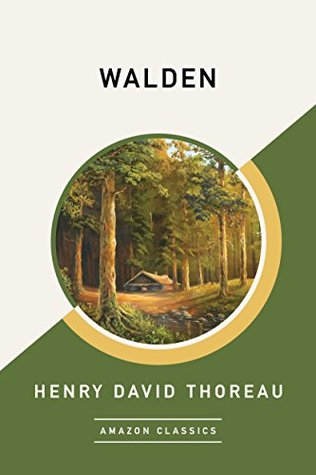
    Walden by Henry David Thoreau crystalized for me how a simple and reflective life was desirable. For a time I thought about moving somewhere remote to build my own cabin and live a simple, off grid life. I never did this, but Thoreau emphasis on a life filled with meaning, looking for truth, and appreciating community over getting caught up in “modern” society’s expectations had a deep influence on my life. Unlike many books on this list, I can’t identify a specific event or change that this book brought about in my life, but I can see it’s influence over the years in many ways.

    Whole Earth Catalog by Stuart Brand was a wonderful collection of articles, reviews, and product descriptions. I came across this book in my high school years. It transported me (living in the midwest) to the alternative culture (hippie, progressive, …) of the west coast. I learned a lot about about  sustainable technologies and social activism. I heard someone else say this was a bit like google in a paperback book long before google existed. I would agree with this description. All versions are now available online.

    Shockwave Rider by Jon Brunner took the increasing rate of change discussed in Future Shock and extrapolated that into the future. He envisioned a world wide data network which was used by everyone. Since everything was in the network (web), privacy was also extremely limited. Being able to manipulate (hack) data in the web gave people incredible power. The rate of change was so quick that most people had significant problems coping. Everyone need to take anti-anxiety meds to cope. Many lived “plug in lifestyles” which is characterized by surface relationships, moving for career development, and living in communities which looked identical in whatever city they were living in. This book also touched on the topic of the misguided tendency to pursue knowledge without wisdom. This book deepened my interest in computing, made me think about pursuing wisdom not just knowledge, and gave me an appreciation that technology is a two edged sword. Before reading this book I deeply believed that technology was the answer to all problems. This book tempered my enthusiasm for technology and made me look for unintended consequences.

  • Water Retention in Clothing

    The post was corrupted and I haven’t been able to find a good archive of it. I pulled some text in from another page in May 2025 as a starting point, but this really needs a complete rewrite, updated references, and some corrections. I have run many tests, several of them better constructed since first posting this. I need to find that data and include it here. Maybe this will happen sometime before the end of 2025 🙂

    Managing moisture is critical to comfort and safety. Heat loss when immerse water is 24 times more effective than if you are standing in still air. While a soaked garment isn’t as effective, it can chill you more than standing naked. Ideally, you want clothing to stay dry. It’s not always possible to keep clothing dry, so the best mitigation is to select clothing which minimizes water retention and dries quickly.

    Polyester absorbs the least water, followed by nylon (which is a bit more durable) and then wool which has the bonus of resisting odor. There are a variety of wools including sheep (merino particularly nice, icelandic warm), goat (cashmere – luxury but very fragile), alpaca (warmest/weight), and possum (found in AU and NZ). Cotton is an inappropriate material for highly variable conditions.  Cotton can absorb more than four times of its weight in water and can take five times as long to dry as some synthetics! Silk, Rayon, and a host of other fabrics are better than cotton but not great. The article why cotton kills explores this topic in more detail. There are several treatments that can be applied to these materials which make them even better at resisting water absorption such as Schoeller’s nanospheres

    A nice side effect of quick drying clothing is that on extended trips in the back country or when you are adventure traveling you can wash your clothing in the sink or river and be able to wear them almost immediately. This reduces the amount of clothing you need to carry without being grubby or smelly. All of my clothing normally dry overnight if spun dry or squeezed with a towel after washing. The exception is when it’s >90% humidity and <65F… some items are slightly damp after 7 hours, most most are completely dry (e.g. not even 1gram of extra weight from the water).

    My experience is that water retention (called regain in the industry) is driven by three inter-related issues. The base material, the fiber (how the material is assembled into fabric), and the thickness of the fabric. For example, even though nylon absorbs 2x more water than polyester, a thin nylon woven shirt (like light weight supplex) can have the same water retention / drying properties as a knit polyster base. See the BPL thread about water absorption in textiles and look for posts by Stephen Seeber, especially is “By the Numbers” posts.

    Over the years I have read people talk about how much water various materials absorb. Most of the time the numbers seemed low, so I ran some simple tests to determine how much water was absorbed by various garments that I use (which is a combination of material, fiber, and weight/thickness). Alas, I have misplaced the spreadsheet with all the results.  So the following data is (1) possibly wrong because I don’t have a great memory (2) wasn’t super rigorous (3) wasn’t a pure apples to apples test.  I didn’t use the same weight for each material.  Rather I used the shirts I owned. The specific shirts I remember included: 

    Polyester: light weight powerdry
    Polypro: light weight base layer (20 years old or so)
    Cotton: Haines beefy-tee with a logo from my work
    supplex nylon: RailRider Eco Mesh
    wool: smartwool light weight tee
    rayon: aloha button up shirt
    bluesmith hydrophobic shirt (polyester+nanospheres)

    First Test: Weight the garment, submerged it under water and kneaded it, pull it out dripping wet, weight it, squeeze everything out I could get out, weight again, wear for 30 minutes, weight again. Something that was pretty surprising is that when I did this test, the dripping weight was much higher than I expected. with the exception of the bluesmith shirt which was only 1.2x, nearly everything was at least 2x, wool being 3x, cotton 4x, and rayon 5x. After 30 minutes of wear, the figure were something like bluesmith 1.05x, polypro 1.2x, supplex 1.3x, polyester 1.3x, wool 2x, cotton was 2.5x. Not as large a difference as I would have expected. 

    Second Test: I concluded that the kneading the item fully submerged wasn’t a good test. It was most likely measuring void space in the garment and how easy a super saturated garment would release moisture rather than what it would absorb so I tried what I though was a more “reasonable” simulation. The real life situation I was wondering about was what would happen to my base layer after my windshirt fully wet out… how much water would be absorbed and how quickly would it dry out. The second experiment’s steps were: 

    1. Weight the garment
    2. Placed it on top of a sink filled with water
    3. Briefly pressed it into the water repeatably for 30 minutes
    4. Shake item. Weight
    5. Squeeze. Wear 30 minutes. Weight

    When I did this the number were significantly different. Polypro and polyester were less than 1.1x gain after the shake, and more or less completely dry after 30 minutes. Nylon was 2x gain after the shake, and about 1.1x weight after 30 minutes. Wool and acrylic were something like 2.5x after shake, and around 2x after 30 minutes. Cotton was 4x after the shake, 2.5x after the squeeze, and 2.4x after 30 minutes of wear. I am pretty hazy on the acrylic and rayon. My memory was the acrylic was around wool, and the rayon was worse than cotton after the squeeze, but had already surpassed cotton after 30 minutes of wearing. After one hour of wearing I hung the clothing in a location that the temp ranged between 45-50F with a relative humidity of approx 70%. Eight hours later then cotton shirt still felt wet. The wool was still damp, but reasonably comfortable.Everythng else was comfortably dry.

     My personal conclusions were the that polyster / polypro didn’t absorb a lot of water. Supplex absorbed more, but was sufficiently thin without voids so it dried quickly. I was unimpressed with wool. Cotton really sucks because not only does it suck up the water, but it didn’t want to let go.  This more or less matched my experience in the field.

    The backpackinglight.com folks did a more rigorous field test: comfort moisture transport in wool and synthetic clothing. They found that wool took 50% longer to dry than polyester. My personal experience was that it takes longer than that, but we were using different fabrics and fabric weights than what I was using, and I believe invested more effort into having a true apples to apples comparision,

    The champ will likely be nanotech clothing fabric.

    Related

  • Environments for Teaching Kids to Program

    In 2007 my ten year old daughter asked me to help her learn to program. It’s not that she’s interested in computer science, it’s that she knows that programming is required to create games and other things that she has imagined. I investigated a multitude of languages / environments. The following is what I decided would be the best languages for instructing kids at that time. Some updates in 2024 below.

    • Scratch or Logo for simple projects and younger kids. Both provide simple worlds to explore.  There was more material for Logo, but Scratch is “more fun”.
    • Squeak (smalltalk) for older kids whose focus is building artifacts more than programming. 
    • Scheme for kids focusing on learning computer science. The kids can focus on CS principles rather than syntax. Scheme can be used to teach a number of programming styles.
    • JavaPython, or Ruby for kids that want a quick path to vocational programming.

    A few months later I discovered Alice which was designed for children who want to tell stories through created worlds. Alice has been used very successfully with middle school girls. The environment uses a drag and drop editor to drive an animation 3d world.

    In 2024 there is a richer set of options and a lot of good material.

    • Scratch for kids wanting to learn concepts and have some fun
    • Scheme for teaching fundamental computer science
    • Python for a quick path to vocational programming
    • JavaScript for people who want to build web or simple model applications. Several of the classes / projects on code.org use JavaScript.

    In 2007 I decided that Squeak was best option for my daughter, especially using the ReadyPC environment from Squeak: Learning to Program with Robots and that it had an Alice like Wonderland environment. After we started, it has become clear that Alice would have been a better choice because she is more interested in storytelling than creating artifacts. There are also a number of other other noteworthy languages that I considered, but I rejected them for various reasons after a brief investigation. Others might find these languages useful for their needs.

    The Search

    Years ago I was inspired by the book Mindstorms which made the case to use computers as a tool for students to explore and learn rather than merely an automated tool for rout memorization or for teaching computer science. In the early 1990s I helped run some classes in Scheme and Logo that focused on discovery and creativity.  I figured there had been a lot of advances in the last ten years. So I started by looking for projects which were not just teaching kids to program, but were using computers and programming to help kids explore the world around them. I guess I wasn’t looking in the right places, because I had trouble finding people doing interesting things. I have recorded what I discovered in the additional information end the end of this document.

    I spend some time trying to find what languages / environments and curriculum were being successfully used with kids. The rest of the document details what I found. For each language I have recorded my biased assessment of it’s pedagogical value, small bit about the history of the language, educational material / practices I could find, a summary of possible implementations to use, and a list of additional resources. I believe the best environment would provide minimally:

    • Simple, clean, powerful language
    • Easy to use interactive development environment (IDE)
    • Quick development cycles with direct commands
    • Easy access to graphics… want near immediate feedback

    Logo was designed from the ground up for use as a pedagogical tool and is very easy to learn. Logo is good for a very basic introduction to programming or for exploring mathematical principles, especially geometry. Most logo implementations provide a friendly IDE. A down side, there are no industrial strength logo implementations and the programming model is fairly simple. These days, visual “block” oriented languages like Scratch are better for youngsters. While more advanced computer science could be taught in logo, I would recommend using scheme, python, or Pyret.

    The Language

    Logo originally designed at MIT in the late 1960s as a educational tool for children. Logo itself is a functional language which is normally implemented as an interpreter within an interactive environment. All logo implementations to my knowledge provide a read, interpreter, execute loop which allows the direct entry of expressions as well as the creation of functions and provide turtle graphics makes it extremely easy for kids to immediately gain visual feedback for the programs they create. Logo hasn’t changed significantly over the years though a number of logo implementations have taken the 2d graphics “world” of turtle graphics to much richer “worlds” which support 3d graphics, animation, and/or music.

    Educational Use

    Through the 1980s logo was the premier language and environment for thoughtful education. There is a reasonable body of research, curriculum, and tools for someone wanting to use logo for instruction and exploration. There were a number of MIT-AI memos about logo. The Logo Foundation continued to generate educational resources as well as often workshops to help teachers better use logo in educational settings. Today, Logo is typically used as a tool to explore topics such as geometry rather than a way to teach “programming”.

    Implementations

    • UCB Logo: As close as you will find to “classic logo” which will run on just about any machine.  Provides basic logo with turtle graphics.  Has been ported to a number of platforms. [Freeware: DOS, Windows, Macintosh, UNIX]
    • LCSI Microworlds: seems to be the premier commercial logo. The staff of LCSI have been near the center of the logo community since Seymour Papert help found the company. In recent years the LCSI has updated their implementation for the 21st century including the support of richer “worlds”, robot systems such as Lego mindstorms, and publishing and sharing projects via the web. [Commercial: Windows, Macintosh]
    • Terrapin Logo is a “classic” logo implementation. Many children used terrapin logo on Apple IIs and later IBM PCs and Macintoshes. In recent years Terrapin updated the UI to confirm more to the native OS GUI and added support for lego mindstorm. [Commercial: Windows, Macintosh]
    • mswlogo, and fmslogo are updated versions of UCB logo which support Windows functionality such as direct access to the GUI and other OS functionality. Some function names have been changed from classic logo, for example “forward” is now “fd” [Freeware: Windows]
    • For other options see a list of  logo software.

    Resources

    • The Logo Foundation Resources List
    • All of the web sites listed in the implementation section have links to resources for their specific implementation.

    Scheme

    Scheme is well suited for classic computer science education. The scheme language is clean and simple. I would recommend considering scheme for teaching computer science material because the student can focus on the core concepts they need to understand without spending a lot of time thinking about the language they are working in.

    The Language

    Scheme is a language rooted in the Lisp community which was originally designed to explore Carl Hewitt’s theory of actors as a computing model. [See Evolution of Lisp, see page 33-36 for a brief explanations of scheme’s history]. Scheme has exceptionally clear and simple syntax and semantics making the language very quick to learn. You will find that the full description of scheme is concise and extremely readable. Yet, scheme supports a wide variety of programming paradigms, including imperative, functional, and message passing styles. With additional libraries it is possible to explore object oriented, meta-object, and aspect orient approaches. 

    Educational Use

    In the early 1980s scheme started to displace Pascal as the language of choice for computer science education in progressive schools. For a short time I had hopes that Scheme might become the dominate instructional language, but that didn’t happen and the number of schools using Scheme has significantly decreased. I found people whose introduction to computing was by way of the classic introductory SICP textbook tended to have better foundational understanding that the more commonly used textbooks. There are several reasons why scheme is ideal for teaching introduction to computer science materials. There are several excellent college level textbooks for teaching computer science in scheme as well as a number trade texts.  The two most popular texts these days seem to be:

    Implementation

    • Racket environment provides the best IDE for teaching using Scheme, and several other scheme inspired languages [Freeware: Windows, Macintosh, UNIX]
    • BEE: Decent IDE [Freeware: UNIX w/ Emacs]
    • Lisppad: Simpe IDE [Freeware: Macintosh, iPhone, iPad]
    • LambdaNative: [Freeware: Gambit based which creates apps for iOS, Android, etc]
    • BiwaScheme: [Freeware: Scheme in JavaScript / Your Browser]
    • See scheme wiki’s list scheme implementations for other options

    Resources

    • scheme.org is a good place to begin learning about the scheme language

    Squeak (Smalltalk)

    Squeak provides an extremely rich development environment. The down side of squeak is that the complex environment is fairly different from everything else. The Smalltalk language also uses a moderately complex syntax which is quite different from most other languages. So the learning curve is more than say scheme, and the learning invested into learning Smalltalk is unlikely to transfer to other languages. Even with the extra complexity I would recommend using Squeak to explore general topics, building multi-media projects, or creating simulations because the environments richness offsets it’s idiosyncrasies. I would recommend using some other language if you want to focus primarily of computer science.

    The Language

    The Smalltalk family of languages that was developed at Xerox PARC. The original versions of Smalltalk was designed to teach younger children. Over time Smalltalk evolved into an extremely rich programming language and environment designed for professional programmers. Smalltalk is a purely object oriented language and the environment is also written in Smalltalk. The syntax is quite different from popular language in common use. Squeak is a version of Smalltalk which was developed to be a freely available. It’s extremely powerful, complex, with a GUI interface which doesn’t follow the native windowing system user interface guidelines. It is easy to change and evolve Smalltalk, yet little has been changed since 1980. Hopefully more people will start to work on Squeak and take it to the next level.

    Educational Use

    Squeak and tools built on top of squeak seems to have taken up the “premier educational tool” mantle from logo in the educational research community. There was a nice article/interview about squeak. The best place to find information about using squeak for education will be found at Squeakland. If you click on “download” you will find a repackaged Squeak designed to make it easier for kids to get a good start by hide some of the environment’s complexity.  

    • Powerful Ideas in the Classroom by B.J. Allen Conn and Kim Rose. Short text designed for elementary age kids. Gets them started using the Squeakland environment and with etoys components. 
    • Squeak: Learn Programming with Robots by Stéphane Ducasse seems to be the best text for teaching programming which would be appropriate for late elementary or middle school students. Old Miner follow-on to “Robots” will take students into more advanced topics.

    Implementations

    • Squeak [Freeware: Macintosh, Windows, UNIX, PocketPC]
    • Squeakland (@archive.org) [Freeware: Browser Helper for Macintosh, Windows]
    • SqueakJS [Freeware: Lets you run Squeak in JavaScript such as your browser]

    Resources

    Python

    Python is a clean language which are easy to learn. Python is popular in the real world for developing web oriented applications, doing data analysis and many other tasks. Given many kids’ desire to create cool web pages, there is a nature drive which can be harnessed for educational purposes in python. The downside of python is that there isn’t a really great, kid friendly, IDE.

    The Language

    Python is a dynamic language designed for the creation of scripting and applications in a variety of domains. Python was built for working programmer, but due to the clean design, are well suited for educational uses. Python has a rich library and an extremely active community.

    Educational Use

    In 2007 material was pretty scarce for teaching python. The only introductory material I was able to find was:

    In 2024 there are plenty of materials. From what I can tell, many of the best engineering schools are using Python in their introduction to computer science classes. A few examples

    Implementation

    • Python: [Freeware: Macintosh, Windows, and UNIX]
    • PyCharm: Arguably the best IDE for Python. [Free/Paid: Macintosh, Windows, and Linux]
    • Trinket: Simple IDE / interpreter which runs in the Browser. Good for getting a quick start at the beginning of learning.
    • ActivePython: In 2007 the best version of Python for Windows. No clue how good it is today

    Resources

    Java

    In the 2000s Java unfortunately has become the most common language used in high schools and for CS1 & CS2 in college and college prep curriculum, though by 2024 it seems like Python is more often the language used in these course. On the plus side, Java has become a popular vocational language and has a rich and growing set of libraries. The downside is that there is a large learning curve, students typically end up focusing a large amount of time on learning the libraries rather than focused on creating unique / new code, and the develop/test/evaluate cycle is slow compared to the environments provides by most of the other languages in this list.

    Language

    Java was original developed to be a working language industrial strength applications and operating systems incorporating features found in a number of languages and making up for some deficiencies found in C++. Java is the first language to win a large popular following which has a garbage collector, modules, a decent type system, exception handling, and a clean object system. Java is commonly used in industry for the creation of business applications. Java is often used for web based applications which require complex user interaction.

    Educational Use

    There are a wide variety of text books and curriculum for classic computer science education in Java, especially at the college level. Sometimes Karel the Robot or Alice are used at the beginning of a course to provide an easier framework for programming. Once the core concepts related to computing are understood, the students switch to using Java. I would strongly recommend starting students out with Karel or Alice if students have no past programming experience.

    In 2007 some resources for teaching Java to kids (still accessible thanks to archive.org) were

    These days, I am sure there are materials that are actively maintained, but I haven’t gone looking for them since I am not particularly fond of Java for instruction.

    Implementations

    • bluej: One of the best IDE for instruction due to it’s simplicity
    • Eclipse Seems to be one of the most popular IDE for Java. Industrial strength used by many professional developers.

    Resources

    JavaScript

    To be added.

    Language

    Educational Use

    Implementations

    Resources

    • Code on iOS: IDE for JavaScript (and other languages) which runs in iPhone and iPad

    Other Languages

    • AgentSheets: Disovered this recently. Looks like a pretty cool environment for building simulations. A lot of kids want to make games and this would be a good environment to do that in.
    • Alice: Uses a drag and drop editor to drive an animation 3d world. A number of universities are using Alice to help student understand the core concepts found in CS1 before working in Java. Alice like functionality has been added to Squeak as Wonderland. Can be pitched as a tool for storytelling to folks who aren’t excited about programming.
    • C#: Not significantly better than python or java with less instructional material
    • Factor: Forth meets lisp. Interesting system but doesn’t seem to be as easy to use as some of the other systems I are considering.
    • Forth: In the days of small memory, slow machines I would have considering Forth… but these days it makes sense to use a more advanced language that is memory safe
    • Greenfoot: A set of java objects that produce an object oriented, graphical environment for kids to build tools and explore. The authors suggest that it offers the best of the object interaction of BlueJ with a microworld which provide visualization like Karel the Robot.
    • Guido van Robot: Logo with python syntax. Designed to be a easy way to get into python, much like Karel the Robot was an intro to Pascal.
    • Haskell with pan#: Pure functional language. Pretty cool for CS, but steeper learning curve than I would want for younger kids.
    • Karel the Robot: Originally a gentle introduction to Pascal from CMU. Multiple forms of Karel have evolved over time.  Search the phrase karel the robot for a variety of resources.
    • KPL: Kid’s Programming Language: looks like a simplified version of Visual Basic meets C# which Microsoft is promoting for use with first time programmers / kids. As you might expect, KPL was build in Visual Studio in C# and is tied pretty solidly to Microsoft’s .NET framework. Don’t expect KPL to run on anything but Windows. Think of KPL & C# as being the proprietary equivalent of Karel & Java. [Freeware: Windows]
    • Kodu: logo meets video games
    • love2d: gaming engine + Lua
    • MakeCode: Microsoft’s block system which embeds JavaScript and/or Python providing a nice transition from a block / visual system to text oriented code and can be uses with microbit for bridging into the physical world.
    • Processing: a graphics oriented IDE which execute a graphics oriented language which is built on top of java
    • Pyret: A language in the spirit of Scheme with a Python like syntax with a wide array of instructional material at bootstrampworld
    • RCX: Visual programming language for Lego Mindstorms. Build programs on the PC and then execute them on a mindstorms robot. Somewhat limited, but you do get to build and control robots. Mindstorms are not cheap.
    • Ruby: Materials in python are more developed but it seems like Ruby is catching on. One nice thing about Ruby on Rails is that very sophisticated applications can be created with little effort. You can take advantage of the auto-magic at the beginning and the progressively have the students learn what’s happening under the covers. hacketyhack was been constructed to provide newbies with a friendly environment.
    • Scratch: Drag and drop interface where you plug actions, controls, sensors, etc together to control sprites and environments. Easier to use than Alice, but originally lacked the 3D rendering. Scratch would be an ideal environment to use anywhere people have historically used logo. Version 1 was built on top of Squeak, Scratch has been rewritten in JavaScript and happily runs in a modern browser.
    • Small Basic: Free language from Microsoft based on the original basic running in a .NET framework. Just 14 imperatives. Designed for kids.
    • Stagecast Creator: No longer around. Several junior high girl’s schools seemed to be using it.
    • Toontalk: First-person-ish environment which using direct manipulation to interact with the virtual world. I would think building anything substantial would be quite tedious. [Commercial, Windows]

    Around 2007 there were a few discussions I found about educational programming languages including Don’s Box discussion on teaching younger kids to program and lambda’s follow-up. Some other idea could be found in kidsdomain list of programming languages and the Educational programming languages article on wikipedia. Microsoft has a “kid’s oriented” coding4fun section of MSDN.  I am sure there are more up-to-date resources now.

    Additional Information

    Active Research Programs

    Interesting People

    Other Information

    Other Information (from 2007)

  • Visiting Northern California

    The following recommendations I have given friends from outside northern California who were planning a vacation here.  Northern California Best Places has a lot of other ideas, though it’s a out of date now. These days you can get a “look” at many places through Google Street View, and if it’s not, maybe the SF virtual tour will have it. I also have some notes about living in the sf-bay area.

    Transportation

    Your first and last day will most likely involve an airline flight and transportation to/from the airport. The San Jose Airport (SJC) is a smaller airport which I have found typically is the easier to get in and out of. The San Francisco Airport (SFO) is the largest airport and typically has the larger number of flights to any given destination. Sometimes fares out of Oakland Airport are cheaper than SJC or SFO.  Relative to Mountain View, SJC is 20 minutes, SFO is 45 minutes, and Oakland is around 60 minutes. It is possible to get to Mountain View from SJC via Light Rail (though it’s slow), or from SFO via CalTrain. A taxi/uber/lyft will typically be around $25 from SJC, and around $50 from SFO.

    Areas to Explore

    Most people think to visit the typical tourist stops such as Chinatown, Pier 39, the Golden Gate Bridge, etc.  Make sure to visit some of the incredible parks in the area.  Whenever I have friends visiting for a more than a few days we will spend at least one day south around the Carmel / Monterey area with a  mandatory stop at Point Lobos State Park, and one day north in the Golden Gate Recreation Area (especially Muir Woods). Below are areas I would recommend visiting if you have time, in rough, priority order.

    • San Francisco: culture, museums, food, parks. 2-3 days.
    • The general SF Bay Area and Mid-Penisula
    • Napa Valley & Wine Country: Wine! Food! 1-3 days.
    • Santa Cruz and Coastline: Redwoods, butterflies, sea lions, beaches. 1 day.
    • Monterey Penisula & Big Sur: picturesque coastlines, world class aquarium, and good food and art boutiques. 1-2 days.
    • Yosemite: One of the most spectacular parks in the world. You should spend at least three days and visit the Valley floor, Marapoa Grove,  and Tuolumne Meadows. 3-4 days.
    • Tahoe: Tahoe is pretty… but unless you have a lot of time, I would skip Tahoe so you have more time as Yosemite. 3-4 days.
    • Northen California Redwoods: If you have another 3-6 days, head north of San Francisco. There are a number of cute towns along the coast, and the wonderful Redwood State & National Parks region just below the Oregon border.


  • Purpose in Life

    Libby and I were recently talking about a women she sees each week. Last week the women noted that Libby’s life seems different from hers, and that when Libby prays it seems like God is right there. This women has faced a lot of difficult issues in the last year and is looking for peace. She wanted to know what Libby’s secret was. We thought what has made a difference was that Libby let the tough times deepen her trust in God and transform her character and understands that God uses difficulties (trials) to bring her into a closer walk with Him.

    A nice interview on this topic entitled Preparing for Eternity — On Purpose can be found on Billy Graham’s website. Warren is best known as the author of The Purpose Driven Life.

  • Sykes Hot Springs

    Minor Updates Aug 2022

    The hike from Big Sur Station to Hot Springs is a 20 mile in and back trip. Sykes Hot Springs is one of my favorite places to take first time backpackers who are reasonably fit. The destination has a natural hot springs and a trout filled stream. The hike is pretty. The trip is long enough that people have a sense they have accomplished something, but short enough that it’s not overwhelming for many. The trail is easy enough to follow that no maps are needed and there is little to no risk of getting lost. There are a number of clear milestones, so people can easily see that they are making progress. The conditions tend to be moderate year round so there is never a bad time to go. Sykes is only a two hour drive from the bay area, so it can easily be done in a 24 hour period, though some people like to take several days by the hot springs and/or the river. For people who are fit, It’s also doable as a day hike. The only down side is that you aren’t going to find solitude, except maybe Tue-Thu in the middle of the winter.

    Current Conditions

    In Aug 2022 the trail from both Big Sur Station and China Camp were open and easy to navigation with minimal deadfall. Kudos to the the trail workers who repairs the trails which have been closed for several years due to fire and flood damage. As always, check current conditions before planning a trip via Pine Crest Trail Conditions. If you have an a satellite communication device like Garmin’s InReach you can send Sykes coordinates “36.25,-121.69” to 765-553-4737‬ (aka trailinfo.org) and get status of any fires within 50 miles.

    Hike Description

    This trip is into the Ventana Wilderness near Big Sur.  The hike is ten mile each way.  The hike starts at 400 ft elevation and hits a maximum of 1500 ft, but over the course of the hike you will climb approximately 3000 ft and descended 2000 ft.  Craig suggested this should be called the elevator trail since it kept going up and down.  The destination campsite has hot springs and a stream.  There are a number of other campsites along the way. The Pine Ridge Trail mostly weaves through a cover of redwoods, pine and oak. The trail is typically well maintained and extremely easy to follow. In the winter months, especially after a storm, you might find dead fall, or short sections of trail washed out… but these tend to be repaired reasonably quickly. April – October the trail is typically clear.

    Someone in decent shape should be able to hike in in around five hours, and come out in around four.. this is an enjoyable pace for me.  Even out of shape, middle aged men can do this hike in less than seven hours, unless they have bad blisters, in which case it might take something like eight or nine hours. I am not the fastest hiker, and I have done the hike 4 hour in, 3 hour out. If you want to witness people going quickly, stop by the day before The Big Sur International Marathon and get passed by people “warming up” on their way up and down.

    Part 1: Getting past the campsites

    The trail head is at the far end of the parking lot of the Big Sur Forest Service Station. There is a small kiosk and a drinking fountain. Today you walk around 1000 ft and then the trail drops to the campground below. You will walk through the camp area until just after spot #31 at which point the Pine Ridge Trail leaves the campground and rejoins the original trail. The trail used to run on the ridge.

    Part 2: Up and into the Hills

    The next 2.5 miles of the trail are up hill, taking you away from the ocean. Around 40% of this section is on exposed hills which can heat up in the spring and summer sun, but you will can get a nice view of the ocean in some of the clearings. You will start up a series of small switch backs as the trails gets increasingly steep. Around 1 miles in, you will break out of the trees and start the uphill in earnest. For the next mile the trail will be ascending almost continuously, with some short sections being quite steep. This is one of the hardest up hill sections of the trail. The sign indicating you have entered Ventana Wilderness is at the 2 mile marker.

    The next mile will trend upward, but there will be sections which are flat or downhill as you cut across the hillside. Around 2.8 miles in you will find yourself on a sort of outcropping with a large rock on your left. It’s time to celebrate because this is the end of the up hill climb you have been doing for the last 1-2 hours. This is a very popular place to stop and enjoy the last view you will have of the coast. Some people like to have a snack or lunch at this spot. I like to take a very short break here to drink a bit of water and then continue on to Terrance Camp.

    Part 3: Cruising Down to the Streams

    The next four miles are much easier than the first three with only a few hills to climb.  The trail is mostly a gentle drop. Most of this section of the trail weaves in and out pretty micro canyons. At the three mile mark is a trail on the left which goes down hill to Ventana camp. [Sometimes the sign is missing.] At the five mile mark you will come to Terrace camp, a lovely place to stop.  The area is nicely shaded with a stream for water.

    The stream can be easily crossed using stepping stones. Just passed the creek you can go left or right. Left is continuation of the Pine Ridge Trail which will take you to Sykes camp. To the right the trail takes you Outlaw camp.  There is a a pit toilet just up the trail toward Outlaw camp. The trail has a slight climb as you exit Terrance camp. Around 6.5 miles in you will start down a series of moderate switch backs which take you to the next creek you need to cross. Much of the year it is possible to cross this creek without getting your feet wet if you are careful. The best place to cross is typically slightly upstream where there is a large fallen log. When the water is really running high you can cross the stream on the large tree that fell over the stream which is maybe 200 yards upstream.

    Part 4a: Down to Barlow Up and Back Up to the Trail

    Once you have passed the creek you are beginning the next up-hill section of this trip. At the seven mile mark you will see a turn-off on the left side of the trail for Barlow Flats campsite.  Historically you would continue passed Barlow Flats, but the former trail is washed out. Now The Pine Ridge Trail descends to Barlow, crosses the the river.

    proceeds upstream several hundred feet, and then crosses the river, and climbs up the hill back to the old Pine Crest trail.

    Part 4b: Over the Last Hill and Down to the Springs

    In the next mile or so the hike will get progressively steeper, but is still very pleasant. You know you are near the end of this section when you reach the tree burnt out trunk. This used to be a nice place to stop and have a brief snack before climbing up the last steep climb on this hike

    Once you reach the top of the switch back you will have a pleasant mile or two as the trail slowly drifts down toward the river below. Shortly before you get to Sykes the trail will descend a set of steep switchbacks to the river below.

    Part 5: Campsites

    Now it’s time to decide where to camp. Both sides of the river have a pit toilets. The hot springs are on same side of the river as the trail from Big Sur.  If you want a bit of privacy, I would recommend camping on the far side of the river. There are more campsites on the far side, and you don’t have a constraint stream of people walking past your camp on the way to the hot springs.

    Part 6: Hot Springs

    To get to the hot springs, walk down stream.  You will eventually come to a rock face sticking out from the side of the hill. If you are careful, it it possible to climb around the rocks and continue down to the hot springs. Most people, take the safer route, and wade across part of the stream to a jetty (sometimes island when the water is really high). 

    Continue from the jetty along the left side of the river.  You will pass below a pit toilet which is on a step above the river. Follow the river until you see a trail heading up the hill.  It will look like you could go a bit further by the river, but I don’t recommend staying by the river unless you want to wade / swim down the river to the hot springs.  Follow the trail up the hill. Twice the trail will take you up the hillside and away from the river to get around small cliffs.  After the second up-and-over you will be just short of the hot springs. You will know you are close when you smell a slight sulfur odor.

    Historically there have been 2-3 soaking pools. One it typically up the hill, while two are down near the river. The pools have been formed using a combination of plastic piping to direct the hot springs output, and sandbags to hold the water in a pool. As of August 2022 the forest service has been actively working to keep this area more natural, having removed the sandbags and piping. The pools are now just rocks and dirt. It’s not quite as comfortable as the previous incarnation but still a joy to use.

    Current Top Pool
    Previous Top Pool

    Keep in mind that some people (maybe 20-30%?) treat the hot springs as clothing optional.  A little bit of etiquette can prevent embarrassment and conflicts. Since there are multiple pools it is unlikely that all will be filled with people clothed or unclothed. If naked soakers make you uncomfortable, go to an empty pool or one where people are wearing suits. If you like soaking without clothing and all the pools are filled with people in swim suits, ask if they would mind if you soak without clothing. I am sure that all the people in at least one of the pools would say they don’t care.

    Getting There:

    Big Sur is a two hour drive from Mountain View if you don’t get hung up in traffic.  Take 85 south to 101 south.  Take 101 passed Gilroy to the exit for 156 west (Monterey Peninsula).  From 156 you will want to take Highway 1 South.  Take Route 1 past Monterey and Carmel.  Big Sur is 30 minutes beyond Carmel. The entry to Big Sur Forest Service Station will be on the left, is approximately half a mile passed the main entry for Pfeiffer Big Sur State Park.  The trail head for the Pine Ridge Trail is at the far end of the parking lot.

    Permit Info:

    You can pick up a free fire permit at the Big Sur Forest Service Station (8am-4pm) or online after watching a 4 minute video and taking a quiz.

    Parking is self serve $10/night… bring exact change and a pen to fill out the form. You have to pay for partial days, not 24 hour periods of time. I got the impress the day “ends” at 3pm. So if you arrive Friday, and come out Saturday in the early evening you might need $30. Read the instruction at the kiosk more carefully than I have.

    Wilderness permit is self issued at the trail kiosk.

    Weather

    You can see current conditions at weather.com – Big Sur. The conditions tend to be pretty mild. Late Spring through Early Fall the days tend to get into the 70s or 80s during the day, and down to the 50-60s at night. Note: It will typically be warmer in the summer at Sykes then by the coast: my last visit it was 68F in Big Sur and 90F at Sykes. The weather in Soledad, CA might be a better indication of the temperatures at the hot spring. It almost never rains with modest bug pressure. It’s possible to ignore the bugs, but I would generally recommend bring some sort of protection. Late Fall through Early Spring I would be prepared for some rain, with days to be in the mid 50s to low 60s, and the nights to get down into the lower 40s.

    Personal Supplies

    We have a Basic Gear Check List if you aren’t sure what you need to bring as well as a few notes about Getting Starting Backpacking. There are numerous gear lists on the web which might give you other perspectives / ideas. You should bring a towel for the hot springs. I sometime hike in River Shorts which I also use when swimming the river and soaking in the hot springs. In the colder month I save weight by leaving my swim suit behind and soak in a pair of dark colored capiline boxer shorts with the fly sewn shut which provides adequate coverage for modest.

    Grouping & Group Gear

    N/A – will update next group trip.

    Physical Preparation

    It is possible to find hikes which are similar in terms of elevation gain and distance.  Some examples are: Mount TamalpaisFall CreekBlack MountainPurisima CreekEl Corte de Madera Creek, and Rancho San Antonio.

    Long Ago Group Trips

    • April 27-29, 2003 trip with Andrew, Holly, Mark, Craig, Sam, and Cary.  Cary has posted Sam’s pictures
    • May 24-26, 2003 trip with Cyndy, Erik, Hubert, Katja, Mark, Mike, Nancy, Paul, Taylor. Group pictures (site gone).

    Other Information

    • Pfeiffer Big Sur State Park
    • Ventana Wild website
    • AllTrails Sykes Page
    • The bathroom by the trailhead doesn’t have heating or cooling, and only has cold water. The bathroom on the site of the ranger station has hot water and is heated / cooled as is the station.
    • On your way out, eat at the Big Sur Bakery.  About 1 mile south of the park on the west side of Route 1.  Excellent wood fired oven pizza, many other tasty items.  Their chocolate pudding is really good.  If the Bakery is closed try the Rio Grill in small shopping center on your right just as you get into Carmel.
  • BalloonBed Review

    Review Item: BalloonBed Original Sleeping Pad
    Manufacturer URL: http://www.balloonbed.com/
    Manufacture Year: 2005
    Listed weight
    : 100g (3.5 oz)
    Weight as delivered: 85 g (3oz) + .7g  (.2 oz) for a night of balloons
    MSRP: £18.95 GBP (~US$38 depending on exchange rate)

    Description

    Brownish green fabric holster to hold balloons, small sack made from the same light material to hold all the items, balloons, and a small hand pump.  While the fabric might be 60cm x 120cm (24″ x 48″) when laid flat, with the balloons inserted the pad is 40 cm x 120 cm (16″ x 48″) which is significantly narrower than most other pads.  Hand pump has a cute picture of a clown.

    Field Conditions

    40-11K ft.  Sleeping under a Nunatak Ghost down blanket.  Night time low temp between 45-55F using just the balloonbed, and between 30-50F with a combination of the balloonbed and the Gossamer Gear Thinlight Pad 1/8″ foam pad.

    Performance

    Ten  minutes to assemble.  The hand pump is surprisingly effective, though when I finished pumping the seventh balloon I was glad to be done. Inserting the balloons into the pad was strait forward

    I found that the balloonbed was more cushioning than a therm-a-rest ultralight pad or closed cell foam pad, but less cushioning than insulated air mattresses such as the Big Anges Insulated AirCore.  If I stayed in a single position I found the pad wide enough, but I found when I switched sleeping positions (from say on my back to on my side) I often rolled off the pad and then need to reposition the pad and myself.

    Plenty warm for 55F sleeping with a quilt.  Below 55F the lack of insulation is evident and I started to get chilled. I found that I had a very hard time sleeping when using just the balloonbed when the temperature got down to 45F. When combined with a 1/8″ foam pad I found that I was comfortable down to around 35F before I noticed a chill reaching me through the two pads.

    My experience with the balloonbed staying inflated has been very mixed. I have had a number of trips when the balloonbed made it through the whole night or when just one of the balloons popped. I found that a 20F drop in temp didn’t cause the balloons to shrink noticeably.  On the nights that one of the balloons popped,  I had a raging debate with myself: live with the missing tube and just go back to sleep, or climb out of bed, dig out another balloon, blow it up, and then go back to bed now that I was fully awake.  The first time this happened I pulled out my max-thermo (this was a test trip) when the temperature dropped to 50F and I was starting to get cold in addition to having a missing tube.  On later trips I tried sleeping with a popped balloon. I found that if I pushed the pad together the missing space I could go back to sleep and the pad worked moderately well. I found that is was easy to replace the popped balloon, and would recommend that options. Alas, I have had a few nights when nearly all the balloons popped or leaked so much air that the balloonbed was pretty useless for padding or insulation. Why the near total failures on those trips? I can’t identify any root causes. At the present time I would say that using a balloonbed is a risky proposition.

    Durability

    Only used it for a 21 of nights so far.  12 of the nights I made it all the way through the night. On 5 on the nights, 1 balloon popped. 4 of the nights I lost nearly all the balloons.  I don’t reuse ballons between nights.

    Summary

    If you are trying to go super-ultra-light, and can’t hack sleeping on a foam pad, the balloonbed might be just the ticket to drop a pound or so from your kit weight.

    Things that I liked:

    • Super-light weight
    • Extremely compact
    • More comfortable than a therm-a-rest ultralight or closed cell foam pad

    Things I don’t like:

    • Unreliable
    • Too narrow
    • Not as comfortable as the Pacific Outdoors Insul thermo-max inflatable pad.
    • The disposable nature of the balloons
    • Kind of expensive for what you get.  You could make this yourself for less than $10 such as Bill’s CheerStic Air Pad.
  • What is Percent of Naked?: Patagonia on Technologies and Testing

    The following was Patagonia’s response to some questions about materials and testing which was posted in 2005 to a public forum.  Most of this article matches my personal experience and still seems valid today.

    Mark Verber

    Innovation, that steamroller of change, has, over the past five years completely redefined the way people dress for the mountains – to the benefit of alpinists, anglers, snowsliders and endurance athletes who can stay out more comfortably and for longer stretches.

    But innovation has also brought confusion to the retail floor: claims and counterclaims abound. How does one make sense of the multitude of marketing messages? 

    The goal of this document is to help clear the fog, to go back to first and basic principles, to concentrate on the customer’s essential question: For the activities I pursue in the conditions I encounter, how do I stay warm and dry?

    That’s Patagonia’s focus when we design. What’s the need? Then, how do we create a product that will meet it?

    Technology and Change: What’s It Good For?

    At Patagonia, technology is secondary: it’s backstory. A means to an end. Only when we come to a full understanding of the performance requirements for a garment do we dive into the details: choosing the elements of the fabric package, but also – and this can get lost in the current discussion – construction, features, fit.

    When technology comes second and performance goals first, “off-the-shelf” fabrics rarely fit the bill. An existing fabric more often than not has some of the performance characteristics we require but lacks others. So we’ll work with the supplier to tweak it: change some element of the construction, or use a different lining or finish. 

    Our more successful concoctions get adopted by the industry as a whole. The shelves and racks of outdoor stores bulge with non-Patagonia products made of fabrics we helped develop over the years: among others, Malden’s Polartec 100, 200, 300, Power Stretch, Thermal Pro, and Recycled Polartec fleece; Dyersburg’s Eco Fleece; Gore’s Activent and Windstopper fabrics; Nextec’s Epic water-repellent finish.

    In any given year, we work as closely as we can with over 80 mills and suppliers. These relationships, built up over 30 years, are important to us. But the customer’s need comes first: Patagonia will always employ the best, most appropriate fabrics (and construction, features, fit) for an intended use. When a better technology comes along, or when we can help create something better, we do.

    Sometimes – as is the case now with shells – the rate of change is dizzying. Our Dimension Jacket, for instance, at the time of its 2001 introduction, was more breathable, more wind- and water-resistant and quicker drying than any competing soft shell on the market. It won industry and customer accolades and sold well. Only two years later, we changed both the fabric and surface treatment – to achieve an 80% increase in breathability and a 20% reduction in weight.

    On the other hand: Capilene®. For the past 18 years we have worked with one supplier to continually improve the performance of our Midweight base layer. And although the 2004 Midweight Crew is in every way better than its 1986 original, the DNA match still looks pretty close. 

    Have we looked at alternatives? Of course. Have we tested all the new underwear fabrics from all suppliers as they’ve come on the market? Yes. Some have great stories behind them, but none pan out to our satisfaction. After 18 years, the only garment that outperforms Midweight Capilene, for some conditions and some uses, is an appropriate Regulator® base layer.

    Capilene technology is not complex, which brings us to a related point. Although we work hard to develop the best possible fabric package for each product, why overbuild? The ice climber, for instance, needs the stretch, high compressibility, low weight, extended DWR performance and breathability that H2No® Stretch HB fabric lends the Stretch Element Jacket. But many of those characteristics are overkill for even the most committed alpine skier or patroller, for whom the Primo Jacket offers more sport-specific features and an excellent, more downhill-appropriate fabric: in this case, Gore® XCR®.

    The Patagonia Lab: What Goes On Behind the Swinging Doors?

    We test ALL emerging fabrics and technologies, whether we’re involved in their development or not. Last year, we conducted 3,796 tests on 836 fabrics in development. Of those, only 56 performed well enough to be adopted. The lab also conducted nearly 15,000 tests on production lots to ensure that adopted fabrics perform to expectations.

    The qualities we test for include breaking strength, abrasion and tear resistance, bonding strength, breathability, zipper strength, compressibility, water repellency, wind resistance, wicking speed, colorfastness and garment durability in wet conditions. 

    Chart 1 lists the tests Patagonia performs on every product designed for mountain layering.

    Note that we test only complete fabric packages – that is, all the fabric components used together in a final garment. It’s useless to test, for instance, a waterproof/breathable barrier without its substrate. The barrier will never be used alone.

    And we test to predict performance in the field, not to generate winning numbers. The tests derive initial, preliminary answers to the important questions: How does one component of a fabric package affect the garment’s overall performance? How will this overall package perform in a range of conditions, and after a full season of use?

    Testing for long-term performance is especially important because many fabrics that ace their exams when new, and would perform beautifully on the sales floor should the roof leak, but deteriorate rapidly in mountain conditions. 
    What are some of the most important tests? What do they signify for end use? We’ll take you through a few of them and, along the way, point out what they can’t tell you.

    What is the PSI Test for waterproofness?

    PSI (pressure expressed in pounds per square inch) is a measure of the strength of a waterproof barrier before water penetrates. A person weighing 165 pounds, for instance, exerts about 16 PSI on the knees, when kneeling. The military standard for waterproofness is 25-PSI, the industry standard – and practice – much higher.

    Patagonia actually performs two tests to check a barrier’s waterproofness: the traditional Mullens Test and, more importantly, the Hydro Test that yields PSI after extended performance. All barrier technologies used by the outdoor industry are better than waterproof when new. And they all degrade with time, and at greatly variable rates. We want long-term performance, not a superhigh off-the-shelf rating that plunges under a bit of rain.

    We have rejected, for precisely this reason, the newer lower-priced 2.5-layer hard shell packages, including those adopted by other manufacturers, in favor of an H2No package that maintains its waterproofness long after others have noticeably deteriorated.

    The H2No 2.5 layer package has a superior surface water repellent; a barrier less prone to contamination from dirt and oil, which can “draw” moisture through a fabric or membrane via capillary action (as well as reduce breathability). In place of standard coating or dots, a slightly raised, internal 3-D matrix provides durable service (as well as better wicking and compressibility).

    How does MVTR indicate breathability?

    Moisture Vapor Transport Rate (MVTR) measures the ability of a fabric to pass moisture from the inside to the outside of breathability in grams per square meter per day. Unfortunately, dozens of test methods are used to measure this: beware of direct comparisons of fabrics tested by different methods.

    Patagonia uses an ASTM protocol known as E96 that allows us to create a pressure differential between the inside and outside of the fabric, one that is reasonably identical to conditions you encounter in the real world (i.e., E96 test results correlate consistently with those of our field testers). It’s the only test that does not introduce artificial factors like excess heat and pressure. E96 also allows us to measure MVTR without regard to air permeability (which we measure separately): this gives us a true measure of a fabric’s inherent ability to move moisture. And we can test two levels of exertion, low and high.

    We’ve developed our own MVTR chamber, one recognized by independent research facilities for its excellence. Our tests are highly repeatable and produce consistent results. 

    How does CFM measure wind resistance?

    Cubic feet per minute per square meter (CFM) is a measure of the wind resistance or air permeability of a fabric. The higher the CFM, the greater the volume of air passing through.

    When hard shells dominated the landscape, discussions about CFM didn’t come up. Traditional barriers like H2NO, Gore, Triple Point, Entrant, and other respectable waterproof breathable technologies all have a 0 CFM rating. They are absolutely windproof.

    With the advent of soft shells and more breathable fabrics, the air permeability argument becomes complicated, sometimes heated. 

    Traditional layering has always taught the “vapor barrier warmth” concept. That is, maintain a (windproof) stable dead air space next to skin and you will stay warmer. That’s true, if you’re watching football game from the stands in November.

    But what happens when you’re pounding uphill to the ridge before someone else sneaks into that untracked line of new powder? You can use a bit of convective heat loss; and you need more breathability to move the extra moisture you create through exertion.

    And a fabric with 0 CFM doesn’t provide it. We’ve found that fabrics that measure as much as 5 CFM are still functionally windproof: that is, you don’t feel the breeze come through. And they afford much greater comfort on the uphill. So we use 1-5 CFM as our standard for weather-protective soft shells (Mixmaster, Dimension, Dragonfly, etc.)

    Shells for higher exertion activities (e.g. Slingshot, Super Guide Pants, Talus Pants) must be even more breathable. For these products we hold to a comfortably wind-resistant, but not windproof, standard of 10-15 CFM.

    Beyond this, we don’t go. We don’t produce shell fabrics with a higher CFM (say, 15-20) because our field test shows that further gains in breathability don’t offset the heat loss from wind penetration. (See Schoeller Dryskin on the chart on the next page- offering high breathability, but not enough wind protection) The goal is: both warm and dry.

    At the other end of the scale, as mentioned, we don’t make 0 CFM soft shells. What’s the point of a soft shell that doesn’t breathe better than a hard shell?

    What is Percent of Naked?

    Patagonia has developed an intuitive way of evaluating overall breathability called “Percent of Naked,” in which we directly compare the combined MVTR and CFM data of a fabric to data produced by the same equipment, but without fabric. [Love of the idea of this, but just how do we use equipment with no fabric: sounds more than naked, positively immaterial] This gives us a base line to compare individual fabric performance to the holy grail, the 100% of comfort and breathability: how you feel naked in your living room with the thermostat at 72 degrees.

    How does the Bundesmann Test measure water absorption?

    We use the Bundesmann principally to test the performance of DWR finishes. It’s a more demanding, and accurately predictive, test of water absorption than simple spray tests that uses a shower head to wet a rotating piece of fabric for ten minutes or more. Samples are then tested for dry times (and results compared to those we get from the field.)

    What does the Killer Wash really do?

    A low-tech wonder, our Killer Wash is simply a Maytag modified to churn, churn, churn until we kill the switch. Twenty-four hours is our usual minimum, the equivalent of 160 wash cycles in a home machine. The Killer Wash is more than an excellent test of the durability of laminates and DWR finishes; it gives good clues to a fabric’s overall ability to stand up to punishment in alpine conditions. It also tells us what components of a garment are prone to wear out before others (and thus need beefing up).

    Does Patagonia measure dry times?

    Absolutely. Wet and cold outdoors spells misery. Fast dry times are critical. Patagonia rejects many otherwise promising undershell fabrics for their slow dry time. Our test apparatus: a fairly sophisticated moisture analyzer that measures how many minutes a fabric takes to dry over 90-degree (body) heat.

    What is a “Soft Shell”?

    Simply put, Soft Shell is a concept, not a category. A soft shell, constructed of either a static or stretch fabric, will contain no waterproof barrier – breathable or otherwise. If internal moisture must turn to vapor to exit the shell, it is not soft. A soft shell is, by construction, highly water and wind-resistant and extremely breathable. Secondly, stretch woven garments that afford no effective wind resistance in mountain weather may be soft, but they ain’t shells: they’re gym clothes. Or we can think of it this way, choose your soft shell based on the level of exertion you will output for your intended activity. Consider the spectrum of highly aerobic (skate skiing, trail running) to stop and go (Alpine routes, fly fishing) and then make your purchase choice.

    If you remember nothing more of this document, remember this one statement: A soft shell will, more often than not, allow you to stay drier longer, in a wider range of conditions, than its conventional hardshell counterparts. If you are still thinking, “ok, but for how many minutes will my softshell keep me dry?” then the point has been missed. So, before continuing, go back to the top of this paragraph and read it again. 

    As we said at the outset, technology is only a means.

    Performance comes first.

    That’s why we don’t use slow-drying elastic fibers in soft shell jackets (though we do in pants, which lie closer to the body as a heat source). That’s why our shell tops employ mechanical stretch weaves to achieve freedom of movement without slowing dry time – and thus diminishing breathability. Why we use directional linings to speed moisture transfer. Why we use exceptional – and long lasting – finishes to keep the surface dry in our proprietary Deluge™ DWR. And why we always use the best of the technologies available (and often have a hand developing them).

    Patagonia & Gore-Tex- Where’s the love?

    There is no question that Gore-Tex monolithic fabrics, especially XCR, are strong waterproof/breathables. In the history of waterproof/breathables they certainly set the standard for years – and that is precisely why we used them when they were at the top of the food chain. That said, from a development and testing perspective, today Gore-Tex fabrics are dated in terms of performance and price. To put this in perspective, consider our current H2No HB Stretch Element jacket and pants for comparison. The Stretch Element is not only noticeably more breathable than XCR in field trials, it is also very soft and has remarkable, stretch as compared to stretch fabrics which have what boils down to ‘cosmetic’ or ‘marketing’ stretch. Gore’s current technology, PTFE doesn’t stretch so we don’t expect to see dynamic stretch fabrics in Gore’s near future. Additionally we have found our own Deluge DWR to offer significant performance benefits over the DWR offered (and required by license to be used) by Gore. 

    Additionally, consider the changes that brought about XCR’s level of breathability: a serious reduction in the urethane topcoat applied to Gore-Tex. In fact, this is what changed early Gore from a highly breathable first generation to a not so breathable second generation. So can you guess what the remedy was? Correct, introducing XCR.

    Add to this the wide variety of face fabrics and interior treatments (think 2.5 layer patterns and scrims, etc) that we have at our disposal with non-Gore product, coupled with the higher price on Gore, especially XCR and it starts to make sense.

    So what it boils down to is better performance and value in our own technologies. We have no doubt that Gore will respond to the softening of their market with research and development which is why we keep ourselves open and not tied to single technologies. We insist on state of the art product – period. Things change too quickly to ride only one horse. 

    Why don’t we use Gore Windstopper?

    Pretty much the same story here…we did use Gore Windstopper when windproof fleece was first developed in the late 80’s, early 90’s. In fact, in field trials it was noticeably better in terms of breathability. Today however, in our R4 jackets and vests, we have windproof fleece that is not only more breathable, but has remarkable stretch and softness. Remember, Windstopper is not Soft Shell and cannot be, given its current PTFE barrier technology. We have the capacity to control our barrier technology for different applications whether it be monolithic Hard Shell or Soft Shell – this is really important to us as this allows us to address the limitation that windproof fleeces manifest.

    And Gore “Soft Shell”?

    This is really simple…. it is not Soft Shell, its simply Gore-Tex with a brushed scrim that makes it softer on the inside. It’s just marketing. So Gore Soft Shell has little to offer the Soft Shell market. Gore can only throw marketing dollars at a game of semantics and hope to confuse the issue enough to become a viable player in Soft Shell. Again, hopefully they will throw their energies into some true Soft Shell product.

    The limitations of the Lab

    There are two inherent problems with all lab testing. First, good numbers can become ends in themselves (0 this, 100 that) and deflect from the central goal of making a great product, period. Lab data can become numerologically based mysticism.

    Second, numbers can be manipulated, easily. Not only do specific numeric performance standards vary from fabric supplier-to-supplier and manufacturer-to-manufacturer, companies use a variety of equipment – and protocols – to test fabric attributes. In fact, most outdoor manufacturers don’t have their own serious testing facilities and have to rely on the word of others. “Spinning” the data, in a self-interested way, is not an unknown phenomenon. Other companies practice earnest science but go clueless when they try to correlate lab and field data. The upshot: you simply can’t usefully compare data from different companies. Always beware of numbers used for marketing, how they were derived – and what they mean. 

    Field Testing: What Happens When We Take the Product Outside

    Many of our lab tests turn out to be keen predictors of performance. Comparing the specific criteria of one fabric against another in a controlled environment is a critical first step. But the true test – of how all these individual characteristics work in one garment – must follow in the natural world, and from a human being pursuing a real experience in actual conditions.

    In-the-field testing of prototypes is critically important. You just can’t know how a fabric or garment performs until you try it out as it is intended to be used. Last year, we had 30 field testers put 203 prototypes and samples through the paces, all over the globe. Our testers are paid, trained and extremely skilled.

    In the words of Duncan Ferguson, our long-time field-testing chief: “Our job is to endure some misery in the field so our customers don’t have to.”

    On a bivouac in below-0 weather and howling wind, no one cares any longer about acronyms or numbers or charts or graphs, but whether a zipper works, a collar protects the chin, the body stays warm, the skin stays dry.

    Only a handful of the prototypes we test make it into the line. Technology’s fine. But nature bats last. And she only reveals her power in the wild.

    Endgame

    And so we’ve come full circle. Technology and testing, the lab and field, checks and balances, yin and yang. We’ve left the marketing, the spin and the spray out. Instead you hopefully understand by now that we are absolutely committed to the pursuit of better and better products, achieving optimal benefits for their intended uses.

    Yet, by this point, you may envision us as lab technicians in white coats. You may imagine mustached scientists in pleated trousers clutching electronic daytimers. Perhaps you are thinking of Church Ladies in long dresses and soft shoes. Well, truth be told, we’re still just phunhogs – climbers, anglers, paddlers and surfers, activists and athletes who through serendipity or otherwise, became fabric connoisseurs obsessed with building the best product and doing the least harm.

    So, we’ll leave you with this: Patagonia is a product driven company, run by folks who, you may be surprised to find are just like you. We are never market driven. We are not corporate giants, owned by other corporate giants who have only initials for names. And, while we have no place on Wall Street, we do have shareholders: our resource base. Our shareholders have been celebrated by John Muir, photographed by Ansel Adams and described in the prose of Edward Abbey. Our shareholders have roots, rock and rhythms. Without them, we have no business, no future. And, here at Patagonia, we’re do business like we plan to be here for the next 100 years. Thanks for reading.

    Addendum:

    Test & Protocol descriptions:

    Mullens Test- Mullens is a high-pressure test used to measure waterproofness up to 200 lbs. Per square inch

    Hydrostatic Test- This is widely used worldwide for seam tape testing and low-level waterproofness. It applies 3 lbs. of pressure for two minutes.

    Bundesmann Test- This is a very rough spray test. The normal spray test sprays a gentle stream of water from 4 inches above the fabric that has been angled at 45 degrees for approximately 10 seconds. The Bundesmann drops a heavy shower of large water droplets on a flat surface of fabric from 60 inches for a period of 10 minutes. We’ve adopted this test because our DWR’s passed the normal spray test too easily and we needed a tougher test that correlated better to actual field use. Our standard for Deluge DWR is a 90% rating (10% wetting) after 24 hours killer wash- a very, very tough test.

    What is ASTM protocol? ASTM is the “American Society for Testing and Materials.” Almost every test method out there is written into an ASTM standard, most but not all have comparable EU and JIS (Japan) standards.